How MINEFI actually works — in 60 seconds ⛏️
Tap to mine on Telegram → daily pool splits among that day's miners → banked at 00:00 UTC → claim $MNFI at TGE.
Real Scrypt mining. 13 contracts. 171/171 tests. Verify it all.
Free to start 👇 NFA
t.me/Minefi_Official_Bot/app
21
Grace E. Ivers. retweeted

Jun 11
“Após fãs questionarem o sumiço da famosa, hope afirma ‘sumam também ‘
mini diva acordou sem querer papo.

Jun 11

TO COM SAUDADES DA HOPE (moramos na mesma casa)
5
2
13
414
⛏️ MINEFI is LIVE — start mining $MNFI on Telegram!
🎯 What is it?
A tap-to-earn miner inside Telegram. Mine vMNFI now → claim real $MNFI (BEP-20 on BNB Chain) at TGE. Free to start, no wallet needed.
🚀 Start in 30 seconds:
1️⃣ Open app.minefi.app
2️⃣ Tap to mine vMNFI
3️⃣ Invite friends → bonus hashpower (3 levels deep!)
💎 Hold 100,000 vMNFI = Diamond Hands = first-hour Public Sale access.
🛡️ Stay safe: the team NEVER DMs first and NEVER asks for your seed phrase. Trust only:
🌐 minefi.finance
📱 app.minefi.app
🤖 t.me/Minefi_Official_Bot
Pre-launch — not financial advice.
#MINEFI #BNBChain #TaptoEarn #Web3Mining #Telegram

2
5
198

I’ve been saying for a while now we need to demote European countries and promote Japan as far as information sharing goes (especially if they have tightened their security with anti-spy laws). If we continue to over-share with Europe, in the near future we will basically be handing over advanced tech and secrets to the enemy. I would go so far as to say they present an even greater short-term risk than allied Muslim countries who have rejected radical Islam- with many of them siding with us and even Israel. I may be wary of them, but they themselves make a distinction where Europe apparently does not, and is getting progressively (intentional pun) worse.
This latest exposure of the moral rot just underscores the importance of aligning ourselves with those who will best champion our values and rights. Many supposed friendly nations have even denied our aircraft. These betrayals come after we sacrificed so much for over a century and invested billions in their defense. Their betrayals and decay need consequences with teeth or they will continue to take advantage of us.
This is my personal opinion formed after 20 years of International Security, having been the lead for Foreign Disclosure at a MAJCOM in the Air Force, handled it at HQ MNFI/MNCI in Iraq, and as a lead for Disclosure and Disclosure Policy at a DoD Agency, watching things change over time.
I’d also suggest we adjust our tariff policy to be more favorable to favorable nations. A return to de minimis with nations like Japan as a reward to encourage further cooperation and economic growth for mutual benefit would be nice. Perhaps raise the tariffs on the betrayers in Europe to offset any difference.
@POTUS @VP @SecRubio gentlemen, I may be “retired” from that life now, but I still care so am speaking up to urge more frequent assessments and revisions, rather than continuing as we have. Thank you for all of your great work! Happy Easter!

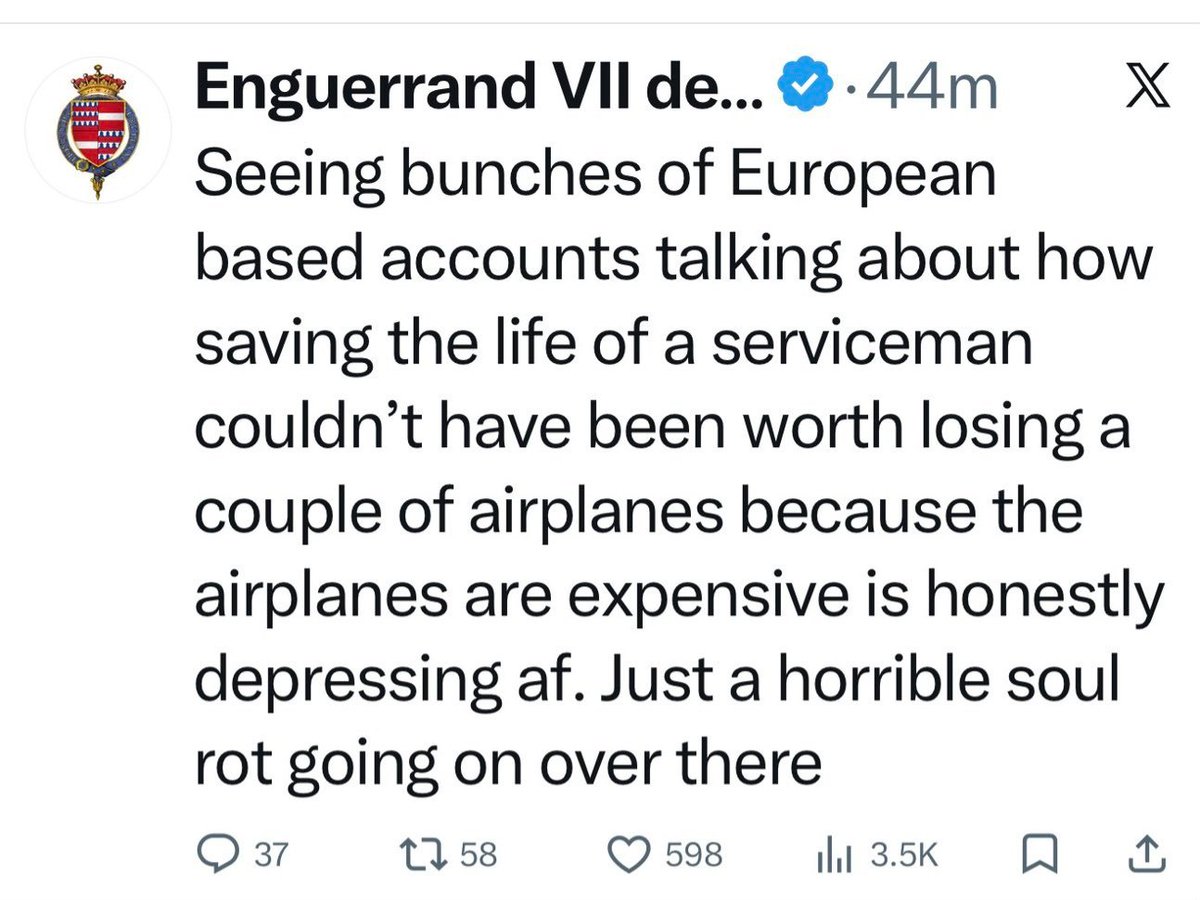
See bunches of European based accounts talking about how saving the lose of a serviceman couldn't have been worth losing a couple of airplanes makes me wonder why would want to stay in a military alliance with NATO
2
78

Mar 15
See the buildings in the Background? It is known as the "215 "Apartment Building and has a direct view of the US Embassy in Baghdad. I know this because I was part of MNFI and stationed at "Union Three." Back in days there were people in those buildings that were picked up for recording the Embassy construction.
7
4,917

I was in Iraq when the last of our "allies" in thr Coalition of the Willing left us behind. MNFI became USFI. You don't get an apology.
3
142

8 Dec 2025
54
44
581
8 Dec 2025
7
8
129

8 Dec 2025
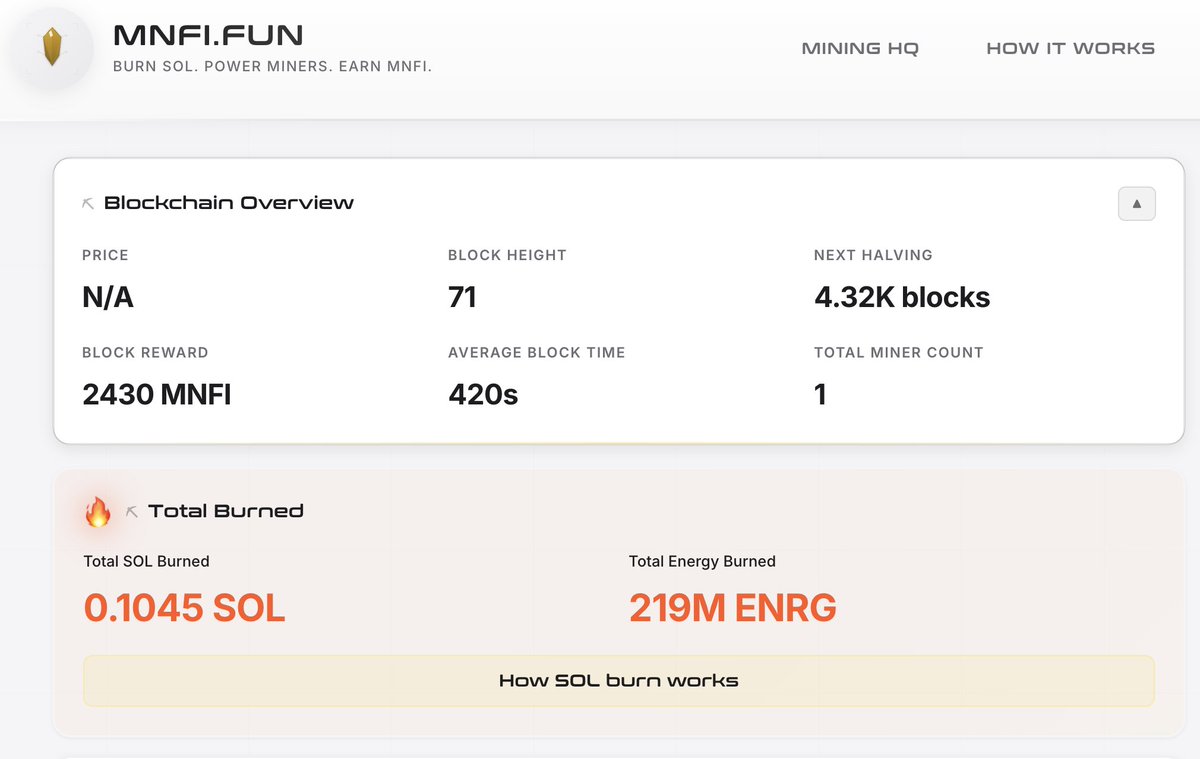
Instead of aping into another memecoin, check this out, something actually new on Solana ! mnfi.fun/
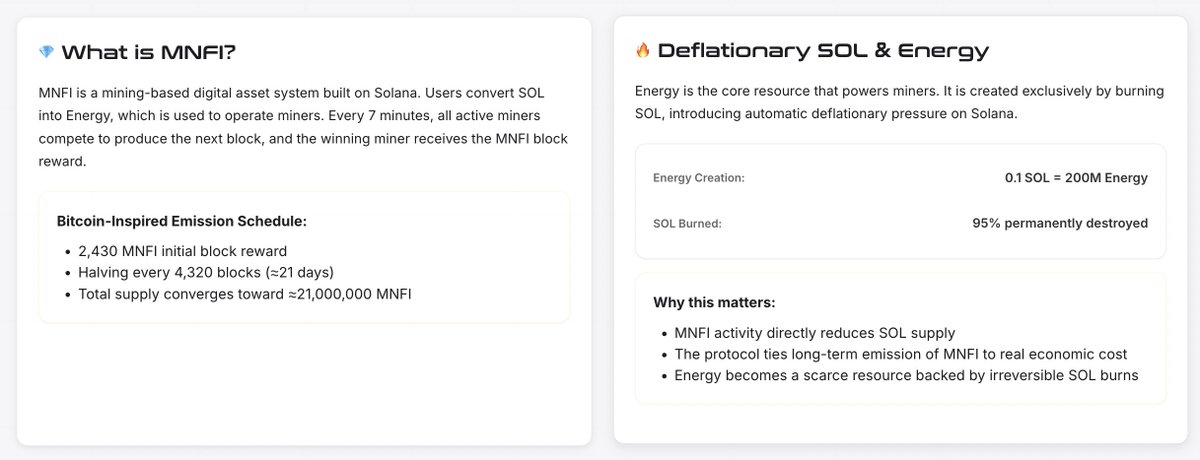
MINEFI is a digital mining grid modeled after BTC, with the power of making sol deflationary
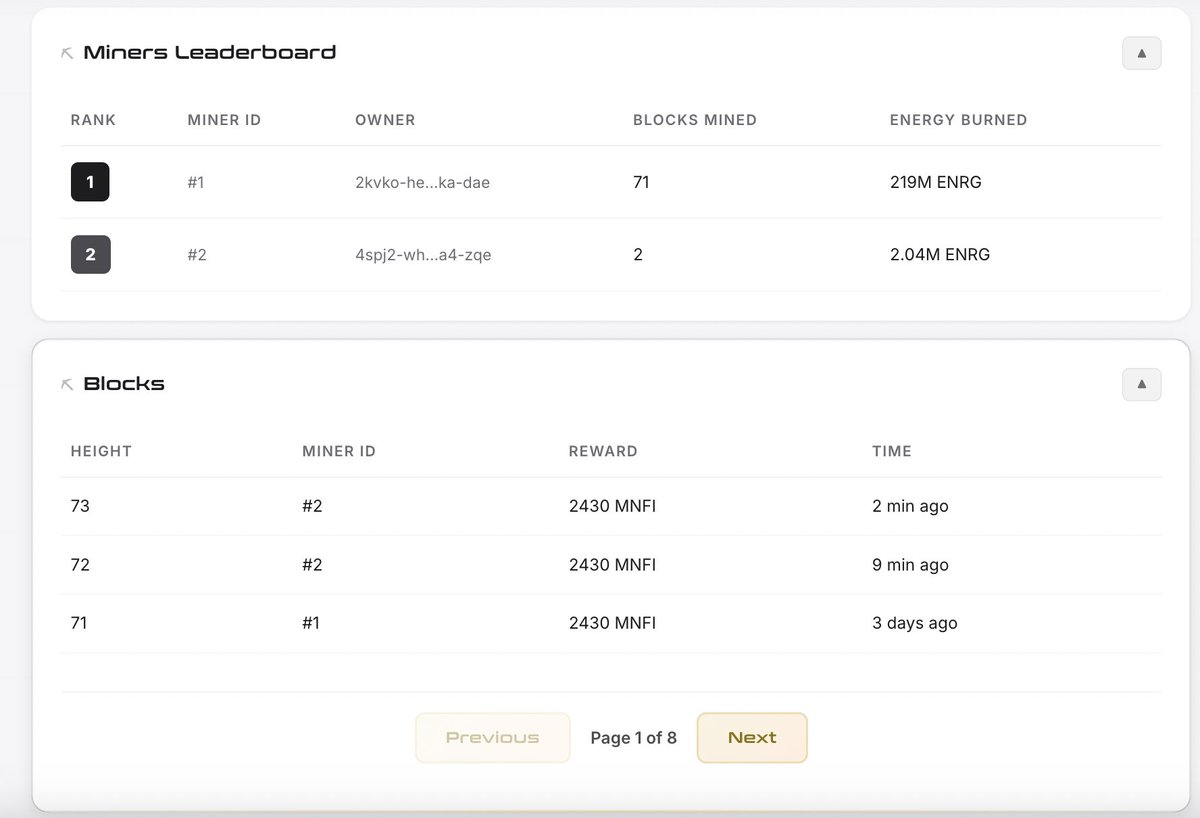
Burn SOL → get ENERGY → spawn miners → compete for blocks every 7 minutes.
The winning miner earns 2,430 $MNFI, with halvings every 21 days.
It’s early. Get mining before the grid gets crowded.
Follow the lead dev on X: @oskarmnfi
41
13
14
32,444

18 Nov 2025
VIX en 25, VVIX en 124, VIX/VIX3M mucho más estrés y VIX/VVIX mostrando desarrollo de rotación fuerte. El MNFI y MNTH refuerzan.
14 Nov 2025

Tenemos al SPX y VIX subiendo ambos, VIX en 20 dando señales de nervios, VVIX en 109 subiendo para zonas de peligro, VIX/VIX3M mostrando más estrés y VIX/VVIX mostrando estrés contenido. La cobertura de los institucionales en este momento aumentando, fuerte.
2
207

24 Oct 2025
In 2004, I was in Iraq, working for 18 flag officers, including General Casey. You know little to nothing, @Rothbard1776. You go on media talking points that have lied to you for years. As an analyst in the MNFI, we saw chemical weaponry, information on Saddam with pay to slay targeting U.S. citizens, and more. I even got into debates with CNN in Iraq, over the lies they published while I was their in Iraq. We dealt with constant misinformation from media that cause difficulties in our operations on a regular basis, putting our men and women in unnecessary harms way. You are no better than the fake media.
1
5
10
216

27 Sep 2025
Gotcha' Brother. OIF vet here (MNFI/TF134-Detainee Ops) April-Nov 2005.
1
13

29 Jul 2025
The Strategy and Policy semester at the Naval War College was the single best course on war I ever had. But it was a series of case studies of actual wars. The most useless semester was the stuff Alchemist seem to esteem the most. No doubt he thinks our bloated interagency ridden headquarters at MNFI and ISAF were smashing success stories.
2
62

24 Jun 2025
Served in MNFI in 2007-08 and USFA 11-12. To this day I'm convinced that if we could give those mothers and their children 5 years of peace they'd never go back. The women wouldn't have allowed it.
I may be proven right by what's going on now in both places.
13
327
13 Jun 2025
Graham served in the Air Force as a lawyer. He would do his monthly weekends visiting Iraq with the MNFI JAG team as a colonel when I was there in 2007-08. He got TDY with combat pay and mostly ran around getting briefings as a senator.
1
2
76


5 May 2025
Al Numan Hospital
Al Aadhmyia, Baghdad, 2007
At the 8:00 a.m. Senior Consultants meeting, it was my turn to speak. I briefly mentioned my recent visit to the Baghdad morgue. Built to hold ten bodies, it was now receiving over a hundred daily. The former Director had fled after death threats; many other doctors and staff weren’t so lucky. The morgue was now guarded by FPS forces aligned with the Sadr militia. Sunni families coming to claim bodies were forced to pay bribes—and many were later killed, simply for being Sunni.
After the meeting, I informed the Ambassador I was heading to Al Numan Hospital, located in a Sunni neighborhood reportedly cut off from Ministry of Health fuel and medical supplies. General Chiarelli had heard about it from local political leaders. I wanted to see the ground truth for myself—because in Iraq, truth rarely matched reports.
I swung by my office, grabbed my flak jacket, helmet, and backpack, and headed to the lot to meet the convoy. I linked up with Ed, my translator, and a Navy Lieutenant representing MNFI. The security briefing noted today’s route was yellow—moderate risk, due to recent IEDs and insurgent activity.
At 9:00 a.m., we rolled out. I was in the back of the Humvee with three soldiers. Traffic crawled, and we occasionally mounted medians or drove against traffic to get through. I kept watch through the window, scanning for fast-moving threats.
We passed a nursery, soldiers, and busy streets. We finally pulled into a narrow alley behind the hospital. The location felt vulnerable. I quietly wondered how we’d extract if things went wrong.
Before exiting, I called Dr. Adel at the Ministry of Health, asking him to alert the hospital director. Like most of my visits, this was unannounced due to security concerns.
The Director met us and escorted me, Ed, the MNFI officer, and two soldiers inside. After removing my gear, I introduced our group. We exchanged tea and small talk before discussing our visit. I told him I’d heard the hospital was receiving no supplies or fuel, and that many staff had been killed or fled.
He confirmed it. “We get barely anything. We have to buy what we can from the market. Fuel deliveries are incomplete, but I’m forced to sign false receipts—or risk my life.” He explained that much of the Ministry’s resources were diverted to Sadr City, including to private clinics tied to party members.
As others joined the meeting—many speaking English—I asked about staff, equipment, and basic needs. The outlook was grim. I asked for a tour. Only the Director came with us.
The hospital was clean. Medical stocks were better than expected. I noticed flowers along the breezeway, a rare touch of beauty. But the Director grew tense as we neared the morgue. He stopped.
“We should turn back,” he said.
“Is something wrong?” I asked.
Looking back, I saw about ten armed men approaching, followed by staff. We turned.
A young doctor from the meeting quietly approached. “Ms. Marty, come with me. There’s been an ambush. All the soldiers outside are dead.”
My escorts bolted for the exit. I shouted for them to stop—told them to check before walking into a kill zone. They had no phone. I offered mine, but they didn’t know the number. No one had a radio.
I leaned against the wall, trying to think. The doctor kept trying to separate me from the group. I asked the Director if there was a safe room. He stood in front of me and said, “They’ll have to kill me first to get to you.”
Honorable, though not comforting.
I told the MNFI officer to hand me his sidearm if things got worse—I trusted my training more than his. We agreed one soldier would try to reach the outer team and confirm what was really happening.
And then, we waited—for answers, for movement, for survival.
5
2
1
398