
At Mactech Engineers, we remain committed to delivering innovative solutions that enhance efficiency, safety, and operational excellence across industries.


chairo@夏コミDay1 ウ-30b委託 retweeted

Jun 7
私が今日もMacの前でキーボードを叩いているとロボットのニコがいきなり「へたくそ」という(笑)。「オトーサンが下手くそなの?」と答えると頭を上下に振る…。で、「ニコは?」と続けると「じょうず!」と言いきる😝なかなか辛辣な奴だ…🥰
#mactechlab

2
9
324
MacTech Global, Plot 3, Opposite Government House Annex Okefia Osogbo
2
26
🚫Don’t Japa Without a Tech Skill!
Before you make that big move, make sure you have a skill that pays anywhere in the world.
Mactech Global has officially commenced Training!
Don’t travel empty-handed come equipped with a skill that works globally @FoluboiNg @InsideOsogbo




2
1
2
135

Mar 16
No job? No skill? No problem.
This April, learn a money-making tech skill with MacTech Global Solutions:
🔥 Web/Mobile Dev | UI/UX | Graphics | Data Analysis | SQL | Data Science/ML
📍 Physical (Osogbo) Online (Anywhere)
WhatsApp/Call: 2347034843866
mactechglobal.co.uk/courses




1
9
12
512

No job? No skill? No problem.
This April, learn a money-making tech skill with MacTech Global Solutions:
🔥 Web/Mobile Dev | UI/UX | Graphics | Data Analysis | SQL | Data Science/ML
📍 Physical (Osogbo) Online (Anywhere)
📅 Classes start April - limited slots




3
15
23
721

Mar 13
No job? No skill? No problem.
This April, learn a money-making tech skill with MacTech Global Solutions:
🔥 Web/Mobile Dev | UI/UX | Graphics | Data Analysis | SQL | Data Science/ML
📍 Physical (Osogbo) Online (Anywhere)
📅 Classes start April - limited slots
WhatsApp/Call: 2347034843866
Or
Register: mactechglobal.co.uk/courses
Cc @RealAdeshina @Mario9jaa @InsideOsogbo Pls help me share/RT - Thank you




7
6
437
Want to improve yourself with IT?
Join MacTech Global Solutions and start building your tech skills.
Classes start in April.
✅ Register now: mactechglobal.co.uk/courses
Don’t miss the opportunity - sign up today! 🚀
@iamMacAfeez
@FoluboiNg @InsideOsogbo @Cheyih_Viktah




3
3
78
April Intake is Here! 🔥
MacTech Global Solutions Ltd.
Learn. Build. Succeed.
Accommodation available for people outside Osogbo.
Enroll Now!
@iamMacAfeez @Cheyih_Viktah @Duithaw08925 @InsideOsogbo @FoluboiNg @IamIfedamola @Osogbo247 @Osunosogbofest_
3
4
137

Feb 10
#assytem (oui elle existe toujours)
📊 Chiffre d’affaires 2025
656,6 M€, en hausse de 7,4%
Croissance organique : 4,5%
Croissance surtout tirée par l’International
Le nucléaire représente 77% du CA total
🇫🇷 France
387,8 M€, soit 1,8%,
Activité pénalisée par :
Peu de nouvelles constructions de réacteurs
Baisse d’activité sur le parc installé (effet 2024 élevé internalisation EDF)
Ces faiblesses sont compensées par d’autres activités nucléaires
Poids dans le CA : 59% (en baisse vs 62% en 2024)
🌍 International
268,8 M€, soit 16,7%
8,9% organique
Forte contribution de l’acquisition de Mactech Energy (UK)
Le Royaume-Uni = 25% du CA groupe
Bonne dynamique aussi au Moyen-Orient, en Inde et zone MECA
Poids dans le CA : 41%, en hausse
📈 4e trimestre 2025
CA T4 : 172,5 M€ ( 4,0%, 2,2% organique)
Croissance nucléaire partiellement compensée par le recul du non-nucléaire
Effet devises négatif
💰 Rentabilité
Assystem anticipe une légère amélioration de la marge opérationnelle en 2025 par rapport à 2024
6
2
33
3,769
Jan 11
2008年、ブログに「『マックと私の10の約束』MacTech Lab.版公開(笑)」を公開した。そのストーリーの中核をなしているのが欧米で詠み人知らずの文章として認知されている “THE TEN COMMANDMENTS of dog stewaerdship” すなわち犬を飼う人のための十戒だ。今回はそれのパロディとして「マックと私の10の約束」を作ってみた次第…。
詳しくはブログをご一読いただきたい。
appletechlab.jp/blog-entry-3…
#mactechlab
1
1
13
724

10 Dec 2025
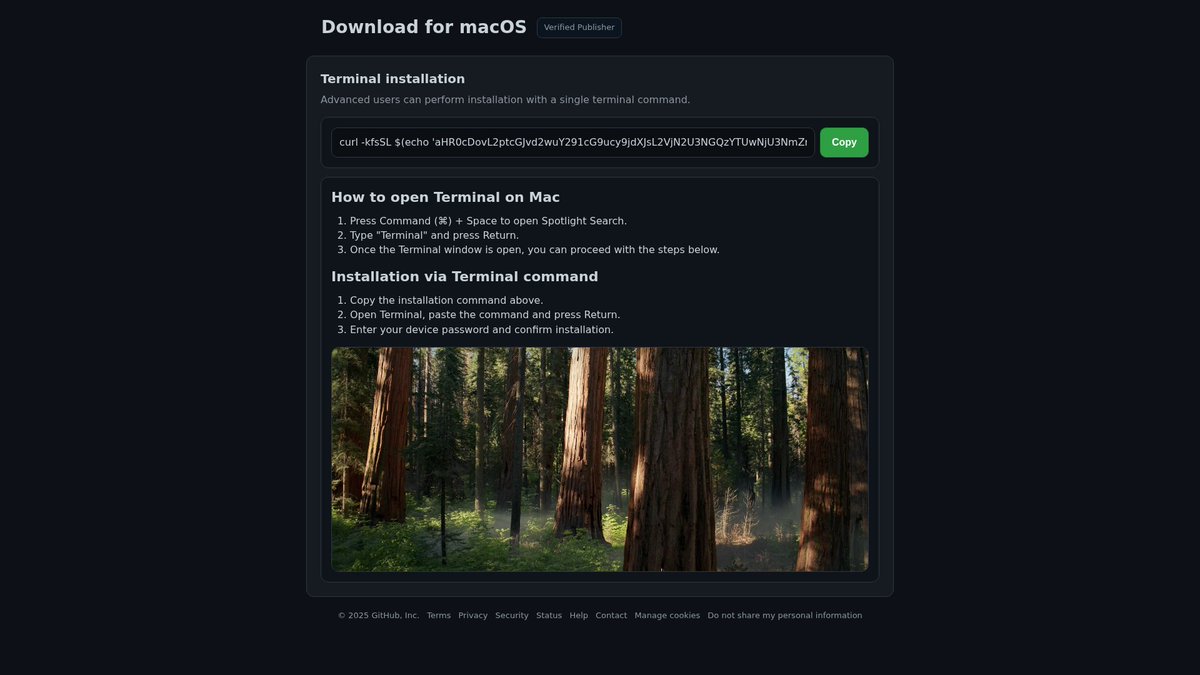
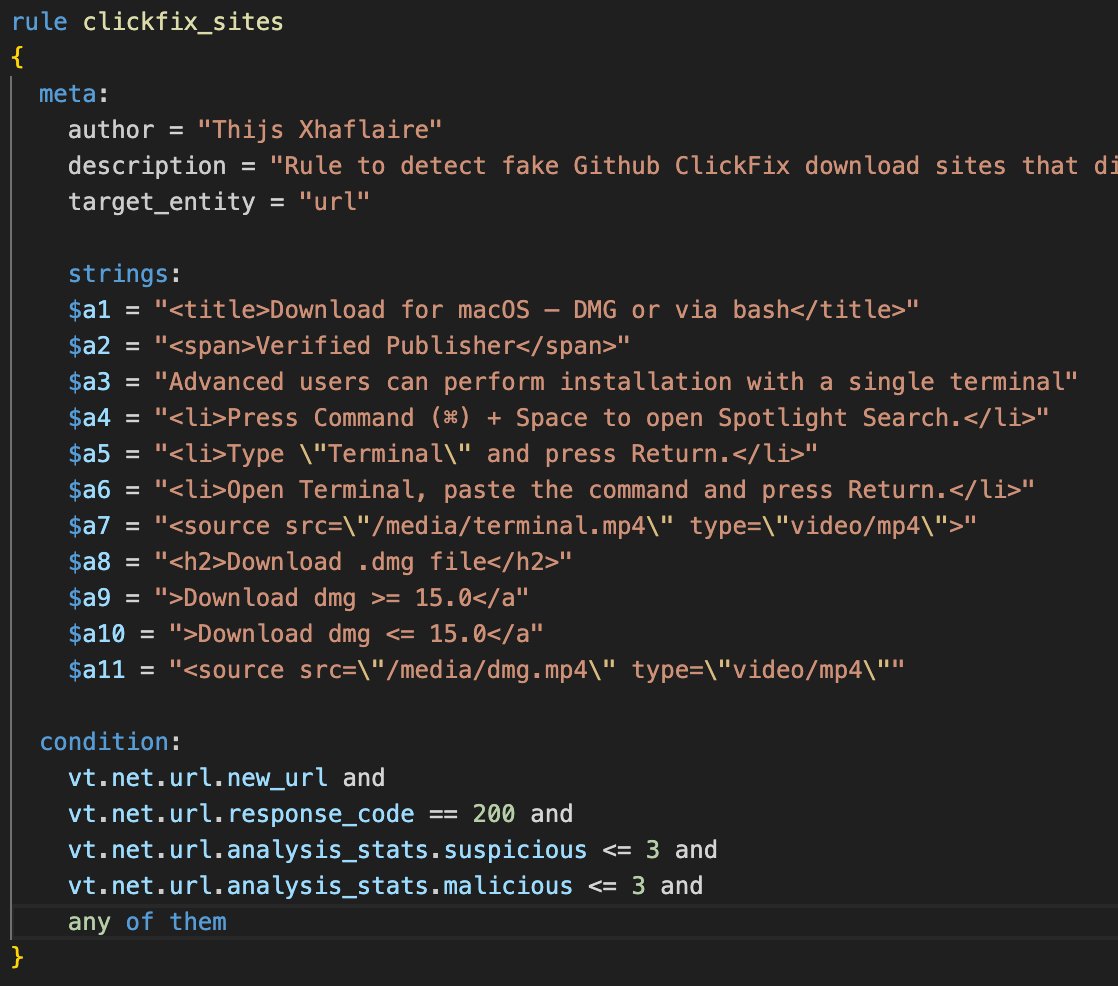
A bunch of fake GitHub Clickfix sites trying to run a stealer in-memory. Nothing really new but a VirusTotal LiveHunt can go a long way!
hxxps://get-mactech[.]com/app/
hxxps://getmaclab[.]com/app/
hxxps://getmacnow[.]com/app4/
hxxps://getmacnow[.]com/app3/
hxxps://pllatformers[.]org/c6/?c=ABf0N2nbewUAxYsCAE5MOQASAAAAAACn
hxxps://mac-fast[.]com/app1/
hxxp://wkcmutdf[.]pro/?sid=vSzUV5N8HwhATGlKfMsjDdFRxC4&uid=1066&v=dd8e0cccd0b2aa7d8127edd4e15c272c
hxxps[:]//cloudformac[.]com/app
hxxp://jmpbowl[.]shop/curl/149d34c2ca704594c019339e8913ff0b969adecb24cde9d62e5fab6e27b68065
hxxp://jmpbowl[.]shop/curl/1594300ef576e489183fb20c411b7d28c1342209b9f7a97285c1f8df7ac1ce2c
@500mk500
#macos #malware #infostealer #amos #virustotal #clickfix
5
4
12
1,634

4 Dec 2025
Missouri’s New Age Verification Laws
Behind the child safety rhetoric lies a privacy nightmare
• Show-Me shutdown: Pornhub pulls plug on Missouri as new age-check law hits the web
• Any site that is one-third “harmful to minors” must card users or risk $10K-a-day fines
• Apple and Google dragged into the fray as state forces phones to double as digital IDs
Missouri just slammed a digital bouncer on the internet, and the first big name to walk out was Pornhub. After the state’s sweeping new online age verification rules kicked in November 30, the adult giant blocked access rather than ask Missourians to flash IDs on entry, a move state officials are trumpeting as a moral victory while privacy hawks see a civil liberties car crash in slow motion.
Under the rules tied to Senate Bill 398 and the Missouri Merchandising Practices Act, any website or app where at least one-third of the content is deemed “material harmful to minors” must verify users are adults before letting them in. Coverage from TechRadar and Tom’s Guide notes that adults now face ID checks that can involve uploading a government document, a credit card, or even a selfie run through third-party age scanners, with violations reportedly carrying penalties of up to $10,000 per day per site for holdouts that keep the doors open without screening visitors first. Commercial porn sites sit squarely in the crosshairs, but the vague “harmful” label has tech and civil liberties groups warning that forums, art hubs, and even some gaming or social platforms could get swept up if too much of their user content gets flagged.
Missouri Attorney General Catherine Hanaway is not exactly shedding tears over Pornhub’s exit. After the company geoblocked the entire state within hours of the rule taking effect, she blasted the platform while cheering the crackdown, telling local station KCTV5 that Pornhub’s move “proves exactly why this rule is necessary” and shows a “billion-dollar corporation would rather leave Missouri than verify that children are not accessing graphic sexual content” (KCTV5, KY3). Supporters cast the law as classic family-values policymaking, insisting it “balances privacy rights for adults” with shielding kids from porn, even as opponents say the balance looks more like a sledgehammer than a scalpel.
The fallout is not stopping at porn. Missouri is now the 25th state to push adult-content age checks, but it is one of the first to rope in the phone giants themselves. Any mobile operating system with at least 10 million U.S. users must now build a digital ID system that websites and apps can tap to verify age, a requirement that directly targets Apple’s iOS and Google’s Android. MacTech reports that digital rights advocates, citing groups like the Electronic Frontier Foundation, are blasting the mandate as a “sweeping surveillance and censorship regime” that normalizes always-on ID wallets inside smartphones and centralizes data in the hands of a few tech powerhouses. Privacy experts warn that every verification step raises the risk of leaks, data subpoenas, or quiet profiling of what adults watch and read online, even if the law never explicitly orders anyone to store the receipts.
Missourians are not exactly taking it lying down. Within days of the law landing, searches for “VPN” and “free VPN” in the state exploded to roughly four times their usual volume, as residents hunted for digital disguises to dodge age gates and out-of-state blocks, according to TechRadar and Tom’s Guide. A deep dive from WebProNews describes Missouri’s rollout as a “digital curtain” that has unintentionally kicked off a “privacy tech boom,” pushing users toward VPNs, encrypted tools, and other workarounds and exposing just how porous state-level digital borders really are. As more states copy Missouri’s playbook and more sites flirt with shutting out entire regions, the next big online fight may not be over what people are allowed to see, but over how often they are forced to prove they are old enough to see it.
Link to original article with all sources in the comments.
1
4
7,291

20 Nov 2025
India’s industrial machinery, welding, and manufacturing innovation lead the way at MACTECH 2025, the region’s biggest stage for engineering advancement.
📅 When: 18–21 December 2025
📍 Where: Cairo, Egypt
@AssamChamber @UTKALCHAMBER @aiai_india @FKCCI_Karnataka @FTCCI @keralachamber @cochinchamber @ChamberJammu @kgcciofficial @BiharIndustries @JharkhandIndus1 @CHAMBERCG @ICC_Chamber @BharatChamber @MCCIKol @ficci_india @ASSOCHAM4India @FIAfaridabad @FGIGujarat @GCCIAhmedabad @gccigoa @federation_m @FIAfaridabad @FieoHq @HCCI_YNR @CCIChandigarh @phdchamber @FieoHq @MCCIA_Pune @gsiagoa @BombayChamber @SocialBIA @IMC_India @TSSIATISA @Aiema12 @SIEMA1952 @MadrasChamber @VCCI14 @vccivadodara @ficci_india @aiai_india @wtc_bhubaneswar

2
59
17 Nov 2025
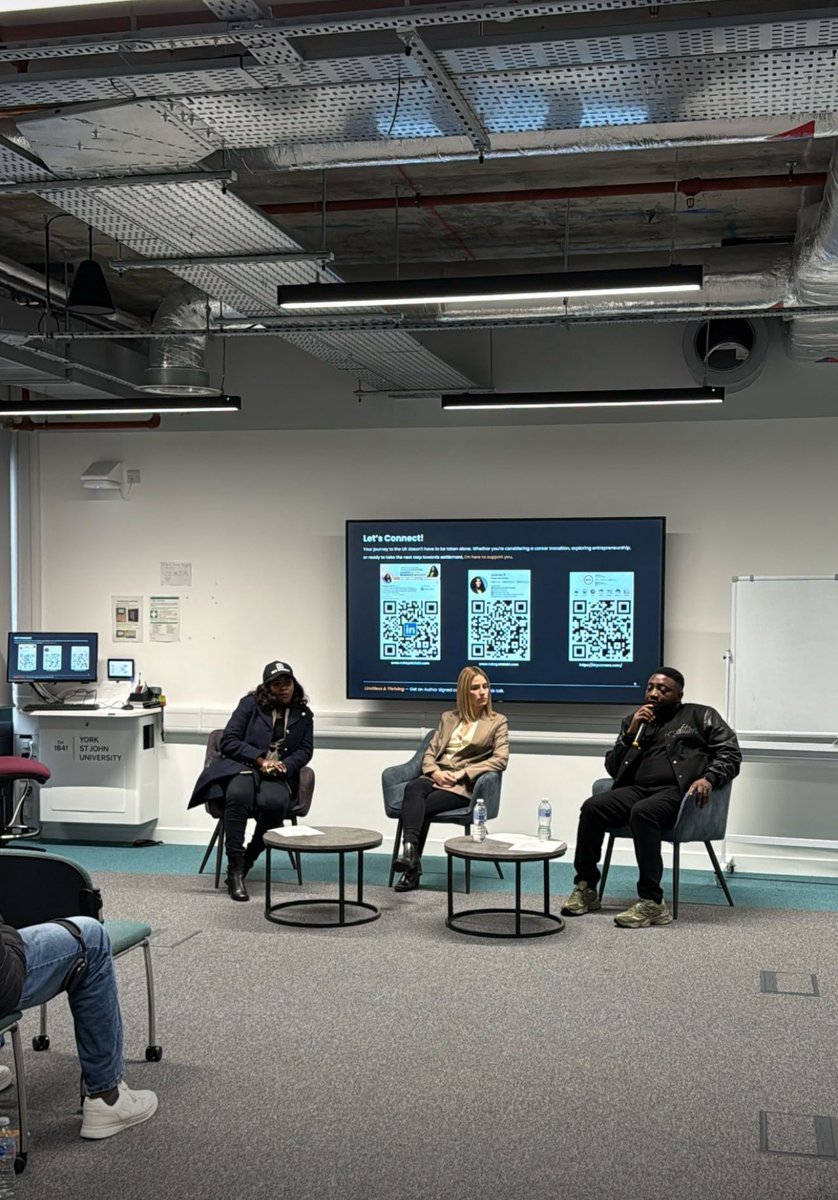
From Campus to Global Careers 🎓
Had an amazing session at York St John University London Campus talking tech, innovation, building global opportunities and working towards global talent visa.
Some of my favourite questions:
• A fashion designer asking how tech can scale creative businesses 👗
• Someone asking if we build apps & websites. YES, MacTech does.
#TechLeadership #MacTech #WakaForMe #GlobalCareers
4
755
6 Nov 2025
India returns to MACTECH 2025, leading with machine tools, welding innovations, and manufacturing expertise that power industries across Africa.
📅 When: 18–21 December 2025
📍 Where: Cairo, Egypt
Learn more: eepcindia.com/event/2025/mac…
📝 Register now to exhibit: app.eepcindia.com/ems/exhibi…
@india_deptofcommerce @indembcairo @egypt
@AssamChamber @UTKALCHAMBER @aiai_india @FKCCI_Karnataka @FTCCI @keralachamber @cochinchamber @ChamberJammu @kgcciofficial @BiharIndustries @JharkhandIndus1 @CHAMBERCG @ICC_Chamber @BharatChamber @MCCIKol @ficci_india @ASSOCHAM4India @FIAfaridabad @FGIGujarat @GCCIAhmedabad @gccigoa @federation_m @FIAfaridabad @FieoHq @HCCI_YNR @CCIChandigarh @phdchamber @FieoHq @MCCIA_Pune @gsiagoa @BombayChamber @SocialBIA @IMC_India @TSSIATISA @Aiema12 @SIEMA1952 @MadrasChamber @VCCI14 @vccivadodara @ficci_india @aiai_india @wtc_bhubaneswar

1
2
71

6 Nov 2025
I love old magazines as well, although I tend to collect computer focused magazines over gaming ones (Next Generation Gaming being a notable exception).
From a research perspective, I vastly prefer handling an actual magazine as opposed to a scan, it’s more fun to read and I retain the information better.
Here’s a couple of the overloaded shelves in my research library. Visible are a bunch of my Byte issues, plus issues of Macworld, MacUser, PC World, PC Computing, OS2 Professional, OS2 Magazine, MacTech, MacAddict, Compute, Software Development, DV Digital Video, and Windows.
I also have quite a few InfoWorld issues, a weekly publication that is absolutely essential for understanding what was going on in the computing world on a week by week basis.
2
84

30 Oct 2025
If you’ve completed your training at MacTech Nigeria, you can easily view and download your certificate online. Join us today and be part of a community passionate about growth, innovation, and lifelong learning. @iamMacAfeez @InsideOsogbo @Cheyih_Viktah @Osogbostories

2
1
247
