
May 25
I think the only reason why gacha twt dosen't want to play warframe is because there is no giant anime slot machineq
2
4
679

Apr 13
Nearly Half of Restaurant Operators Surveyed Report Lost Revenue Due to Equipment Downtime, New MachineQ Report Fin - ift.tt/obHQ8ex #restaurants #restaurantbusiness #restaurantnews
2

Nearly Half of Restaurant Operators Surveyed Report Lost Revenue Due to Equipment Downtime, New MachineQ Report Fin restaurantnews.com/machineq-…
68

Growing IoT interest for restaurant operations - MachineQ survey
fiercesensors.com/iot-connec… #SmartRetail #RestaurantIoT
1
1
46

Jan 27
! #TuckerCarlson #NASA #trump #whitehouse
Growing IoT interest for restaurant operations - MachineQ survey - Fierce Sensors ift.tt/BhwmbvA
12


10 cool IoT products and services that debuted in 2025 from these companies: Aeris, @MachineQ, a @comcast company, @digidotcom, @HPE_Aruba_NETW, @intel, @lantronix, @MyriotaGlobal, @Qualcomm, @SoracomIoT and @ZebraTechnology
@HPE
Learn about them here:
okt.to/ZDc69y
1
352

7 Nov 2025
I dont just reflect how i actually feel like. Its a farce, its just all cope, it never felt well and made me just despise myself more
If indeed the world is a positivité-devouring machineq of voidural anguish, i'd rather die out as a joyous, positive softie than to the opposite.
1
42


27 Sep 2025
Comcast's MachineQ Unveils AI-Powered Insights for Businesses - Telecompetitor telecompetitor.com/comcasts-… #AgenticAI
14
26 Sep 2025
! #TuckerCarlson #NASA #trump #whitehouse
Comcast's MachineQ Unveils AI Feature to Turn IoT Data into Instant Business Insights ift.tt/W0cxEUy
24

26 Sep 2025
Comcast’s MachineQ Unveils AI Feature to Turn IoT Data into Instant Business Insights thefastmode.com/technology-s…
15

26 Sep 2025
Today's read: Comcast’s MachineQ Unveils AI Feature to Turn IoT Data into Instant Business Insights 📣
ift.tt/PKtZspk
Read the full story by clicking on the link below ⬇️
Never miss a beat in telecoms. Catch the latest news on @TheFastMode 🚀 #tech #telecoms #technews
1
58

28 Aug 2025
Machine Learning with Current Transformer Technology: A Practical Approach for Plant Managers and Engineers
Executive Summary
The integration of machine learning (ML) with current transformer (CT) technology offers a straightforward, cost-effective method to monitor equipment health and performance in industrial plants. By installing a non-intrusive CT sensor on an existing power supply line, plant operators can leverage advanced analytics to automatically learn equipment signatures—capturing start-up profiles, steady-state operation, and early indicators of failure. This eliminates the need for multiple dedicated sensors (e.g., flow switches, limit switches) while improving visibility into plant operations and equipment condition.
This paper explores how CT-based machine learning works, its ease of deployment, and the economic and operational advantages it offers for diagnosing plant issues.
1. Introduction
Industrial plants depend on a wide variety of electrical loads—motors, heaters, compressors, pumps, and fans—each with unique operational characteristics. Historically, monitoring these systems has required installing multiple sensors: flow switches to confirm pump operation, temperature sensors for heaters, or vibration sensors for motors. These devices provide valuable data but add complexity, installation costs, and maintenance burdens.
Recent advances in machine learning applied to CT technology provide an alternative: one sensor, installed on a power cable, can provide comparable insights across a wide range of equipment. This innovation is particularly well-suited to existing plants, where retrofitting additional sensors is costly and disruptive.
2. Current Transformer Technology Basics
A current transformer (CT) is a non-intrusive sensor that clamps around a conductor to measure current flow. It requires no changes to wiring, introduces negligible resistance, and is widely used for metering and protection applications.
When paired with a data acquisition device and machine learning algorithms, CTs transform from simple measurement tools into diagnostic instruments. Instead of merely reporting amperage, the system analyzes the “signature” of the current waveform to detect subtle differences in equipment behavior.
3. Ease of Installation
Non-invasive: CTs clamp onto existing power cables without requiring system shutdown.
Scalable: Multiple CTs can be deployed across plant distribution panels, covering motors, heaters, or entire equipment groups.
Plug-and-play: Integration requires only a data logger or edge computing device with machine learning capabilities.
For plant managers and maintenance teams, the simplicity of installation means monitoring can begin within hours, not weeks, and without impacting production schedules.
4. Learning Equipment Signatures
Machine learning models trained on CT data quickly recognize operational states:
Start-up transients: Motors and pumps exhibit unique inrush currents and acceleration profiles.
Steady-state operation: Each load has a characteristic current draw that remains consistent under normal conditions.
Imminent failure indicators: Bearing wear, insulation degradation, or flow restrictions alter current harmonics, unbalance, or load patterns. These deviations can be detected earlier than traditional sensors would indicate.
Over time, the system builds a library of “signatures” for each device, enabling real-time diagnostics and historical trend analysis.
5. Eliminating Redundant Sensors
Traditionally, verifying equipment operation requires dedicated instrumentation:
Flow switches for pumps
Pressure switches for compressors
Temperature probes for heaters
With CT-based machine learning, these devices become optional. For example:
A pump’s operation is confirmed by its current draw pattern, eliminating the need for a flow switch.
Heater status can be verified by the presence of a resistive load signature.
Motor health can be tracked via current imbalance without vibration sensors.
The result is simplified instrumentation, fewer failure points, and lower maintenance costs.
6. A Subset of Artificial Intelligence: Applied Sophistication
While “artificial intelligence” is often associated with complex autonomous systems, the application here is narrow and practical. The algorithms used fall under machine learning, specifically pattern recognition and anomaly detection.
Pattern recognition: Identifying equipment start/stop cycles and differentiating between devices.
Anomaly detection: Flagging changes in signature that deviate from normal operation, providing early warning of failure.
This is not general-purpose AI but a highly focused tool tailored to industrial operations. The sophistication lies in the algorithm’s ability to detect subtle variations invisible to the human eye in real-time current data.
7. Economic Advantages
The economic benefits for plant operators are significant:
Reduced instrumentation cost – Eliminates the need for redundant flow, pressure, or limit switches.
Faster deployment – Simple clamp-on installation without downtime.
Predictive maintenance – Early fault detection reduces unplanned outages and extends equipment life.
Operational efficiency – Monitoring multiple assets from a single panel reduces inspection rounds.
Scalability – One system can be applied plant-wide, regardless of equipment type or vintage.
8. Use Case Example
Consider a 100 HP centrifugal pump:
Baseline: A CT is installed on its feeder cable. Within days, the machine learning system establishes the pump’s startup inrush, steady-state draw, and normal runtime.
Event: After several months, the system detects increased harmonic distortion and minor load imbalance.
Outcome: Maintenance is alerted, discovering early bearing wear before catastrophic failure. The repair is scheduled during a planned outage, preventing costly downtime.
This same principle applies across motors, heaters, compressors, and fans, offering a unified diagnostic framework.
9. Conclusion
Machine learning integrated with CT technology represents a practical step forward for plant operators. By transforming simple current measurements into diagnostic insights, facilities gain the ability to monitor critical assets with fewer sensors, less complexity, and at lower cost.
For plant managers and engineers, the message is clear: one sensor, intelligently applied, can provide operational clarity across an entire facility. This subset of AI delivers practical sophistication—reducing risk, cutting costs, and enhancing reliability without complicating plant operations.
10. Available Technologies & Suppliers: Strengths and Trade-Offs
ABB – “Smart Sensors”, Circuit Monitoring, and Machine Learning Analytics
ABB offers a suite of CT- and sensor-based products tailored to industrial condition monitoring:
ABB Ability™ Smart Sensor
A compact, wireless attach-on sensor for motors—it clamps on without rewiring and connects via Bluetooth Low Energy to gateways or mobile devices. Quick to install, generating encrypted “big data” for cloud analysis, it boasts payback in under a year and works with both legacy and new motors Scribd.
Benefits: Super simple retrofit, scalable across entire motor fleets, rapid insights, strong cybersecurity.
Drawbacks:* Relies on Bluetooth and cloud connectivity—small plants with limited infrastructure or air-gapped systems may need extra networking.
Circuit Monitoring System (CMS)
Multichannel CT system for panel-level branch monitoring. Sensors plug into a control unit via ribbon cables, with Modbus or LAN communications for encrypted data. Ideal for granular visibility of power distribution ABB Electrification.
Benefits: Solid retrofit for distribution panels, robust and secure, no invasive wiring.
Drawbacks: More infrastructure (ribbon cables, gateways), cost scales with number of branches monitored.
Machine Learning & Anomaly Detection
ABB developed scalable unsupervised ML models for motor health diagnostics, capturing early-stage faults via current or vibration signatures. UI features allow filtering anomalies, user annotations, and controlled retraining—all within MLOps frameworks (pattern recognition and unsupervised methods) ABB GroupABB Group.
Benefits: Detects subtle faults (even belt or bearing issues), minimizes false alarms, and supports evolving operational baselines.
Drawbacks: Requires initial data collection and setup, MLOps approach may require some analytics support.
Predictive Analytics via Neural Networks and EWMA Models
ABB deploys neural-network-based prognostics to forecast asset health and generate simple “Keep running / Needs attention” outputs. EWMA (Exponentially Weighted Moving Average) models also allow lightweight, real-time monitoring of heat-related variables with minimal compute ABB Group 1.
Benefits: High detection accuracy (~90%), predictive rather than reactive, low computation on edge.
Drawbacks: Neural-network models require quality historical data; EWMA applies best where physical heat dynamics are well understood.
Siemens – MindSphere (now Insights Hub)
MindSphere is Siemens’ industrial IoT platform that aggregates sensor data (including CT-derived currents), enabling real-time analytics, predictive maintenance, and development of digital twins across machinery and fleets Wikipedia.
Benefits: Very flexible platform with rich API support (including OPC UA), cross-vendor compatibility, scalable over many assets.
Drawbacks: Platform-level tool; adds value only when paired with sensors and configured analytics. Requires integration effort and potential subscription fees.
Fluke – AI-Powered Diagnostic Tools
Fluke provides trusted, rugged test instruments (like thermal imagers and power meters) with AI/ML features for predictive maintenance and diagnostics Challenging Voice.
Benefits: Industry-trusted hardware, portable demo tools, familiar interface for maintenance crews.
Drawbacks: Less extensive AI integration or edge analytics—more point-in-time diagnostics than continuous monitoring.
Wind River, Claroty – Edge-Focused Monitoring & Cybersecurity
Platforms like Wind River offer edge-computing analytics for real-time monitoring, while Claroty specializes in AI-driven security and anomaly detection for industrial control systems Challenging Voice.
Benefits: Advanced edge processing and cybersecurity—great for critical infrastructure where network risk is a concern.
Drawbacks: Not primarily focused on equipment start-up signatures or predictive maintenance via CTs—often more complex to deploy and may require specialized knowledge.
MQpower CT – IoT-Enabled Self-Powered CT
The MQpower CT from MachineQ is a self-powered CT that communicates over LoRaWAN, offering ±1–3 % accuracy depending on current load machineq.com.
Benefits: Wireless long-range communication, easy clamp-on installation, ideal for distributed sensor networks.
Drawbacks: LoRaWAN network needed; accuracy drops at low currents; environmental conditions must be considered.
CR Magnetics – Simple Split-Core CTs for ML Input
Basic split-core CTs (e.g., CR-3111-3000) can feed current data into ML models for bearing, airflow, or overload detection—simple, small-scale, and cheap DigiKey.
Benefits: Cheapest sensor solution for proof-of-concept or retrofit; no networking or platform lock-in.
Drawbacks: Requires DIY data acquisition, lacks integrated analytics or monitoring software—must build ML pipeline.
Community Feedback (from Practicing Engineers)
Working engineers often share that CTs themselves are passive, but invaluable for metering or fault detection—they drive relays or feed analytics platforms Reddit.
And when sizing CTs, practical wisdom says: brief inrush won’t damage them but may saturate—so choose CT rating above steady-state current; AutomationDirect or similar suppliers are good sources Reddit.
32

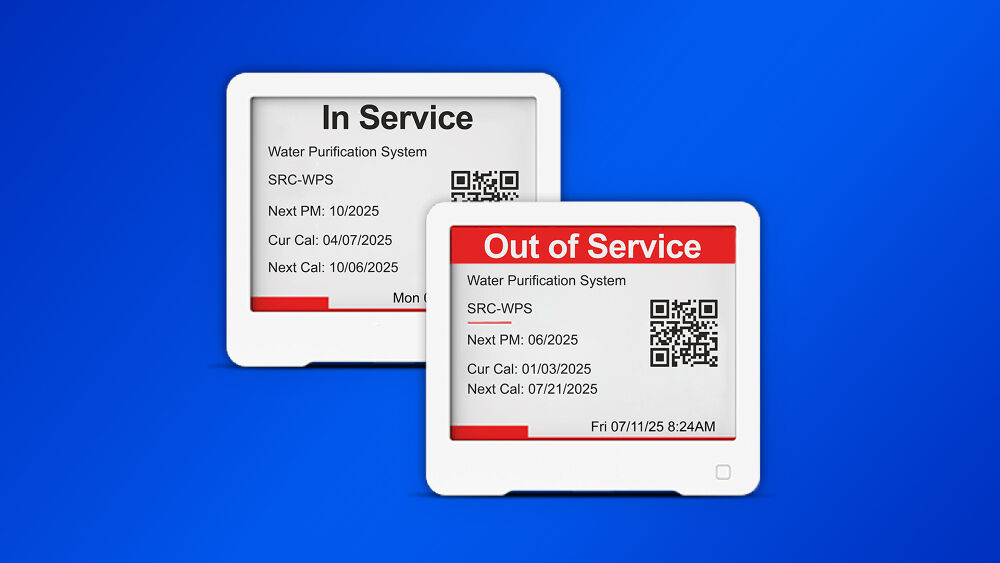
New ePaper displays from @MachineQ bring real-time lab data to life.
corporate.comcast.com/press/…
1
262

25 Jul 2025
Semiotik.IT #IoT »Comcast’s MachineQ Launches New Device to Digitize Lab Equipment Display« iotbusinessnews.com/2025/07/… #Semiotik #Smart #InternetOfThings
38

20 Jul 2025
Attention toute les machineq à étiquettes, et récupération sont prête
30
16 Jun 2025
Today's read: Comcast's MachineQ Executive Gaurav Naik Reappointed to LoRa Alliance Board 📣
ift.tt/YWRxH9j
Read the full story by clicking on the link below ⬇️
Never miss a beat in telecoms. Catch the latest news on @TheFastMode 🚀 #tech #telecoms #technews
19
13 Jun 2025
! #TuckerCarlson #NASA #trump #whitehouse
Comcast's MachineQ Executive Gaurav Naik Reappointed to LoRa Alliance Board ift.tt/gbFAeVD
6