
Energy Risk Engineering Lessons | 40 years in power generation, oil & gas, and renewables. Sharing technical solutions and risk management insights.
Joined August 2025
- Tweets 27
- Following 11
- Followers 36
- Likes 12
10 Photos and videos

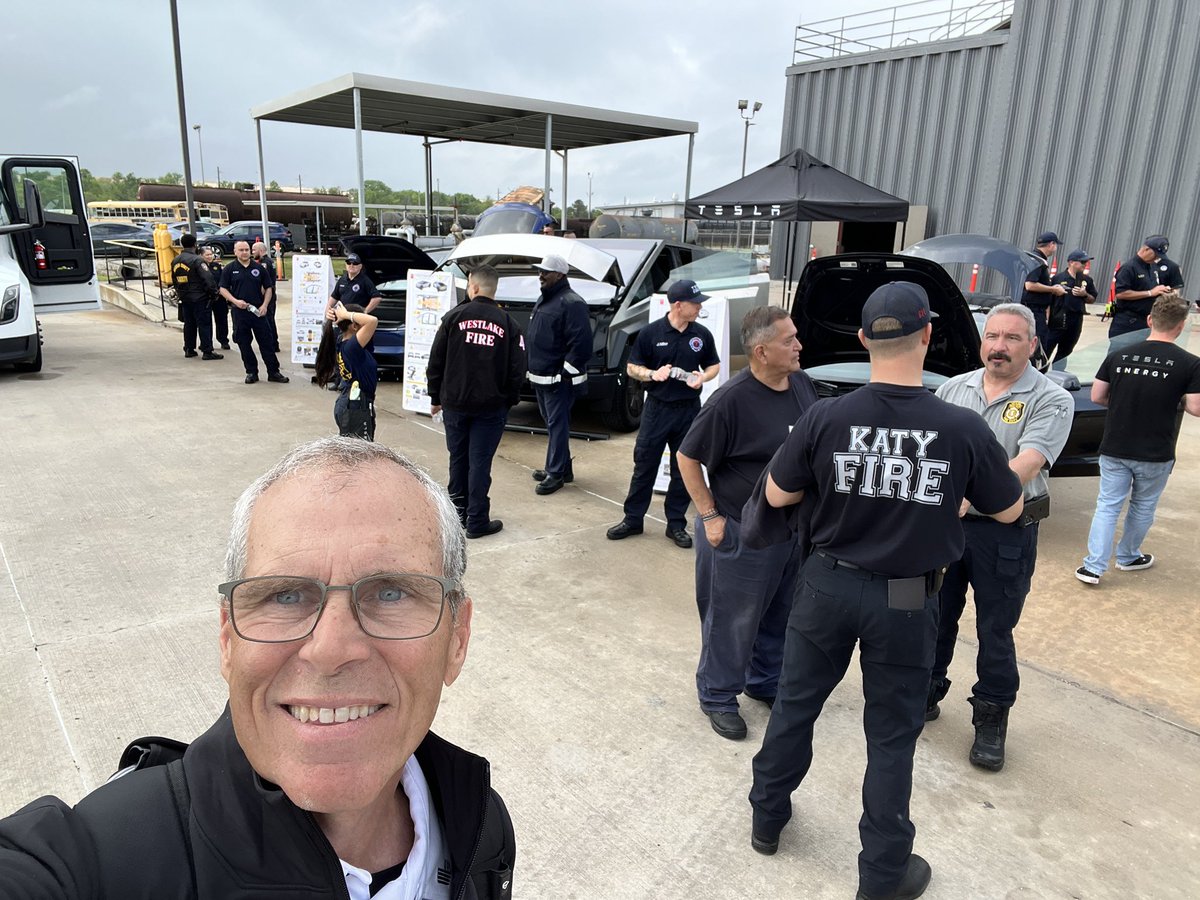
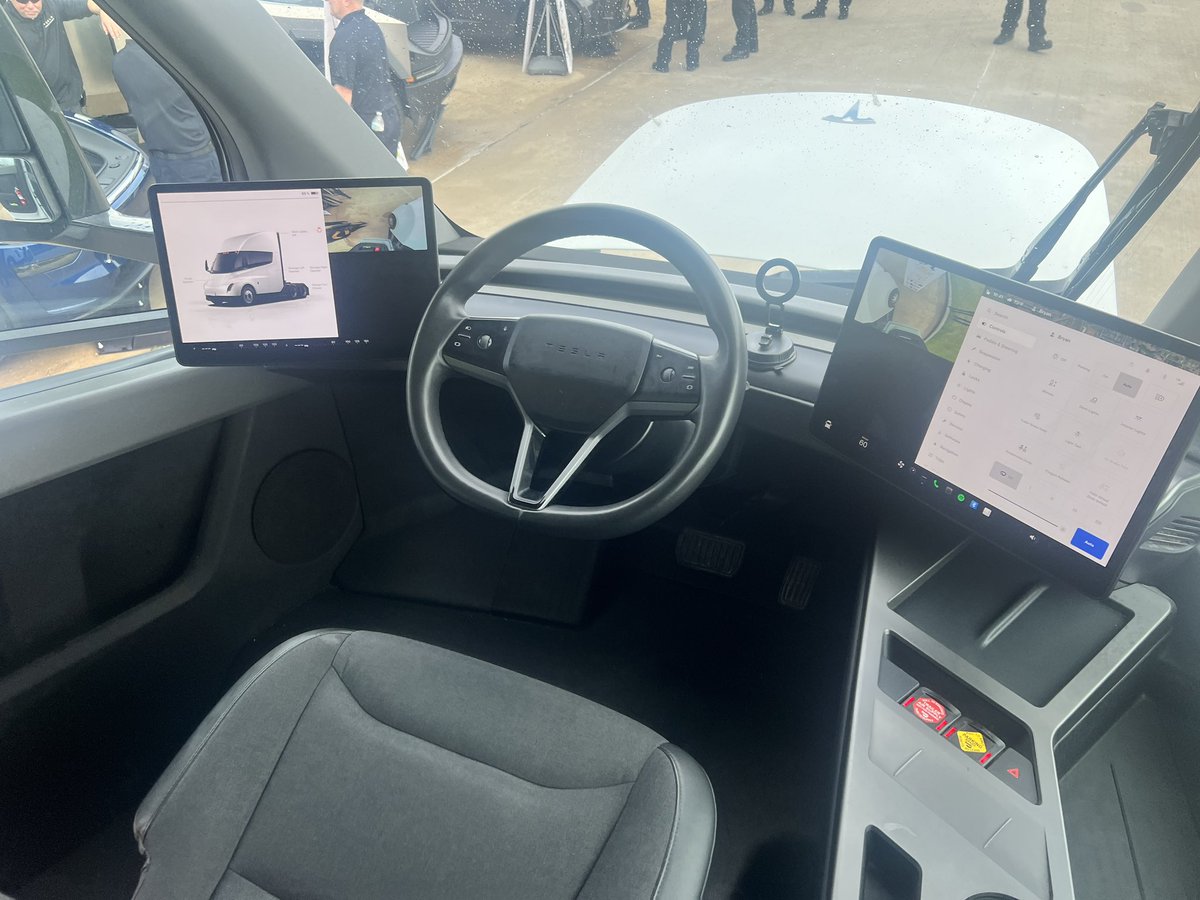
I spent today in Houston at Tesla's first responder training — the 5th such event Tesla has conducted nationally and the first ever held in Texas.
I brought a professional IR camera.
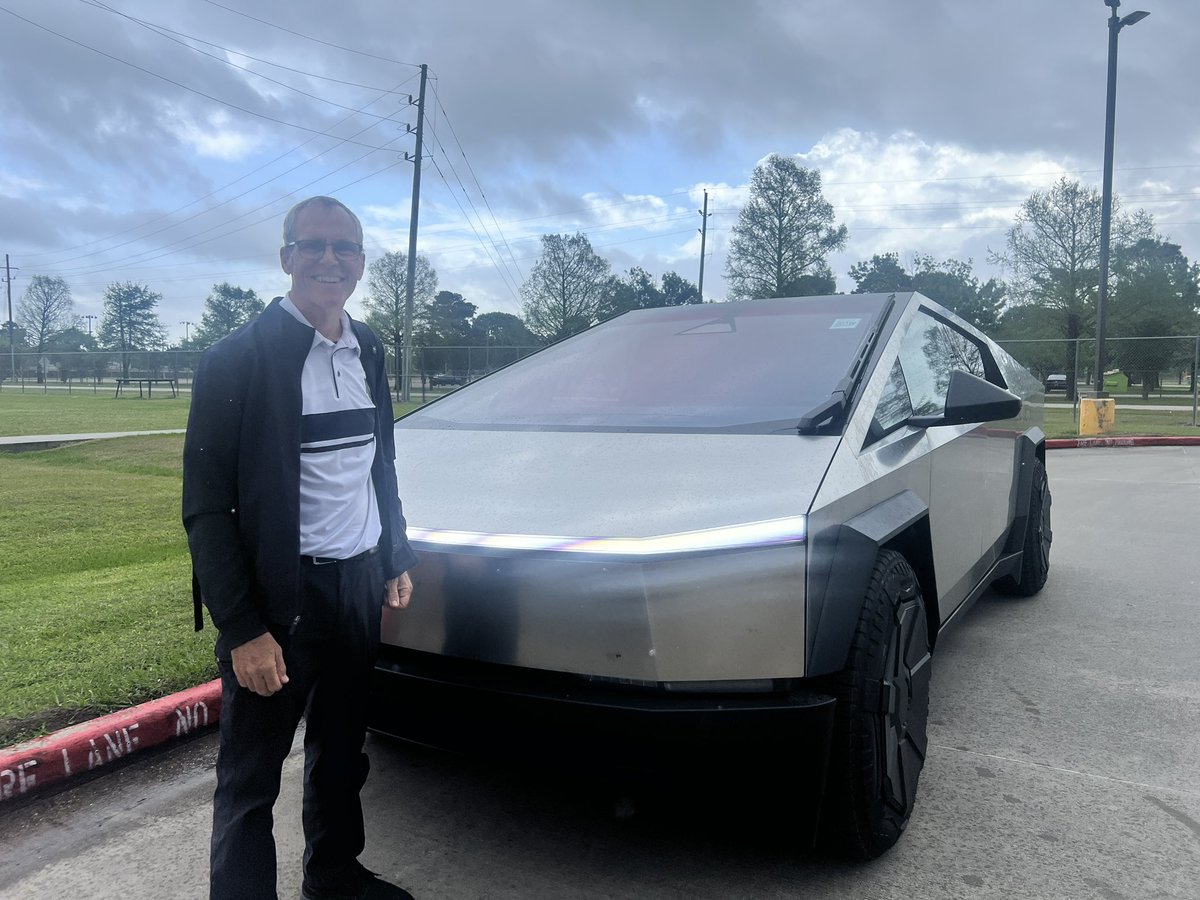
I test drove a Cybertruck before the session started, climbed into the cab of the Semi, and stood in front of an open Megapack on a flatbed with a thermographer's eye and 40 years of energy risk engineering experience.
Here's what every risk engineer, facility operator, and underwriter with BESS exposure needs to know:
1. Tesla's Megapack batteries are designed to safely consume themselves inside the container.
Read that again. This isn't a warning label. It's a deliberate engineering philosophy. The container IS the last line of defense. Your fire protection objective at a Megapack installation is CONTAINMENT — not suppression. If your insurance program was written on suppression assumptions, it is structurally misaligned with the actual loss scenario.
2. The sparker system is the most counterintuitive fire protection engineering I've encountered in 40 years.
Conventional logic: detect gas, eliminate ignition sources, ventilate.
Tesla's logic: detect gas, IMMEDIATELY CREATE a controlled ignition event.
They use adapted automobile spark plugs that fire the moment flammable gas reaches a detectable level — burning it off before it can accumulate to explosive concentration.
Their analogy was perfect: "It's like lighting a gas stove. If you light it right away, there is never a problem. Delayed ignition is the problem."
I have close-up IR images of the actual hardware. I believe they are among the first publicly documented from a Tesla-sanctioned training event.
3. Tesla prefers firefighters do NOT spray water on a Megapack fire.
The faster it burns through the battery contents, the faster the container can be cleared and the system replaced. Everything that matters — uptime, revenue, grid reliability — is better served by a fast contained burn than a slow water-suppressed event that extends scene time without improving the outcome.
If your business interruption coverage assumes water suppression and partial asset recovery — you are carrying unquantified gap exposure.
4. The flammable off-gases do NOT reach explosive concentration.
The primary atmospheric hazard is TOXICITY — not explosion. The sparker system addresses the explosive accumulation risk by design. Respiratory protection and toxic atmosphere monitoring take priority over explosion precautions. Most first responders don't know this yet.
5. Tesla has a 24/7 internal fire department.
Staffed by former career and volunteer firefighters.
Available around the clock for any incident involving Tesla energy hardware anywhere. Most facility operators and risk engineers have never heard of this resource. It belongs in every pre-incident plan for every facility with a Megapack installation.
I covered the sparker concept after Christina [last name] presented at an EEI meeting last year. Today I finally have the close-up IR images to match the concept.
Tesla has now conducted 5 of these events. They need to conduct 500.
Full article with infographics, IR images, and four specific action items for risk professionals is linked below.
Christina Francis — thank you for the invitation, the engineering conversations, and the first-edition Texas challenge coin.
linkedin.com/posts/john-munn…
#EnergyRisk #BESS #Tesla #Megapack #ThermalRunaway #FireProtection #RiskEngineering #BatteryStorage #NFPA855 #FirstResponders #Thermography #IRImaging #ElectricVehicles #LithiumIon #InsuranceRisk
2
1
73
Spent the day at Harris County Sheriff’s Department for Tesla First Responder training.
1
23
@TechOperator check out the article. Tesla has some very different approaches to battery safety.
1
5
Energy Risk Engineering retweeted

Apr 13
🚨 BREAKING: Tesla AI patents improved auto wipers!
This new system uses the wiper motor itself to sense windshield moisture.
No more relying on infrared or cameras.
Could this be the end of unreliable wipers?
2
3
41
1,387
Energy Risk Engineering retweeted

Apr 12
FSD eliminates slow reaction time and distraction.
There is NO WAY a human can compete (except for making the decision to use FSD).

7
40
326
17,281
Energy Risk Engineering retweeted

Apr 11
25
61
400
32,730

22 Oct 2025
Energy Risk Engineering Buzz
Date: October 22, 2025
Edition: Weekly Roundup
Welcome to this week’s edition of Energy Risk Engineering Buzz, your go-to source for the latest in energy risk management through technological and scientific lenses. We’ve curated the top 10 stories from the past seven days, each with a concise summary and a key takeaway.
1. OECD NEA Advances Nuclear Irradiation Experiments
The OECD NEA’s FIDES-II framework is pushing forward joint experimental programs on nuclear fuel and materials, including power ramp tests and accident simulations using facilities like the TREAT reactor to improve modeling and data integration. 30
Key Takeaway: Collaborative data-modeling approaches strengthen risk management for nuclear materials under extreme operational conditions.
2. Hot Fuel Examination Facility Recognized as Historic Landmark
Built in 1975, the Hot Fuel Examination Facility has become the largest U.S. hot cell for postirradiation nuclear research, supporting diverse projects from fast breeder reactors to advanced waste characterization. 31
Key Takeaway: Versatile research infrastructure enhances nuclear waste management and licensing, reducing long-term environmental risks.
3. Federal Grant Cuts Threaten Environmental Health Research
Cancellations of major grants, including DOE projects on urban weather impacts and EPA studies on chemical contaminants, are halting critical data collection on energy-related health and economic hazards. 32
Key Takeaway: Loss of funding erodes preparedness for pollution and climate-driven risks, emphasizing the need for sustained scientific investment.
4. Climate Mitigation Efforts Progressing Slowly
Global renewable installations surged in 2024, but coal consumption remains at record highs, highlighting the need for faster phaseouts to meet emissions targets amid technological advancements in clean energy. 33
Key Takeaway: Rapid coal retirement strategies are crucial to mitigate warming risks and align with 1.5°C goals.
5. AI Innovations Offset Environmental Energy Demands
AI technologies are optimizing building efficiency, EV charging, methane reduction, geothermal exploration, and traffic management to cut emissions, despite the high energy use of data centers. 34
Key Takeaway: Widespread AI deployment can balance its own energy risks by enabling significant efficiency gains across sectors.
6. Breakthroughs in Resilient Nuclear Reactor Materials
Scientists are developing high-temperature ceramics and tungsten alloys for fission and fusion reactors, alongside improved fuel processes to minimize waste and boost efficiency. 36
Key Takeaway: Material innovations could accelerate safe, low-waste nuclear energy, transforming risk profiles for sustainable power generation.
7. Rising Power Demands from AI Data Centers
AI-driven data center expansion is projected to spike electricity use, necessitating advanced cooling and energy security measures amid geopolitical and cyber threats. 11
Key Takeaway: Behavior detection technologies are vital for safeguarding energy infrastructure against escalating cyber risks.
8. Grid Strains Impacting Data Center Projects
With grids under pressure, up to 20% of planned data centers face delays, prioritizing power availability in site selection and spurring renewable finance innovations. 13
Key Takeaway: Targeted clean energy solutions in emerging economies can alleviate grid overload risks and support tech growth.
9. Energy Projects Facing Significant Overruns
A global analysis shows energy infrastructure projects often exceed budgets by 40% and timelines by nearly two years, with nuclear facing the highest uncertainties. 16
Key Takeaway: Early risk assessments are essential to minimize financial and operational vulnerabilities in large-scale developments.
10. Solid-State Batteries Revolutionizing EVs
Next-gen solid-state batteries from companies like QuantumScape promise extended range, rapid charging, and improved safety
1
21
19 Oct 2025
Listen to Energy Risk Engineering on Spotify for Creators open.spotify.com/episode/1oU…
103
10 Sep 2025
Energy Risk Engineering Buzz
Date: September 9, 2025 Edition: Daily Digest
Welcome to your daily roundup of the top developments in energy risk engineering, emphasizing technology and science. This edition explores advancements in risk teams, cybersecurity acquisitions, ransomware threats, nuclear-AI integrations, and grid innovations, sourced from recent web insights.
1. Willis Towers Watson Launches Global Risk Engineering Team
Willis, part of WTW, has introduced a specialized Global Risk Engineering team of nearly 200 experts across 30 countries, integrating property and casualty expertise with advanced analytics and data science to deliver tailored risk assessments for energy portfolios, enhancing resilience against emerging threats like climate impacts. Key Takeaway: Data-driven engineering tools will optimize total cost of risk for energy operators, enabling proactive mitigation of sector-specific vulnerabilities.
2. Mitsubishi Electric Acquires Nozomi Networks for OT Cybersecurity Boost
Mitsubishi Electric announced its acquisition of Nozomi Networks to strengthen industrial cybersecurity, particularly for operational technology in energy systems, incorporating AI-powered threat detection and cloud-based monitoring to safeguard critical infrastructure from sophisticated attacks. Key Takeaway: Merging hardware expertise with AI analytics fortifies OT environments, reducing breach risks in high-stakes energy operations.
3. GLOBAL Ransomware Franchise Targets Energy Critical Infrastructure
The GLOBAL RaaS group deploys multi-platform malware that encrypts Linux servers, VMware hypervisors, and NAS systems common in energy setups, using one-click propagation and AI negotiation tactics to evade detection and maximize extortion in OT networks. Key Takeaway: Comprehensive visibility across endpoints and networks is essential for early detection, preventing widespread disruptions in energy supply chains.
4. Rick Perry's Company Seeks DOE Loan for Nuclear-Powered AI Data Centers
A firm led by former Energy Secretary Rick Perry is pursuing a Department of Energy loan for a massive AI project powered by small modular reactors, addressing surging energy demands while navigating regulatory and safety risks in nuclear infrastructure expansion. Key Takeaway: Strategic nuclear deployments can meet AI's power needs, but require rigorous risk assessments to balance innovation with safety protocols.
5. Capgemini Advocates Redesign of Electricity Grids for Complexity
Capgemini proposes transforming electricity grids into smart, orchestrated systems using AI and digital twins to manage renewable integration, cyber threats, and demand variability, shifting from maintenance to dynamic risk orchestration in aging infrastructure. Key Takeaway: Adopting orchestration technologies will enhance grid resilience, mitigating cascading failures from technological and climatic complexities.
Stay tuned for tomorrow's edition.
47
29 Aug 2025
Riding with Tesla FSD: Grok Breaks Down Machine Learning for Energy Risk Engineering
youtu.be/gj8aqMkdVI8?si=tBjB…
56
28 Aug 2025
In this episode, we explore how machine learning paired with current transformer (CT) technology is changing the way plants monitor and maintain equipment. Instead of wiring up flow switches, pressure sensors, or vibration probes, a simple clamp-on CT can learn the signatures of motors, pumps, and heaters—detecting start-ups, runtime, and even early signs of failure.
We’ll walk through how easy these systems are to install, how the algorithms recognize operational patterns, and why one sensor can often replace a whole bank of instrumentation. You’ll also hear about the latest offerings from suppliers like ABB, Siemens, and Fluke, along with the pros and cons of each approach.
For plant managers and engineers, this episode highlights how a focused subset of AI delivers practical results—cutting costs, simplifying maintenance, and giving better visibility into equipment health.
creators.spotify.com/pod/pro…
24
28 Aug 2025
Tailored for engineers, this episode explores the technical and practical impacts of the new standard, with a focus on its significance for the energy industry—covering power generation, oil and gas, and renewables. Learn how to interpret IR scan results, ensure compliance, and integrate predictive maintenance strategies while enhancing workplace safety. Stephen shares expert insights on overcoming challenges, leveraging technology, and preparing for the future of electrical maintenance. Perfect for engineers seeking actionable knowledge without the sales pitch. Tune in to stay ahead in risk management and compliance!
creators.spotify.com/pod/pro…
19
28 Aug 2025
Machine Learning with Current Transformer Technology: A Practical Approach for Plant Managers and Engineers
Executive Summary
The integration of machine learning (ML) with current transformer (CT) technology offers a straightforward, cost-effective method to monitor equipment health and performance in industrial plants. By installing a non-intrusive CT sensor on an existing power supply line, plant operators can leverage advanced analytics to automatically learn equipment signatures—capturing start-up profiles, steady-state operation, and early indicators of failure. This eliminates the need for multiple dedicated sensors (e.g., flow switches, limit switches) while improving visibility into plant operations and equipment condition.
This paper explores how CT-based machine learning works, its ease of deployment, and the economic and operational advantages it offers for diagnosing plant issues.
1. Introduction
Industrial plants depend on a wide variety of electrical loads—motors, heaters, compressors, pumps, and fans—each with unique operational characteristics. Historically, monitoring these systems has required installing multiple sensors: flow switches to confirm pump operation, temperature sensors for heaters, or vibration sensors for motors. These devices provide valuable data but add complexity, installation costs, and maintenance burdens.
Recent advances in machine learning applied to CT technology provide an alternative: one sensor, installed on a power cable, can provide comparable insights across a wide range of equipment. This innovation is particularly well-suited to existing plants, where retrofitting additional sensors is costly and disruptive.
2. Current Transformer Technology Basics
A current transformer (CT) is a non-intrusive sensor that clamps around a conductor to measure current flow. It requires no changes to wiring, introduces negligible resistance, and is widely used for metering and protection applications.
When paired with a data acquisition device and machine learning algorithms, CTs transform from simple measurement tools into diagnostic instruments. Instead of merely reporting amperage, the system analyzes the “signature” of the current waveform to detect subtle differences in equipment behavior.
3. Ease of Installation
Non-invasive: CTs clamp onto existing power cables without requiring system shutdown.
Scalable: Multiple CTs can be deployed across plant distribution panels, covering motors, heaters, or entire equipment groups.
Plug-and-play: Integration requires only a data logger or edge computing device with machine learning capabilities.
For plant managers and maintenance teams, the simplicity of installation means monitoring can begin within hours, not weeks, and without impacting production schedules.
4. Learning Equipment Signatures
Machine learning models trained on CT data quickly recognize operational states:
Start-up transients: Motors and pumps exhibit unique inrush currents and acceleration profiles.
Steady-state operation: Each load has a characteristic current draw that remains consistent under normal conditions.
Imminent failure indicators: Bearing wear, insulation degradation, or flow restrictions alter current harmonics, unbalance, or load patterns. These deviations can be detected earlier than traditional sensors would indicate.
Over time, the system builds a library of “signatures” for each device, enabling real-time diagnostics and historical trend analysis.
5. Eliminating Redundant Sensors
Traditionally, verifying equipment operation requires dedicated instrumentation:
Flow switches for pumps
Pressure switches for compressors
Temperature probes for heaters
With CT-based machine learning, these devices become optional. For example:
A pump’s operation is confirmed by its current draw pattern, eliminating the need for a flow switch.
Heater status can be verified by the presence of a resistive load signature.
Motor health can be tracked via current imbalance without vibration sensors.
The result is simplified instrumentation, fewer failure points, and lower maintenance costs.
6. A Subset of Artificial Intelligence: Applied Sophistication
While “artificial intelligence” is often associated with complex autonomous systems, the application here is narrow and practical. The algorithms used fall under machine learning, specifically pattern recognition and anomaly detection.
Pattern recognition: Identifying equipment start/stop cycles and differentiating between devices.
Anomaly detection: Flagging changes in signature that deviate from normal operation, providing early warning of failure.
This is not general-purpose AI but a highly focused tool tailored to industrial operations. The sophistication lies in the algorithm’s ability to detect subtle variations invisible to the human eye in real-time current data.
7. Economic Advantages
The economic benefits for plant operators are significant:
Reduced instrumentation cost – Eliminates the need for redundant flow, pressure, or limit switches.
Faster deployment – Simple clamp-on installation without downtime.
Predictive maintenance – Early fault detection reduces unplanned outages and extends equipment life.
Operational efficiency – Monitoring multiple assets from a single panel reduces inspection rounds.
Scalability – One system can be applied plant-wide, regardless of equipment type or vintage.
8. Use Case Example
Consider a 100 HP centrifugal pump:
Baseline: A CT is installed on its feeder cable. Within days, the machine learning system establishes the pump’s startup inrush, steady-state draw, and normal runtime.
Event: After several months, the system detects increased harmonic distortion and minor load imbalance.
Outcome: Maintenance is alerted, discovering early bearing wear before catastrophic failure. The repair is scheduled during a planned outage, preventing costly downtime.
This same principle applies across motors, heaters, compressors, and fans, offering a unified diagnostic framework.
9. Conclusion
Machine learning integrated with CT technology represents a practical step forward for plant operators. By transforming simple current measurements into diagnostic insights, facilities gain the ability to monitor critical assets with fewer sensors, less complexity, and at lower cost.
For plant managers and engineers, the message is clear: one sensor, intelligently applied, can provide operational clarity across an entire facility. This subset of AI delivers practical sophistication—reducing risk, cutting costs, and enhancing reliability without complicating plant operations.
10. Available Technologies & Suppliers: Strengths and Trade-Offs
ABB – “Smart Sensors”, Circuit Monitoring, and Machine Learning Analytics
ABB offers a suite of CT- and sensor-based products tailored to industrial condition monitoring:
ABB Ability™ Smart Sensor
A compact, wireless attach-on sensor for motors—it clamps on without rewiring and connects via Bluetooth Low Energy to gateways or mobile devices. Quick to install, generating encrypted “big data” for cloud analysis, it boasts payback in under a year and works with both legacy and new motors Scribd.
Benefits: Super simple retrofit, scalable across entire motor fleets, rapid insights, strong cybersecurity.
Drawbacks:* Relies on Bluetooth and cloud connectivity—small plants with limited infrastructure or air-gapped systems may need extra networking.
Circuit Monitoring System (CMS)
Multichannel CT system for panel-level branch monitoring. Sensors plug into a control unit via ribbon cables, with Modbus or LAN communications for encrypted data. Ideal for granular visibility of power distribution ABB Electrification.
Benefits: Solid retrofit for distribution panels, robust and secure, no invasive wiring.
Drawbacks: More infrastructure (ribbon cables, gateways), cost scales with number of branches monitored.
Machine Learning & Anomaly Detection
ABB developed scalable unsupervised ML models for motor health diagnostics, capturing early-stage faults via current or vibration signatures. UI features allow filtering anomalies, user annotations, and controlled retraining—all within MLOps frameworks (pattern recognition and unsupervised methods) ABB GroupABB Group.
Benefits: Detects subtle faults (even belt or bearing issues), minimizes false alarms, and supports evolving operational baselines.
Drawbacks: Requires initial data collection and setup, MLOps approach may require some analytics support.
Predictive Analytics via Neural Networks and EWMA Models
ABB deploys neural-network-based prognostics to forecast asset health and generate simple “Keep running / Needs attention” outputs. EWMA (Exponentially Weighted Moving Average) models also allow lightweight, real-time monitoring of heat-related variables with minimal compute ABB Group 1.
Benefits: High detection accuracy (~90%), predictive rather than reactive, low computation on edge.
Drawbacks: Neural-network models require quality historical data; EWMA applies best where physical heat dynamics are well understood.
Siemens – MindSphere (now Insights Hub)
MindSphere is Siemens’ industrial IoT platform that aggregates sensor data (including CT-derived currents), enabling real-time analytics, predictive maintenance, and development of digital twins across machinery and fleets Wikipedia.
Benefits: Very flexible platform with rich API support (including OPC UA), cross-vendor compatibility, scalable over many assets.
Drawbacks: Platform-level tool; adds value only when paired with sensors and configured analytics. Requires integration effort and potential subscription fees.
Fluke – AI-Powered Diagnostic Tools
Fluke provides trusted, rugged test instruments (like thermal imagers and power meters) with AI/ML features for predictive maintenance and diagnostics Challenging Voice.
Benefits: Industry-trusted hardware, portable demo tools, familiar interface for maintenance crews.
Drawbacks: Less extensive AI integration or edge analytics—more point-in-time diagnostics than continuous monitoring.
Wind River, Claroty – Edge-Focused Monitoring & Cybersecurity
Platforms like Wind River offer edge-computing analytics for real-time monitoring, while Claroty specializes in AI-driven security and anomaly detection for industrial control systems Challenging Voice.
Benefits: Advanced edge processing and cybersecurity—great for critical infrastructure where network risk is a concern.
Drawbacks: Not primarily focused on equipment start-up signatures or predictive maintenance via CTs—often more complex to deploy and may require specialized knowledge.
MQpower CT – IoT-Enabled Self-Powered CT
The MQpower CT from MachineQ is a self-powered CT that communicates over LoRaWAN, offering ±1–3 % accuracy depending on current load machineq.com.
Benefits: Wireless long-range communication, easy clamp-on installation, ideal for distributed sensor networks.
Drawbacks: LoRaWAN network needed; accuracy drops at low currents; environmental conditions must be considered.
CR Magnetics – Simple Split-Core CTs for ML Input
Basic split-core CTs (e.g., CR-3111-3000) can feed current data into ML models for bearing, airflow, or overload detection—simple, small-scale, and cheap DigiKey.
Benefits: Cheapest sensor solution for proof-of-concept or retrofit; no networking or platform lock-in.
Drawbacks: Requires DIY data acquisition, lacks integrated analytics or monitoring software—must build ML pipeline.
Community Feedback (from Practicing Engineers)
Working engineers often share that CTs themselves are passive, but invaluable for metering or fault detection—they drive relays or feed analytics platforms Reddit.
And when sizing CTs, practical wisdom says: brief inrush won’t damage them but may saturate—so choose CT rating above steady-state current; AutomationDirect or similar suppliers are good sources Reddit.
32
27 Aug 2025
🔥 New Episode! 🔥
We sat down with Stephen Fike of Assured NDT to break down the latest changes in NFPA 70B regulations and what they mean for risk engineers, insurers, and facility managers. Discover how infrared thermography is transforming electrical safety, why certified professionals matter, and how to build a proactive maintenance program that saves money and prevents disasters.
Don’t miss expert insights, real-world stories, and practical tips for staying compliant and protecting your assets.
Watch now, share with your network, and subscribe for more industry-leading conversations!
RiskEngineering #InfraredThermography #NFPA70B #ElectricalSafety #FacilityManagement #Podcast
youtu.be/oZDLNH5gJUo?si=C0Gn…
13
26 Aug 2025
Transforming Energy Risk Management with MultiSensor AI (MSAI)
In the high-stakes energy sector, where safety, reliability, and efficiency are critical, MultiSensor AI (MSAI) delivers cutting-edge solutions for early warning detection, predictive maintenance, and risk mitigation. With over 30 years of expertise, MSAI’s integrated hardware and software platforms—powered by advanced AI—are revolutionizing risk management in renewables, battery energy storage systems (BESS), refineries, thermal plants, and large power transformers. Recently, I connected with MSAI’s team—Damian Taylor, Eric Walter, Khalid Rahman, and Gary Foster—to explore their advanced thermal and acoustic imaging technologies, including the FMX P-Series, Apex 290 Dual, and Sound Detect systems, which are tailored to address the energy industry’s toughest challenges.
Why MSAI Matters for the Energy Industry
Energy operations face significant risks: undetected equipment failures, thermal runaway in EV batteries, partial discharges in transformers, and compliance with stringent standards like NFPA 70B and 72. MSAI’s solutions provide real-time monitoring, leveraging high-resolution thermal imaging, acoustic detection, and cloud-based analytics to prevent costly downtime, fires, and safety incidents. Their systems integrate seamlessly with existing workflows, delivering actionable insights to plant managers, maintenance teams, and risk engineers via the MSAI Connect platform.
Key Applications and Technologies
Battery Energy Storage Systems (BESS):
The growth of large-scale BESS to support data centers and grid stability has heightened concerns about thermal runaway in lithium-ion batteries. MSAI’s FMX 320 P-Series (320x240 resolution, ±1°C accuracy, 60 Hz) and Apex 290 Dual (256x192 thermal resolution, IP67, $1,500) detect early signs of overcharging, electrolyte degradation, or off-gassing with sub-0.1-second response times. These compact cameras, smaller than a cell phone, monitor multiple regions of interest (ROIs—up to 256 per camera) and integrate with fire panels or battery management systems to prevent catastrophic failures. For example, at an automotive R&D facility, MSAI’s cameras detected a thermal event caused by a shorted battery, prompting a switch to non-metal tools to mitigate risks.
Solar Farms and Renewables:
Undetected thermal events, such as grass fires at solar farms, can escalate without proper monitoring. MSAI’s pilot in Spain uses 10 FMX 700 P-Series cameras (640x512 resolution, ±2°C accuracy, -20°C to 550°C) to monitor an 800x500-foot solar facility, identifying faulty connectors that led to fires. The cameras’ long-wave infrared (8-14 µm) capabilities ensure visibility through dust, fog, and smoke, providing early warnings to operators and avoiding costly damages.
Refineries and Chemical Plants:
In refineries, continuous circulation fire main systems pose leak detection challenges. MSAI’s Sound Detect FM (128 MEMS microphones, 2-48 kHz bandwidth, up to 120m range) uses acoustic imaging to pinpoint gas leaks or partial discharges in transformers with real-time visualization. The FMX 640 P-Series (640x512, ±1°C accuracy, 30 Hz) complements this with thermal monitoring for electrical panels and harsh environments, offering IP54 protection and Power over Ethernet (PoE) for easy integration. A silicon carbide plant fire, detected 20 minutes before flames erupted, underscores the value of MSAI’s early detection.
Predictive Maintenance for Critical Assets:
MSAI’s MSAI Connect platform aggregates data from multiple sensors, enabling 24/7 monitoring of conveyor belts, bearings, and motors. The platform’s AI analytics, live alerts (email, SMS, Slack), and integration with EAM, PLC, DCS, and SCADA systems streamline maintenance workflows. For instance, a conveyor belt failure was flagged due to overheated bearings, allowing automated work orders to prevent downtime. The FMX 700 P-Series, with its explosion-proof housing, is ideal for petrochemical environments, while the Sound Detect (128 microphones, 7” touchscreen) offers ISO 50001-compliant reports for maintenance planning.
Large Power Transformer Monitoring for Partial Discharge:
Large power transformers are critical assets in energy infrastructure, but partial discharges (PD)—small electrical sparks caused by insulation defects—can lead to catastrophic failures, outages, and costly repairs. MSAI’s Sound Detect FM and Sound Detect systems, equipped with 128 MEMS microphones (2-48 kHz bandwidth, up to 120m range), leverage advanced acoustic imaging and beamforming technology to detect and locate PD in real time, even in noisy industrial environments. These systems visualize PD sources on-screen, identifying issues like corona discharge or arcing in transformer bushings, windings, or insulation. For example, the Sound Detect FM (IP56-rated, 25 fps video) can be fixed-mounted on ceilings or poles for 24/7 monitoring, sending automatic alerts when PD exceeds user-defined thresholds. Combined with the FMX 640 P-Series or Apex 290 Dual for thermal monitoring, MSAI detects hot spots associated with PD, providing a dual-layer approach to transformer health. This was demonstrated in a refinery where acoustic imaging pinpointed PD in a transformer, allowing maintenance before failure. The systems’ ability to classify PD type and estimate severity enhances predictive maintenance, reducing downtime and extending transformer lifespan.
Remote Monitoring with MSAI Connect
MSAI’s remote monitoring capabilities, powered by the MSAI Connect platform, are a cornerstone of its value proposition for the energy industry. This cloud-based solution provides real-time oversight, predictive maintenance, and rapid response to anomalies, ensuring operational continuity and safety. Key features include:
Multi-Sensor Integration: MSAI Connect combines data from thermal imaging (e.g., FMX 700 P-Series, Apex 290 Dual) and acoustic detection (Sound Detect FM) to monitor diverse assets, including BESS, electrical panels, conveyors, and transformers. This provides a unified view of facility health, enabling comprehensive risk management.
Real-Time Analytics and Alerts: The platform uses AI-driven analytics to minimize false positives, delivering customizable alerts via email, SMS, or Slack. For example, a silicon carbide plant fire was detected 20 minutes early, with alerts sent to a single engineer, highlighting the potential for faster response with full integration. Sub-0.1-second response times ensure timely notifications for critical events like thermal runaway, gas leaks, or partial discharges.
Scalability and Precision: Supporting up to 256 ROIs per camera, MSAI Connect enables precise monitoring of individual components, such as battery cells, motor bearings, or transformer bushings. The Apex 290 Dual (IP67, 90° FOV, $1,500) is compact and ideal for hard-to-reach areas like vents or electrical panels, while the FMX 700 P-Series scales across global facilities, as seen with clients like Amazon and Toyota.
Seamless Integration: MSAI Connect integrates with existing EAM, PLC, DCS, and SCADA systems, meeting clients where they are without requiring workflow changes. Automated work orders streamline maintenance, as demonstrated when overheated conveyor bearings triggered immediate action, preventing downtime.
Data Storage and Trend Analysis: The platform archives data indefinitely, supporting trend analysis, compliance reporting, and AI model training. This ensures long-term insights into asset performance, as seen in a case where MSAI monitored conveyor lines in real time, identifying belt tension issues caused by failed bearings.
Cost-Effectiveness: With devices like the Apex 290 Dual starting at $1,500, MSAI offers high ROI, with some clients reporting a two-month payback. Continuous monitoring reduces labor costs by minimizing on-site inspections and automating alerts.
Compliance and Cybersecurity
MSAI’s solutions align with critical standards:
NFPA 70B: Ensures continuous electrical panel monitoring to prevent faults, overloads, and arc flash incidents, with automated documentation for compliance.
NFPA 72 (2025, Chapter 17): Supports thermal imaging and acoustic leak detection requirements, including for partial discharge monitoring.
UL 2684: Aligns with emerging standards for video detection systems (under ratification).
Cybersecurity: Compliant with NFPA 72 Chapter 11, IEC 62443, NDAA, and BABBA Act, ensuring secure data transmission. MSAI Connect’s cloud-based architecture supports secure data storage and compliance reporting, critical for audits.
Real-World Impact
Serving clients like Amazon, Toyota, Stellantis, and Micron with over a million devices globally, MSAI has proven its value across industries. In energy, their systems excel in harsh environments—waste management, road tunnels, and semiconductor clean rooms. A recent fire at a silicon carbide plant, caused by faulty connections, was detected early by MSAI’s cameras, though delayed notifications highlighted the need for full integration. Micron’s clean room facilities benefited from hotspot detection in data racks, showcasing MSAI’s versatility. Additionally, MSAI’s acoustic imaging has been instrumental in detecting partial discharges in large power transformers, preventing failures in high-voltage systems.
Why Energy Risk Engineers Should Care
Annual infrared inspections, often mandated by insurance, may miss critical issues like partial discharges or early thermal events. MSAI’s continuous monitoring—described as the “Cadillac” of infrared solutions—offers a proactive alternative. The Apex 290 Dual supports up to 256 ROIs, enabling precise monitoring of electrical panels, battery cells, or transformer components, while the Sound Detect FM provides 24/7 acoustic monitoring for gas leaks and partial discharges. These solutions reduce insurance premiums through risk mitigation and provide detailed documentation for safety audits.
Looking Ahead
As energy demands grow—driven by data centers, renewables, grid-scale BESS, and aging transformer infrastructure—MSAI’s technologies are vital for risk engineers, plant managers, and maintenance teams. Their cost-effective solutions (e.g., Apex 290 at $1,500) deliver high ROI, with some clients reporting a two-month payback. MSAI’s willingness to collaborate on hazard mitigation analyses, provide demos, and support job work makes them an ideal partner for driving safety and efficiency.
I’m excited to introduce MSAI to my network and clients, including insurers like FM Global, AIG, and Sompo, and at conferences like the Edison Electric Institute’s Loss Control Engineers event. Their solutions can elevate risk management to new heights. If you’re ready to transform your energy operations, reach out to MSAI for brochures, budgetary quotes, or tailored demos.
Let’s connect to explore how MSAI can safeguard your critical assets and ensure operational continuity. #EnergyRisk #ThermalImaging #AcousticDetection #PredictiveMaintenance #MSAI
19
25 Aug 2025
Transformer Failure at Power Plant
Executive Summary:
This document summarizes the key events and takeaways from a real-world scenario involving a generator step-up transformer failure at a power plant in Louisiana. The narrative highlights the benefits of proactive risk management through the purchase of a multi-purpose spare transformer and the complexities of the insurance claim process. It details a situation where an insurance adjuster initially misinterpreted the policy regarding the replacement of the specialized spare and how intervention, citing the “additional cost and expense” clause, led to a favorable outcome for the client. The briefing also covers a separate issue regarding the necessity of rebuilding a firewall to accommodate the larger spare transformer, ultimately resulting in significant cost savings through a risk-based assessment.
Main Themes and Important Ideas/Facts:
Strategic Importance of Spare Equipment: The power plant’s foresight in purchasing a multi-purpose spare generator step-up transformer proved to be a crucial risk mitigation strategy. This spare, equipped with a load tap changer, offered flexibility for use across multiple plant locations, consolidating the need for multiple expensive dedicated spares.
“the utility had purchased a spare multi-purpose Transformer just in the event that something like this might happen”
“this particular spare had a load tap changer so the voltage of the Transformer could be adjusted to the size of the generator depending on which plant they were going to use this generator Step up Transformer in”
“they could have 20 million dollars worth of Transformers were replaced by this one 4-1/2 million dollar Transformer so it was a good strategy and it was paying off well”
Navigating the Insurance Claim Process: The incident exposed potential challenges in the insurance claim process, particularly regarding the replacement of a specialized spare. The initial stance of the insurance company engineer was to only cover the cost of a standard replacement, overlooking the value and intent of the multi-purpose spare.
“I overheard the insurance company engineer tell our client that they were not going to pay for a multi-purpose spare to replace the one that we’re now taking out of its spare service and putting it into live service he said that we’ll they were only going to pay the cost to replace what failed the one that didn’t have that flexibility”
Importance of Policy Knowledge and Advocacy: Intervention based on a thorough understanding of the insurance policy was critical in ensuring the client received the appropriate coverage. Specifically, the “additional cost and expense” clause (with a $1 million sub-limit) was leveraged to justify the replacement of the multi-purpose spare and the subsequent costs associated with its temporary installation and eventual removal.
“I reminded the adjuster that there was a cause in the policy for additional cost and expense it’s sort of an extra expense cover in a property policy that we had and we had a million dollar sub limit for it so I told the adjuster we would apply that basically all the expenses necessary to get back up and running to near normal as possible as soon as we could”
Cost-Benefit Analysis in Insurance Claims: The adjuster’s reassessment of the situation highlighted the importance of considering the long-term cost implications. Paying for the multi-purpose spare upfront avoided potentially higher cumulative costs associated with repeatedly moving the spare in and out of service while awaiting the new replacement.
“the adjuster did the math real fast and realized that an extra million dollars worth of in and out costs wasn’t worth the extra 10 percent of the four million dollar Transformer cost so he quickly agreed that there would be no problem replacing the spare with the multi-purpose load tap changer”
Risk-Based Decision Making Beyond the Insurance Claim: The client also faced a decision regarding the need to rebuild a firewall to accommodate the larger spare transformer. A risk-based assessment, considering the relative value of the assets and the likelihood of cascading damage, led to the conclusion that a full rebuild was unnecessary, resulting in significant cost savings.
“their Engineers were questioning the need to rebuild the firewall now it can cost a million dollars to put a firewall in and even doing work on a firewall in a substation around other live Transformers it’s a tough job”
“from a risk standpoint we looked and said okay if the small transformer catches on fire it had a basically a auxiliary transformer for the site which was smaller much smaller than the generator Step up Transformer generator Step up Transformer over here it’s providing the power that’s leaving the plant the auxiliary Transformers providing the power that goes back into the plant for the lights and the controls and the pumps for the water and the in-house loads so with this firewall between them what we had basically was a fire on the small transformer we didn’t want to affect this large Transformer well it really wouldn’t because the firewall was already big enough for the other large Transformer that was there and then the question is really this newer larger Transformer is it going to affect the Transformer over here well if you look at that well then you’re saying are we worried about a four million dollar Transformer burning up a five hundred thousand dollar Transformer and you really you know you’re not going to spend a million dollars for this firewall to avoid one day maybe involving this half million dollars in the four million dollar loss so it just doesn’t make sense to do that”
“we saved them probably a quarter million dollars at least in just making the extending the wall up higher that was one of their Alternatives”
Conclusion:
This account underscores the value of proactive investment in flexible spare equipment for critical infrastructure. It also highlights the importance of expert knowledge of insurance policies and the ability to effectively advocate for the client’s interests during the claims process. Furthermore, it demonstrates how a pragmatic, risk-based approach can lead to significant cost savings in operational decisions, even those seemingly related to safety and compliance. The case ultimately resulted in the client getting the necessary replacement quickly and avoiding unnecessary expenses.
20
25 Aug 2025
Hydrogen Leak at Bulgarian Power Plant
Executive Summary:
This briefing document outlines the key events and the central dispute surrounding a hydrogen leak at a Bulgarian power plant. The incident involved a failure of stator bar joints due to crevice corrosion cracking, leading to a significant financial loss (approximately $3 million). The core of the issue lies in the interpretation of the insurance policy, specifically the exclusion of “normal corrosion.” The analysis reveals that poor workmanship during the manufacturing/installation process, specifically the failure to properly clean the stator bar ends of adhesive residue, prevented the formation of a protective passivation layer, ultimately creating the conditions conducive to the “unusual” crevice corrosion. This distinction between “normal corrosion” and the specific circumstances leading to the crevice corrosion cracking became the basis for a successful insurance claim.
Main Themes and Important Ideas/Facts:
The Incident: A Bulgarian power plant experienced a hydrogen leak in the stator bars of their generator. Initial investigation revealed the leak originated from failed joints at the ends of the stator bars.
Initial Assessment and Manufacturer Advice: The equipment manufacturers reportedly advised the client to simply “keep topping it off” until the next scheduled outage, downplaying the severity of the leak.
Metallurgical Analysis: Upon shutdown, metallurgical analysis conducted by the insurance company identified the cause of the failure as “crevice corrosion cracking.”
Insurance Claim Denial: The insurance company initially denied the claim, citing the presence of “corrosion” and “cracking” as excluded perils under the policy. The estimated loss was $3 million.
Policy Interpretation and the “Normal Corrosion” Clause: The client’s insurance team, possessing expertise in manuscript insurance policies, identified a crucial distinction in their policy wording. Unlike some policies that exclude “all corrosion,” their policy specifically excluded “normal corrosion.”
Quote: “in our policy we exclude normal corrosion and that word normal just that tiny little word makes a huge difference you won’t see that in all policies in fact some policies say all corrosion not normal corrosion”
Understanding Crevice Corrosion: Research into crevice corrosion revealed it to be a “very unique and unusual type of corrosion” that requires specific conditions to occur, including small spaces and appropriate humidity.
Quote: “if you look into crevice corrosion in fact it’s a very unique and unusual type of corrosion the conditions have to be just right there has to be small places the humidity has to be just right and hence that’s the name crevice corrosion it doesn’t just happen there the things need to come together before it can happen so it’s not something that would you know be considered just normal corrosion”
The Root Cause: Poor Workmanship: The investigation delved into why the crevice corrosion formed. It was discovered that a critical step during the stator bar assembly was omitted: the cleaning of adhesive residue from the protective tape used during shipping.
Process: The heating of the copper to create the connection should have resulted in a protective “passivation layer” to prevent corrosion.
Failure: The presence of the glue residue, when heated, formed a “carbon layer,” preventing the formation of this crucial passivation layer.
Quote: “leaving that step out basically allowed that heating process to heat up the glue and create a carbon layer well once that carbon layer was in place there was no way for a passivation layer to form so that step was poor workmanship”
The Link Between Poor Workmanship and Crevice Corrosion: The failure to form the passivation layer due to poor workmanship created the susceptible condition for crevice corrosion to occur within the imperfectly formed joints (the “crevice”). While the workmanship itself might not be covered, the resulting damage (crevice corrosion) was argued to be distinct from “normal corrosion.”
Quote: “that poor workmanship led to the damage that went down Beyond we”
Successful Claim Based on Policy Interpretation and Causation: The client’s team argued that the crevice corrosion was not “normal corrosion” and that it was a direct consequence of the poor workmanship creating the specific conditions for this unusual type of corrosion. They further supported their argument with “International case law.”
Quote: “we were successful in our client you know getting that three million dollar claim paid”
Conclusion:
This incident highlights the importance of precise policy wording and the need to thoroughly investigate the root cause of failures, especially in complex industrial settings. The successful insurance claim hinged on the nuanced interpretation of the “normal corrosion” exclusion and the demonstration that the crevice corrosion was an indirect consequence of poor workmanship, creating an abnormal environment for corrosion to occur. This case serves as a reminder that understanding the specific mechanisms of failure and the exact language of insurance policies can have significant financial implications.
17
25 Aug 2025
Prototypical, Unproven, Proven: An Insurer’s Perspective on the Maturity of a New Gas Turbine Model
New gas turbine models promise efficiency, lower emissions, and greater reliability—game-changers for power generation. But for insurers, the shiny brochure specs mean little until the technology proves itself in the field. From my 25 years operating power plants and 15 years directing energy risk engineering, I’ve seen how turbine maturity drives underwriting decisions. Insurers categorize new models into three stages—Prototypical, Unproven, and Proven—each with distinct risk profiles. Here’s how we see it, and what it means for coverage.
Prototypical: The High-Risk Frontier
A gas turbine is Prototypical until several units—say, five or more—rack up 8,000 hours of operation (about one year of continuous runtime) without significant issues. This is the bleeding edge: a design fresh from the R&D lab, with limited real-world data. Think of advanced H-class turbines or novel hybrid systems hitting the market today.
From an insurer’s lens, Prototypical screams uncertainty. Manufacturing defects, untested materials, or control system glitches can surface fast—think blade cracking or combustion instability. A single failure could mean millions in repairs, downtime, and lost generation. Historical examples like early F-class turbine teething pains (vibration issues, anyone?) remind us why caution rules here.
Risk Implications:
High likelihood of claims due to unproven reliability.
Limited data for actuarial models—premiums skyrocket to offset unknowns.
Policy terms tighten: exclusions for design defects, mandatory OEM oversight, or higher deductibles.
Case in Point: A new model I surveyed in 2018 logged 3,000 hours before a compressor surge sidelined it. The fix? Six months and $2 million. Prototypical risks aren’t theoretical—they hit hard.
Unproven: The Middle Ground
Once a model crosses 8,000 hours across multiple units, it enters the Unproven phase. This lasts until fleet leaders—those longest-running turbines—reach their first Hot Gas Path Inspection (HGPI), typically at 24,000–32,000 hours (3–4 years), without major issues. If problems persist (e.g., premature wear, cooling failures), it stays Unproven longer.
This stage is a proving ground. The turbine’s out of infancy, but it’s not seasoned. Insurers get some comfort from operational hours, but risks linger—especially if early units show quirks. A fleet-wide issue (say, a coating flaw in the hot section) could cascade, driving claims across multiple insureds. I’ve seen this with mid-2000s designs where HGPI revealed unexpected erosion, pushing repair costs past $5 million per unit.
Risk Implications:
Moderate claim risk as design flaws emerge or resolve.
Premiums ease slightly but reflect ongoing uncertainty.
Coverage adjusts: broader terms possible, but with conditions like enhanced maintenance logs or AI-driven monitoring (a tool I’ve honed for state-of-the-art assessments).
Real-World Example: A 2015 model hit 10,000 hours smoothly, but at 20,000, fleet leaders showed blade tip wear. Unproven status held, and insurers faced a $10 million claim spike. Data matters here—hours alone don’t tell the full story.
Proven: The Safe Bet
A turbine becomes Proven when fleet leaders pass their first HGPI without significant issues, and the model demonstrates consistent performance across dozens of units. At this point—often 5–7 years post-launch—it’s a known quantity. Think GE 7FA or Siemens SGT6-5000F after their early kinks got ironed out.
For insurers, Proven is the sweet spot. Failure rates stabilize, spare parts are stocked, and OEMs have fixes dialed in. Claims drop to routine wear-and-tear—far less volatile than a $7 million compressor replacement. My experience with mature combined-cycle plants shows loss ratios shrinking by 50% or more once turbines hit this stage.
Risk Implications:
Low claim likelihood, barring external factors (e.g., operator error).
Competitive premiums reflect predictable risk.
Policies loosen: fewer exclusions, lower deductibles, and flexibility for operators.
Lesson Learned: A Proven turbine I assessed in 2020 had 50 units at 40,000 hours each—no surprises at HGPI. Insurers slept easy, and so did the plant owner.
Why It Matters for Underwriters
From Prototypical to Proven, a turbine’s journey shapes the risk curve. At Energy Risk and Claims Consulting LLC, I’ve spent decades bridging engineering reality with insurance needs—25 years presenting these risks to London Markets taught me what underwriters crave: data-backed clarity. A Prototypical model might demand a 30% premium hike; Unproven, 15%; Proven, a baseline rate.
For operators, rushing a new model into service can mean higher costs upfront—both in premiums and potential claims. For insurers, misjudging maturity can erode profitability fast. My surveys for US power projects hammer this home: know the stage, know the stakes.
Looking Ahead
Next-generation turbines—think hydrogen-capable or ultra-high-efficiency designs—are resetting the cycle. They’re Prototypical today, and insurers are watching closely. Will they hit 8,000 hours flawlessly, or stall in Unproven limbo? Time, and runtime, will tell. Until then, I’ll keep assessing, analyzing, and advising—because in this game, maturity isn’t just a milestone; it’s the bottom line.
45