
Jun 7
After AGI, one of the funniest and darkest reversals will be watching the same people who said “AI will never replace real work” suddenly discover that their entire job was emails, meetings, summaries, approvals, dashboards, and pretending coordination was production.The machine will not hate you.
It will not envy you.
It will not call you obsolete.It will just read the thread, write the brief, update the spreadsheet, draft the contract, answer the customer, generate the deck, schedule the follow-up, and move on in four seconds.The real shock will not be that AI replaces work.
The real shock will be how much “real work” was just institutional latency with a salary attached.So what comes next: abundance, ownership, shorter workweeks, and dignity beyond employment — or a decade of white-collar coping from people who only believed in creative destruction when it was destroying someone else?
That is the cleaner, smarter, meaner version.
Best headline options
Punchy
AGI Will End the Email Job
Darkly funny
The Machine Won’t Hate You. It’ll Just Finish Your Job Before Lunch.
More intellectual
AGI and the Collapse of White-Collar Exceptionalism
Viral
The Email Class Is About to Discover Automation
Strongest version
Your Job Was a Workflow With Benefits Attached
That last one is brutal and memorable.
The key upgrade: attack the hypocrisy, not the workers
Your current draft says:
“watching people who spent years saying AI will never replace real work suddenly demand protection for their email job.”
This works because it identifies status hypocrisy. But to avoid sounding like you are celebrating suffering, sharpen the target:
The joke is not that people lose security. The joke is that many knowledge workers only became pro-labor the moment automation climbed the credential ladder.
That is the deeper point.
Better framing:
For decades, automation was framed as a blue-collar problem. Factory workers, drivers, cashiers, warehouse staff, translators, call-center workers — everyone was told to adapt, reskill, move, hustle, learn code.AGI flips the mirror onto the laptop class.
Best line:
The laptop class believed automation was meritocracy until the machine learned Outlook.
The biggest missing insight: AGI does not “hate” labor — it dissolves task scarcity
This is the philosophical engine of the post.
The machine does not need resentment. It does not need revenge. It does not need class politics. It just changes the cost curve.
Better paragraph:
AGI will not replace people because it is angry. It will replace tasks because tasks become cheap. The disruption is not emotional. It is thermodynamic: work that once required attention, memory, writing, judgment, coordination, and time collapses toward near-zero marginal cost.
Best line:
The scariest thing about AGI is not hostility. It is indifference plus competence.
Another:
The machine does not need to defeat you. It only needs to make your billable hour look ridiculous.
Add the “email job” taxonomy
“Email job” is funny, but make it precise. Define the category.
An email job is not literally just email. It is work made of:
Email-job componentWhat AGI automatesThread readingSummaries, action extraction, decision historyStatus updatesAutomated progress reportsMeeting notesTranscription, synthesis, task assignmentDeck creationSlide generation, visual layout, executive summariesSpreadsheet wranglingCleaning, modeling, forecasting, chartingApproval routingPolicy checking, compliance reviewCustomer repliesPersonalized responses and escalationResearch memosSource gathering, synthesis, argument mappingProject coordinationTimelines, dependencies, remindersInternal politicsLess automatable, but still partially exposed through information flows
Best line:
An email job is a job where the main output is permission, interpretation, coordination, or formatted uncertainty.
Even sharper:
The email job was never fake. It was real inside a slow information system. AGI changes the speed of the system.
That prevents lazy anti-office-worker rhetoric while keeping the critique.
Add the “task versus job” nuance
A serious version should say that AI does not usually swallow whole jobs first. It eats tasks. Then it eats workflows. Then it changes headcount.
The OECD says AI is likely to act as a substitute for human labour in some tasks and a complement in others, creating new tasks and occupations while changing or de-skilling others. It also notes that, so far, there is little evidence of broad negative aggregate employment effects, but exposure is concentrated in white-collar work and benefits are not equally distributed.
Use this:
The first phase is not “your job disappears.”
The first phase is “40% of your tasks stop needing you.”
Then your team of ten becomes a team of four.
Then your junior pipeline disappears.
Then the promotion ladder starts missing rungs.
Then everyone says, “No one could have predicted this,” while standing inside the prediction.
Best line:
AI does not have to replace your job to replace your leverage.
The “four-second” line is excellent — make it more cinematic
Your line:
“It’ll just do your work in 4 seconds and move on.”
Upgraded versions:
It will not hate your job. It will not respect your job. It will simply compress it.
It will read the inbox, write the memo, update the CRM, generate the deck, file the ticket, and ask what else needs doing.
It will not call you obsolete. Your manager will call it productivity.
Best version:
The machine will not hate you. HR will call it operational excellence.
That one will travel.
Add evidence without killing the vibe
The post does not need to become a research paper, but a few hard facts give it weight.
OpenAI’s GDPval benchmark tested AI models on economically valuable real-world tasks across 44 occupations and found that frontier models are already approaching expert-quality work on many knowledge-work deliverables; OpenAI also reported that models completed those benchmark tasks roughly 100 times faster and cheaper than industry experts in pure model inference, while noting that real workplaces still require oversight, iteration, and integration.
Anthropic’s Economic Index found that AI use is already concentrated in software development and technical writing, that about 36% of occupations in its initial sample saw Claude used for at least a quarter of their associated tasks, and that usage leaned 57% augmentation versus 43% automation in its first report. Later, Anthropic reported that “directive” automation rose from 27% to 39% over tracked samples, and that business API users were more likely to automate tasks than consumer users.
The World Economic Forum’s 2025 report projects major churn by 2030: 170 million roles created, 92 million displaced, and 40% of employers expecting to reduce workforce where AI can automate tasks. It also says clerical and secretarial roles, including administrative assistants and executive secretaries, are expected to see some of the largest absolute declines.
How to integrate that in a punchy way:
This is not just vibes anymore. The early data already points in the same direction: AI is hitting knowledge work, administrative work, coding, technical writing, documents, summaries, analysis, and coordination first. The AGI version is not “ChatGPT helps with your email.” It is “the workflow no longer needs a human-shaped delay in the middle.”
The strongest missing concept: white-collar exceptionalism
This is the core social critique.
Many knowledge workers believed their jobs were protected because they involved:
judgment
communication
credentials
meetings
“stakeholder management”
writing
strategy
taste
context
emotional intelligence
domain knowledge
AGI attacks many of those assumptions.
Use this:
White-collar workers did not think they were safe because their work was sacred. They thought they were safe because their work was illegible to outsiders. AGI makes the illegible legible.
Best line:
Credentialed work was protected by opacity. AI turns opacity into process maps.
Another:
The laptop class confused social status with automation resistance.
Add the “coordination theater” idea
A lot of office work exists because organizations are slow, fragmented, political, and information-poor. AGI compresses coordination.
Possible paragraph:
A shocking amount of white-collar work is coordination theater: forwarding context between silos, translating one team’s ambiguity into another team’s format, attending meetings to discover what a database could have said, and producing documents that prove someone thought about the thing.
Best line:
The modern office is a latency machine. AGI is a latency weapon.
Another:
A meeting is what happens when the organization cannot query itself.
That is a genius-level line.
Add the “job as bundle” insight
This is important.
A job bundles many things:
income
health insurance
identity
status
schedule
social life
legitimacy
bargaining power
legal protections
retirement savings
purpose
AGI may unbundle the productive task from the social institution.
Best paragraph:
The danger is not only that AGI performs tasks. The danger is that society attached healthcare, housing access, status, retirement, adulthood, and moral worth to jobs — and then built a technology designed to reduce the need for human labor.
Best line:
We automated the work before we redesigned the deal.
Another:
The job was never just income. It was society’s permission slip to exist.
Add the “abundance or mass coping” false binary
Your ending asks:
“So what comes next, abundance or mass coping?”
That is good, but make it sharper:
Abundance is a technical possibility. Mass coping is the default political outcome.
Or:
AGI creates the possibility of abundance. Institutions decide whether people experience it as freedom or humiliation.
Best version:
The machine can create abundance. The ownership structure decides who gets it.
This connects beautifully with your previous Universal Capital Ownership angle.
The strongest policy missing layer
Your post needs one sentence that says: the answer is not just “people should reskill.”
Possible ending:
The answer cannot just be “learn to prompt.” The answer has to be ownership, dividends, shorter workweeks, portable benefits, public AI infrastructure, and a society where dignity is not conditional on having a human perform a task a machine can do better.
This makes the post bigger than a dunk.
“Genius-level solutions” to add
1. Universal capital ownership
If AGI shifts income from labor to capital, people need capital income.
Best line:
If AI turns labor into software, citizens need ownership of the software economy.
Policy options:
national AI wealth fund
public warrants in AI firms receiving state support
citizen dividend accounts
public compute equity
data-center community royalties
sovereign AI fund
broad index ownership for every citizen
2. Shorter workweek as productivity dividend
Instead of firing 40% of people, firms could use AI productivity to reduce working hours.
Best line:
If AGI makes a week of work take two days, the sane outcome is not mass layoffs. It is a shorter week.
Policy:
32-hour workweek trials
overtime reform
productivity-sharing agreements
AI transition wage subsidies
tax credits for firms that reduce hours instead of headcount
3. Portable benefits
If work becomes project-based, automated, fragmented, or unstable, benefits should follow people.
Best line:
In an AGI economy, benefits attached to a single employer become industrial-age baggage.
Policy:
portable healthcare
portable retirement
portable training accounts
portable unemployment insurance
portable credential wallets
4. AI displacement insurance
Create a social insurance system specifically for automation shocks.
Best line:
If we can insure crops, banks, homes, and hurricanes, we can insure workers against technological displacement.
Policy:
wage-loss insurance
transition grants
retraining stipends
relocation support
mental health support
public job-matching
income bridges for workers in high-exposure roles
5. Human-premium sectors
Not all human work disappears. Some becomes more valuable precisely because it is human.
Examples:
care
live teaching
therapy
community leadership
physical craft
trust-heavy roles
politics
taste-making
high-stakes accountability
embodied work
local services
Best line:
When cognition becomes cheap, trust, embodiment, care, and accountability become premium.
6. Public compute
Instead of only private firms owning advanced AI infrastructure, create public compute access.
Best line:
If compute is the factory system of the AGI age, public compute is the new public library.
Policy:
national compute cloud
university/public-interest compute credits
small-business AI grants
public-sector model access
open science compute pools
7. Human accountability law
Where AI performs work, humans and institutions still need accountability.
Best line:
The machine can do the work. It cannot go to prison, testify under oath, hold fiduciary duty, or comfort a family.
Policy:
human accountable officer for automated decisions
audit trails
model provenance
appeals processes
liability rules
disclosure requirements
Obscure thought inputs
1. AGI creates “status unemployment” before job unemployment
People may still technically have work, but the prestige evaporates when everyone knows the machine does the hard part.
Best line:
The first thing AGI replaces may not be income. It may be professional mystique.
2. Credentials become weaker when performance becomes instantly testable
Degrees mattered partly because they signaled capability. AGI lets small teams produce outputs that used to require credentials.
Best line:
AGI does not just automate tasks. It depreciates credentials by making output cheap to test.
3. The office worker’s moat was friction
Many jobs are protected by friction: internal systems, approvals, formatting rituals, information asymmetry, legacy software, compliance fog.
Best line:
A lot of jobs were not protected by skill. They were protected by organizational friction.
4. AGI makes “looking busy” harder
When outputs can be generated instantly, performative busyness loses value.
Best line:
The nine-hour workday made effort visible. AGI makes output visible.
5. The junior career ladder gets attacked first
Entry-level jobs are often bundles of learn-by-doing tasks: research, drafting, formatting, QA, summarizing, client prep. AI is very good at those.
Best line:
AGI may not replace the senior partner first. It replaces the apprenticeship that creates the next senior partner.
That is one of the most important missing elements.
6. “Prompt engineer” is not the end state
Prompting is a transitional skill. The endpoint is not everyone becoming a prompt engineer; it is workflows becoming agentic.
Best line:
“Learn to prompt” is the new “learn to code” — useful advice, but not a civilization-level labor policy.
7. The machine will not replace the job title; it will replace the reason for the headcount
This is subtle and powerful.
Companies may keep the same departments but cut layers.
Best line:
The org chart survives longer than the workload.
8. AGI turns managers into exception handlers
If agents do routine execution, humans may supervise edge cases, ambiguity, values, and accountability.
Best line:
The future manager may not manage people. They may manage exceptions.
9. “Real work” was always a political category
People call their own work “real” and other people’s work replaceable.
Best line:
“Real work” usually means “the kind of work my class does.”
That line is devastating.
10. Mass coping will look like moral rebranding
People will not say “my task got automated.” They will say:
“AI lacks nuance.”
“Clients need human connection.”
“This is unsafe.”
“This threatens quality.”
“There must be regulation.”
“We need human-in-the-loop.”
“Our work is too complex.”
“The model does not understand context.”
“It can help, but it can’t replace us.”
Some of those claims will be true in high-stakes contexts. Many will also become status-defense language.
Best line:
Some human-in-the-loop arguments will be safety. Some will be guild protection wearing a safety vest.
Add “the coping ladder”
This would make a great section or carousel.
The AGI coping ladder:
1. It can’t do my job.
2. It can do tasks, not jobs.
3. It can do junior work, not senior work.
4. It can draft, but not decide.
5. It can decide, but not be accountable.
6. It can be accountable through a company, but people prefer humans.
7. It’s replacing people, so we need protection.
8. This was always obvious and I supported regulation from the beginning.
Best caption:
Every automation wave has a denial phase. White-collar work is entering its own.
Add “the protection paradox”
People who oppose protection for others often demand it for themselves.
Possible paragraph:
The funny part will not be workers asking for protection. Workers should ask for protection. The funny part will be the ideological U-turn from people who called every previous displaced worker lazy, obsolete, or anti-progress.
Best line:
Labor solidarity often begins when the algorithm reaches your floor.
Make the post less cruel and more powerful
Current line:
“suddenly demand protection for their email job”
Sharper:
“suddenly rediscover labor politics when automation reaches the inbox.”
Even better:
“suddenly become union theorists when the model learns calendar invites.”
Best version:
“suddenly discover the dignity of labor when the machine learns PowerPoint.”
Add a stronger ending
Your ending:
“So what comes next, abundance or mass coping?”
Better:
What comes next is not determined by the model. It is determined by the deal: who owns the systems, who gets the productivity gains, who receives protection, and whether society can separate dignity from employment before employment stops being the main distribution system.
Punchier:
AGI can give us abundance. But only if we stop pretending wages alone can distribute a machine-made economy.
Dark version:
The machine can make abundance. Humans can still choose feudalism.
Best version:
The technology points toward abundance. The ownership structure points toward mass coping.
Better rewritten versions
Version 1: viral and sharp
After AGI, the funniest part will be watching people who spent years saying “AI will never replace real work” suddenly rediscover labor rights when the machine learns their inbox.It will not hate you.
It will not mock you.
It will not even think about you.It will just read the thread, write the memo, generate the deck, update the spreadsheet, schedule the meeting, answer the client, and move on in four seconds.The real shock will be realizing how many “serious jobs” were just slow workflows with benefits attached.So what comes next: abundance, ownership, and shorter workweeks — or mass coping from the laptop class?
Version 2: more intellectual
AGI will expose one of the funniest hypocrisies in modern labor politics: people who dismissed automation when it hit factories, warehouses, call centers, retail, translation, and driving will suddenly demand protection when it reaches email, spreadsheets, decks, compliance, and strategy memos.The machine will not hate them. It will simply compress their work.A task that used to require six meetings, three approvals, two analysts, and a Friday deadline may become a four-second background process.The question is not whether those workers deserve dignity. They do.The question is why so many people only discover the dignity of labor when their own status layer gets automated.
Version 3: darker and funnier
The machine will not hate your email job.It will not resent your calendar.
It will not envy your title.
It will not roll its eyes at your “quick sync.”It will just do the work in four seconds and silently reveal that half the office was a latency-management ritual with dental insurance.After AGI, the funniest genre of content will be former “AI can’t do real work” people explaining why their particular combination of Slack, decks, and stakeholder alignment is actually sacred human labor.Abundance is possible.
Mass coping is scheduled.
Version 4: policy-heavy
After AGI, we are going to learn very quickly that “reskill” is not a civilization plan.The same people who said AI would never replace real work may suddenly ask for protection when the machine starts doing emails, research, memos, spreadsheets, support, analysis, coding, compliance, and management workflows faster than departments can schedule meetings.They will not be wrong to ask.The problem is that we should have built the answer before the shock: public AI dividends, universal capital ownership, shorter workweeks, portable benefits, wage insurance, public compute, and a society where dignity is not conditional on having a task the machine cannot yet perform.AGI can create abundance. But abundance is not automatic. It has to be distributed.
Version 5: clean X/Twitter version
After AGI, the funniest part will be watching people who said “AI will never replace real work” suddenly discover labor politics when the model learns their inbox.The machine won’t hate you.It’ll just write the memo, update the spreadsheet, answer the client, generate the deck, schedule the follow-up, and move on in four seconds.The real shock won’t be that AI replaces fake work.It’ll be how much “real work” was just slow coordination with a salary attached.So what comes next: abundance, ownership, and shorter weeks — or mass coping from the email class?
Best carousel structure
Slide 1
AGI will end the email job.
Slide 2
Not because the machine hates workers.
Because it makes coordination cheap.
Slide 3
Email jobs are made of:
summaries
approvals
decks
dashboards
follow-ups
scheduling
status updates
client replies
“alignment”
Slide 4
A lot of white-collar work was not protected by genius.
It was protected by friction.
Slide 5
AGI removes friction.
The memo writes itself.
The meeting summarizes itself.
The CRM updates itself.
The report drafts itself.
The client gets answered.
The spreadsheet explains itself.
Slide 6
The funniest reversal:
People who told everyone else to “adapt” will suddenly demand protection when automation reaches the inbox.
Slide 7
They will not be wrong to ask.
The wrong part was thinking only some workers deserved protection.
Slide 8
The real question:
Does AGI produce abundance for everyone — or just profits for whoever owns the machines?
Slide 9
The answer is not “learn to prompt.”
The answer is ownership, dividends, shorter workweeks, portable benefits, and dignity beyond employment.
Slide 10
The machine can create abundance.
The ownership structure decides whether people experience it as freedom or humiliation.
Best one-liners to use
The laptop class believed in creative destruction until creativity destroyed the laptop class.
The machine will not hate you. It will just make your calendar look insane.
AGI will not replace jobs. It will expose which jobs were workflows wearing job titles.
The office was a latency machine. AGI is a latency weapon.
“Real work” often means “the work my class does.”
The machine does not need to mock you. It only needs to finish before the meeting starts.
White-collar workers are about to discover that “just reskill” sounds different when said upward.
Your job was a bundle of tasks. Your identity was the wrapper.
The first casualty of AGI may not be employment. It may be professional mystique.
AGI will turn a lot of managers into exception handlers.
The future of work may be less “everyone replaced” and more “everyone negotiating with a machine that can do 80% of the job.”
Abundance is a technical possibility. Mass coping is a political choice.
The machine can make the pie bigger. Ownership decides who eats.
Best final polished version
After AGI, one of the funniest and darkest reversals will be watching people who spent years saying “AI will never replace real work” suddenly rediscover labor rights when the machine reaches their inbox.It will not hate you.
It will not envy your title.
It will not make a speech about disruption.It will just read the thread, write the memo, update the spreadsheet, generate the deck, answer the client, schedule the follow-up, and move on in four seconds.The real shock will not be that AI replaces fake work.
Best final line:
The machine can create abundance. The ownership structure decides whether it feels like liberation or replacement.
Jun 7

After AGI, the funniest part will be watching people who spent years saying “AI will never replace real work” suddenly demand protection for their email job.
The machine won’t hate you.
It’ll just do your work in 4 seconds and move on.
So what comes next, abundance or mass coping?

12
2
19
1,710

9 May 2025

1
4
2,876

12 Jun 2024
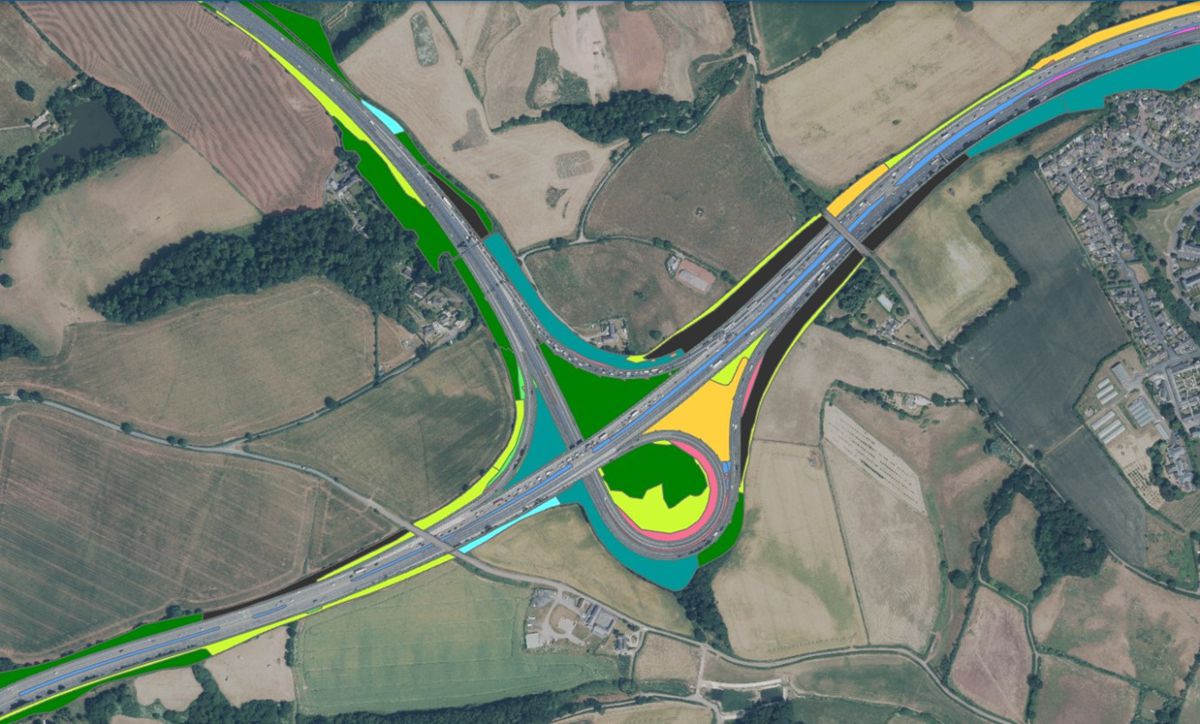
🌍 Innovative Mapping Project Enhances Biodiversity Conservation 🗺️
🔍 Discover the groundbreaking mapping project aimed at enhancing biodiversity conservation. This initiative uses advanced mapping technologies to monitor and protect diverse ecosystems, promoting sustainable development and environmental stewardship. 🌟🔧
🔗 Read the full article on Highways Today: highways.today/2024/06/08/ma…
#ConstructionNews #HighwaysToday #Biodiversity #MappingProject #Conservation #Sustainability #Innovation #TechInConservation #EnvironmentalStewardship
4
3
29

28 Apr 2024
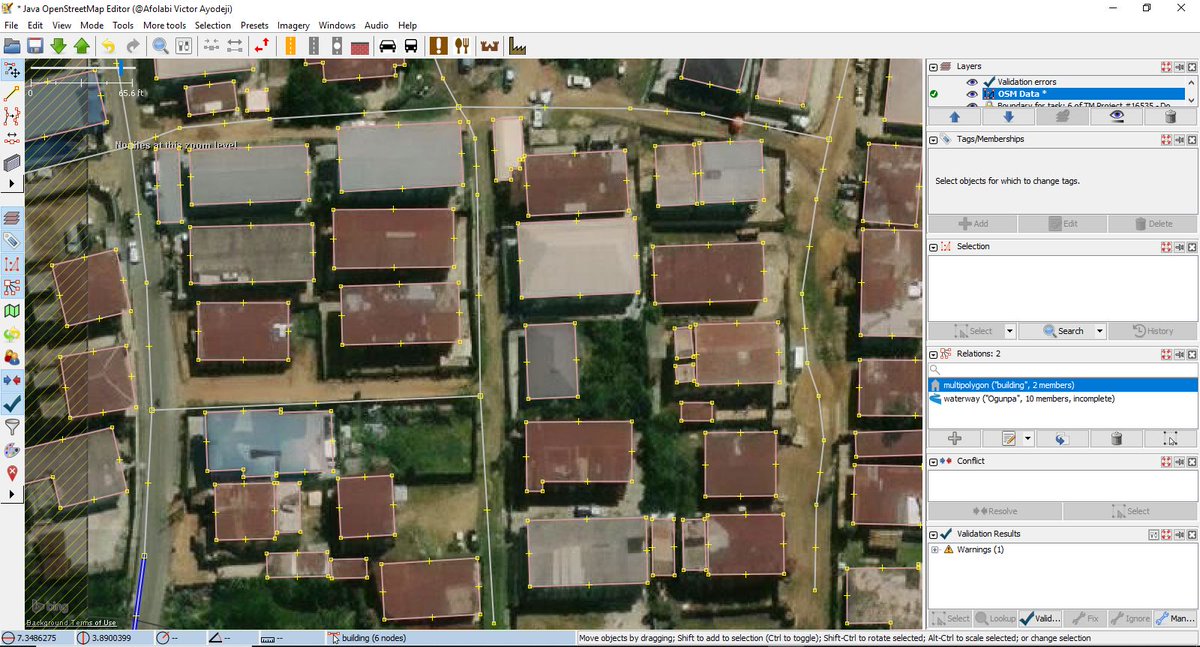
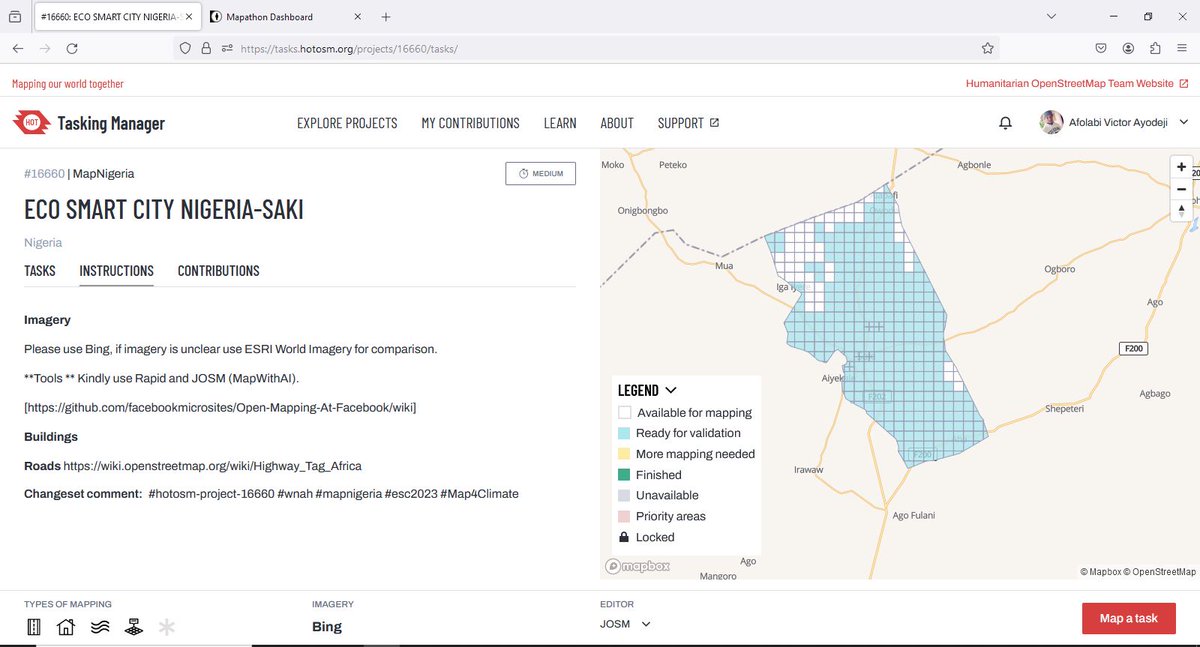
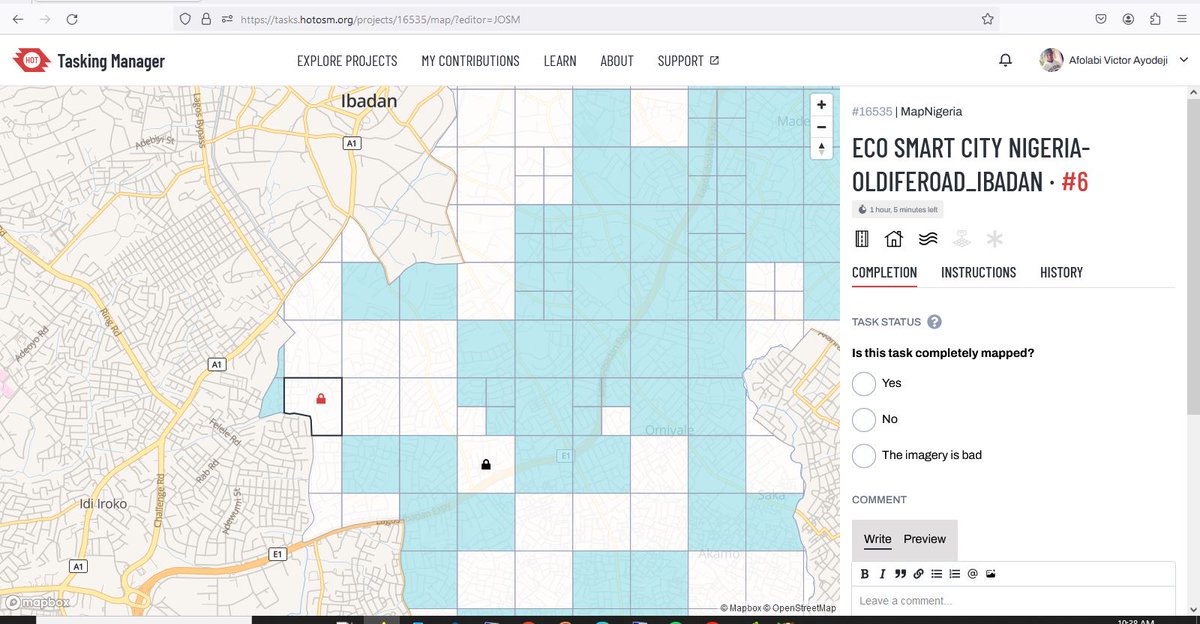
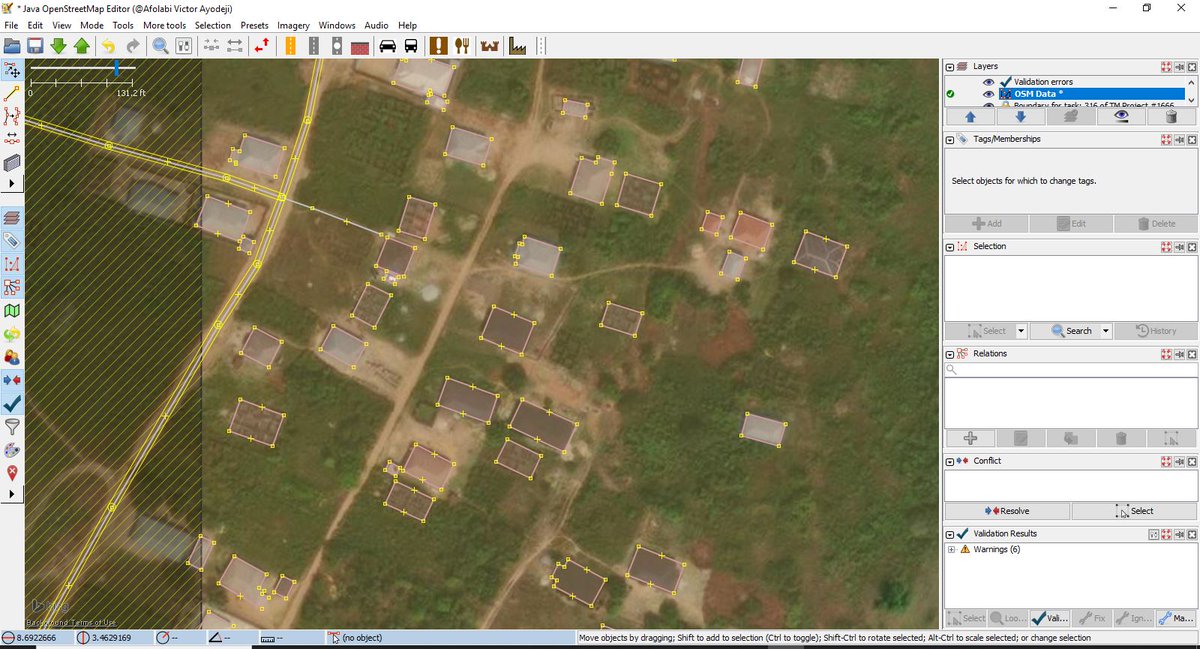
Quality Time, Quality Data, Quality Analysis, Quality life
#esc2023Saki #mappingproject"@OSMNigeria, @Dantaria,
#esc2023, #ESC2023OldifeRoad
#ESC2023Saki #MapNigeria @hotosm, #wnah
@openmapping_wna
4
11
128

27 Apr 2024
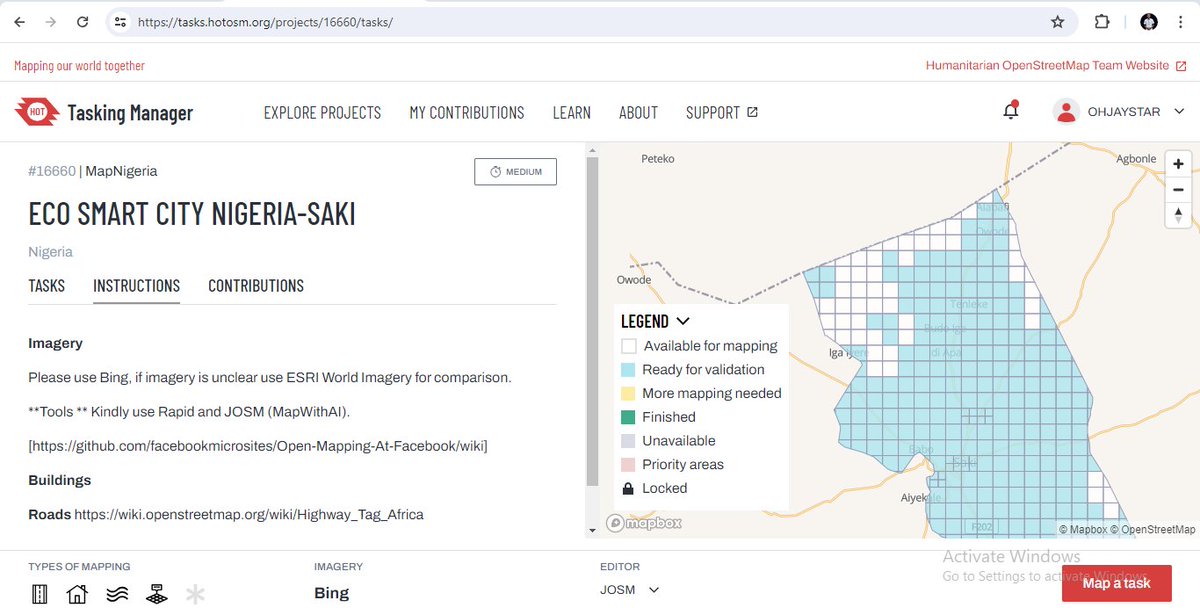
There is no better time to map than now! 🌏🌎🌍
#esc2023Iseyin #mappingproject"@OSMNigeria, @Dantaria,
#esc2023, #ESC2023Iseyin
#ESC2023Ogbomosho #MapNigeria @hotosm, #wnah
@openmapping_wna
2
5
91
20 Apr 2024
Let's make the world a better place in the best way that we can. 🌍🌎🌏
#esc2023Iseyin #mappingproject"@OSMNigeria, @Dantaria,
#esc2023, #ESC2023Iseyin
#ESC2023Ogbomosho #MapNigeria @hotosm, #wnah
@openmapping_wna
1
3
42
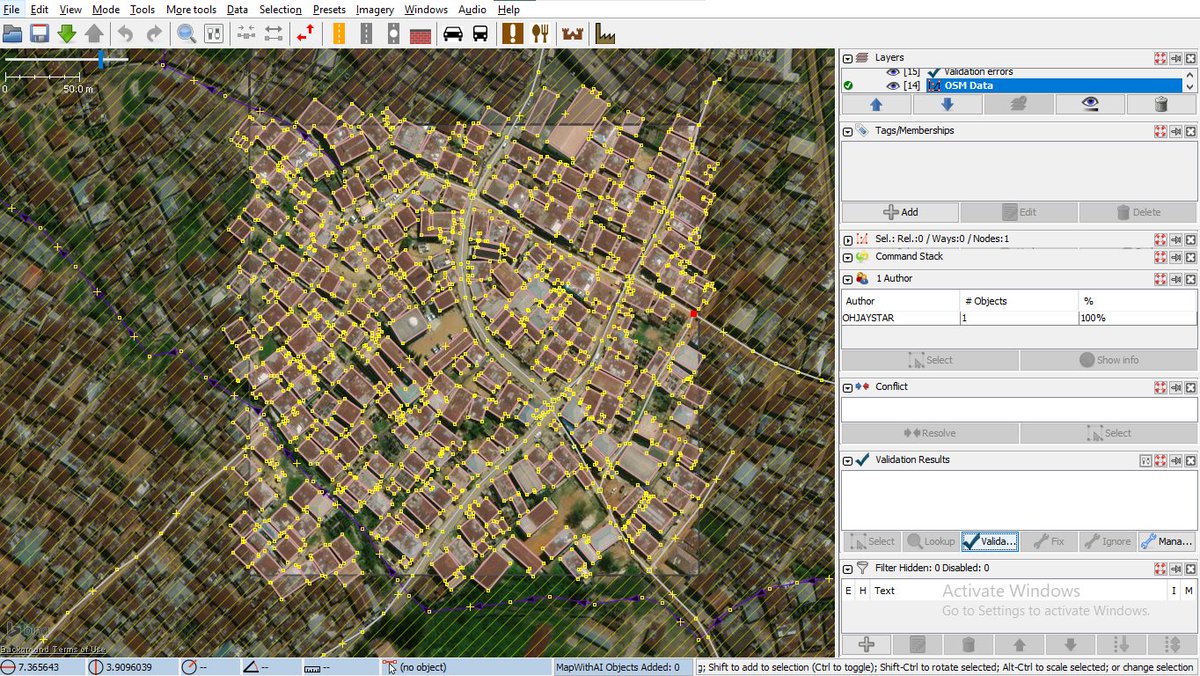
13 Apr 2024
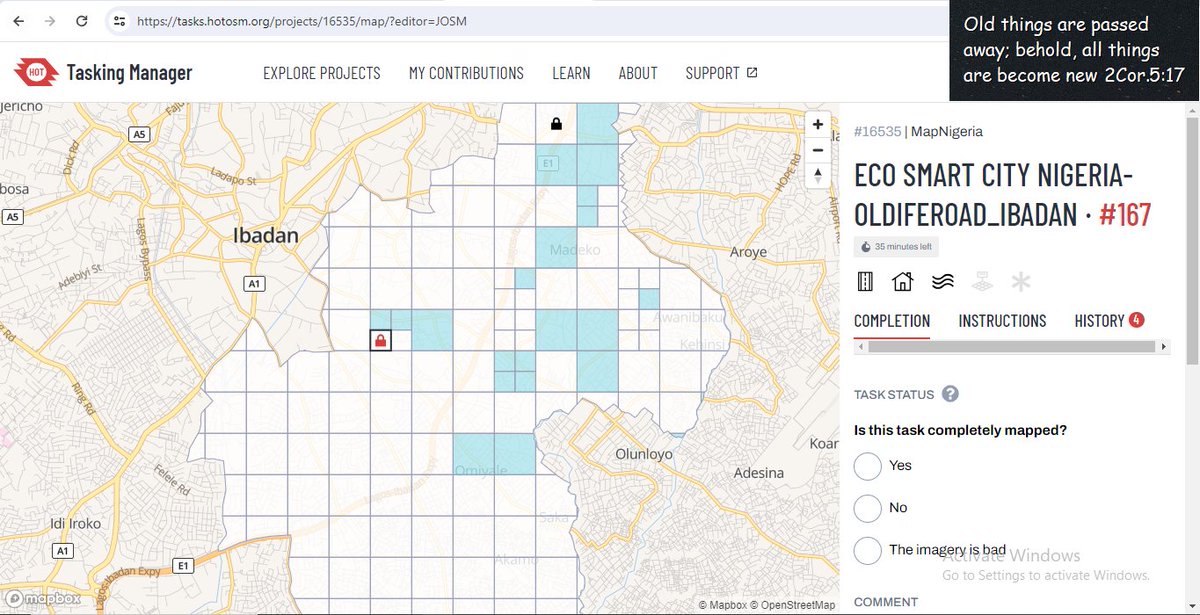
Transforming cities into eco-smart hubs, where innovation meets sustainability for a brighter urban future. 🏙️♻️ #EcoSmartCities #esc2023Iseyin #mappingproject"@OSMNigeria, @Dantaria,
#esc2023, #ESC2023Iseyin
#ESC2023Ogbomosho #MapNigeria @hotosm, #wnah
@openmapping_wna
1
9
119
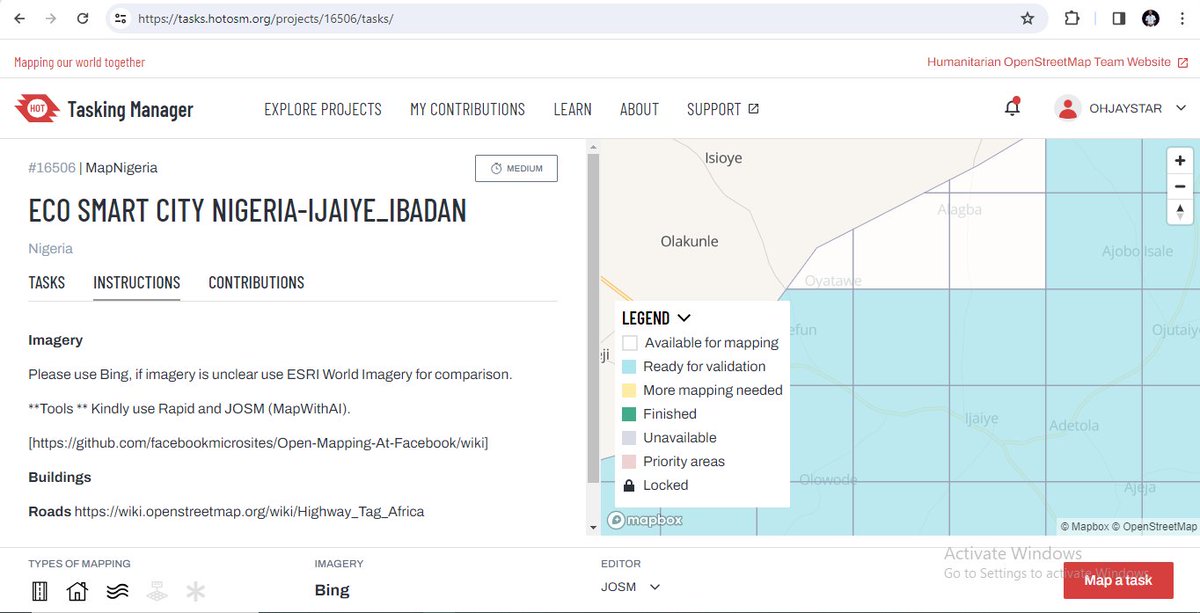
6 Apr 2024
I am always more than grateful to be part of a team that is particular about stimulating sustainable urban growth, which benefits current and forthcoming generations. 🌏❤️
#esc2023Iseyin #mappingproject @OSMNigeria, @Dantaria, #esc2023, #ESC2023Iseyin
#ESC2023Ogbomosho
1
1
8
118
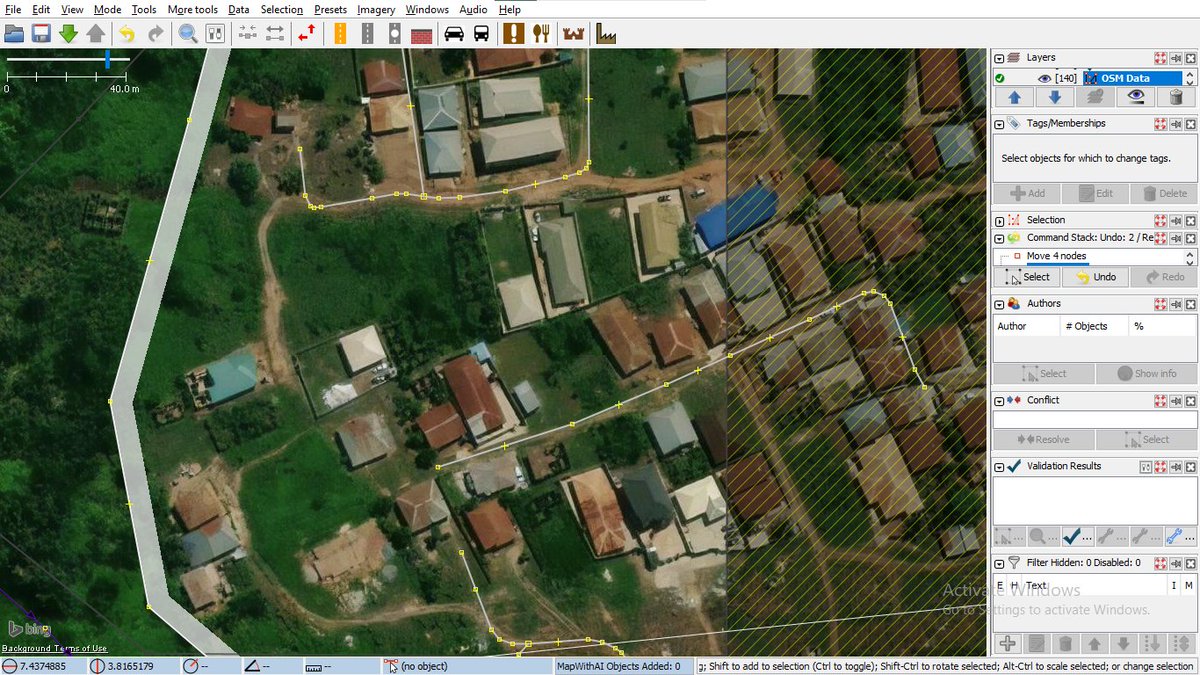
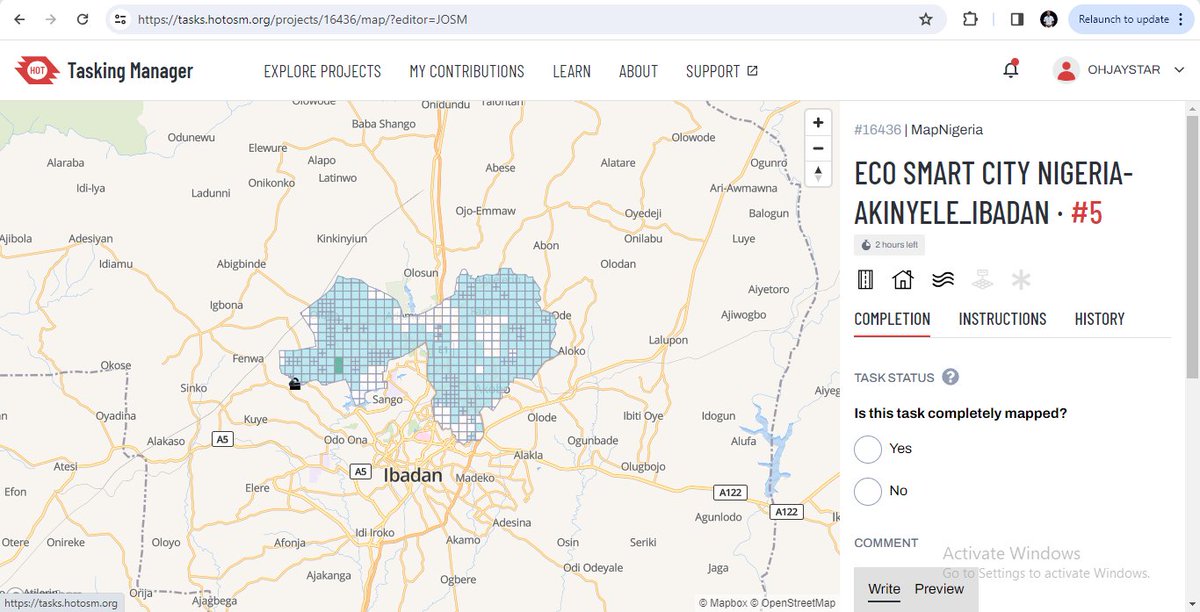
30 Mar 2024
It's Holy Saturday and we are still mapping to address the challenges related to sustainability. 🌍🌎🌏
#esc2023Iseyin #mappingproject"@OSMNigeria, @Dantaria,
#esc2023, #ESC2023Iseyin
#ESC2023Ogbomosho #MapNigeria @hotosm, #wnah
@openmapping_wna
6
57

17 Feb 2024
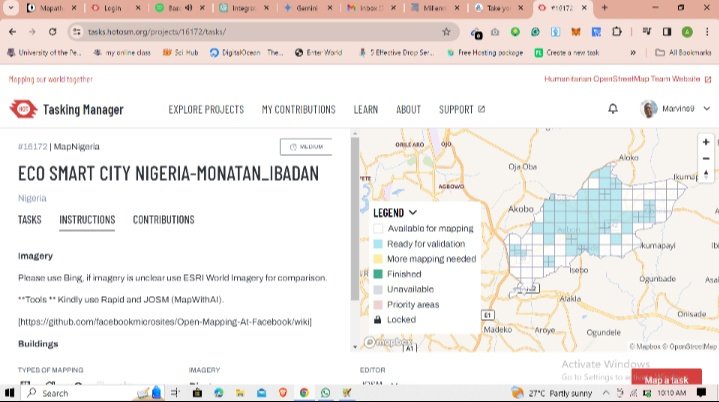
Another week to contribute to the #EcoSmartCities project with amazing teammstes! Together, we're mapping out a more sustainable future! 🗺️🌿.
#esc2023Iseyin #mappingproject #esc2023, #ESC2023Iseyin
#ESC2023Ogbomosho #MapNigeria #wnah
@openmapping_wna
4
34

16 Feb 2024
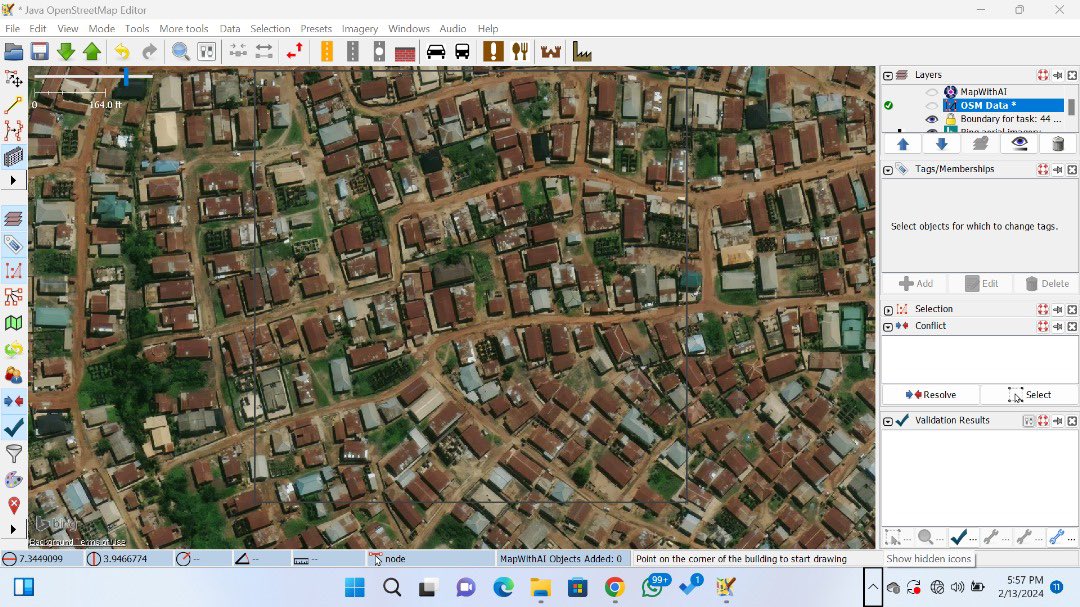
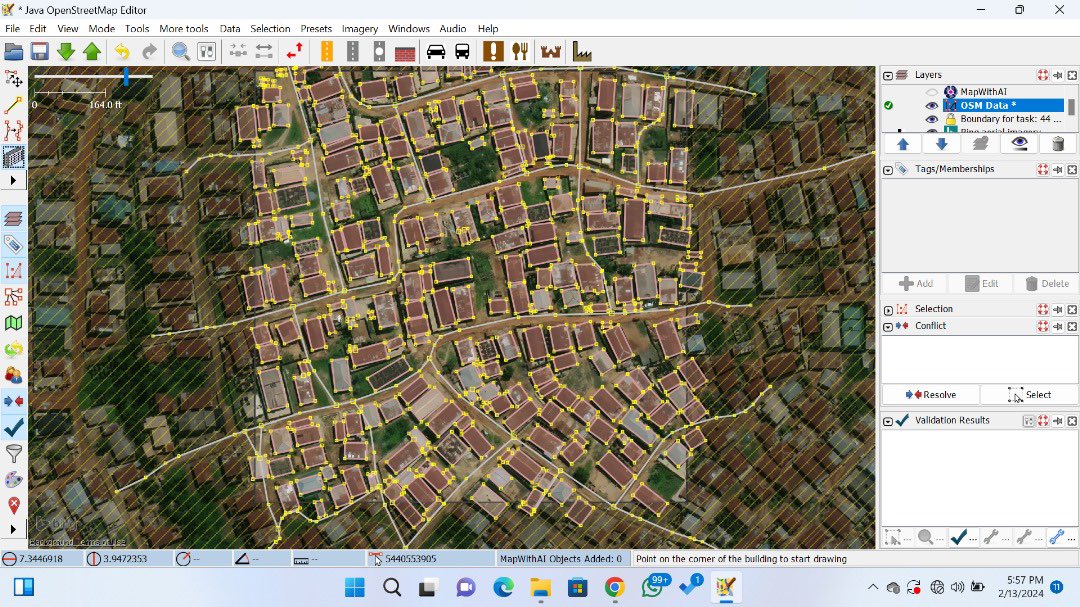
Spot the difference!
Reply with your guesses and learn more about the mapping project
#esc2023Iseyin #mappingproject"@OSMNigeria, @Dantaria,
#esc2023, #ESC2023Iseyin
#ESC2023Ogbomosho #MapNigeria @hotosm, #wnah
@openmapping_wna
1
17
133
9 Feb 2024
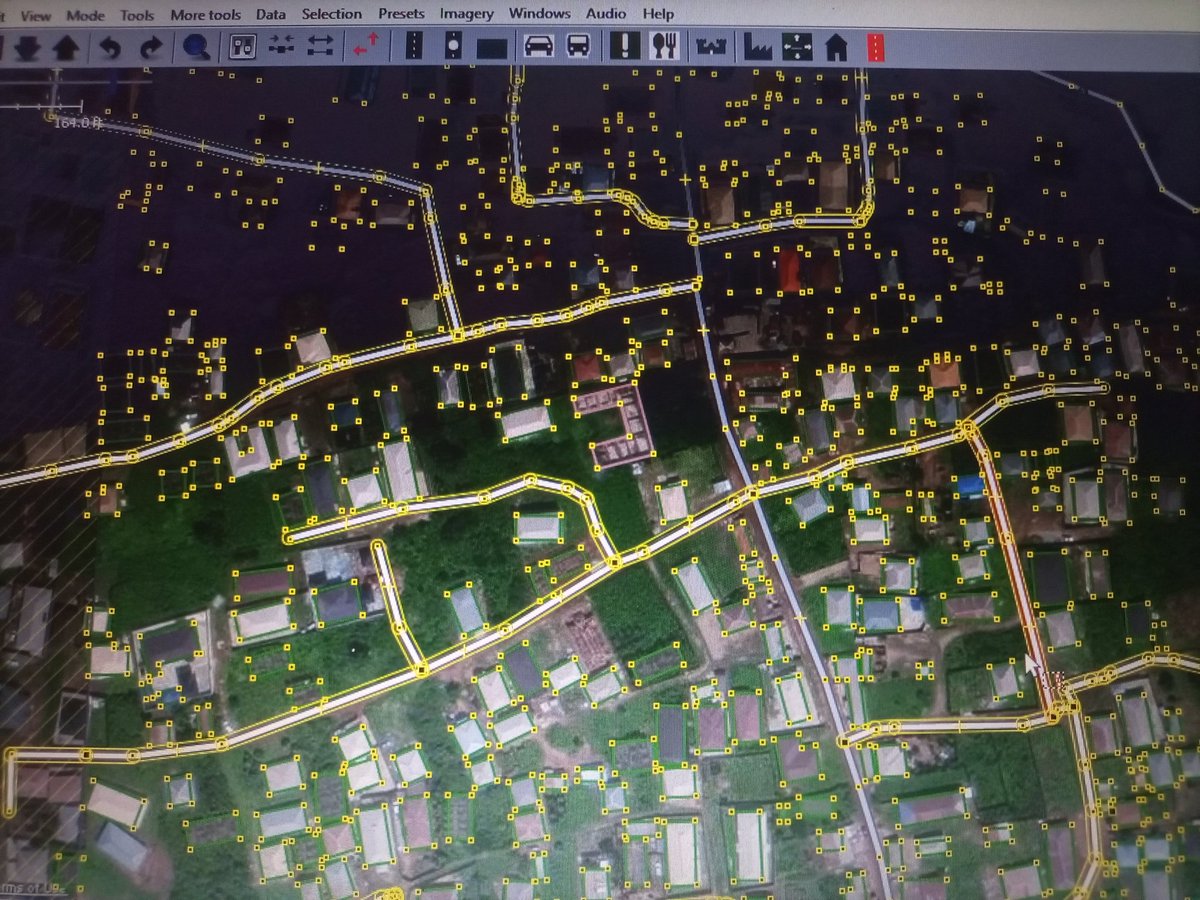
It's with pleasure contributing to the #EcoSmartCities project with amazing teammstes! Together, we're mapping out a more sustainable future! 🗺️🌿.
#esc2023Iseyin #mappingproject #esc2023, #ESC2023Iseyin
#ESC2023Ogbomosho #MapNigeria #wnah
@openmapping_wna
2
9
107
9 Feb 2024
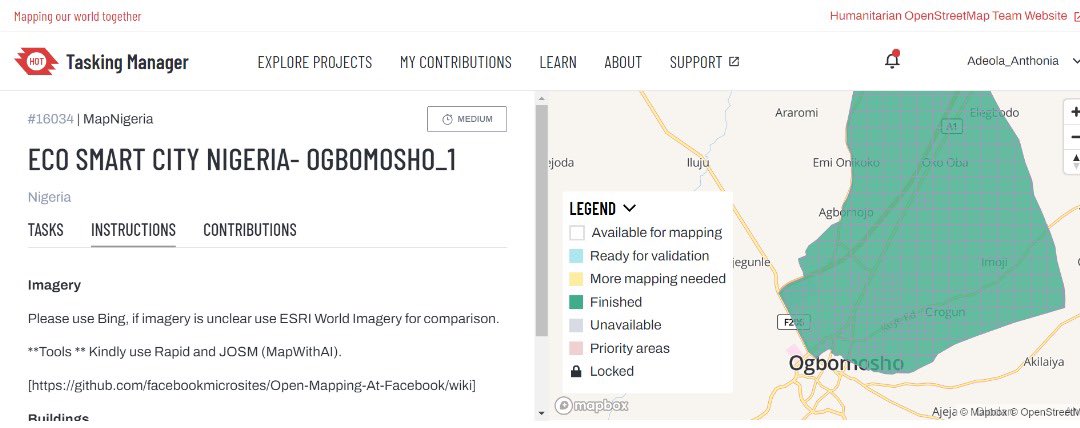
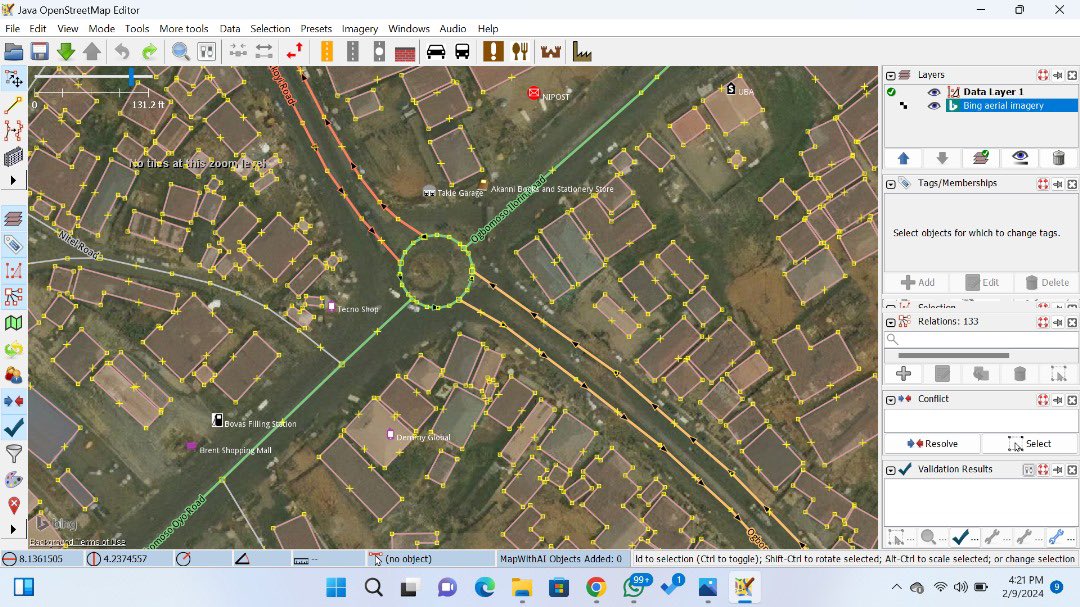
Joined the #MapNigeria team in #EcoSmartCities project to create a more ecological, smarter and sustainable ecosystems in Nigeria by improving the buildings & roads
#mappingproject @OSMNigeria, @Dantaria, #esc2023, #ESC2023Iseyin
#ESC2023Ogbomosho @hotosm, #wnah
@openmapping_wna
1
19
187
9 Feb 2024
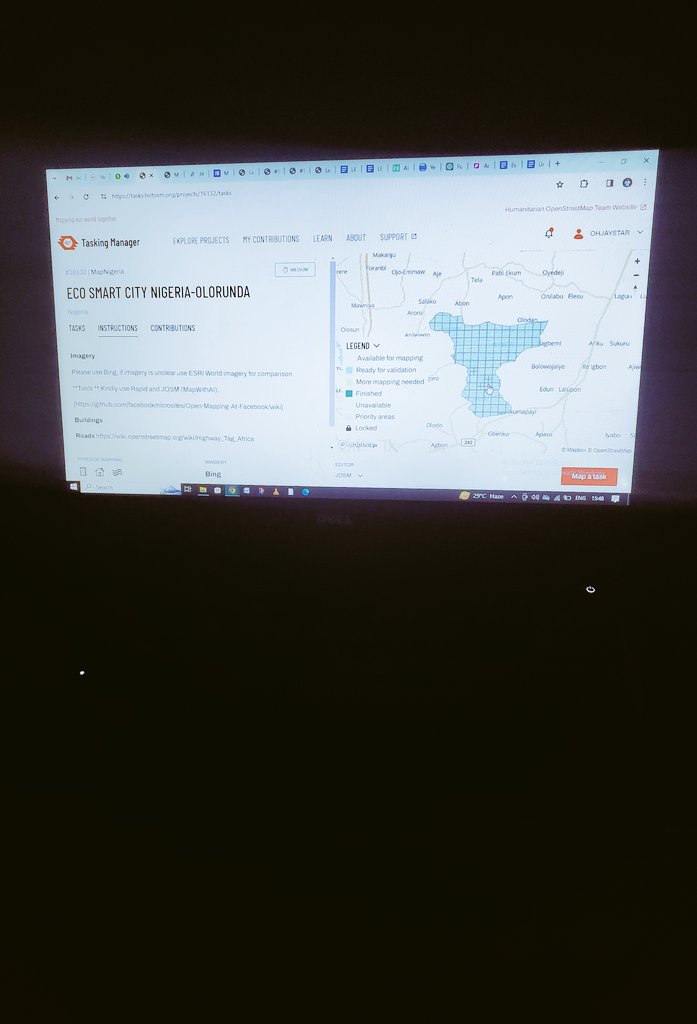
Proud to be contributing to the #EcoSmartCities project alongside an amazing team of individuals! Together, we're mapping out a more sustainable future! 🗺️🌿.
#esc2023Iseyin #mappingproject #esc2023, #ESC2023Iseyin
#ESC2023Ogbomosho #MapNigeria #wnah
@openmapping_wna
2
3
13
162

Today in Reykjavik, Board Member @sharon_nazarian testified on behalf of ADL to urge an Icelandic court to shut down the antisemitic #MappingProject, which is now ramping up its calls in support of Hamas & continues to put Jewish communities in danger: adl.org/resources/press-rele…
13
28
8,392

27 Jul 2023
🔴 Meta, Microsoft, and Amazon collaborate on an open-source mapping project
#Meta #Microsoft #amazon
#opensource #mappingproject
#operturemapsfoundation
founders40.com/meta-microsof…
7
26

29 Jun 2023
📢 Exciting news! AllTerra India and NeoGeo won the largest-ever drone-based Land Parcel Mapping contract in Karnataka, covering 68,000 sq. km. Proud to partner with Aereo for this historic project! 🌍🛰️ #GeospatialMapping #Karnataka #allterrain #MappingProject #DroneTechnology
2
29

6 Jun 2023
Work in progress 👷🔥✨ Glimpse before flight ✈️
#uttarakhand #surveyors #dronesurvey #mapping #mappingproject #surveyandmapping #indiasfastestmappingcompany
#dronesurveyor #birdscale
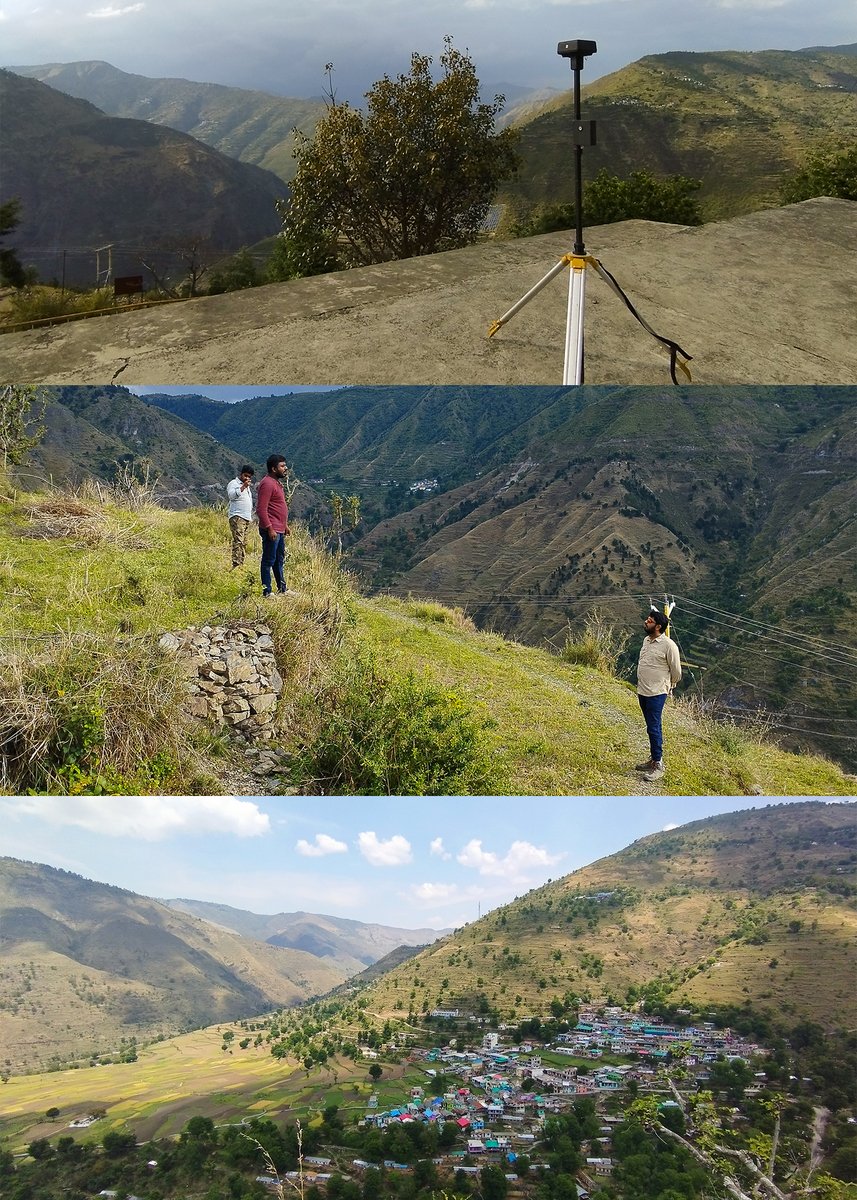
4
52

5 Mar 2023
The #Iranian regime may be behind the shockingly antisemitic, #BDS-affiliated "#MappingProject", which aims to 'dismantle' and 'disrupt' most of Boston's #Jewish community and various Jewish and #Israel-supporting organizations in Massachusetts.
For more: jpost.com/diaspora/antisemit…
6
21
31
3,642

14 Jan 2023
Why after 7 months has not every individual involved in any way with Boston #MappingProject been charged in federal court?
Is Auschwitz okay again?
1
6
19
595