
MarsChain is A PoC Value-Storage Layer 1 Where Burning equals Mining
In an era flooded with fake APY and airdrop farming games,
we return to one simple truth:
Burning is the only source of computing power. @MarsChainCN
🧵
18
15
93


🚀MarsChain Daily Class:🏆 From the NBA Court to the Crypto Frontier: Champions Are Born Today!
Driven by our highly successful Node Event, MarsChain’s total network hashrate is on the verge of breaking 10 Trillion, hitting a massive new milestone! 🚀
Huge congrats to the New York Knicks on winning the NBA Championship today! 🏆 Just like the Knicks, MarsChain is out here chasing greatness—and one day soon, we’ll claim our own championship crown. 👑
#MarsChain #Knicks #NBAFinals #Web3 #Crypto #Milestone


41

🚨 Used #Mooathon, #M3DAO, #M3Mars, #MarsVerse, #MarsProtocol, or #MarsChain and your funds are gone?
You may have been scammed — but recovery is still possible.
📩 DM now for support.
#CryptoScam #CryptoRecovery #EXANTB #Nebumine #SwfcNrho #GoldFinanceLtdScam

21
Bilal Solana retweeted

Jun 9
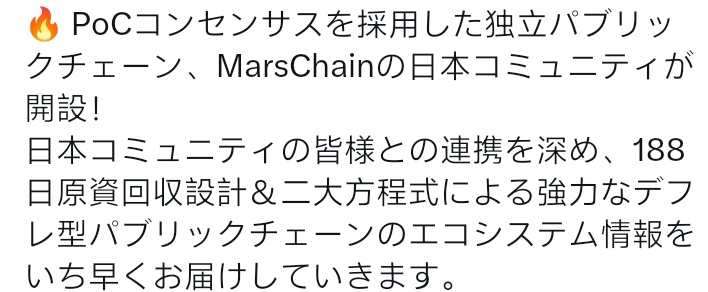
🔥 PoCコンセンサスを採用した独立パブリックチェーン、MarsChainの日本コミュニティが開設!
日本コミュニティの皆様との連携を深め、188日原資回収設計&二大方程式による強力なデフレ型パブリックチェーンのエコシステム情報をいち早くお届けしていきます。
🚀【TG参加でエアドロッププレゼント中】👇
✈️ t.me/MarsChain5
🌐 marschain.net | メイン: @MarsChainCN
#MarsChain #パブリックチェーン #Web3 #Giveaway
2
2
6
1,664
Foxen 🦊 Free OF retweeted

Jun 12
GG's MarsChain, i really did not think i'll make it
1
1
52
Lulu💜 retweeted

Jun 5
“What if a blockchain wasn’t trying to become the next Ethereum?”
That question is what made me pay attention to @MarsChainCN ,@MarsChainCS
While most projects focus on building apps and ecosystems, MarsChain is experimenting with something different: a model built around contribution, scarcity, and token burns.
The deeper I dug into the mechanics, the more I realized this isn’t just another blockchain trying to follow the same playbook.
It’s an interesting experiment in game theory, incentives, and economic design.
I broke it down in this video. Curious to hear your thoughts after watching 👇
24
7
80
4,780
chaiyao.io retweeted

Jun 12
🤝 MarsChain x Chaiyao
Culture deserves a place on-chain.
Excited to partner with @cbid_io as we explore how RWAs can bring real-world cultural assets into the digital economy.
#MarsChain #RWA #Web3
1
3
73
UTDNero retweeted

Jun 3
MarsChain: Redefining Mining Through Contribution
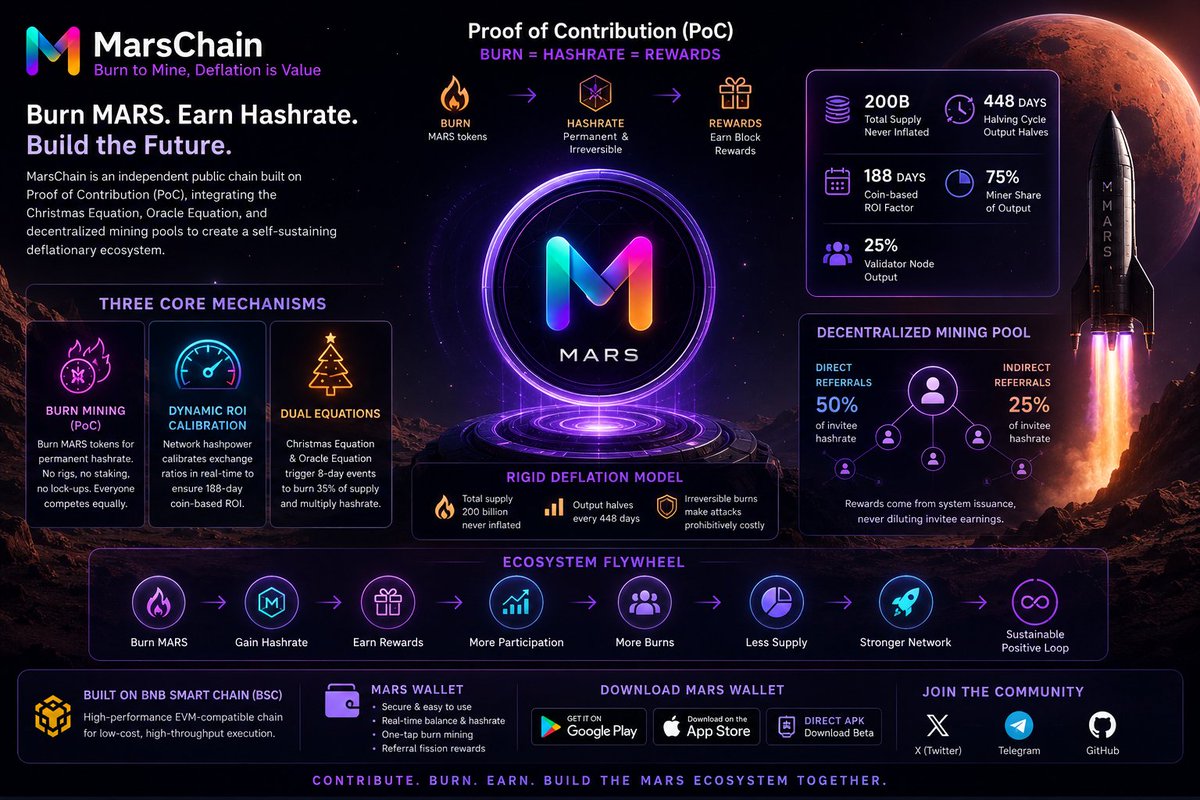
The blockchain industry has long relied on either expensive mining hardware or token staking to secure networks and distribute rewards. MarsChain introduces a different approach through its Proof of Contribution (PoC) consensus model, where users burn tokens to obtain permanent hashrate and participate in network rewards.
At its core, MarsChain is built around a simple principle:
> Burn = Hashrate = Rewards
Instead of purchasing mining equipment or locking assets in staking contracts, users permanently burn MARS tokens to gain hashrate, which represents their mining power and reward-generating capacity within the ecosystem.
A Deflation-First Economy
Unlike many crypto projects that continuously inflate supply, MarsChain adopts a hard deflationary model.
Total supply is capped at 200 billion MARS
No additional inflation can occur
Network emissions halve every 448 days
Burned tokens are permanently removed from circulation
This structure is designed to reduce selling pressure while increasing scarcity as network participation grows.
The Proof of Contribution (PoC) Mechanism
MarsChain's PoC system converts burned MARS into permanent hashrate. This hashrate grants participants the right to earn block rewards without requiring specialized hardware, staking lockups, or large upfront infrastructure investments.
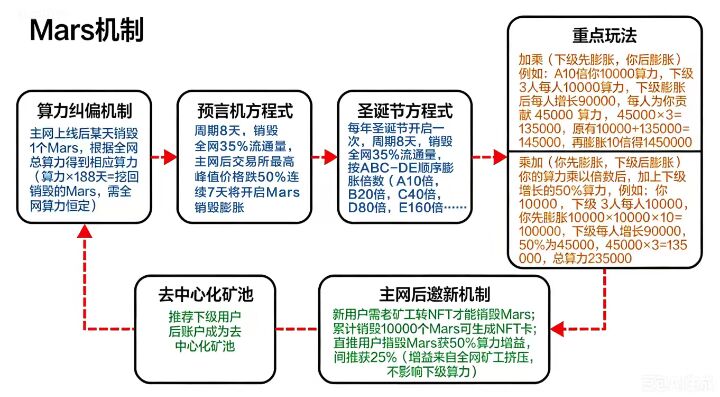
The protocol dynamically adjusts network parameters to target a 188-day coin-based ROI cycle, aiming to maintain fairness between early and new participants while preventing long-term monopolization of mining power.
The Dual Equation System
One of MarsChain's most unique features is its dual-equation economic model.
The Christmas Equation activates annually during Christmas, launching an 8-day event where 35% of circulating supply is burned and participants receive exponentially increasing hashrate multipliers.
The Oracle Equation activates when the token price falls 50% from its all-time high for seven consecutive days. Similar to the Christmas Equation, it triggers a burn event and hashrate expansion cycle designed to strengthen scarcity and stabilize network incentives.
Together, these mechanisms act as automated deflation tools that respond to both scheduled and market-driven conditions.
Decentralized Mining Pools
MarsChain also incorporates a referral-powered mining ecosystem.
Direct referrals earn 50% of invitees' hashrate growth.
Indirect referrals earn 25% of second-level invitees' growth.
According to the project, these rewards come from system issuance rather than reducing the earnings of referred users, creating a network effect that encourages ecosystem expansion.
Security Through Economics
Security is another area where MarsChain takes a different approach. Since hashrate is acquired through irreversible token burns, acquiring enough power to perform a 51% attack would require destroying an enormous amount of MARS tokens. This significantly increases the economic cost of attacking the network while simultaneously reducing circulating supply.
The MarsChain Flywheel
The ecosystem is designed around a self-reinforcing cycle:
Burn MARS → Gain Hashrate → Earn Rewards → Increase Participation → Burn More MARS → Reduce Supply → Strengthen Network Value
As more participants join, the combination of burn mining, halving schedules, referral growth, and dual-equation deflation aims to create a long-term positive feedback loop.
Final Thoughts
MarsChain is more than just another blockchain project. It combines Proof of Contribution mining, permanent hashrate ownership, fixed supply tokenomics, dynamic ROI calibration, and dual-equation deflation into a unique economic framework.
Its vision is to build a sustainable ecosystem where value is generated through contribution rather than inflation, creating a blockchain economy centered on scarcity, participation, and long-term network growth.
#MarsChain
48
24
93
5,851

Jun 11
The matrix of wealth is being rewritten. 🧠 While others chase volatile charts, Mars believers are locking in stable growth through our unique 188-day mining cycle. Your content, your nodes, your future. ⚡
👇 Follow us & Contact @MarsChainCS to claim your airdrop!
#MarsChain #Web3 #Mining

13
8
25
908

Jun 11
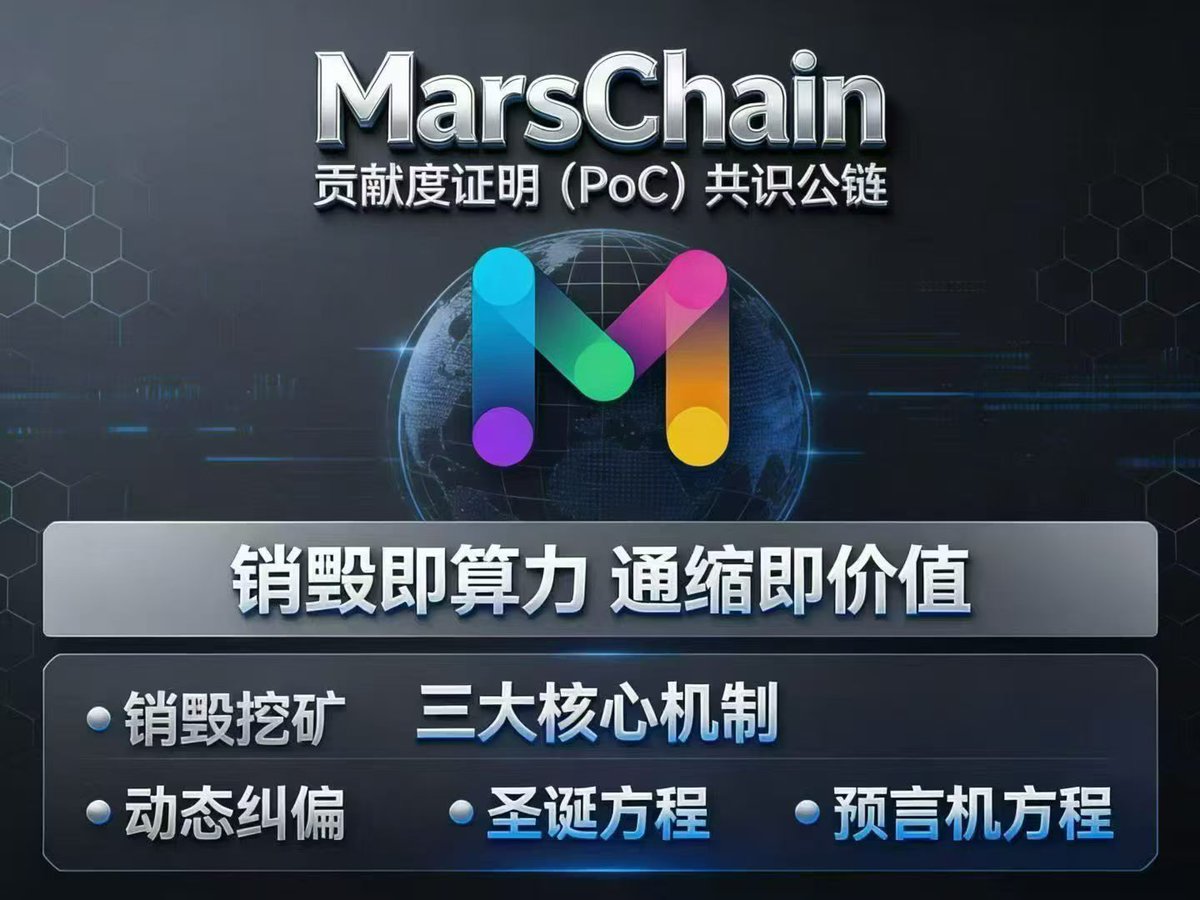
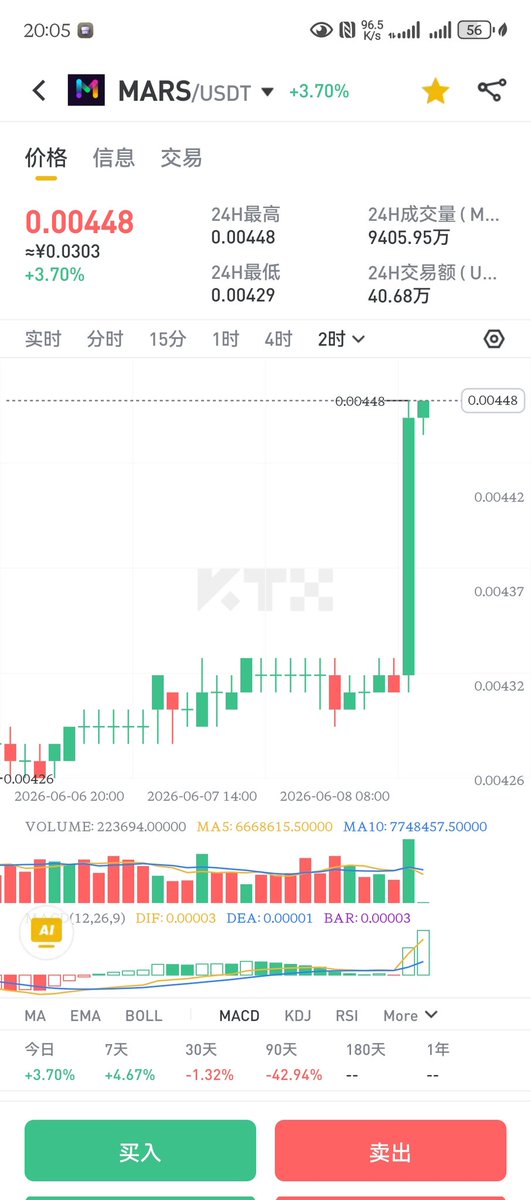
MarsChain 是一条以贡献度证明(PoC)为共识基础,融合圣诞方程、预言机方程及去中心化矿池的独立公链。通过双方程刚性通缩构建价值闭环,打造去中心化的新兴数字货币自治形态。
Mars官网: marschain.net
Mars区块浏览器: explorer.marschain.net

29
Defann🌊RIVER retweeted

Jun 10
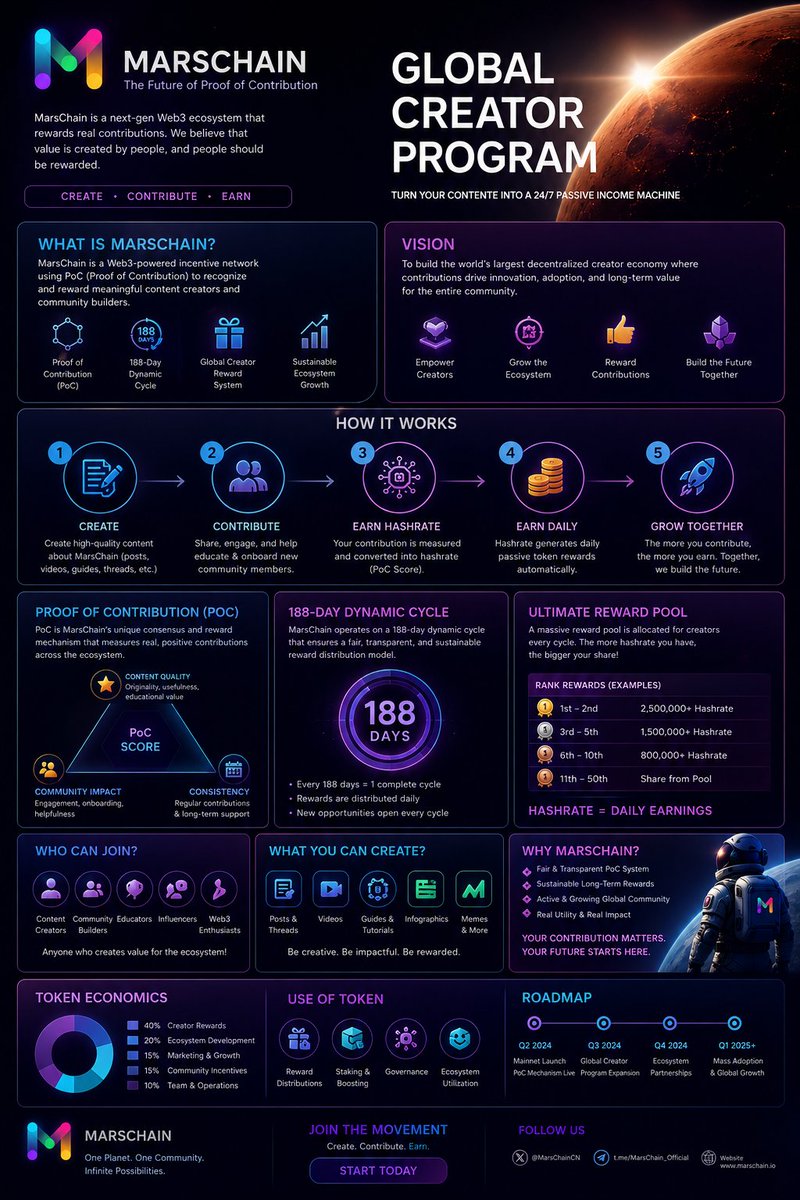
Content is no longer just engagement—it's contribution. Every post, insight, and share helps expand the MarsChain ecosystem.
Join the Global Creator Program and turn impact into rewards. @MarsChainCN @MarsChainCS
4
2
3
41

Jun 10
MarsChain Japan Community is launched! More language regions are coming. Want to lead a community for your country? DM us! 📥
1
22

Jun 10

29
