
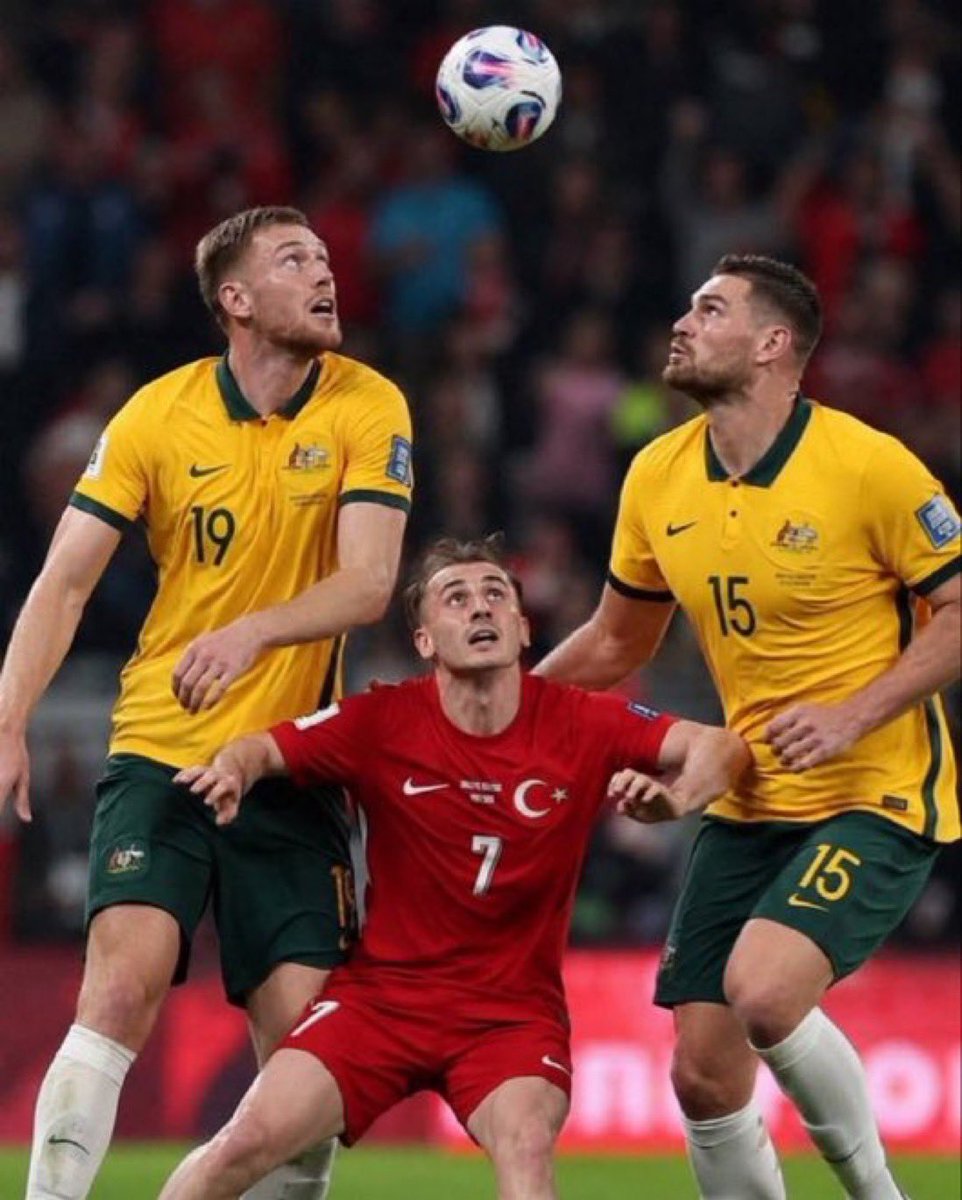
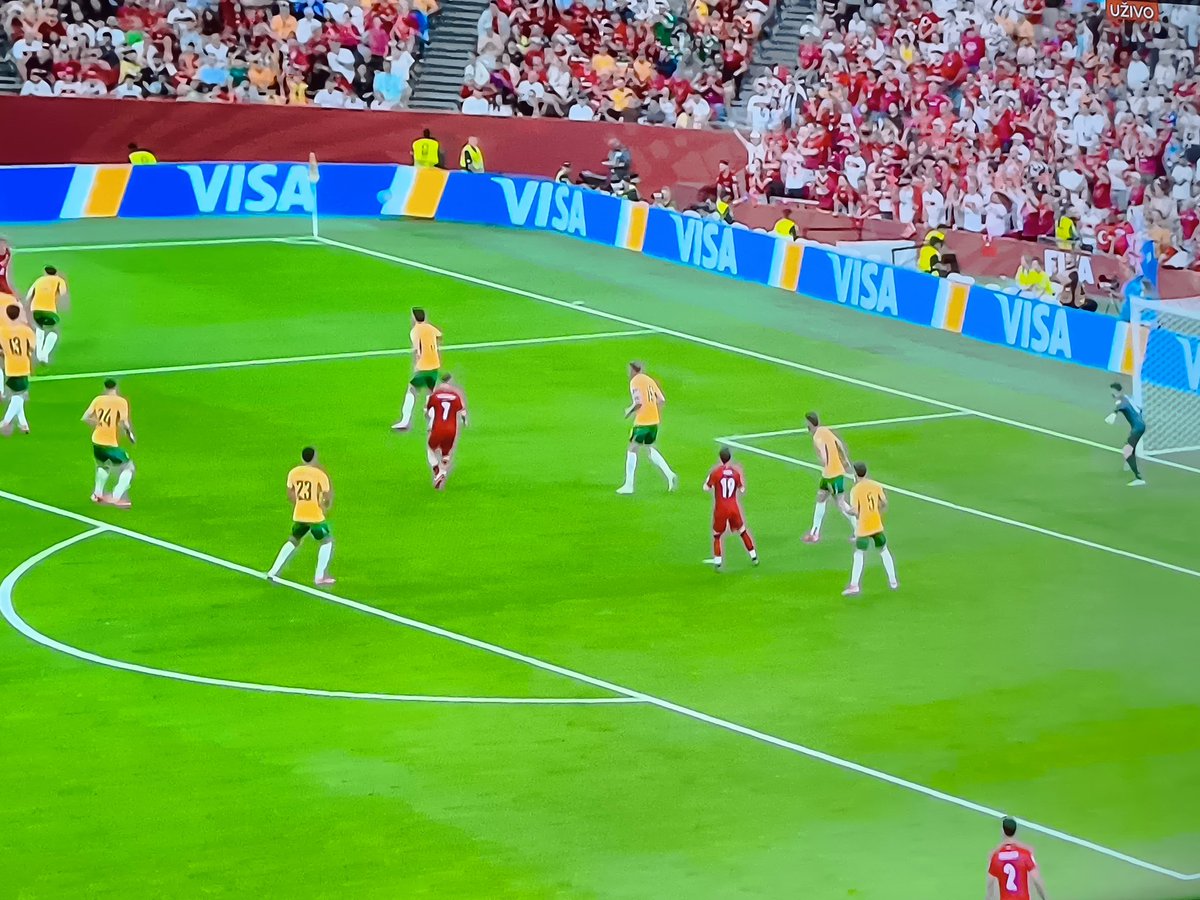
Watching Türkiye vs. Australia, I was genuinely impressed by Australia’s tactical discipline. Their 2:0 victory was built on a clear defensive structure, deep compactness, and a perfect understanding of their physical strengths.
What surprised me, however, was Türkiye’s lack of adaptation and the sterile nature of their possession. They repeatedly attempted to progress through wide areas, relying on wing play and crosses against an opponent that was clearly prepared for exactly that scenario.
Australia deliberately conceded the flanks, confident in their superiority in physical duels and aerial situations. As a result, Türkiye spent much of the match attacking where Australia was strongest. Despite controlling possession, they rarely managed to create meaningful instability within Australia’s defensive block. The possession statistics suggested control, but the game itself suggested otherwise.
Against a physically dominant low block, the objective should be to manipulate defensive references rather than challenge them directly. I expected to see more central combinations, positional rotations to draw defenders out of shape, and vertical movements designed to exploit spaces behind advancing defenders. Instead, the same attacking pattern was repeated throughout the match with little adjustment.
The most surprising aspect was not that the initial plan failed, but that there appeared to be no effective alternative once it became evident that Australia had neutralized it. At the highest level, coaching is not only about designing a game plan, it is about recognizing when that plan is no longer working and adapting accordingly.
This is not science fiction. It is game reading, opponent analysis, and in-game adaptation, the fundamental responsibilities of elite coaching staffs.
#WorldCup2026 #WorldCup #WC2026 #WC26 #AUSTUR #TacticalAnalysis #FootballTactics #InGameAdaptation #MatchAnalysis #EliteCoaching #Socceroos #BizimUşaklar #Football #Soccer
1
84

🧠 𝐂𝐎𝐍𝐓𝐄𝐗𝐓
• Australia = disciplined, physical side
• Türkiye = more technical, creative
👉 This is a BALANCED game
Not a clear favorite matchup
#WorldCup2026 #MatchAnalysis
1
81

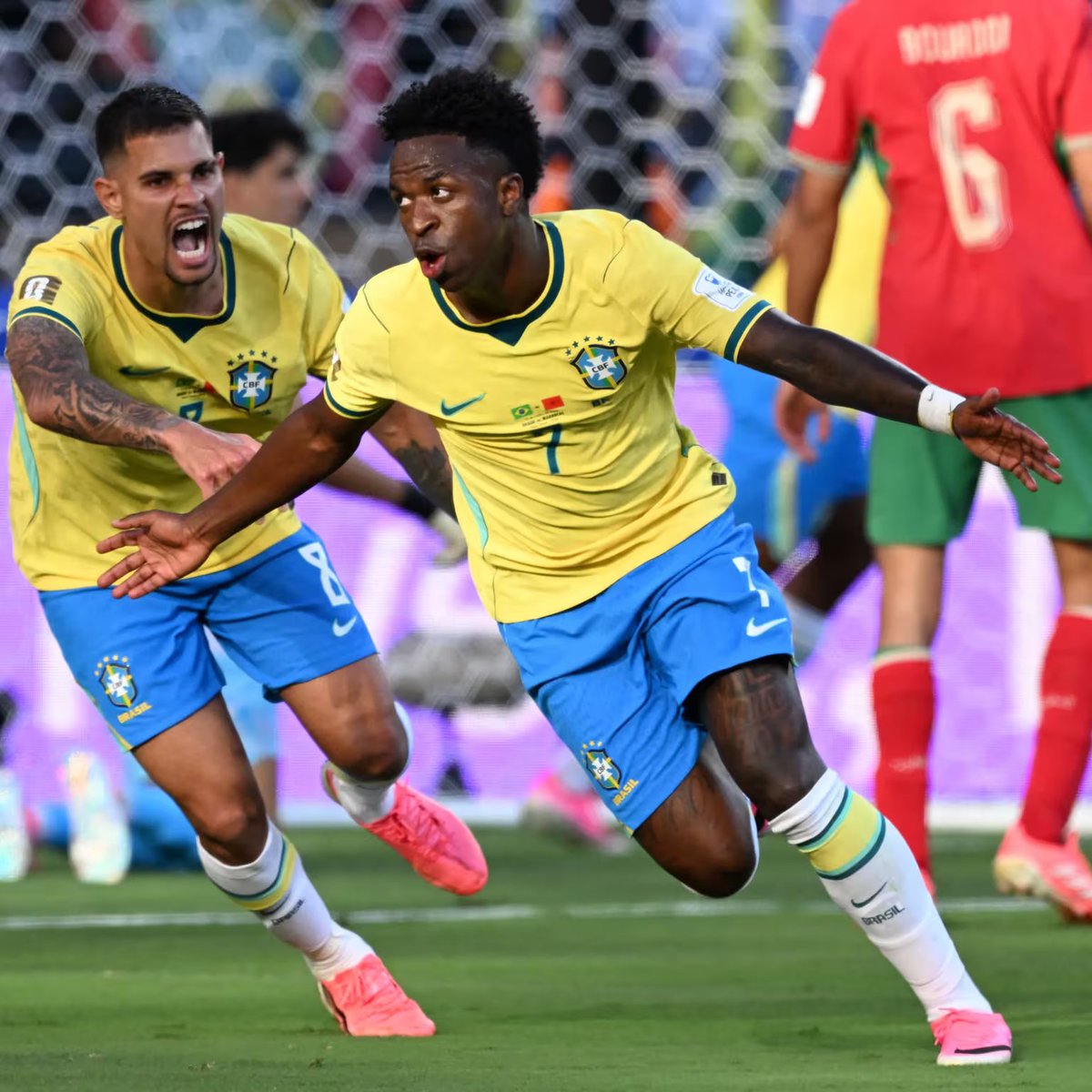
Morocco once again proved they are no easy opponent. A team that has already taken down some of the biggest names on the world stage, they capitalized on their opportunity and struck first in the opening half.
Brazil, however, took full control after the break, dominating possession, dictating the tempo, and creating a series of dangerous chances. Goalkeeper Yassine Bounou was outstanding, producing crucial saves to keep Morocco in the game.
In the end, a draw feels like a fair result. A deserved point for both teams and a solid start to their campaign.
#Brazil #Morocco #WorldCup #BrazilVsMorocco #Selecao #AtlasLions #Football #Soccer #MatchAnalysis #Bono #FootballAnalysis #WorldCup2026 #BrazilNationalTeam #MoroccoNationalTeam #FootballFans #Draw #GroupStage #MatchDay #FIFAWorldCup #SportsAnalysis
1
351

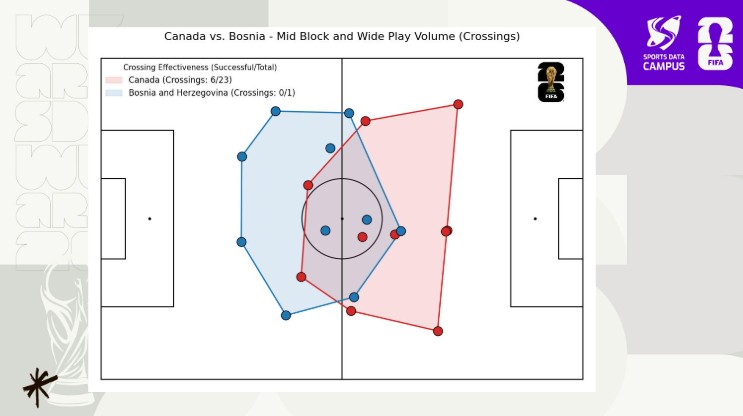
Midfield Control Earns Canada Their First Ever World Cup Point
Full analysis: worldcup2026.sportsdatacampu…
#SportsDataCampus #Mundial2026 #WorldCup2026 #DataAnalytics #MatchAnalysis
1
1
26

⚽🇶🇦 The goal against Qatar was offside — it should not have stood as a penalty decision.
VAR should have intervened more clearly on that call.
#Qatar #Football #VAR #Offside #MatchAnalysis #Refereeing
#قطر #كرة_القدم #تقنية_الفار #تسلل #تحكيم #مباراة
🤷
3
317

Switzerland controlled the game for long spells and created the better chances, but Qatar held on and struck late to earn a 1-1 draw. Football really doesn’t always reward dominance.
#WorldCup #QATSUI #Football #MatchAnalysis
186

12h
podés verlos de manera gratuita, en Sports Data Campus: lnkd.in/dT97HK3i
#SportsDataCampus
hashtag#ElMundialdelosDatos
hashtag#Mundial2026
hashtag#WorldCup2026
hashtag#EstadosUnidos
hashtag#Paraguay
hashtag#DataAnalytics
hashtag#MatchAnalysis
28

Son was expected to be the star, and he delivered magic moments. But it was Hwang In-bum who truly stepped up for the South Korean side, answering the call when other goals didn't materialize. #Football #MatchAnalysis
7

Gamble Responsibly 🛑
#FIFA2026 #WorldCup #Switzerland #Brazil #Morocco #Qatar #BettingTips #MatchAnalysis #V10TradingDesk
12

Jun 13
How to break a compact block: Make the defense choose.
In Czechia vs. South Korea, clever off-the-ball runs dragged the Czech CBs out of position, opening a massive gap.
The runner creates the space. 👇
#worldcup #football #FootballTactics #MatchAnalysis
1
24
147
6,900

Jun 13
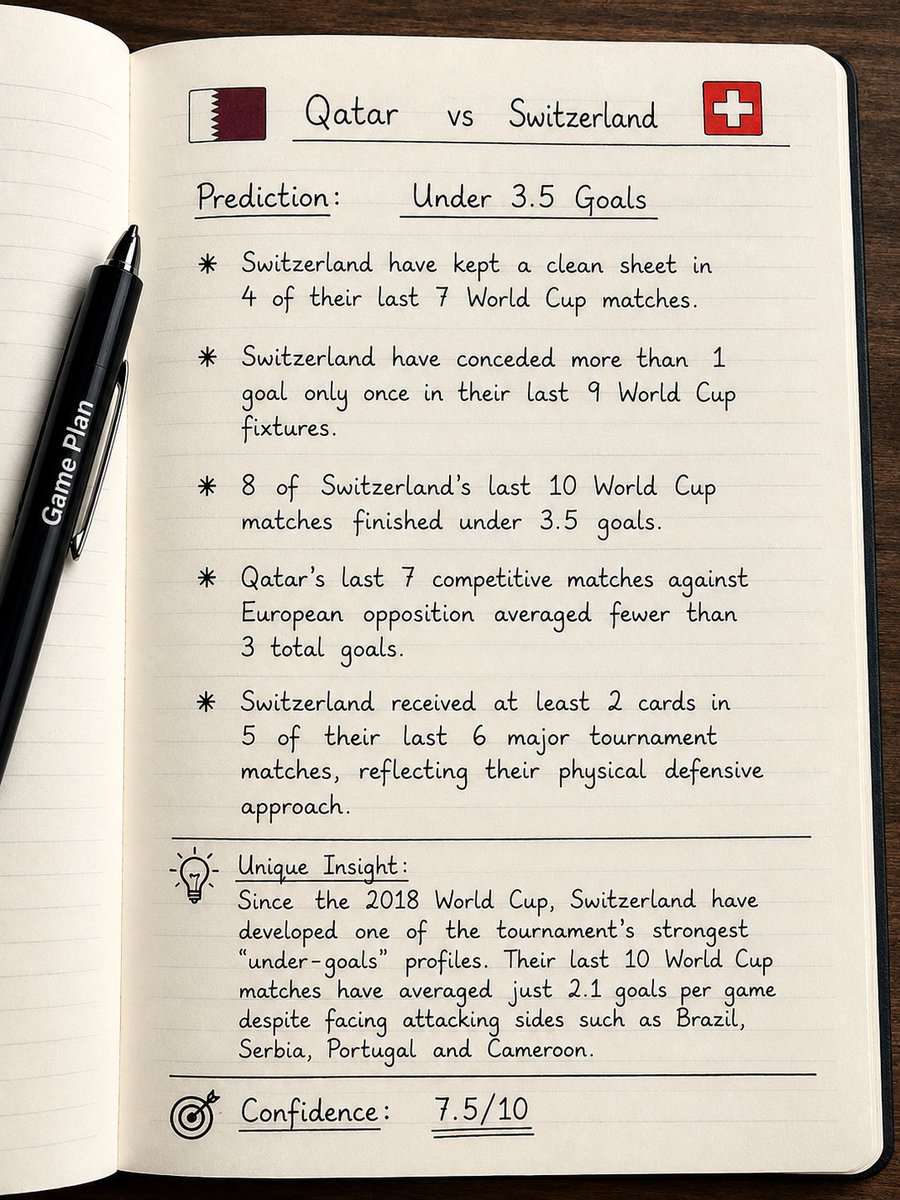
Five key stats.
One prediction.
The data suggests Switzerland's defensive structure and Qatar's cautious approach could produce another low-scoring World Cup encounter.
🎯 Under 3.5 Goals | Confidence: 7.5/10
Full notes below 👇
#WorldCup2026 #FootballStats #MatchAnalysis
244
Jun 13
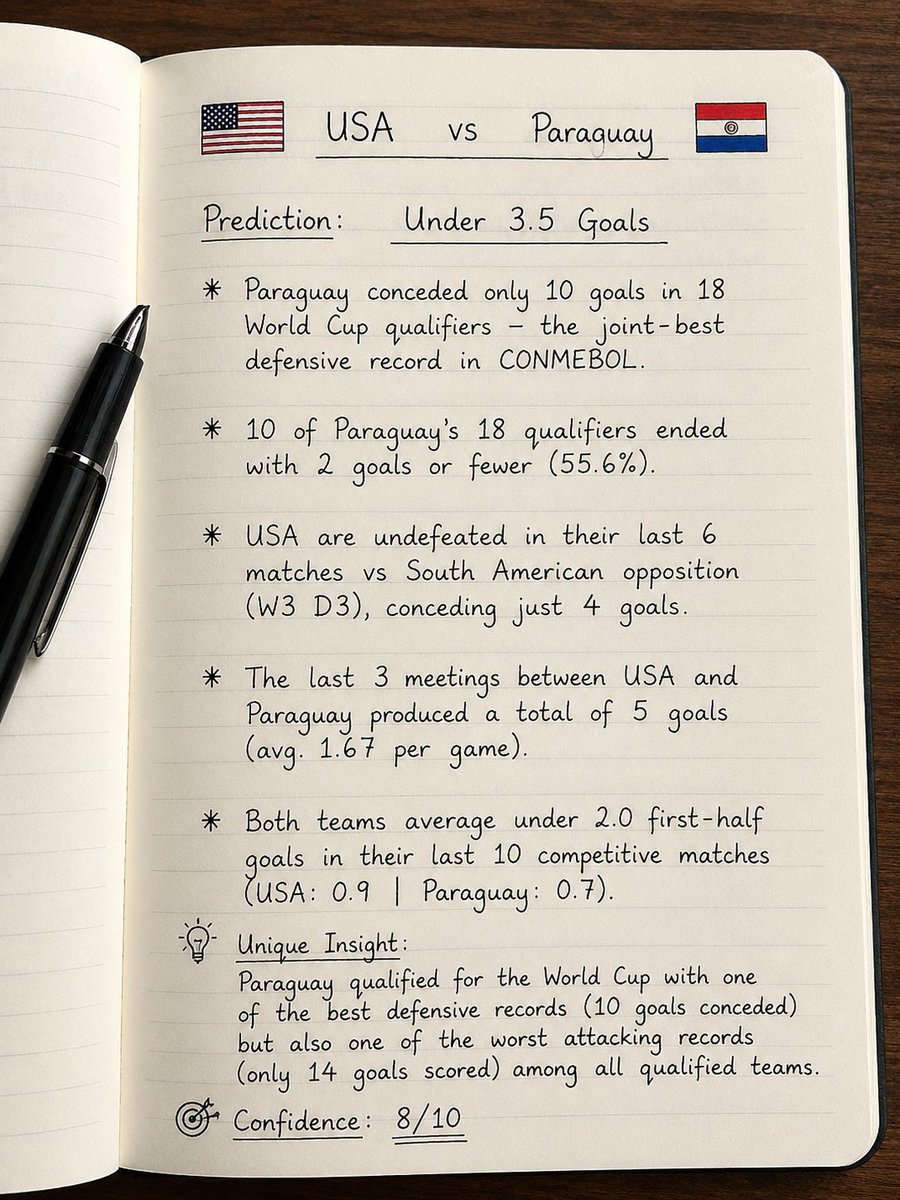
What are your thoughts? Score prediction below 👇
#WorldCup2026 #USAvParaguay #FootballStats #MatchAnalysis #WorldCup
1
1
25

puedes verlos de manera gratuita aquí en Sports Data Campus: lnkd.in/eeuZs8pH #SportsDataCampus #ElMundialdelosDatos #Mundial2026 #WorldCup2026 #CoreaDelSur #RepublicaCheca #DataAnalytics #MatchAnalysis
20

puedes verlos de manera gratuita aquí en Sports Data Campus: lnkd.in/eeuZs8pH
#SportsDataCampus #ElMundialdelosDatos #Mundial2026 #WorldCup2026 #CoreaDelSur #RepublicaCheca #DataAnalytics #MatchAnalysis
65

Jun 12
Welcome to Smash IT. In this video we look closely at the upcoming football matchups to see which team is strong. We break down the strengths, recent form, and key players for Canada vs Bosnia Herzegovina and USA vs Paraguay.
#FootballFever #SmashIT #CanadaVsBosnia #USAVsParaguay #FootballPredictions #MatchAnalysis
#InternationalFootball
43

ജയിച്ചെങ്കിലും മെക്സിക്കോ ഇനിയും ഗൃഹപാഠം ചെയ്യണം; ലോകകപ്പ് ഉദ്ഘാടന മത്സരത്തെക്കുറിച്ച് അലെജാൻഡ്രോ ലിനോ
#MexicoVsSouthAfrica #AlejandroLino #WorldCup2026 #RaulJimenez #MatchAnalysis #FootballMalayalam #SportsNewsKerala #FIFAWorldCup #ElTri
etvbharat.com/ml/sports/mexi…
5

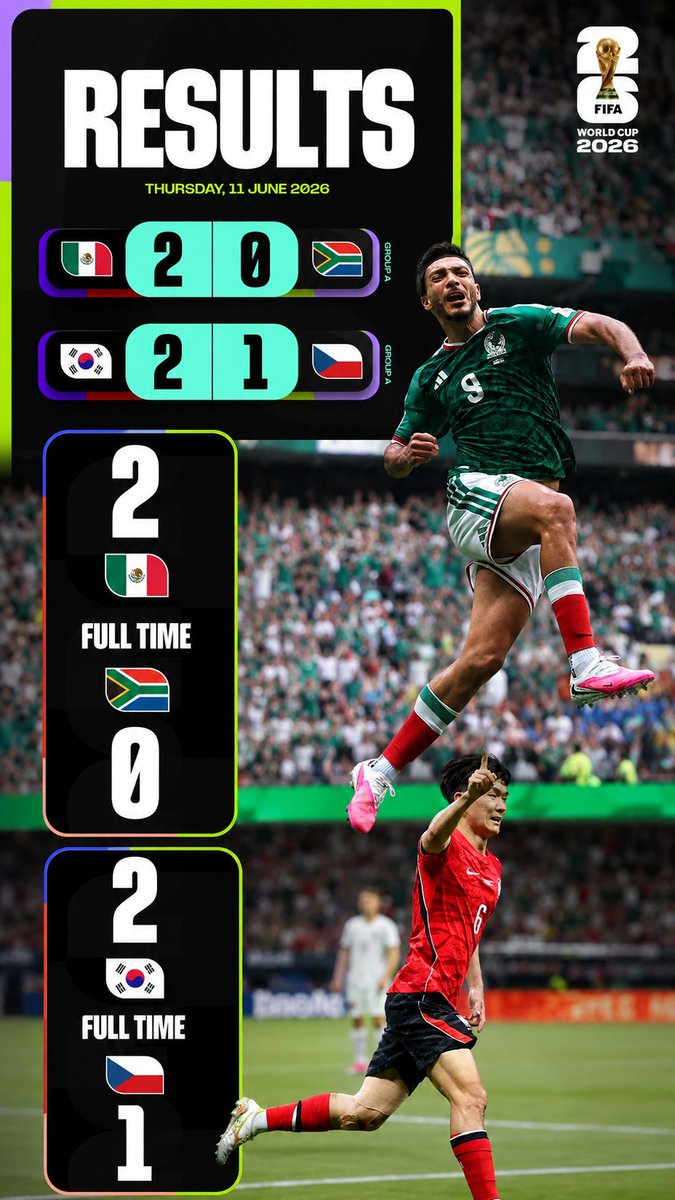
🇲🇽 Mexico cruise past South Africa 2-0, while 🇰🇷 South Korea edge Czechia 2-1 in Group A action at the FIFA World Cup 2026. ⚽🔥
#FIFAWORLDCUP2026
#MATCHANALYSIS
#DAYONE
#MATCHRESULTS
#INNINGSINSIGHTSWITHSRIKI
44

Jun 12
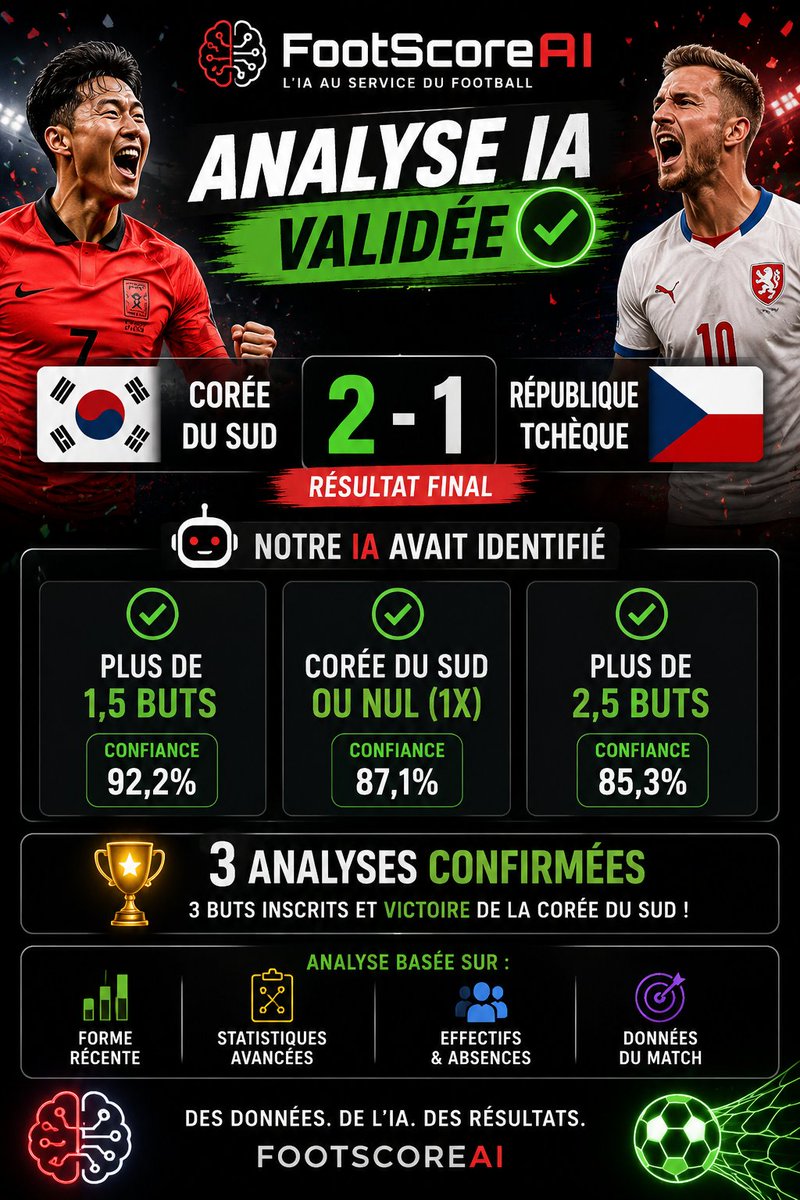
🚨 ANALYSE IA VALIDÉE ✅
🇰🇷 Corée du Sud 2️⃣ - 1️⃣ République Tchèque 🇨🇿
🤖 Avant le match, notre IA avait identifié :
✅ Plus de 1,5 buts (92,2%) ✅ Corée du Sud ou Nul (1X) ✅ Plus de 2,5 buts
📊 Résultat final : 3 buts inscrits et victoire de la Corée du Sud.
Analyse basée sur : ⚽ Forme récente 📈 Statistiques avancées 👥 Effectifs 📋 Données du match
👇 Quel match voulez-vous voir analysé ensuite ? #Football #AnalyselA #WorldCup #SouthKorea #CzechRepublic #FootballStats #FootScoreAl #Soccer #MatchAnalysis #FootballFans
94

Jun 11
POST MATCH ANALYSIS:
🇲🇽 Mexico 2-0 South Africa 🇿🇦: Total Dominance & Red Card Chaos! 🟥
Mexico cruised to a comfortable 2-0 victory over South Africa in a match defined by El Tri's absolute control and heavy disciplinary issues.
📊 By The Numbers:
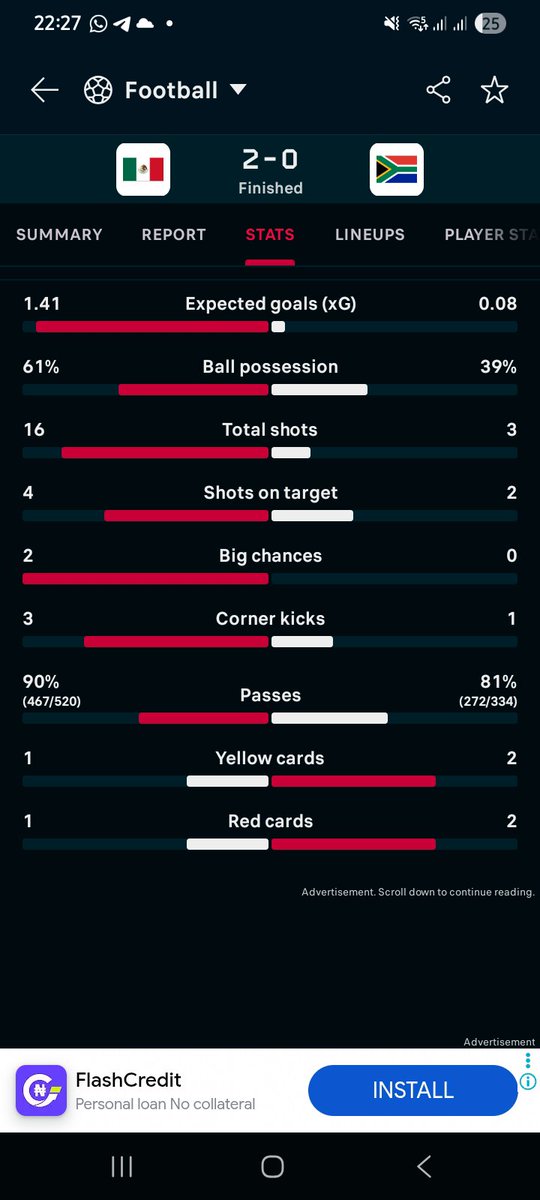
Possession & Passing: Mexico completely dictated the tempo, holding 61% ball possession compared to South Africa's 39%. El Tri completed 467 of their 520 passes, achieving a stellar 90% pass accuracy. South Africa only managed an 81% pass accuracy from 334 total passes.
Attacking Threat: The xG (Expected Goals) tells the whole story: Mexico amassed 1.41 xG, while South Africa offered almost zero attacking threat with a mere 0.08 xG. Mexico generated 16 total shots and 2 big chances. South Africa was neutralized, limited to just 3 total shots and 0 big chances.
🌟 Standout Performers:
Julián Quiñones: The undisputed Man of the Match. He secured an incredible 8.6 rating and got on the scoresheet.
Raúl Jiménez: Delivered a clinical performance up top, bagging a goal and earning an 8.2 match rating.
Roberto Alvarado: Pulled the strings beautifully, finishing the game with a highly impressive 7.7 rating.
⚠️ Discipline Breakdown:
A Fiery Affair: The match was incredibly physical and saw a staggering total of 3 red cards.
Mexico's Cards: Center-back Montes was given his marching orders with a red card. Gutierrez also picked up a yellow card for El Tri.
South Africa's Nightmare: Bafana Bafana received a total of 2 red cards and 2 yellow cards. Sithole was sent off, resulting in an abysmal 3.8 match rating. Mokoena and Sibisi both went into the referee's book with yellow cards.
A dominant tactical display from Mexico, but both managers will definitely be having words about discipline in the dressing room! 🗣️⚽️
#ElTri #BafanaBafana #FootballStats #MatchAnalysis

2
650

Jun 11
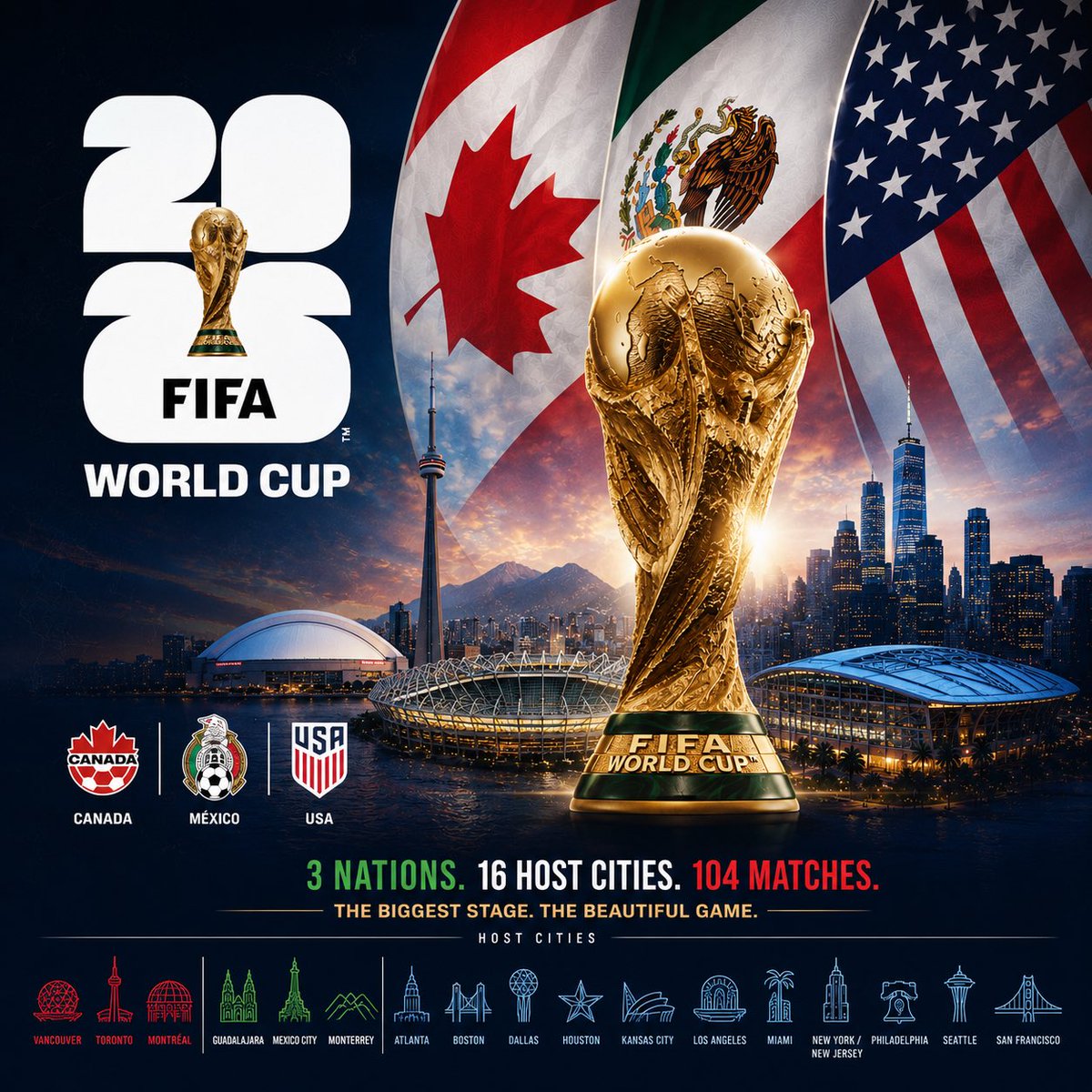
🏆⚽ The 2026 FIFA World Cup begins tonight!
Every great World Cup story begins long before kickoff.
With our all-in-one commentary platform, stay ahead of the game with:
🔍 Pre-match research & team insights
📊 Real-time match analysis & live data
🎙️ Comprehensive post-match reviews
⚡ Instant access to the stats and stories that matter
Whether you’re covering every match or following your nation’s journey, elevate your commentary and deliver deeper insights throughout the 2026 FIFA World Cup.
#WorldCup2026 #FIFAWorldCup #FootballAnalytics #SportsCommentary #MatchAnalysis #FootballData #Almanac
2
2
181