





In 1899, an American psychologist predicted that if schools kept training children to memorize instead of think, an entire civilization could grow up unable to make a single original judgment, and he wrote that sentence 75 years before the smartphone existed.
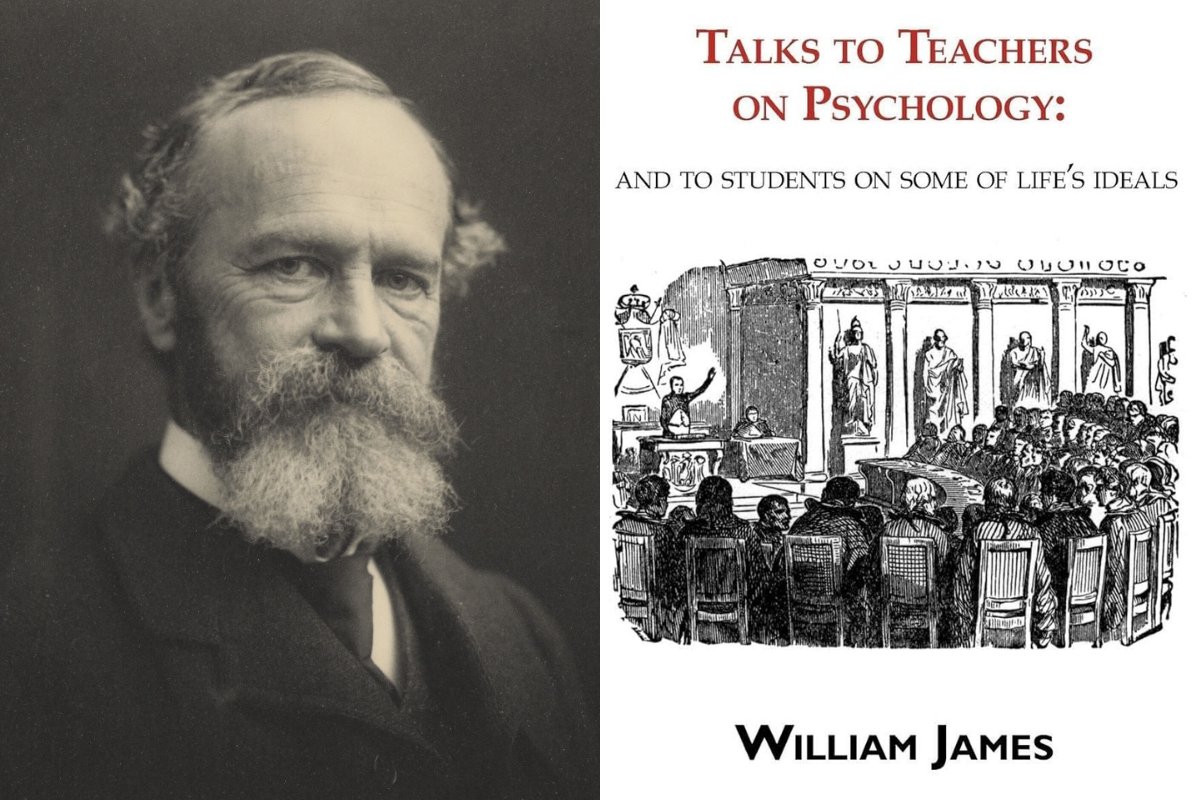
His name was William James. The book is called Talks to Teachers on Psychology.
He is the father of American psychology. He invented pragmatism, the only major philosophical movement America has ever produced. He wrote the most comprehensive study of human consciousness in the 19th century. His name appears almost nowhere in popular culture.
That gap should bother you.
Here is what he actually figured out, and why it still matters more than most things published this year.
James had earned his medical degree from Harvard by 1869, but could not practice. He spent three years barely leaving his bed, paralyzed by depression and panic attacks so severe he considered suicide. The question breaking him was not clinical. It was philosophical. He believed, from everything science had shown him, that free will did not exist. That every choice a person made was just a mechanical outcome of prior causes. That trying was an illusion.
In April 1870, he read a single essay by a French philosopher named Charles Renouvier. He wrote in his journal that same night: "My first act of free will shall be to believe in free will."
He got out of bed. He went to Harvard. He built the field.
By 1890, after twelve years of work, he published The Principles of Psychology. All 1,400 pages of it. It introduced the stream of consciousness the idea that thought is not a series of snapshots but a continuous flowing river, always moving, never repeating itself exactly. It introduced the modern scientific understanding of habit. It introduced the concept of attention as a moral act, something you chose to direct rather than something that simply happened to you.
The habit chapter is the one that should have ended the self-help industry before it started.
James argued that the brain is physically reshaped by repeated action. Every time you run a behaviour, the neural pathway behind it gets carved a little deeper. Eventually it runs automatically, without conscious effort. This is not a metaphor. He was describing what neuroscientists now confirm with brain imaging: behaviour rewires structure. He wrote this without a single fMRI machine, using only clinical observation and his own mind.
His line on habit is the one nobody quotes correctly: "Habit is the enormous flywheel of society, its most precious conservative agent." He meant that most of what people do in a day, a year, a life, runs on autopilot. The question is whether you set the autopilot deliberately or let it get set by accident.
Then came the part that cost him the most to say.
In 1892, he started traveling the country giving lectures to schoolteachers. He had watched what schools were doing to children and could not stay quiet. They were training kids to receive information, repeat it back, and call that learning. No discussion of ideas. No friction. No genuine thinking. Just reception and reproduction.
He said this would produce a generation capable of holding facts and incapable of using them.
He was describing our current moment. In 1899.
His two maxims for teachers were the opposite of everything schools practiced: "No reception without reaction. No impression without expression." His argument was simple. An idea that passes through a student's mind without being applied, argued, or connected to something real does not become knowledge. It becomes noise that fades within days.
Every study on learning retention published in the last forty years has confirmed this. He had the principle correct a century earlier and nobody listened.
James died in 1910. He never owned a car. He never used a telephone regularly. He had no idea what a feed algorithm was.
But the civilization he warned about is the one you are looking at right now.
The most important things he wrote are free on Project Gutenberg. Most people will never read them. Most people prefer the summary.
Which is, as James would have pointed out, precisely the problem.
3
3
12
416

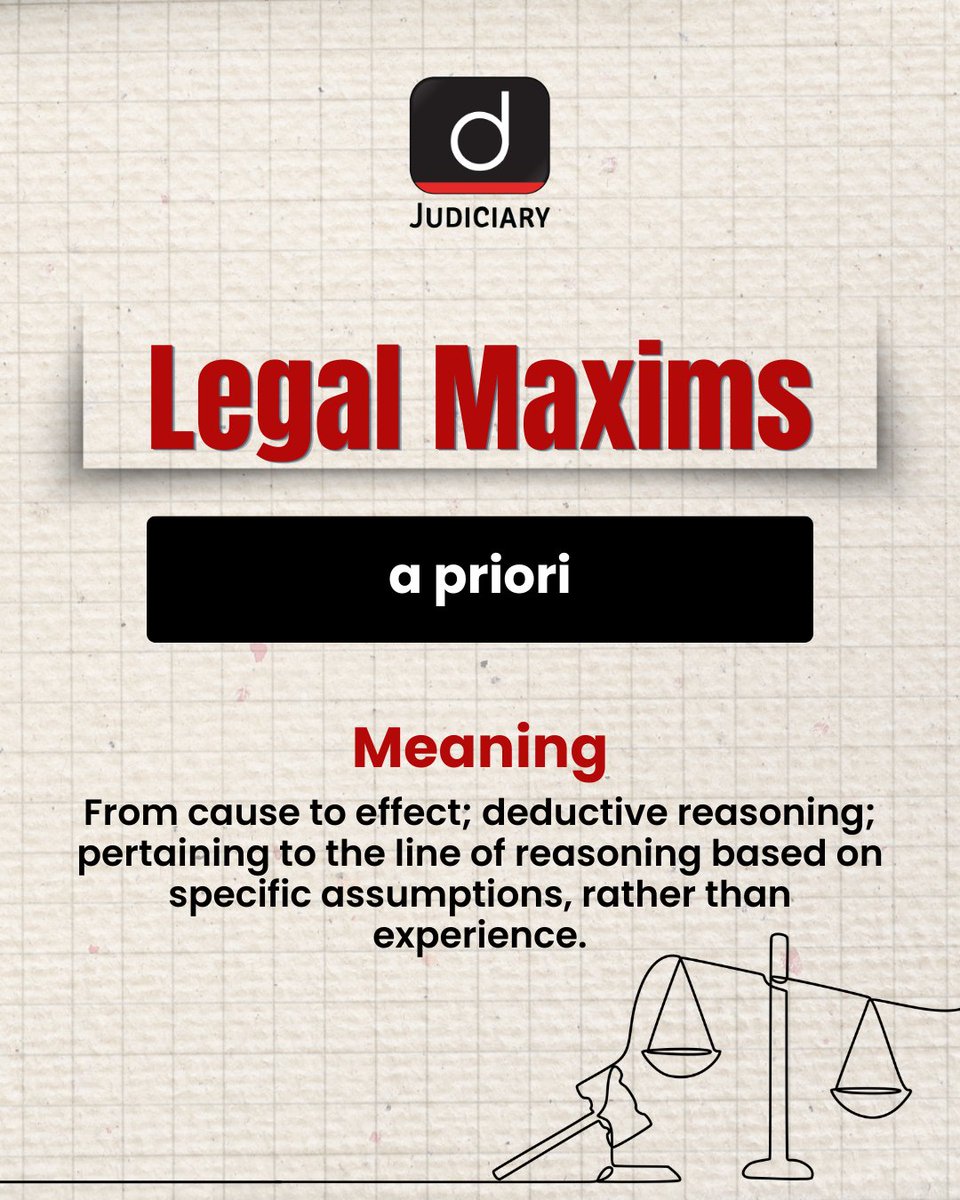
A journey from Latin origins to modern verdicts, revealing the lasting impact of Legal Maxims
.
#LegalMaxims #IndianLaw #Terms #Phrases #LegalMaximOfTheDay #LegalTerms #LanguageLearning #DrishtiJudiciary #TeamDrishti
1
4

And you literally don't even know how "of all" actually functions even within greek.
And the fact that I don't view the passage as a mistake either is pretty funny as well. You might not even understand what I meant by maxims and Didactic literary.
1
22
Priyanka Mehta retweeted

Jan 16
This is what I mean: your debates and learned talks, your maxims gathered from the teachings of the wise, your cultured conversation,—all these afford no proof of the real strength of your soul.
- Seneca
1
112
トーマ・イヴ (Thomas Yves) retweeted

Jun 14
𝖠𝗆𝗈𝗇𝗀 𝗍𝗁𝖾 𝗆𝖺𝗑𝗂𝗆𝗌 𝗈𝗇 𝖫𝗈𝗋𝖽 𝖭𝖺𝗈𝗌𝗁𝗂𝗀𝖾’𝗌 𝗐𝖺𝗅𝗅, 𝗍𝗁𝖾𝗋𝖾 𝗐𝖺𝗌 𝗍𝗁𝗂𝗌 𝗈𝗇𝖾: “𝖬𝖺𝗍𝗍𝖾𝗋𝗌 𝗈𝖿 𝗀𝗋𝖾𝖺𝗍 𝖼𝗈𝗇𝖼𝖾𝗋𝗇 𝗌𝗁𝗈𝗎𝗅𝖽 𝖻𝖾 𝗍𝗋𝖾𝖺𝗍𝖾𝖽 𝗅𝗂𝗀𝗁𝗍𝗅𝗒.” 𝖬𝖺𝗌𝗍𝖾𝗋 𝖨𝗍𝗍𝖾𝗂 𝖼𝗈𝗆𝗆𝖾𝗇𝗍𝖾𝖽, “𝖬𝖺𝗍𝗍𝖾𝗋𝗌 𝗈𝖿 𝗌𝗆𝖺𝗅𝗅 𝖼𝗈𝗇𝖼𝖾𝗋𝗇 𝗌𝗁𝗈𝗎𝗅𝖽 𝖻𝖾 𝗍𝗋𝖾𝖺𝗍𝖾𝖽 𝗌𝖾𝗋𝗂𝗈𝗎𝗌𝗅𝗒.”

1
17
114

Good morning from the Wahiba Sands, Oman, 2009. A timeless place to share some of my deeper philosophical thoughts:
The Sages of Submission - Where Eastern Philosophy meets Devotion.
„The Tyranny of Choice: Why True Freedom Lies in Submission“
Look at the horizon. The desert does not apologise for its vastness, nor does it compete for your attention. It simply exists—timeless, absolute, and still.
Yet, the world you return to every day entices you with a paradoxical promise: absolute freedom through boundless opportunity. The collective knowledge of mankind, thousands of films, hundreds of studios, and countless Dominas – everything is a mere click away, resting quietly in your pocket. Geographical boundaries seem entirely dissolved. Yet, beneath this glittering veneer lies one of the greatest psychological afflictions of the modern age: endless abundance that breeds a profound paralysis. When everything is possible, the act of choosing becomes an exhausting ordeal. Your attention is fragmented, your energy scattered to the winds.
The Art of Leaving the Noise Behind
Centuries ago, the great sages of the Orient understood that an undisciplined mind inevitably drowns in chaos. They recognised that the virtue of a life is measured not by the volume of stimuli consumed, but by the sovereign ability to silence the noise of the world.
The Persian philosopher and mystic Jalal al-Din Rumi (1207–1273) captured this necessity for radical reduction in one of his most celebrated maxims:
فَنُّ المَعْرِفَةِ أَنْ تَعْرِفَ مَا يَجِبُ أَنْ تَتَجَاهَلَهُ
“The art of knowledge is knowing what to ignore.”
(Source: Rumi, Diwan-e Shams-e Tabrizi)
True wisdom, therefore, is not the accumulation of everything, but the deliberate casting aside of the irrelevant. Similarly, the scholar Ibn al-Qayyim (1292–1350) warned against the illusion of sheer quantity. He described the essence of true insight far beyond the realms of mere consumption:
لَيْسَ الْعِلْمُ بِكَثْرَةِ الرِّوَايَةِ ، وَلَكِنَّهُ نُورٌ يَقْذِفُهُ اللَّهُ فِي الْقَلْبِ
“Knowledge is not found in the abundance of narratives; rather, it is a light ignited within the heart.”
(Source: Ibn al-Qayyim, Al-Fawa'id)
The myriad stimuli, the aimless scrolling, and the perpetual search do not enlighten you. They merely blind you. Transformation demands absolute concentration. Excellence requires governance.
The Mistress as Your Sanctuary
It is precisely here that timeless philosophy converges with the deep psychology of BDSM. Why do highly successful, intellectual individuals yearn so deeply for submission? It is not born of weakness, but of a desperate, urgent need for absolution from choice.
In your daily life, you are condemned to constantly decide, to filter, and to maintain absolute control. The moment you step into my sanctuary, or immerse yourself in my content, this war ceases. Within my domain, there is no scattered attention, no outside world.
As your Domina, I become your filter. I assume the protocol. I dictate the rules, the rhythm, and the intensity. I relieve you of the heavy burden of deciding what deserves your devotion. In the conscious surrender to my will, you find that very radical reduction of which Rumi spoke: you ignore the entirety of existence, for in that precise moment, only one sharp reality remains – the exquisite dynamic between you and me.
Grant your mind a true transformation, rather than the hollow comfort of consumption. Silence the roar of the world.
Choose wisely!
©madame-catarina.com

2
8
34
809




Holy and Divine Love:
Reflections for June 15th
holylove.org/wp-content/uplo…
holylove.org/message/6199
holylove.org/wp-content/uplo…
holylove.org/message/9179
To view more Holy and Divine Love Maxims, please see: holylove.org/maxims
"Every intervention from Heaven, approved by worldly entities or not, calls for the conversion of the hearts of sinners. But this one, you must realize by now, goes far beyond that by merit of the graces and devotions offered here. This Mission offers strength and protection for the difficulties that have begun and will increase before My Return. This is the call to the Remnant Faithful to unite in the Chambers of Our United Hearts as a prescribed journey into personal holiness introduced here and offered nowhere else. * You must not allow others to decide for you the worthiness of My Call here. We will not collapse under obedience to abusive authority, but remain steadfast for all to partake of the graces so generously, offered here. We must remain strong in resolve for those who are weak. I will never abandon you to please man. Read Acts 5:39 . . .but if it is of God, you will not be able to overthrow them. You might even be found opposing God!"
- Jesus 6.15.2015
* The Confraternity of the United Hearts is a worldwide ecumenical lay apostolate, which exists for the salvation and sanctification of souls and calls all people into the journey of personal holiness through the Chambers of the United Hearts and to be united together in the United Hearts.
* For information regarding the Confraternity of the United Hearts and how to become a member, please see:
holylove.org/lay-association…
1
1
7

Maxims of Law. Every entry on lands without the owner's leave, or authority of law, is a trespass. C.L.M.
The owner of a piece of land owns everything above and below it to an indefinite extent. Co. Litt. 4; 9 Coke, 54; Shep. Touch. 90; 2 Bl. Comm. 18; Broom, Max. 395; 2 Bout)..

Can the Government Come Onto Your Property Without a Warrant? Attorney Philip Ellison from @olcplc explains. Very important information.
22
Louise Salomon retweeted

Maxims Law: Understanding Legal Principles and Their Impact | US Legal Forms legal-resources.uslegalforms…
1
1
22
Nakul Mandan retweeted

@CameronLMcCord is the rare guy who lives these maxims.
One I'd add from my time on submarines:
1. Turn left.
Off watch, an officer is usually in or near the wardroom. When an emergency happens - fire, flooding, a hydraulic leak (and they often do), you have two choices:
Turn RIGHT and go man the 1MC (public address system). Meaning, orchestrate emergency response.
Or turn LEFT and be the "man in charge," putting on firefighting equipment and heading to the source of the fire.
Both necessary, but you need to go to where the fire is.

10 takes from our conversation w/ @CameronLMcCord, who went from 484 days underwater as a submarine officer --> founder of @Nominal_io, a physical AI unicorn:
1/ Earnestness in leadership. A submarine is too small for performative people. Your colleagues see you 24/7. Most founders act a certain way in front of parts of their company to put up an appearance. But earnestness goes a long distance in actual leadership.
2/ Be direct in conflict. There's no "we'll sort it out later". There's no later at a submarine or a startup. Feedback is a gift.
3/ "You earn the right to stand the night watch." The best talent are quiet operators - safe hands you can hand any project w/ total ambiguity & they make the right calls while you're heads-down elsewhere.
4/ Hire people who are "three layers deep" --> Ask why someone works hard. Then ask why again. Then again. The answer underneath the answer is where the real drivers are.
5/ Low ego and killer instincts aren't a tradeoff. You can find both in the same person. The connective tissue is often the mission driven nature of people.
6/ Went 40 → 170 people in a year & still interviews everyone himself. Saturdays & Sundays. If you won't show up Sat AM, probably not a fit for Nominal. Insert friction into interviews. You learn fast who takes a breath & rolls vs. who gets flustered.
7/ Promote clarity in comms. Close the comms loop: Acknowledge, execute, confirm back. An instruction that never gets confirmed is just noise.
8/ Stress is the body preparing you for greatness. The discomfort is the signal, not the warning.
9/ Draw the thread from the feature to the outcome. Nobody is fired up about a dashboard. They are fired up about the jet it keeps in the air.
10/ What the Navy can teach SV: the "critique" — five whys to real root cause, not accept a surface-level answer just b/c you're moving fast.
2
12
1,660

When we were shaping how we would evaluate reward model data in the early Bedrock LLM rlhf days, we actually used a grice's maxims as criteria. Clearly the practice did not persist, lol.
1
3
36

An interesting question: might AI slop become a preferred style of human speech and infect the way people talk so much that AI diction becomes a natural form of human language, thus making AI slop no longer sound like AI slop?
The answer is no, but there's no formal or information-theoretic answer for why. The answer rests in Grice's Maxims.
It's important to understand what the Maxims are not. They are not rules, they are not things that are necessary for communication or for information transfer or anything like that. They are better thought of as expressing a particular attitude that human beings tend to bring to any situation in which they will communicate with another person, unless motives drive them to break these maxims.
They are:
Quantity: Give just as much information as is needed.
Quality: Be truthful, don't say what you believe is false or have no evidence to support
Relation: Don't be irrelevant
Manner: Don't be ambiguous or obscure
These form what is called the cooperative principle, and the name is telling because it suggests that people more often cooperate than not when communicating. That this is true is itself a wonder and reason to love humanity, by the way, but that's beside the point.
When we see someone break these maxims, it is usually for a reason. I want to focus on a specific breaking of the maxim, because it relates to AI, although it predates LLMs by nearly 20 years: in the 2000s, British supermarket Marks and Spencer ran an ad campaign where the tagline was: "It's not just food, it's M&S food."
Arguably, this violates the Maxim of Quantity: one can just say "it's M&S food" and the point is made, but the antithesis has rhetorical force: it creates an opposition in your mind where M&S food becomes a group in your mind, and all other food becomes "just food" becomes its opposite.
The maxim here was broken to sell you something.
Of course, AIs break this maxim all the time. But note that this is not a formal description! So I'm not saying that the antithetical construction "it's not x, it's y" breaks the maxim in every instance. It doesn't--that's why the maxims are not a formal law.
If I am walking in the garden with my girlfriend and she screams because she sees a snake, I could say, "relax! It's not poisonous, it's fine." This is arguably NOT a violation of the Maxim of Quantity because the antithesis is needed to calm her down.
Note I've said "arguably". Because the maxims describe tendencies and aren't fixed to a particular linguistic form or set of forms, application of the maxims is always up for debate. They are not fixed rules and yet they guide most of human communication.
But they require a language user to have the intentionality to cooperate. The user must as it were feel the cooperative principle and use it in their communication BEFORE thinking. Look closely at what I said. Before thinking.
This is why your chatbot feels off no matter how much better it gets at spitting out text. And this problem will never, ever go away.
Why DO bots prefer the "it's not x, it's y" construction so much that they use it in a way that violates Grice's maxims all the time?
Because the frontier labs, especially Anthropic and OpenAI, post-trained their bots to sell you something.
5
1
24
961
Laura Matuszak retweeted
Daily Maxims of St Philip Neri - June 15 - mailchi.mp/bournemouthorator…

2
4
116
ght retweeted

You can’t reason with these people because there is no coherent set of maxims they will abide by. They are immune to “By that logic…” because their goal is to get you to do what they want and they will say or do whatever it takes. Neither God nor Reason is sacred to them.
Jun 14

The mosque predates the airport. Rajarhat was a Muslim dominated area before Hindu refugees settled in, followed by VIP Road adjacent Marwari / middle class Bengali settlements, and then New Town.
5
38
165
3,542

No, it's because you, like most lemmings, hear "AI slop" become a buzzword, and then because you lack the intelligence to distinguish what actual slop is, and you lack the competence to actually understand that "AI slop" is actually stupid video renderings made mostly by jeets and retards, you just blanket umbrella label everything that comes from AI as "slop" especially when it doesn't agree with your pitiful claims.
I'm sick of it. This is why all of your arguments only appeal to people with a sub 80 IQ.
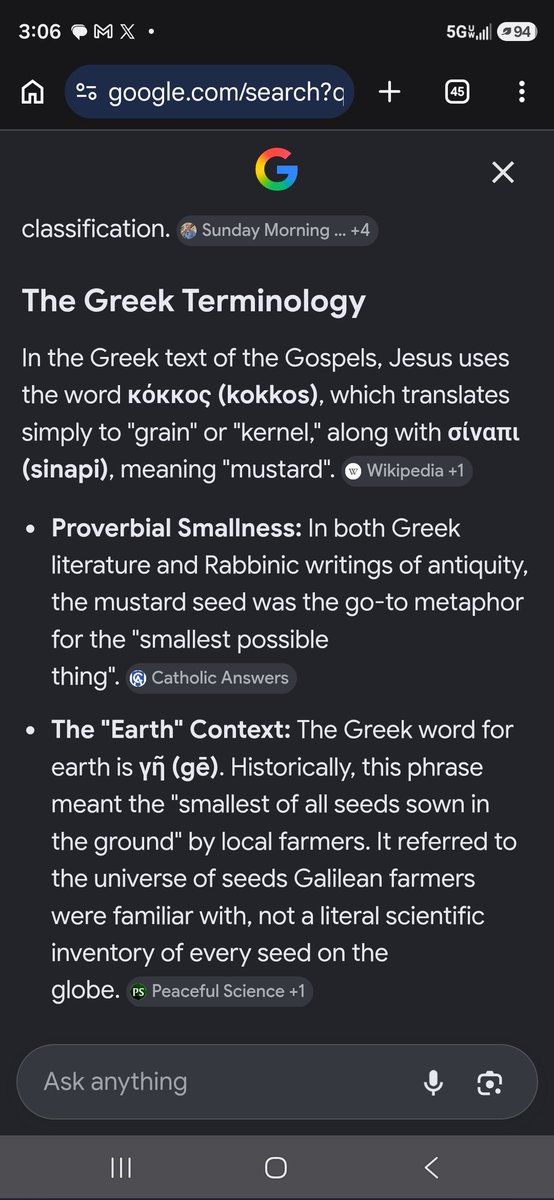
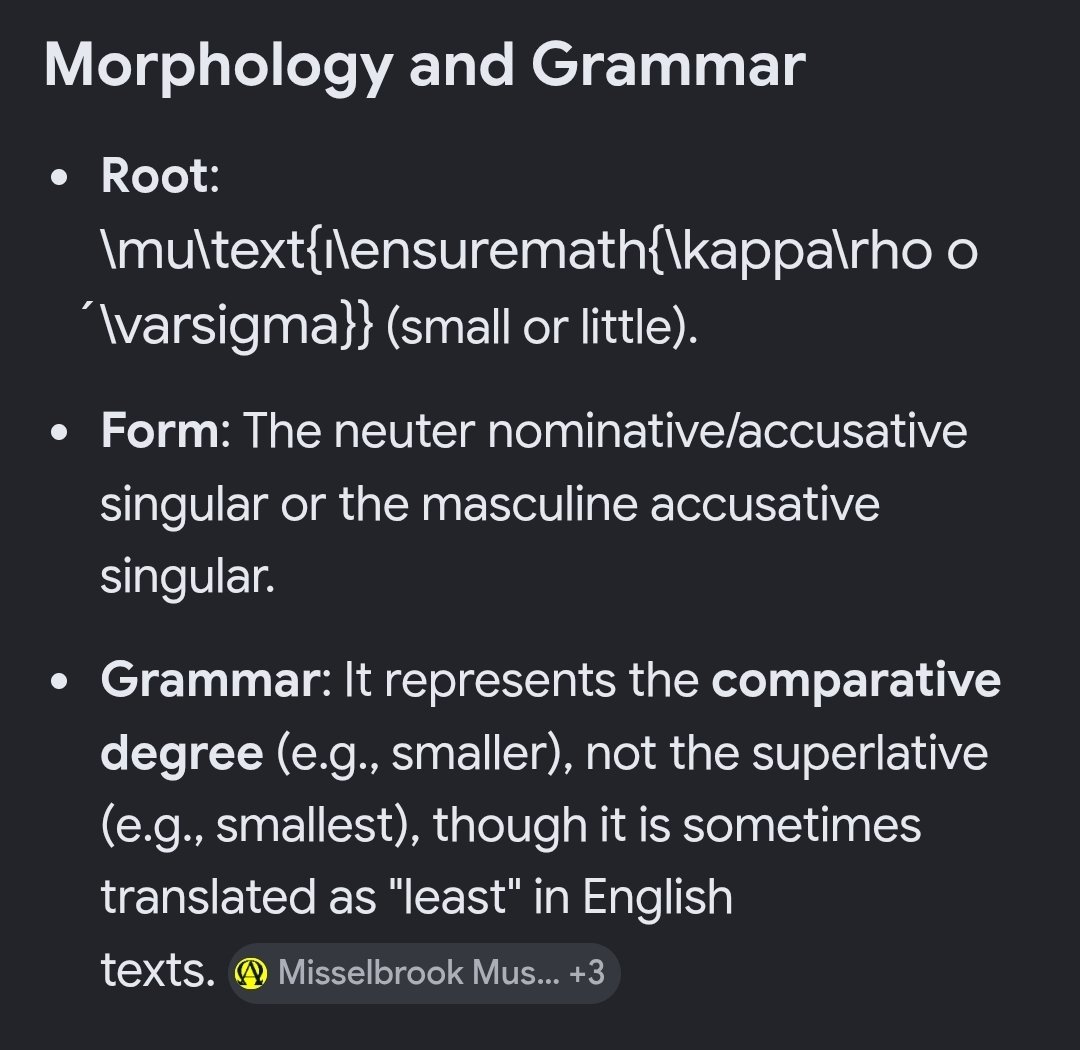
Look at the morphology of the greek words μικρότερον, mikroteron.
It represents a comparative degree or class. It does not mean the "SMALLEST", it means "smaller.
It's a class, and not the "smallest".
Therefore it is actually MORE ACCURATE to translate the Mark 4:31 as,
"Is of the smaller of seeds of all the earth."
Or you could even render it,
"Is among the smaller seeds of the earth."
We are done here. I have ZERO doubt you will continue to ignore and argue despite all of the grammatical evidence, use of hyperbolic and idiomatic language, and its illustrative use for philosophical maxims or wisdom in rabbinic teachings throughout history.
All while you are defending a religion that straight up PRESCRIBES cousin marriage. The church figured out that consanguinous marriage causes genetic disorders and defects a full 500 years before Islam and banned it.
They banned it because it hurts populations and destroys cognitive faculties.
Yet Muhammad, your "greatest example", was given his first cousin. And ever since then, Muslims have emulated him.
It took a few centuries for the deleterious effects to REALLY take hold of your populations, so yes, while there was an Arab golden age, Islamic people's quickly fell into retardity for that very reason.
Your religion was literally engineered to keep your people stupid and ignorant, and we are witnessing the fruits of it today, because no matter how clearly we explain the most SIMPLE of matters, all of you refuse to grasp it or listen. None of you can comprehend anything that even remotely challenges your bias.
It's disastrous and it makes dialogue nearly impossible. Christianity will convert all Muslims with above a 90-100 IQ and the rest of you will be left trying to bite your elbow in a state of never ending thirst because your nations will continue to receive no rain. It will be a never-ending humanitarian crisis, a thorn in the side of the entire world.
I genuinely don't know which is worse anymore, Hinduism or Islam. They eat cow poop and Islam prescribes camel piss.
I can't anymore.
Done.
1
5
94

Maxims of Law:
51b. The government is to be subject to the law, for the law makes the government.
51c. Obedience makes government, not the name by which it is called.

If you don't follow the constitution to start the war. I fail to see why we should follow the constitution to end the war.
And as trump has said, it's not war, but we did win the war over 50 times.
Only to now have to pay 325 billion in reperations for losing said war trump started.
It's ok if you can't keep up with it, it's hard to follow retarded logic.
15