
May 27
I built my own mini @hydra_db
Spent the last few weeks rebuilding an AI memory system from scratch, this time based on the Hydra DB paper.
My last attempt was Mem0-style: extract facts, embed them, UPDATE or DELETE on contradiction. It worked. But every UPDATE silently destroyed history. Every DELETE pretended a fact never existed. I was building a faster log file, not a memory.
HydraDB takes a different stance:
- Never delete. Never update. Append-only forever.
- Three vectors per memory (literal, semantically-enriched, BM25 sparse); search hits whichever lane fits the query.
- Forgetting isn't eviction. Memories decay through a bio-mimetic curve (Ebbinghaus reinforcement) and the LLM reasons about freshness at retrieval time. The paper uses rerankers, I went with LLM reasoning for v1.
How the decay actually works, in plain terms:
Every memory has a retention score. Two forces push on it:
- Decay: each memory has a birth time (t_commit). The longer it sits untouched, the more its score drops on an exponential curve. With my settings, the baseline roughly halves every two weeks.
- Reinforcement: every time a memory is actually used to answer a question, a record-access worker appends a timestamp to it. Recent accesses bump the score back up; older accesses contribute less and less.
A retention worker runs once a day, sweeps every memory, recomputes the score, and maps it to a tier: Hot, Warm, Cold, or Stale. Nothing ever gets deleted. The answer LLM just reads the tier and frames old facts historically ("you previously mentioned…") instead of treating them as current truth.
The most interesting moment was catching a live bug I'm calling "reinforcement grooming"; stale memories that got queried often inflated their retention score and started beating fresher facts in answers.
Fixed it with a precedence ladder in the answer prompt (supersession verbs > t_valid > t_commit > retention as tie-breaker only) and citation-gated reinforcement, only memories the LLM actually cited get reinforced, not everything that surfaced.
I've been knee-deep in AI memory for almost a year now and it's still the subfield I find most beautiful. Mem0 reasons from first principles. MemoryBank borrows from cognitive science. Hydra DB starts from the database side.
Three completely different starting points and they converge on the same primitives: chunked embeddings, structured fact extraction, temporal metadata, decay, reinforcement.
If you've made it this far, thank you. There aren't a lot of people who love memory architecture the way I do, and writing these posts is partly how I find them.
See you in the next one.
site link: lnkd.in/eVBRWsqa
blog: lnkd.in/eAgQkxdp
please checkout the demo below
@contextkingceo
3
178

May 25
#MemoryBank photos uploaded! 📸
Submit your photos to oodmag.com/mbentry for a chance to win a $25 gift card to Gagnon Sports and appear online/in print as part of our weekly Photo Friday contest.


1
2
144


May 11
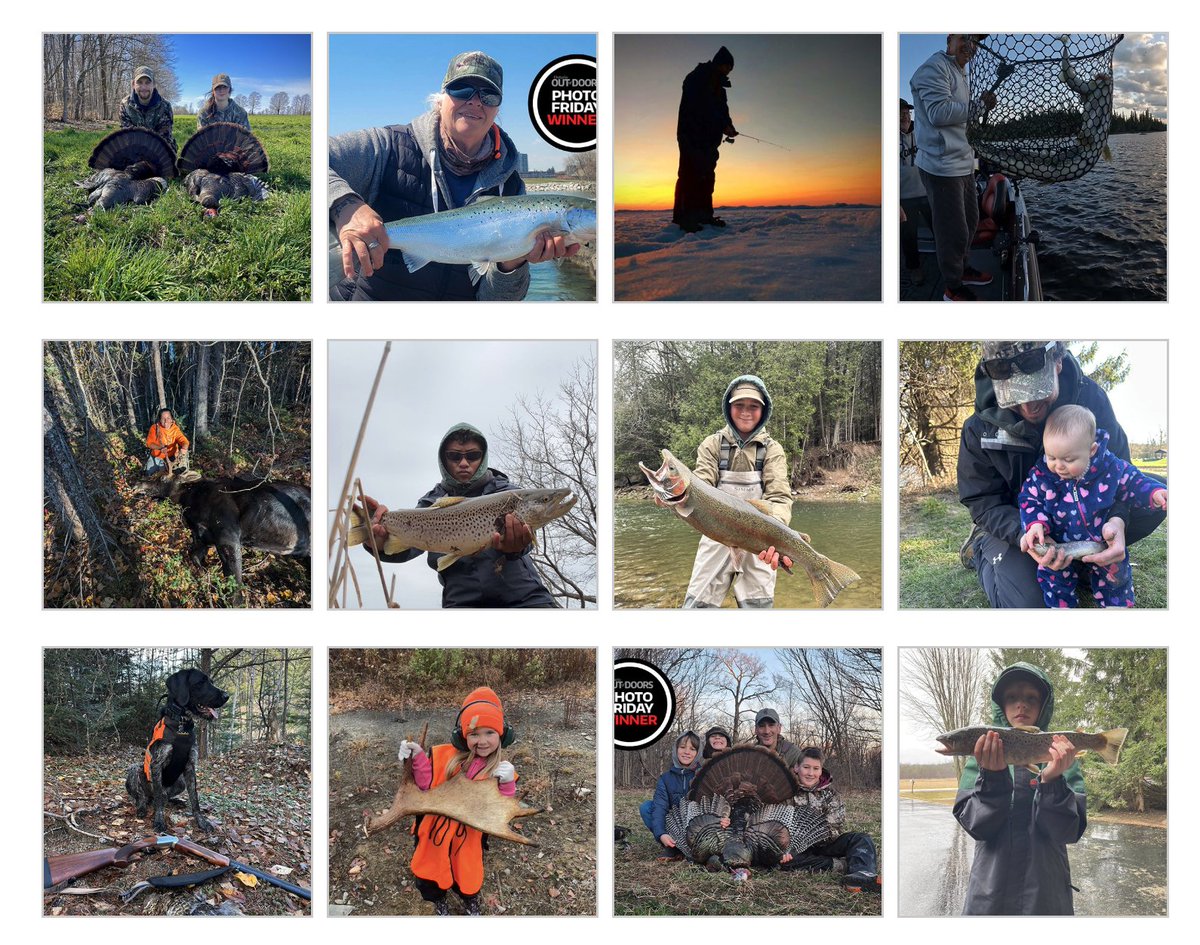
#MemoryBank photos uploaded! 📸
Submit your photos to oodmag.com/mbentry for a chance to win a $25 gift card to Gagnon Sports and appear online/in print as part of our weekly Photo Friday contest. Send us your pics!
@GagnonSports
@ofah
#Hunting #Fishing #OFAH #GagnonSports

1
4
152

May 5
multi-user / multi-tenant SaaSのAIエージェントを作るときに、起こりうる事故を整理しながら、MCP/Tool/MemoryBankの認可処理の設計判断について記事を書いてみました。
zenn.dev/peintangos/articles… #zenn
1
172

Tensei 1/1 revealed!
Be introduced to Atrix - specially made for @FreezyMcdurbin
Atrix is a native to Himinaúlfar, or at least native to the old city that now floats in the sky. During her boot protocol, there was a mix-up of coordinates uploaded to her memorybank.

5
4
25
822

Apr 23
"listed for sale like we were in the 20s" i s2g thats goin in my memorybank forever
1
3
17


用 github.com/lijigang/ljg-skil… 看了下关于memory 的研究脉络:
-------------------
* 溯源地图
[2020] Lewis et al. - RAG (Retrieval-Augmented Generation)
|
| 问题: 模型参数存的知识是死的,不能更新,不能追溯
| 解法: 生成时从外部文档库检索,拼进输入
v
[2023.04] Park et al. - Generative Agents (Smallville)
|
| 问题: RAG 只检索文档片段,没有"经历"的概念
| 解法: 记忆流 反思机制,让智能体有自传式记忆
v
[2023.05] Zhong et al. - MemoryBank
|
| 问题: 记忆只进不出,越积越多,没有遗忘机制
| 解法: 用艾宾浩斯遗忘曲线给记忆加衰减权重
v
[2023.10] Packer et al. - MemGPT
|
| 问题: 不管记忆怎么存,都受限于上下文窗口装不下
| 解法: 借鉴操作系统的虚拟内存,分层管理上下文
v
[2025.01] Rasmussen et al. - Zep
|
| 问题: MemGPT 的记忆是扁平碎片,缺乏结构化关联
| 解法: 时序知识图谱,让事实带上时间戳和实体关系
|
| [2025.04] Chheda et al. - Mem0
| (并行路线: 向量库 图数据库的工程化方案)
v
[2025.05-07] Li et al. - MemOS
|
| 问题: 记忆散落在 RAG/KG/参数各处,没有统一调度
| 解法: 把记忆当操作系统资源,统一表示、调度、治理
v
[2025.08] Nan et al. - Nemori
|
| 问题: 记忆组织靠人工规则,不能自适应地分段和抽象
| 解法: 认知科学启发的自组织——事件分割 预测校准
v
[2026.01] Zhu, Chen et al. - EverMemOS <-- 目标论文
|
| 问题: 碎片化记忆无法合并为稳定的语义结构
| 解法: 印迹生命周期——情景痕迹->语义固化->重建性回忆
|
---> [2026.01] SimpleMem, MAGMA, Aeon (同期竞争)
---> [2026.02] EverMemBench (配套评测)
---> [2026.03] D-Mem, SmartSearch, MemFactory (后续挑战)
3
9
67
12,054
Mar 25
#MemoryBank photos uploaded! 📸
Submit your hunting, fishing, and outdoors photos for a chance to win an OFAH/OOD prize at: oodmag.com/mbentry/
Winners may also have their photo selected for online, in print, and/or across our social media channels. Send us your pics!
@ofah

2
153


Mar 15
Made you a File City Tour of openclaw-vertexai-memorybank
A visual map narrated walkthrough of the long-term memory bank for OpenClaw agents using Vertex AI.
github.com/Shubhamsaboo/open…
Great work! @Saboo_Shubham_
7
81

Mar 13
been exploring ai memory for quite some time, had implemented a preliminary version using the mem0 paper
github.com/karthiknadar1204/…
explored forgetting in memory systems and implemented it via the memorybank paper
github.com/karthiknadar1204/…
• selfless-fulfillment-product…
• karthiknadar1204.hashnode.de…
can check more of my work on self improving agents here:
massive-fireplace-8b5.notion…
2
44
Feb 20
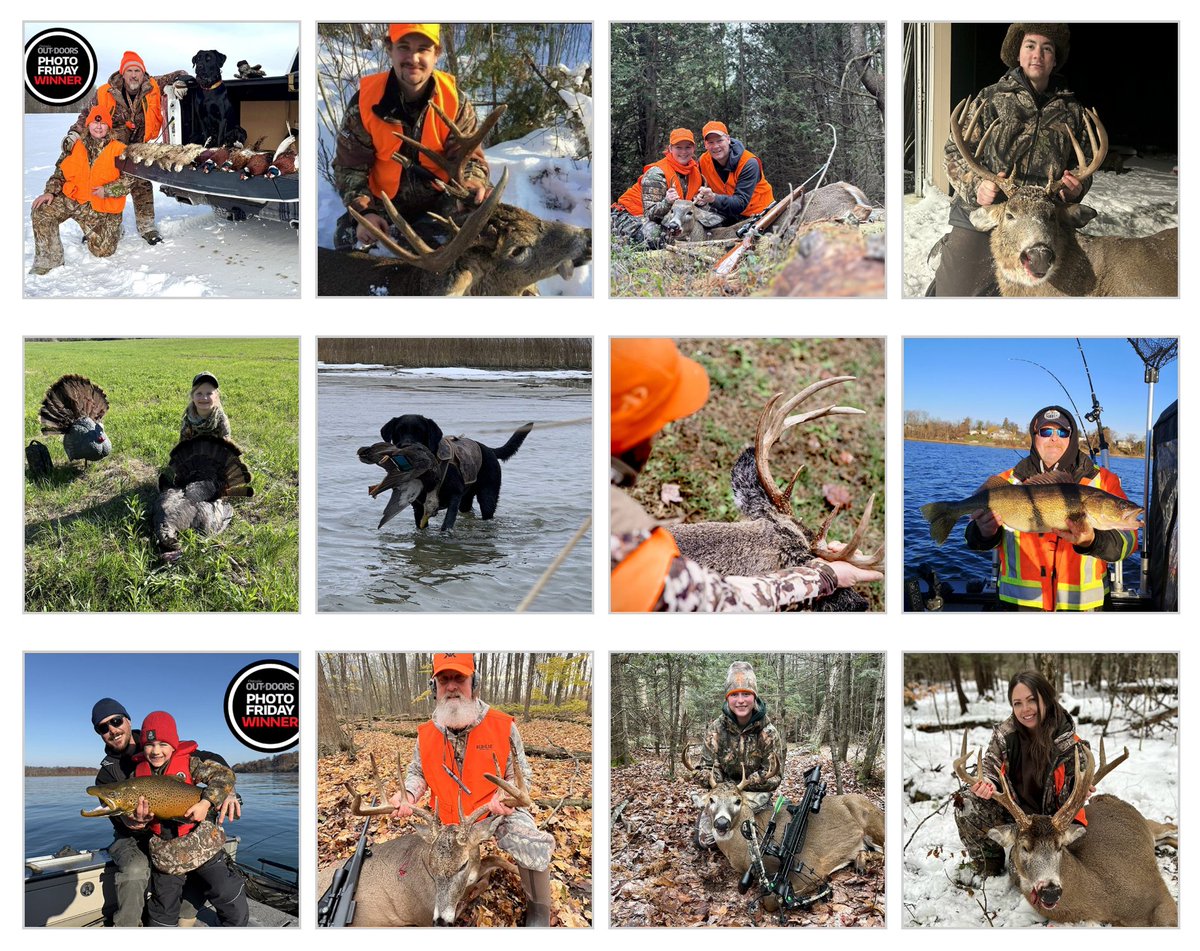
#MemoryBank photos uploaded! 📸
Submit your hunting, fishing, and outdoors photos for a chance to win an OFAH/OOD prize at: oodmag.com/mbentry/
Winners may also have their photo selected for online, in print, and/or across our social media channels.
Send us your pics!
@ofah
2
154
#MemoryBank photos uploaded! 📸
Submit your hunting, fishing, and outdoors photos for a chance to win an OFAH/OOD prize at: oodmag.com/mbentry/
Winners may also have their photo selected for online, in print, and/or across our social media channels.
Send us your pics!
@ofah

2
145

31 Dec 2025
one function I'm considering, is front-loaded memory tooling
memorybank grows as many are now doing, but the prompt you run through your agent is chunked and sem_searched for relevant memories first, and injected with the prompt
@doodlestein runs his memories as a tool_call.
2
3
148

30 Dec 2025
The LNP are desperately trying to win votes one way or another from the Bondi tragedy....it won't be forgotten. #memorybank
42
24
178
2,235