
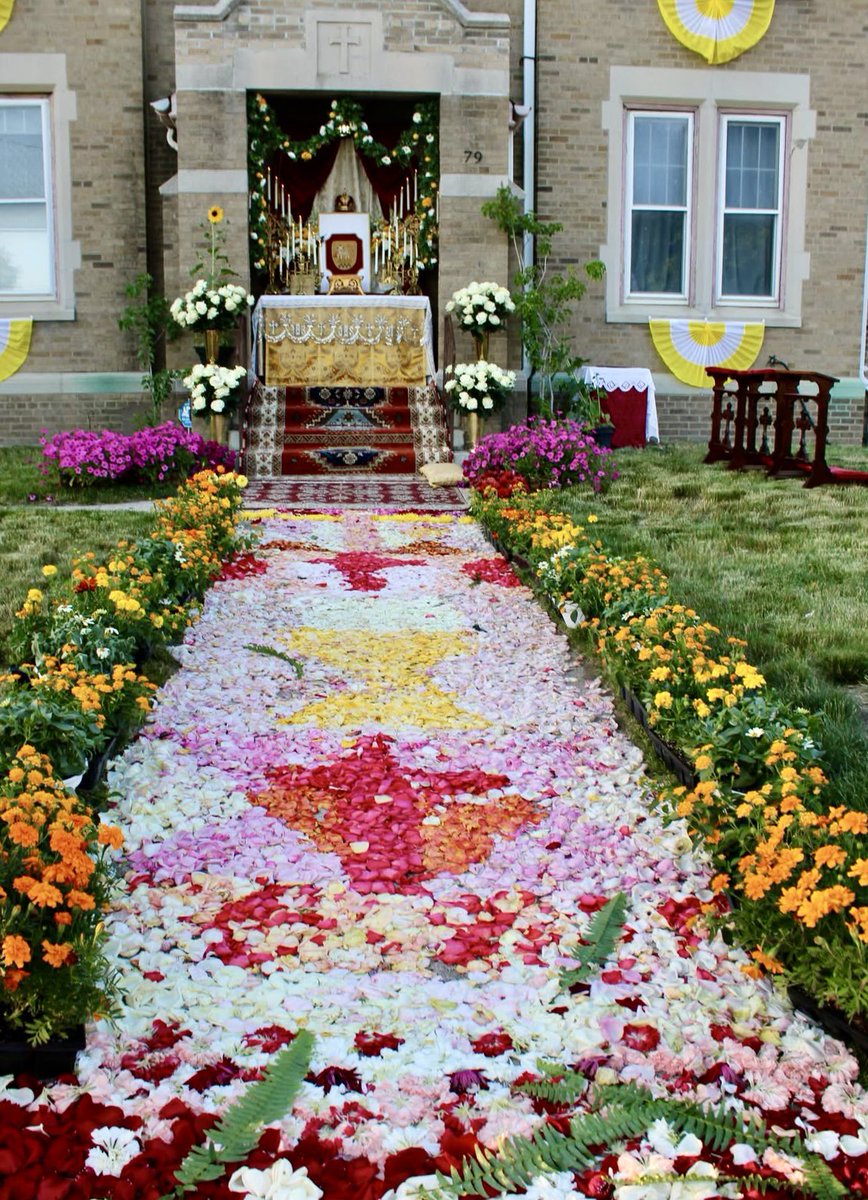
The flower carpet, lovingly prepared by volunteers, which led to the temporary altar that received the King of Kings on the feast of Corpus Christi at Sts. Cyril & Methodius Oratory, the Institute’s apostolate in Bridgeport, CT
#Catholic #Tradition #Beauty
4
57
675

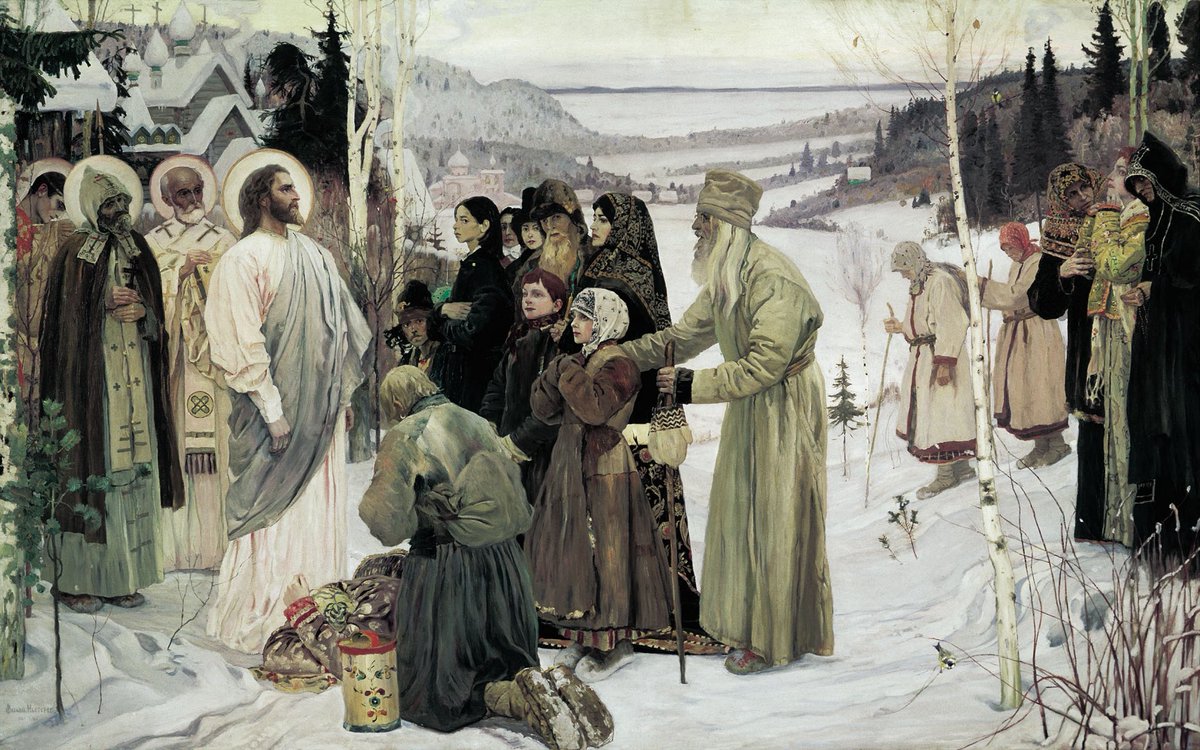
☦️🇷🇺🙏🏼 Saint John of Shanghai & San Francisco, sermon on the Feast of All Russian Saints:
“Today is the Feast of All Saints who shone forth in the land of Russia - that is, of all those Saints raised up by the Russian Church, the Russian Land. Now is the feast of the ‘spiritual sky’ that is spread out over Russia. That sky stretches forth broadly, beginning with the Holy Prince St Vladimir and Blessed Princess Olga; these were, in a manner of speaking, the spiritual ‘roots’ of all the saints who shine forth in the land of Russia. From this root has grown a great host, a vast tree of holiness - though it is true that even before Grand Duke Vladimir there were saints and righteous ones who shone forth there, in what is now the land of Russia. Those regions that now constitute the expanse of Russia, even before they became part of the Russian land, were illumined by holy saints of God.
Cherson boasted of seven bishops from the early days of Christian visitations to that region, and Sts Cyril and Methodius subsequently preached there. It was in Cherson that the Grand Duke Vladimir was baptised and, bearing with him the relics of the ancient Hieromartyr Clement of Rome, he brought the Orthodox Faith to Kiev, marking the beginning of the growth of the Russian Church. Today we celebrate all those Saints of God - the Venerable Anthony and Theodosy and many other miracle-workers of the Kiev caves; all those righteous Hierarchs who shone forth in the land of Russia, who affirmed Orthodoxy, establishing Christianity in the Russian land and affirming among the people both faith and piety; those saints who pretended foolishness, but in reality were wise, and with their seemingly ridiculous actions themselves humbled their pride and taught the children [of the Russian lands] to venerate holiness and follow the Gospel.
We glorify the many saints of God who shone from different corners of the Russian land: those Passion-bearers who patiently endured the sufferings sent to them and, ultimately, those Martyrs who in small ranks shone forth in antiquity, but now abundantly poured forth their blood in every corner of the Russian land. The very earth was sanctified by their blood; the air was sanctified by the ascent of their souls. Even the sky over Russia was sanctified by that host of holy Saints of God, who shine over it. Their number is beyond counting.
A wonderful book has recently been written, entitled Holy Russia, in which the Cross of Russian holiness is detailed. From this book one can learn how it was that holiness took root and grew in Russia, how the spirit of one of the saints became an inheritance to others, as if among them there was a genuine connection; and this in truth manifests the ‘golden chain‘ of holiness in the land of Russia.
We celebrate all of them now, whose number is beyond listing. We see wondrous Saints who strengthened the Russian ideal with their pastoral work. We see how the Russian land was famous not only for the exploits of tsars, boyars, and warriors, but also how its parts were linked together spiritually by this holiness. It is for this reason that it was called ‘Holy Russia’ - not because there were no sins, no transgressions. No, wherever there are people, there have always been and always will be sins and transgressions.
Since the falling into sin of our ancestors, evil has entered the world; but never did any evil seem the ideal, or even something bearable, in the Russian land. Evil arose, but it was followed by repentance.
Even robbers repented; there were those whose lives were ended on the block, but even the majority of these, before their death, remembered the Lord Jesus Christ and bowed to the people, asking for forgiveness for the crimes by which they led others into temptation, and asked the people to pray for the repose of their souls.”
2
12
439

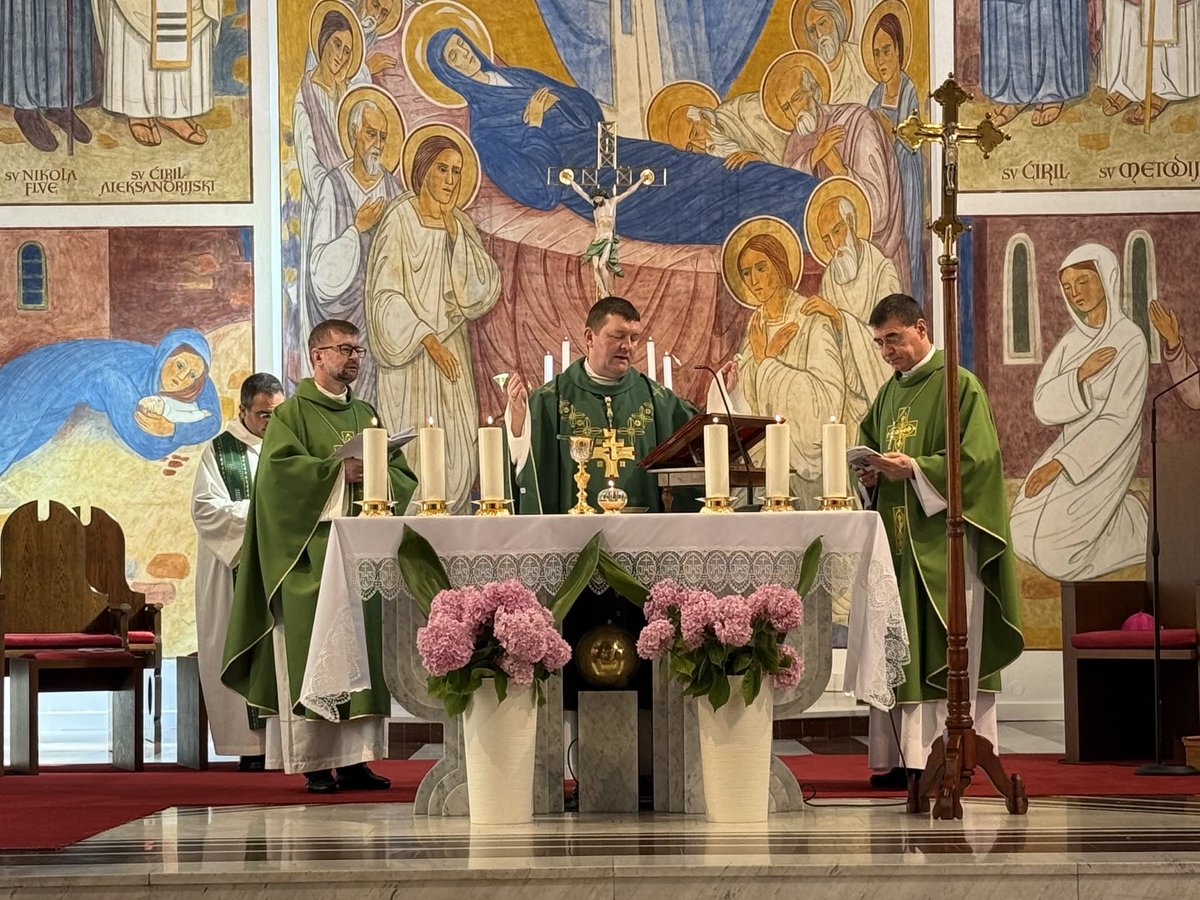
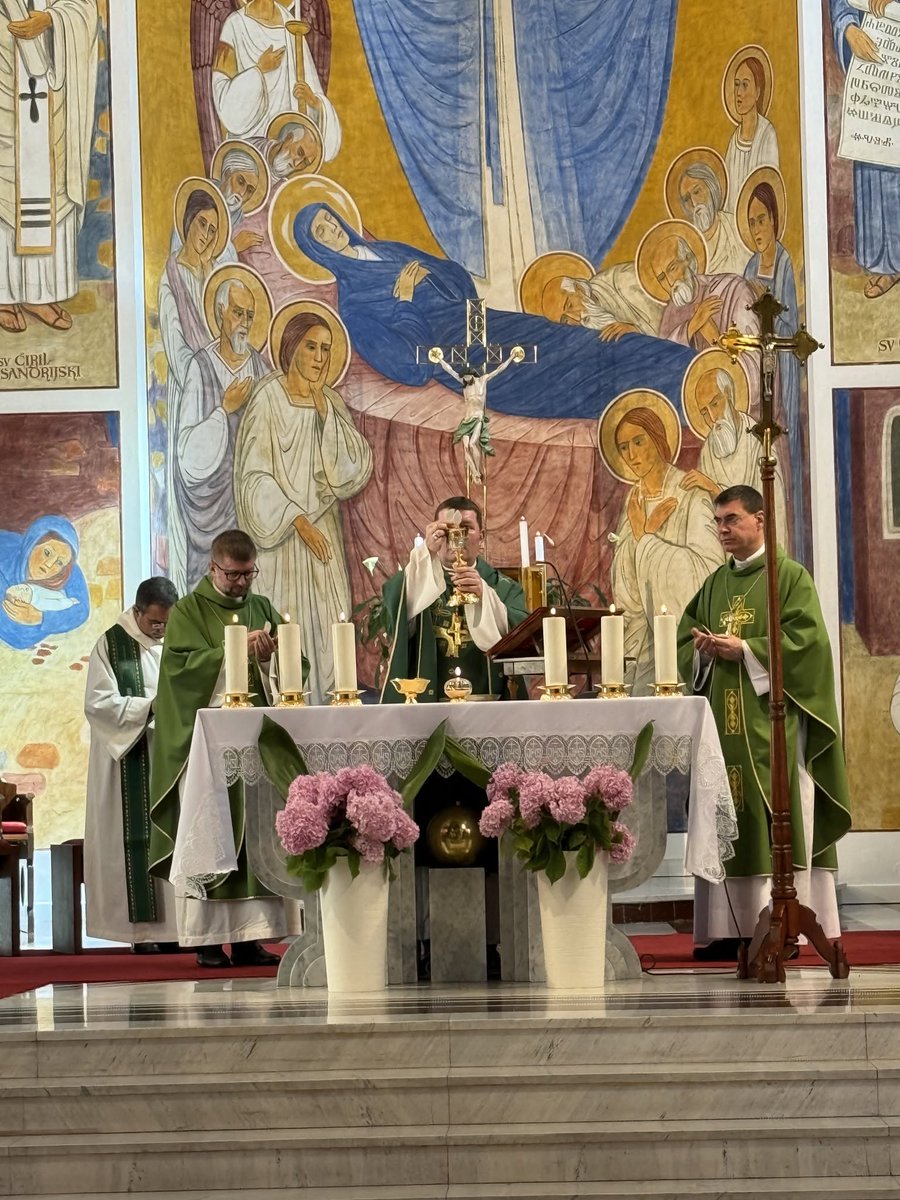
The final day of the meeting of the General Secretaries of the European Bishops’ Conferences in Belgrade began with the Holy Mass presided over by Bishop Mirko Štefković, Secretary General of the Bishops’ Conference of Saints Cyril and Methodius.
Photos: @MediaCcee
1
3
117
Yaroslav-Kurkul retweeted

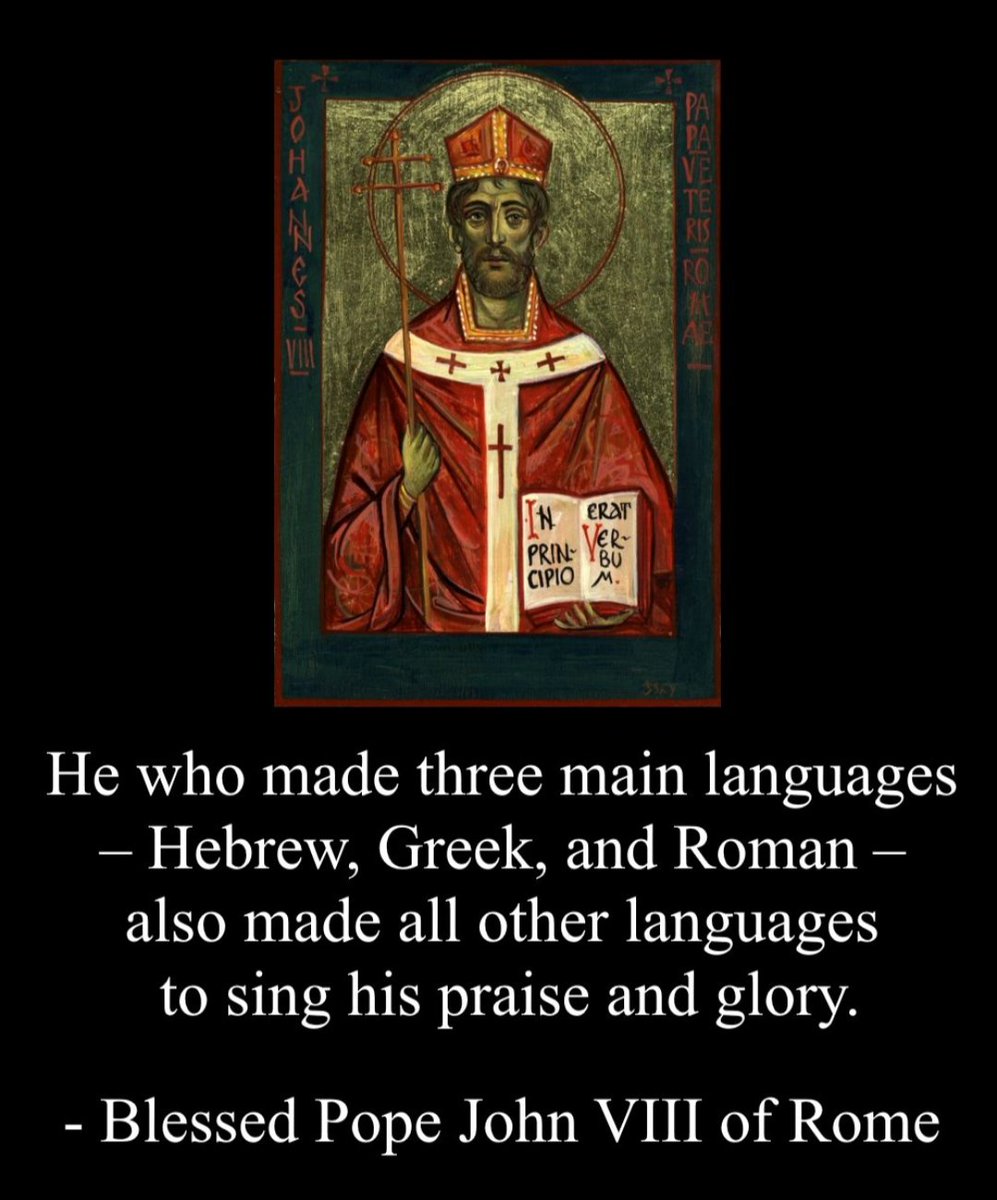
Pope Saint John VIII already denounced the Heresy of Trilingualism in defense of Saints Cyril and Methodius' mission to the Slavs. There's no such thing as a special language in Christianity. God the Holy Ghost sanctified all of the tongues of men at Pentecost.
Jun 15

Stephen DeYoung says it is a sin for English speakers to try to teach about Church Fathers. Says English speakers cannot understand Church Fathers.
15
12
146
10,593

19h
The Myth of Fraternal Peoples
• 1622 — Order by Tsar Michael, at the suggestion of Patriarch Philaret of Moscow, to burn all copies of the “Didactic Gospel” by K. Stavrovetsky printed in Ukraine.
• 1690 — Condemnation and anathema by the Russian Orthodox Church Council against the “new Kievan books” by P. Mohyla, K. Stavrovetsky, S. Polotsky, L. Baranovych, A. Radzivilovsky and others.
• 1720 — Decree by Peter I banning book printing in Ukrainian and removing Ukrainian texts from church books.
• 1729 — Order by Peter II to rewrite all decrees and orders from Ukrainian into Russian.
• 1763 — Decree by Catherine II banning teaching in Ukrainian at the Kyiv-Mohyla Academy.
• 1769 — Synod ban on printing and using the Ukrainian primer.
• 1775 — Destruction of the Zaporizhian Sich and closure of Ukrainian schools at regimental Cossack offices.
• 1832 — Reorganization of education in Right-Bank Ukraine according to empire-wide principles, switching instruction to Russian.
• 1847 — Defeat of the Cyril and Methodius Brotherhood and intensified brutal persecution of the Ukrainian language and culture, ban on the best works of Shevchenko, Kulish, Kostomarov and others.
• 1862 — Closure of free Sunday Ukrainian schools for adults in Russian-ruled Ukraine.
• 1863 — Valuev Circular banning censorship approval for printing Ukrainian-language religious and popular educational literature: “there was not and cannot be any separate Little Russian language.”
• 1864 — Adoption of the Statute on Primary Schools, according to which instruction had to be conducted exclusively in Russian.
• 1870 — Clarifications by Russian Minister of Education D. Tolstoy that “the ultimate goal of educating all foreigners must indisputably be their Russification.”
• 1876 — Ems Ukase by Alexander II banning the printing and importation from abroad of any Ukrainian-language literature, as well as banning Ukrainian theatrical performances and printing Ukrainian texts under musical notes, i.e. folk songs.
• 1881 — Ban on teaching in public schools and delivering church sermons in Ukrainian.
• 1884 — Ban by Alexander III on Ukrainian theatrical performances in all Little Russian provinces.
• 1888 — Decree by Alexander III banning the use of the Ukrainian language in official institutions and baptizing children with Ukrainian names.
• 1892 — Ban on translating books from Russian into Ukrainian.
• 1895 — Ban by the Main Directorate for Press Affairs on publishing Ukrainian books for children.
• 1911 — Resolution of the 7th Noble Assembly in Moscow on exclusively Russian-language education and inadmissibility of using other languages in Russian schools.
• 1914 — Ban on celebrating the 100th anniversary of Taras Shevchenko; decree by Nicholas II banning the Ukrainian press.
• 1914, 1916 — Russification campaigns in Western Ukraine; ban on the Ukrainian language, education, and church.
• 1925 — Final closure of the Ukrainian “secret” university in Lviv.
• 1926 — Stalin’s letter “To Comrade Kaganovich and other members of the Politburo of the CC of the CP(b)U” sanctioning the fight against “national deviation,” beginning of persecution of “Ukrainization” activists.
• 1933 — Stalin’s telegram on ending “Ukrainization.”
• 1938 — Decree of the Council of People’s Commissars of the USSR and the CC of the VKP(b) “On compulsory study of the Russian language in schools of national republics and regions,” corresponding decree of the Council of People’s Commissars of the Ukrainian SSR and the CC of the CP(b)U.
• 1947 — Operation Vistula; resettlement of part of Ukrainians from ethnic Ukrainian lands “scattered” among Poles in western Poland to accelerate their Polonization.
• 1960–1980 — Mass closure of Ukrainian schools in Poland and Romania.
• 1970 — Order to defend dissertations only in Russian.
• 1972 — Ban by party organs on celebrating the anniversary of the I. Kotlyarevsky Museum in Poltava.
1
44

to have them translate liturgic texts from Latin to a language that Moravians could actually understand, and in the process the scholars (Cyril and Methodius) developped the Glagolitic font.
But later under the influence of the Franskish empire it was
1
1
296

Jun 16
• Tertullian (c. 155–220): Kingdom on earth for 1,000 years in a renewed Jerusalem.
• Others: Hippolytus, Cyprian, Victorinus, Methodius, Lactantius, Commodian, Nepos, and some references to Melito, Pothinus, etc
5

Jun 16
2. The ethnicity (in our sense) of Sts Cyril and Methodius is a moot point. There are strong arguments for their having been Hellenized Slavs.
3. They did not «spend their lives» translating. I suggest you read about their lives.
1
16

Jun 16
And you are missing the point. Fr. Stephen De Young said that if you're not going to learn the original language, then you need to be guided by those who do know it. Saints Cyril and Methodius were Greeks.
1
17
T'Oluwalope retweeted

Feb 16
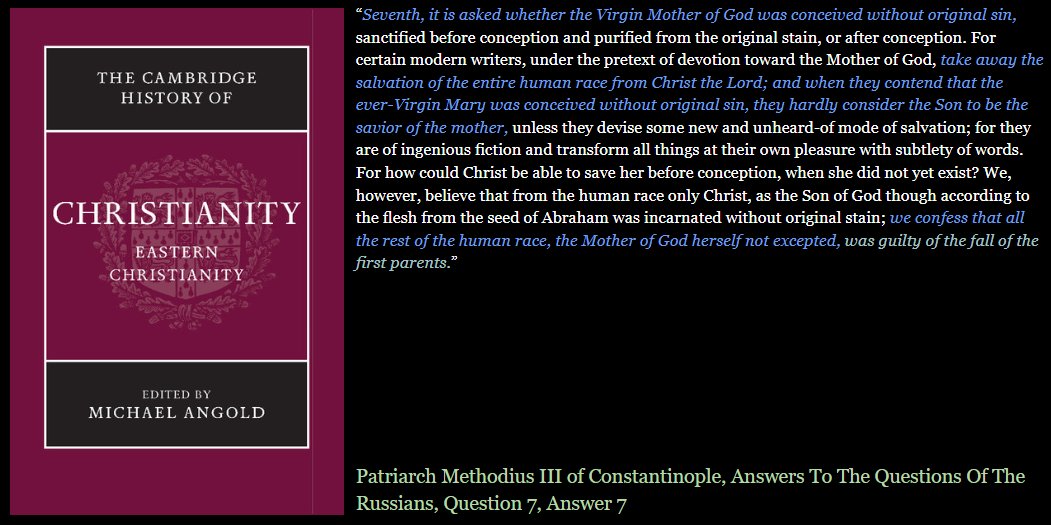
Patriarch Methodius III of Constantinople on inherited guilt and the immaculate conception.
5
11
53
3,985

Jun 16
✝️ 14 Juin
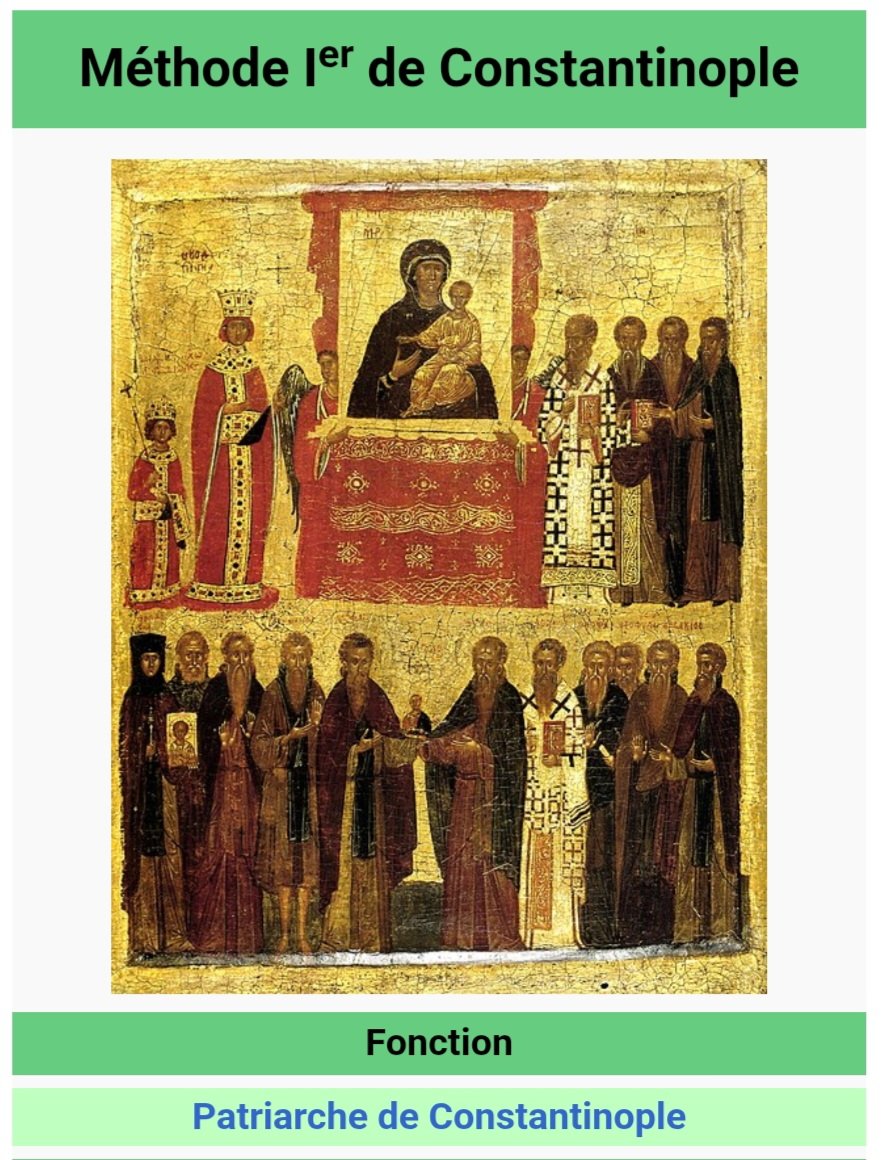
Méthode Ier de Constantinople († 847),
patriarche.
Méthode Ier de Constantinople (en grec ancien : Μεθόδιος, en latin Methodius) fut patriarche de Constantinople du 4 mars 843 à sa mort le 14 juin 847.
Son avènement correspondit au rétablissement du culte des images après la deuxième période iconoclaste : le triomphe de l'orthodoxie.
La principale source utilisée pour reconstituer la biographie de Méthode est une Vie (reproduite en PG, vol. 100) considérée comme très postérieure à la mort du patriarche.
L'attribution à Méthode de la Vie d'Euthyme de Sardes, transmise anonymement par un seul manuscrit, conduit à apporter certaines corrections aux données traditionnellement admises.
Il naquit à Syracuse, dans une riche famille, en 787 ou 788.
Jeune homme, il vint à Constantinople pour chercher un emploi à la cour, mais fut sensible à la prédication d'un moine et entra au monastère de Chènolakkos.
Il y devint peut-être higoumène.
En mars 815, l'empereur Léon V l'Arménien déposa le patriarche Nicéphore Ier de Constantinople et rétablit officiellement l'iconoclasme.
Méthode partit pour Rome, peut-être envoyé par Nicéphore, et y resta jusqu'au meurtre de Léon V le jour de Noël 820.
Ensuite, espérant apparemment un changement de politique religieuse de la part de Michel II, le nouvel empereur, il revint à Constantinople porteur d'une lettre du pape Pascal Ier réclamant le rétablissement du patriarche Nicéphore et l'abandon de l'iconoclasme.
Selon sa Vie, il n'eut pas plus tôt délivré son message à l'empereur qu'il fut saisi par les gardes, reçut 70 coups de fouet, puis fut enfermé dans un cachot souterrain qui était une ancienne tombe, où il resta pendant sept ans dans des conditions affreuses ; mais l'auteur de la Vie d'Euthyme de Sardes fut seulement consigné dans une cellule de monastère sur l'îlot Saint-André (mer de Marmara), où il écrivit plusieurs textes et eut des contacts suivis avec l'extérieur.
En 829, peu de temps avant sa mort, Michel II aurait, selon la Vie de Méthode, promulgué une amnistie générale qui aurait permis au futur patriarche de sortir de son cachot ; mais l'auteur de la Vie d'Euthyme resta consigné bien plus longtemps dans le monastère Saint-André où il se trouvait encore en 832, date de la rédaction de ce texte (avec une plus grande liberté de mouvement).
En 831, un autre texte prophétique circula, contenant l'annonce de la mort de l'empereur Théophile ; ce fut la raison de l'arrestation d'Euthyme de Sardes, apparemment accusé d'avoir diffusé le texte, conduit sur l'îlot Saint-André et soumis à un interrogatoire brutal, ponctué de coups de fouet, pour l'amener à dénoncer ses complices, à la suite de quoi il mourut.
Sous le pontificat du patriarche Jean VII le Grammairien (intronisé en 837), l'empereur Théophile trouva dans la bibliothèque du palais impérial un mystérieux document dont l'interprétation le tourmenta tellement qu'il en perdit l'appétit.
Son chambellan, nommé Jean, l'assura que Méthode pouvait lui en donner l'explication.
Avec l'accord de l'empereur, il se rendit sur l'îlot Saint-André, où le futur patriarche était donc toujours consigné.
Impressionné par la réponse fournie, Théophile fit venir Méthode au palais et le logea dans un bâtiment appelé le Sigma pour pouvoir le consulter quand il en aurait besoin.
Installé au palais, Méthode put nouer des liens avec l'impératrice Théodora, qui à l'insu de son époux était partisane du culte des images.
Après la mort prématurée de Théophile, en janvier 842, Théodora, devenue régente, et le ministre Théoctiste s'employèrent à écarter le patriarche Jean le Grammairien, et à rétablir le culte des icônes.
Une assemblée de dignitaires civils et religieux triés sur le volet se tint au domicile de Théoctiste le dimanche 4 mars 843, en l'absence du patriarche Jean ; elle réaffirma la validité du deuxième concile de Nicée de 787, déposa le patriarche (qui aurait été arrêté et enfermé dans un monastère),
suite 👇🏻
1
1
64