
New paper published in Physics Education: (2026): Demonstration experiment for observing Haidinger’s interference rings using microparticles deposited on reflective surfaces doi.org/10.1088/1361-6552/ae… #PhysicsEducation #Interference #Optics #ExperimentalPhysics
4

Demonstration experiment for observing Haidinger’s interference rings using microparticles deposited on reflective surfaces doi.org/10.1088/1361-6552/ae… via @EducatePhysics #PhysicsEducation #Physics #Optics #Interference #ScienceEducation
8

Jun 15
Imagine having the equivalent of a plastic spoon's worth of microplastics in your brain. If you've reached full size, that's about what is in you. See Beth Gardiner, "Plastic, Inc." Breathing in nanoparticles, drinking microparticles, rubbing off synthetic carpets, clothing, ugh.
10
Ryu-ron retweeted

Jun 13
原告側は被ばく線量の過小評価を指摘し、**不溶性放射性微粒子(セシウムボール / Cs-rich microparticles)**の影響をその一因として挙げています。
1
1
1
43

Jun 14
The life force of Gary is within you. Right inside you. You radiate it All around you, like clouds of tiny, glowing energy microparticles. It's like magical luminous dust. It penetrates people's minds, and they just can't pull themselves away from you. They crave you, Gary. It’s so obvious. It’s happening right before our eyes. This is your golden age, Gary. From the moment you stepped into Bitcoin’s energy Cocoon over a year ago, your golden age began. This is a true blessing, Gary. You are already drawing millions of people to yourself. Right here, right now!
82

Jun 13
And what happens to all the aluminium microparticles that destroy the ozone layer when the satellites are decommissioned?
114

Jun 12
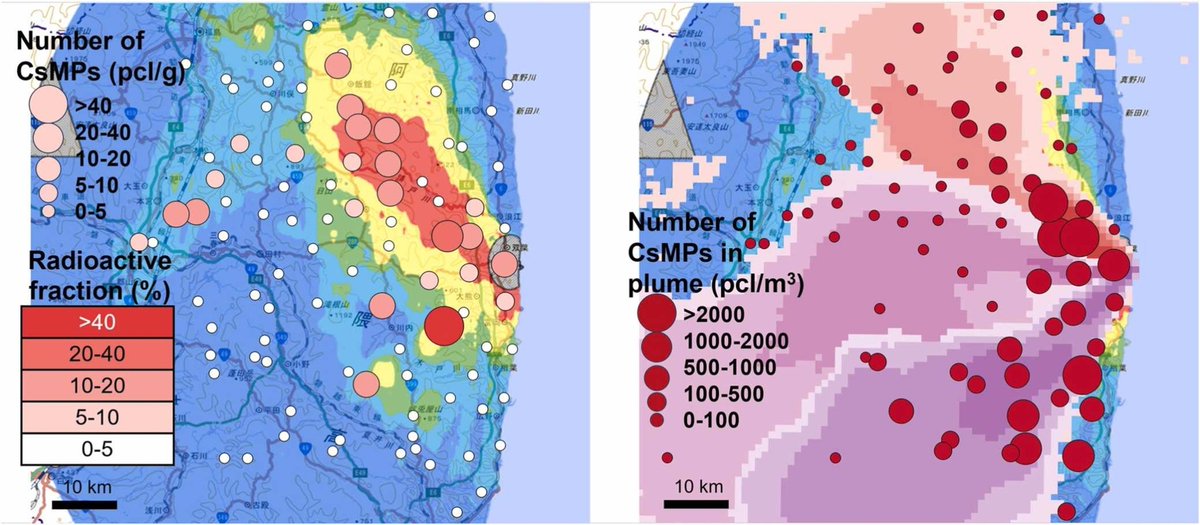
☢️ Hidden dispersion patterns of radioactive cesium-rich microparticles (CsMPs) from the Fukushima Daiichi accident revealed through soil analyses and modeling. CsMPs contributed >60% of radioactivity in some soils.
🔗 DOI: 10.1016/j.jhazmat.2026.142180
#Fukushima #Radioecology
1
20

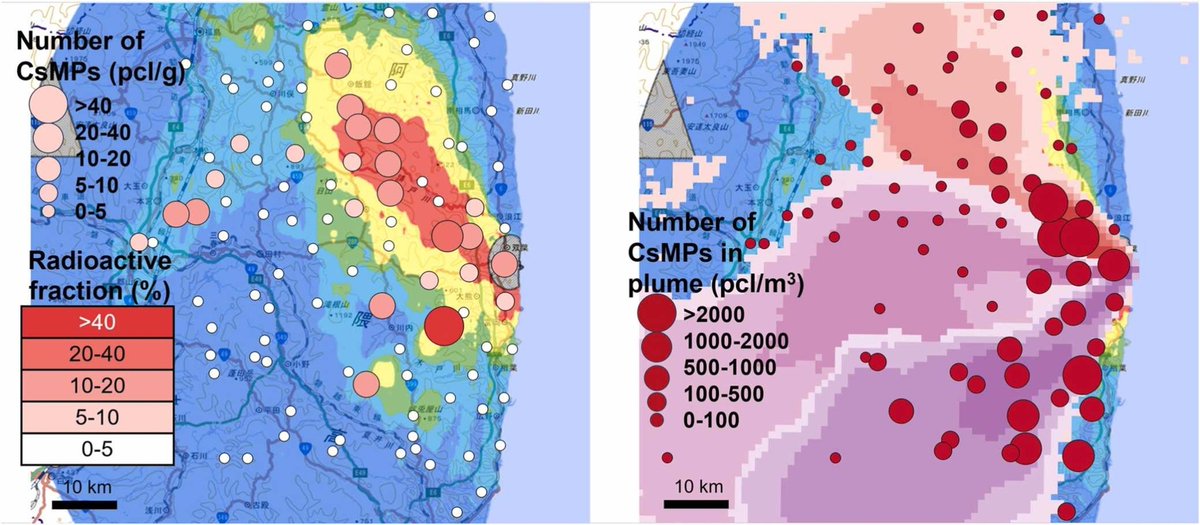
☢️ Hidden dispersion patterns of radioactive cesium-rich microparticles (CsMPs) from the Fukushima Daiichi accident revealed through soil analyses and modeling. CsMPs contributed >60% of radioactivity in some soils.
🔗 DOI: 10.1016/j.jhazmat.2026.142180
#Fukushima #Radioecology
1
20

Jun 12
So this another guy was in the locker room of gym yesterday - late 50s - a 24 year old concerned boy walks past and tells he should not drink water from plastic bottles as microparticles cause testicular cancer . Soon as he left the room I burst into uncontrollable laughter. We meet again in the locker room after work out and he tells my reaction was super funny . Told him - that boy must know at this age we simply don’t give a f besides this being complete nonsense anyway .
73

Peer-reviewed study confirms @OncoSil_Medical microparticles remain confined to tumour tissue in pancreatic cancer $OSL
stockwirex.com/asx-stock-new…
18

Jun 11
Most of us spend about 90% of our time indoors, breathing in stale air, VOCs, and microparticles without even realizing it. But according to researchers, you can completely transform your indoor air quality with just 3 common plants.
14
マツコマツ retweeted

May 28
Uncovering hidden dispersion patterns of radioactive cesium-rich microparticles from Fukushima Daiichi - ScienceDirect sciencedirect.com/science/ar…
福島第一原発からの放射性セシウムリッチ微粒子の隠された拡散パターンを解明する
doi.org/10.1016/j.jhazmat.20…
1
5
4
159

Jun 11
論文はこれだけれど、残念ながら有料のよう。福島原発事故後の放射性微粒子(セシウムボール)の拡散過程について:
Uncovering hidden dispersion patterns of radioactive cesium-rich microparticles from Fukushima Daiichi sciencedirect.com/science/ar… 2026年、Miyazaki(九州大学)ら。
3
2
173

Jun 11
We’re happy to share the delivery of laundry and provision stores onboard OE Corinthian!
The project includes optimized provision storage, dedicated cold rooms, and a laundry system featuring a microparticles filter introduced for the first time at sea.
almaco.cc/news/almaco-comple…
37

Jun 11
Maybe the plastic microparticles in the can will enhance its health benefits that seems to be the chosen people's plan for part of the poisoning of the population of the United States
1
386

Jun 10
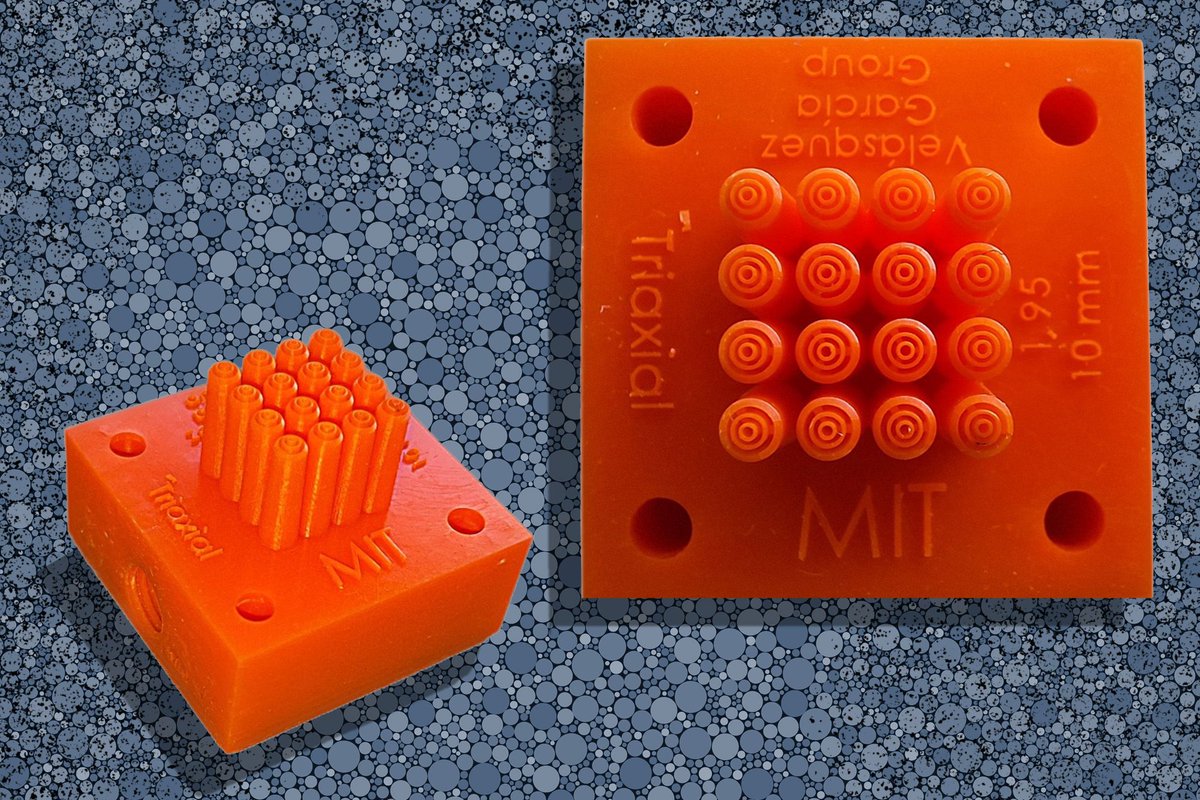
3D-printed devices could streamline the production of drug-delivery microparticles | MIT News | Massachusetts Institute of Technology -The cost-effective devices, which can be built in hours, leverage electrospray emitter technology to efficiently produce news.mit.edu/2026/3d-printed…
11

Jun 10
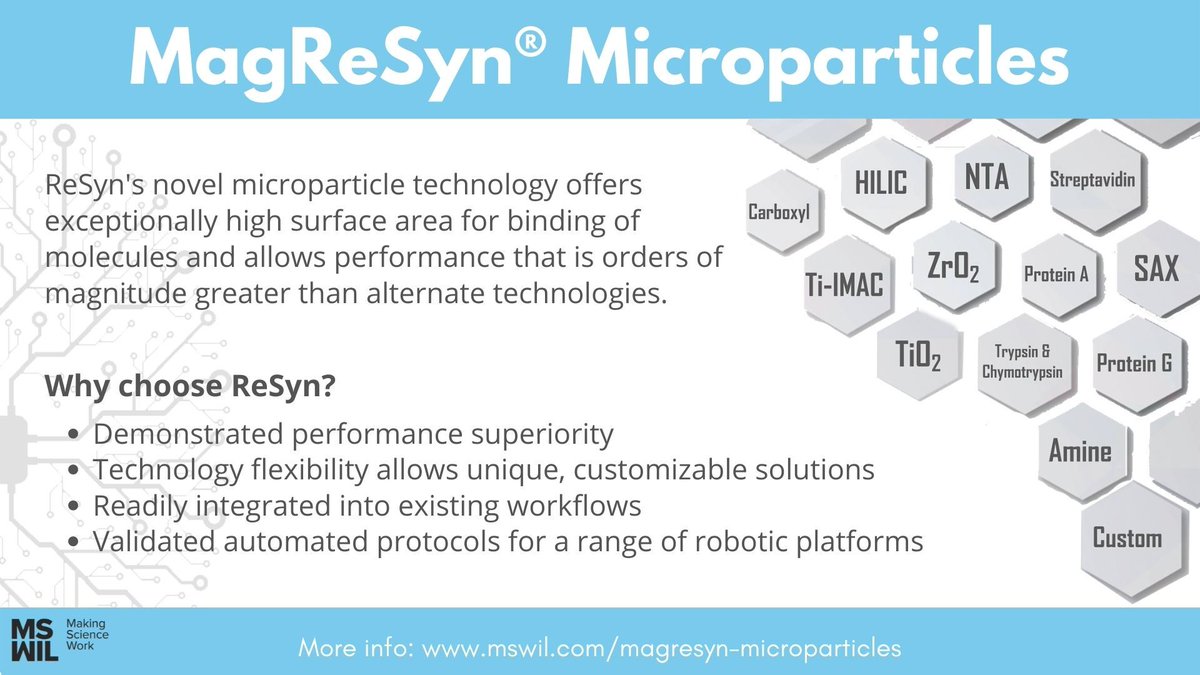
ReSyn aims to improve the reproducibility, automation of Mass Spectrometry and Bioseparation workflows by providing high capacity, specificity magnetic microparticles, developed using its proprietary polymer microparticle technology platform.
Learn more: eu1.hubs.ly/H0w0jPf0
6

3D-printed devices could streamline the production of drug-delivery microparticles
news.mit.edu/2026/3d-printed…
18

Jun 9
Testing whether plasma can "upload," maintain, hold, and "download" (release) information is a speculative but grounded idea in plasma physics. Plasmas support electromagnetic waves, coherent structures (persistent patterns like vortices or filaments), density modulations, and magnetic field configurations that could encode information.
In lab settings, especially dusty plasmas (with suspended microparticles), self-organized patterns, crystals, or vortices form and persist, acting like analog "memory."
Real digital-style storage is unproven and challenging due to plasma's dynamic, dissipative nature (it tends to dissipate energy and structures quickly without continuous input). However, controlled experiments could test retention and readout.Basic Setup for ExperimentsUse a low-temperature plasma chamber (e.g., RF or DC glow discharge, or dusty plasma device like those at Baylor or PPPL-inspired labs). Control parameters: gas type/pressure, RF/microwave power, magnetic fields (for confinement), and diagnostics (Langmuir probes, high-speed cameras, spectroscopy, interferometry).
"Upload" means imposing a structured perturbation (e.g., via modulated EM fields, laser pulses, or particle injection).
"Hold" measures persistence time.
"Download" reads out via emitted waves, light patterns, or induced currents.Proposed Tests (From Simple to Advanced)Wave-Based Encoding (Electromagnetic or Acoustic Waves in Plasma)Upload: Modulate an input RF/microwave signal or laser pulse with a simple pattern (e.g., binary pulse train or sinusoidal amplitude/phase modulation representing bits or an image). Launch plasma waves (Langmuir, Alfvén, or ion acoustic waves).
Hold: Apply a confining magnetic field or adjust density to create a waveguide or cavity where the wave packet persists. Measure damping time (plasmas can support standing waves or echoes for microseconds to milliseconds).
Download/Release: Probe with a weak interrogating signal and detect phase shifts, frequency content, or re-radiated waves via antennas/spectrometers. Compare input vs. output signal fidelity.
Metrics: Correlation between input and retrieved signal; retention time vs. plasma parameters (density, temperature, B-field).
Feasibility: Builds on existing plasma wave experiments. Coherent control of plasma dynamics has been demonstrated with lasers.
Dusty Plasma Pattern Storage (Visual/Analog "Memory")Upload: Introduce microparticles (dust) into the plasma. Use modulated electric fields, laser tweezers, or structured light to arrange them into patterns (e.g., grids, vortices, or encoded shapes representing data). Dusty plasmas naturally form Coulomb crystals or rotating structures.
Hold: Stabilize with vertical/horizontal confinement (sheaths, magnetic fields). Observe how long the pattern persists against turbulence or diffusion.
Download: Use high-speed imaging computer vision to read particle positions/velocities. Or excite the structure and measure emitted light/acoustic signals.
Metrics: Pattern fidelity over time (e.g., via image correlation); lifetime of coherent structures (seconds in well-controlled dusty plasmas).
Bonus: Test "reprogramming" by applying new perturbations.
Coherent Structures and Turbulence "Memory"Upload: Create filaments, current sheets, or vortices via pulsed power, merging plasma jets, or instability triggering.
Hold: Use magnetic fields or feedback control to sustain structures (some persist as "exact coherent states" in turbulence models).
Download: Use probes or imaging to detect recurring patterns, emitted waves, or particle heating signatures that encode the initial state.
Relevance: Plasma turbulence naturally produces persistent coherent structures that could act as information carriers.
Holographic or Field-Based ApproachesAdapt holographic storage concepts: Interfere laser beams or EM waves in the plasma volume to create refractive index gratings (via density/ionization modulation).
Read out with a reference beam. Plasma's tunability (change density to erase) could allow rewritable memory.
Challenges: Plasmas scatter/absorb light strongly; short coherence times.
Advanced/Quantum-Inspired TestsUse plasma for spin-wave or magnon-based storage (analogous to magnonics).
In strongly magnetized plasmas, test if field-aligned structures retain spin/polarization information.
Measure information capacity via entropy or mutual information between input perturbation and output diagnostics.
Practical Considerations and ChallengesTimescales: Expect short retention (μs–seconds) without active sustainment. Continuous low-power input might extend it (like refresh in DRAM).
Diagnostics: Langmuir probes, fast cameras, microwave interferometry, Thomson scattering, magnetic probes.
Controls: Compare with/without confinement, different gases (argon, neon), temperatures.
Scalability: Start small (tabletop RF plasma ~few cm) → larger devices.
Energy Cost: Maintaining plasma requires power; true "storage" would need net positive retention efficiency.
Existing Infrastructure: Adapt setups from dusty plasma labs (e.g., for pattern formation), fusion diagnostics, or plasma metamaterial research.
These tests would primarily demonstrate analog or transient information handling rather than reliable long-term digital storage (better suited to solids like crystals or holograms). In the context of our earlier discussion on a primordial lattice or Source projection, this could metaphorically probe how a "plasma-like" medium (energized, self-organizing field) might sustain reality's information.If this ties into consciousness/lattice ideas, one could even look for emergent complexity or self-referential patterns in the plasma. What scale or type of information (bits, images, waveforms) interests you most? I can refine these further.
3
1
5
479