Bryan Kelly retweeted

Microrobots: Two Decades of Progress | SmartBot | 2026-06-06
onlinelibrary.wiley.com/doi/…
1
2
74
Bryan Kelly retweeted
Magnetically guided biohybrid microrobots with multimodal locomotion for barrier penetration and multifunctional tumor treatment | Microsystems & Nanoengineering | 2026-06-08
nature.com/articles/s41378-0…
1
1
67

slitting my throat in front of 6 people tomorrow u will not hear me talking about microrobots
1
1
59

Los microrobots del tamaño de un grano de arroz (de 1.5 a 4 mm) representan una innovación crucial en la medicina. Son desarrollados por diversas instituciones y empresas (como Robeauté en Europa) para realizar cirugías poco invasivas y terapias dirigidas
📹: Doctor Negrete
EC⚡️
24
高橋正俊 retweeted

Jun 13
A new Science #Robotics Focus highlights the promise of biohybrid microrobots for varied biomedical applications and discusses bottlenecks in manufacturing and storage that could limit their clinical translation. @JWangnano
scim.ag/443SFWy
2
5
17
1,261

🌟 Featured Article | Editor’s Choice 🌟
#Micromachines #OpenAccess
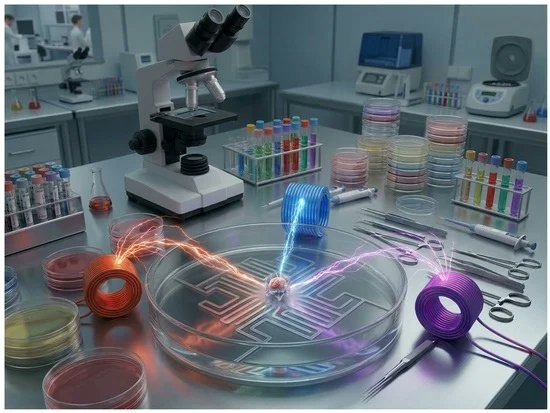
📄 Selective Magnetic Field Generation Method for Effective Manipulation of Two-Dimensional Magnetic #Microrobots Using a Triad of Electromagnetic Coils
by Lee et al.@knuniv
🔗 Full text: mdpi.com/2072-666X/17/3/337
2
21

📖🖍️Check out the #Article📢
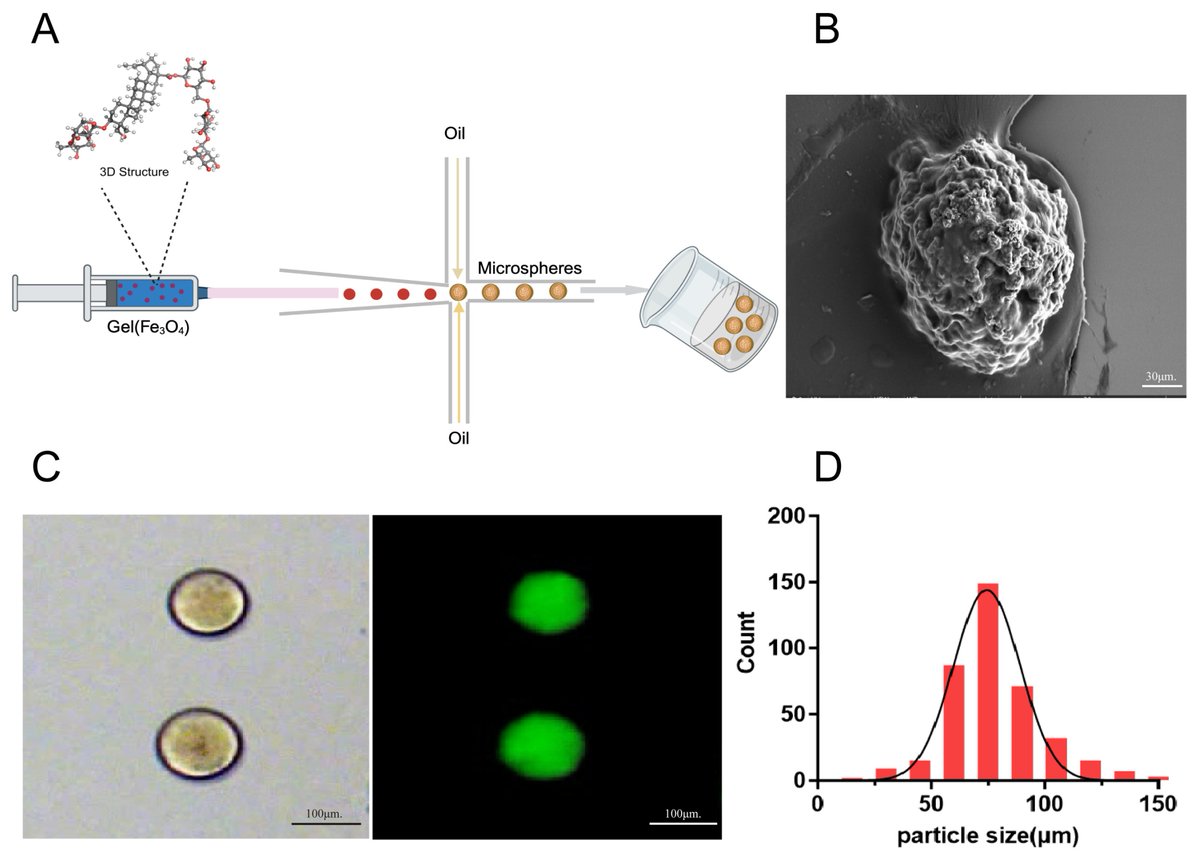
"Programmable #Magnetic #Navigation of Gelatin #Microrobots Enhances AB4 Delivery to Inflamed Lung Epithelium"
by Ziyong Yue et al.
Access the full paper here👉
brnw.ch/21x3jEs
22
عبد العزيز ١ retweeted

Jun 2
Scientists Use Magnetic Microrobots to Repair Spinal Cords & Make Paralyzed Mice Walk Again
#DiebO37 #Nanotechnology #Bio #Medicine
phys.org/news/2026-06-biohyb…
46
64
458

Jun 12
Surgery’s next robot may be invisible.
In 2025, Science reported magnetic microrobots that navigate, appear on imaging and release drugs in physiological conditions, with tests in vessel models and large animals [1]. That shifts surgery from “cut wider” to “target tighter.” 🧬
Surgical robots were valued at $6.6B in 2025 and forecast to reach $18.5B by 2033 [3]. The edge goes to hospitals that combine imaging, robotics and training. ⚕️
The bottleneck is trust. The FDA frames robotic surgery as trained-operator, OR-based care [2]. Nanorobots raise the bar.
🤔 What would make you trust a robot you cannot see in your body?
[1] [science.org/doi/10.1126/scie…](science.org/doi/10.1126/scie…)
[2] [fda.gov/medical-devices/surg…](fda.gov/medical-devices/surg…)
[3] [grandviewresearch.com/indust…](grandviewresearch.com/indust…)
#Nanorobotics #MedTech #RoboticSurgery
70
Lifeboat Foundation retweeted

Biohybrid microrobots repair spinal cord by combining stem cells with magnetoelectric nanoparticles lifeboat.com/blog/2026/06/bi…
1
6
9
230

📰Des microrobots transportant des cellules souches neuronales favorisent la réparation de la moelle épinière et restaurent rapidement certaines fonctions motrices chez le poisson-zèbre et la souris après une lésion.
nature.com/articles/s41563-0…
13

Jun 12
ROBEAUTE sounds absolutely insane. Brain-navigating microrobots for neurosurgery? That is straight out of a movie. The whole lineup is great but a robot literally traveling through brain tissue to treat disease is next level.
1
250

Jun 11
✅
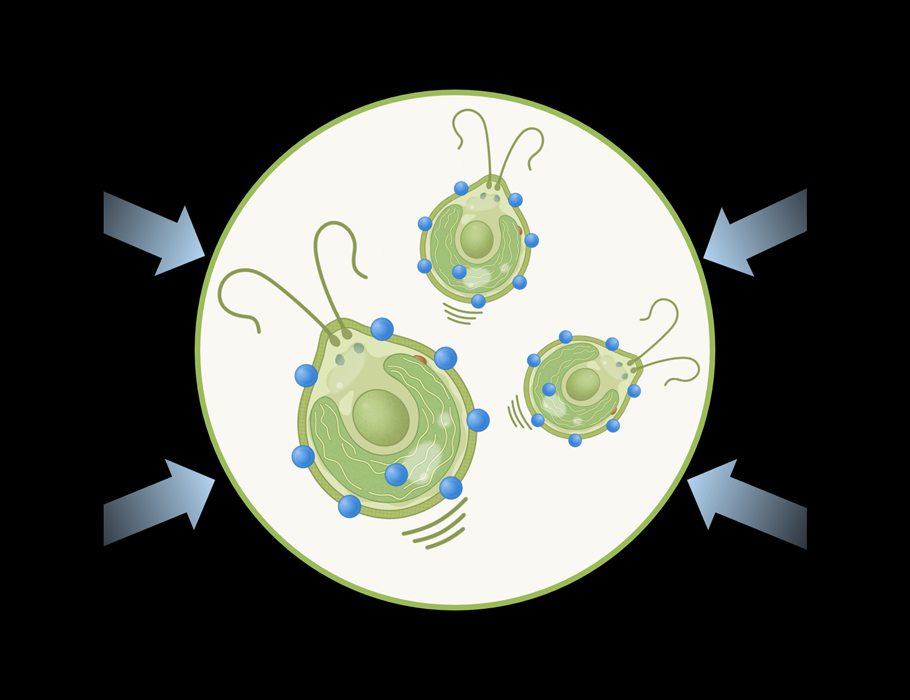
Living robot swarms built from algae can split, merge, and target wounds with light
┈┈┈┈┈┈┈┈┈┈┈┈┈┈┈┈ 🟢 🔴
Scientists at the University of California San Diego, developed living microrobots made from green algae and nanoparticles that can assemble into precise shapes using blue light and disperse with red light. The swarms can split, merge, and move while maintaining their structure. Researchers demonstrated a “smart bandage” concept where AI identifies infected wound regions, then guides the algae robots to assemble on medical tape matching the wound’s shape. Once applied, red light releases the microrobots into the wound, transferring nearly 90% within two minutes. The technology could enable targeted drug delivery and advanced wound treatment, though deeper tissue applications remain challenging.
Interestingengineering.com x.com/InsideOurBodies/status…
 Science Joy
27
jotter retweeted

Jun 11
Magnetic microrobots are a promising, experimental technology designed to treat blood clots by navigating vascular networks using external magnetic fields for precise, minimally invasive removal or drug delivery ...
1
1
115