
7 Jun 2025
📅 Pre-monsoon: South Odisha gets scattered thunderstorms.
Monsoon arrival (June 12): Systems bring heavy rain mostly to northern Odisha & West Bengal by mid-June.
#MonsoonPatterns #WeatherFacts #IndiaMonsoon 🌤️🌧️ 7/8
1
2
245

3 Jan 2025
Union Govt's River Interlinking Initiative Needs Reconsideration: Sandhwan yespunjab.com/?p=78964
#RiverInterlinking #KultarSinghSandhwan #WaterConservation #AgriculturalSustainability #MonsoonPatterns #KenBetwaProject #WaterManagement #JalShakti #PunjabAssembly #SustainableWaterUse #WaterResources #HydrologicalSystems #NationalPerspectivePlan
35

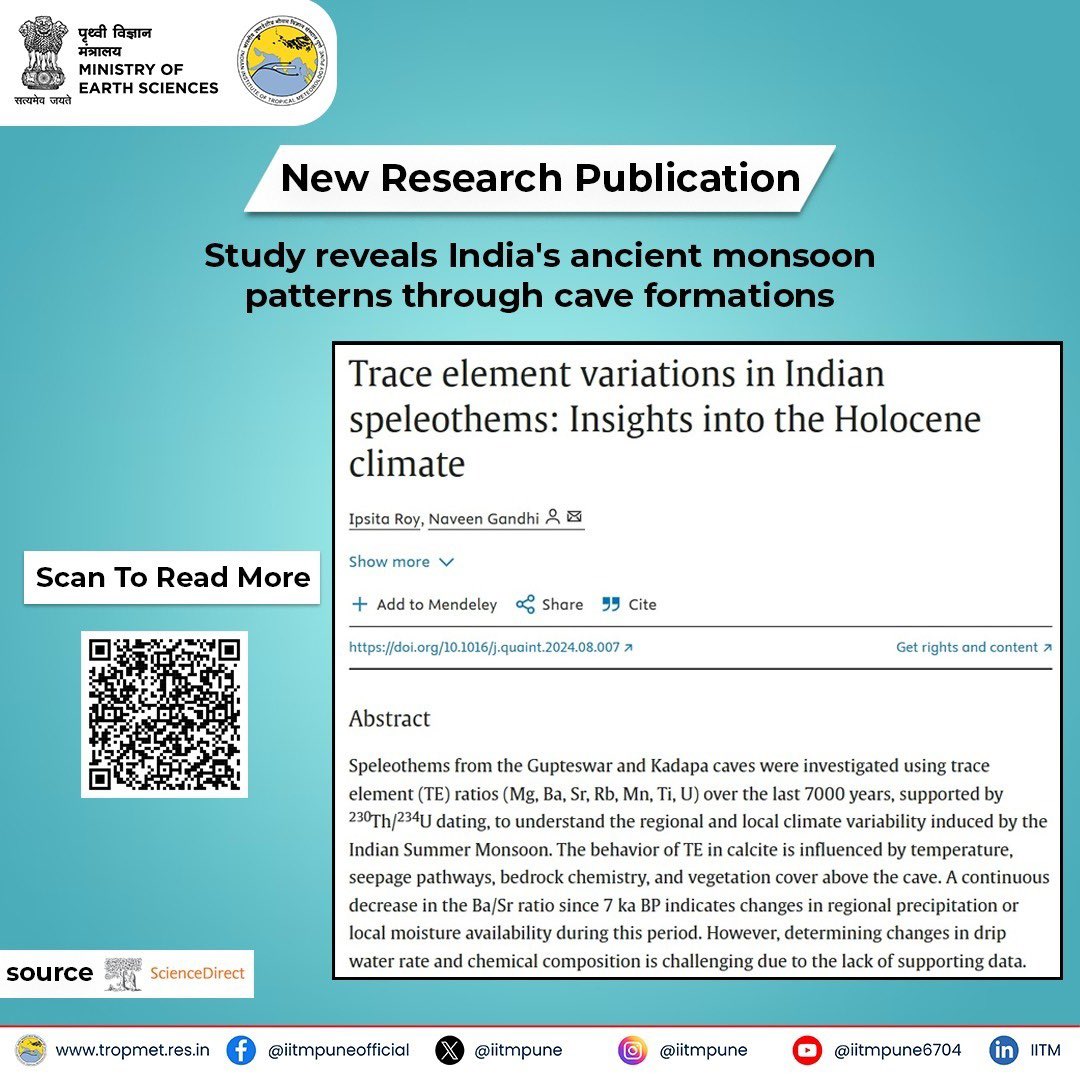
This research into trace elements in Indian speleothems (a structure formed in a cave by the deposition of minerals from water) reveals new insights into the Holocene climate, offering valuable clues about #monsoonpatterns and #environmentalchanges over millennia. This multi-proxy approach strengthens our understanding of past and future climate dynamics.
Read More: sciencedirect.com/science/ar…
#ClimateResearch #EarthSciences #IITMPune
5
191

8 Apr 2024
FAQ: 2024 El Nino heat? All the information on El Nino, including its duration and impact on Indian summers, is provided below:
The mechanism of El Nino
1. Ocean currents are impacted by a weakening or reversal of the east-to-west trade winds.
2. As a result, warmer surface waters can move eastward.
3. There is an increase in sea surface temperatures in the eastern and central Pacific.
4. This thus affects global weather patterns.
Sea surface temperatures in the central and eastern equatorial Pacific Ocean rise abnormally during El Niño, a climate phenomena. Every few years, it happens erratically and has the potential to significantly alter global weather patterns, causing droughts, floods, and other extreme weather events in different parts of the world.
————
How does Indian Summer get affected by El Nino?
El Niño usually modifies the monsoon patterns, which impacts Indian summers. El Niño years frequently cause the Indian monsoon to weaken, which causes below-average rainfall in several regions of the country. Crop yields and agriculture are impacted by the drought conditions, water shortages, and agricultural challenges that follow. El Niño can affect weather patterns and cause hotter and drier conditions in some parts of India if it occurs during the summer.
————
Timeline and Frequency:
El Nino affects global weather patterns and lasts for around nine to twelve months, peaking in December or January. usually appears in 2024 and develops in March–June and fades in April–June.
Strong rainfall activity has been present across the Indian subcontinent during El Nino downturns in previous years' data, and it appears that this time is no different. The news is positive for farmers in India.
Spread the word about El Nino to those who need to know!
#ElNino #ClimatePhenomenon #GlobalWeatherPatterns #IndianSummer #MonsoonPatterns #Drought #Floods #ExtremeWeather #CropYields #Agriculture #WeatherImpact #Timeline #Frequency #RainfallActivity #Farmers #ClimateAwareness
1
2
2
179

10 Jul 2023
#ClimateChange #MonsoonPatterns #Sustainability
💧 Climate change and its influence on monsoons remind us of the interconnectedness of our planet's systems and the urgent need for collective action. It is a call to prioritize sustainability, resilience, and a shared responsibility to safeguard our environment and future generations. Let's work together to address climate change and protect the delicate balance of our monsoon systems. 🌏🌱
🌿 Mitigating climate change itself is key to addressing the impacts on monsoons and other natural systems. By reducing greenhouse gas emissions, transitioning to clean and renewable energy sources, and adopting sustainable practices, we can work towards stabilizing global temperatures and minimizing future disruptions to monsoon patterns.
7
12
809

10 Jul 2023
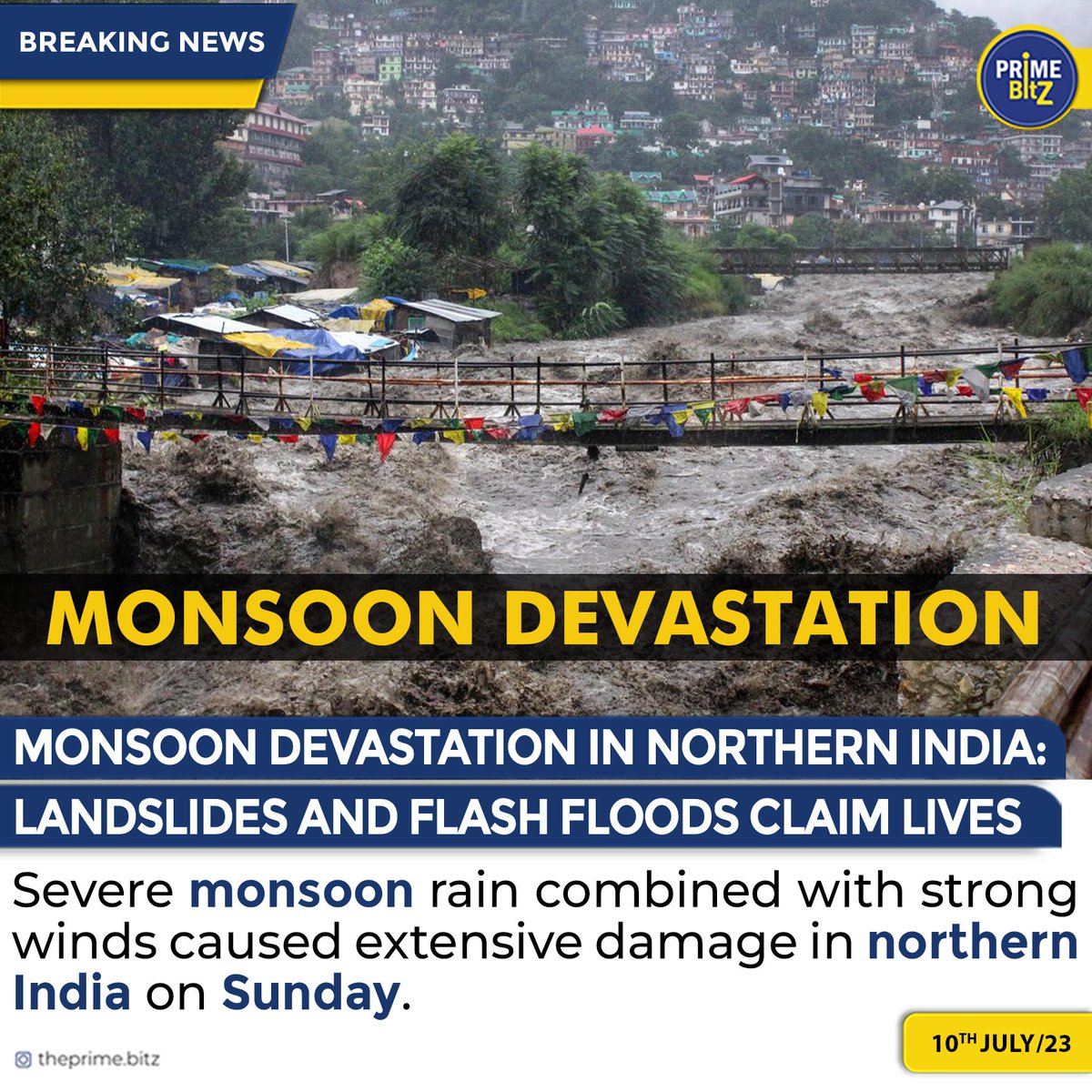
Monsoon Devastation in Northern India: Landslides and Flash Floods Claim Lives. #Monsoon2023 #NorthIndia #landslides #HimachalPradesh #JammuAndKashmir #MonsoonPatterns
4
214
10 Jul 2023
#ClimateActionNow
🌧️ Climate change has the potential to significantly impact monsoon patterns. As global temperatures rise, several factors come into play, affecting the monsoon system. One key effect is intensified rainfall. With climate change, increased evaporation rates occur, leading to more moisture in the atmosphere. As a result, rainfall during the monsoon season can become more intense, with heavier downpours and heightened flood risks in certain regions.
💦 The additional moisture in the atmosphere can contribute to a greater availability of water for precipitation. When the monsoon arrives, this surplus moisture combines with other atmospheric conditions, leading to more concentrated and intense rainfall events. The increased intensity of rainfall poses challenges in terms of water management, infrastructure resilience, and disaster preparedness.
🌊 The impact of intensified rainfall on flood risks is particularly concerning. Heavy downpours can overwhelm drainage systems, rivers, and water bodies, leading to flash floods and inundation of low-lying areas. These extreme flood events can have devastating consequences for communities, damaging infrastructure, displacing populations, and causing loss of life and property.
🌍 However, it's important to note that the effects of climate change on monsoons can vary across different regions. While some areas may experience intensified rainfall, others may face the opposite scenario, such as decreased rainfall or more erratic rainfall patterns. These regional variations highlight the complex and localized nature of climate change impacts on monsoons.
⏳ Understanding and predicting these changes is crucial for adapting to the challenges posed by a changing climate. Scientists and researchers are studying monsoon dynamics, atmospheric patterns, and oceanic conditions to improve climate models and forecasting capabilities. This knowledge is vital for governments, policymakers, and communities to implement effective adaptation measures and sustainable water resource management practices.
🌿 Mitigating climate change itself is key to addressing the impacts on monsoons and other natural systems. By reducing greenhouse gas emissions, transitioning to clean and renewable energy sources, and adopting sustainable practices, we can work towards stabilizing global temperatures and minimizing future disruptions to monsoon patterns.
💧 Climate change and its influence on monsoons remind us of the interconnectedness of our planet's systems and the urgent need for collective action. It is a call to prioritize sustainability, resilience, and a shared responsibility to safeguard our environment and future generations. Let's work together to address climate change and protect the delicate balance of our monsoon systems. 🌏🌱 #ClimateChange #MonsoonPatterns #Sustainability
5
49
105
57,321
9 Jul 2023
#ClimateChange #MonsoonPatterns #Sustainability
Effects of climate change on monsoons can vary across different regions. While some areas may experience intensified rainfall, others may face the opposite scenario, such as decreased rainfall or more erratic rainfall patterns. These regional variations highlight the complex and localized nature of climate change impacts on monsoons.
⏳ Understanding and predicting these changes is crucial for adapting to the challenges posed by a changing climate. Scientists and researchers are studying monsoon dynamics, atmospheric patterns, and oceanic conditions to improve climate models and forecasting capabilities. This knowledge is vital for governments, policymakers, and communities to implement effective adaptation measures and sustainable water resource management practices.
@narendramodi @gopalkagarwal @PiyushGoyal @nitin_gadkari @nitishrajput @sanjeevsanyal @simarpreeths @MichaelEMann @PeterHotez @LeoDiCaprio @rickykej @Varun_dvn @SidBakaria @ErikSolheim @pmalbranche @OlumideIDOWU @ClimateHuman @Ravisutanjani @pbillore141 @EvanKirstel @ARanganathan72 @RandeepHooda @AfrozShah1
9 Jul 2023

50 Years bridge over the bias River flooded away in Himachal at Mandi
1
9
26
3,361
9 Jul 2023
#ClimateChange #MonsoonPatterns #Sustainability
💧 Climate change and its influence on monsoons remind us of the interconnectedness of our planet's systems and the urgent need for collective action. It is a call to prioritize sustainability, resilience, and a shared responsibility to safeguard our environment and future generations. Let's work together to address climate change and protect the delicate balance of our monsoon systems. 🌏🌱
🌿 Mitigating climate change itself is key to addressing the impacts on monsoons and other natural systems. By reducing greenhouse gas emissions, transitioning to clean and renewable energy sources, and adopting sustainable practices, we can work towards stabilizing global temperatures and minimizing future disruptions to monsoon patterns.
@SidBakaria @ErikSolheim @SinghalSailesh @yamigautam @maveinlux @AnupamPKher @SonuSood @simarpreeths @TheVineetMittal @bhash @Connect_Lokesh @pallavict @teamkangana @TheVikasKhanna
18
25
5,125
9 Jul 2023
🌧️ Climate change has the potential to significantly impact monsoon patterns. As global temperatures rise, several factors come into play, affecting the monsoon system. One key effect is intensified rainfall. With climate change, increased evaporation rates occur, leading to more moisture in the atmosphere. As a result, rainfall during the monsoon season can become more intense, with heavier downpours and heightened flood risks in certain regions.
💦 The additional moisture in the atmosphere can contribute to a greater availability of water for precipitation. When the monsoon arrives, this surplus moisture combines with other atmospheric conditions, leading to more concentrated and intense rainfall events. The increased intensity of rainfall poses challenges in terms of water management, infrastructure resilience, and disaster preparedness.
🌊 The impact of intensified rainfall on flood risks is particularly concerning. Heavy downpours can overwhelm drainage systems, rivers, and water bodies, leading to flash floods and inundation of low-lying areas. These extreme flood events can have devastating consequences for communities, damaging infrastructure, displacing populations, and causing loss of life and property.
#ClimateChange #MonsoonPatterns #Sustainability
@narendramodi @gopalkagarwal @nitin_gadkari @Rajeev_GoI @khushsundar @pmalbranche @sanjeevsanyal @niraj_shah @chandrarsrikant @MichaelEMann @MichaelEMann @AidanRGallagher
9 Jul 2023

The situation in Derabasi Chandigarh is, water raised to the first floor
4
23
42
9,912

Been designing #seamlesspatterns everyday for 150 days now! Here’s 150th post from my Buttaharu insta page instagram.com/p/CTSZwruqYYX/ #patterns #monsoonpatterns #paperboat #paperboatpatterns #everydaypattern @figmadesign

1
3