John Kiel, DO/MPH retweeted

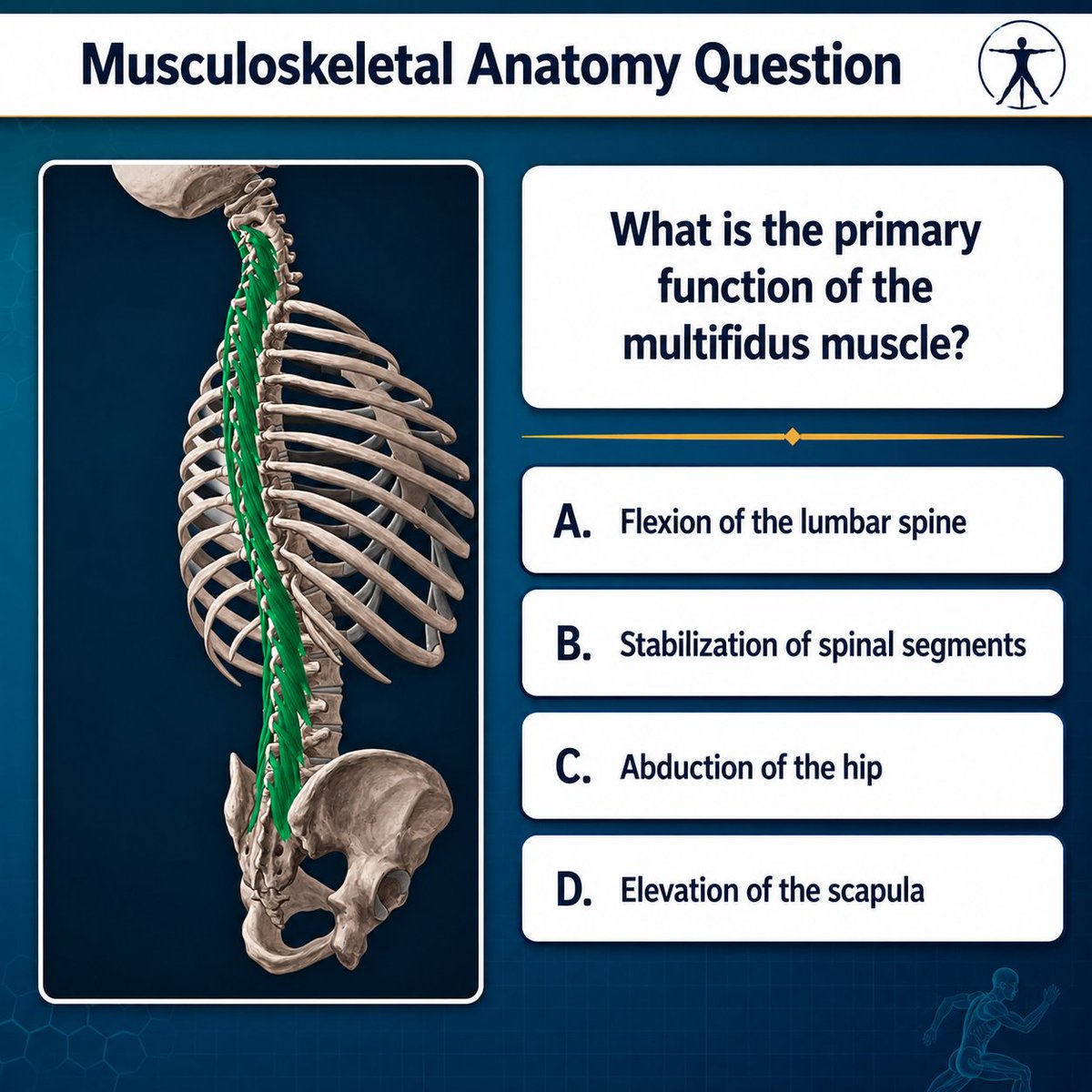
🧠 Musculoskeletal Anatomy Question
What is the primary function of the multifidus muscle?
A. Flexion of the lumbar spine
B. Stabilization of spinal segments
C. Abduction of the hip
D. Elevation of the scapula
The multifidus is one of the most important deep stabilizers of the spine and plays a key role in posture, movement control, and spinal health.
💬 Drop your answer in the comments!
🔗 Full explanation on Wikism.org
#MusculoskeletalAnatomy #AnatomyQuestion #SpineAnatomy #Multifidus #MedicalEducation
3
2
8
364

Biomechanics is REAL but most people are now starting to use it as an aesthetic language and marketing instead of actual science.
Real biomechanics is not just posterior chain or fascial lines. It is the study of force, torque, lever arms, joint moments, ground-reaction forces, tissue stiffness, elastic recoil, neuromuscular timing, tendon compliance, Fascial force transmission and mechanostransduction.
The posterior chain is real but you are talking about it as usual incomplete. The actual posterior chain kinetics use gluteus maximus, hamstrings, adductor magnus posterior fibers, gastrocnemius-soleus complex, erector spinae, multifidus, deep hip rotators, thoracolumbar fascia, latissimus dorsi and contralateral gluteal sling. It’s main functions are hip extension, pelvic control, spinal stiffness, sprint propulsion, jumping, hinging, gait, declaration and force transfer from the lower body into the trunk.
The human body does not perform best when one chain dominantes everything. Elite mechanics require posterior chain, anterior chain, lateral chain, rotational sling, foot arch, pelvis ribcage, diaphragm and cervical spine all coordinating together. If the posterior chain is weak, you lose hip extension, hamstring stiffness, spinal control and athletic propulsion but if someone becomes excessively posterior braced with no anterior trunk control, no ribcage depression, no abdominal pressure and no foot mechanics, they create another compensation pattern.
Therefore there is no universal goal. The real goal is force distribution during lifting, sprinting, chewing, walking, the body needs the right tissue to accept the right load.
Fascia is also real but not in fake way. Fascia is not a mystical sheet that explains every jaw, posture, trauma, hormone and face problem. Fascia is collagen-rich extracellular matrix containing fibroblasts, myofibroblasts, elastin, proteoglycans, hyaluronic acid, water, nerves, vessels, and mechanosenstive receptors. It's real role is force transmission, tissue compartmentalization, sliding, proprioception, elastic recoil and mechanical continuity between muscles.
The thoracolumbar fascia is one of the best examples of fascia. It connects the paraspinals, abdominal wall, pelvis region tissues, and latissimus dorsi and it helps integrate force between the trunk and the lower body. This is not cope it is real pmc.ncbi.nlm.nih.gov/article…
The chain is:
mechanical load → extracellular matrix strain → integrin deformation → talin/vinculin recruitment → focal adhesion → Src/RhoA/ROCK → actomyosin tension → nuclear → mechanosesing → YAP/TAZ translocation → Collagen synthesis → fibroblast activity → Matrix remodeling
The real model is:
Force → Tissue strain → cellular mechanosensing → transcriptional response → matrix remodeling and structural adaptation
The fake model is:
Tight fascia → release fascia → posture fixed → hormones fixed → Face fixed
The Editing Team and @OscarPatel who made this video with their own ChatGPT scripts is just misleading. This is not me hating on you. But your team and you actually need to research also Don't steal OTHER Peoples images and content. You are literally being accused and we have proof.
The website Fasciacompany is made with Claude and has no real functions.
I wonder why Oscar Patel blocked me on Instagram and Tiktok for no reason.
Very High Testosterone and DHT behaviour lmao
Jun 14

Top UFC Fighters make this crucial mistake which ruins careers
2
2
33
1,687

Jun 13
Beyond the pars defect: multifidus degeneration as an independent predictor of vertebral slippage severity in isthmic lumbar L5 spondylolisthesis European Spine Journal | Springer Nature Link - link.springer.com/article/10…
19
Jun 13
The degree of vertebral slippage in isthmic lumbar spondylolisthesis was specifically associated with multifidus atrophy, while other paraspinal muscles showed no such relationship. These results support the distinct biomechanical role of the multifidus in segmental stability.
1
13


Jun 10
Don't be fooled by how subtle these Pilates exercises look!
Even though I don't even lift my head from the floor once, I'm working very hard!
The deep stabilising system; pelvic floor, transverse abdominis, multifidus and diaphragm, supports your spi...
162

Do athletes with chronic low back pain have distinct lumbar multifidus changes? 🪵 This new meta-analysis shows structural features are actually similar to pain-free controls. Expand your #SportsPT reasoning, read now, and share with a peer: ijspt.scholasticahq.com/arti…
@alex_wong1112

1
4
8
364

💥 Want a stronger, pain-resistant back? Ditch the endless crunches.
Meet the Bird Dog — one of Dr. Stuart McGill’s “Big Three” core exercises proven to build spine stability.
It delivers excellent muscle activation with surprisingly low stress on your lower back, making it safe and effective even for people with back pain.
What makes it powerful? It’s an anti-rotation challenge.
Extending opposite arm and leg forces your core to fire diagonally, especially hitting the multifidus and erector spinae (key muscles that often weaken in chronic back pain sufferers).
This movement activates your trunk muscles far better than most standing balance exercises.
✅ How to do it:
1. On all fours, brace your core and slowly extend one arm forward opposite leg back.
2. Keep your hips level and back flat.
3. Hold 5–10 seconds, then switch.
Simple, smart, and spine-friendly.
Who’s adding bird dogs to their routine? Drop a 🐦 if you’re trying it!
#SpineHealth
#CoreStrength
#BackPainRelief
9
26
145
3,899

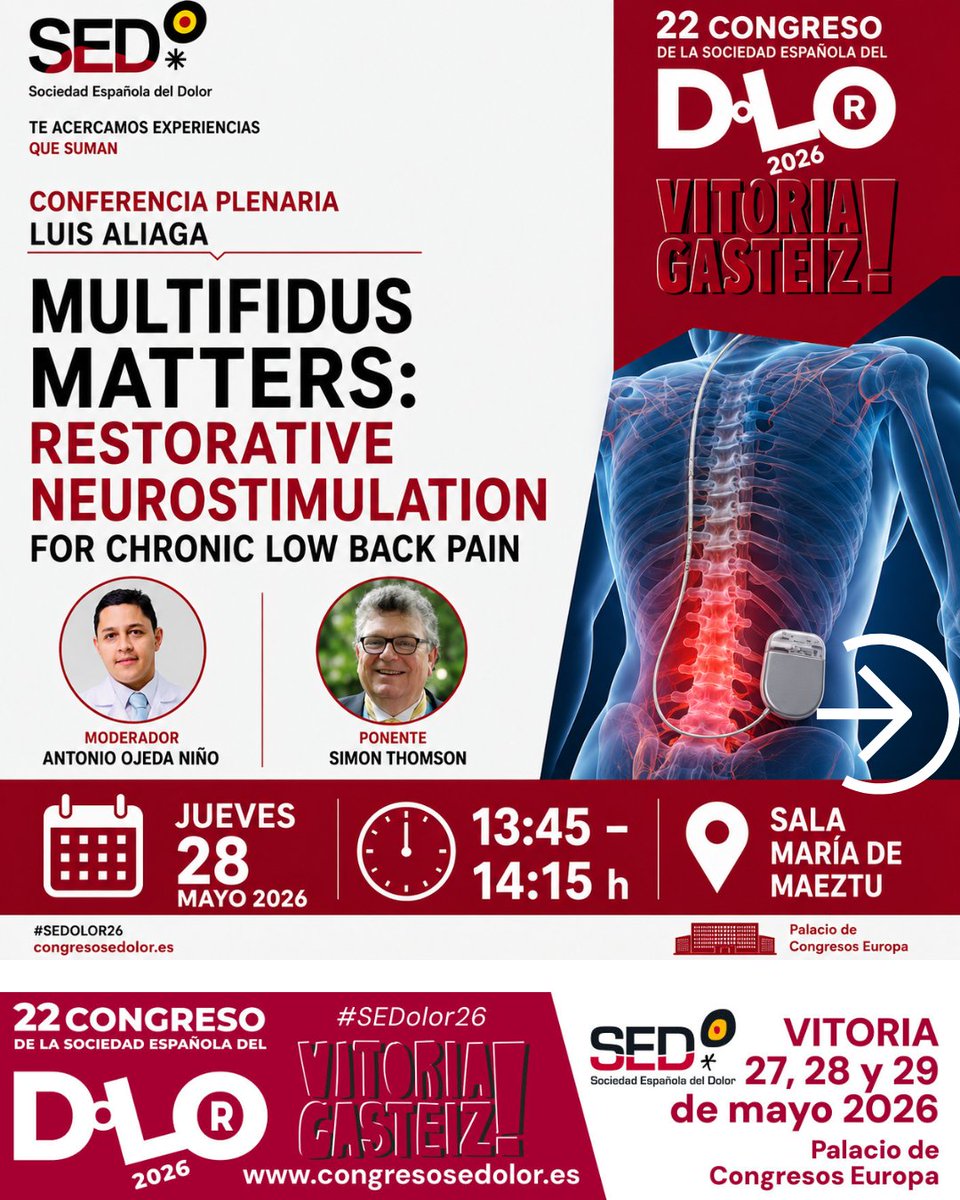
#SEDOLOR26 ¡No te pierdas la 🔴Conferencia Plenaria Luis Aliaga! HOY ⏰ 13:45–14:15 📍 Sala María de Maeztu
📌 MULTIFIDUS MATTERS: RESTORATIVE NEUROSTIMULATION FOR CHRONIC LOW BACK PAIN
👤 Moderador: Antonio Ojeda Niño @tratar_eldolor 🗣️ Ponente: @drsimonthomson
#DolorCrónico #Neuroestimulación
2
2
211
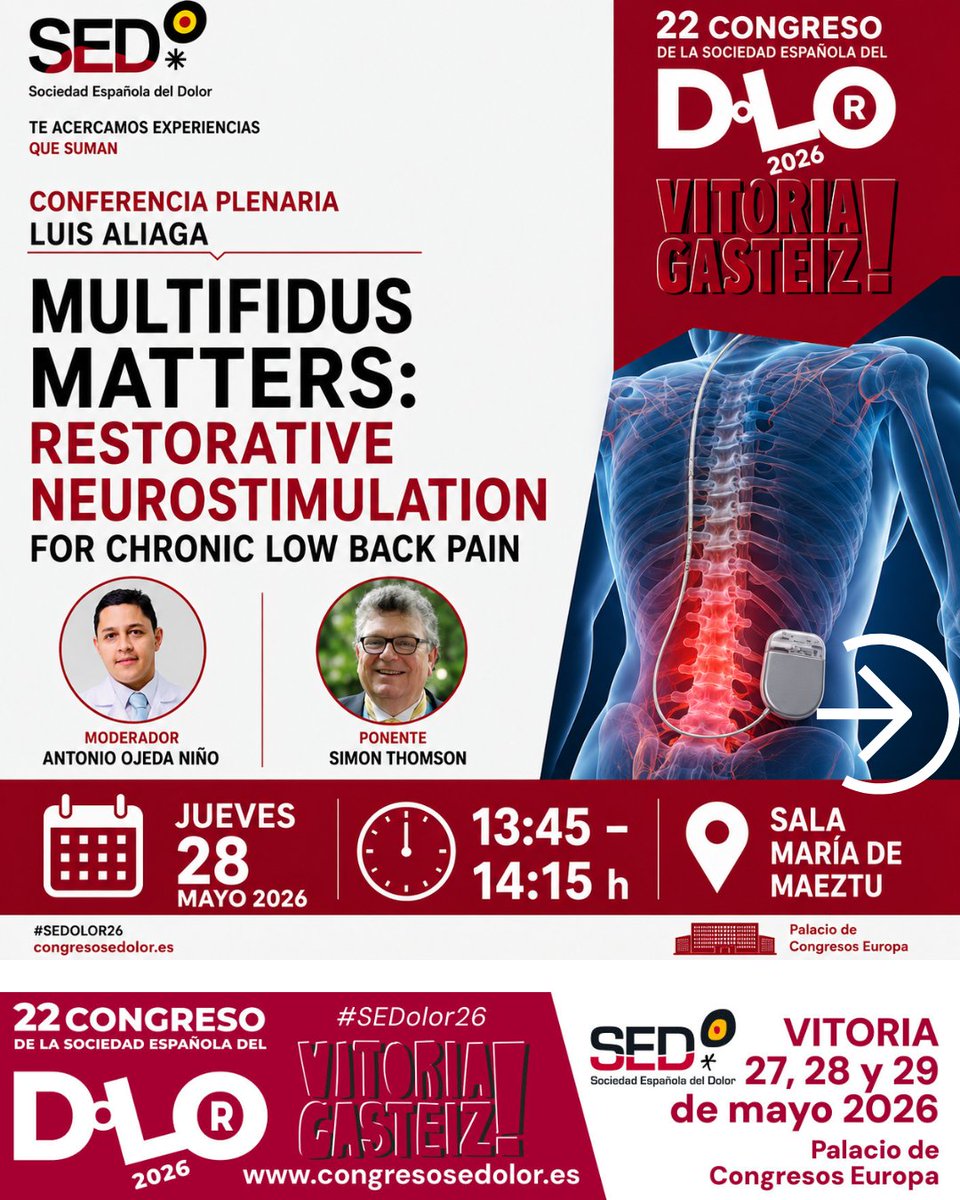
Estas son las Conferencias Plenarias que tenemos este año en el 22 Congreso de la Sociedad Española del Dolor.
📍 Sala María de Maeztu
🔴Conferencia Plenaria Luis Aliaga
📌 MULTIFIDUS MATTERS: RESTORATIVE NEUROSTIMULATION FOR CHRONIC LOW BACK PAIN
👤 Moderador: Antonio Ojeda Niño 🗣️ Ponente: Simon Thomson
📅 Jueves 28 mayo ⏰ 13:45–14:15
1
1
2
187
Estas son las Conferencias Plenarias que tenemos este año en el 22 Congreso de la Sociedad Española del Dolor.
Conferencia Plenaria Luis Aliaga
📌 MULTIFIDUS MATTERS: RESTORATIVE NEUROSTIMULATION FOR CHRONIC LOW BACK PAIN
👤 Moderador: Antonio Ojeda Niño 🗣️ Ponente: Simon Thomson
📅 Jueves 28 mayo ⏰ 13:45–14:15 📍 Sala María de Maeztu
Conferencia Plenaria Enrique Reig
📌 Lo que una enfermedad rara de la piel puede enseñarnos sobre el dolor neuropático
👤 Moderador: Enrique Cobos del Moral 🗣️ Ponente: Margarita Calvo Bascuñán
📅 Jueves 28 mayo ⏰ 16:30–17:00 📍 Sala María de Maeztu
Conferencia Plenaria José Luis Madrid Arias
📌 RESINIFERATOXIN: WHEN PAIN PERSISTS, SCIENCE RESPONDS
👤 Moderador: Denis Dupoiron 🗣️ Ponente: Andrew J. Mannes
📅 Viernes 29 mayo ⏰ 11:00–11:30 📍 Sala María de Maeztu
Conferencia Plenaria Juan Antonio Micó
📌 CANNABINOIDES Y DOLOR. HABLEMOS DE CIENCIA
👤 Moderador: Fernando Cerveró 🗣️ Ponente: Carlos Goicoechea
📅 Viernes 29 mayo ⏰ 14:00–14:30 📍 Sala María de Maeztu
#DolorCrónico #investigación #Dolorneuropático #Cannabinoides #Neuroestimulación
3
7
191
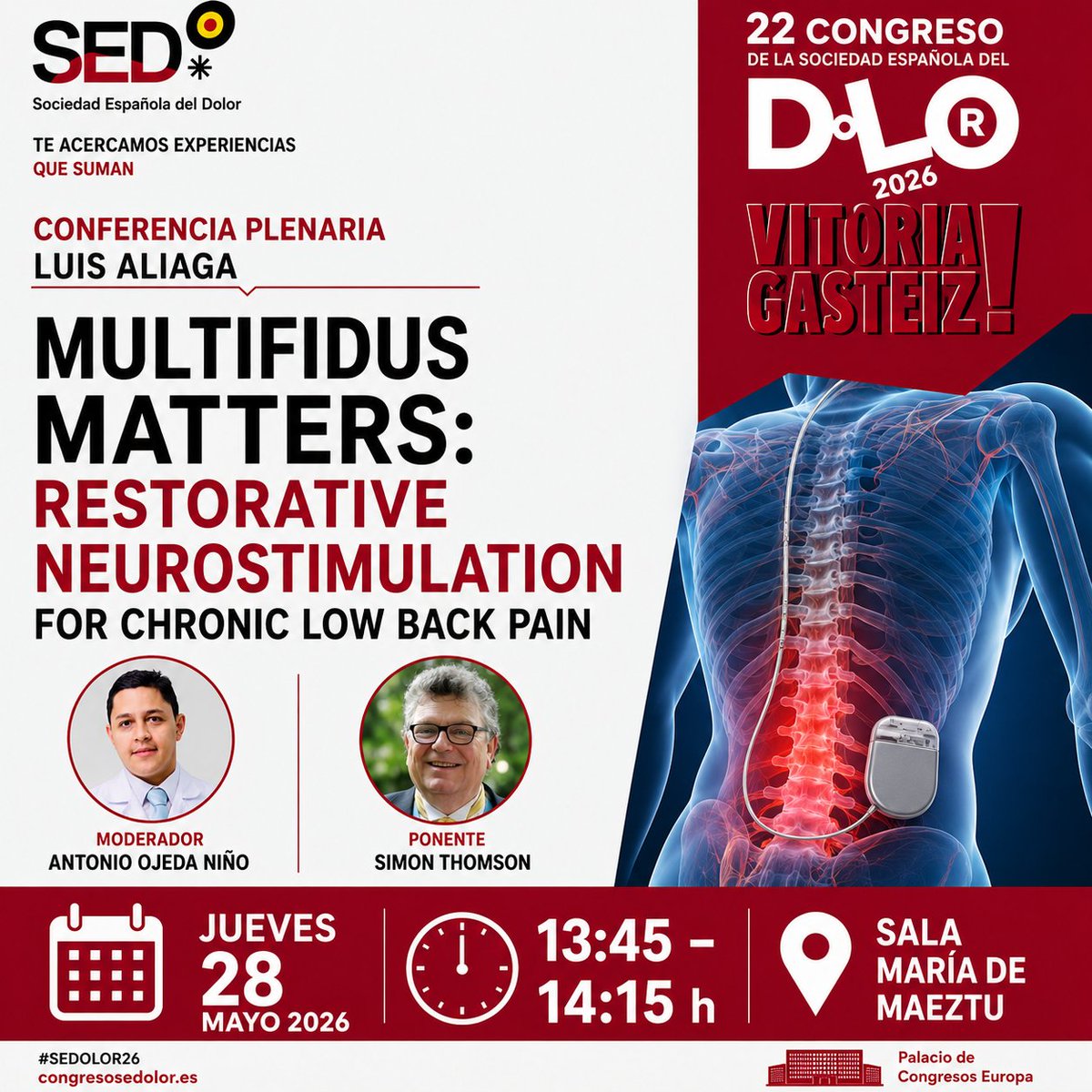
▶️Conferencia Plenaria Luis Aliaga
📅 Jueves 28 mayo ⏰ 13:45–14:15 📍 Sala María de Maeztu
📌 MULTIFIDUS MATTERS: RESTORATIVE NEUROSTIMULATION FOR CHRONIC LOW BACK PAIN
👤 Moderador: Antonio Ojeda Niño 🗣️ Ponente: Simon Thomson
#SEDOLOR26
1
2
284

May 10
This exercise targets the deep core muscles.
Since my multifidus muscles are weak, I do this every day.
9
3
136
1,317


Apr 26
3. Tip: Omurga İstikrarsızlığı, Zayıf Postür ve Mekanik Bel Ağrısı (4/5)
Muayene Bulgusu: Hastada belirgin bir disk patolojisi yoktur ancak zayıf karın kasları (zayıf core bölgesi) ve duruş bozukluğu saptanır,. Uzun süre oturmakla veya yük taşımakla yorgunluk tarzı ağrı gelişir.
Hedef: Omurgayı bir korse gibi saran derin kasları (multifidus, transversus abdominis) güçlendirerek omurgaya binen yükü dengelemektir.
Nokta Atışı Egzersizler (Lomber Stabilizasyon):
Köprü Kurma (Bridging): Sırtüstü dizleriniz bükülü yatarken karın ve kalça (gluteal) kaslarınızı sıkarak kalçanızı havaya kaldırın. Yukarıda düz bir hat oluşturun, 5-10 saniye bekleyip yavaşça indirin,. Bu egzersiz pelvisin stabilitesini büyük ölçüde artırır.
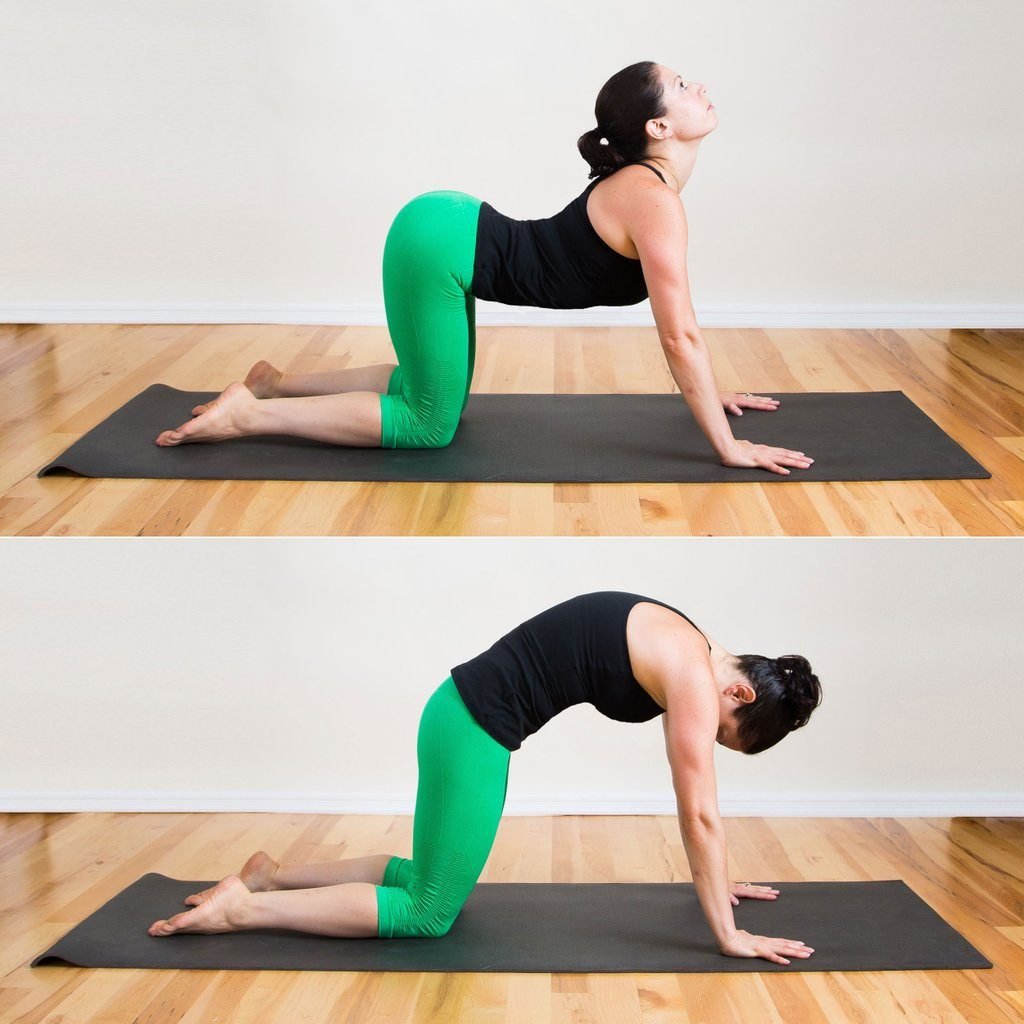
Kedi-Deve Egzersizi: Emekleme (dört ayak) pozisyonu alın. Başınızı öne eğerken sırtınızı ve belinizi tavana doğru kamburlaştırın (kedi). Ardından başınızı kaldırırken belinizi aşağı doğru çukurlaştırın (deve). Pelvis kontrolünü artırmak ve ağrıyı azaltmak için çok etkilidir.
1
1
6
1,253

Apr 17
Exercise 2: Bird Dog
Start on hands and knees.
Extend opposite arm and leg, hold 5 seconds.
Focus on keeping hips level and spine neutral.
Builds multifidus strength and anti-rotation control.
1
2
16
2,759
Apr 17
Muscle #2: Multifidus
Tiny muscles running along each vertebra.
They provide segmental control and proprioception.
Studies show they atrophy in chronic back pain and WON'T recover without specific exercises.
2
3
14
3,892