Camagu retweeted

Beyond weight loss: multisystem benefits of #obesity medications thelancet.com/journals/landi…
#weightloss #GLP-1 receptor agonists
#ENDO2026
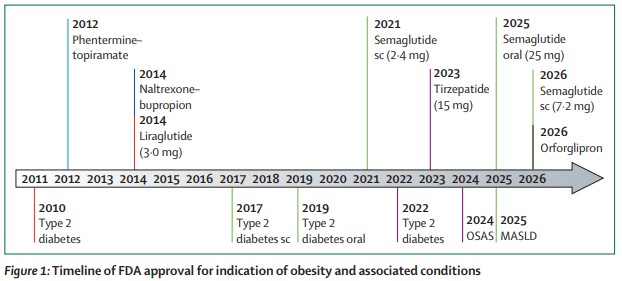
ALT The years above the horizontal line indicate FDA-approval for obesity treatment, while those below show approval for obesity-related conditions for the same active ingredient (doses and administration forms can differ), with consistent colour coding for each agent across indications. FDA=US Food and Drug Administration. MASLD=metabolic dysfunction-associated steatotic liver disease. OSAS=obstructive sleep apnoea syndrome. sc=subcutaneous.
13
35
1,892
💜 Ruth Lobo retweeted

Jun 11
Long-Term Outcomes of Multisystem Inflammatory Syndrome in Children up to 4.5 Years After COVID-19
🚨IMPORTANT new study just dropped: MIS-C in kids is NOT a temporary illness!!
🚨It raises cardiovascular disease risk 14×, hypertension 9×, and gut/lung/brain problems for up to 4.5 years later(=LC)
Earlier “kids recover fine” claims are now officially challenged! Study:👇
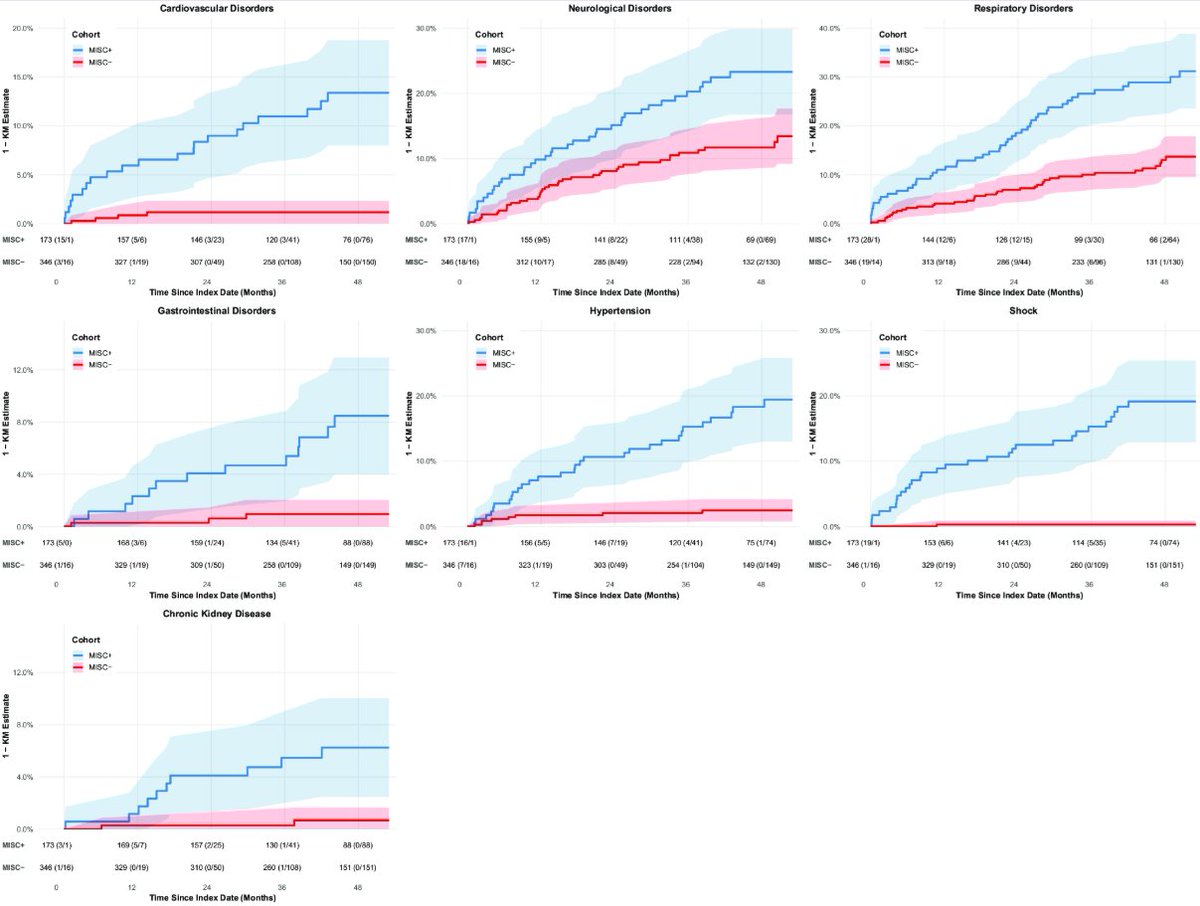
➡️ A retrospective cohort study from New York’s Montefiore Health System examined 173 children under 21 with MIS-C versus 346 propensity score-matched controls without MIS-C, all following documented COVID-19 infection.
➡️Follow-up extended up to 4.5 years (March 2020–August 2024) using electronic health records, with MIS-C confirmed by ICD-10 code M35.81 plus CDC/WHO criteria.
➡️Results:
1. MIS-C patients faced markedly elevated risks compared to controls:
- Cardiovascular disorders (aHR 13.88, 95% CI 4.69–41.07),
- Hypertension (aHR 8.86),
- Gastrointestinal disorders (aHR 9.48),
- Respiratory disorders (aHR 3.46), and
- Neurological disorders (aHR 2.02),
- Shock and chronic kidney disease (CKD) occurred almost exclusively in the MIS-C group,
2. Kaplan-Meier analysis showed persistent cumulative incidence in the MIS-C cohort ranging from 6.8% (CKD) to 35.2% (respiratory disorders), with risks diverging and accumulating over years rather than resolving,
3. Preexisting hypertension strongly predicted cardiovascular, neurological, respiratory, and gastrointestinal outcomes,
4. Preexisting diabetes increased CKD risk 49-fold,
5. Older age modestly raised risks of shock and CKD.
6. Sensitivity analyses using stricter MIS-C definitions and alternative respiratory coding confirmed the main results.
7. No mention or data on vaccination and/or reinfection impact.
➡️The study directly challenges earlier reports portraying MIS-C as a transient, self-limited condition with minimal long-term sequelae.
‼️So, MIS-C is not a temporary inflammatory storm that children outgrow. It inflicts severe, lasting multisystem damage that multiplies the lifetime risk of serious cardiovascular disease, hypertension, gastrointestinal, respiratory, and neurological disorders by several-fold to more than ten-fold, while introducing rare but devastating conditions like shock and CKD that almost never occur in peers.
‼️Sadly enough risks continue to accumulate years later.
‼️Earlier short-term “excellent recovery” narratives are contradicted by this longer, rigorous evidence.
‼️Affected children now carry a heavy, potentially permanent burden of chronic illness that will require lifelong medical surveillance and coordinated care or face accelerated morbidity and reduced quality of life!
‼️Of course we need further confirmation, but this does fit the ongoing concerns within the LC science community!
😡So much for paediatric minimalizations!
#AvoidSars2 #AvoidReinfections #ProtectChildren
publications.aap.org/pediatr…
6
204
413
18,595

organ damage, cardiovascular complications, autoimmune disorders, neurological injuries & the increased risk of death documented in the scientific literature.
LC is not just a collection of symptoms. It is a serious multisystem disease.
1
2
8
38

its not actually any more convenient than storing your emulators in a folder or launching through steam. not to mention ra isnt the only multisystem emulator
1
31

Jun 13
A subset of chronic multisystem illness consistent with myalgic encephalomyelitis/chronic fatigue syndrome (ME/CFS) has been hypothesized to involve a human gammaretrovirus/MLV-like agent. Over several decades, retroviral hypotheses in chronic fatigue syndromes have been explored
7
Jun 13
Reversible severe multisystem neuroimmune syndrome associated with presumed human MLV-like retroviral infection and sustained remission
3

Source, and it's a peer-reviewed consensus, not a press release.
According to PubMed, a global consensus of 56 academic, clinical, and patient organisations, drawing on 14,360 survey responses from people with the condition and health professionals worldwide, renamed polycystic ovary syndrome to Polyendocrine Metabolic Ovarian Syndrome (Teede et al, @TheLancet, May 2026):
doi.org/10.1016/S0140-6736(2…
The consensus says the old name was inaccurate because it implies ovarian cysts while obscuring the endocrine and metabolic features, which it links to delayed diagnosis, fragmented care, and stigma. That's the whole argument for the change: the name was steering the medicine.
A few caveats. This is a classification and care-pathway fix, not a new treatment; the biology (insulin resistance, higher androgens, higher type 2 diabetes risk) was already known. It's a multisystem condition, the new name keeps "ovarian" for a reason, so the ovarian and fertility side still needs care, not less of it. And the 14,360 figure is the survey count for this specific consensus paper; the decade-long process drew on more than 22,000 responses across several waves.
1
2
4
564