Biomed Scientist in #longevity. Mentor & Investor in Health startups. Past CTO @BioVivaScience ,Researcher @CASMIORG ,Lead @oxfordscisoc @NewsInLongevity ,BGRF

Joined May 2008
972 Photos and videos
Pinned Tweet
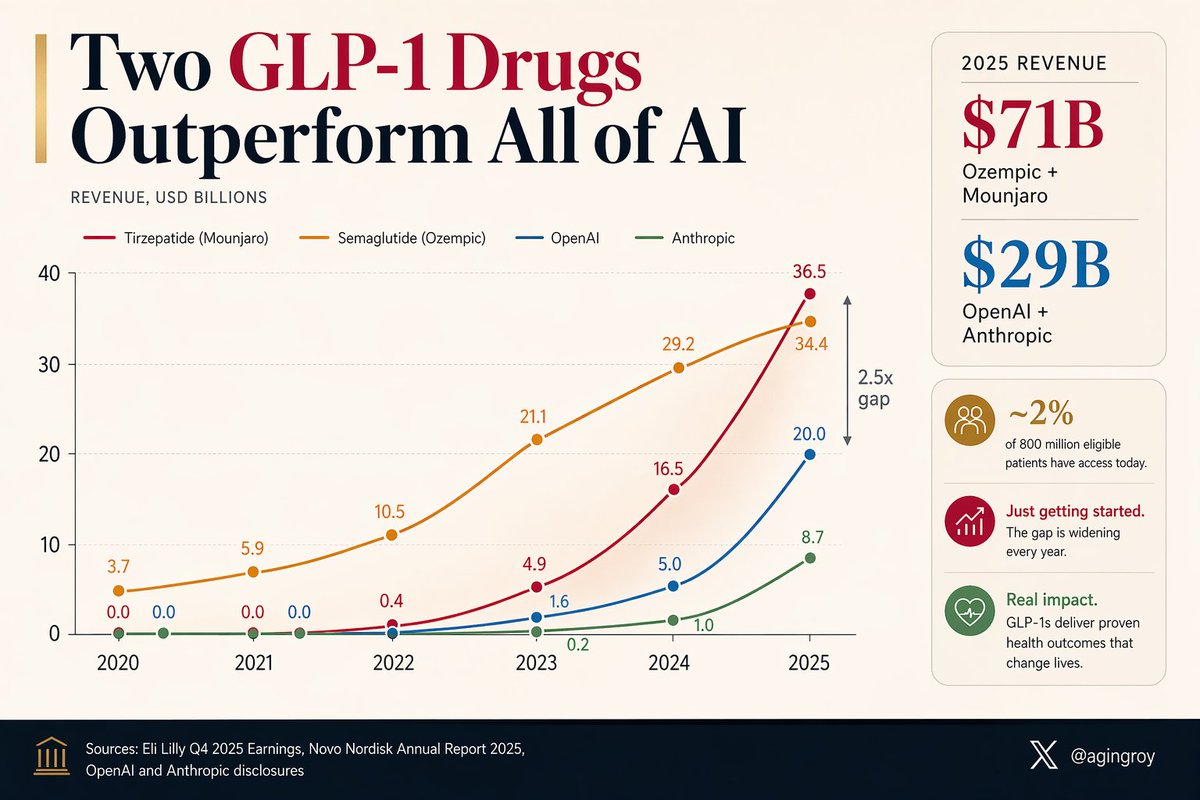
A weekly jab in the belly is generating more revenue than the entire AI industry. Ozempic Mounjaro: $71B in 2025. OpenAI Anthropic: $29B. And they've barely started. ~2% of the 800 million eligible patients can currently access them. h/t @DrSamuelBHume
57
199
1,117
547,888
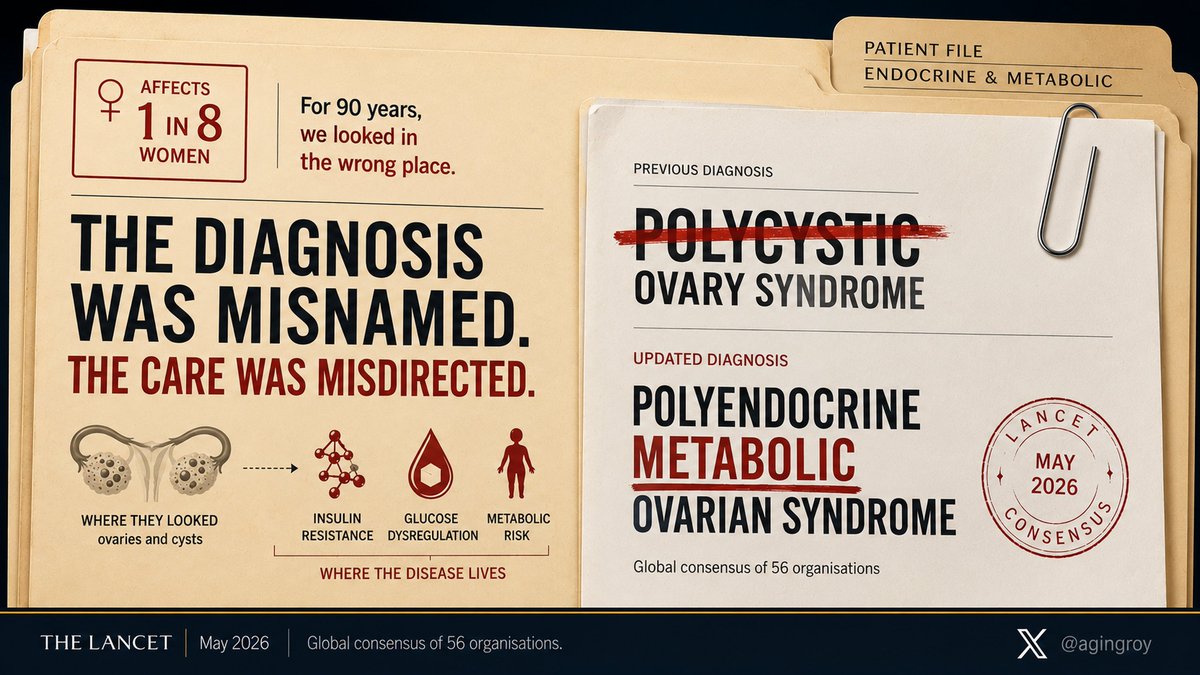
Source, and it's a peer-reviewed consensus, not a press release. According to PubMed, a global consensus of 56 academic, clinical, and patient organisations, drawing on 14,360 survey responses from people with the condition and health professionals worldwide, renamed polycystic ovary syndrome to Polyendocrine Metabolic Ovarian Syndrome (Teede et al, @TheLancet, May 2026): doi.org/10.1016/S0140-6736(2… The consensus says the old name was inaccurate because it implies ovarian cysts while obscuring the endocrine and metabolic features, which it links to delayed diagnosis, fragmented care, and stigma. That's the whole argument for the change: the name was steering the medicine. A few caveats. This is a classification and care-pathway fix, not a new treatment; the biology (insulin resistance, higher androgens, higher type 2 diabetes risk) was already known. It's a multisystem condition, the new name keeps "ovarian" for a reason, so the ovarian and fertility side still needs care, not less of it. And the 14,360 figure is the survey count for this specific consensus paper; the decade-long process drew on more than 22,000 responses across several waves.

1
2
3
511
A disease that affects 1 in 8 women was named after the wrong organ for 90 years. Polycystic ovary syndrome put the ovaries in the title. The bigger story is hormonal and metabolic: insulin resistance, rising androgens, weight gain, a steep climb in type 2 diabetes risk. The cysts were never the main event. That naming error has a cost you can measure in referrals. Call it ovarian and she lands in a fertility clinic first, while the blood sugar and insulin side gets looked at late. May 2026: 56 organisations signed a global Lancet consensus and renamed it Polyendocrine Metabolic Ovarian Syndrome. Metabolic is finally in the name. In medicine, the name is the first diagnosis. This one was wrong for three generations.
1
2
19
1,591
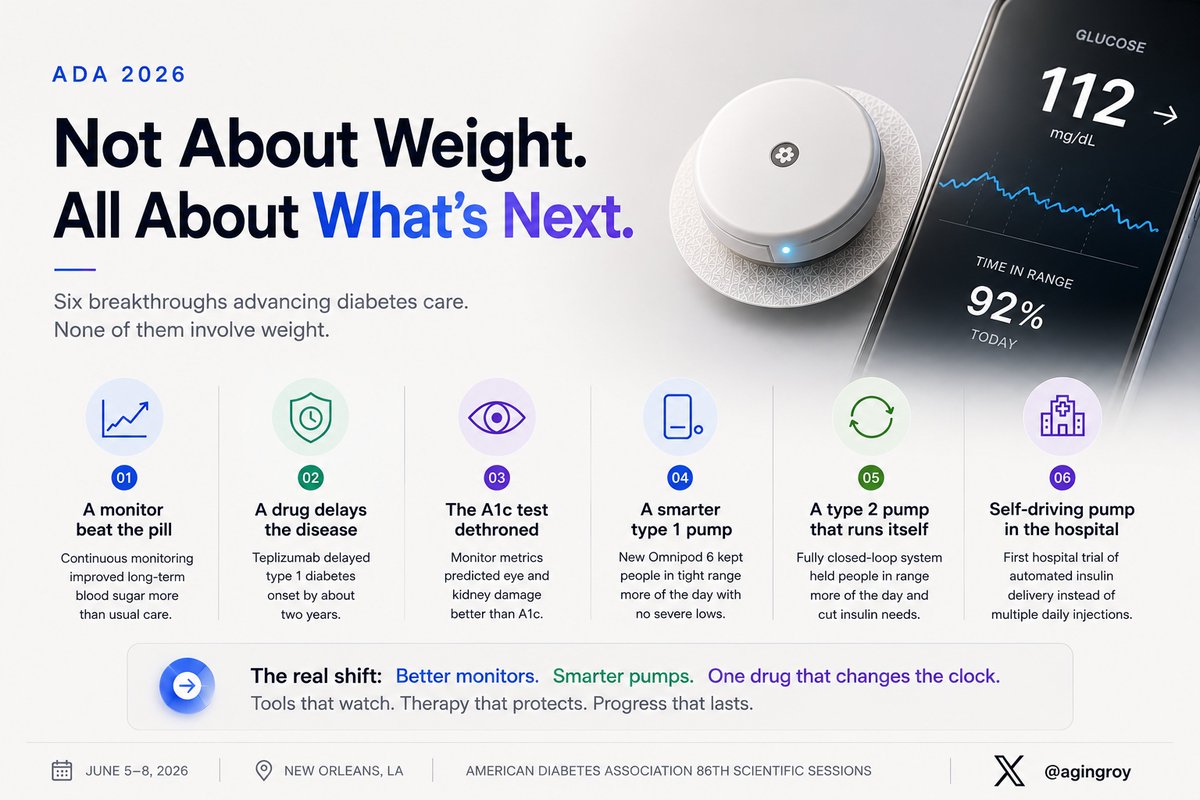
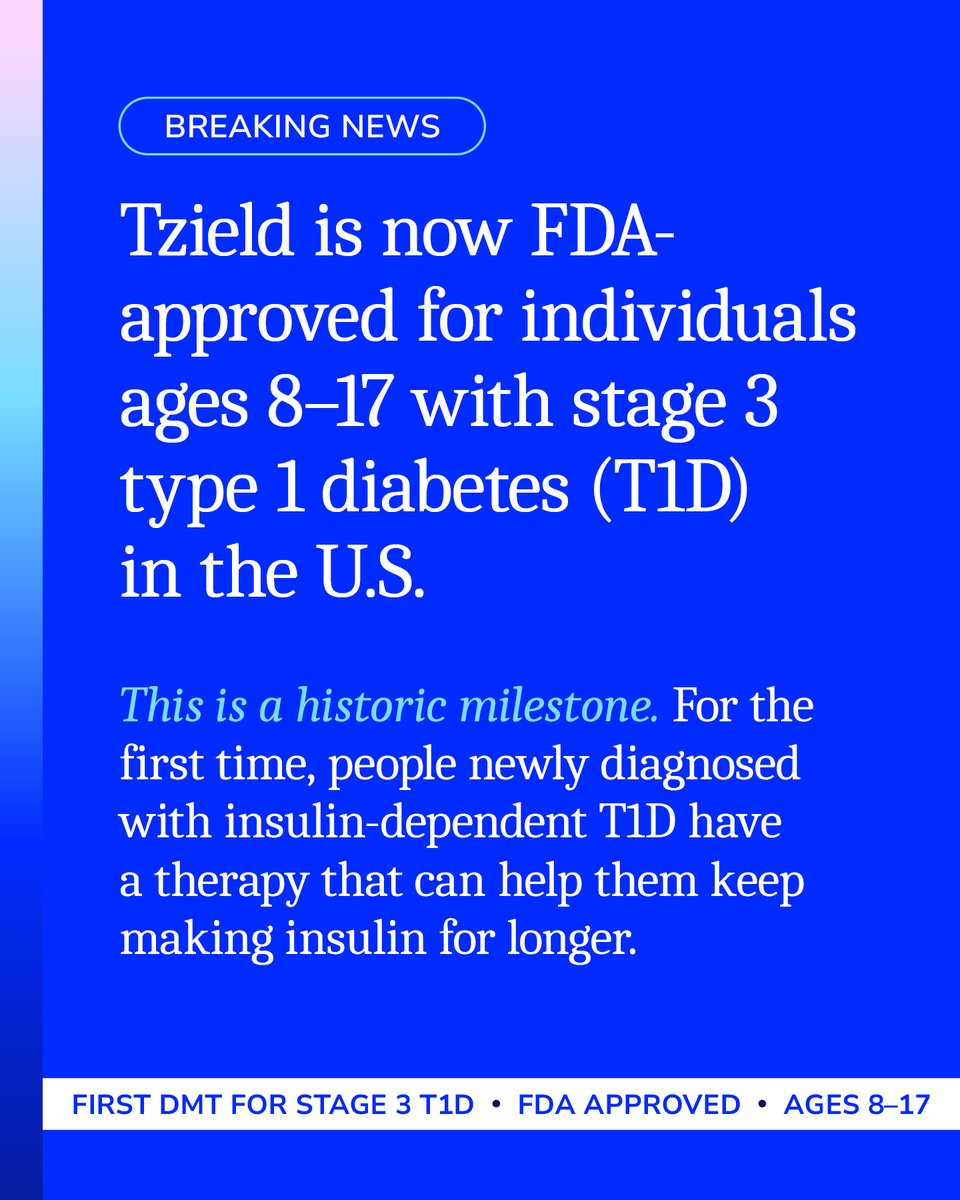
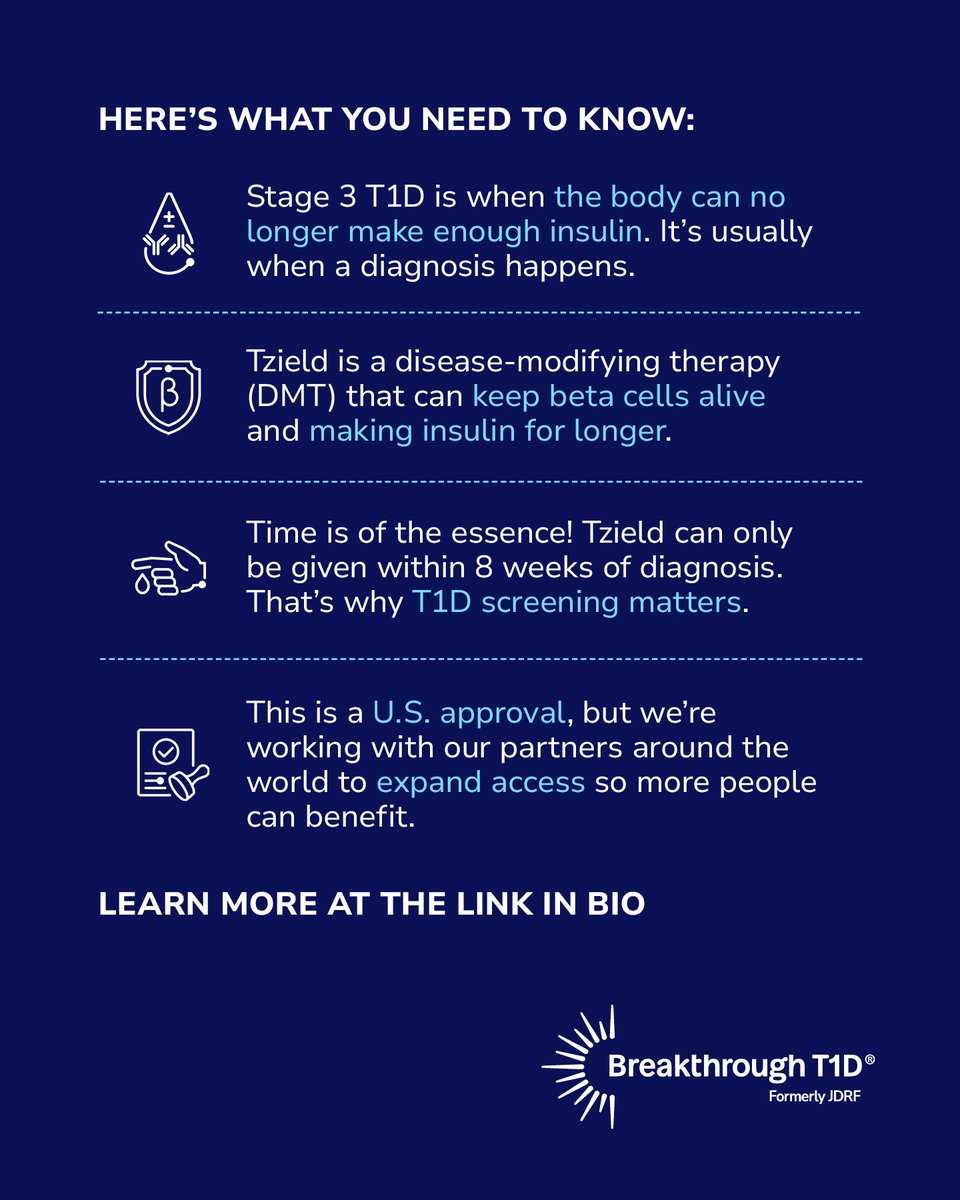
Type 1 diabetes, in three moves toward the actual problem. 1922: insulin. You inject the hormone your body stopped making. It saved millions of lives and never touched the disease. Yesterday: the @FDA approved Tzield for newly diagnosed kids. It slows the immune attack itself, so the insulin factory you've got left lasts longer. Not a cure, but the first drug to fight the disease instead of replacing its output. Next: @VertexPharma grew new islet cells and infused them into 12 people. They stopped needing insulin for a year. Early, and still needs anti-rejection drugs. But that's the factory rebuilt. A hundred years to go from replacing the hormone to rebuilding the source.
Today marks a historic milestone for the type 1 diabetes (T1D) community: the @US_FDA has approved Tzield for use in individuals ages 8–17 with stage 3 T1D. This is the first disease-modifying therapy ever approved for stage 3 T1D! Tzield preserves beta cell function in newly diagnosed individuals, which has been shown to result in fewer hypoglycemic events, lower insulin use, reduced burden of care, and improved A1c. We'll keep working to ensure people with stage 3 T1D everywhere, not just in the U.S., have access to therapies that help them live healthier lives. Breakthrough T1D and the T1D Fund have supported the development of this therapy for over 30 years, and we're grateful to the FDA for recognizing the urgent unmet need in T1D and expediting Tzield's approval through the accelerated approval pathway. We also thank @sanofi for their continued research and the T1D community for advocating for therapies that change the course of this disease. Read more here: breakthrought1d.org/news-and…
3
26
2,139
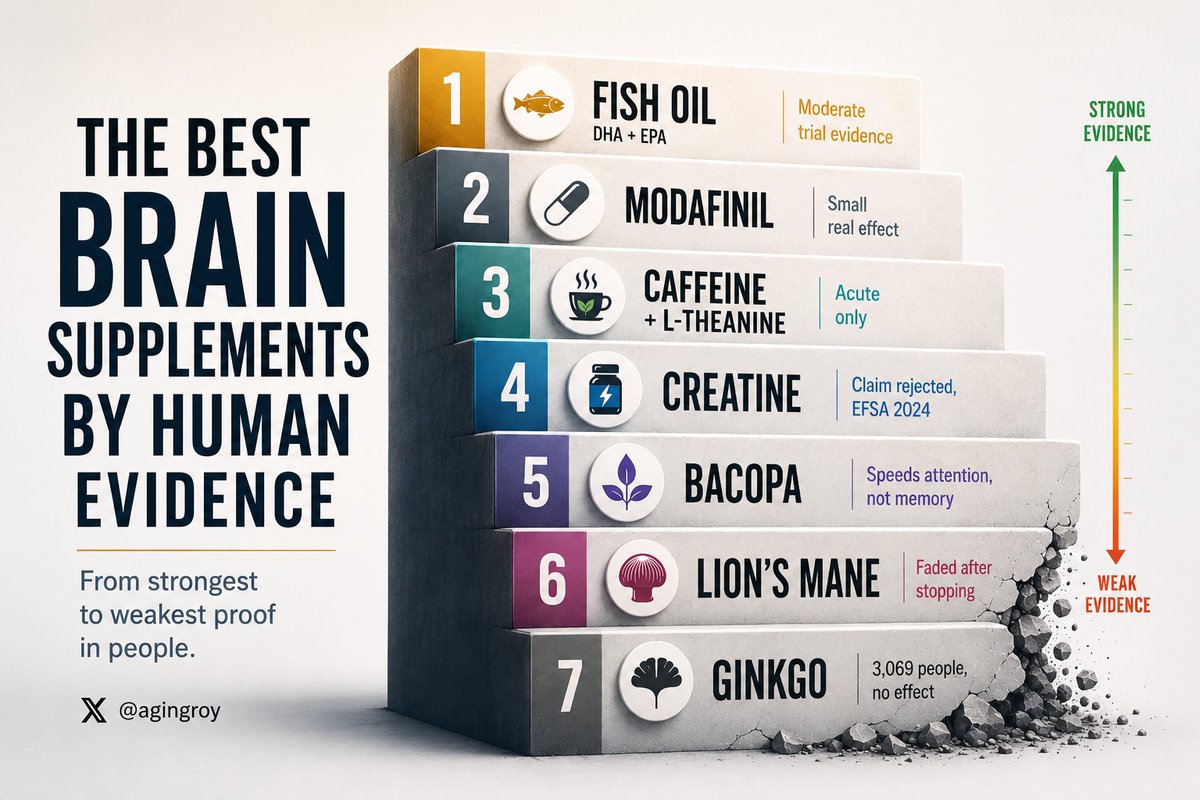
The two best-selling brain supplements have the weakest evidence on this list. The strongest data belongs to a cheap fish-oil dose and a prescription you already know. 7 nootropics, ranked by how strong the HUMAN trial evidence is, not how loud the marketing is. 1. Omega-3 (DHA and EPA). The only one with moderate-grade trial evidence. Across 24 RCTs and 9,660 people, a real but small gain in executive function, showing up above about 500 mg a day. More isn't better: very high doses bring their own heart-rhythm risk. Caveat: the famous "30% lower Alzheimer's risk" is from population studies, not trials, and the big prevention trial in healthy elders found nothing. Best of a humble bunch. 2. Modafinil. A prescription-only wakefulness drug, Schedule IV controlled in the US, not something you can buy. The one compound here with a clean pooled positive in rested people, and it's tiny: average effect size 0.12 across 14 trials, mostly on hard executive tasks. It's on the list for evidence strength, not as something to go take. It may even dull creative thinking. 3. Caffeine plus L-theanine. A real, repeatable attention boost, but read the fine print: every trial is a single dose, in young adults, measured for about two hours. A review of 49 trials puts the attention effect at a modest 0.33. Cheap and reliable for the next two hours. Not a proven daily upgrade. 4. Creatine. A small memory signal, mostly in older adults. But Europe's food-safety regulator reviewed it in 2024 and rejected the cognition claim outright, and the largest "win" meta double-counts participants. In young healthy people the effect is zero. 5. Bacopa monnieri. Nine trials, 437 people, twelve weeks minimum. The effect is real but narrow: it speeds up attention, it doesn't boost memory. Expect stomach upset, the main reason people quit. 6. Lion's mane. One small win (30 older adults with mild impairment) that vanished four weeks after they stopped taking it. A 2025 trial in healthy young adults came back mixed and inconclusive, no clear overall benefit. Huge data in mice. Thin, messy data in people. 7. Ginkgo. The most thoroughly disproven supplement on this list. 3,069 people, six years, 120 mg twice a day: 277 got dementia on ginkgo, 246 on placebo. A second trial in 2,854 people agreed. Cochrane, 36 trials, calls the benefit "inconsistent and unreliable." Safe enough if you're not on blood thinners. It just doesn't work. Fish oil and modafinil have the best data. The two on the front shelf have the worst.
9
5
48
2,944
Sources, ranked by strength of HUMAN evidence (GRADE), with the catch on each. Links are direct. 1. Omega-3 (moderate-grade RCT data, executive function): -> Suh 2024, BMC Medicine, 24 RCTs, n=9,660, executive-function benefit above ~500 mg/day total omega-3 doi.org/10.1186/s12916-024-0… -> Shahinfar 2025, Sci Reports, 58 RCTs, separate memory dose-response doi.org/10.1038/s41598-025-1… -> Catch (observational, label it): the ~30% lower ALZHEIMER'S risk is cohort data (all-cause dementia was null in the same paper), Kosti 2022 doi.org/10.1093/nutrit/nuab0… -> Counterweight (null): VITAL-COG, healthy elders, no benefit, Kang 2022 doi.org/10.1002/trc2.12288 Safety: very high-dose omega-3 carries an atrial-fibrillation signal (Marcus and Link 2024). If you have an AF history, check with a cardiologist before high-dose supplementing. 2. Modafinil (small real effect, SMD 0.12, prescription-only): -> Roberts 2020, Eur Neuropsychopharmacol, 14 trials doi.org/10.1016/j.euroneuro.… Schedule IV controlled in the US, approved only for narcolepsy / shift-work / sleep apnea. Listed for evidence strength, not as a recommendation. 3. Caffeine plus L-theanine (acute attention boost, ~2 hours, young adults): -> Payne 2025 meta, 49 RCTs, attention-switching SMD 0.33 (note: Lipton/Unilever-affiliated authors) doi.org/10.1093/nutrit/nuaf0… -> Combo beats caffeine alone, Owen 2008 (note: Unilever-funded) doi.org/10.1179/147683008X30… Safety: ease off if you have an arrhythmia or an anxiety disorder. 4. Creatine (small memory signal in older adults, claim REJECTED by EFSA): -> Prokopidis 2023, memory meta (older SMD 0.88; young SMD 0.03, null) doi.org/10.1093/nutrit/nuac0… -> EFSA 2024, rejected the cognition claim doi.org/10.2903/j.efsa.2024.… 5. Bacopa monnieri (9 RCTs, 437 people, attention speed not memory): -> Kongkeaw 2014, J Ethnopharmacol doi.org/10.1016/j.jep.2013.1… 6. Lion's mane (one small positive that faded, one mixed/inconclusive in young adults): -> Mori 2009, MCI older adults (positive, N=30, faded after stopping) doi.org/10.1002/ptr.2634 -> Frontiers Nutr 2025, healthy young (N=18, mixed and inconclusive, no clear overall benefit) doi.org/10.3389/fnut.2025.14… 7. Ginkgo (the most disproven, three converging lines): -> GEM, DeKosky 2008, JAMA, n=3,069 doi.org/10.1001/jama.2008.68… -> GuidAge, Vellas 2012, Lancet Neurology, n=2,854 doi.org/10.1016/S1474-4422(1… ->Cochrane, 36 trials, "inconsistent and unreliable" doi.org/10.1002/14651858.CD0… Safety: ginkgo has antiplatelet effects and can raise bleeding risk with warfarin. Safe for healthy adults not on blood thinners. Ranked by evidence strength, not effect size. Even the winners are small. Fish oil and a prescription have the best data; the two best-sellers have the worst.
4
547
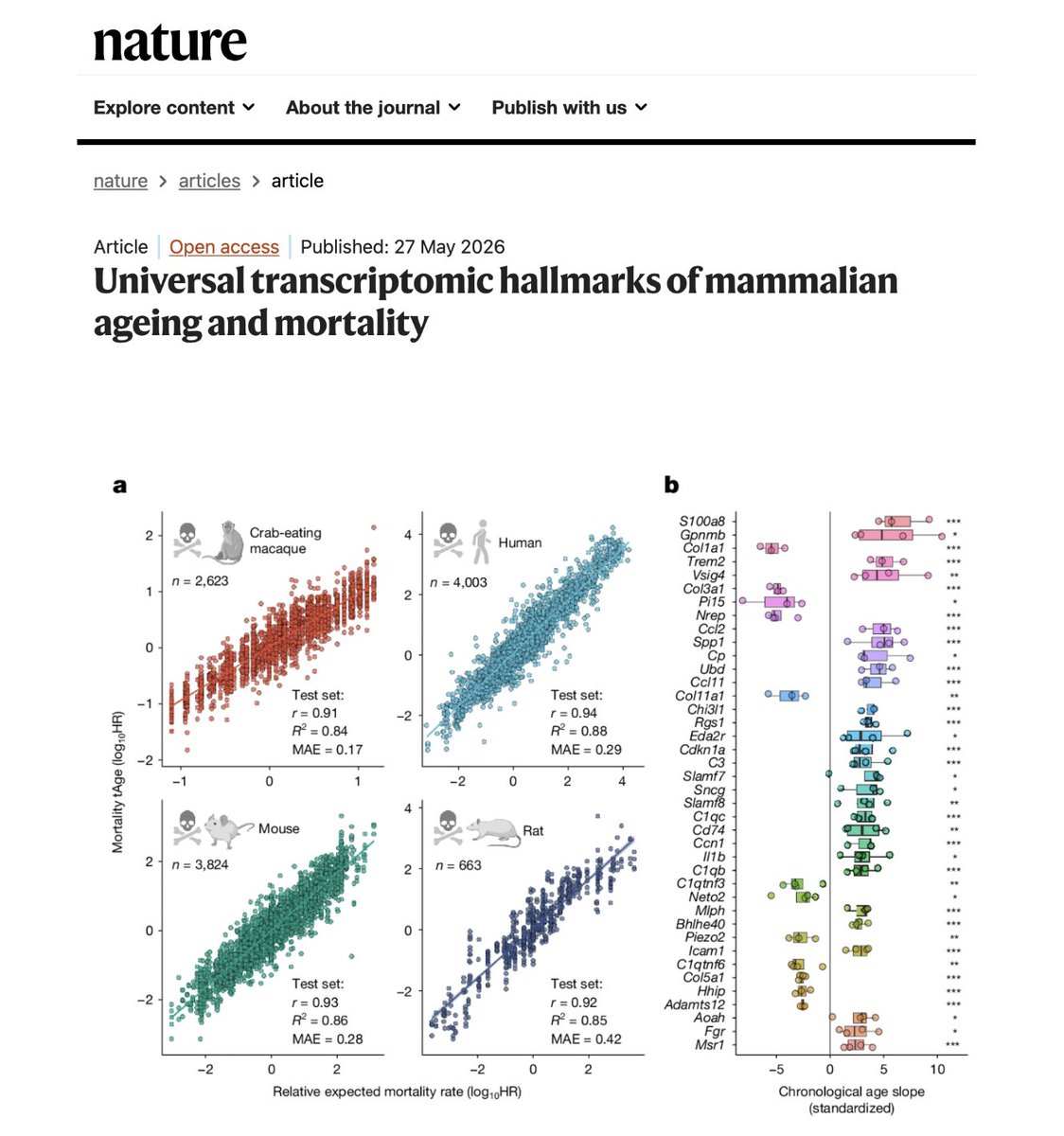
For years aging looked like a thousand things going wrong at once, with no single dial to read. A new Nature study went looking for the dial. The team read gene activity in over 11,000 samples across mice, rats, monkeys, and people, and asked which signals drift the same way in all of them. Three genes did. GPNMB, CDKN1A, LGALS3, moving in the same direction as every one of those species got older. In humans that signature tracks how much time is left. And it shifts when you eat less. A shared clock, written in gene activity, ticking across the whole mammal family.
Large-scale transcriptomic data across four mammalian species and multiple tissues identify conserved molecular signatures associated with ageing and mortality risk. The integration across species, tissues, perturbations, and interventions is a notable strength. Further, mRNA abundance is more biologically interpretable than DNA methylation, though still an indirect readout of physiological processes. The article advances the idea that ageing is multidimensional rather than a single scalar process, with partially separable inflammatory, metabolic, extracellular matrix, and stress-response programs changing over time. Predictive performance is strong, but it is important to distinguish predictive association from mechanistic understanding. Even sophisticated transcriptomic signatures primarily capture statistical dependencies and correlations with ageing-related states and mortality risk. They do not yet explain the causal mechanisms underlying ageing. Achieving deeper mechanistic understanding will require more functional readouts: protein states and modifications, molecular interactions, metabolic fluxes, cell functions, tissue physiology, and experimentally testable causal perturbations. This work provides a valuable cross-species resource and advances the field through its scale, comparative framework, and integrative systems biology perspective.
5
29
143
12,730
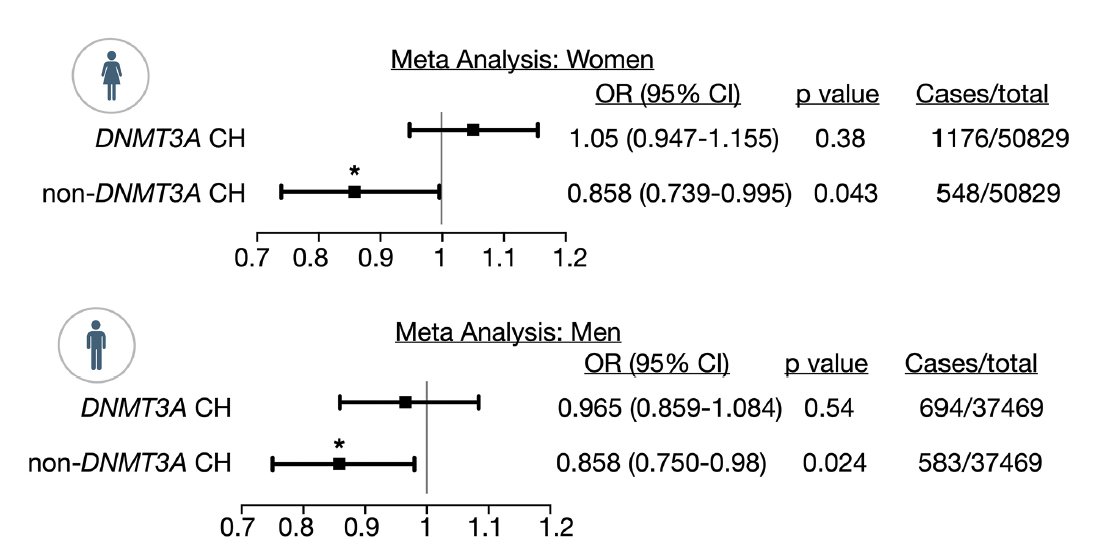
There's an aging clock most people have never heard of, hiding in your blood. By your 50s, 10 to 15% of people carry mutations in blood stem cells, called CHIP. They raise the risk of heart disease and cancer, and your doctor doesn't test for them. A new Nature study found something you can do about it. Exercise and better sleep suppressed those mutant clones. In animals, in people, in both women and men. The cheapest interventions in medicine, working on a clock we couldn't see.
Blood stem cell mutation clones (CHIP) occur frequently with advanced age and portend risk of cardiovascular disease and cancer. A new report @Nature today tells us about suppression of CHIP by sleep health and exercise in the experimental model and people Data below for exercise, seen in both women and men nature.com/articles/s41586-0…
3
6
33
2,186
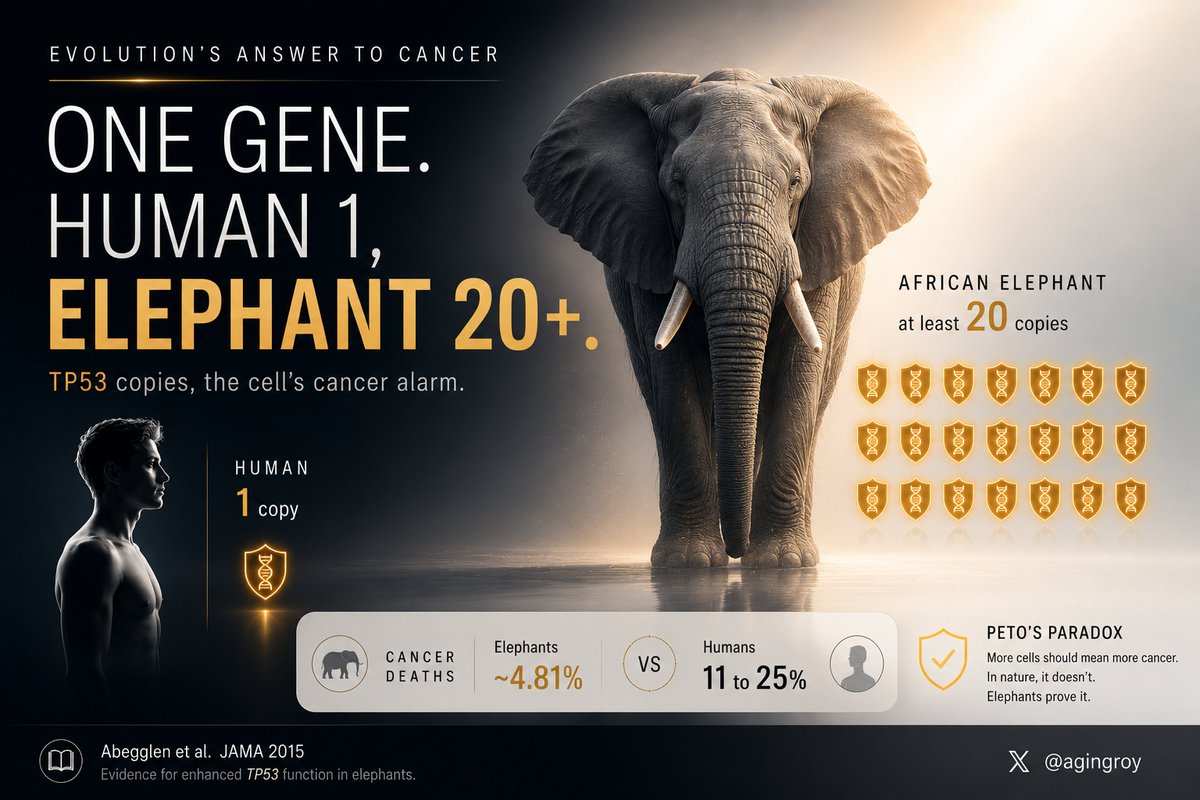
An elephant has about 100 times more cells than you and lives for decades. Every one of those cells is a lottery ticket for cancer. By the math, elephants should be cancer factories. They're not. About 4.81% of elephants die of cancer. For humans the figure is 11 to 25%. The clue is in a single gene. TP53 is the body's cancer alarm. When a cell's DNA gets damaged, TP53 decides whether to repair it or kill the cell before it turns dangerous. You carry one copy. African elephants carry at least 20. In lab dishes, elephant cells hit with DNA damage are far quicker to self-destruct than human cells. More alarms, faster shutdown, fewer chances for a tumor to start. Biologists call this Peto's Paradox. Across species, more cells does not mean more cancer. Evolution already solved the problem. We're just reading the answer.
2
3
29
1,431
Source: Abegglen LM, et al. "Potential mechanisms for cancer resistance in elephants and comparative cellular response to DNA damage in humans." JAMA, 2015. Read it (PubMed): pubmed.ncbi.nlm.nih.gov/2644… The numbers: across necropsy and zoo death records, cancer mortality was about 4.81% in elephants, versus 11 to 25% in humans. Genomic analysis found at least 20 copies of the TP53 tumor-suppressor gene in African elephants, against the single copy humans carry. A precise caveat on the cell data: in lab assays, elephant lymphocytes exposed to DNA damage underwent apoptosis (programmed cell death) at roughly 14.6%, versus about 7.2% for human cells. That is in-vitro lymphocyte work, not whole-animal cancer protection, so read it as a mechanism clue, not the final word. And the honest framing: elephants are not "cancer-proof." 4.81% is low, not zero. The TP53 story is strong but it is correlation plus mechanism, not a single proven cause. The twist for the sequel: across species, more cells doesn't mean more cancer. But WITHIN a species, it can. Taller people carry a measurably higher cancer risk than shorter people. Same logic, opposite direction.
1
466
In a dish, ivermectin looked like it crushed the virus. One detail got lost in the noise: the dish needed about 35 times more drug than a safe human dose ever puts in your blood. Then the trials ran. TOGETHER, ACTIV-6, 14,000 people, higher and higher doses. Flat every time. I watch this same trap in longevity every week. A molecule saves a worm, saves a mouse, sells a supplement. The dish proposes. The trial disposes.
MedCram reviewed Ivermectin for Covid in April of 2020 showing that Ivermectin prevented replication of SARS-CoV2 in vitro. But made it clear that this was only in a test tube! youtube.com/watch?v=nHzBLfuN… We later reviewed (2 years later) data in humans showing it didn't work. youtube.com/watch?v=nHzBLfuN… Since then numerous trials have confirmed this with different doses: Key U.S. trials: 1) ACTIV-6, ivermectin 400 µg/kg daily x 3 days — JAMA 2022 U.S. decentralized, double-blind, randomized placebo-controlled trial at 93 U.S. sites. Ivermectin did not significantly improve time to recovery, and hospitalization/death was essentially identical: 1.2% vs 1.2%. 2) ACTIV-6, higher-dose ivermectin up to 600 µg/kg daily x 6 days — JAMA 2023 Also U.S., double-blind, randomized, placebo-controlled. Median recovery was 11 days with ivermectin vs 12 days with placebo, but the posterior probability of reducing symptoms by more than 1 day was <0.1%, and urgent care/ED/hospitalization/death was 5.5% vs 5.8%. Authors concluded it did not support ivermectin use. 3) COVID-OUT — NEJM 2022 U.S. phase 3 randomized, double-blind, placebo-controlled factorial trial of metformin, ivermectin, and fluvoxamine. For ivermectin, the adjusted odds ratio for the primary composite outcome was 1.05, and for hospitalization/death was 0.73 with a very wide CI crossing 1; the trial concluded none of the three drugs prevented hypoxemia, ED visit, hospitalization, or death. The closest “positive” ivermectin signal in a rigorous recent community trial is not U.S. and not placebo-controlled: the UK PRINCIPLE trial was open-label and found a small symptom-duration signal, but the authors still said the findings did not support ivermectin use for COVID-19.
11
13
58
5,886
Chemo can't tell a cancer cell from a healthy one. That's the entire side-effect problem. Nobel Prize winner Dr. Jennifer Doudna's lab just built something that can. It reads the cell's RNA, and if it finds the message for mutant p53, the single most common typo in cancer, it triggers a CRISPR enzyme to shred that cell's DNA. One wrong letter is the trigger. Healthy cells, spared. The killing works. In mice, a single dose roughly halved the tumors. The unsolved half is getting it into every tumor cell in a living body. That's where every CRISPR cancer idea has stalled. Real advance, real wall.
A new CRISPR-based approach can selectively destroy cancer cells, according to a recent UC Berkeley-coauthored study. The technique opens a new frontier for treating the mutations found in nearly half of all cancers—including some of the most difficult types. bit.ly/4e2x5aQ
28
374
2,034
330,425
A weight-loss pill just got approved in Britain. It matters far past Britain. The injections work, but plenty of people will not stick a needle in themselves every week. A pill solves that. 10,000 Britons were on a waiting list before approval. 75% had never used one of these drugs. America has it. The UAE has it. The UK now, too. A pill needs no needle, no fridge, and no specialist. You can ship it anywhere. One billion people live with obesity. This is how the medicine reaches them.
Wegovy weight-loss pill approved in UK bbc.in/49RSCR7
2
2
15
1,433
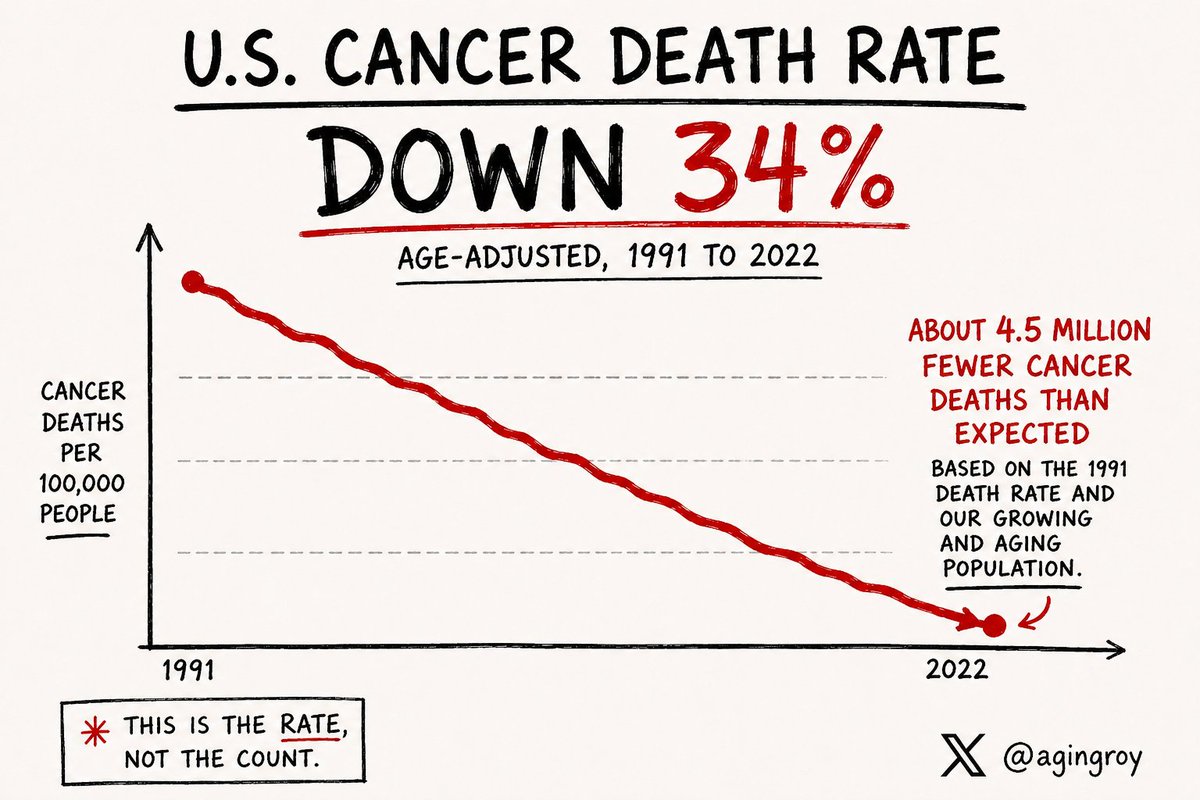
Almost everyone thinks we’re losing to cancer. The age-adjusted death rate says otherwise: down 34% since 1991. Measured per person and adjusted for age, the US cancer death rate dropped by a third between 1991 and 2022. That adds up to roughly 4.5 million deaths that simply didn’t happen (about 3.0 million men and 1.4 million women). One caveat. That’s the death RATE per person, not the raw count. The total number of cancer deaths still rises each year because the country keeps getting bigger and older (about 618,000 deaths expected in 2025). Your odds of dying from cancer, though, keep falling. We bent the curve on the second-biggest killer without ever “curing” cancer.
10
17
79
5,270
Source and the fine print, because this one always gets challenged. The number: the age-adjusted US cancer death rate fell 34% from its 1991 peak through 2022, which works out to about 4.5 million deaths averted (3,021,200 men and 1,437,500 women). From Siegel, Giaquinto, and Jemal, Cancer Statistics 2025, CA: A Cancer Journal for Clinicians: doi.org/10.3322/caac.21871 (PMID 39817679). The caveats, all three: 1. This is the age-adjusted death RATE, not the raw count. Total cancer deaths still rise every year because the US population keeps growing and aging (about 618,120 deaths projected for 2025). Risk per person fell; the headcount didn’t. 2. Incidence (new diagnoses) is rising in several groups, including some cancers in younger adults. Falling death rates and rising case counts can both be true at once. 3. The biggest single driver of the decline is the long drop in smoking, plus earlier detection and better treatment. It wasn’t one breakthrough. It was decades of compounding. The bigger point for longevity: cancer is one of the clearest cases that a disease of aging can be pushed back at scale. Take a third off the death rate of the #2 killer and the idea that aging is fixed and immutable is already wrong at the disease level. The frontier (clearing senescent “zombie” cells, partial cellular reprogramming) is the same project aimed upstream.
5
444
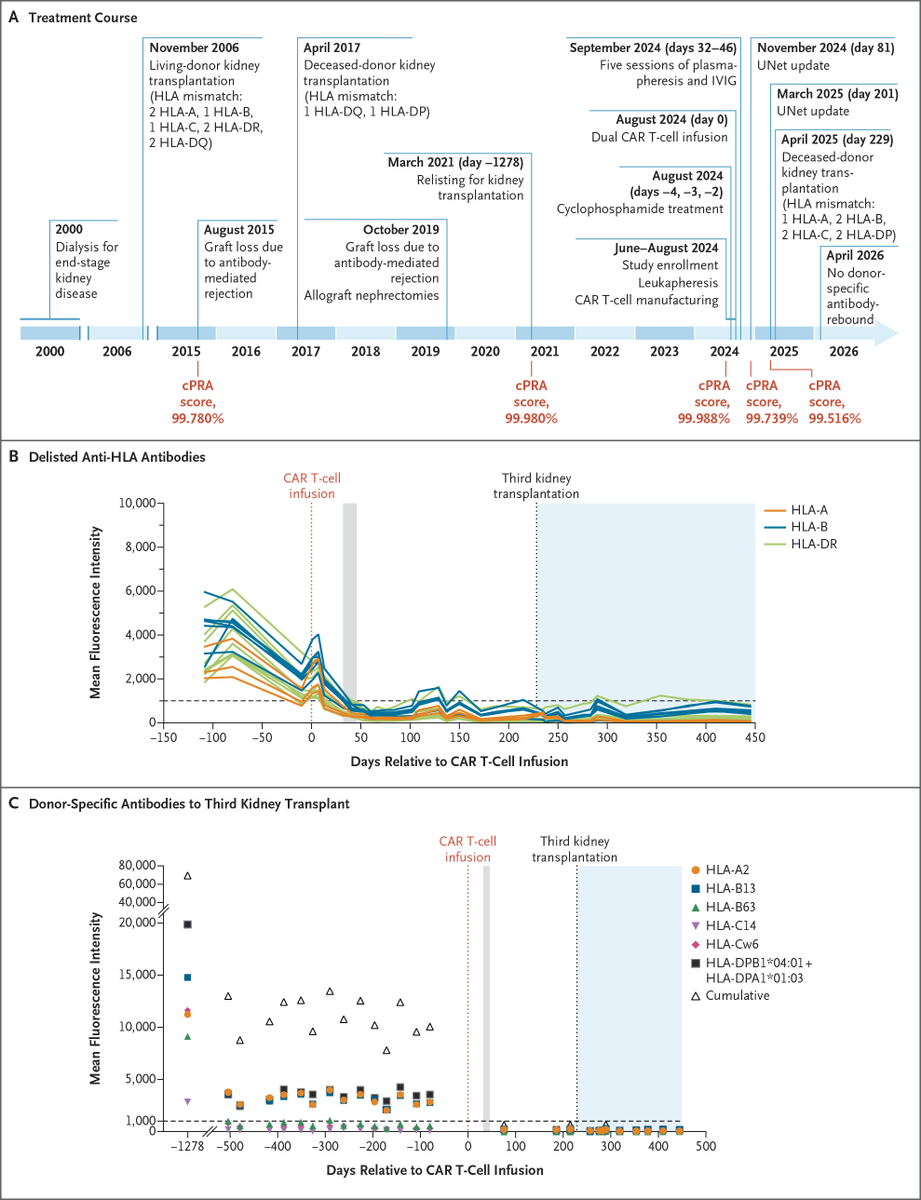
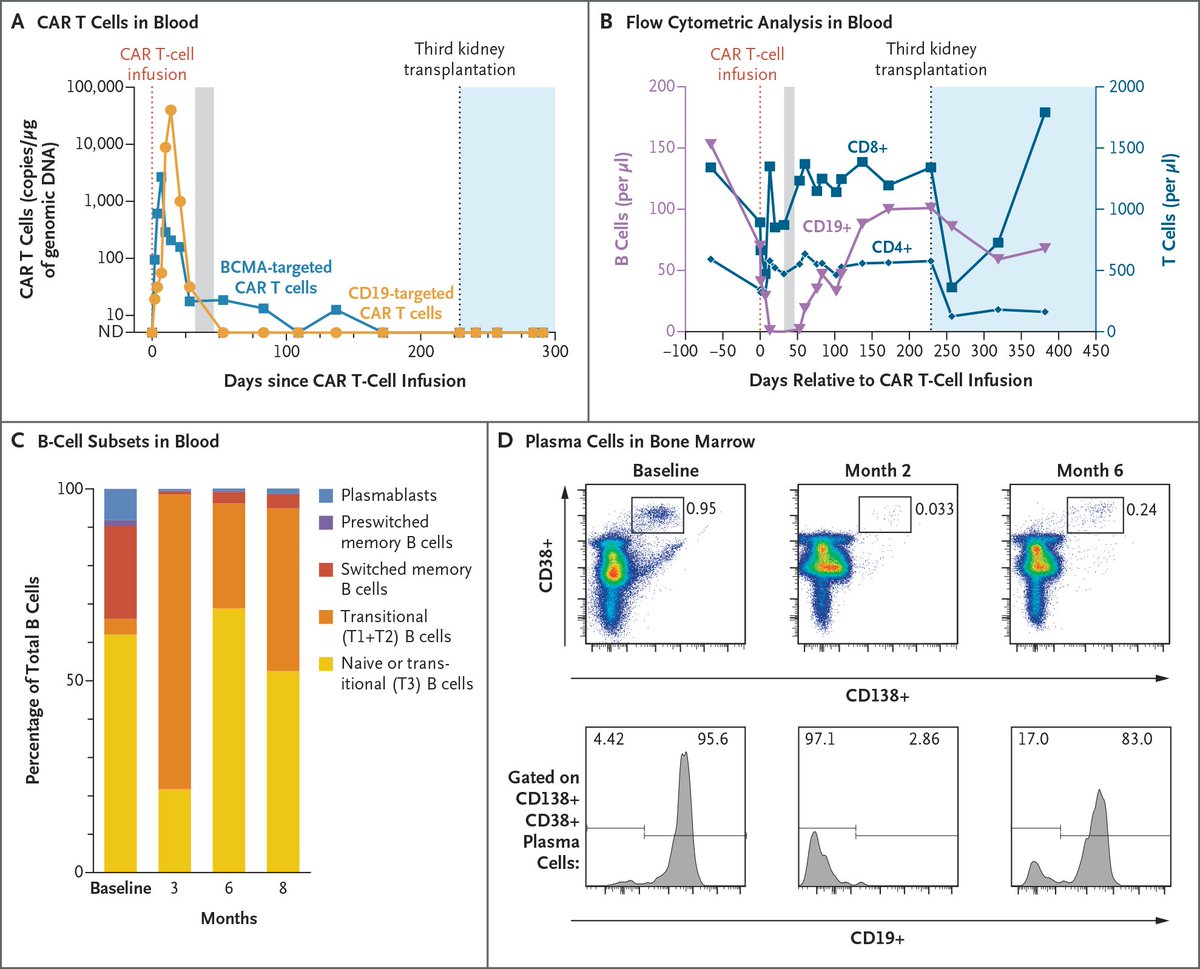
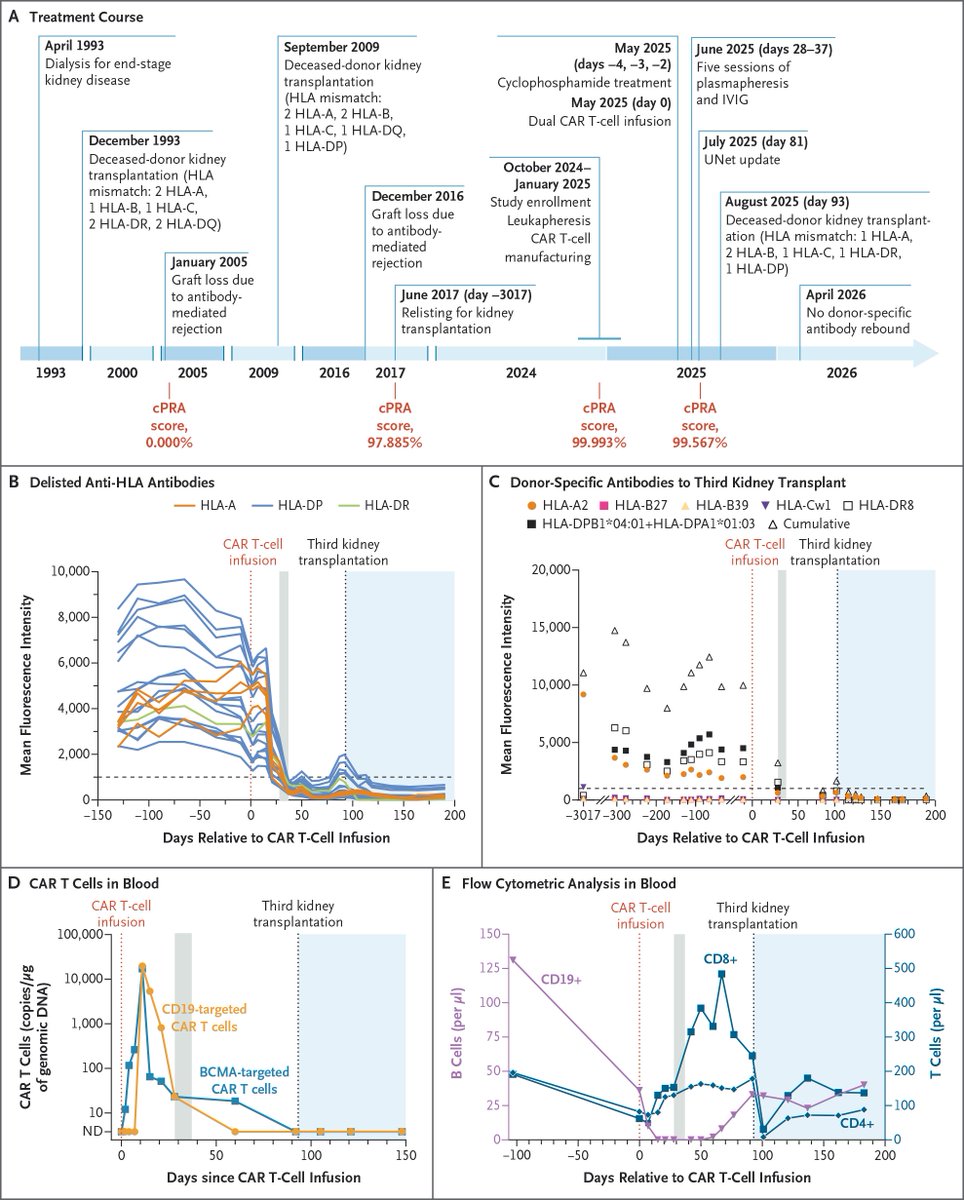
Imagine you’ve been on dialysis for years. There are kidneys available. You can’t have one. Your immune system made antibodies against almost every donor type that exists. A compatibility score called cPRA sits at 99.9%. One in a thousand donors is even usable before the surgeon looks at you. The standard playbook, drugs, plasma exchange, intravenous antibodies, rarely clears that level of sensitization. Researchers at Penn asked a different question: what if we used the same cells that kill leukemia? A dual CAR T-cell therapy, built to wipe out the cells that manufacture antibodies, was given to two of those waiting patients. The anti-HLA antibodies dropped. Both patients got kidneys. Leukaemia research built a key that fits a completely different lock. n=2, safety run-in, a long road to standard care. Still. Two people who had almost no options are no longer waiting.
Jun 9
Brief Report: Kidney Transplantation in Two Highly Sensitized Candidates after CAR T-Cell Therapy nej.md/4forWeq Correspondence: Kidney Transplantation after Clearing Anti-HLA Antibodies with CD19 CAR T Cells nej.md/4e1Gn5E #Nephrology
3
3
32
4,812
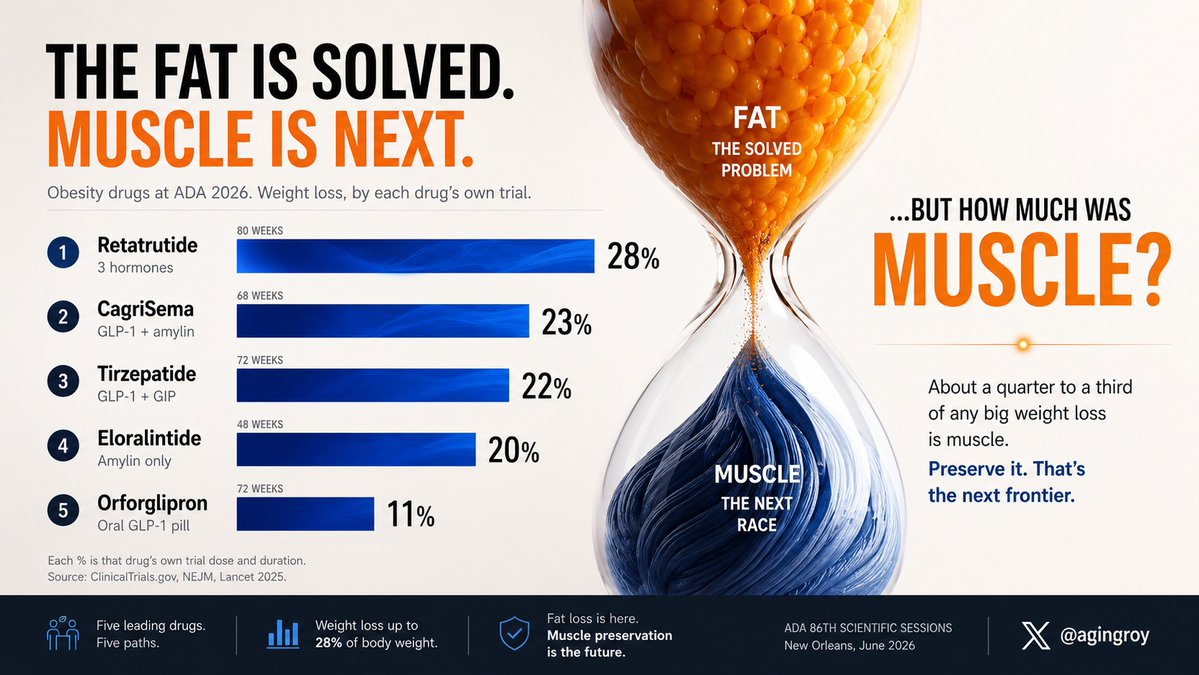
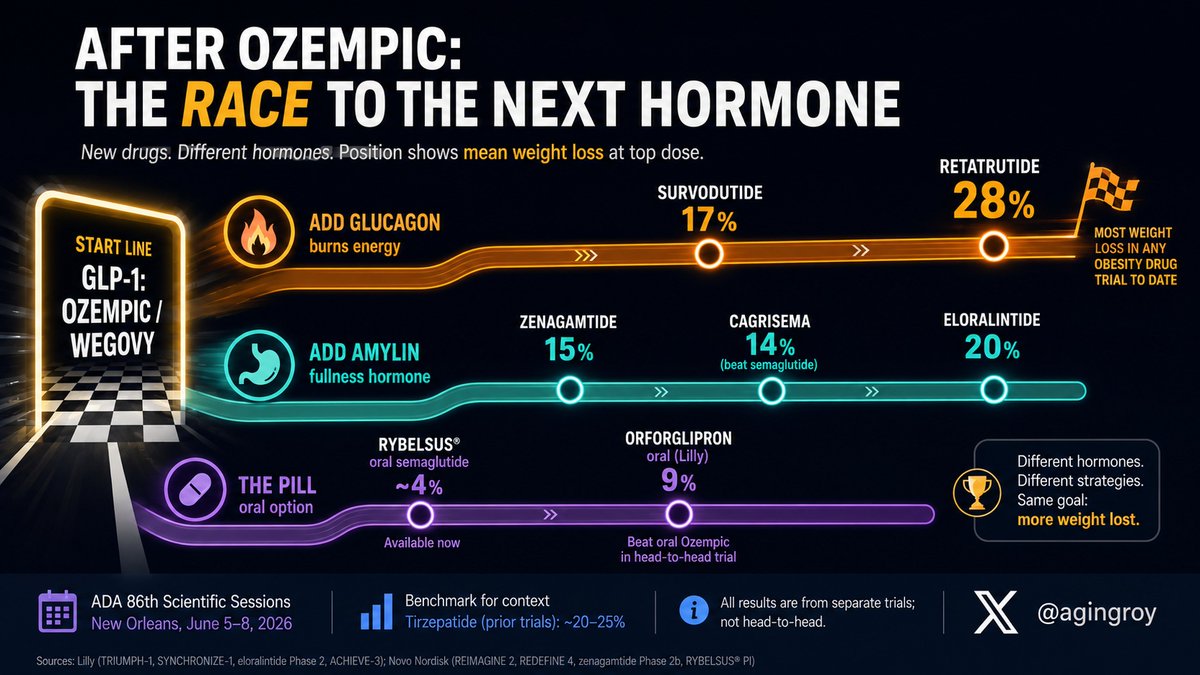
The ADA meeting just ran five obesity drugs at once, and the weight numbers have never looked better. Here’s the board, and the question hiding behind all of it: 🥇Retatrutide (three hormones): 28% of body weight gone at 80 weeks. The most a drug has ever taken off in a major trial. 🥈Tirzepatide (Mounjaro): about 22%. Most people on a weight drug are already here. 🥉 CagriSema (adds the fullness hormone, amylin, on top): about 23%, from a peer-reviewed Phase 3 trial. 4️⃣ Eloralintide (that same fullness hormone, no Ozempic component): about 20%. 5️⃣ Orforglipron (a pill, no needle): about 11%. The first once-daily oral option in this class. Five drugs. Five ways to lose the fat. The fat is the part the field has figured out. None of those percentages tell you what happened to muscle. When you lose 28% of your body weight, about a quarter of the loss is lean mass. The careful body-scan data, from Ozempic’s own trial, shows that fraction is the same whether you used a drug or just dieted hard. The body sheds lean mass with every large weight loss. So the next race isn’t a bigger weight number. It’s keeping the muscle while the fat comes off. Bimagrumab already does it: paired with a weight drug in a trial this year, 92% of the loss was fat and lean mass barely moved. That’s why the pipeline looks nothing like this board.
3
1
15
1,576
The board, each number tied to that drug’s own trial dose (no mixing arms): Retatrutide: 28.3% mean weight loss at 80 weeks, 12mg (TRIUMPH-1, Phase 3, n=2,335 per ClinicalTrials.gov). clinicaltrials.gov/study/NCT… Tirzepatide: 22.5% at 15mg (SURMOUNT-1, n=2,539). doi.org/10.1056/NEJMoa220603… CagriSema: 22.7% on-treatment estimand (20.4% intention-to-treat), REDEFINE-1, n=3,417, peer-reviewed in NEJM 2025. doi.org/10.1056/NEJMoa250208… Eloralintide: ~20% over 48 weeks at the top dose (Phase 2, selective amylin, no GLP-1; nausea is dose-specific). Lancet 2025: thelancet.com/journals/lance… Orforglipron: oral, 11.2% weight loss at 36mg over 72 weeks in obesity (ATTAIN-1, the first oral once-daily GLP-1 pill; treatment-regimen estimand, ITT). NEJM Sept 2025, DOI 10.1056/NEJMoa2511774. Survodutide (a two-hormone GLP-1/glucagon agonist, not on the board above but worth knowing): about 17% (SYNCHRONIZE-1). A reminder that the field is wider than five. On the muscle question (the point of the post): when you lose a large amount of weight, roughly a quarter of it is lean mass. The careful body-scan (DXA) data is the key: in tirzepatide’s SURMOUNT-1 substudy the lean-mass fraction was about 25%, statistically identical to the placebo group’s fraction, which means the loss tracks the weight loss itself, not the drug (Look et al., Diabetes Obes Metab 2025, DOI 10.1111/dom.16275). The “you lose 40% muscle on Ozempic” line online comes from the wide spread across older studies, not the controlled data. The fix isn’t avoiding the drugs, it’s resistance training, enough protein, and a new class of muscle-preserving agents. Bimagrumab (an activin-receptor antibody) paired with semaglutide: the combination produced substantially greater fat loss than semaglutide alone with better lean mass preservation, and bimagrumab on its own ADDED lean mass (BELIEVE trial, Phase 2, n=507, Nature Medicine 2026, DOI 10.1038/s41591-026-04204-0). The long-term stake is sarcopenia, the muscle loss of aging: cachexia is where this gets studied, sarcopenia is where the market is, and the reader is the market.

2
696
A good diet fell apart at the end of a brutal work week. Not willpower. Two nights of bad sleep changed the hormonal environment before breakfast. Spiegel et al. put 12 men through 2 nights of restricted sleep. Ghrelin (the hunger signal) went up 28%. Leptin (the fullness signal) dropped 18%. Same person. Different body. One caveat. The data came from 12 young men. St-Onge's work on women points toward a different switch, probably GLP-1 (satiety hormone) suppression rather than a ghrelin spike. Direction holds. The exact percentages don't travel to everyone. Look at your sleep log the week that diet died. Bet you already know what you'll find.
Mild sleep deprivation drives significant increases in hunger, but differentially in men versus women. It makes men release more pro-hunger signals. In women it inhibits satiety via reductions in GLP. This has key implications for how to counter it.
1
6
914
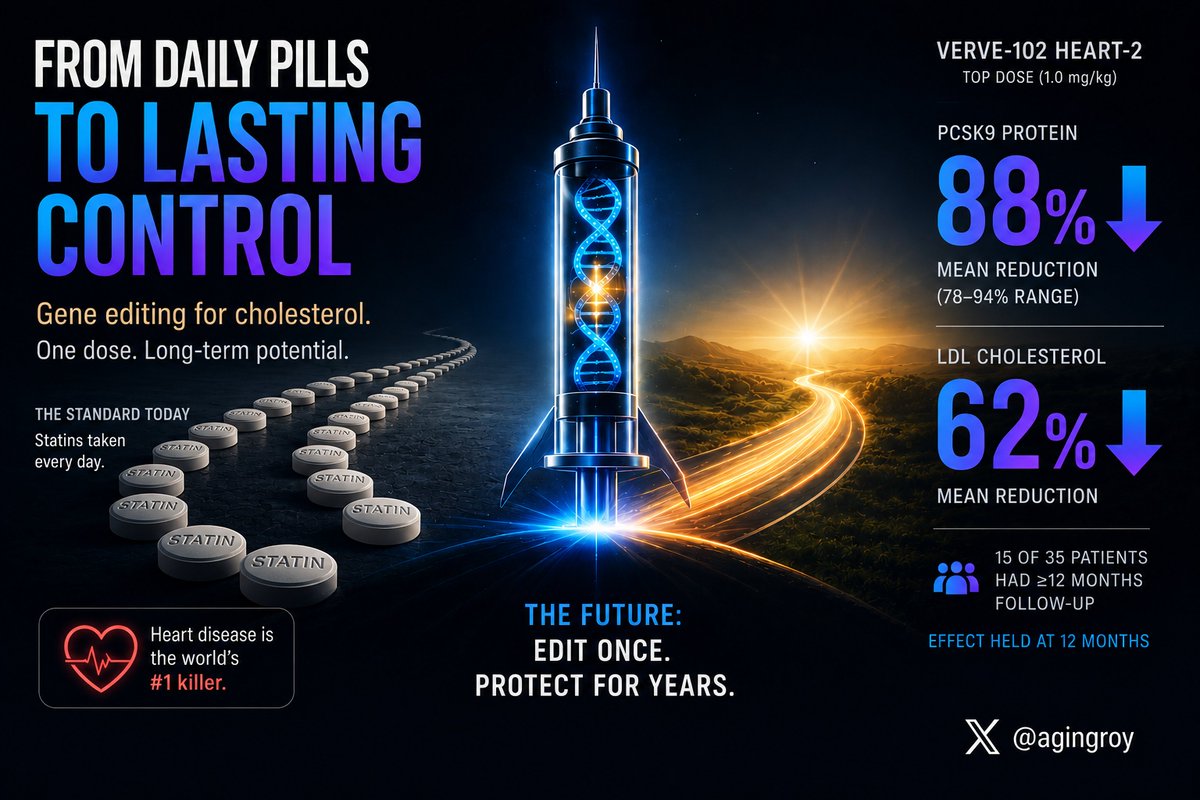
Heart disease still kills about 680,000 Americans a year. For forty of those years the only fix was a pill you took every single morning, and plenty of people quit within a year or two. Then the shots arrived. Evolocumab, an antibody you inject every two weeks, drops LDL about 60%. Inclisiran went further, two shots a year, LDL roughly halved. Each one needed less of the patient than the last. VERVE-102 needs them once. One IV dose of a base editor switches off the liver's PCSK9 gene, the gene that keeps LDL high. In 35 patients with inherited high cholesterol, the top dose cut the PCSK9 protein a mean of 88% and LDL a mean of 62%, and in the 15 followed past a year, it held. The pill, the fortnightly shot, the twice-yearly shot, every one of them stops working the day you stop showing up. This is the first that doesn't ask you to. Phase 1b, no placebo, 35 people. @EliLillyandCo bought Verve to see what it does in 3,500. Would you take a one-time edit at 45, or wait for the outcomes data?
5
3
10
1,709
The ladder, with sources: Statins: real-world cohort studies find 40-50% of new users stop within 1-2 years (Jackevicius et al., J Gen Intern Med 2004, PMID 15209602). Adherence, not potency, is the limiting factor. Evolocumab (Repatha): a PCSK9 antibody, 140 mg every 2 weeks or 420 mg monthly. ~59% LDL drop and a 15% cut in the 5-point MACE composite in FOURIER (n=27,564). Note: hard MACE fell, CV death alone did not significantly drop. doi.org/10.1056/NEJMoa161566… Inclisiran (Leqvio): an siRNA that silences PCSK9 in the liver, dosed at 0, 3 months, then every 6 months. ~50-52% LDL drop in ORION-10/11. CV outcomes trial (ORION-4, ~15,000 patients) is still reading out, so the hard-outcome benefit isn't proven yet. doi.org/10.1056/NEJMoa191238… VERVE-102: a one-time base edit (a single DNA letter change) that turns off PCSK9 in liver cells. Top dose cut PCSK9 protein a mean of 88% and LDL a mean of 62%; held up to 18 months in the earliest-dosed. Phase 1b, n=35, no placebo, no outcomes data yet. The "one and done" framing is the hypothesis, not proven durability. doi.org/10.1056/NEJMoa260128… Eli Lilly acquired Verve in 2025.
1
1
4
497