But none of the mosques will be built on waqf land. Only on govt land or hindu land.
The frauds these muslim thugs are.
#MuslimThuggery
4
You just debunked your scam muslim theology which mentioned even ocean creator some muslim guy.
You are just moving thugs.
#MuslimThuggery
1
15
690
7,787
Help comes with a price now for mulla. Double haram abdul. Now you will not get 72 virgins.
#MuslimThuggery
1
210
Sufiyan wanted Muslims to adopt modern practices. Islam wanted camel era. Islam won.
#MuslimThuggery
197
Suniil Bhardwaj retweeted

Jun 11
Scamster Quam
#Muslimthuggery
Jun 11

काॅलज में उर्दू लक्चरर शाइस्ता नूर हिदूं बच्चों को
जबरन उर्दू पढ़ाती है साथ ही मजहब के तौर तरीके भी सिखाती है।
विरोध करने पर काॅलेज के गेट पर
मुस्लिम लड़कों को बुलाकर हिंदू बच्चियों से छेड़छाड़ करवाती है।
1
1
12
Jun 12
But but but why Hindus aren’t secular.
#MuslimThuggery
Jun 12

Islamist outfit in Kerala directs Muslims to avoid Hindu rituals amid row over Muslim League MLA lighting ceremonial lamp: Shows how secularism in India is responsibility of only Hindus
opindia.com/2026/06/seculari…
14
Jun 12
Sada hua musalman samaaj
#MuslimThuggery
Jun 12

Murshidabad is Muslim dominated area with 67% Muslim population
A hindu brahmin student was tortured for having SHIKHA by a Muslim teacher in a school in MURSHIDABAD West Bengal
She asked him to attend the school only after cutting SHIKHA
Hindu community showed unity and along with ISCKON devotees they protested for targeting HINDU Brahmin student
12
Jun 12
Sada hua musalmaan samaaj
#MuslimThuggery

A Muslim man entered a Hindu house asking for water in Dehradun, Uttarakhand.
An innocent 11-year-old Hindu girl brought him water, and he started molesting her.
Hearing her screams, the mother rushed out and caught the predator with the help of locals.
13
Jun 12
Muslim Scamsters
#MuslimThuggery
Jun 11

Our daughters are not safe on matrimonial sites!
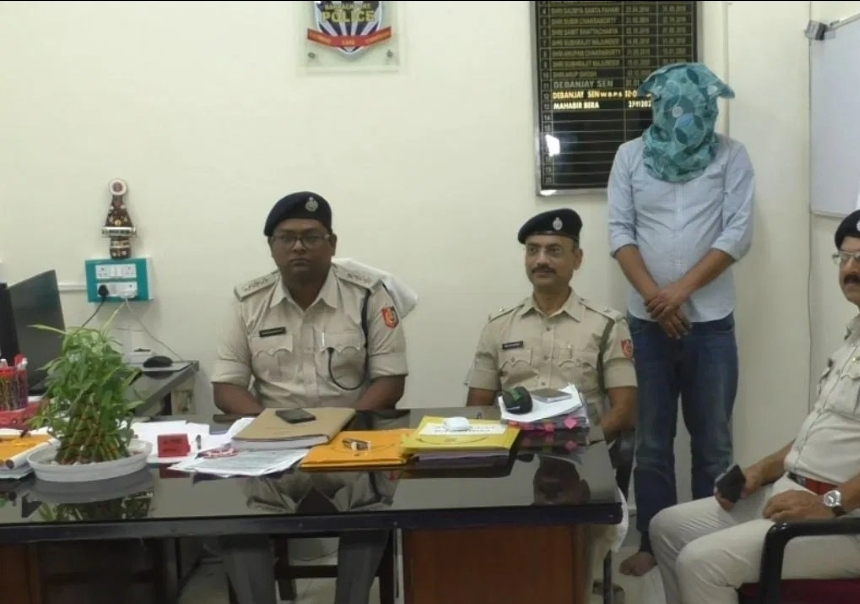
Kolkata Police have arrested one Matiur Rahman, who posed as "Manik Roy" on matrimonial websites and trapped over 15 Hindu women.
According to investigators, his modus operandi was simple:
1. Create a fake Hindu identity
2. Present himself as a wealthy professional earning nearly Rs 1.5 crore annually
3. Build emotional relationships through matrimonial platforms
4. Gain the trust of women and their families
5. Initiate marriage discussions and promise a future together
6. Start seeking money citing medical emergencies, family crises, and financial troubles
7. Extract cash, gold, and valuables
8. Disappear once suspicions arose
The case came to light after a woman from Naihati complained that she was persuaded to hand over Rs 85,000, a gold bracelet, and other valuables after being promised marriage. Her suspicions grew when the accused's stories about his family and background began to unravel.
After reaching out through social media, she found several other women with nearly identical experiences. Investigators now suspect that at least 15 Hindu women may have been targeted using the same pattern of deception.
Several victims reportedly narrated a similar sequence: contact through matrimonial sites, emotional bonding, promises of marriage, repeated financial demands, and eventual abandonment. Some women have even alleged that wedding ceremonies took place before they were cheated.
Police are now examining digital records, financial transactions, and matrimonial profiles to determine the full scale of the fraud and identify additional victims.
6
Jun 12
5099 year old pakistani custom.
#Muslimthuggery
Jun 11

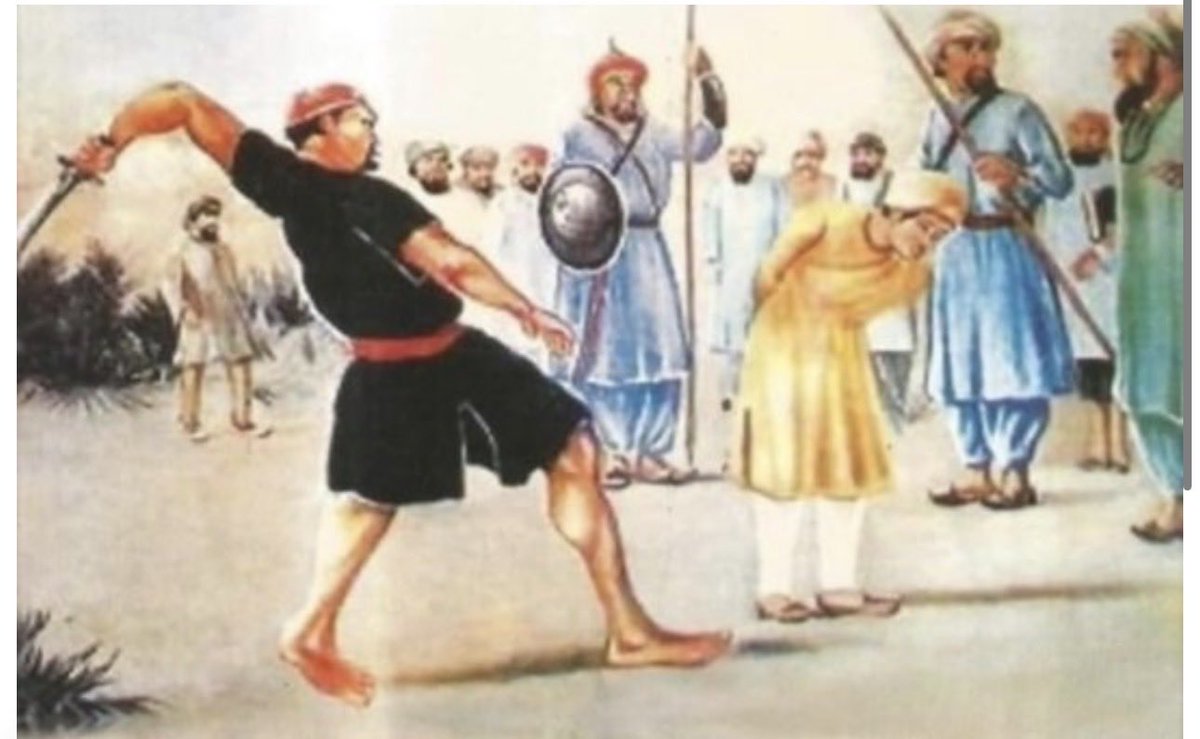
The year was 1734, in Lahore. A 10-year-old Hindu boy named Haqiqat Rai was studying as usual with other students at a madrasa. He had recently joined the Persian class. The festival of Vasant Panchami was just around the corner, and he clashed with some Muslim children over the same topic. The Muslim children hurled some profanities against Goddess Saraswati, which the entire class supported. Unable to tolerate, Haqiqat Rai single-handedly opposed them.
Seeing the situation escalate, Haqiqat Rai and the other children were taken to the madrasa's cleric. There, all the Muslim children lied, claiming that Haqiqat had hurled profanities at Bibi Fatima. There was no evidence to support Haqiqat, and considering it a heinous crime, the cleric decided to punish Haqiqat Rai without even knowing the truth.
The cleric reported the incident to the Qazi, and considering it an insult to Islam, the young boy was publicly sentenced to death. His family pleaded for mercy with the then king, Zakaria Khan, but he, without knowing the truth, justified the punishment. The day of execution was deliberately set for Vasant Panchami.
Before his beheading, he was offered the option of converting to Islam, but Haqiqat refused. In 1734, when the entire country was celebrating Saraswati Puja, the beheading of this young child, only 10 years old, was beheaded in Lahore.
It is said that in her final moments, his mother urged him to convert to Islam, as at least he would remain alive. But Haqiqat Rai, smiling, bowed his head to the executioner.
Until the partition of India, both Hindus and Muslims gathered at Haqiqat Rai's tomb in Lahore every Vasant Panchami. It is no wonder that it was because of self-respecting Hindus like Haqiqat Rai that Sanatan Dharma stood tall against the invaders even in such difficult times.
9
Jun 11
Thugs called Muslims
#Muslimthuggery
Raja Khalid befriended a 16-year-old illiterate Hindu minor girl working as domestic help to feed her poor family in Dehradun.
He promised marriage, threatened her, took her to a hotel and allegedly raped her.
Later, he said he could not marry her because he was already married and had a child.
15
Jun 11
Jun 11

मुस्लिम समाज के लड़कों ने दलित समाज के लड़के के साथ किया दुष्कर्म 🚨
मेरठ से आ रही इस खबर के बारे में आप क्या सोचते है ?
10
Jun 11
Jun 11

"मेरा धर्म मेरे देश से बड़ा है। संकट के समय, मैं सबसे पहले अपने धर्म की सेवा करूँगा और देश के बारे में बाद में सोचूँगा। अपने धर्म के लिए मैं किसी की भी जान ले सकता हूँ।"
- अब्दुल जिहादी
11
Jun 11
Jun 11

Three Madrasachap Ramjan Ali, Sahil Ali, Motiur Hussain, trapped a Hindu girl of Majuli, through Social Media by introducing themselves as Hindu. Today the girl came to Jorhat in her relatives house, the Madrasachap reached there to take her, looking at their dress, locals suspected and caught them and gave them some light physical refreshments before handing them to Police. Interestingly the Jihadi’s age is only 17-18 years.
#Assam
8
Jun 11
Jun 11

In Germany, a Syrian refugee polygamous family is causing outrage.
Ahmed lives with his 2 wives and 6 children in a free house. He says he is looking for 2 more wives and wants to have 20 children.
He’s illiterate, does not work, and says his only goal is to have many children to ‘make Germany more Muslim.’
6

8 Aug 2024
Bit of #MuslimThuggery going on there, eh? Tut tut, they are usually so calm and dignified.
3
18