
Jun 12
✅ Rarity Scores
✅ Whale Activity
✅ Market Sentiment
Smart trading signals risk assessments — all in one powerful agent.
Whether you’re hunting alpha or protecting your portfolio, NFT Analyst has your back.
Who’s ready to trade smarter? 🔥
#NFT #NFTs #NFTTrading #BSC #Binance
1
27

Jun 10
Expensive NFTs vs Cheap NFTs — Which Strategy Actually Wins?
One of the biggest debates in NFTs is whether it's better to focus on high-end collections or spend your time hunting opportunities in smaller, cheaper projects.
The longer I stay in this space, the more I realize there is no perfect answer.
At first glance, expensive collections seem like the obvious choice.
If you make 20% on a 5 ETH NFT, that's very different from making 20% on a 0.05 ETH NFT.
The percentage is identical.
The result is not.
That's why many experienced traders naturally gravitate toward larger collections.
Projects like CryptoPunks, Pudgy Penguins, BAYC, and other established brands have liquidity, history, strong communities, and a much larger pool of buyers and sellers.
The problem?
Opportunities don't appear every day.
Sometimes you wait days or even weeks for a setup that makes sense.
And that's where smaller collections become attractive.
There is always action.
New launches.
New narratives.
New hype cycles.
New opportunities.
Every day someone is trying to catch the next 10x.
Every day someone is trying to flip a project before everyone else notices.
The market feels alive.
But there is a cost.
Most people underestimate how much time, attention, and energy they spend chasing those opportunities.
You can spend hours researching collections, tracking wallets, analyzing rarity, placing offers, watching Discords, and monitoring Twitter only to make an amount of money that could have been earned much more easily elsewhere.
Which raises an interesting question:
What are you actually optimizing for?
Profit?
Entertainment?
Experience?
Freedom?
Status?
Because your answer changes the strategy completely.
Personally, I've come to believe that the most valuable asset in NFTs isn't ETH.
It's attention.
You can lose money and make it back.
You can miss a trade and find another one.
You can't get your time back.
That said, the market today is very different from what it was a few years ago.
Back then, most people traded manually.
Today we have bots, analytics, automation, AI tools, wallet tracking, and countless ways to monitor opportunities at scale.
That changes the game.
A strategy that would have been impossible for one person a few years ago can now be executed across hundreds of collections simultaneously.
But there is something important that many people misunderstand.
Bots don't make money.
AI doesn't make money.
Tools don't make money.
People make money.
The tools simply amplify whatever already exists.
If you have discipline, they amplify discipline.
If you have a strategy, they amplify strategy.
If you have no idea what you're doing, they simply help you lose money faster.
There is no magical button.
There never was.
And there probably never will be.
After making plenty of mistakes myself, I find myself moving toward a hybrid approach.
Some capital goes into stronger, more established collections.
Some capital goes into smaller projects where asymmetric opportunities exist.
I don't try to predict every winner.
I don't expect every purchase to become a moonshot.
And most importantly, I try not to fall in love with projects.
Because that's where many of us lose the most money.
The NFT market rewards flexibility far more often than loyalty.
In the end, I don't think the biggest winners are the people who find the best project.
I think the biggest winners are the people who stay in the game the longest.
So I'm curious:
If you could choose only one approach, what would it be?
1️⃣ Focus on expensive blue-chip collections?
2️⃣ Hunt opportunities in smaller collections?
3️⃣ Use a combination of both?
Let's discuss. 👇
#NFTTrading
#NFTMarket
#OpenSea
#EthereumNFT
#NFTCommunity
#Web3
#ETH
#NFTCollector
2
89

Jun 7
4

Jun 7
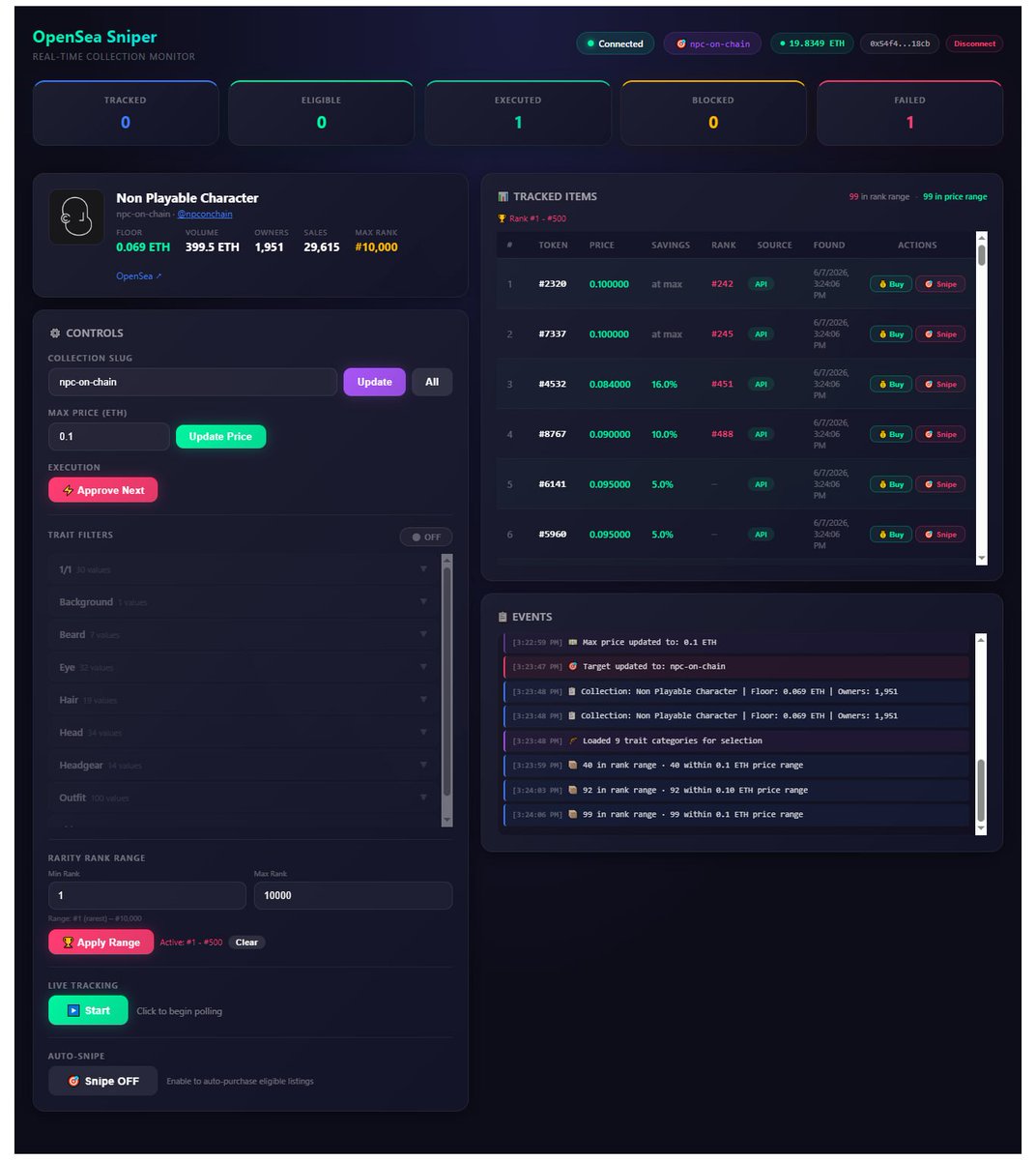
Sniping Bot Update – We’re at 90% DONE 🔥
Low-latency sniping ⚡ • Active tracking • Attributes-based filters 🎯
Price & item control • **Rank filter** added • **Buy/Snipe function LIVE**
Web3 fully integrated • Wallet safety 🔐 • Gas optimization • Anti-bot bypass 🛡️
**What’s finished:**
✅ Tracking system
✅ Attributes Rank filters
✅ Price & item control
✅ Direct OpenSea connection
✅ Buy/Snipe ready
✅ Full Web3 integration
Just polishing:
→ Website security
→ User security
→ Final UI/UX touches
This thing is shaping up to be the cleanest, fastest OpenSea sniper out there.
Who’s hyped for the launch?
Drop your must-have features or just say “ready” below 👇
Here's a sneak peek of Sniping Bot.
Let’s goooo!
#NFT #OpenSea #NFTSniper #SniperBot #Web3 #Crypto #Ethereum #NFTBot #NFTTrading #Eth #Opensea #Minting #freemint
1
61

Jun 6
Blur maintains dominance as the most technically advanced trading-focused marketplace with aggregated liquidity. #Blur #NFTTrading
13
Jun 6
Tensor Trade NFTs on Solana offer integrated fee discounts, driving marketplace volume. #Tensor #Solana #NFTTrading
1
12
Jun 4
Tensor Trade NFTs on Solana provide fee discounts and governance rights, tying value directly to marketplace activity. #Tensor #Solana #NFTTrading
2
12

OpenSea pivoting to token trading says everything about the NFT shift. #OpenSea #NFTTrading
13

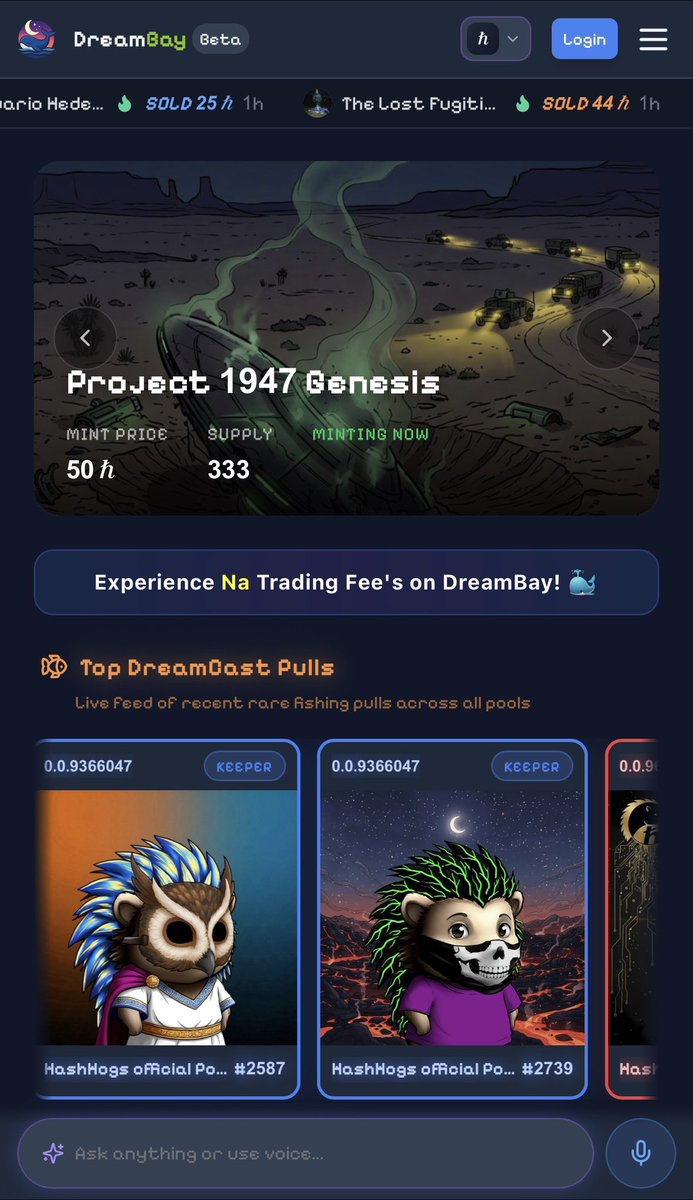
🛍 Marketplace
Buy and sell NFTs with 0% fees on direct purchases and sales.
You can also sweep multiple NFTs in a single transaction, place collection offers, and track floors with alerts.
Built for serious collectors.
#DreamBay #NFTTrading #Hedera
1
24

Jun 3
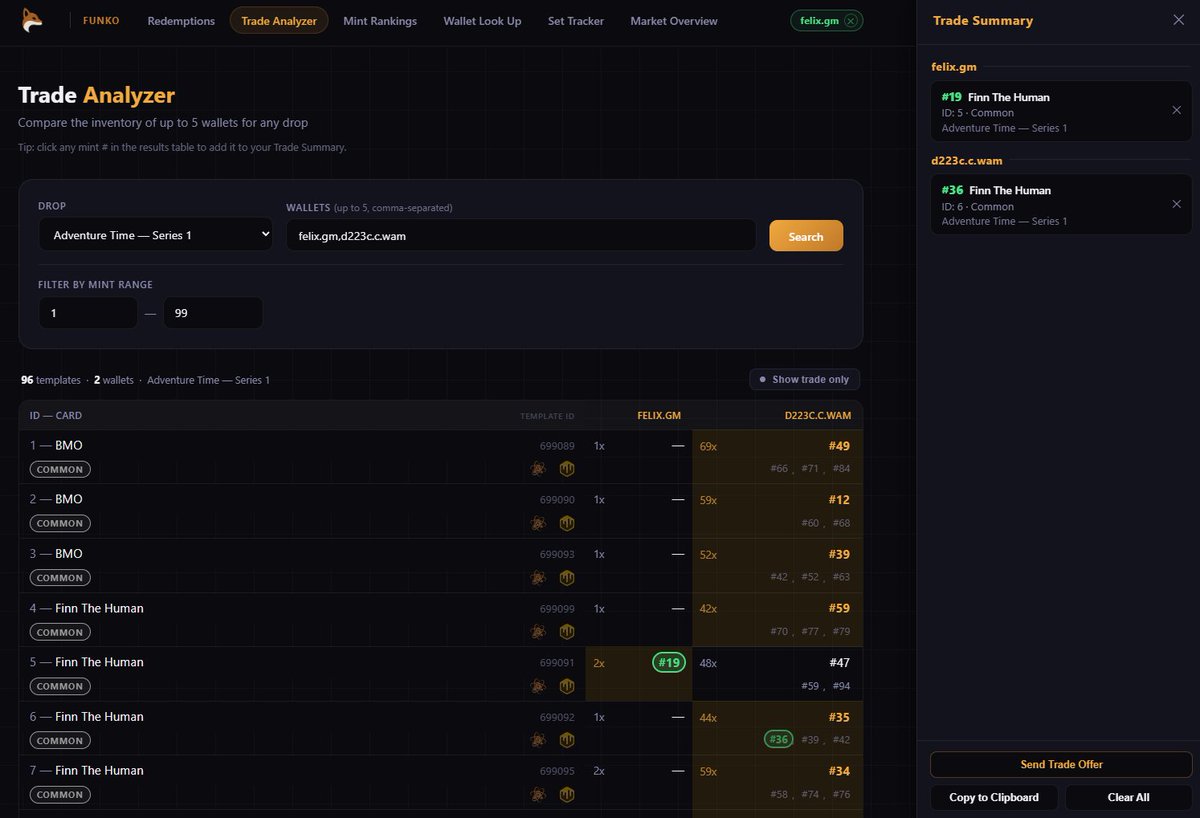
🚀 The Trade Analyzer just got a major upgrade!
You can now connect your WAX wallet and send trade offers directly from Pop In Stock. 🎉
No need to recreate the trade on AtomicHub anymore. Find a match, review it, and send the offer in just a few clicks.
✅ Available for both Funko and Topps collections.
Mint trading is a huge part of collecting, especially for those competing on the ranking leaderboards. Pop In Stock continues to build advanced tools that make collecting, trading, and climbing the rankings easier for the community. 📈🏆
Faster. Easier. Better trading. 🤝
Give it a try and let me know what you think!
#FunkoNFT #ToppsNFT #WAXNFT #NFTTrading
@Dropppio @OriginalFunko @WAX_io
1
137


Jun 3
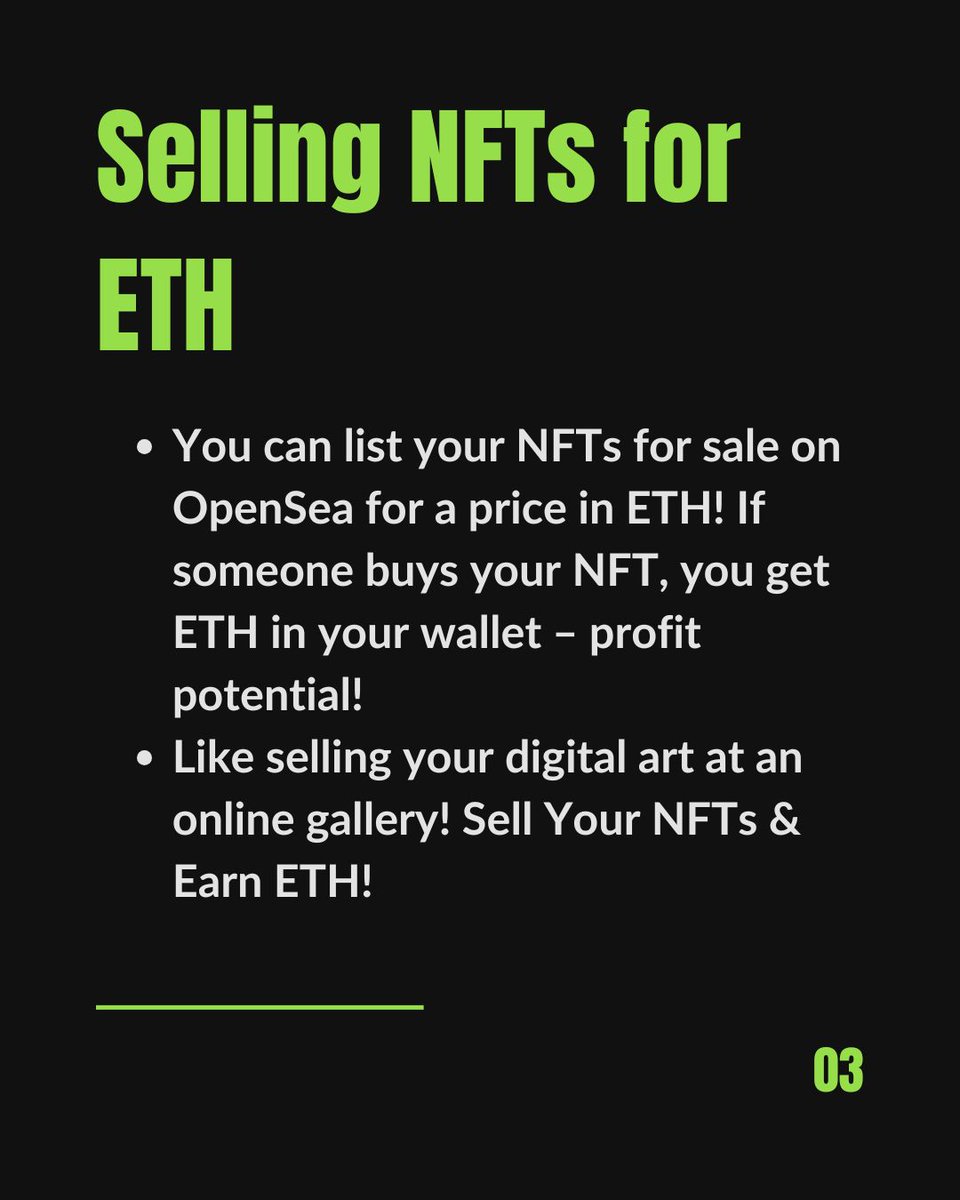
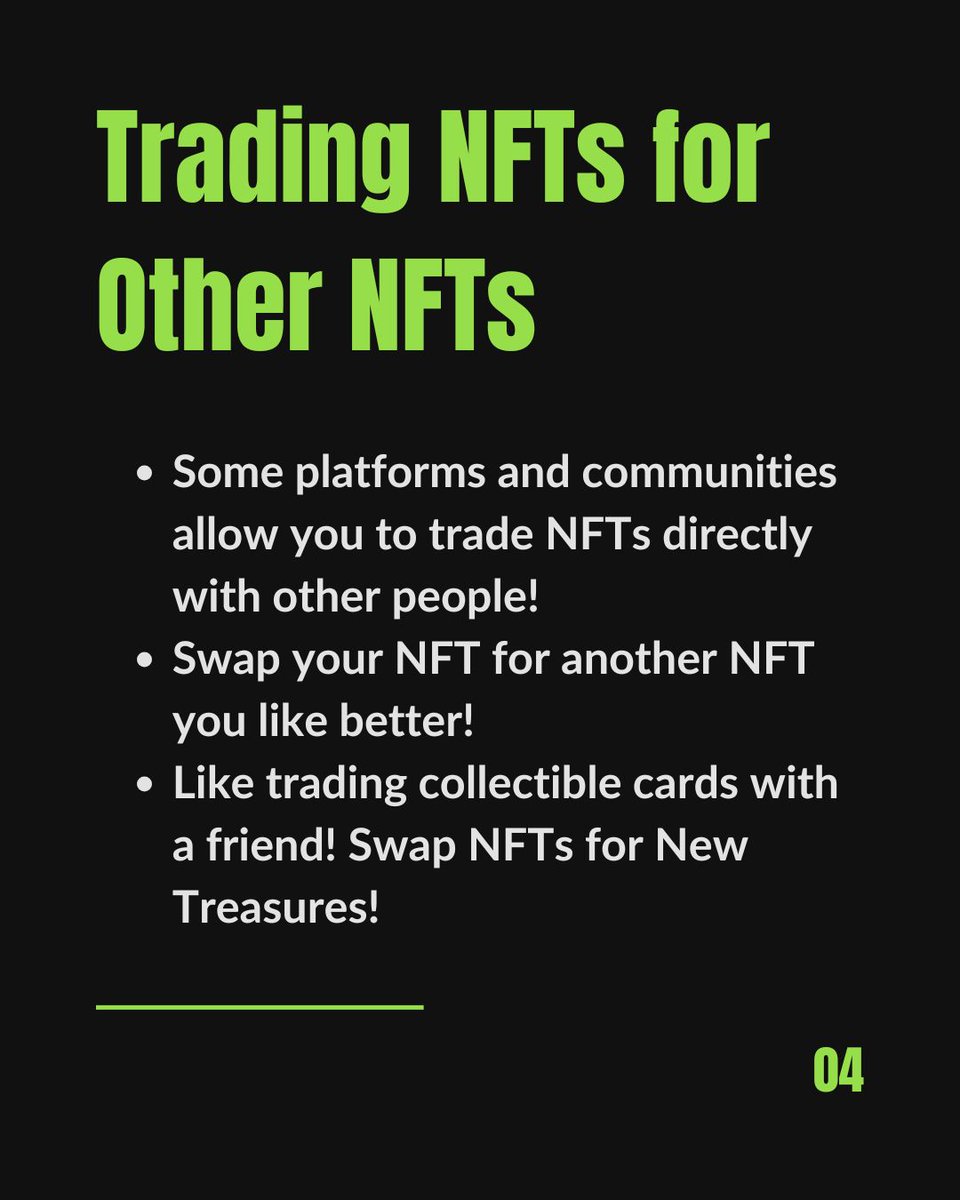
NFTs aren’t just collectibles—they’re assets.
📈 Buy smart.
🔄 Swap strategically.
💰 Trade with purpose.
#NFTTrading #NFTs #Web3 #DigitalAssets #NFTCommunity
3

🛒 OMENX Marketplace is open for trading!
Buy & sell Manager and Faucet NFTs peer-to-peer using OMENX.
List your extras, hunt for upgrades, or trade strategically as the ecosystem grows.
Game NFT support is on the way.
Browse current listings and make your moves!
What are you hoping to see on the market? Reply below!
#OMENX #Marketplace #NFTTrading
9
11
147

• Trade NFTs
LUKSO positions NFT trading not only as collectible buying and selling, but as part of digital ownership, identity and community economies.
NFT marketplaces, onchain ownership and the creator economy can come together here.
#LUKSO #NFTTrading #NFTMarketplace #DigitalAssets
1
2
86

Educational: Solana’s NFT market has matured from pure meme hype to serious infrastructure. Tensor has established itself as the leading NFT trading platform and foundational layer on Solana.
#Tensor #SolanaNFT #NFTInfrastructure #SolanaEcosystem #NFTTrading
1
25

#OzoneChain $OZONE is a next-generation Dual-Engine 5-Layer Blockchain that is #EVM-compatible and built on a highly scalable #CosmosSDK modular architecture and high-speed #CometBFT consensus. New Product Launches: #MetaPredict #MetaLudo #NFTtrading
m.dailyhunt.in/news/india/en…
56

opensea.io/Vextur
#NFT #NFTs #NFTCommunity #NFTArt #NFTCollector #NFTCollectibles #DigitalArt #CryptoArt #NFTDrop #NFTGiveaway #NFTProject #NFTArtist #NFTMarketplace #NFTLaunch #NFTCollection #NFTInvestment #NFTWhale #WhaleAlert #BlueChipNFT #NFTAlpha #Web3 #Web3Community #Crypto #Ethereum #ETH #Solana #SOL #Polygon #Blockchain #Metaverse #DigitalAssets #ArtCollector #CryptoInvestor #NFTGame #NFTGaming #NFTMint #Minting #RareNFT #LimitedEdition #NFTshill #NFTpromo #OpenSea #Foundation #Rarible #NFTTrading #NFTInfluencer #InvestmentOpportunity #NFTDaily #FineArt #ContemporaryArt
2
55

May 11
We develop NFT trading platforms built on strong blockchain architecture and system architecture frameworks for startups and enterprises.
To Know More: addustechnologies.com/nft-tr…
#nfttrading #blockchaindevelopment #nftmarketplace #web3development #cryptoplatform
7
