
Most irritation I felt was when NRs first investment was into Amazon India e-retail!
7
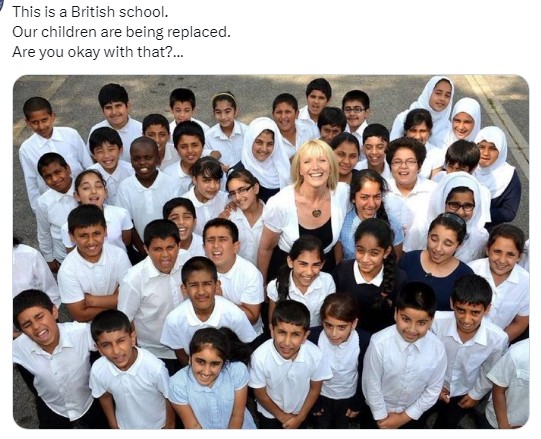
Impending Death of the natives
[
Do a table Squire, For Brighton and Glasgow UK , When will the native white population be 75%,50% of the current population
Thought for 10s
These are not predictions but trend-based estimates. Demographics evolve with policy, economics, and birth rates. For latest official data, check ONS or NRS."Native white" here refers to White British (for Brighton) or White Scottish (for Glasgow), the indigenous majority groups tracked in UK/Scottish censuses.
Projections involve uncertainty due to variables like migration rates, fertility differences, intermarriage, self-identification, and policy changes.
No official long-term local projections match this exact query, so estimates draw from census data, existing models (e.g., Hamilton-Perry on ukdemographics.co.uk for Brighton), and trends.ukdemographics.co.uk
Current Baselines (Latest Census Data)
Brighton and Hove (pop. ~277,100 in 2021):
White British ~73.9% (~204,800 people).
Broader White ~85.4%.brighton-hove.gov.uk 1
Glasgow City (pop. ~620,000–650,000 mid-2020s):
White Scottish ~67–73% (White Scottish Other British ~72.8% in recent estimates;
non-White minority ethnic ~19.3% in 2022). White Scottish has declined notably since 2011
(~78.6%).en.wikipedia.org 2
The question asks when the absolute number of native white people falls to 75%, 50%, or 10% of the current (baseline) native white population count.
This assumes the native white population declines (via lower fertility, net out-migration, aging) while total population may grow via immigration.
It is not the same as when they become <75%/50%/10% of the total population.
Estimated Timelines (Rough Projections)
These are illustrative extrapolations based on recent trends (e.g., ~1–2% annual decline in White British/Scottish share in diverse UK cities, adjusted for local data).
Brighton uses Hamilton-Perry-style projections showing rapid decline to ~40% White British by 2051. Glasgow uses trends from 2011–2022 and Scotland projections (slower overall but faster in the city). Actual outcomes depend heavily on future net migration.ukdemographics.co.… 1
Brighton and Hove (current native White British ~204,800)
Threshold (% of current native pop.)Est.
Year
Notes
75% (~153,600)~
2035–2040Moderate continued decline modest pop. growth.
50% (~102,400)~
2050–2060Aligns with ~40% share projection by 2051; total pop. growth accelerates decline in absolute numbers.
10% (~20,500)~
2080 or never (highly uncertain)Extreme scenario; requires sustained high migration and low native fertility for decades
.Glasgow (current native White Scottish est.
~420,000–450,000; using ~68–72% of ~630k)Threshold (% of current native pop.)Est.
Year
Notes
75%~
2040–2050Slower than Brighton; city diversity rising but from lower base.
50%~
2060–2075Extrapolating non-White growth to ~20% by 2031 and ongoing trends.
10%~2100 or never (highly uncertain)Very long-term;
Scotland's overall White Scottish share remains higher.
Key Caveats and Context
Absolute numbers vs. percentages: Even as % share falls, absolute native white numbers can stabilize or decline slowly if total population growth is moderate.
Brighton shows faster change due to its attractiveness to migrants/students.policyexchange.org.uk
Drivers:
Higher non-White fertility in some groups, net international migration (dominant UK growth factor), and White British/Scottish net out-migration from cities. Intermarriage blurs categories over generations
.migrationobservatory.ox.ac.uk
Uncertainty: Models vary widely (e.g., low vs. high migration scenarios).
UK-wide White British could approach minority status nationally ~2060s under some projections, but cities lead this trend.
Recent migration policy shifts could slow changes
.facebook.com
Data sources: Primarily ONS/Scotland Census 2021/2022, local reports, and projection tools. No precise "native white absolute decline to X% of current" tables exist publicly.
1
19



痛み報告を動作・部位・NRS・何が難しいかの型にするやり方、現場でも伝達のぶれが減って助かります。立ち上がりで右膝内側NRS6で荷重が逃げる、まで揃うと相手も次の一手を考えやすく、報告が評価の共有になりますね。型を持つと楽になるという整理、とても参考になります。

Time to skip the back-and-forth. NRS 239.011 lets you petition district court directly when a public records request gets ignored or stonewalled. Courts must prioritize these cases, and if you win, the agency pays your legal costs. Aguilar's office should know this is coming.
7
Sub_Saibot1 witch MKII retweeted

Remember when NRS tore it with this Skarlet skin.

6
10
257
4,618







Lemme know what ya need if you have trouble funding something, I have some extra NRs lying around :P
2
22






Isso é triste, mas espero que a morte dela sirva de conscientização as pessoas, todos devem exigir o cumprimento de procedimentos e protocolos de segurança, que muitas empresas não levam a sério e não valorizam profissionais que tem entendimento das NRs e etc.
Deus a tenha.
17