
4 Nov 2025
Through their expertise in TEI and IIIF technologies, they helped make possible a system where research, storytelling, and memory converge. With exceptional rigor and skill, they built a platform that unites technical excellence with a deep responsiveness to the human record it preserves.
We extend our deepest gratitude to Nick Laiacona, Jamie Folsom, Anindita Basu Sempere, Rebecca Black, Chelsea Giordan, and Camden Mecklem, who each brought care, precision, and imagination to every stage of the work.
Thank you, Performant, for helping us build not just a platform, but a living archive.
#NativeBoundUnbound #PerformantSoftware #DigitalHumanities #ArchivalJustice #IndigenousHistory #HumanitiesInnovation
1
3
66
3 Nov 2025
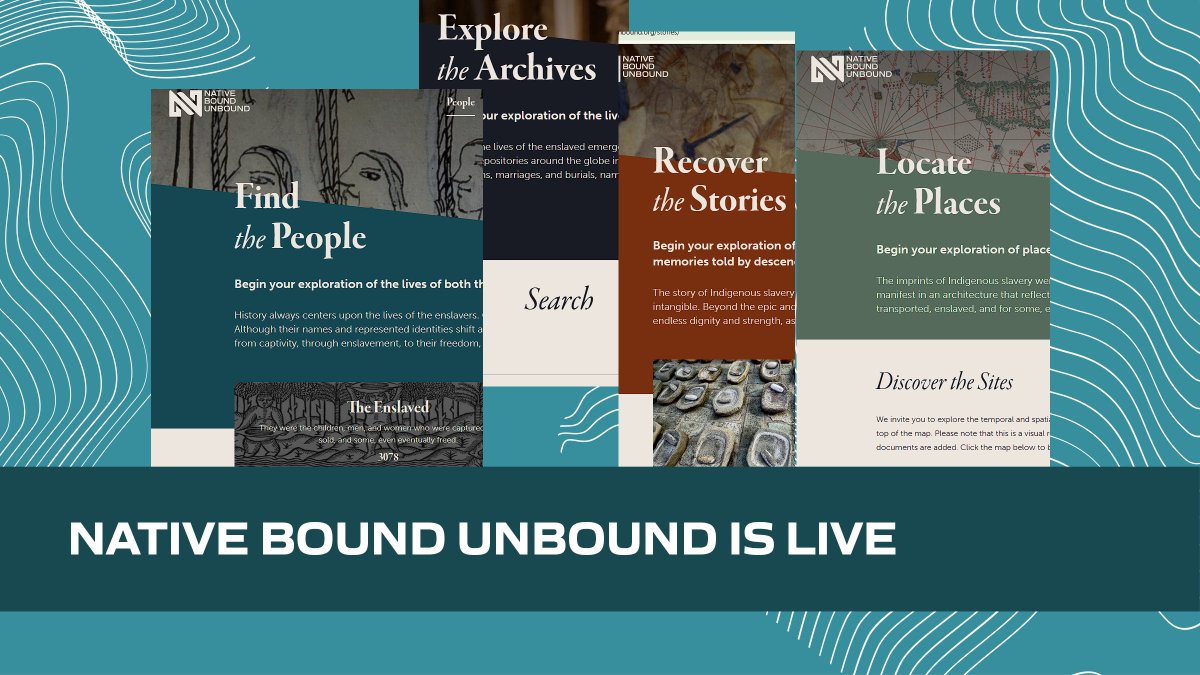
We invite you to explore Native Bound Unbound: Archive of Indigenous Slavery - a living digital platform connecting people, places, events, and stories across the Americas.
Visit nativeboundunbound.org and come back often. This is only the beginning.
#NativeBoundUnbound #IndigenousHistory
1
6
275
4 Jul 2025
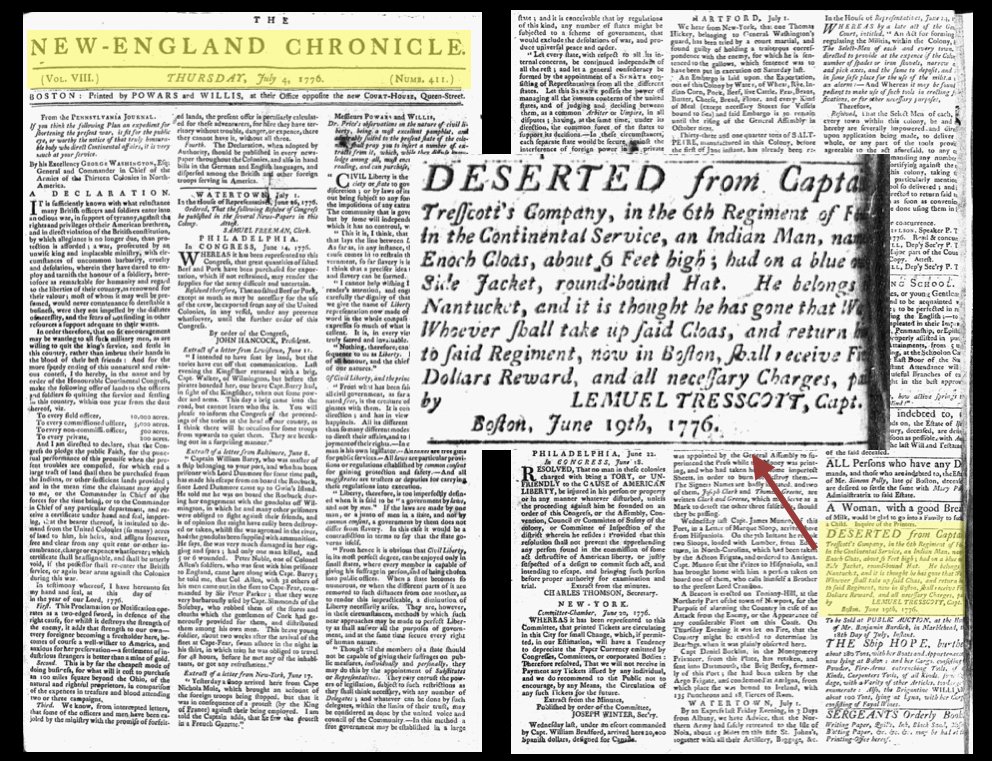
That same grace was not extended to Indigenous men who were conscripted, coerced, or forced into service by American regiments. Such was the case for Enoch Cloas, a Nantucket Indigenous man who deserted from Captain Lemuel Tresscott’s Company in the 6th Regiment of Foot. On the second page of The New-England Chronicle, Tresscott published an ad demanding his return.
While Cloas’s exact legal status is unclear (he may have been conscripted, indentured, or enslaved) his presence in the ranks reflects a larger truth: Indigenous people were drawn into a war that offered them no freedom in return. His case was one of many that appeared in newspaper columns calling for the capture of military deserters and runaway slaves, even as those same pages proclaimed liberty from tyranny.
#EnochCloas #NativeBoundUnbound #FourthOfJuly #IndigenousHistory #RevolutionaryWar #OnThisDay
1
4
102
29 Jun 2025
🎞️ Want to change the narrative?
Join us.
#NativeBoundUnbound #IndigenousSlavery #DecolonizeHollywood #ComancheHistory #HistoricalTruth #ScriptTheFuture
3
81
9 Jun 2025
These moments embedded in early colonial narratives reveal more than voyages and so-called discoveries. They expose a legacy of capture, forced displacement, and commodification. Vespucci’s letters survive in both Spanish and Italian editions, with English translations available via the Early Americas Digital Archive and Project Gutenberg.
In the original Italian:
“Pigliammo due delle fanciulle e tre uomini... La notte seguente le due fanciulle e uno degli uomini fuggirono con grande astuzia.”
Native Bound Unbound is expanding its research into Italian-language records, tracing the deep roots of Indigenous slavery across imperial boundaries and archival silences.
#NativeBoundUnbound #IndigenousSlavery #AmerigoVespucci #NamingTheAmericas #ColonialCaptivity #ItalianArchives #TransatlanticSlavery #EarlyResistance
2
3
154
4 May 2025
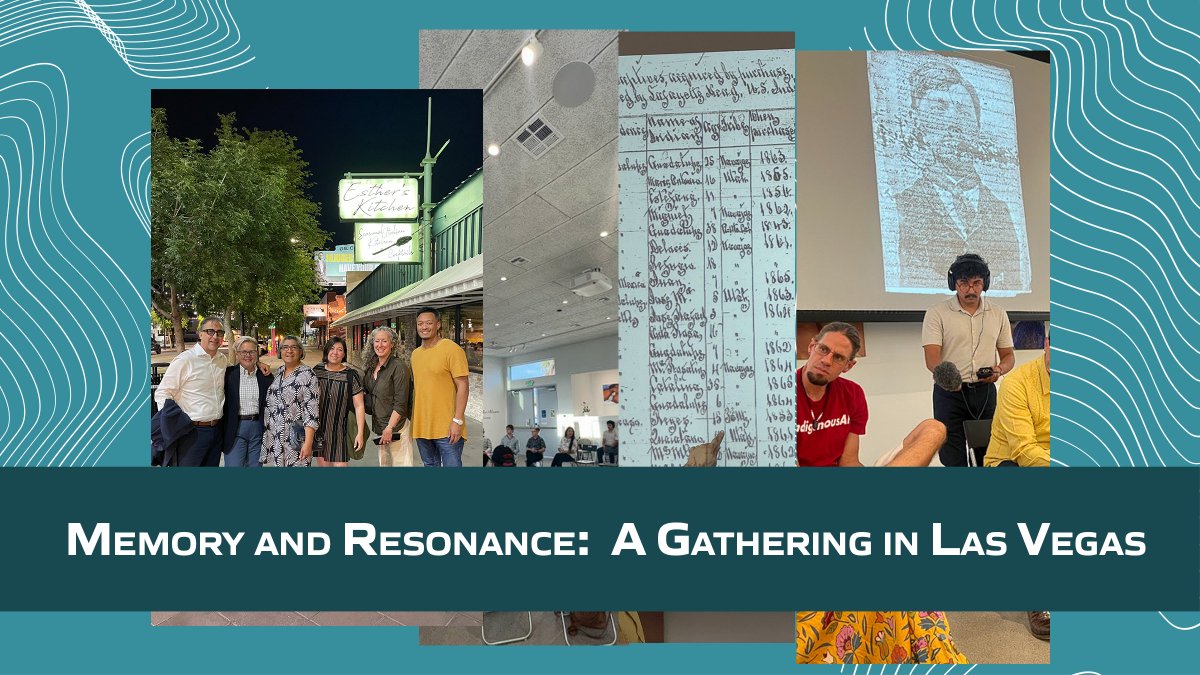
Memory and Resonance: A Gathering in Las Vegas
History lives not only in the archives, but in the voices of those who remember.
During a recent visit to Las Vegas, Nevada, Native Bound Unbound Director Dr. Estevan Rael-Gálvez was invited by Dr. Susan Johnson of the University of Nevada, Las Vegas. His visit included a public presentation at the university art museum and a guest session in Dr. Johnson’s graduate seminar on slavery. There, alongside Dr. Honor Sachs (University of Colorado Boulder), he discussed research methods that inform both Sachs’ forthcoming book, The Book of Judith, and the Native Bound Unbound project.
Yet the most resonant moment of the trip unfolded at a community Memory Gathering held at Nuwu Art, a Native-owned art and activism space founded by Fawn Douglas (Southern Paiute) and Dr. A.B. Wilkinson. The evening began with a welcome from the founders, followed by Dr. Wilkinson’s reflections on his scholarship. Before introducing the Native Bound Unbound project, Dr. Rael-Gálvez invited each participant to speak their name and call into the room an ancestor or loved one whose memory they wished to honor. This invocation opened a space of collective reflection.
In response to his prompt—“What brings you here?”—attendees began to share powerful, personal stories. With vulnerability and clarity, they spoke about the history they carry, the documents they saw, and the ancestors they remembered. Many responded to records revealing that Paiute people had been bought, traded, and enslaved in the region. Others shared their own family histories—Paiute, Nahua, Ute, Diné, Dakota—naming the legacies of displacement, survival, and resistance.
Dr. Rael-Gálvez later described the gathering as one of the most generative and moving he has ever witnessed. “It flowed like water,” he said. The collective memory held in that space, nourished by truth-telling and mutual recognition, became a powerful affirmation of the project’s purpose.
#NativeBoundUnbound #MemoryWork #IndigenousHistory #HistoricalMemory #ResistanceAndResilience #PaiuteVoices #CommunityGathering #DecolonizingArchives #UNLV #NuwuArt #Remembrance #TruthTelling #SlaveryAndFreedom
3
5
340
27 Apr 2025
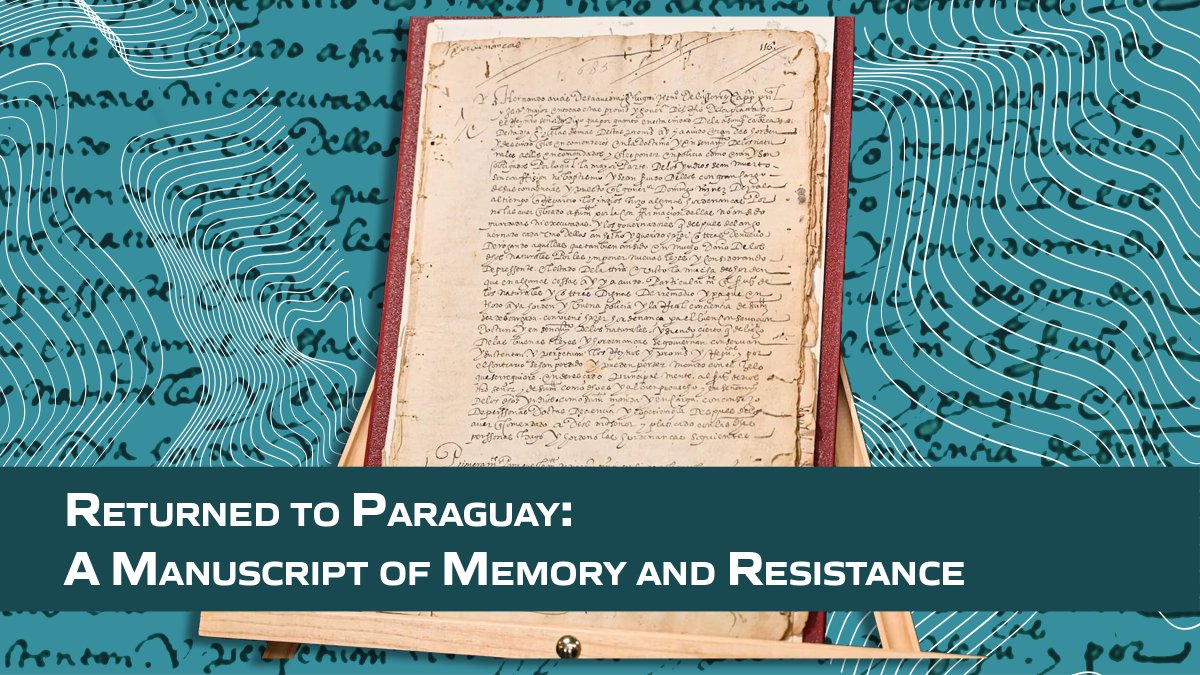
📜 Returned to Paraguay: A Manuscript of Memory and Resistance
This week, Paraguayan authorities celebrated the return of a stolen 16th-century manuscript, written and signed in 1598 by Hernando Arias de Saavedra—Hernandarias, the first American-born governor in the Spanish empire.
The manuscript, which had been stolen from Paraguay’s national archives and was recently intercepted after an attempt to sell it for $28,500, outlines a set of colonial ordinances regulating the treatment of Indigenous communities in Asunción. Among them were efforts to limit forced labor, prohibit the separation of Indigenous families, and restrict unauthorized transfers between encomiendas. These early reforms foreshadowed Hernandarias’s historic 1603 abolition of the encomienda system in Paraguay.
Crucially, Dr. Guillaume Candela, a member of the Native Bound Unbound team, was instrumental in confirming the document’s authenticity during the recovery effort—an act that underscores the role of scholarly collaboration in safeguarding cultural heritage.
Yet, as with the 1542 New Laws, these ordinances rarely translated into real protections. Captivity and enslavement of Indigenous peoples persisted, often under the guise of tribute or labor obligations, especially at the hands of encomenderos who wielded unchecked power.
The return of this manuscript is more than a legal or archival success—it is a reclamation of memory. A moment to reckon with the contradictions of colonial rule, to acknowledge the endurance of Indigenous communities, and to amplify the work of those committed to recovering these histories.
📍 #Hernandarias #Paraguay #StolenHistory #IndigenousRights #NewLaws1542 #Encomienda #DecolonizingArchives #NativeBoundUnbound #ColonialManuscripts #MemoryMatters #HistoryReturned #GuillaumeCandela #ScholarsAtWork
4
11
327
11 Apr 2025
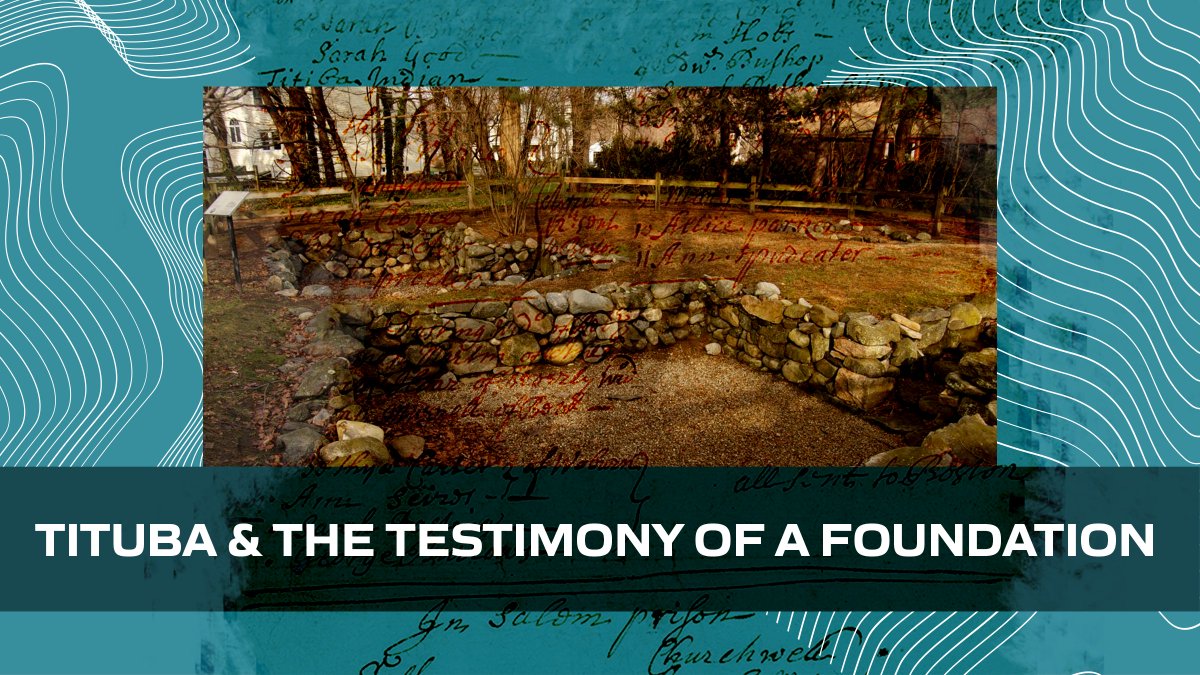
Tituba and the Testimony of of a Foundation
Native Bound Unbound is documenting historic sites that illuminate the history of Indigenous slavery. In Danvers, Massachusetts, the remains of the Samuel Parris parsonage mark the place where Tituba and John Indian lived and labored while enslaved in the late 1600s.
Today, the low stone walls of the original parsonage remain. Set within a residential neighborhood, the site stands as a quiet witness, surrounded by homes and streets. Existing signs recount the ministers who lived here and the unfolding of the witchcraft hysteria, but they do not name or honor the Indigenous lives woven into this ground.
NBU will be documenting sites digitally, but this does not preclude work on site. Currently, three signs stand at the site, and though one mentions Tituba, as we work to recenter the lives of the enslaved, we suggest an entirely new sign:
Tituba and John Indian: Indigenous Lives at the Salem Village Parsonage
On this ground, Tituba — an Indigenous woman enslaved in the household of Samuel Parris — lived, labored, and ultimately faced accusation during the Salem Witch Trials of 1692. Alongside her lived John Indian, an Indigenous man also enslaved by Parris and believed to be her husband.
Tituba’s story began among Indigenous peoples of South America, likely the Arawak of present-day Venezuela. Captured and trafficked through Barbados, she survived the brutal circuits of Indigenous slavery and was forced into the Parris household in New England. Her life traced a vast geography of displacement and survival — from South America, through the Caribbean, to colonial New England.
The foundation that remains today bears witness to their endurance and to the histories too long overlooked.
#IndigenousHistory #Tituba #NativeBoundUnbound #HistoricalMemory #SitesOfMemory
3
10
382
8 Apr 2025
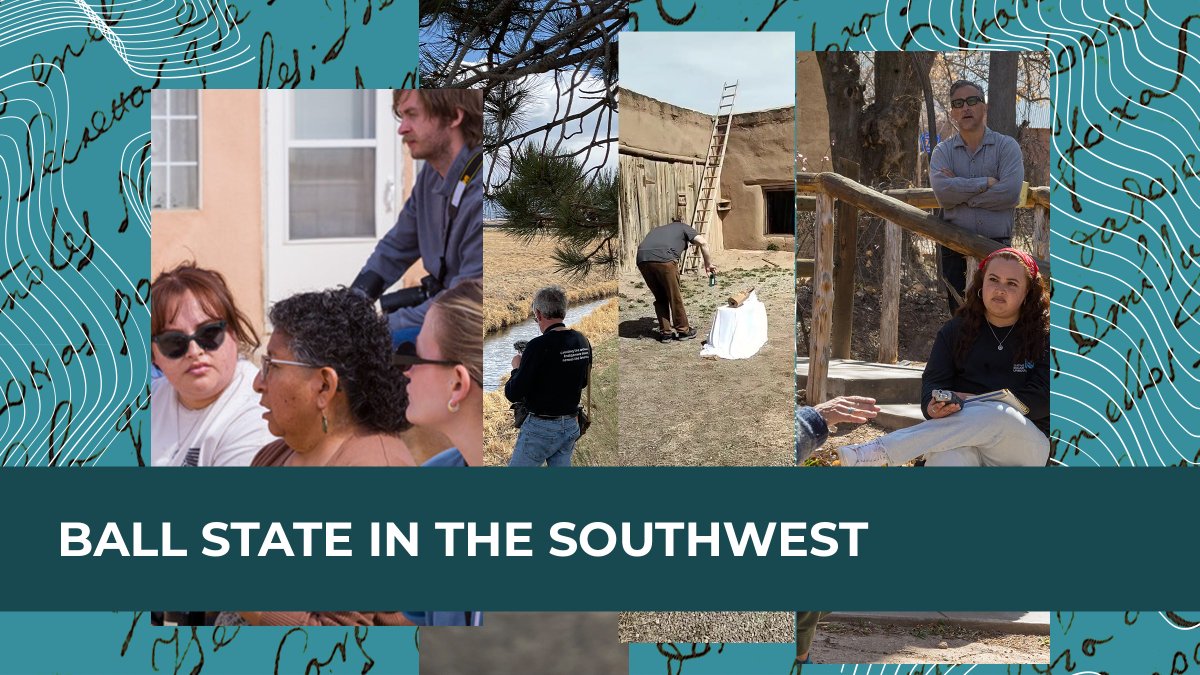
Last week, Native Bound Unbound had the honor of welcoming students from Ball State University's Center for Emerging Media Design & Development to New Mexico for a week of listening, learning, and connection.
Under the leadership of Dr. Kevin Moloney and project manager Matt Lowe, students Blake Chapman, Angelica Gonzalez Morales, Kelsey Nethercutt, Toyosi Ogunsola, Sophie Treend, and Sydney Peters are helping amplify NBU’s mission through digital and transmedia storytelling.
Since 2024, this collaboration has focused on building an immersive digital experience for the NBU website, featuring digitized artifacts, interactive elements, and innovative features like 8D audio to fully engage listeners.
Their visit to New Mexico last week was unforgettable.
At Acoma Pueblo, they listened as Theresa Pascual shared powerful stories about the impact of colonialism — from forced labor and loss to resistance and survival.
In Antonito, Colorado, they sat beside the river and heard Demetrio Valdez share the story of a handmade bridle and the legacy it represents.
At the Hacienda de los Martinez, they explored histories of displacement and labor within its walls.
At the Palace of the Governors, they stepped into the vaults to engage with the layered stories objects hold.
In Chimayó, they listened as Camilla Trujillo shared a broom passed down through generations, reading its story aloud as it flowed through her hands.
We are deeply grateful to the story sharers, organizations, and communities who welcomed the students so generously — and fortified their collaboration with Native Bound Unbound.
Their generosity continues to shape and strengthen this work. #NativeBoundUnbound #BallState #Storytelling #IndigenousHistory
2
7
339

1 Oct 2023
Records Reflecting Resistance #IndigenousSlaveryArchive #nativeboundunbound
1 Oct 2023

𝐎𝐭𝐫𝐨𝐬 𝐂𝐮𝐞𝐫𝐩𝐨𝐬 – 𝐒𝐢𝐧 𝐍𝐨𝐦𝐛𝐫𝐞𝐬
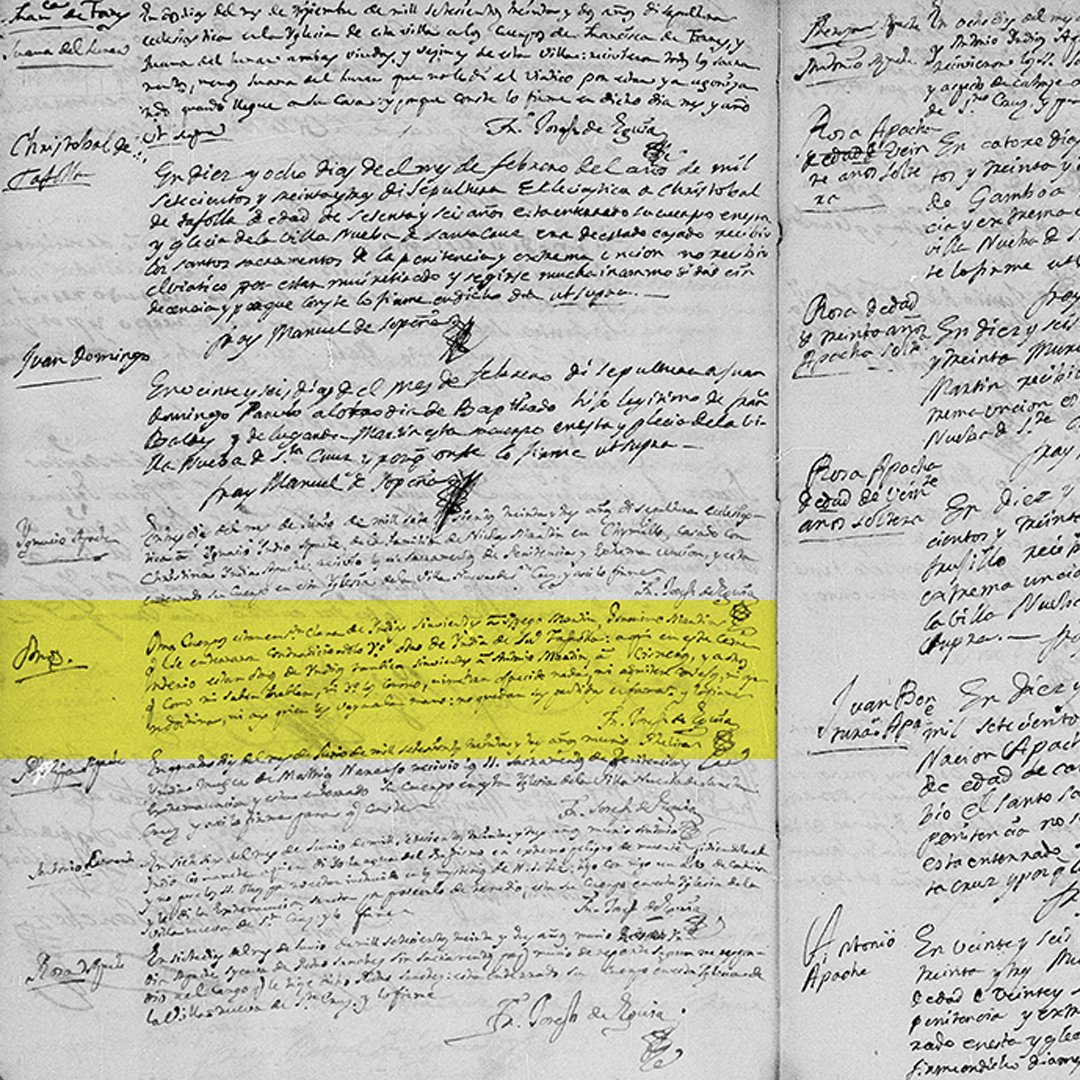
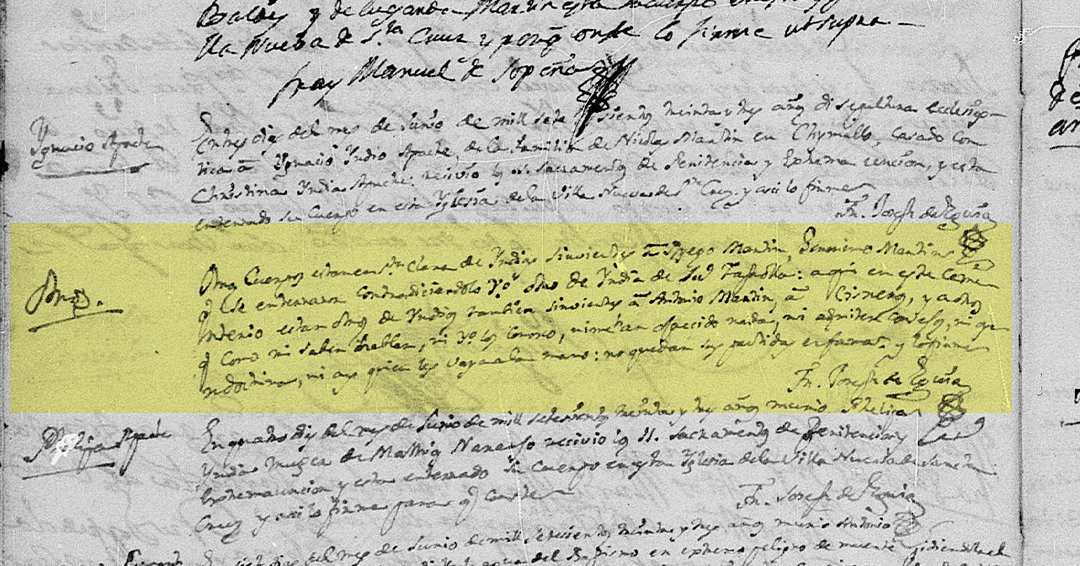
The sacramental records from the Americas are filled with the entries of the enslaved: baptisms, marriages, and burials. In a book of burials recorded in the church of Santa Cruz de la Cañada, New Mexico, there is a curious entry made in June 1733. Although he represented them as “others” and perhaps meant to cast aspersions post-mortem, Fray José Manuel de Eguía y Lumbre, reveals in his notation how these particular enslaved once resisted language, indoctrination and even where they are finally laid to rest. He writes:
“Other bodies of Indian servants are in Santa Clara, buried against my wishes, Indian servants to Diego Martín [and] Jerónimo Martín. Another [body] of a female Indian of Juan Tafoya [is buried] in this cemetery [Villa Nueva de Santa Cruz]. There are other [bodies] of Indians, servants to Antonio Martín and Cisneros; and to others. They do not even know how to speak [Spanish], nor do I know them, nor have they offered me anything, nor do they accept advice, nor do they listen to doctrine, nor is there anyone who can guide them. Their entries are not duly recorded.”
The entry is also notable for various reasons, a reflection of a network of kin-based enslavers, the permeable boundaries of Indigenous communities like Santa Clara Pueblo and Spanish settlements like Santa Cruz and how geography and communities functioned in the colonial period to demarcate what may be resistance or alliance.
Surrounding this entry, in these two pages, alone, are the recordings of the enslavers and the enslaved, including the following deceased, released only in death from their bondage: Ignacio (Apache-adult); Felipa (Apache-adult); Antonio (Comanche-adult); Rosa (Apache); Teresa (Apache, 14); Antonio (Apache, 14); Rosa (Apache, 20); Rosa (Apache, 30); Rosa (Apache, 30); Juan Ventura (Apache, 14); Antonio (Apache, 27).
While these eleven names will be included in the project, we are also deeply committed to locating the names of those othered by Fray Eguía, and the many unnamed, or to at least point to their burial, so many obscured in the colonial archive.
2
4
380
1 Oct 2022
1 Oct 2022
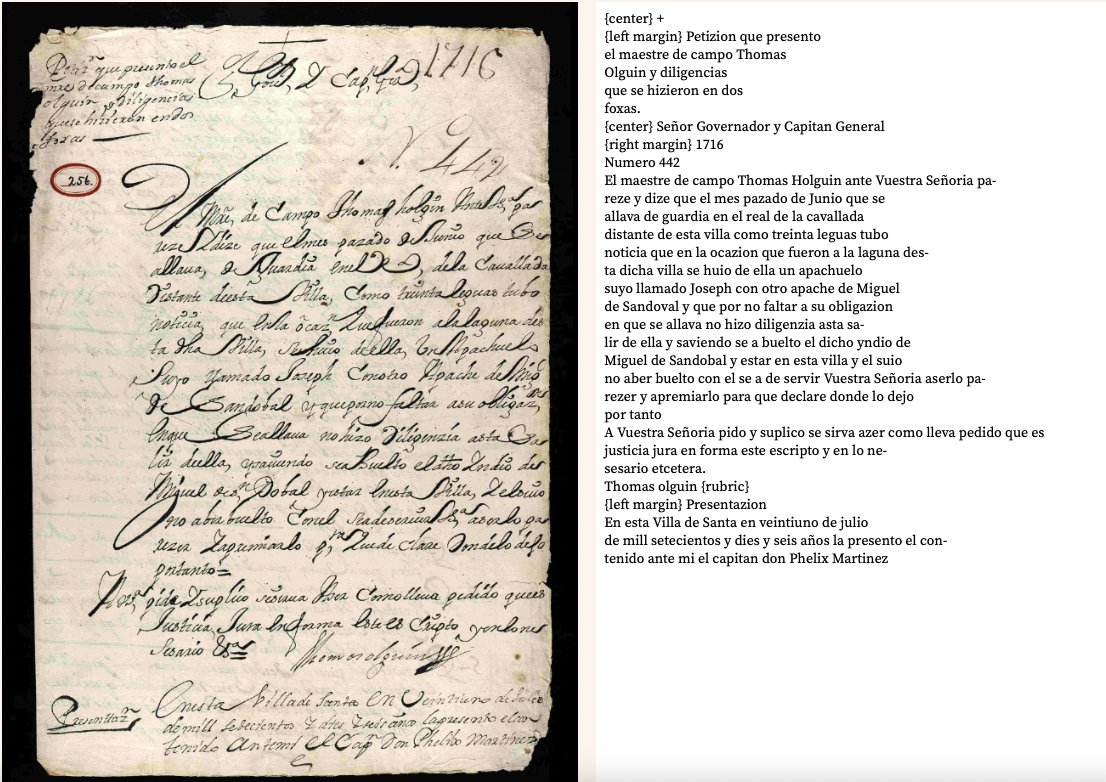
(1/7) Join Our Team in Deciphering the Disappeared
We would love to invite people who have an interest in paleography and transcription to join our project.
1
4
7
29 Sep 2022
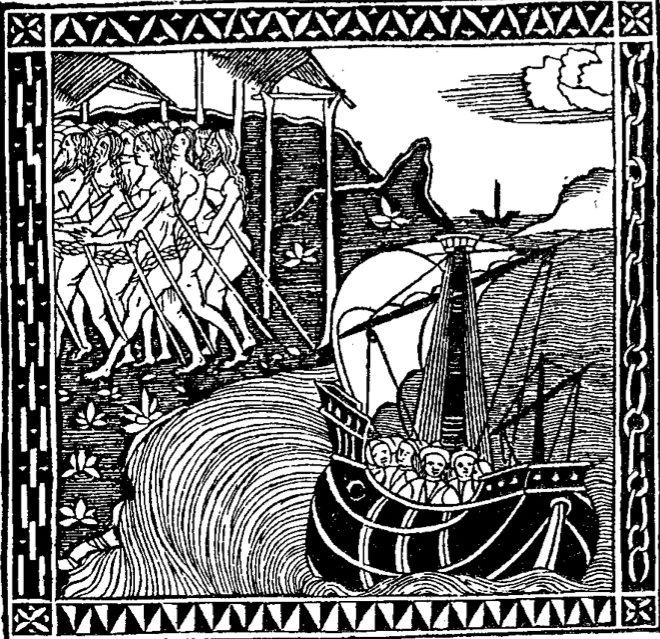
Of the first people documented to have been captured and enslaved.
This 1495 woodcut is from “Lettera delle isole novamente trovata” by Giuliano Dati, an Italian translation of the letter Columbus sent to the Spanish court after his first voyage.
#nativeboundunbound #Caribbean
29 Sep 2022
(1/9) The enslaved appear in the first known document commemorating Christopher Columbus' first voyage in 1492, a significant moment in global history.
3
24
57
9 Jul 2022
We are looking for a Social Media Coordinator to help us build an online presence. Experience and Knowledge of Native American/Chican@ culture a plus. Shorttrm,partime contract. Apply: nativeboundproject@gmail.com
#INDIGENOUS #NativeBoundUnbound #SocialMediaCoordinator
1
33
42
8 May 2022
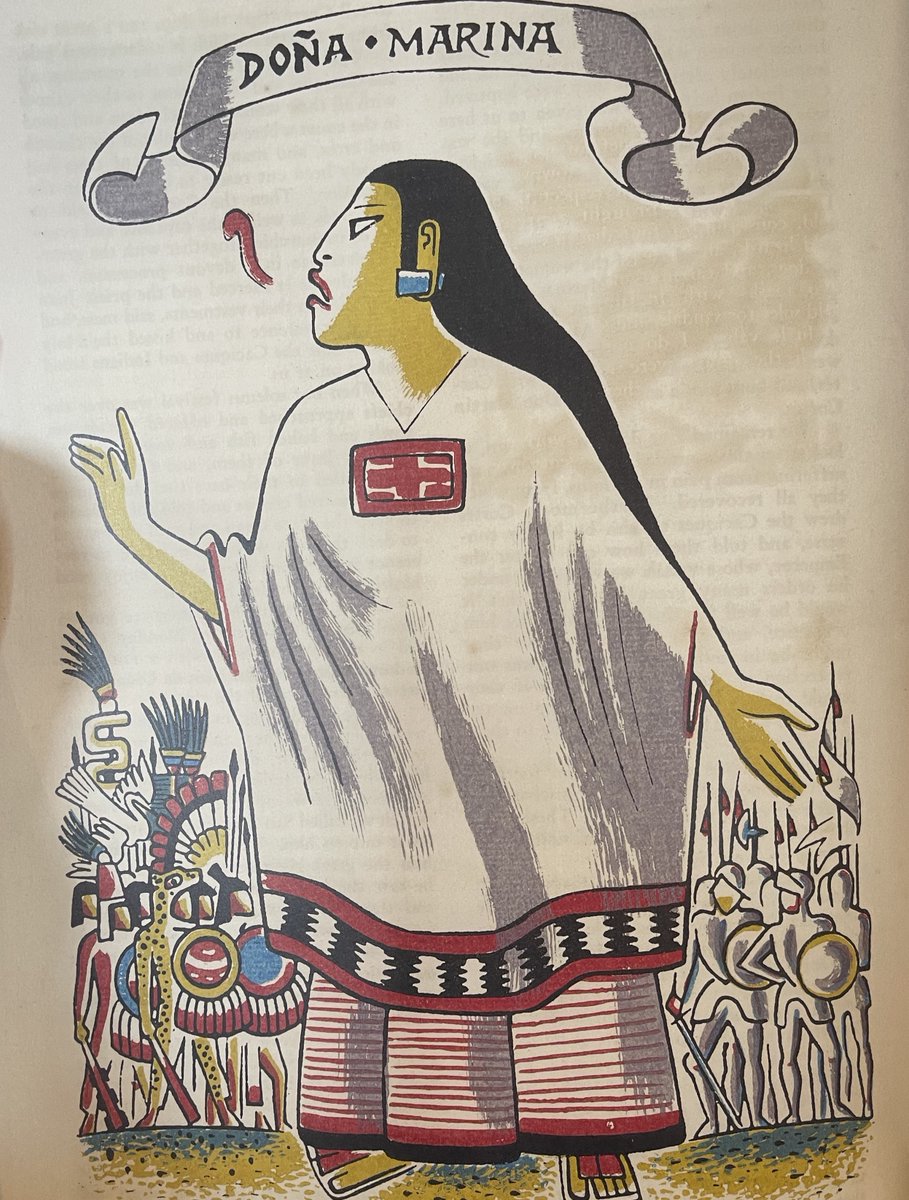
The Legacy of La Malinche ~ It is a soul-shaking exhibition and a reflection of an icon of our community - thank you Dr. Victoria Lyall, the curator of Traitor, Survivor, Icon: The Legacy of La Malinche
#nativeboundunbound #denverartmuseum @vdevicicleta
1
5
17 Apr 2022
“Indian Will”sued for his freedom in 1747 because it “is intirly against free born Indians to be made slaves.” Thank you @brettrushforth #NativeBoundUnbound
This tweet is unavailable
1
3
31 Mar 2022
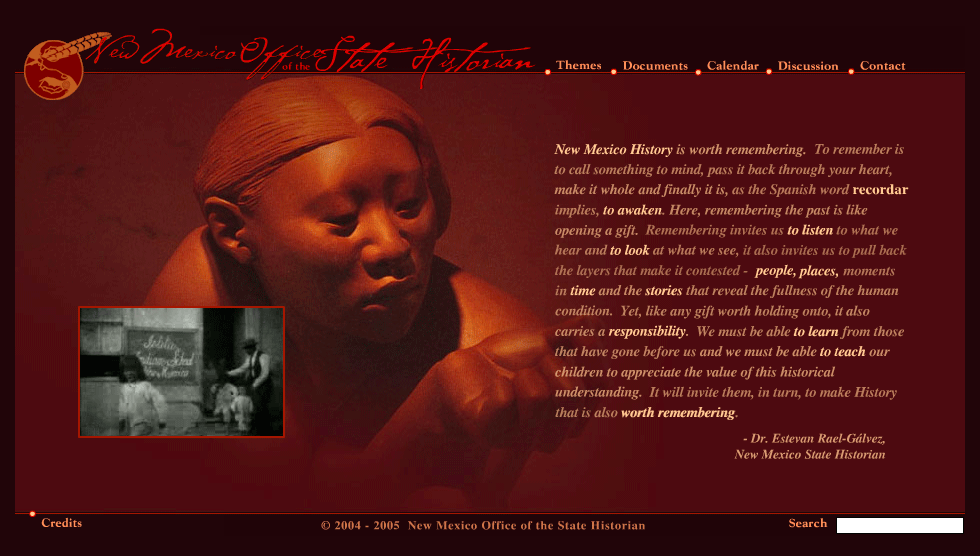
As we begin exploring frameworks for #NativeBoundUnbound, I am reminiscing about projects past web.archive.org/web/20090204…
2

25 Feb 2022
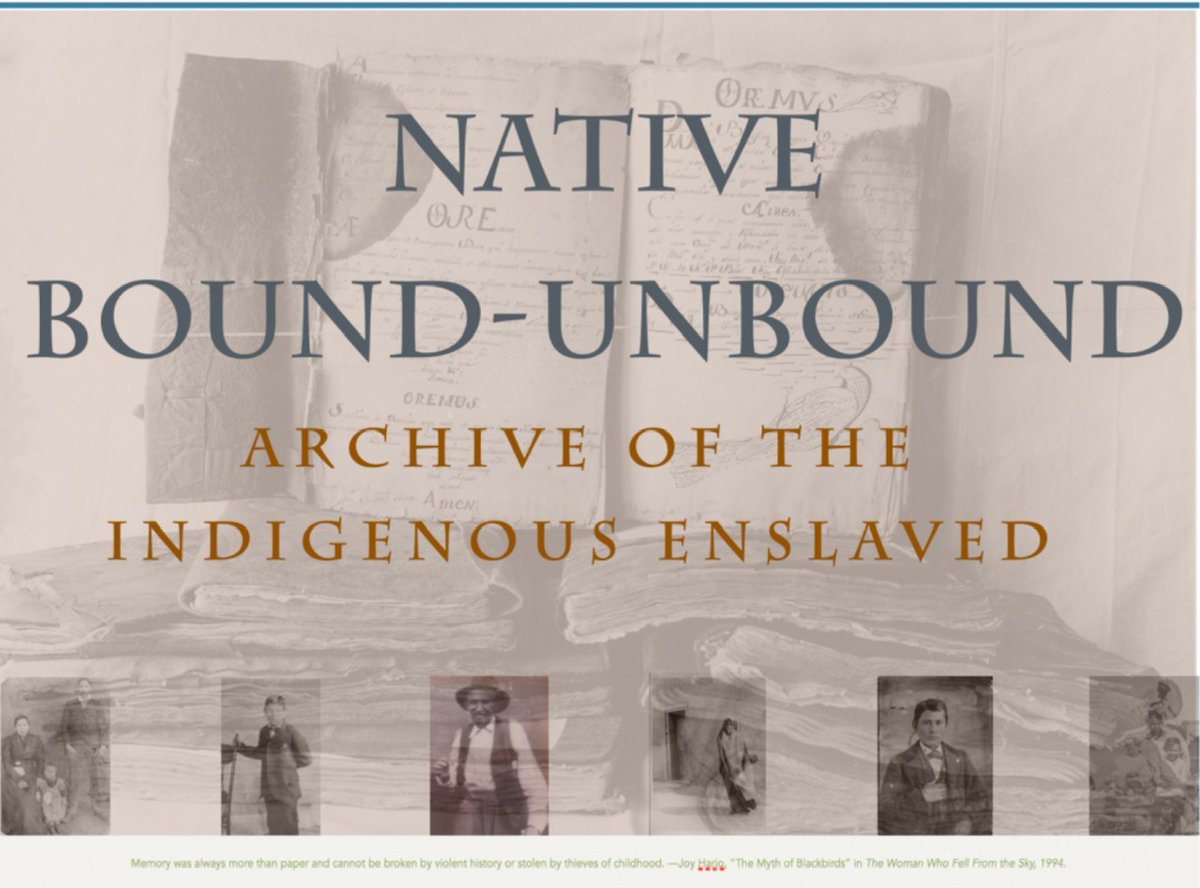
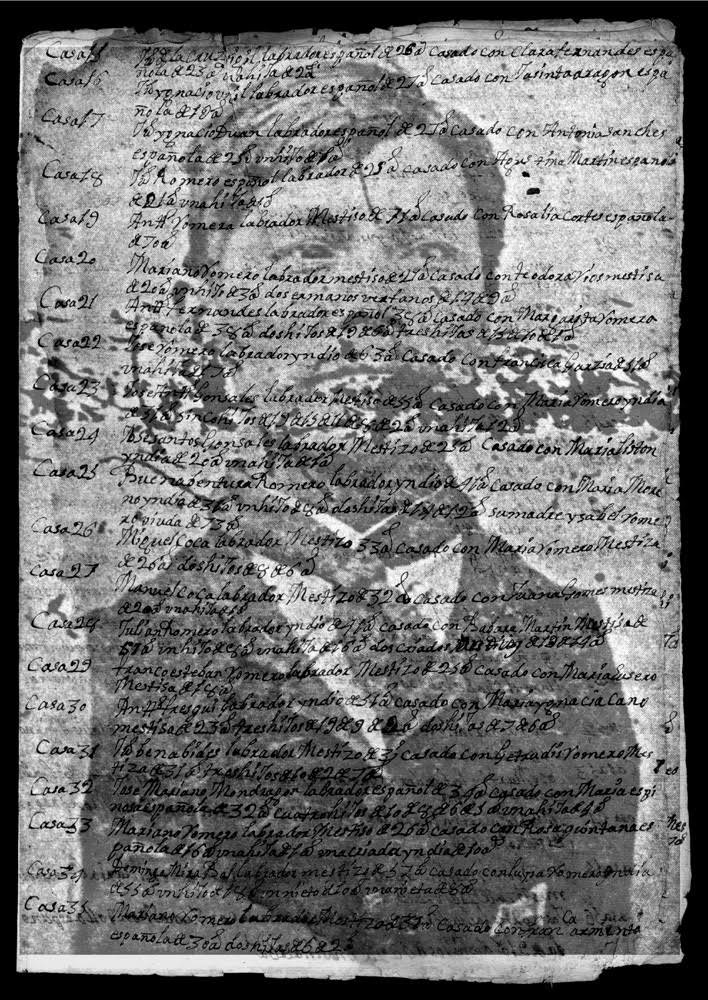
Big news! SAR board member @ERaelGalvez Estevan Rael-Gálvez has received a major grant from the Mellon Foundation for his digital repository project, Native Bound-Unbound. Read about it on the SAR blog.
#nativeboundunbound
@MellonFdn
sarweb.org/mellon-foundation…
3
13

18 Feb 2022
“Recovering these stories is especially imperative for descendants endeavoring to see themselves reflected in history & to recover a sense of self & heal from the past.”—@ERaelGalvez on the importance of #NativeBoundUnbound bit.ly/3I27mgp (via @schadvresearch)
2
2