

Jun 12
Small molecules are not dead—they are undergoing a massive structural renaissance. Big Pharma is currently locked in a multi-billion dollar strategic arms race over Molecular Glues, completely redefining how the industry attacks "undruggable" targets.
Novartis ($NVS) just doubled down on Orionis Biosciences in a new multi-year development deal worth up to $1.4B ($40M upfront). This follows an unprecedented wave of capital flooding into the space over the last 18 months, including AbbVie ($ABBV)/Neomorph ($1.64B), Lilly ($LLY)/Magnet ($1.25B), and Gilead ($GILD)/Kymera ($750M).
The underlying investment thesis is a structural shift from accidental discovery to AI-driven rational design, creating an elite class of platform winners.
• The Mechanism: Over 80% of disease-causing proteins lack the deep binding pockets required by traditional small molecules. Molecular glues don't block pockets; they alter a target protein's surface topology to "stick" it directly to an E3 ubiquitin ligase, triggering complete cellular degradation.
• The Platform Advantage: First-gen glues like thalidomide were discovered by pure clinical serendipity. Orionis’s Allo-Glue™ and rival MNC-backed platforms integrate high-throughput chemoproteomics and predictive machine learning to systematically design glues from scratch, turning a historical lottery ticket into a repeatable, scalable asset pipeline.
• The Fast-Follower Threat: While Western MNCs pay massive premiums for early-stage discovery platforms, agile Chinese biotechs like Kangpu Biopharmaceuticals and GlossBio have already quietly pushed proprietary molecular glues into P1/P2 clinical trials for major oncology and immunology indications, threatening to undercut Western clinical timelines.
This is the ultimate small-molecule paradigm shift to watch as platform validation scales exponentially.
$NVS $RHHBY $ABBV $LLY $GILD $KYMR $XBI $IBB
269

Shah 2G 🇺🇸 🇺🇦 🇮🇱 🏳️🌈 ally retweeted

Oh WOW… That means the MAGA cult is going to hack the election and send Trump to PRISON.
Eric Daugherty you really don’t half spout some cultist crap because if they win in 2026 it means that the Dems won the house in the last election and Musk altered the results.
1
1
326
WOKE xeno of slitter twt retweeted

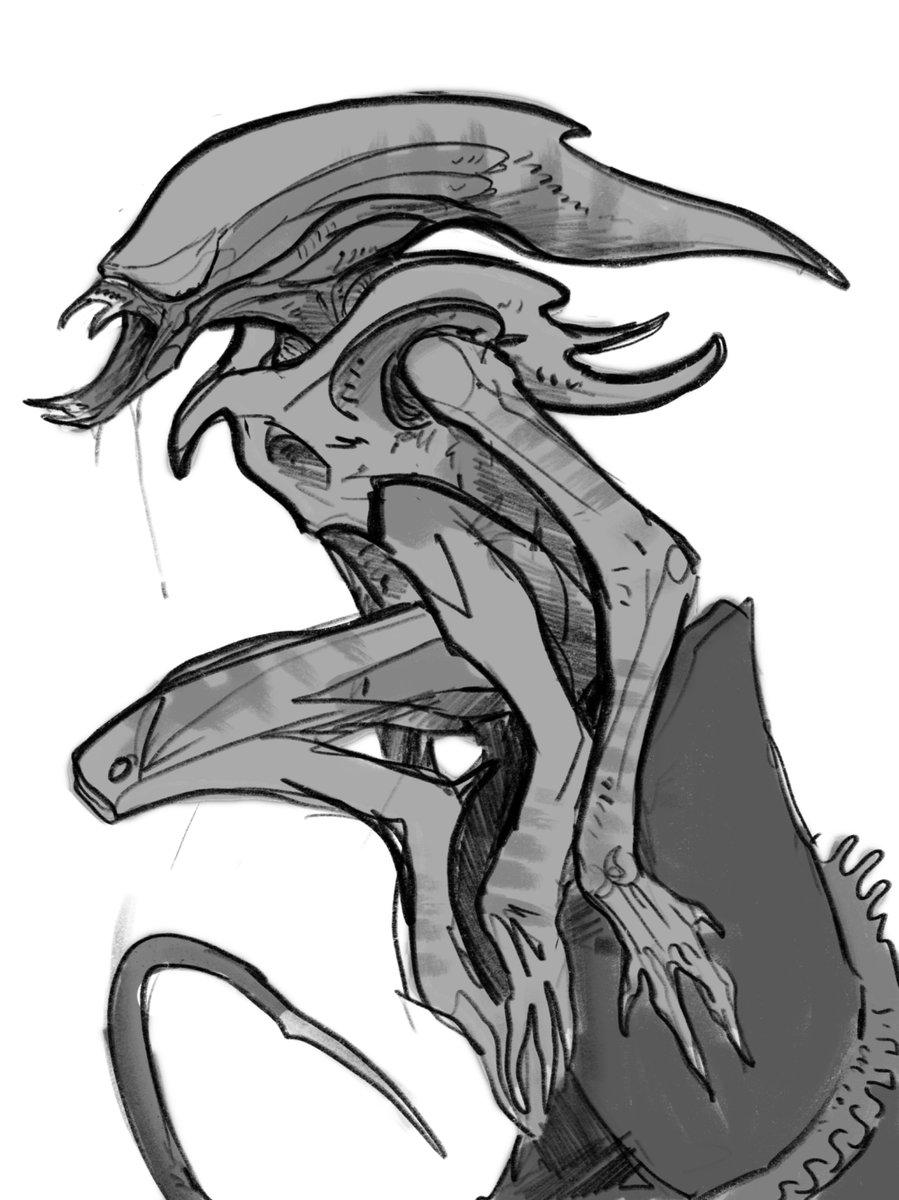
Don’t think I ever showed my neomorph design here #alien
1
29
293
3,628

Jun 10
90