big brown eyes retweeted

#ThePolygamist
#NetfixPolygamist
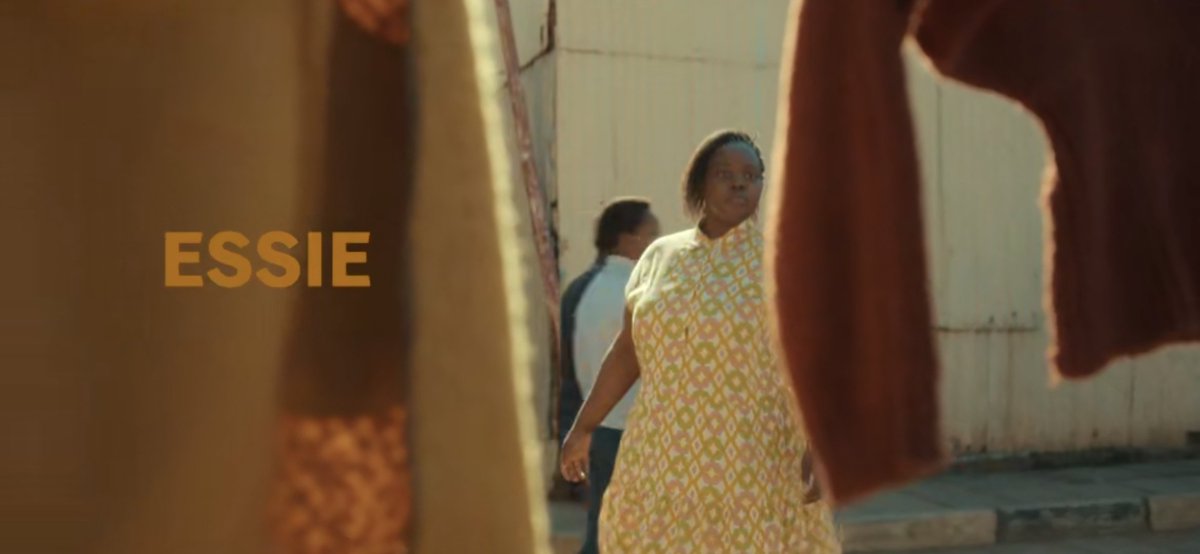
Essie's title card continues with the show's brilliant character coding, introducing a completely different visual theme focused entirely on hidden truths, domestic burden, and community scrutiny.
Essie is framed through hanging laundry, which partially blocks the viewer's sight. In visual storytelling, laundry lines symbolize domestic labor and the private, everyday world of a home.
Framing her behind hanging clothes indicates that Essie is a character who exists in the shadows of the main drama. She is someone who holds, hides, or cleans up the "dirty laundry" of the family. She sees and knows things that are kept hidden from the public eye, but she herself remains obscured and overlooked.
Unlike the pristine, isolated luxury spaces or cold corporate structures of the other characters, Essie is placed directly on an open township street. The harsh, natural sunlight and concrete structures signify that she represents the raw, unpolished grassroots reality.
Standing in an open street with another person visible right behind her highlights that Essie’s life is completely exposed to community gossip, neighborhood scrutiny, and social expectations. She does not have the privilege of a private, gated sanctuary; her struggles and her standing are out in the open for the community to judge.
Essie stands firmly in a simple, everyday patterned dress. It is a wardrobe choice stripped of pretension, representing traditional grounding, survival, and a lack of interest in superficial curation. She represents the unfiltered emotional anchor of her environment, someone whose value comes from her endurance rather than her bank account.
The show uses this framing to tell us that Essie is the Keeper of Secrets. While others fight for public status, corporate dominance, or physical desire, Essie is rooted in the harsh, grounded reality of everyday life, carrying the heavy weight of what happens behind closed doors while navigating the judgment of the world around her.
4
133
682
82,659