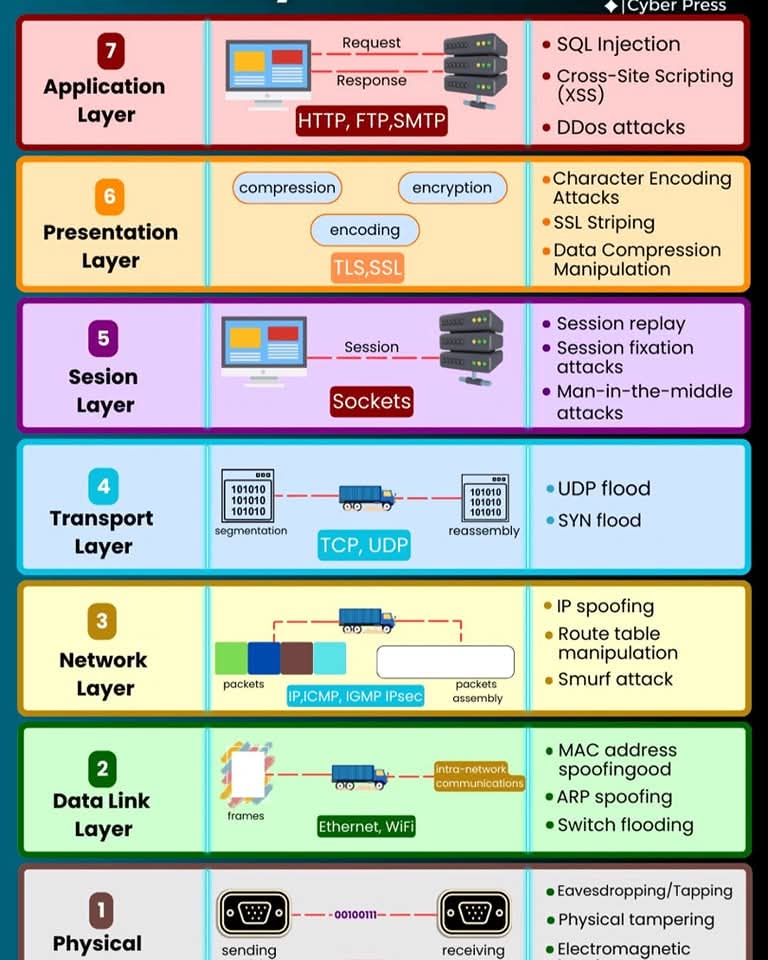
Understanding OSI Layers & Related Attack Vectors 🌐🧠🔐
#OSIModel #CyberSecurity #InfoSec #NetworkLayers #EthicalHacking #EducationOnly #NetworkSecurity #AttackVectors #DefenseInDept
15
80
1,520

13 May 2025
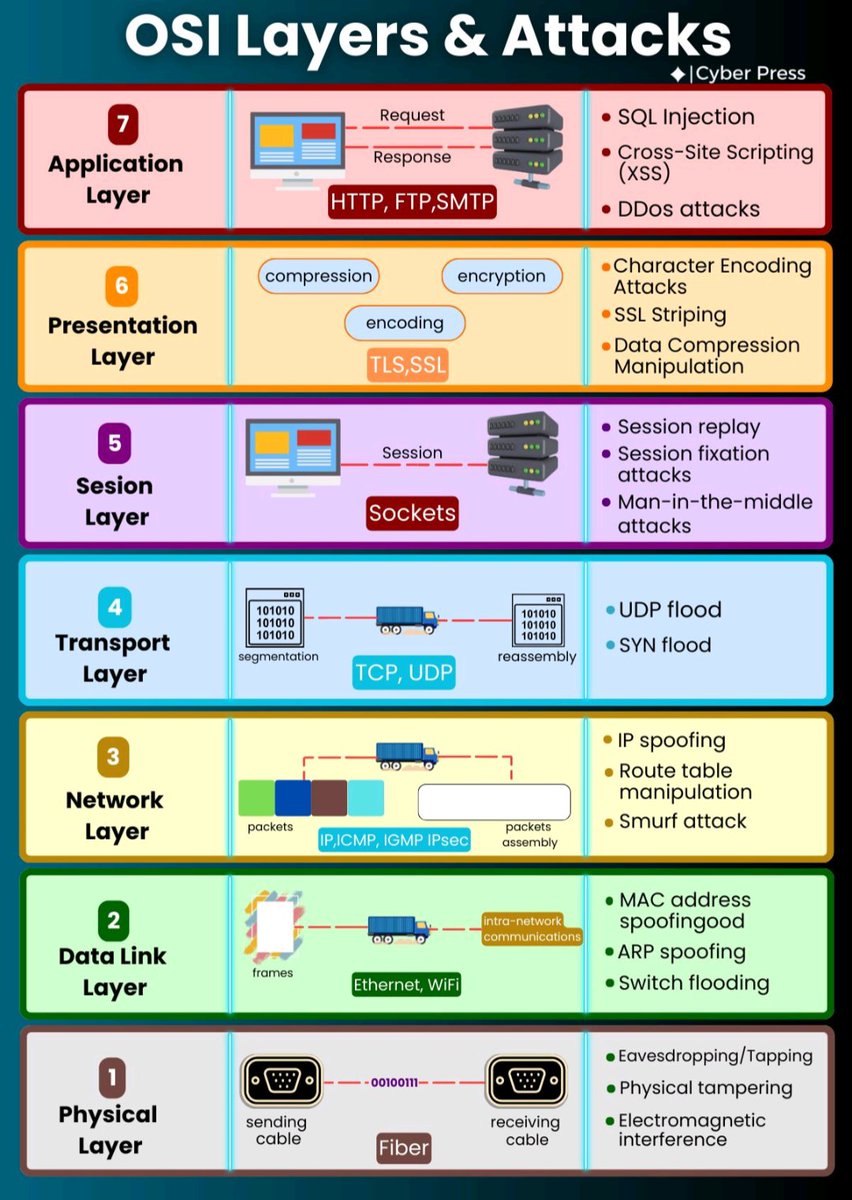
Understanding OSI Layers & Related Attack Vectors 🌐🧠🔐
#OSIModel #CyberSecurity #InfoSec #NetworkLayers #EthicalHacking #EducationOnly #NetworkSecurity #AttackVectors #DefenseInDept
1
126

نوعان من مستخدمي لينكس
#CyberSecurityTips #informationsecurity #pentesting #cybersecurity #cybersecurityawareness #InfoSec #networklayers #linux #TechEducation #windows
2
695

30 Jul 2023
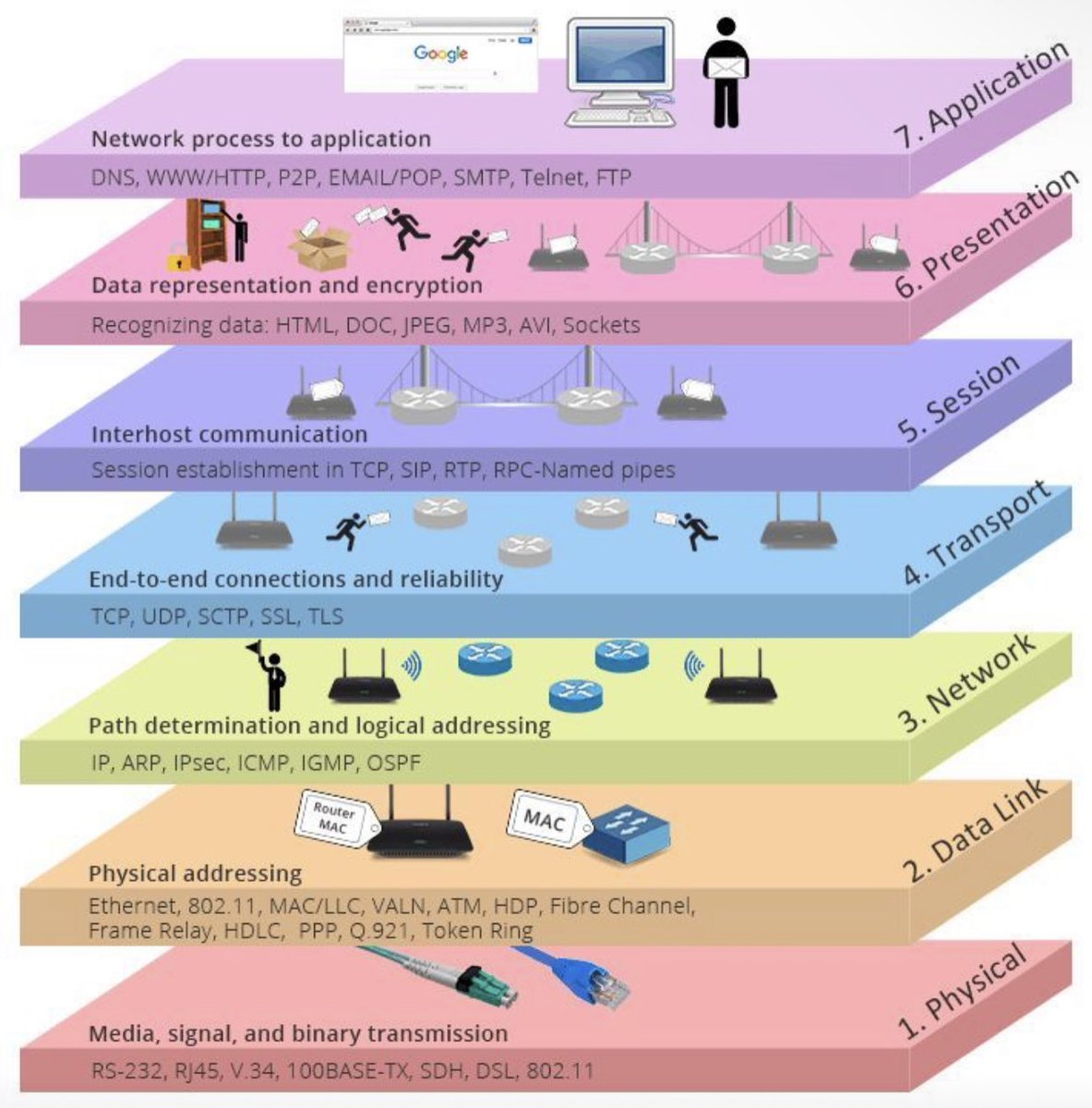
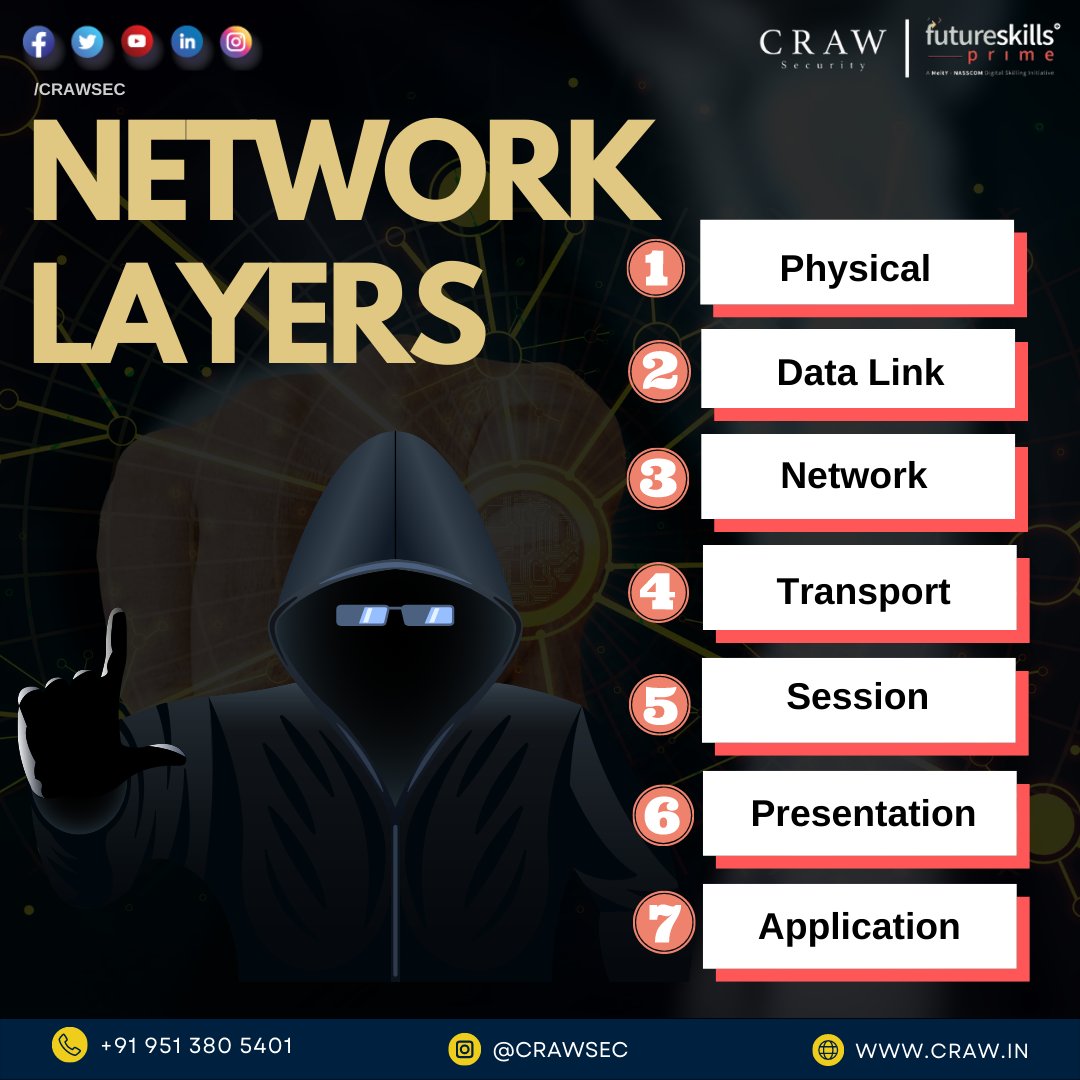
The OSI (Open Systems Interconnection) model is a conceptual framework that helps to understand how network protocols work and communicate with each other. It consists of seven layers, each with its own specific functions and responsibilities. Let's explore them with the help of emojis! 🌟
1️⃣ Physical Layer 🚀: This is the lowest layer of the OSI model. It deals with the physical transmission of data over the network. It includes the cables, connectors, and physical devices like network cards. 🌐
2️⃣ Data Link Layer 🔗: The data link layer provides a reliable and error-free communication between adjacent network nodes. It ensures that data is transmitted without errors and establishes a link between devices. It works with MAC (Media Access Control) addresses. 🔄
3️⃣ Network Layer 🌍: The network layer handles the routing of data packets across multiple networks. It determines the best path for data to reach its destination and performs logical addressing. It works with IP (Internet Protocol) addresses. 🛤️
4️⃣ Transport Layer 🚚: The transport layer ensures the reliable delivery of data between end systems. It divides data into smaller segments, manages flow control, and performs error recovery. It works with TCP (Transmission Control Protocol) and UDP (User Datagram Protocol). 📦
5️⃣ Session Layer 🤝: The session layer establishes, manages, and terminates sessions between applications. It allows two applications to establish a connection and synchronize their communication. It manages session checkpoints and recovery. 🕹️
6️⃣ Presentation Layer 🎨: The presentation layer deals with the syntax and semantics of data exchanged between systems. It takes care of data encryption, compression, and formatting, ensuring that data is in a usable format for the application layer. 💡
7️⃣ Application Layer 🎯: The application layer is the topmost layer of the OSI model. It represents the actual applications and services that utilize the network. It enables user interaction with network services such as email, web browsing, file transfers, and more. 📧🌐📂
So, the OSI model is like a stack of layers, each with its unique role in ensuring effective communication across networks. Understanding these layers helps in troubleshooting network issues and designing efficient network architectures. 🌐💪
Credit to respective owner(s)
✅ Join Amigoscode today for premium programming courses - bit.ly/40ujtvS
#osimodel #networkingbasics #devops #linux #networkprotocols #itinfrastructure #techexplained #networklayers #iteducation #communicationprotocols #networkingfundamentals #itprofessionals #networkarchitecture #itnetworking #techsimplified #networktroubleshooting
5
314
1,092
95,700

If you want to know about all the #networklayers, you can join the #BasicNetworking Course in Delhi offered by #CrawSecurity. Under the guidance of well-qualified #trainers, you can get introduced to the latest techniques and tools to know about network layers
1
1

15 Sep 2021
Our #tutorial will equip you with the essential knowledge you need to navigate the world of #networking. This includes the most commonly used terminology, as well as the fundamental concepts employed in networking.
#Firewall #NetworkLayers #OSIModel #VPN #WAN
2