
𝔽𝕃𝔸𝕊𝕂𝕂𝕐𝕎𝔸𝕍𝔼𝕊 🇵🇸🇨🇩🇺🇦 retweeted

Jun 9
The type of shi people are doing to ai assistants to generate these prompts of Peanut Butter Idksterling
Jun 9

1
2
383

Jun 13
#Venezuela | EN VIDEO: Delcy Rodríguez recibió a delegación de EEUU para «repasar» agenda energética bilateral .- fbvo.short.gy/RYipLP Oa7
194

Card Purchaser retweeted

Jun 12
@CardPurchaser $90 half a case of blaster break… this not even all of the hits just didn’t have the space…

1
3
1,361

Jun 11
OA7 🕯️

21
just here… retweeted

9 Jul 2017
Grandma's kisses you faggot!!! Yeah i know, we said it last time. Fuckin deal with it fuckin....BITCH
4 Jun 2017

Show your age with one statement.
1
1
3
Maggie retweeted

Jun 11
FIRMES POR LA PATRIA!!!
FIRMES POR LA PATRIA!!
FIRMES POR LA PATRIA!!!
FIRMES POR LA PATRIA!!!

1
1
4
93
#Venezuela | Alcalde de Baruta dio más detalles sobre reparaciones en tubería de El Cafetal: ¿Cuándo comenzará a llegar el agua? fbvo.short.gy/jDvhX2 Oa7
136

May 23
متجر روندو ستور راعياً للحساب 💙💙
اي تيشرت لموسم 2026 بـ39 بسسس ومتوفر جميع التيشرتات الكلاسيك بـ89 ريال فقط 😰!!
وفوق كذا كـ.و.دي OA7 بيفيدكم كثير 🎁👌🏻

42
7
185
20,395

May 12
Fenerde Ponçik Kerim olabilirdi. Uğurcan bile fenere gitse kolsuz Uğurcan görselleri ile dolmuştu tsosyal medya.
Çünkü camia kendisi değer yaratamıyor sadece taklit ediyor. Dzeko transferinde gol şarkısına kadar İcardinin muadilini yapmaya çalıştılar. Oğuz Aydın gelsin Galatasaraya OA7 olur
1
24
20,828

昨日は横浜ミントホール
BS12 #あなたに届ける音楽会
「原めぐみのSong Station」
公開収録ライブに出演させていただきました🎶
昨日は群馬からも都内からも応援に来てくださってありがとうございました❣️
また「生きること」感動しましたとCDの応援もいただけてほんとに嬉しかった❣️
OA7/12




1
7
173

Mar 9
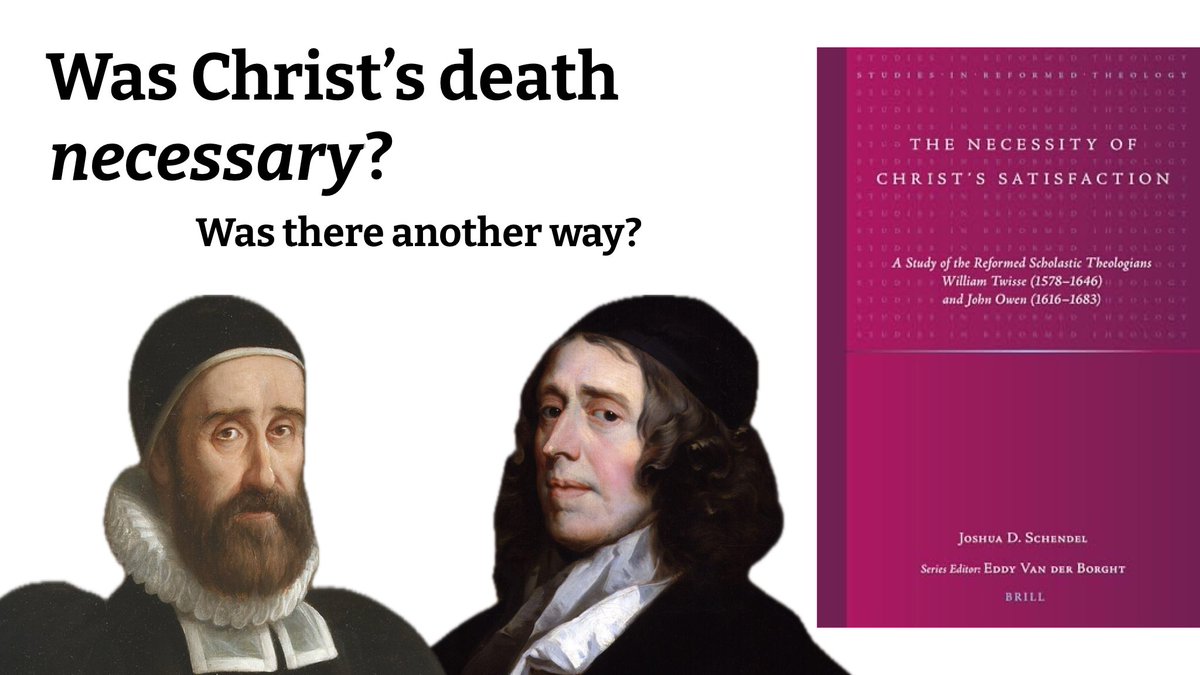
Was Christ’s death necessary? Could there have been another way to save sinners?
William Twisse vs. John Owen
Writing in 1867, the Princeton theologian, Archibald Alexander Hodge, claimed that on account of the seventeenth century debates on the atonement… that “the great body of the Church” has held that “if a sinner is to be forgiven, an adequate satisfaction to divine justice...is absolutely necessary”.
…
Contra Hodge, [A.W] Pink argued that regarding the work of Christ the only kind of necessity that can be asserted of it consistent with the scriptures is a relative, not absolute, necessity.
—1-2
In the nineteenth and twentieth century, for example, Alexander Hodge was joined by Charles Hodge, Herman Bavinck, Geerhardus Vos, and Louis Berkhof as advocates of the absolute necessity of Christ’s atoning sacrifice. Pink, likewise, was not alone in his position, the influential Dutch Reformed theologian G. C. Berkouwer also taking a similar line.
—2
Richard Muller has indicated much the same, noting that the implications of the debate in the Reformed system of doctrine were “far reaching”.
—3
Twisse maintained the fairly standard medieval scholastic answer, which, in brief, was that Christ’s satisfaction was a hypothetical necessity, grounded in the will of God. Owen more creatively appropriated lines of argumentation from, among others, Anselm and Aquinas to argue—contrary to Aquinas and, arguably, Anselm—that God can only save sinful humanity by the satisfaction of Christ. In this way, Owen stands outside the mainstream of the medieval scholastic answer, though not so much as a separate stream but as a distributary.
—5
The question concerning the necessity of satisfaction was raised in, and became a pressing issue because of, polemical context; namely, Reformed polemics against both Socinians and (some) Remonstrants in the latter part of the sixteenth and early part of the seventeenth centuries. Yet, as the debate progressed through the seventeenth century and became an in-house debate amongst the Reformed orthodox, the question took on more positive dogmatic significance. To put the point in another way, the dispute concerning the necessity of Christ’s satisfaction was not used by the Reformed orthodox so much as a means of setting up or maintaining confessional boundary markers between themselves and other groups. The fact that they themselves were not agreed on the answer to the question meant that it couldn’t function in that simply polemical way. Rather, in the Reformed scholastic treatments the question served to clarify certain aspects of their own understanding of the doctrines of God, creation, and the history of God with his creatures.
—37-38
Turretin was right, then, to separate the Reformed into two basic camps with respect to the question of the necessity of satisfaction. He rather infelicitously signified these camps as “absolute” and “hypothetical,” however. All of the Reformed orthodox were agreed that the satisfaction of Christ is necessary. All wer likewise agreed that, strictly speaking, the satisfaction of Christ is not absolutely necessary. Rather, they affirmed that the necessity of satisfaction is hypothetical, consequent upon God’s decree.
The differing camps, then, consisted of those who maintained that the hypothetical necessity of Christ’s satisfaction is solely grounded in the will and decree of God, and those who maintained that it was grounded both in the will of God and in his nature as gubernator iustus. In the terms of the scholastic form of the question, the former group maintained that God could save fallen humanity by other means than the satisfaction of Christ; the latter maintained that he could not.
—65
First, the question raised by Augustine, whether God could have saved fallen humanity by some other way than Christ was taken up by the medieval scholastic thinkers as the best formulation of the question, and its particular formulation allowed for further developments in the answers given it. Aquinas and Scotus developed the question to push for further precision, whether it is possible for God to not redeem humanity once fallen. Though formulated differently, the question and subsequent analyses in Aquinas and Scotus was firmly rooted within the Augustinian framework, each appealing to Augustine as the authority on the matter. Thus, it can now be stated that the Reformed scholastic debates too, as seen in the previous chapter, debated this question from within the Augustinian framework.
—99
TWISSE
Twisse’s Argument can now be revisited:
(TA1) If God cannot remit sin without satisfaction, then it is either because it is beyond his power to do so (i.e. it is absolutely necessary) or because his justice prohibits him from doing so (i.e. it is a natural necessity).
(TA2) It is not the case that remission of sin without satisfaction is beyond God’s power (i.e. it is not the case that satisfaction is absolutely necessary for remission of sin).
(TA3) It is not the case that divine justice prohibits God from remitting sins without satisfaction (i.e. it is not the case that satisfaction is a naturally necessary for remission of sin).
(TA4) Therefore, it is not the case that God cannot remit sin without satisfaction.
—139
OWEN
The remainder of the premises to Owen’s Argument may now be supplied.
Recall,
(OA1) If God creates a creature with a rational nature, he must govern it by a penal law.
(OA2) If the rational creature violates the penal law, God must correct the violation by punishment.
(OA3) God created creatures with a rational nature.
(OA4) Those rational creatures violated the penal law.
(OA5) Therefore, God must correct the violation by punishment.
To which Owen has now added,
(OA6) If God chooses to reconcile those fallen rational creatures, he must do so by punishing one who is able to receive the full measure of punishment due in the place of the others.
(OA7) Only the God-man is able to receive the full measure of punishment due in the place of the others.
(OA9) Therefore, if God chooses to reconcile those fallen rational creatures, he must do so by punishing the God-man.
—173-174
—from The Necessity of Christ’s Satisfaction: A Study of the Reformed Scholastic Theologians William Twisse (1578–1646) and John Owen (1616–1683) by Joshua D. Schendel (Brill, 2022)
2
1
18
1,424


4 Dec 2025
Anti-RoT Clan: DK
Member: OA7
Item: Toxic Staff

1
2
5
157

17 Nov 2025
oa7 you absolute glutton. there is no reason for you to need the fridge.

1
4
100

25 Sep 2025
⚠︎【*Cosplay*】
本日!!7年目にしてプライズ全員揃いました😭✨✨作品を長年愛してやまないメンツとの夢のような時間だった!!!
oa7周年おめでとう!


1
11
30
1,841
16 Sep 2025
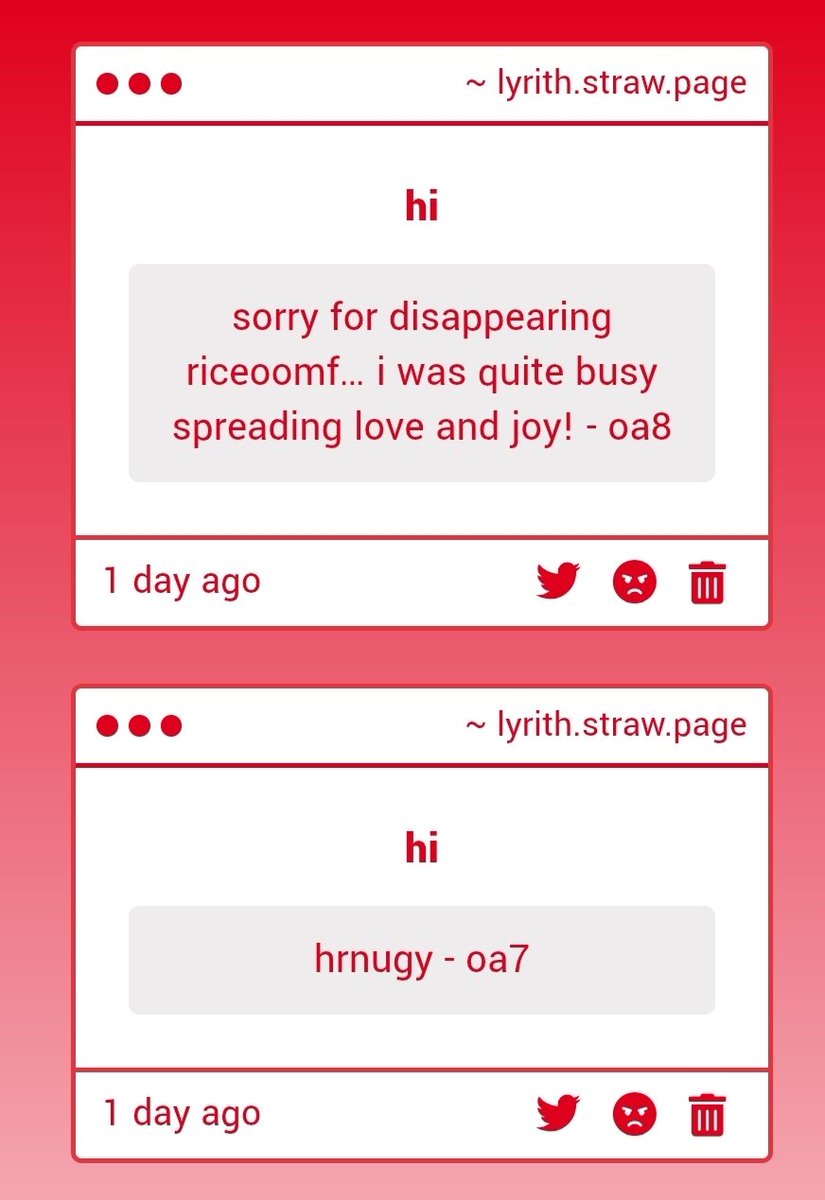
oa7 you fat cat you should follow oa8s example. spread love and joy instead of spreading gluttony and famine
1
6
104

9 Sep 2025
9/16(火)の放送では、当番組OA7年の歴史上、初めて起こる出来事についてのお知らせ(予告)がございます。どうぞお聴き逃しのないようにお願いいたします(^^♪
2
16
393