
Christian | @rtsorlando student | Presbyterian (OPC)
Joined February 2026
- Tweets 151
- Following 68
- Followers 127
- Likes 990
63 Photos and videos









Mar 20
I’m adding @RHB_Books as a dependent on my taxes for all the money I give them
Mar 19

Food $200
Data $150
Rent $800
RHB Clearance Book Sales $3,600
Utility $150
someone who is good at the economy please help me budget this. my family is dying
3
1
33
1,951
Mar 18
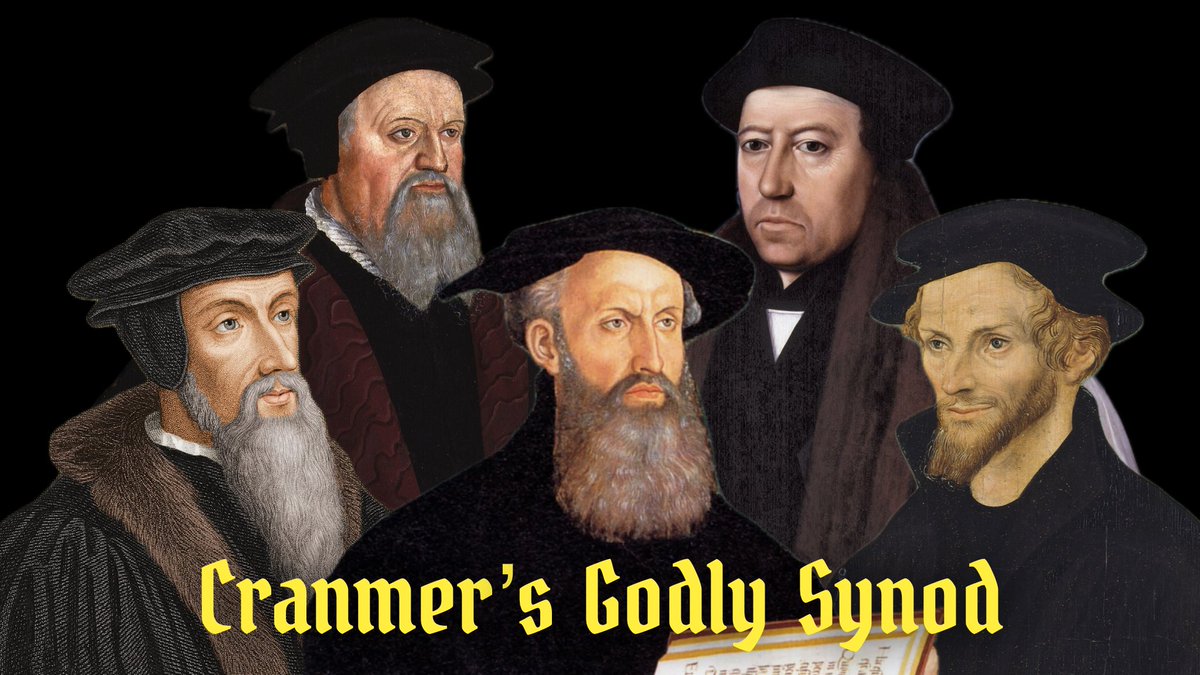
In March 1552, Thomas Cranmer almost assembled a monumental Protestant synod that was intended to respond to Trent, referred to as Cranmer’s “godly synod.” He sent out invitations to the key leaders of the day: John Calvin, Heinrich Bullinger, and Philip Melanchthon to come to England. Peter Martyr Vermigli was already in England at the time and would have attended. For various reasons, it fizzled out. But imagine what could have been…
1
5
189
Mar 11
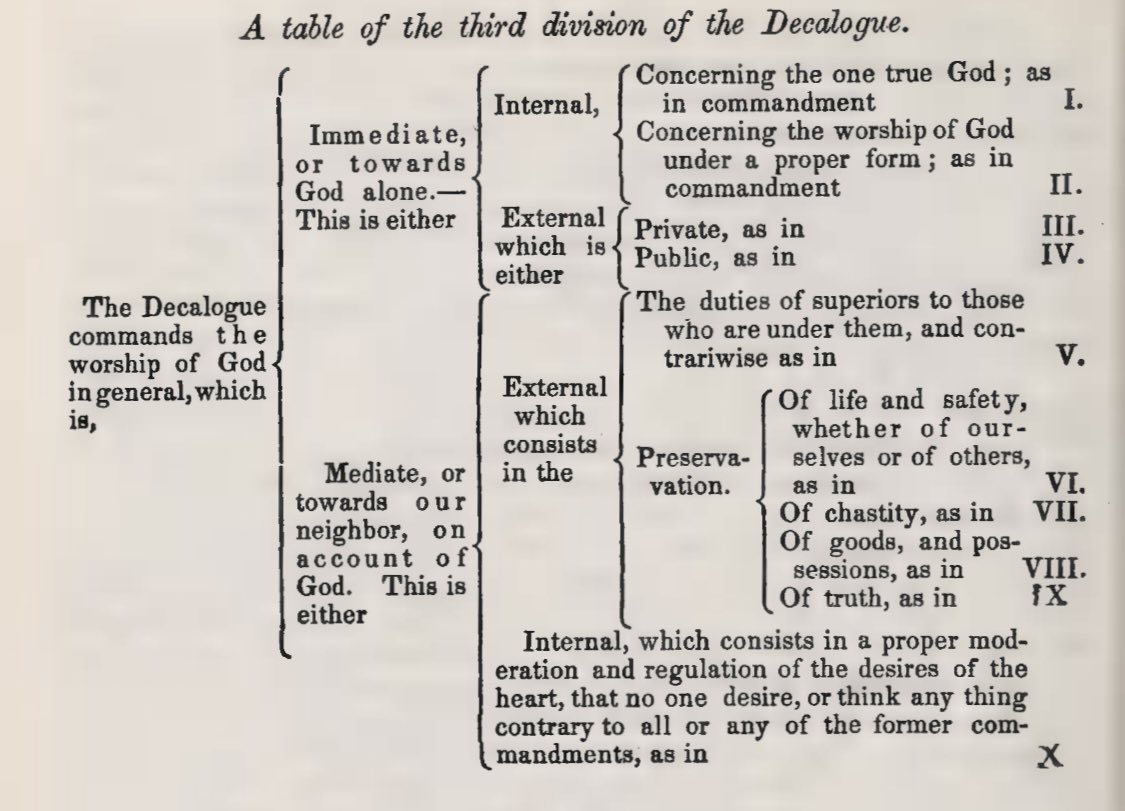
I love this table in Ursinus’ commentary on the Heidelberg Catechism which ties the whole of the Decalogue together under the worship of God.
—from his exposition on Question 93. Page 502 in the 1954 Eerdmans edition
1
18
90
7,056
Mar 10
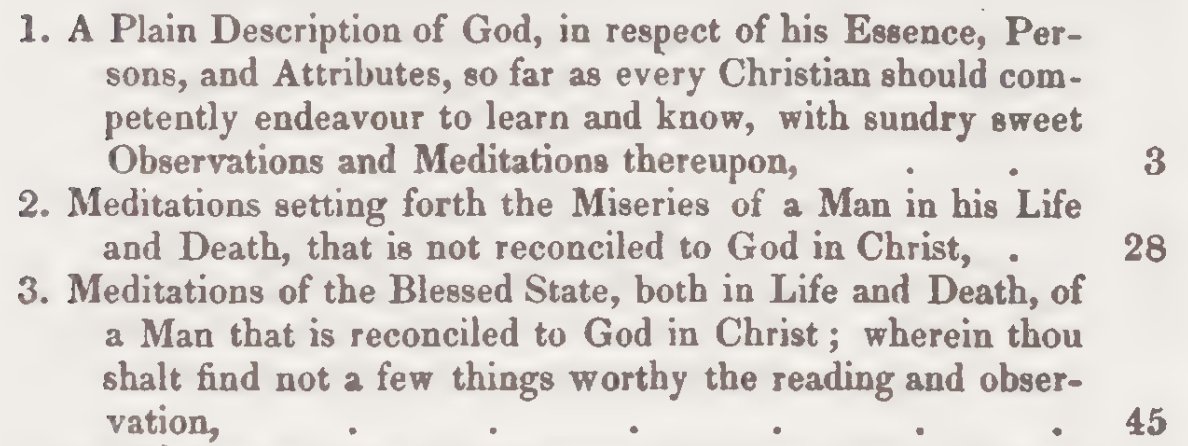
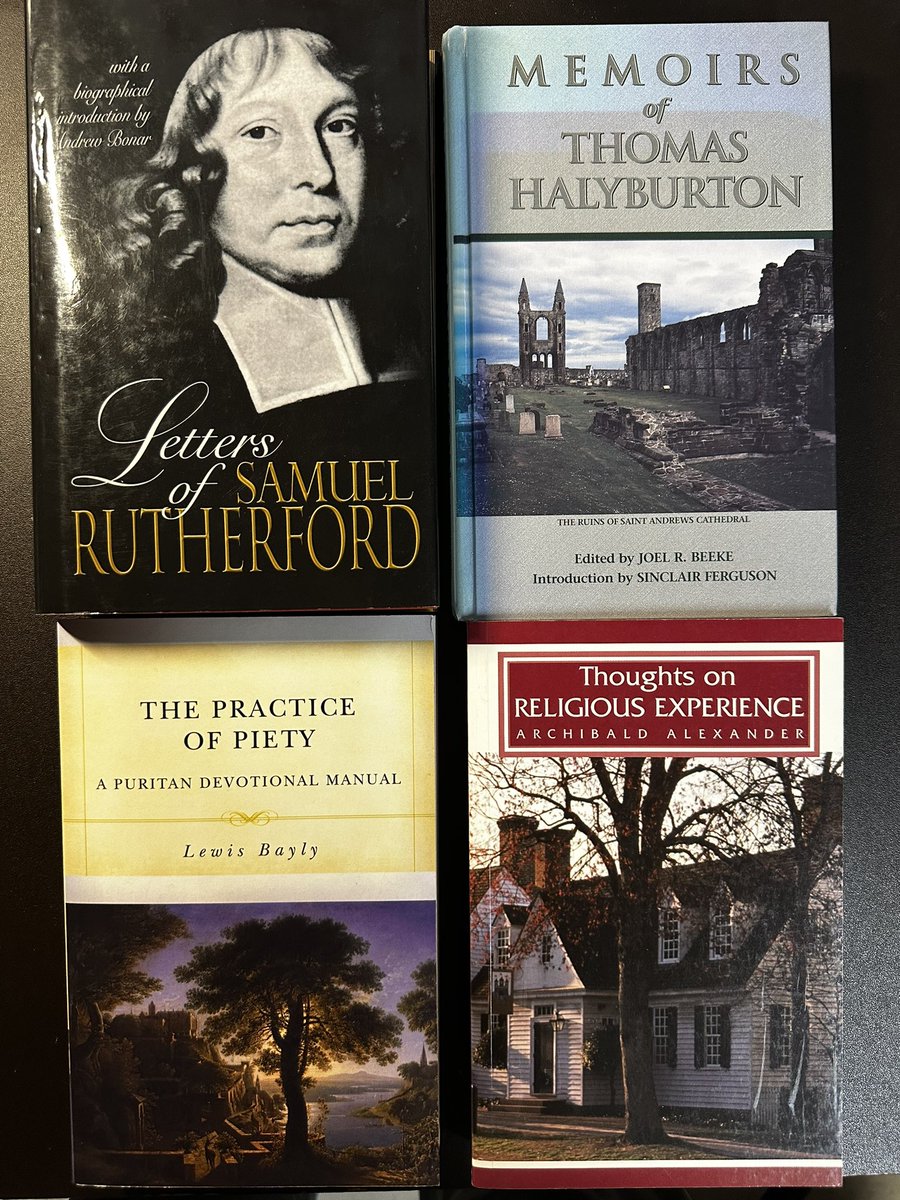
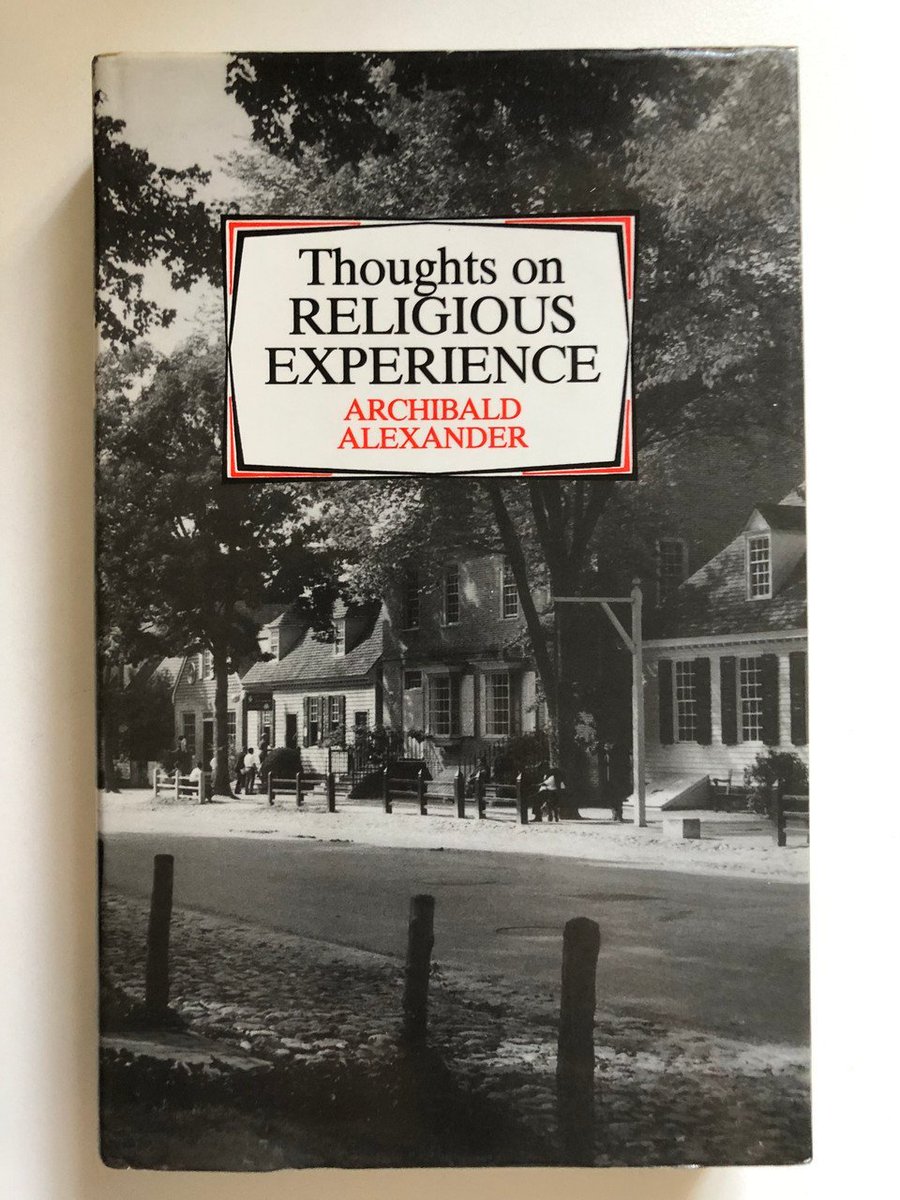
If you want to read more in the way of experimental religion, these are probably on the Mt. Rushmore. There are certainly others in the running, but these are hard to beat.
Mar 10

Washer must have read AA, that master of experimental Christianity: "All professors of religion, and especially the aged, should be importunately URGED to 'give all diligence to make their calling and election sure.'"
1
1
22
2,339
Mar 9
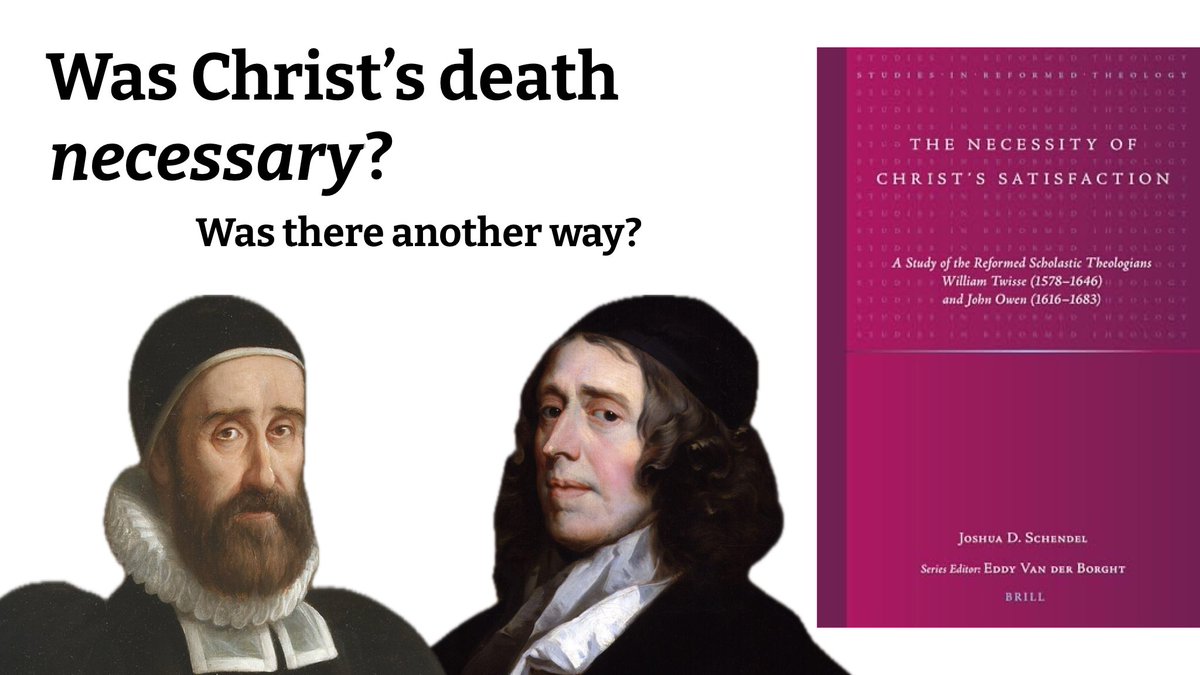
Was Christ’s death necessary? Could there have been another way to save sinners?
William Twisse vs. John Owen
Writing in 1867, the Princeton theologian, Archibald Alexander Hodge, claimed that on account of the seventeenth century debates on the atonement… that “the great body of the Church” has held that “if a sinner is to be forgiven, an adequate satisfaction to divine justice...is absolutely necessary”.
…
Contra Hodge, [A.W] Pink argued that regarding the work of Christ the only kind of necessity that can be asserted of it consistent with the scriptures is a relative, not absolute, necessity.
—1-2
In the nineteenth and twentieth century, for example, Alexander Hodge was joined by Charles Hodge, Herman Bavinck, Geerhardus Vos, and Louis Berkhof as advocates of the absolute necessity of Christ’s atoning sacrifice. Pink, likewise, was not alone in his position, the influential Dutch Reformed theologian G. C. Berkouwer also taking a similar line.
—2
Richard Muller has indicated much the same, noting that the implications of the debate in the Reformed system of doctrine were “far reaching”.
—3
Twisse maintained the fairly standard medieval scholastic answer, which, in brief, was that Christ’s satisfaction was a hypothetical necessity, grounded in the will of God. Owen more creatively appropriated lines of argumentation from, among others, Anselm and Aquinas to argue—contrary to Aquinas and, arguably, Anselm—that God can only save sinful humanity by the satisfaction of Christ. In this way, Owen stands outside the mainstream of the medieval scholastic answer, though not so much as a separate stream but as a distributary.
—5
The question concerning the necessity of satisfaction was raised in, and became a pressing issue because of, polemical context; namely, Reformed polemics against both Socinians and (some) Remonstrants in the latter part of the sixteenth and early part of the seventeenth centuries. Yet, as the debate progressed through the seventeenth century and became an in-house debate amongst the Reformed orthodox, the question took on more positive dogmatic significance. To put the point in another way, the dispute concerning the necessity of Christ’s satisfaction was not used by the Reformed orthodox so much as a means of setting up or maintaining confessional boundary markers between themselves and other groups. The fact that they themselves were not agreed on the answer to the question meant that it couldn’t function in that simply polemical way. Rather, in the Reformed scholastic treatments the question served to clarify certain aspects of their own understanding of the doctrines of God, creation, and the history of God with his creatures.
—37-38
Turretin was right, then, to separate the Reformed into two basic camps with respect to the question of the necessity of satisfaction. He rather infelicitously signified these camps as “absolute” and “hypothetical,” however. All of the Reformed orthodox were agreed that the satisfaction of Christ is necessary. All wer likewise agreed that, strictly speaking, the satisfaction of Christ is not absolutely necessary. Rather, they affirmed that the necessity of satisfaction is hypothetical, consequent upon God’s decree.
The differing camps, then, consisted of those who maintained that the hypothetical necessity of Christ’s satisfaction is solely grounded in the will and decree of God, and those who maintained that it was grounded both in the will of God and in his nature as gubernator iustus. In the terms of the scholastic form of the question, the former group maintained that God could save fallen humanity by other means than the satisfaction of Christ; the latter maintained that he could not.
—65
First, the question raised by Augustine, whether God could have saved fallen humanity by some other way than Christ was taken up by the medieval scholastic thinkers as the best formulation of the question, and its particular formulation allowed for further developments in the answers given it. Aquinas and Scotus developed the question to push for further precision, whether it is possible for God to not redeem humanity once fallen. Though formulated differently, the question and subsequent analyses in Aquinas and Scotus was firmly rooted within the Augustinian framework, each appealing to Augustine as the authority on the matter. Thus, it can now be stated that the Reformed scholastic debates too, as seen in the previous chapter, debated this question from within the Augustinian framework.
—99
TWISSE
Twisse’s Argument can now be revisited:
(TA1) If God cannot remit sin without satisfaction, then it is either because it is beyond his power to do so (i.e. it is absolutely necessary) or because his justice prohibits him from doing so (i.e. it is a natural necessity).
(TA2) It is not the case that remission of sin without satisfaction is beyond God’s power (i.e. it is not the case that satisfaction is absolutely necessary for remission of sin).
(TA3) It is not the case that divine justice prohibits God from remitting sins without satisfaction (i.e. it is not the case that satisfaction is a naturally necessary for remission of sin).
(TA4) Therefore, it is not the case that God cannot remit sin without satisfaction.
—139
OWEN
The remainder of the premises to Owen’s Argument may now be supplied.
Recall,
(OA1) If God creates a creature with a rational nature, he must govern it by a penal law.
(OA2) If the rational creature violates the penal law, God must correct the violation by punishment.
(OA3) God created creatures with a rational nature.
(OA4) Those rational creatures violated the penal law.
(OA5) Therefore, God must correct the violation by punishment.
To which Owen has now added,
(OA6) If God chooses to reconcile those fallen rational creatures, he must do so by punishing one who is able to receive the full measure of punishment due in the place of the others.
(OA7) Only the God-man is able to receive the full measure of punishment due in the place of the others.
(OA9) Therefore, if God chooses to reconcile those fallen rational creatures, he must do so by punishing the God-man.
—173-174
—from The Necessity of Christ’s Satisfaction: A Study of the Reformed Scholastic Theologians William Twisse (1578–1646) and John Owen (1616–1683) by Joshua D. Schendel (Brill, 2022)
2
1
18
1,424
Mar 9
Par for the course

Mar 8

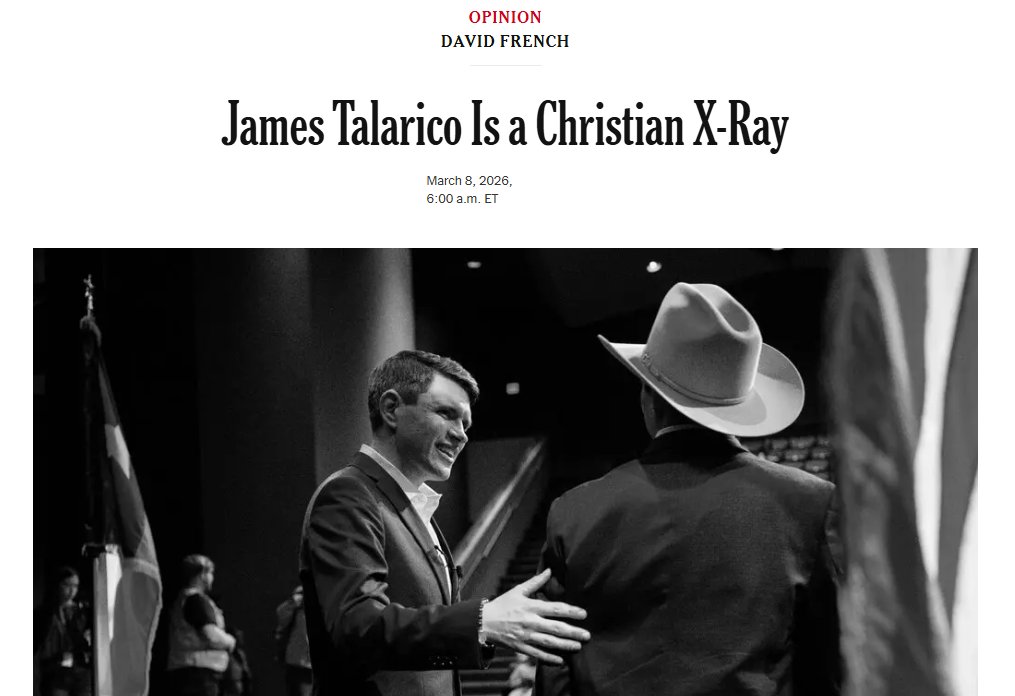
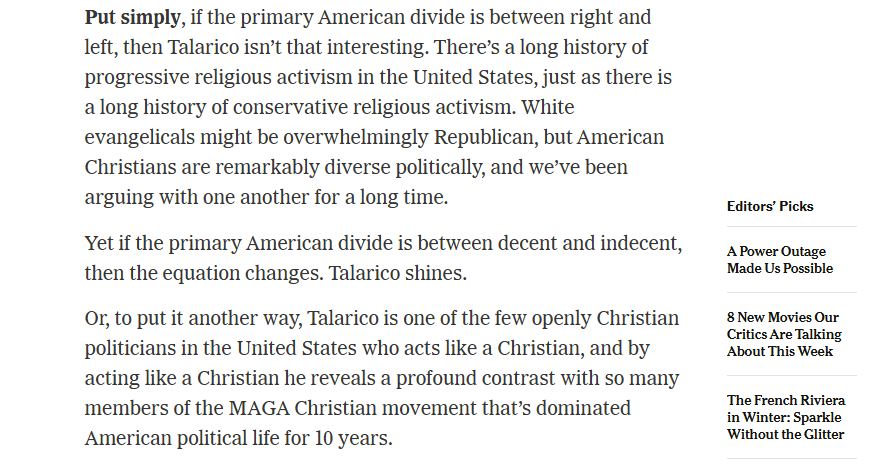
In his newest article, David French says "James Talarico is one of the few openly Christian politicians in the United States who acts like a Christian."
4
8
265
7,988
Mar 8
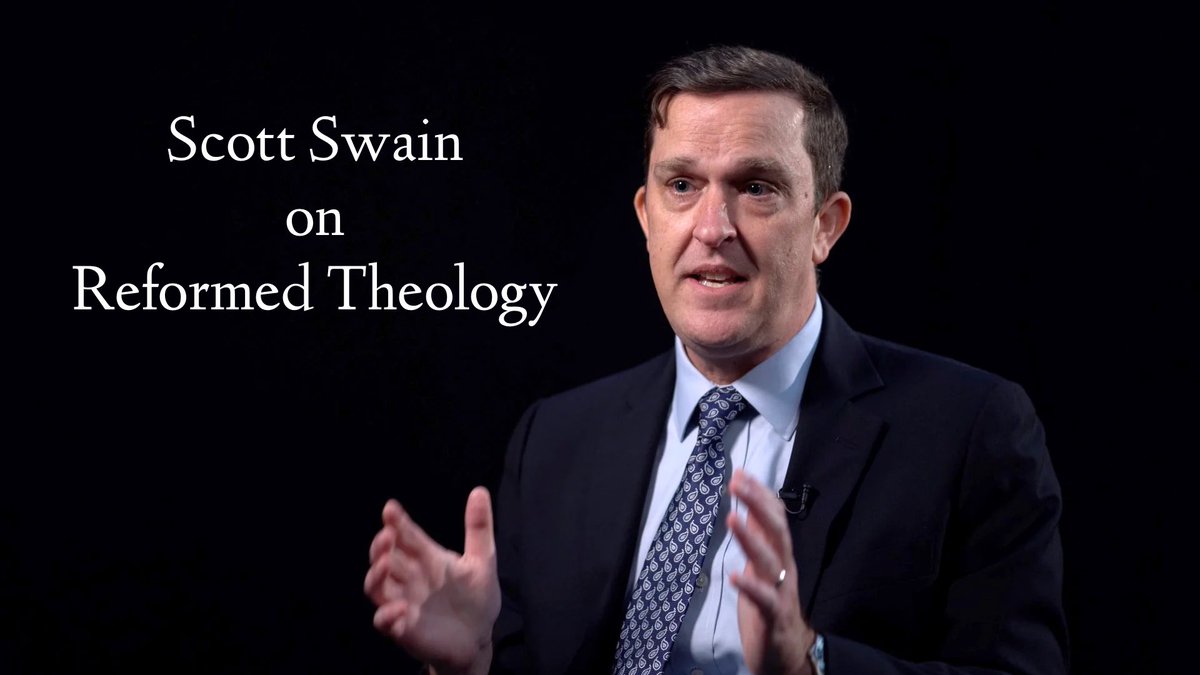
This is one of the best definitions of Reformed Theology I’ve come across. From the one and only @scottrswain
Viewed from the perspective of its historic confessions, Reformed theology may be identified as a catholic, Protestant tradition of inquiry concerning God and all things in relation to God that takes Holy Scripture as its principal source and norm and that orders itself to the glory of God as its chief end. Reformed theology, thus understood, makes specific claims regarding the catholic substance of the faith as summarized in the Ecumenical Creeds, the Ten Commandments, and the Lord’s Prayer. Reformed theology exhibits fundamental agreement with Roman Catholicism and other confessional Protestant traditions on what Martin Luther called ‘articles of majesty’: the being and attributes of the triune God and the person of Jesus Christ. Over against Rome, Reformed theology aligns itself with Lutheran theology on matters such as the authority of scripture and the nature of justification, while distinguishing itself from both Lutheran and Baptist traditions on matters related to biblical interpretation, the sacraments, and church polity. Though Reformed theological systems exhibit a significant degree of diversity, common architectonic patterns and emphases are observable.
— Dr. Scott R. Swain, “The Oxford Handbook of Reformed Theology,” 2-3.
5
8
87
4,822
Mar 7
Talk about living the book-lover’s dream… One of my elders just finished a months-long project of building a built-in bookcase with a sliding ladder. That wood cabinet in the center is a family heirloom — it was handmade by his great-great grandfather.



44
52
1,182
25,664

Mar 6
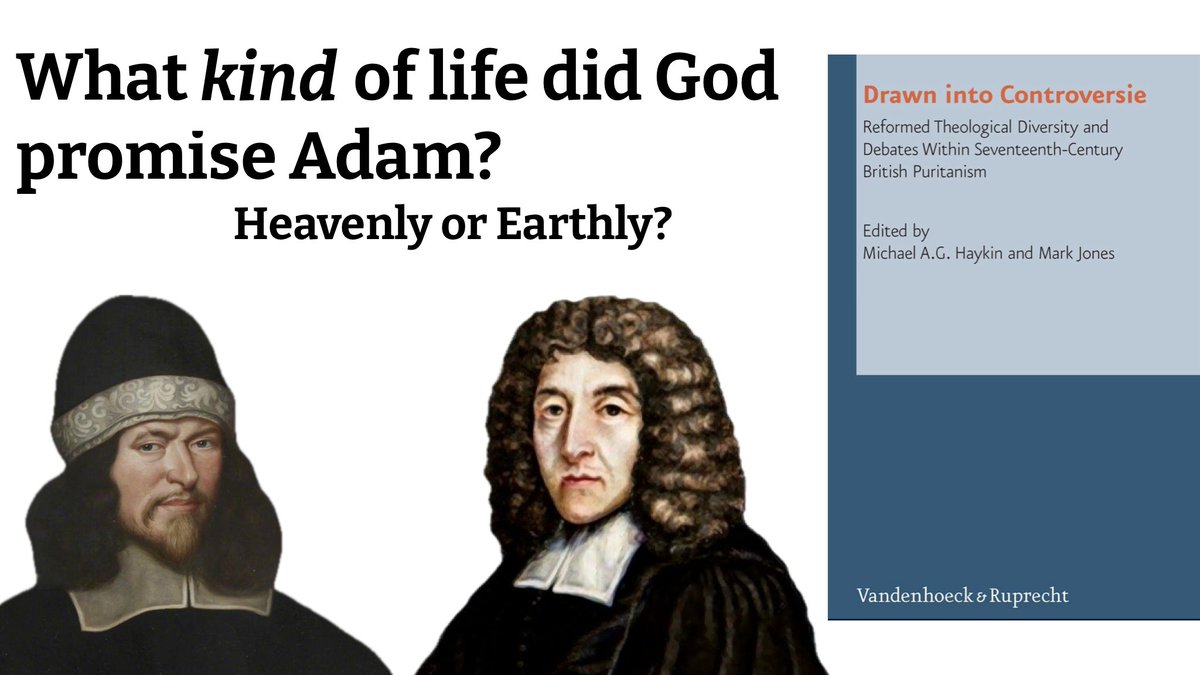
What was Adam’s reward? Heavenly or Earthly life?
Thomas Goodwin vs Francis Turretin
What did God promise Adam? The Westminster Confession of Faith declares that “life was promised to Adam” (7.2) and the Shorter and Larger Catechisms indicate that God entered into a “covenant of life with him” (LC, #20; SC, #12). What is not explicitly stated is the kind of life promised to Adam. No divine would have disagreed with those statements because they were not controversial. But what kind of life would Adam have received had he perfectly obeyed? Not surprisingly, a diversity of answers surrounded this question.
Rowland Ward believes no consensus existed regarding the nature of life promised to Adam at the time of the Westminster Assembly (1647).
…
Francis Turretin (1623–1687) claimed that his was “the received opinion among the orthodox.” He says “that the promise given to Adam was not only of a happy life to be continued in paradise, but of a heavenly and eternal life [...].” He and others advanced this position at the height of protestant orthodoxy.
—162
Early in the eighteenth century, men such as Thomas Boston (1676–1732), Thomas Ridgley (1667–1734), and John Brown (1722–1787) embraced a position similar to that of Turretin.
However, there were important Reformed divines like John Gill (1697–1771) and Jonathan Edwards (1703–1758) who emphatically disagreed. On the one hand, standard orthodox reformed theologians in the nineteenth century, such as Charles Hodge (1797–1878), were not as explicit as Turretin, though Hodge was often heavily dependent on Turretin. But Heinrich Heppe (1820–1879) characterized the Reformed position as being well nigh a consensus on this question.
—162-163
John Ball, Peter Bulkeley and Anthony Burgess were agnostic about the matter and were convinced that it was going too far to decide this issue. Some were inclined towards Turretin’s position but only tentatively.
—164
Goodwin
Goodwin emphasized the distinction between nature and grace in his position while Turretin did not go so far. They preserved the gracious character of the covenant of works while utilizing typical scholastic distinctions. Though some of the language (especially in Goodwin) came from some of the Medieval distinctions, they nonetheless utilized them to advance Reformed orthodoxy. Of the two, Goodwin is the more interesting on account of his careful emphasis on Adam in the foedus naturae.
—165
Goodwin clearly sets forth his position as follows: “the reward, the promised life and happiness that he should have had for doing and obeying, was but the continuance of the same happy life which he enjoyed in paradise, together with God’s favour towards him.” Furthermore, he emphatically denies that Adam would have been translated into heaven: “not the translating him, in the end, unto that spiritual life in heaven, which the angels have, and which the saints shall have.”
…
Basically, Goodwin’s prelapsarian anthropology served as the foundation for his understanding of Adam’s reward.
—166
Goodwin makes a sharp distinction between nature and grace to develop his defense of Adam’s reward. This enables him to draw a sharp contrast between Adam and Christ since his major concern seems to be Christological.
—167
If God offered heaven to Adam, then supernatural faith would have been required. He believed that believers excel the created state of Adam and that the present believer’s light is supernatural and more glorious than Adam’s.
…
If there is an underlying burden in Goodwin’s argument, it is his emphasis on grace over nature. He does not deprecate nature but instead elevates grace. Christ’s work secured a better reward for us than Adam’s. Our light is better than Adam’s and everything we have is of faith and heavenly while Adam’s is natural and earthly. This does not mean that Goodwin viewed the foedus naturae as being static. Rather, Goodwin’s limited or clearly demarcated understanding of foedus naturae enabled him to show in sharp contrast how the second Adam was much better than the first. Nature dominated the first Adam; grace dominates the second Adam. He wanted to set up this contrast for the sake of clarifying and elevating Christ as the Second Adam and the superior benefits we derive from Him.
—168
Turretin
Because of the nature and method of his theological work, he takes issue with the Socinians and Moïse Amyraut. Amyraut’s basic position is the same as Goodwin’s, namely, that Adam was promised perpetual earthly paradise.
…
[For Turretin] the general substance of the law is eternal life (he cites various verses) — “therefore also the law prescribed to Adam” (VIII.vi.4). Whereas Goodwin argued that the law did not explicitly promise eternal heavenly life and that it really could not because of Adam’s nature, Turretin argues inductively. Since all the other examples promised eternal life and that is the nature of the “law of works”, it must follow that the law to Adam offered the same.
…
While Goodwin highlighted the difference between Adam’s and Christ’s reward, Turretin displayed their similarity and symmetry.
—169
Turretin advances another argument by appealing to God’s threat of death in the covenant. That threat was an eternal one. God would not have delighted in aggravating punishments and lessening rewards, Turretin reasons. Would God threaten spiritual and eternal punishment and bestow only earthly promises (VIII.vi.6)? The reward therefore had to be heavenly.
—169
Turretin also argues on the basis of God’s nature (VIII.vi.7). God wants to fully communicate himself and for his creatures to fully enjoy him can only mean eternal and heavenly communion with God since this is the “state of the highest good of God.”
—169
He says that the term [foedus naturale] is not so called “because it conferred nothing above nature and condition (which man had from creation).” That is, the term does not mean that Adam could only receive what was equal to his nature and condition. In utilizing the same language of “natural covenant,” the two drew different conclusions. Goodwin literalizes the covenant of nature and adheres to its strict literal meaning while Turretin has a broader appreciation of the term. He says that the promises of God are not “regulated according to the proportion of the merit. On the contrary, they depend upon God’s will and goodness (a voluntate & bonitate Dei).” Goodwin argued that the moral law and its rewards worked together with Adam’s natural state because Adam’s obedience could only “secure him in that condition he was created in.”
—170
— from Chapter 7 (Mark A. Herzer) in Drawn into Controversie: Reformed Theological Diversity and Debates Within Seventeenth-Century British Puritanism (V&R, 2011)

Sort of. Life forever is less a reward and more a maintenance of the state he was made in. Heavenly life would have been awarded according to the terms of God's special covenant with man in the garden.
2
21
2,705




Mar 5
Junius on the necessity of supernatural grace for man to achieve perfection
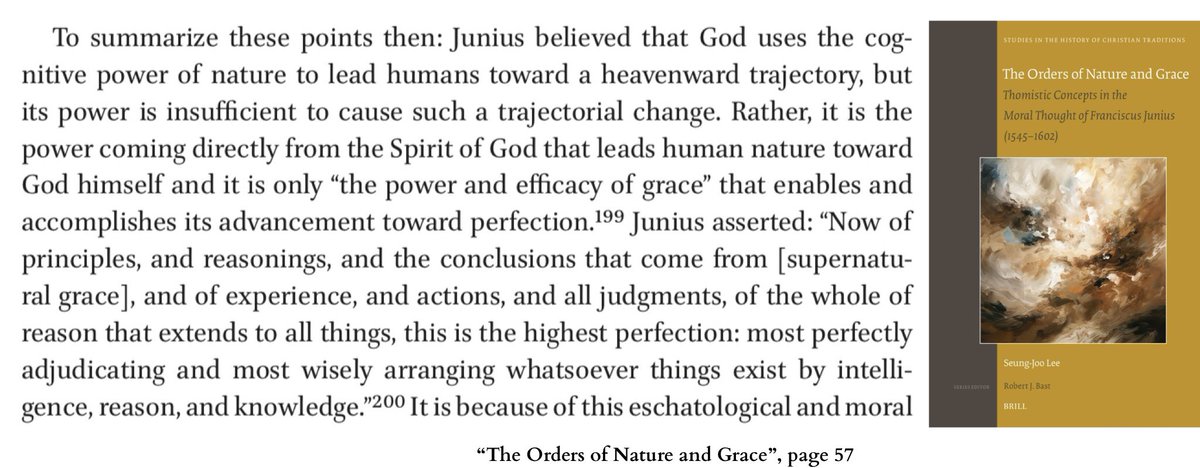
Supernatural grace was necessary for Adam to obtain heavenly life.
This claim is distinct from issues around concupiscence and original righteousness.
Conflating the two has been a long standing problem in Reformed theology/historiography
1
18
1,241
Mar 5
You people gotta be careful with those Lord’s Day afternoon naps

Harrison Barnes missed Tuesday night's game because he woke up from a pregame nap with a sore left ankle (via @APNews)
It's the first time Barnes has missed a game since 2021, ending a streak of 364 consecutive games

1
214
Mar 4
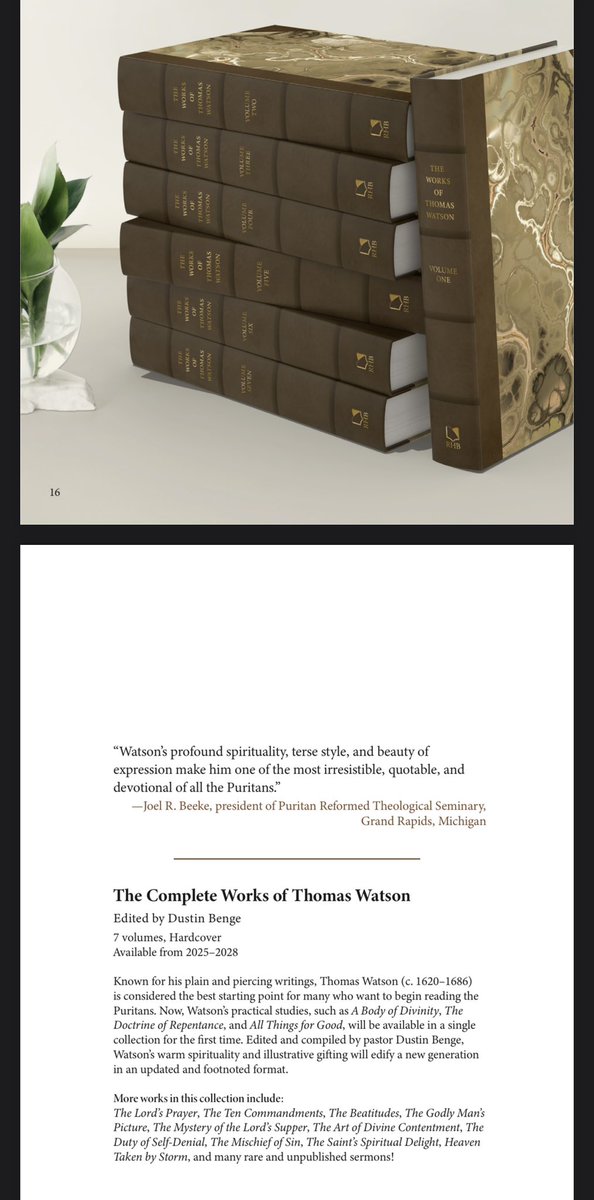
RHB is trying to take all my money again… they’re finally getting Thomas Watson’s complete works published.
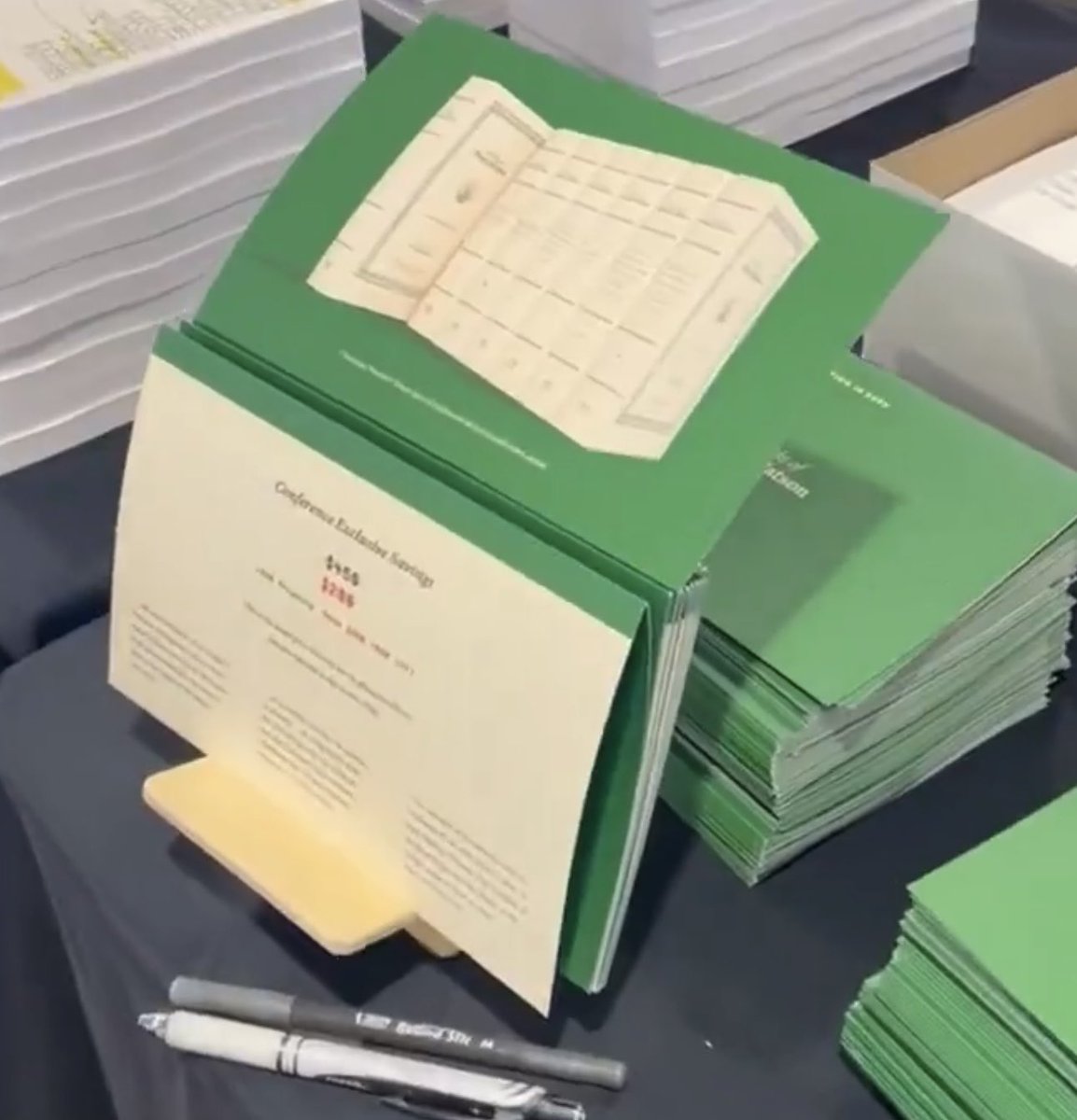


Come see us at #ShepCon2026! (👀Check out that sneak peek of the Works of Thomas Watson👀)
3
19
2,573
Mar 4
Tbh I like the covers on their mockup better when they originally promoted it back in 2023. But this is a big accomplishment so I can’t complain
1
171
