
May 23
Sécurité sociale : l’ONA et l’OFATMA renforcent le dialogue institutionnel
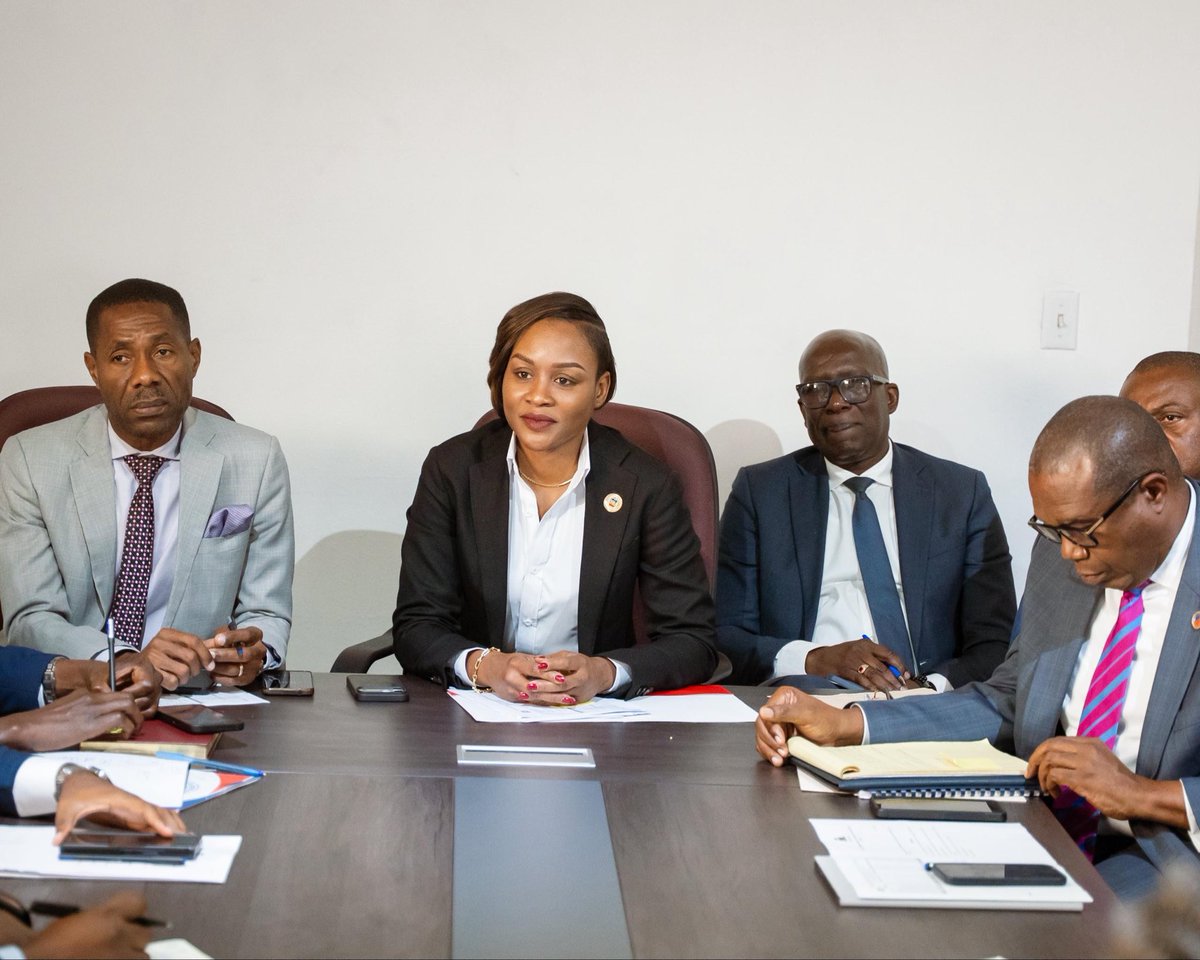
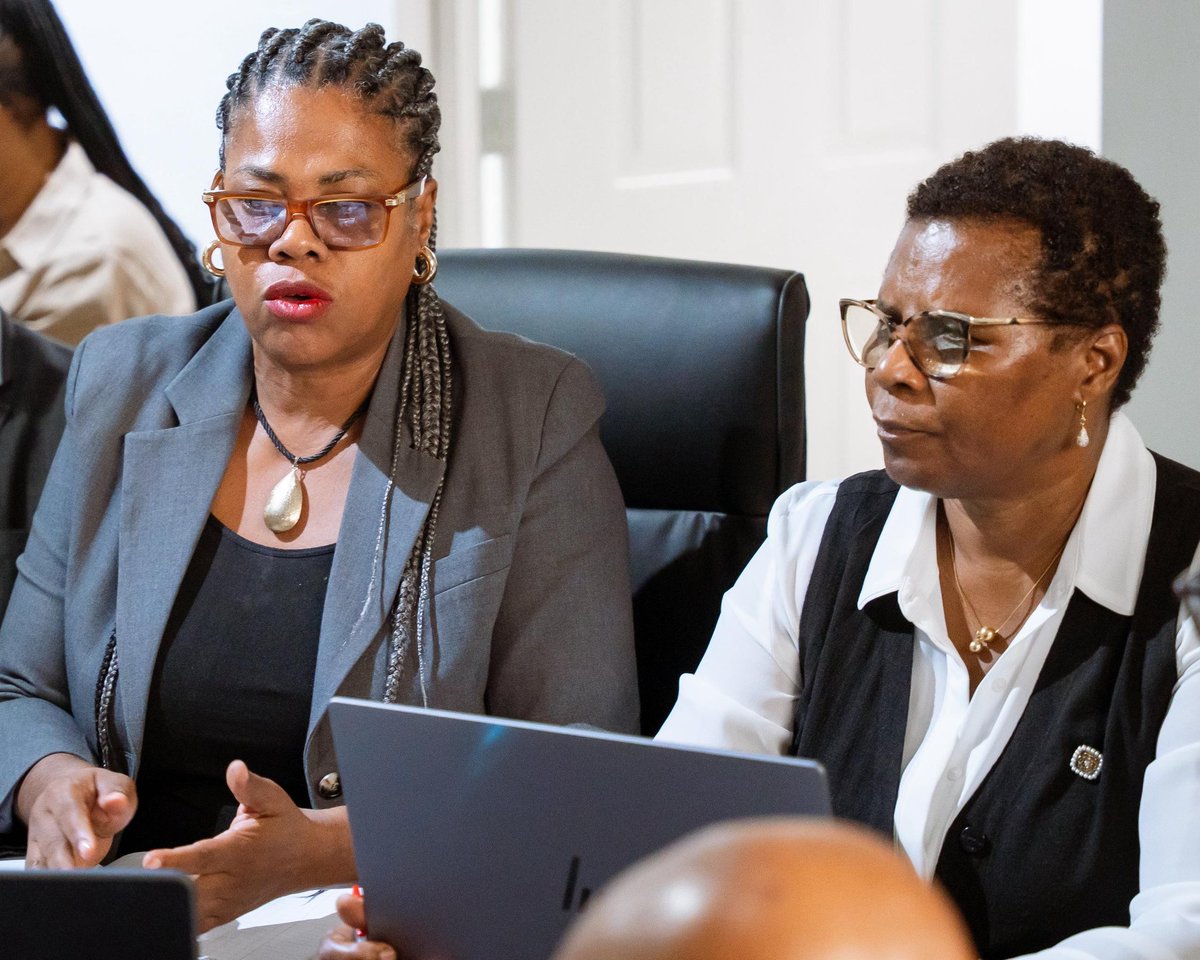
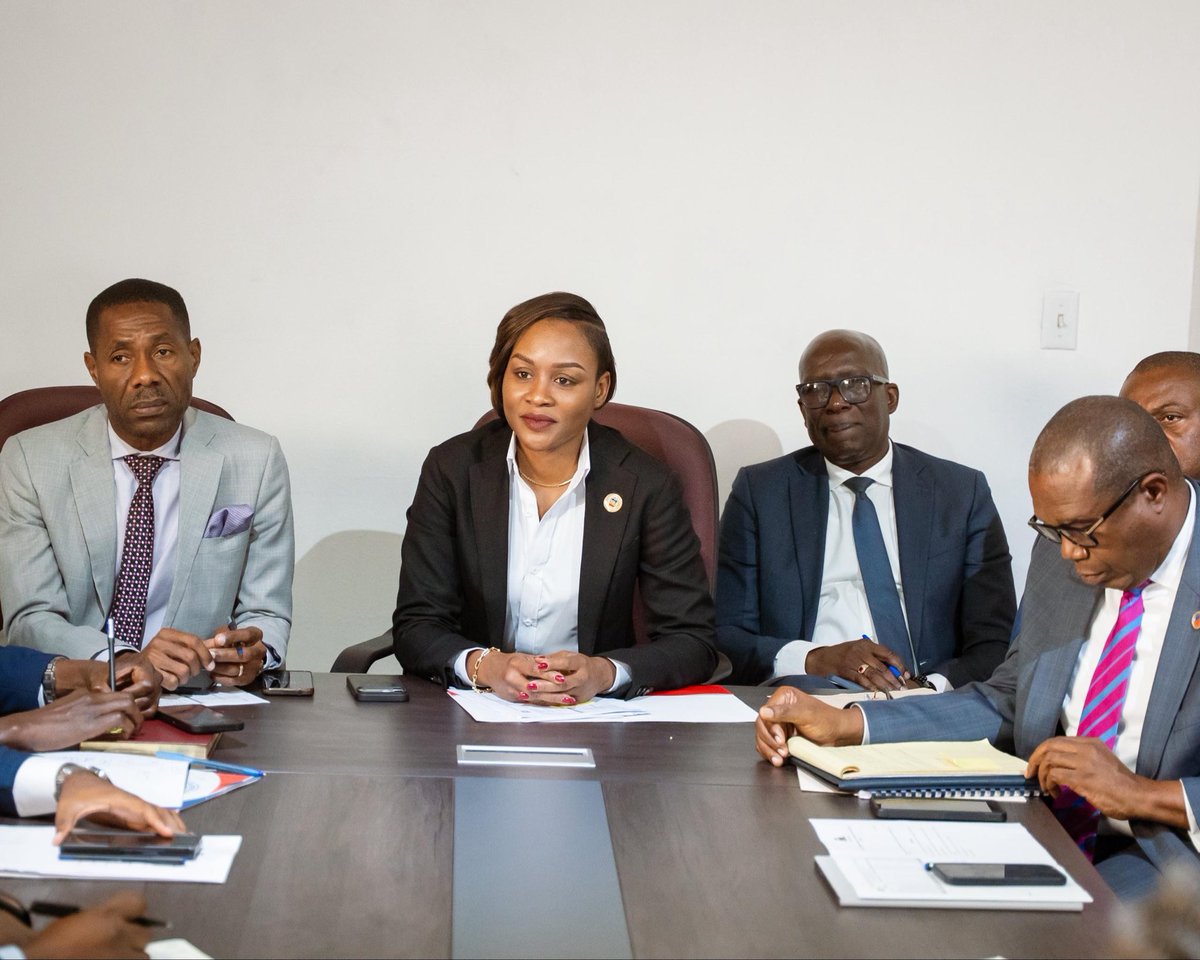
La Directrice générale de l’Office National d’Assurance-Vieillesse (ONA), Lovely François, a participé le jeudi 21 mai 2026 à une réunion de travail organisée par le Conseil des Organes d’Assurances Sociales (CAOSS), consacrée au renforcement du dialogue et de la coopération institutionnelle entre l’ONA et l’Office d’Assurance Accidents du Travail, Maladie et Maternité (OFATMA).
Selon la responsable de l’ONA, les discussions se sont déroulées dans un climat marqué par le respect mutuel, la responsabilité et la recherche de solutions constructives en faveur du système de sécurité sociale haïtien. Cette rencontre a permis aux deux institutions d’aborder plusieurs enjeux liés à leur fonctionnement et à leur complémentarité dans la protection sociale des assurés.
À l’issue des échanges, l’ONA et l’OFATMA se sont accordés sur la création d’une commission mixte chargée de poursuivre les travaux techniques et d’identifier des solutions durables répondant aux besoins des bénéficiaires tout en renforçant les capacités institutionnelles des deux organismes. Cette démarche traduit une volonté commune d’améliorer la coordination et l’efficacité des mécanismes de sécurité sociale.
nouvellesht.com/securite-soc…
#LeadershipFéminin #SécuritéSociale #Femmes #Pouvoir #ONA #OFATMA
2
36

Dialogue institutionnel : l’ONA et l’OFATMA s’engagent vers une résolution concertée de leurs différends
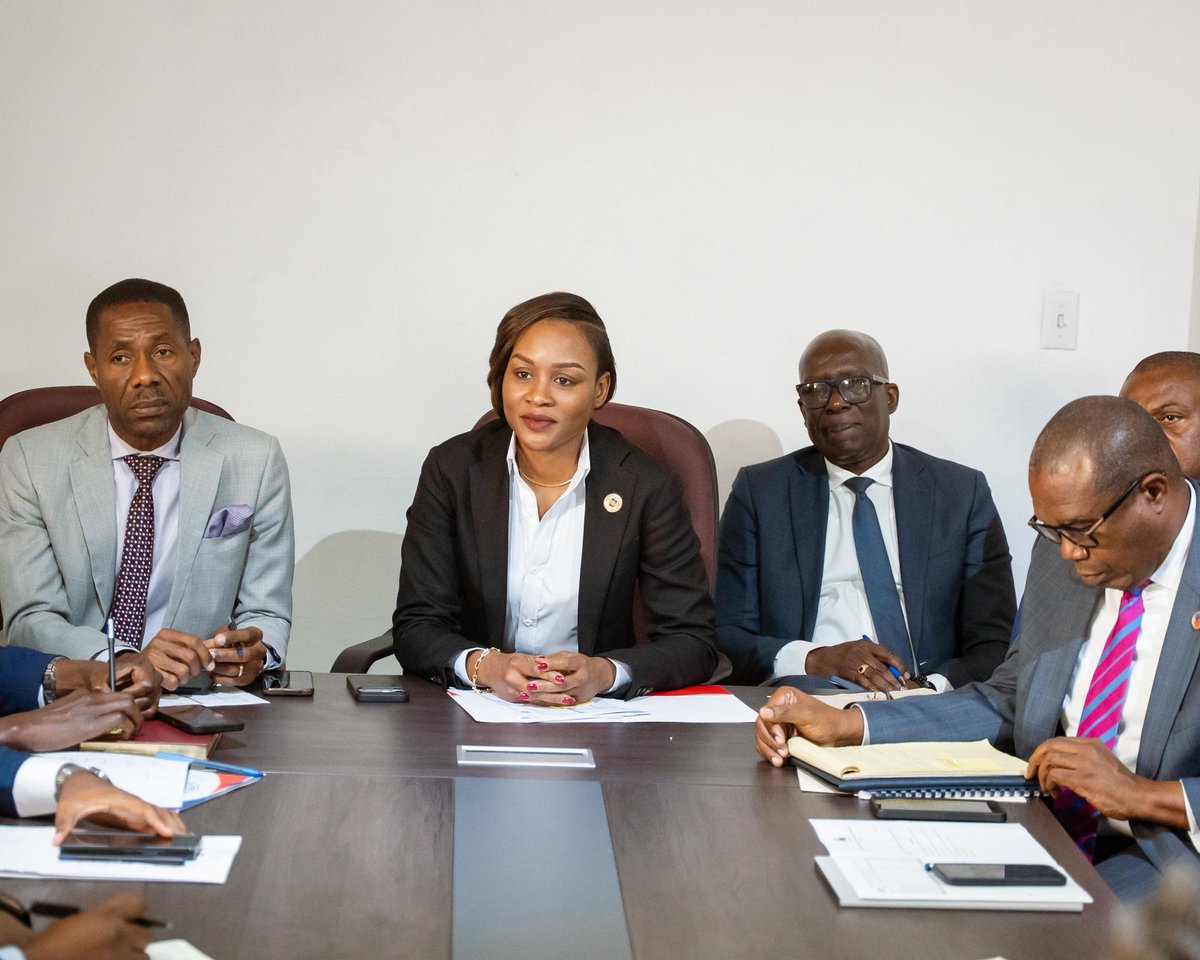
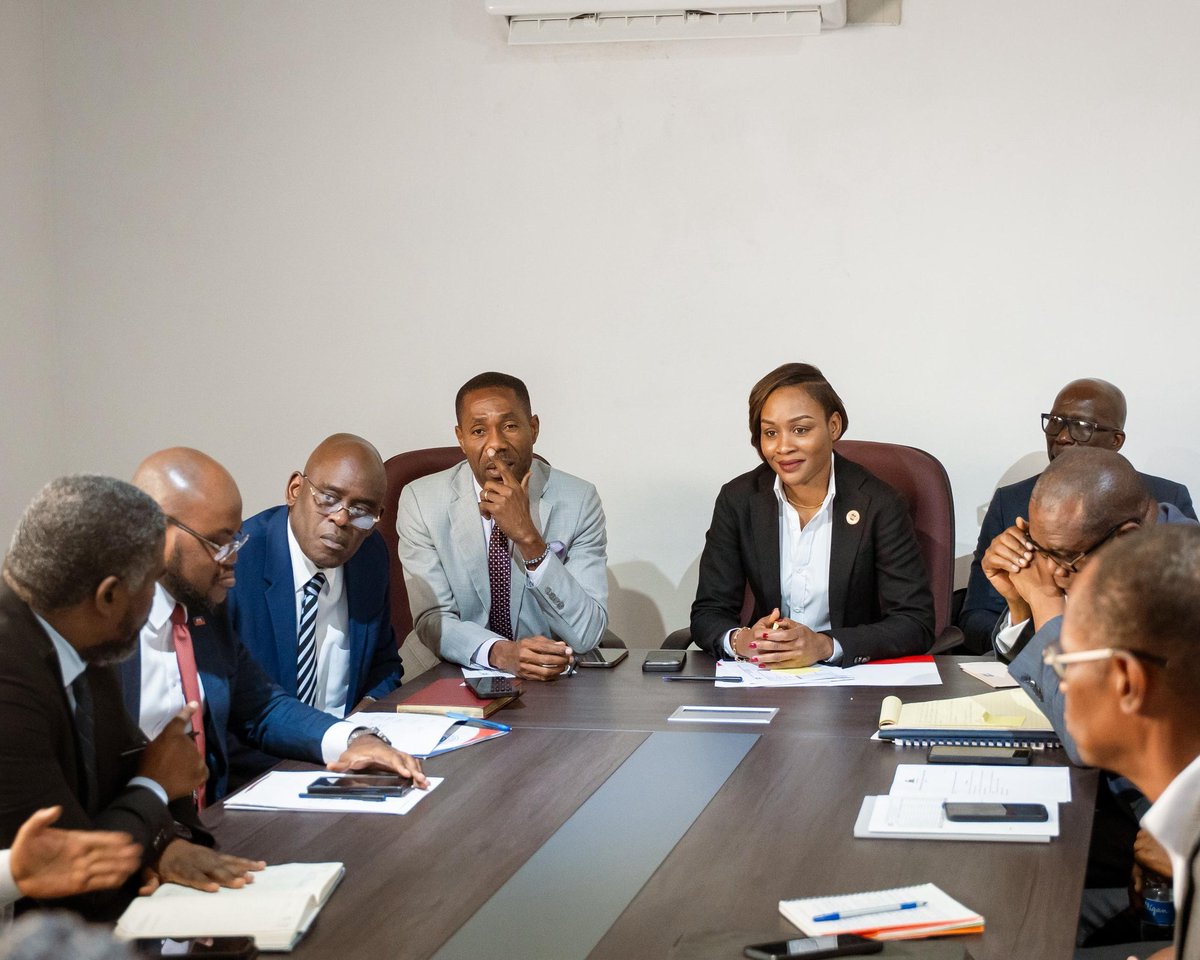
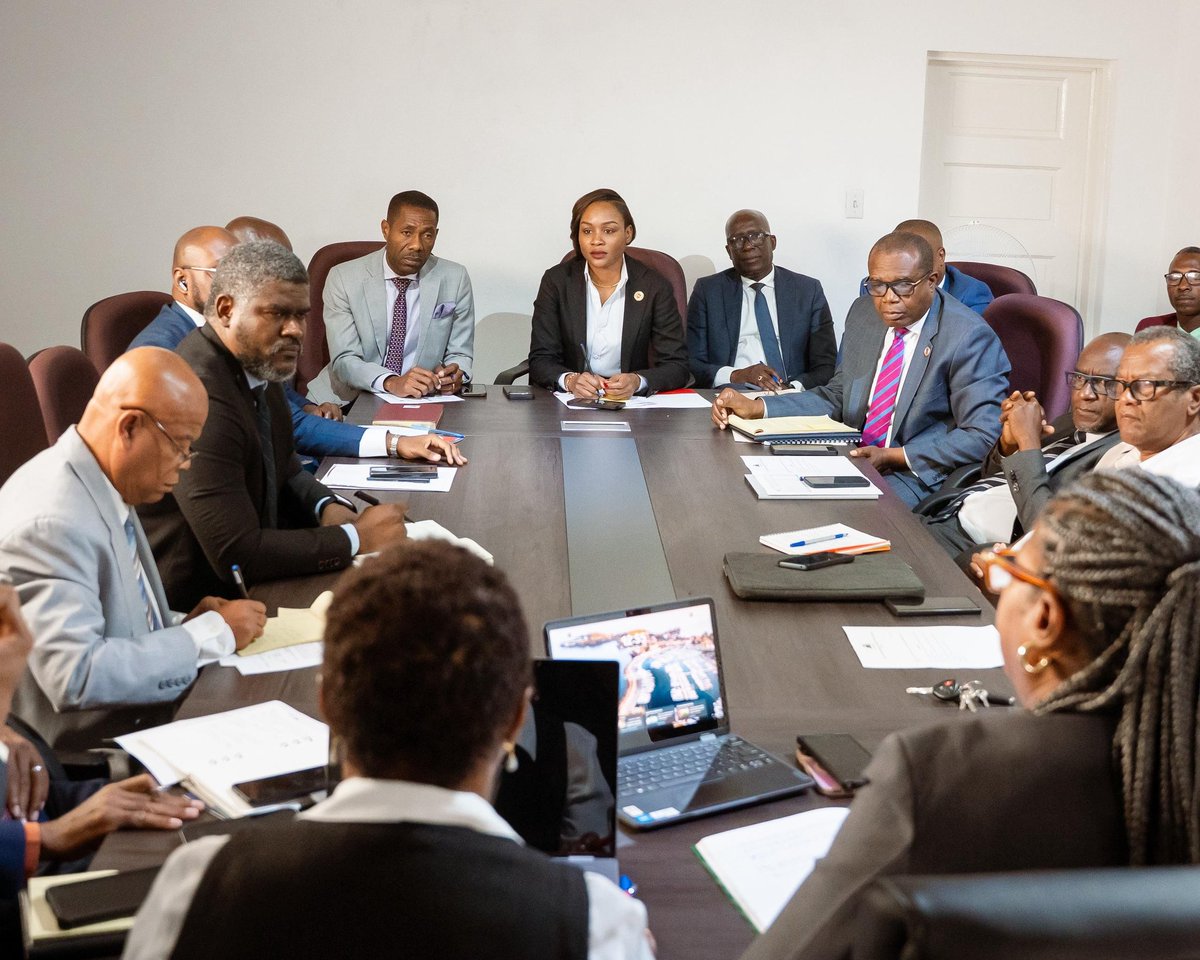
La Directrice Générale de l’Office National d’Assurance-Vieillesse (ONA) @Francoislo05 a pris part, ce jeudi, à une importante réunion de travail organisée sous l’égide du Conseil des Organes d’Assurances Sociales (CAOSS), autour des enjeux de coopération et de stabilité du système de sécurité sociale en Haïti.
Au cours de cette rencontre institutionnelle, les échanges ont principalement porté sur la recherche de solutions durables visant à résoudre les questions financières et administratives en suspens entre l’ONA et l’Office d’Assurance Accidents du Travail, Maladie et Maternité (OFATMA).
Dans un esprit de dialogue, de responsabilité et de coopération interinstitutionnelle, les deux institutions ont réaffirmé leur volonté commune de privilégier la concertation et les mécanismes techniques afin d’aboutir à une résolution équilibrée et constructive des différends existants.
À l’issue des discussions, un accord de principe a été trouvé autour de la création d’une commission mixte ONA–OFATMA. Cette structure technique aura pour mission :
* d’évaluer les différents points de divergence ;
* d’analyser la situation des dettes et engagements existants ;
* de formuler des recommandations concrètes ;
* et de proposer des mécanismes de règlement adaptés aux intérêts des deux institutions ainsi qu’aux exigences de bonne gouvernance administrative.
Cette initiative témoigne de la volonté des autorités des deux organismes de renforcer le dialogue institutionnel, de préserver la stabilité du système national de sécurité sociale et de promouvoir une culture de coopération au service des assurés et des travailleurs haïtiens.
À travers cette démarche, l’ONA réaffirme son engagement en faveur d’une gestion responsable, transparente et orientée vers des solutions durables au bénéfice des institutions publiques et des assurés.
4
5
13
523

May 22
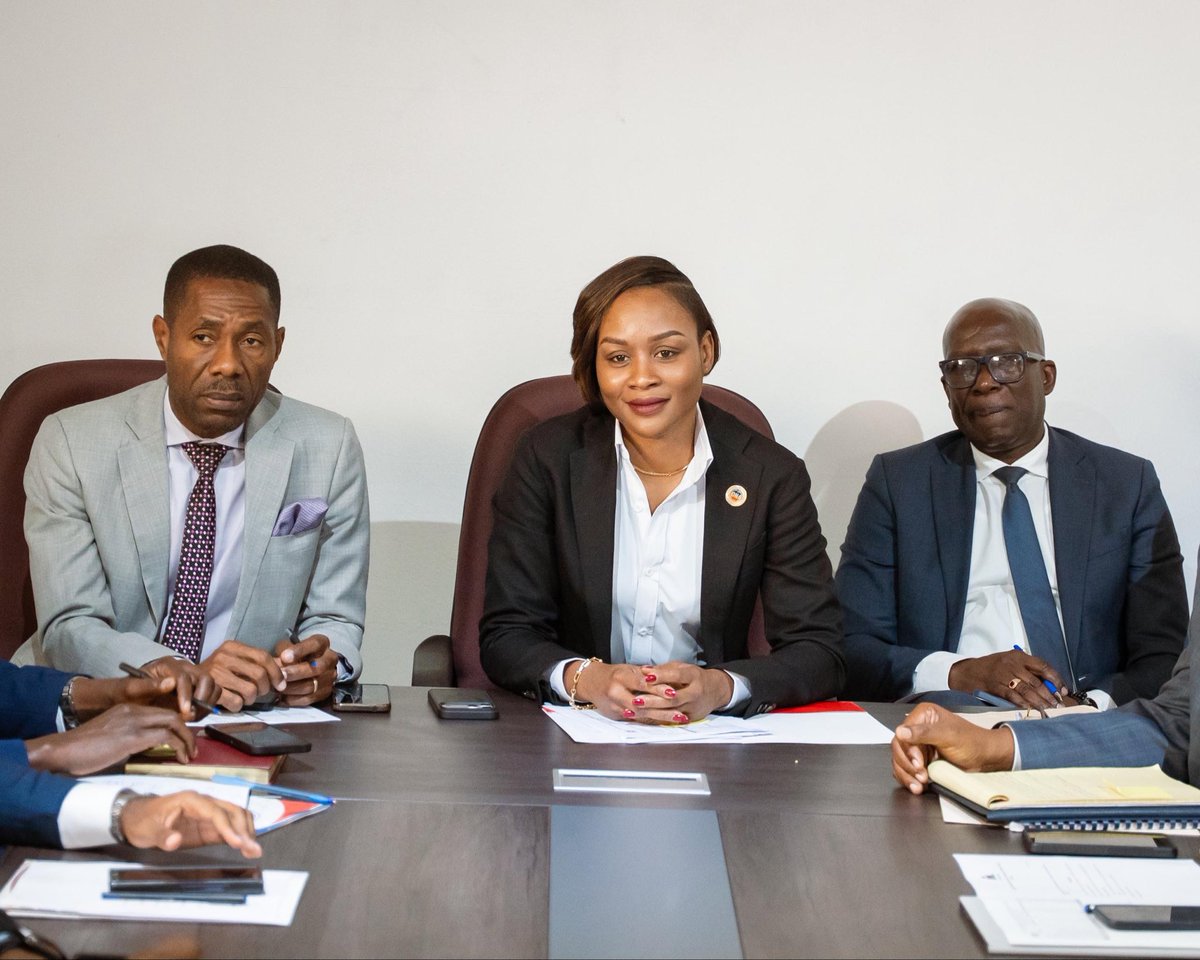
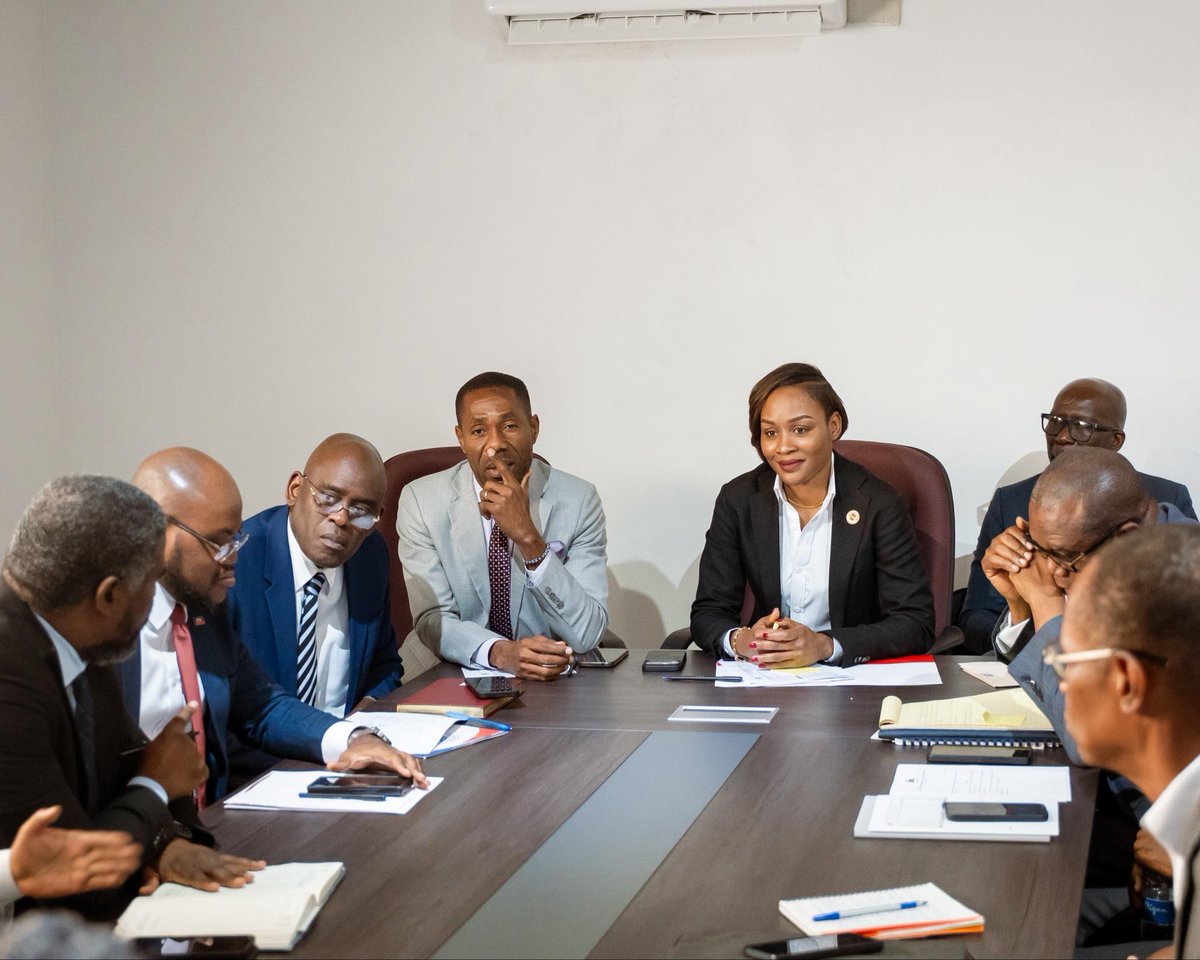
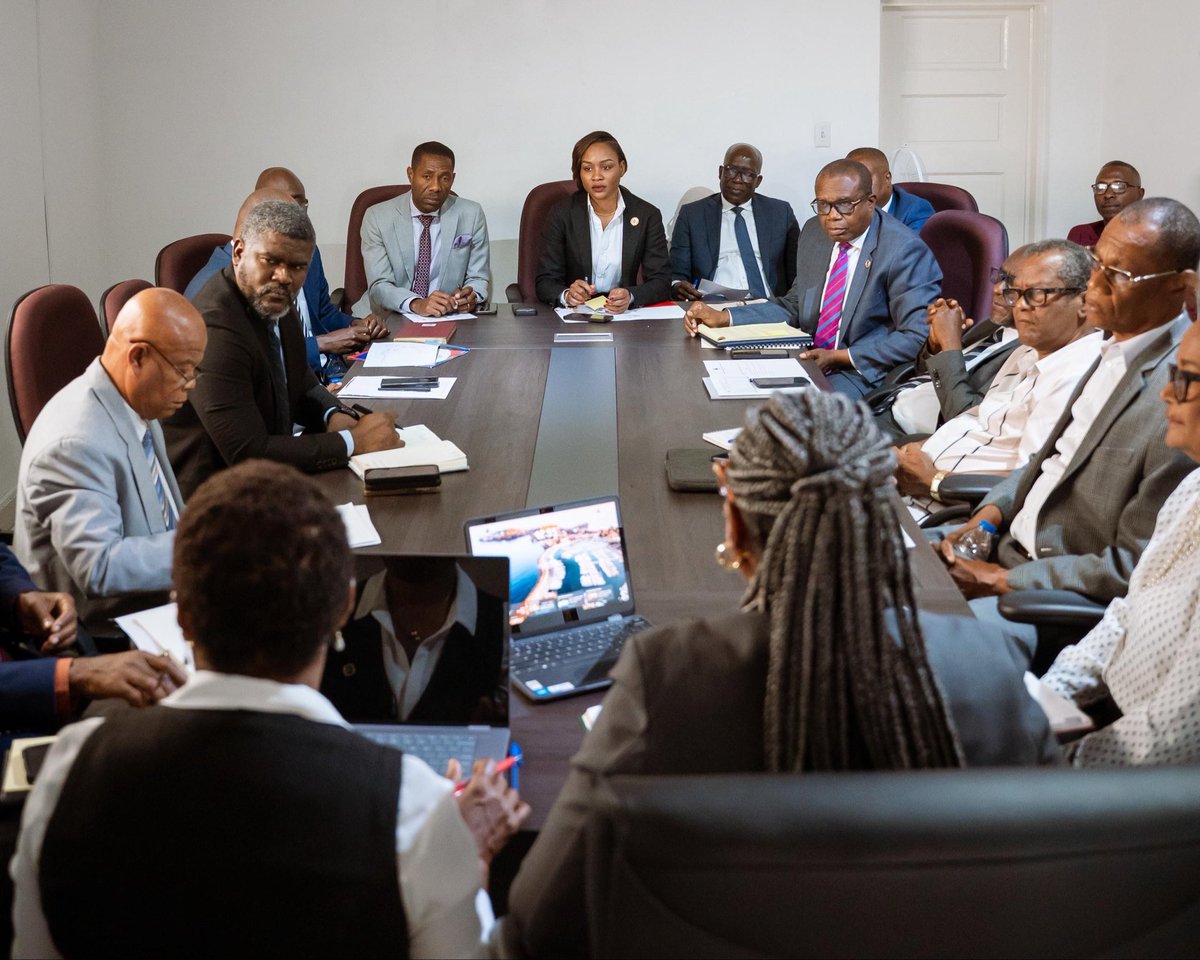
Ce jeudi 21 mai 2026, j’ai pris part à une importante réunion de travail organisée par le Conseil des Organes d’Assurances Sociales (CAOSS) autour des enjeux de coopération et de dialogue institutionnel entre l’Office National d’Assurance-Vieillesse (ONA) et l’Office d’Assurance Accidents du Travail, Maladie et Maternité (OFATMA).
Les échanges se sont déroulés dans un esprit de respect mutuel, de responsabilité et de recherche de solutions constructives au bénéfice du système de sécurité sociale haïtien.
À l’issue des discussions, les deux institutions se sont accordées sur la mise en place d’une commission mixte chargée de poursuivre les travaux techniques et d’identifier des pistes de solutions durables dans l’intérêt supérieur des assurés et du renforcement institutionnel.
Le dialogue, la coopération et la concertation demeurent essentiels pour construire des institutions publiques plus fortes, plus efficaces et davantage au service des assurés.
7
6
28
1,757

Apr 7
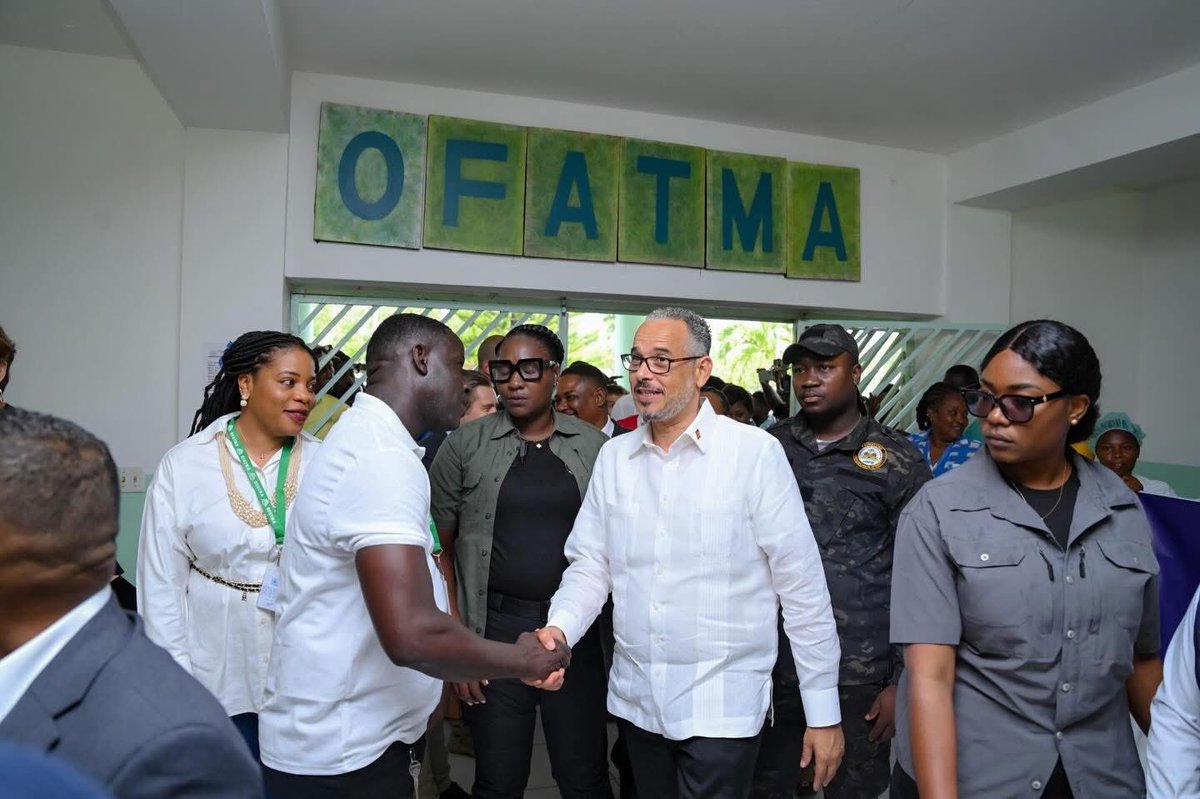
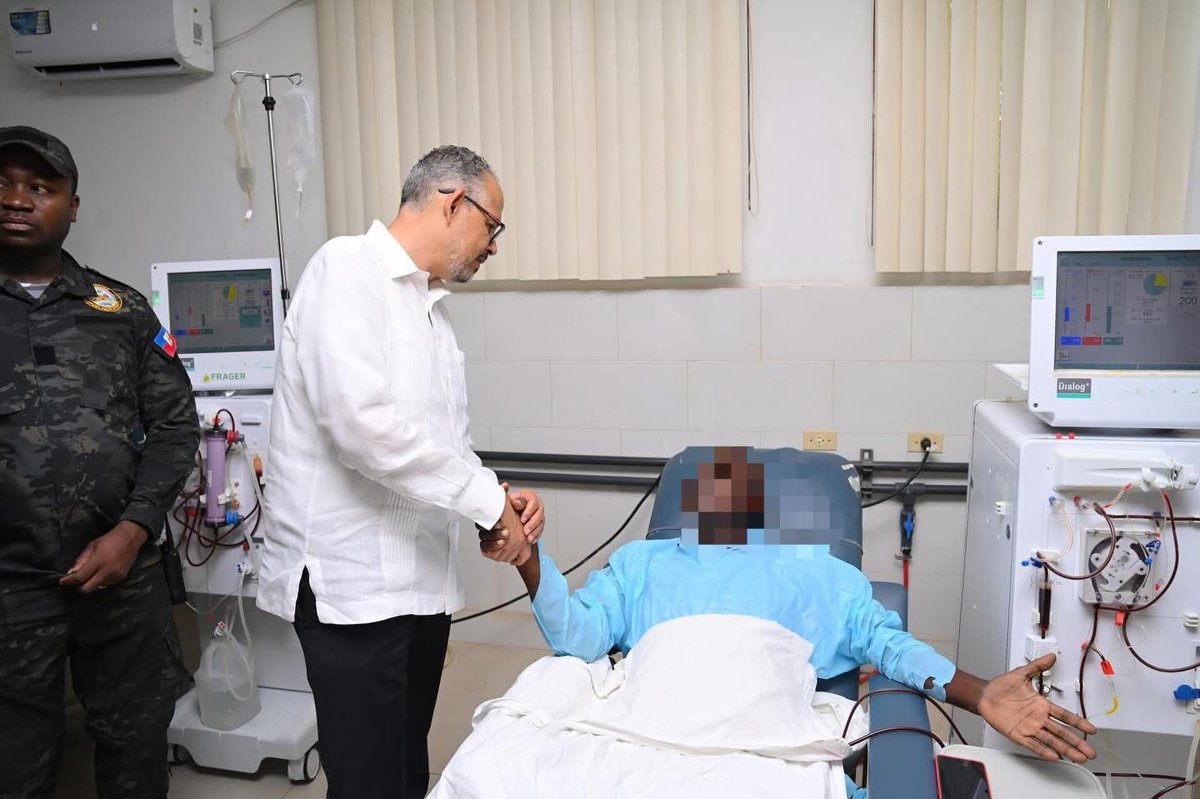
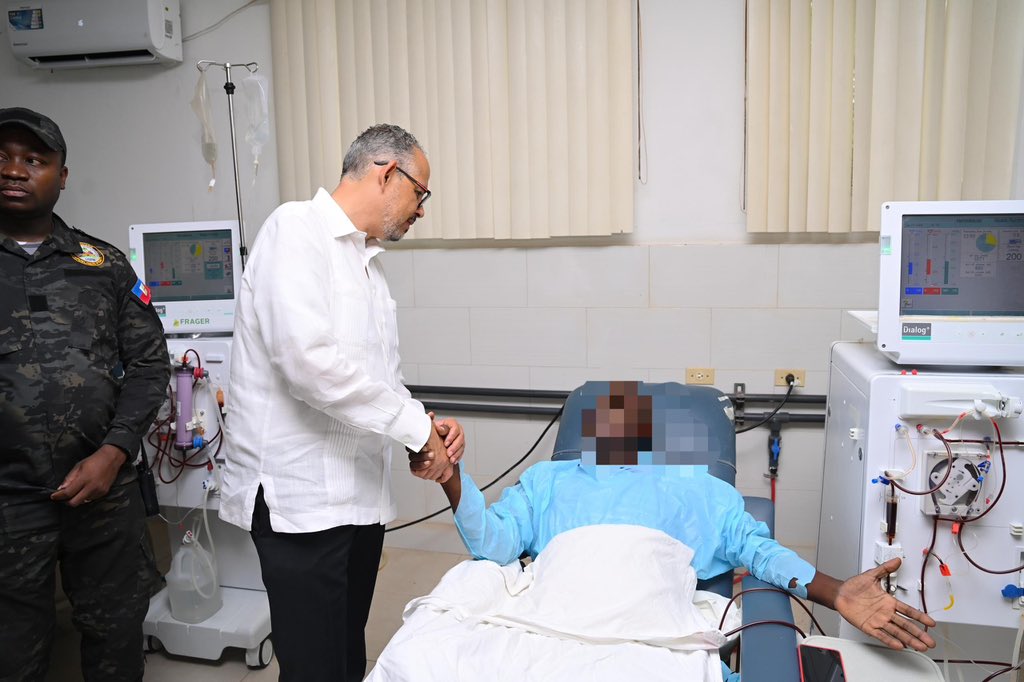
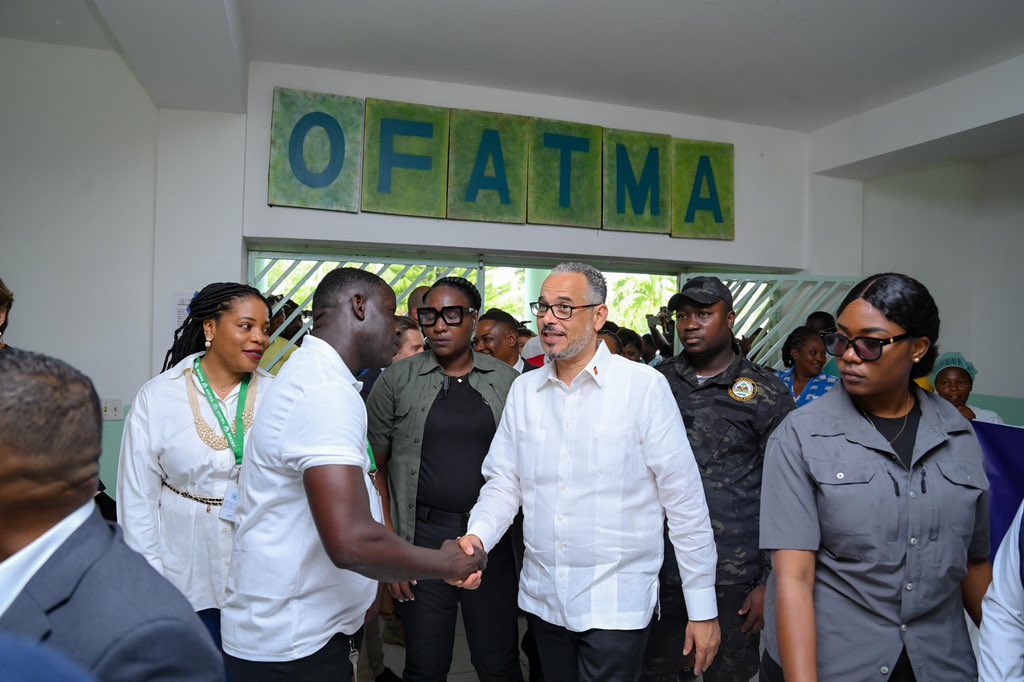
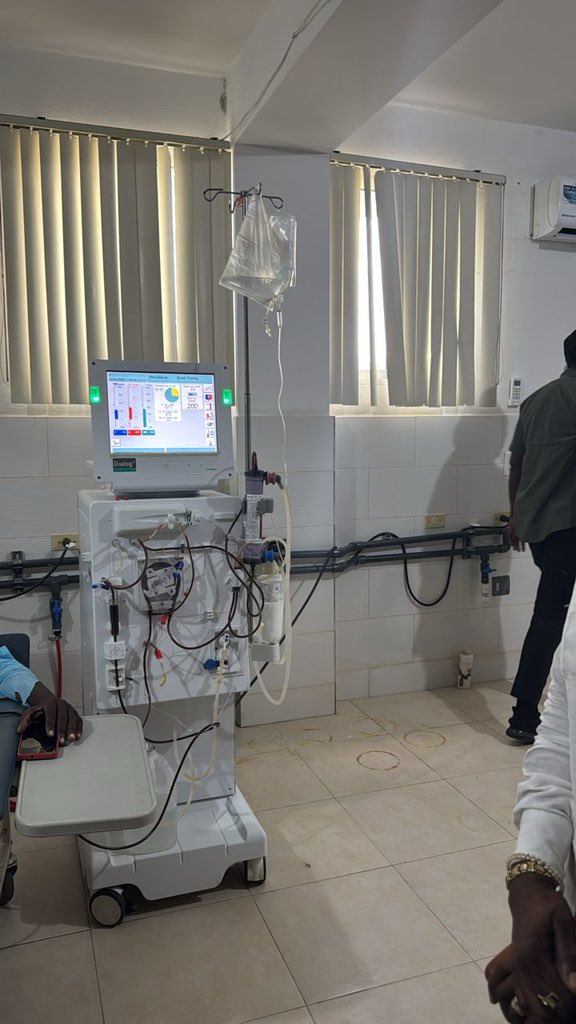
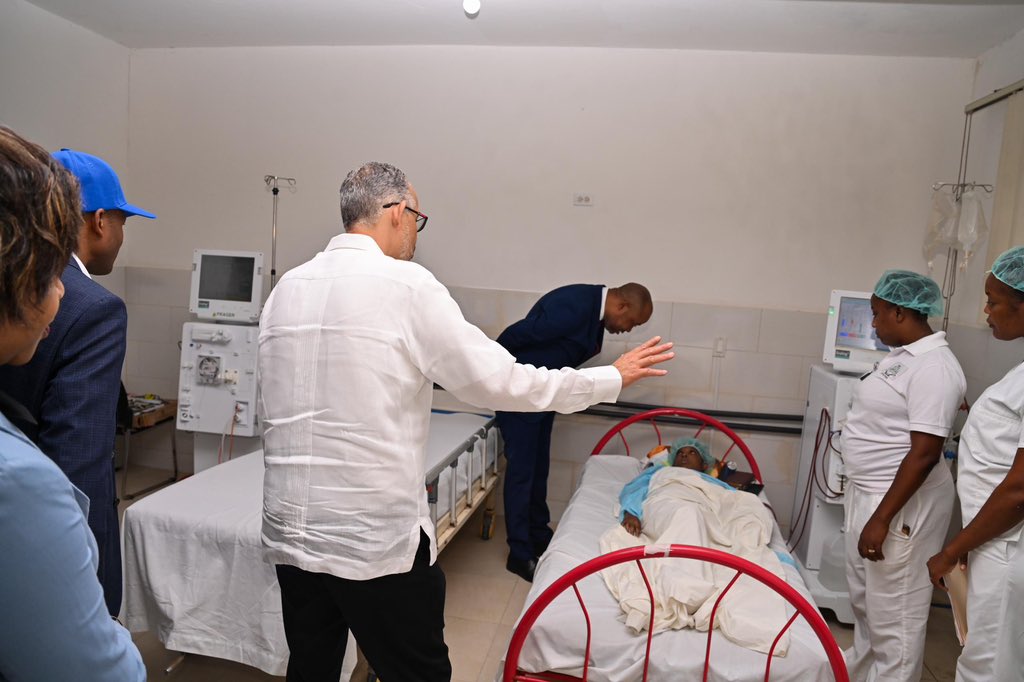
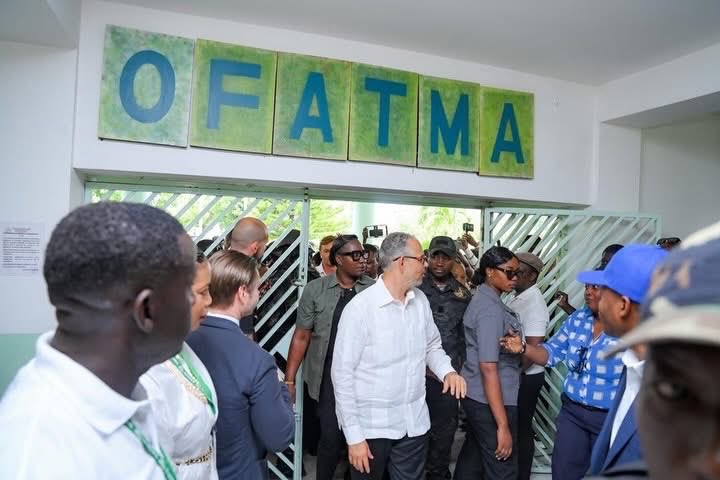
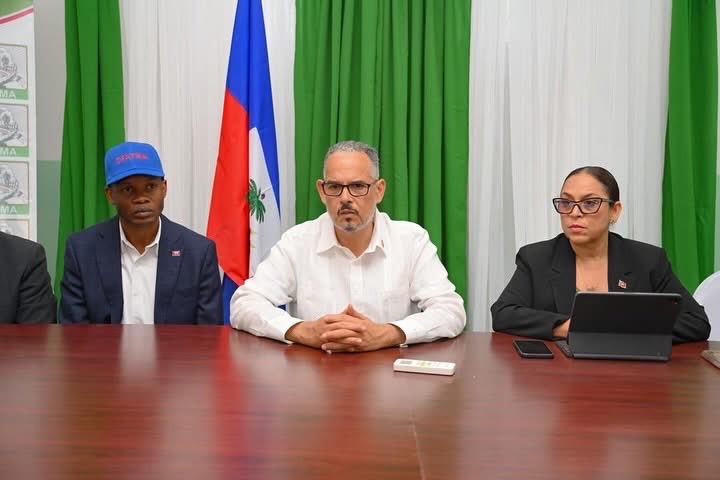
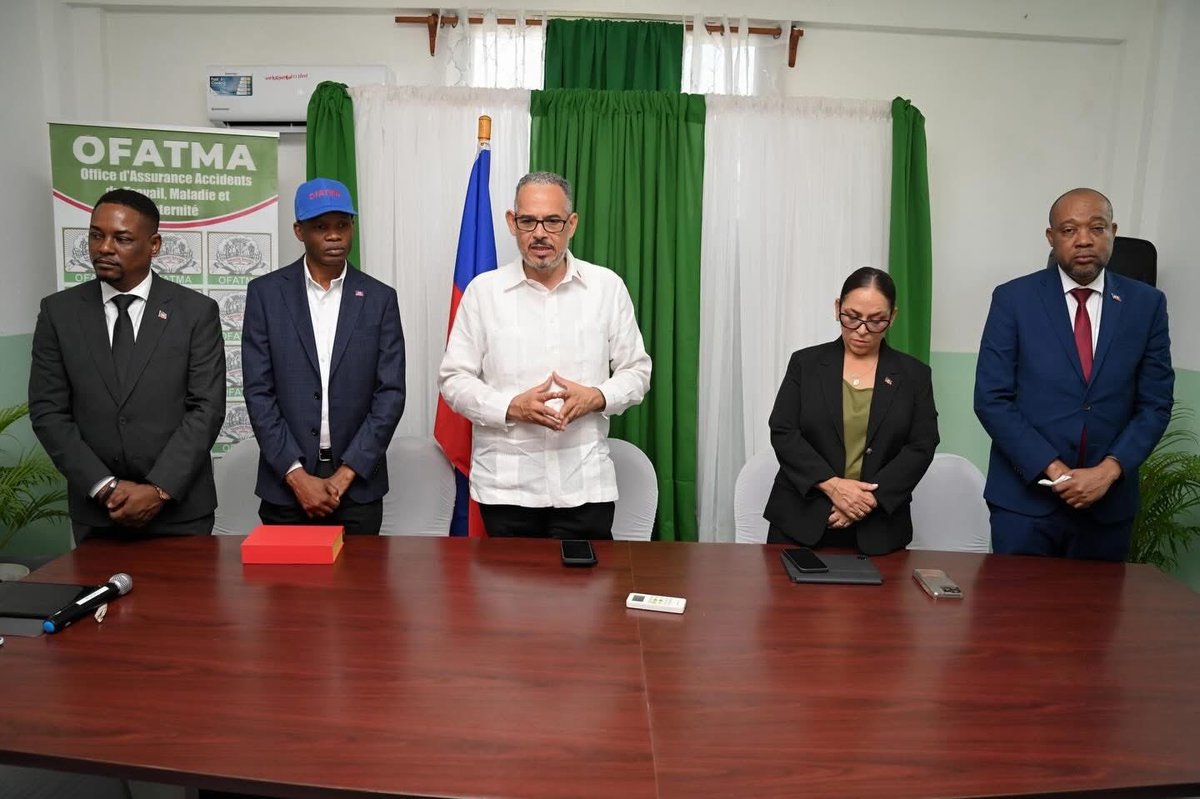
En visite dans le département du Sud, le Premier ministre Alix Didier FILS-AIMÉ s’est rendu ce 7 avril 2026, au centre de dialyse de l’hôpital OFATMA des Cayes, où il a échangé avec le personnel soignant ainsi qu’avec des patients sur leurs conditions de prise en charge. Selon un communiqué de la @Primature, le centre fonctionne actuellement avec quatre appareils de dialyse, une capacité jugée insuffisante au regard des besoins. Toutefois, un don de deux générateurs de dialyse, effectué en mars par Pierre LÉGER, a permis de renforcer le service et d’améliorer l’accès aux soins pour les patients souffrant d’insuffisance rénale. Sur place, le Chef du Gouvernement a constaté les contraintes auxquelles fait face la structure et a salué le travail du personnel médical. Il a, en conclusion, renouvelé l’engagement de son gouvernement à soutenir les services de santé spécialisés.
Juste un clin d’œil !
3
643

COMMUNIQUÉ DE PRESSE
Visite du Premier ministre au centre de dialyse de l’hôpital OFATMA : un engagement renouvelé pour la prise en charge des patients insuffisants rénaux
m.facebook.com/story.php?sto…
4
1
12
1,360

Apr 7
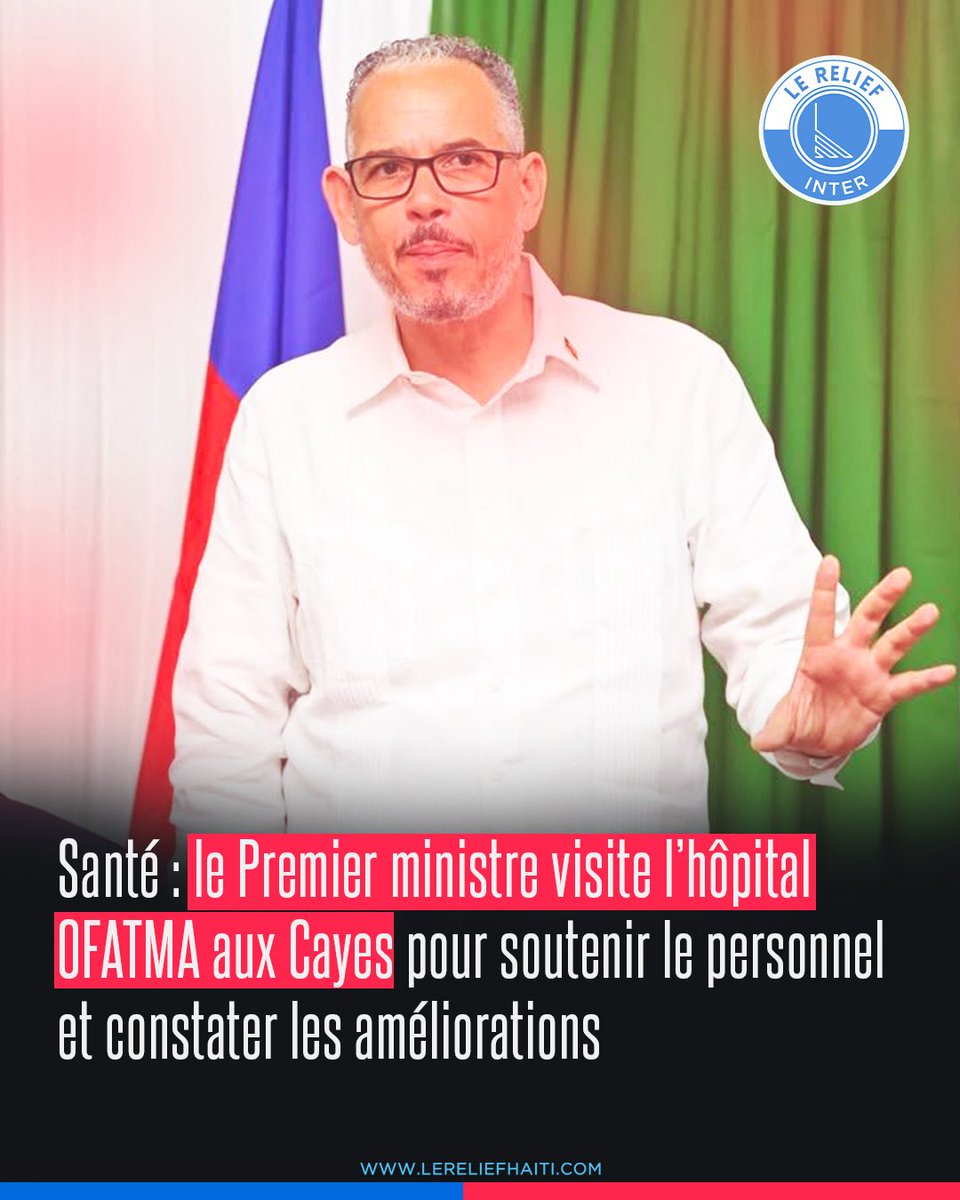
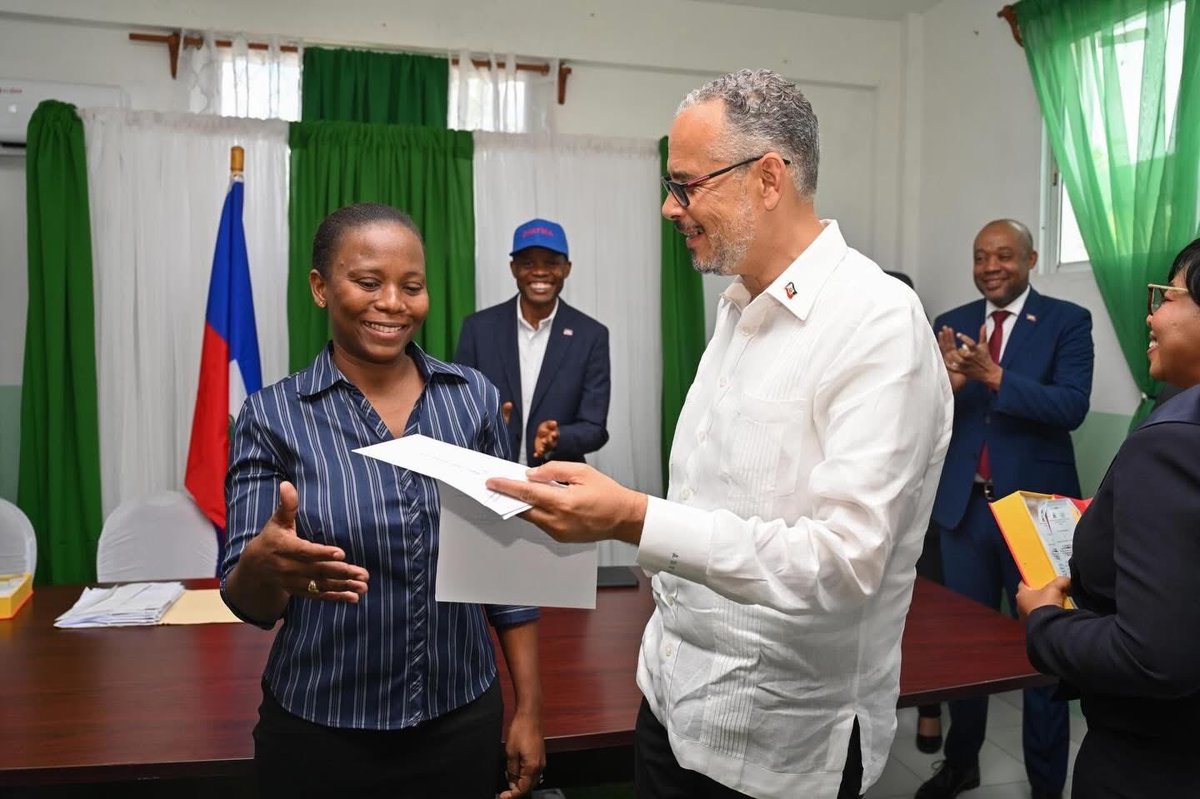
Le Premier ministre Alix Didier Fils-Aimé s’est rendu ce mardi à l’hôpital OFATMA aux Cayes pour voir les améliorations faites dans les services. Il a visité plusieurs unités, comme le centre de dialyse, et a parlé avec les patients et le personnel soignant. Les changements sont grâce aux efforts du Ministère de la Santé pour mieux soigner la population. Le Premier ministre a aussi remis des lettres de nomination à certains employés pour renforcer l’équipe.
4
371

Apr 7
En Haïti, le Premier ministre Alix Didier Fils-Aimé s’est rendu ce mardi à l’hôpital de l’Office d’Assurance Accidents du Travail, Maladie et Maternité (OFATMA) aux Cayes, dans le département du Sud. Le chef du gouvernement, accompagné de responsables sanitaires, a visité plusieurs services de l’établissement, dont le centre de dialyse, afin d’évaluer le fonctionnement de l’hôpital et les améliorations récemment apportées. Il s’est entretenu avec des patients ainsi qu’avec le personnel soignant sur les conditions de prise en charge. Selon les autorités, cette visite a permis de constater certains progrès réalisés grâce aux interventions du Ministère de la Santé Publique et de la Population pour renforcer l’offre de soins dans la région. Le Premier ministre a également remis des lettres de nomination à plusieurs membres du personnel médical et de soutien, une démarche présentée comme une reconnaissance de leur engagement et un moyen de renforcer les ressources humaines de l’établissement. #GlobalInfos
4
237

Deux machines de dialyse pour la ville des Cayes. Le directeur général de l’OFATMA a reçu, ce jeudi, deux machines de dialyse destinées à l’hôpital OFATMA de la ville des Cayes. Ce don a été fait à l’État haïtien par le citoyen américain d’origine haïtienne Scott Martin. Le directeur général de l’OFATMA a salué ce geste et estime qu’il contribuera à renforcer la capacité de l’hôpital en matière de dialyse dans le Sud.#metronomehaiti
4
44
6,284

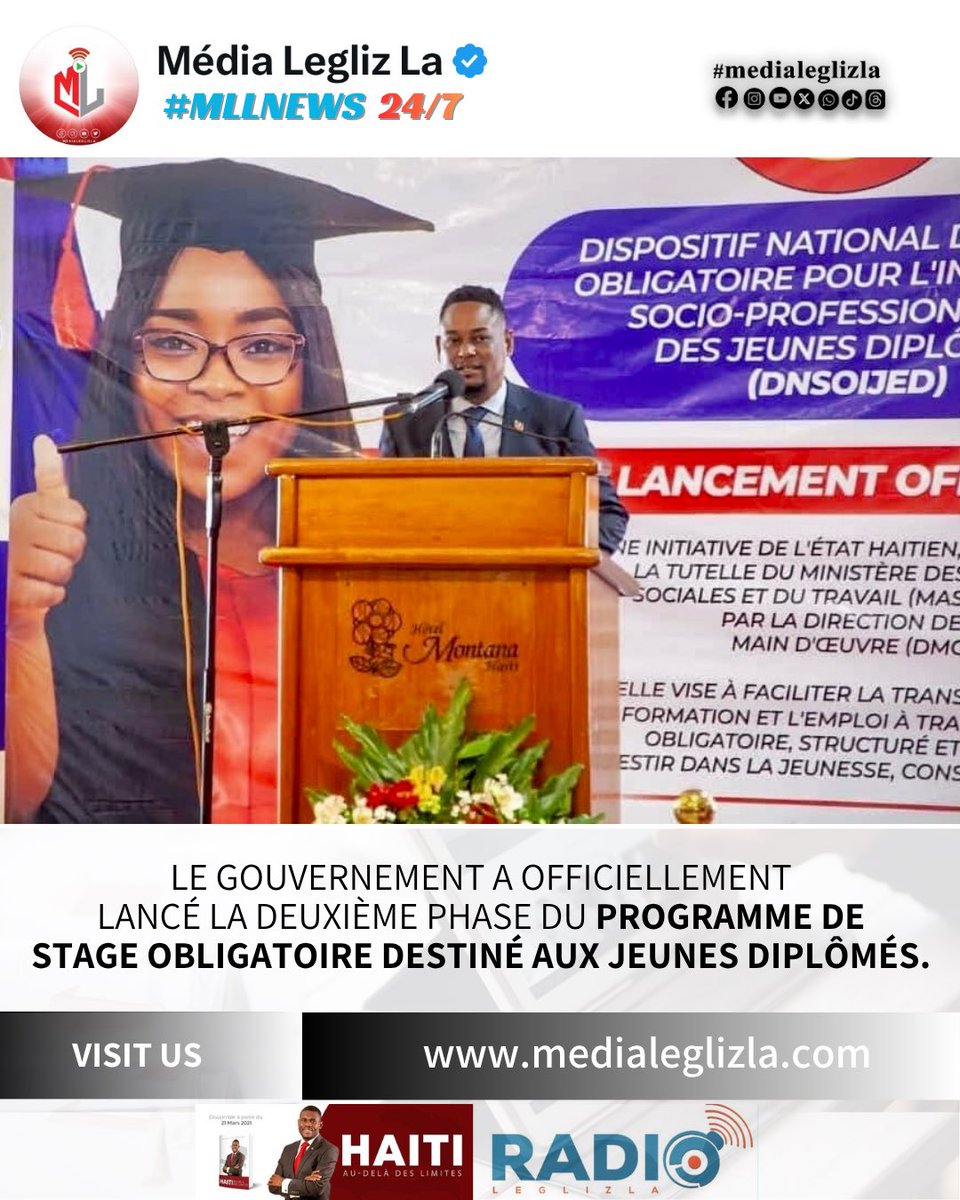
Le gouvernement haïtien a officiellement lancé, le 20 mars 2026, la deuxième phase du programme de stage obligatoire destiné aux jeunes diplômés. La cérémonie de démarrage marque une nouvelle étape dans cette initiative publique visant à renforcer les capacités de l’État en matière d’insertion socioprofessionnelle.
Porté par le Ministère des Affaires sociales et du Travail (MAST), le programme entend offrir aux jeunes une première expérience professionnelle structurée au sein des institutions publiques. Selon les responsables du ministère, l’objectif est de créer plus de 20 000 places de stage à l’échelle nationale sur une période de cinq ans, afin de faciliter l’accès au marché du travail pour les nouveaux diplômés.
Lancé le 23 mai 2025, le projet affiche déjà des résultats jugés encourageants. Lors de la cérémonie, le ministre des Affaires sociales, Marc‑Elie Nelson, a indiqué que plus de 30 % des bénéficiaires de la première phase ont été intégrés de façon permanente dans plusieurs institutions publiques, notamment l’Office national d’Assurance‑Vieillesse (#ONA), l’Office d’Assurance Accidents du Travail, Maladie et Maternité (#OFATMA), le #MAST et l’Établissement public de promotion du logement social (#EPPLS).
#MLLnews
#Leglizlive
#medialeglizla
2
37

Mar 21
Twenty years of the General Inspectorate of Finance (IGF) in Haiti: an invisible institution in the face of corruption
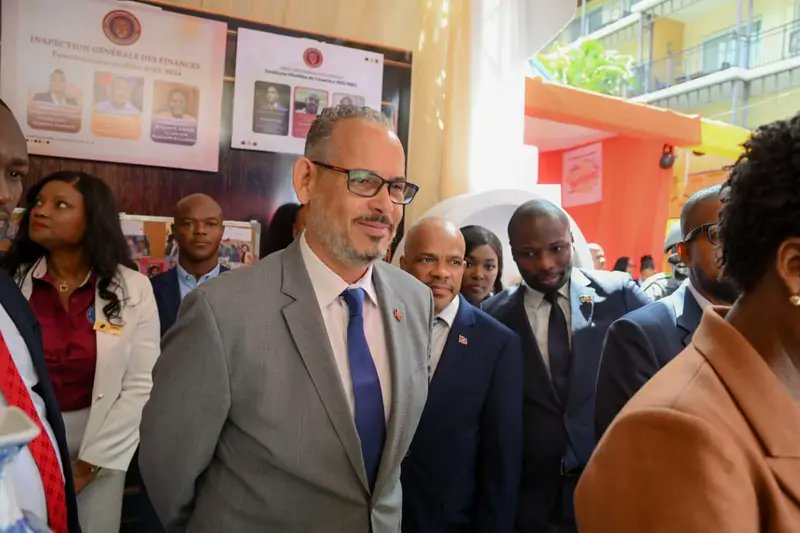
Prime Minister Alix Didier Fils-Aimé participated this week in the ceremony marking the 20th anniversary of the creation of the General Inspectorate of Finance (IGF). The event, organized around the theme "Twenty Years of Commitment to Good Governance and the Fight Against Corruption," provided the head of government with an opportunity to advocate for strengthening transparency mechanisms in the management of public finances.
But behind the official speeches and institutional celebrations, one question remains: what is the true record of the General Inspectorate of Finance after twenty years of existence?
A largely unknown institution
Created to carry out control, audit, inspection, and investigation missions across the entire public administration, the IGF was intended to be one of the main instruments for monitoring the use of public funds. Its mission notably includes the oversight of public investment programs, public procurement, public-private partnerships, and the management of state assets.
Yet, in the eyes of the Haitian public, the IGF remains largely unknown. Few citizens know it exists, let alone what concrete actions it has taken to combat corruption in the public administration. This is all the more troubling given that the last two decades have been marked by numerous financial scandals that have rocked state institutions.
Scandals revealed… by other institutions
Several corruption cases that have come to light in recent years were uncovered not by the General Inspectorate of Finance (IGF), but by the Anti-Corruption Unit (ULCC). The IGF was completely absent.
For example, an investigation by the ULCC implicated former Planning Minister Aviol Fleurant in illicit enrichment. The investigation revealed an increase of over 75 million gourdes in his assets, representing a rise of more than 250% during his time in government.
In another case, the ULCC uncovered a major fuel embezzlement scheme at the National Solid Waste Management Service (SNGRS). Of the more than 227 million gourdes spent on diesel purchases, nearly half of the consumption could never be accounted for.
Investigations have also revealed irregularities in several public institutions, including the Office of Citizen Protection, OFATMA and the Office of Immigration and Emigration, where practices such as fictitious travel, fraudulent contracts and embezzlement of public funds have been documented.
In total, some investigations have revealed losses exceeding 600 million gourdes for the Haitian state.
However, despite these revelations, the judicial results remain extremely limited: out of more than a hundred reports submitted to the courts by anti-corruption institutions, only a few convictions have been handed down.
One of the most corrupt countries in the world
This situation is reflected in international rankings. According to the Corruption Perceptions Index published by Transparency International, Haiti regularly ranks among the most corrupt countries in the world.
With a score of approximately 16 out of 100, the country ranks around 169th globally, far behind the majority of states in the region. This ranking underscores the magnitude of the challenge that oversight institutions are expected to address.
In such a context, the existence of bodies like the General Inspectorate of Finance should play a decisive role in the prevention and detection of financial abuses.
A report that raises questions
Twenty years after its creation, the IGF seems to be operating with relative discretion. Few public reports, few emblematic cases revealed, and an almost non-existent visibility in the public debate.
Sherley François
resistancepresse.com/vingt-a…
2
1
10
1,207

Mar 5
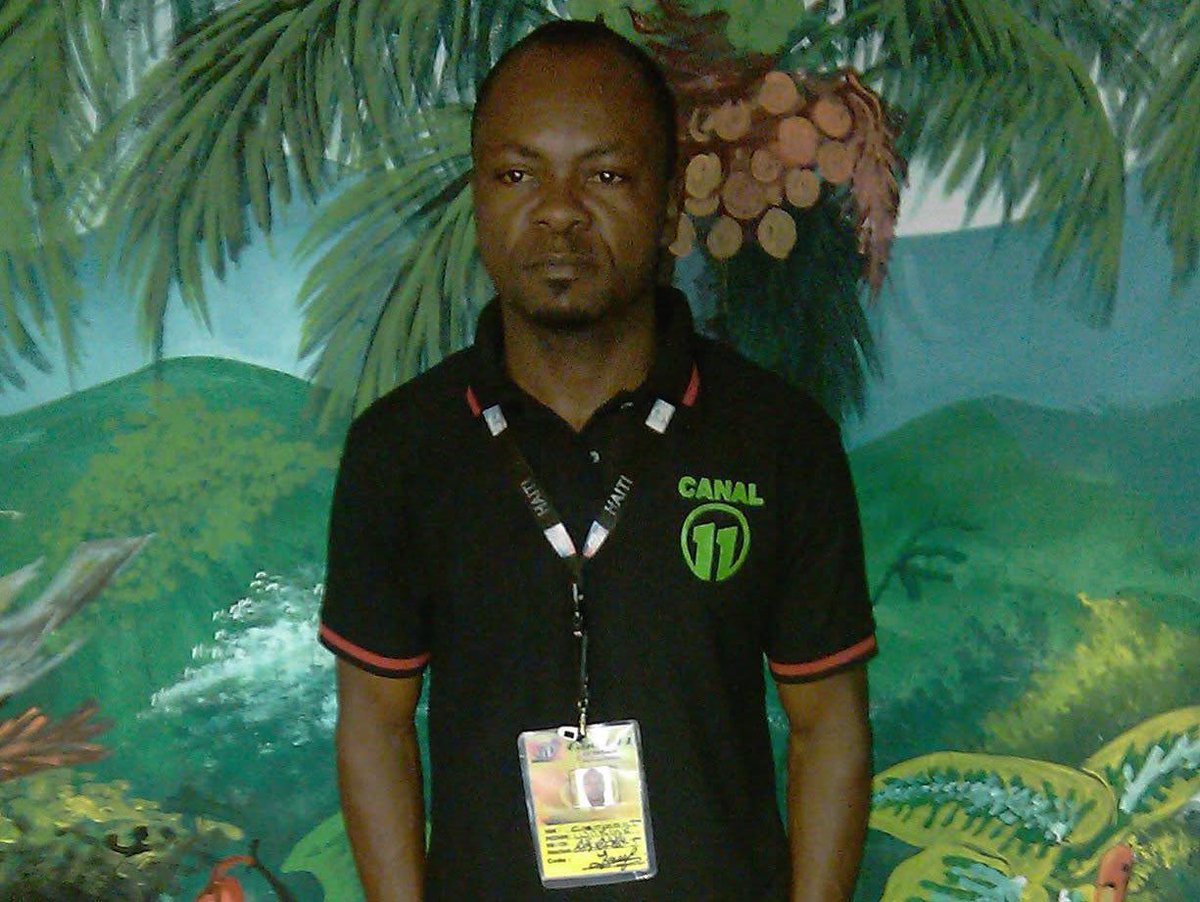
Le journaliste haïtien Wilkins Clermont est décédé ce mercredi 4 mars 2026 après avoir été victime d’un malaise alors qu’il se trouvait dans une salle de gym.
Transporté d’urgence à l’hôpital OFATMA, l’ancien cameraman de Canal 11 n’a malheureusement pas survécu malgré les efforts des médecins qui ont tenté de lui sauver la vie. @Kirikounews
2
4
7
1,941

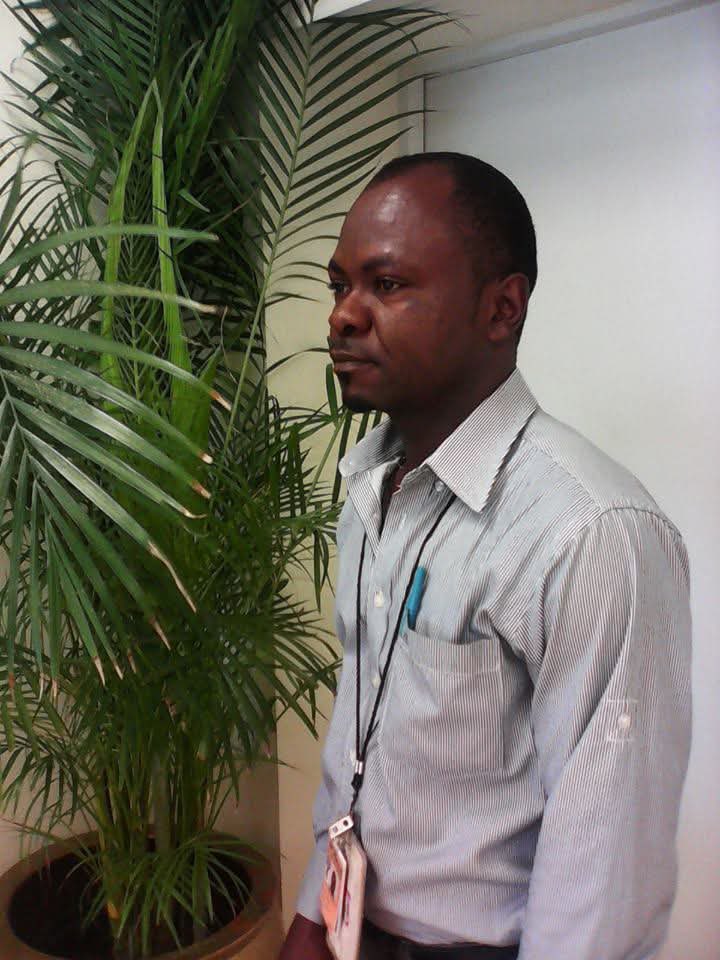
Une onde de choc vient de frapper la presse haïtienne : le journaliste et ancien cameraman de Canal 11, Wilkins Clermont, est décédé ce mercredi 4 mars 2026 après un malaise survenu dans une salle de sport.
Âgé de 48 ans, il a été transporté en urgence à l’hôpital OFATMA, où les médecins n’ont pas pu le réanimer. Marié et père d’une fille, natif de Bonbon (Grand’Anse), il était reconnu pour son professionnalisme et sa discrétion.
Sa disparition laisse un vide profond dans le paysage médiatique, où confrères et acteurs du secteur saluent la mémoire d’un artisan essentiel de l’information.
2
3
414

Mar 5
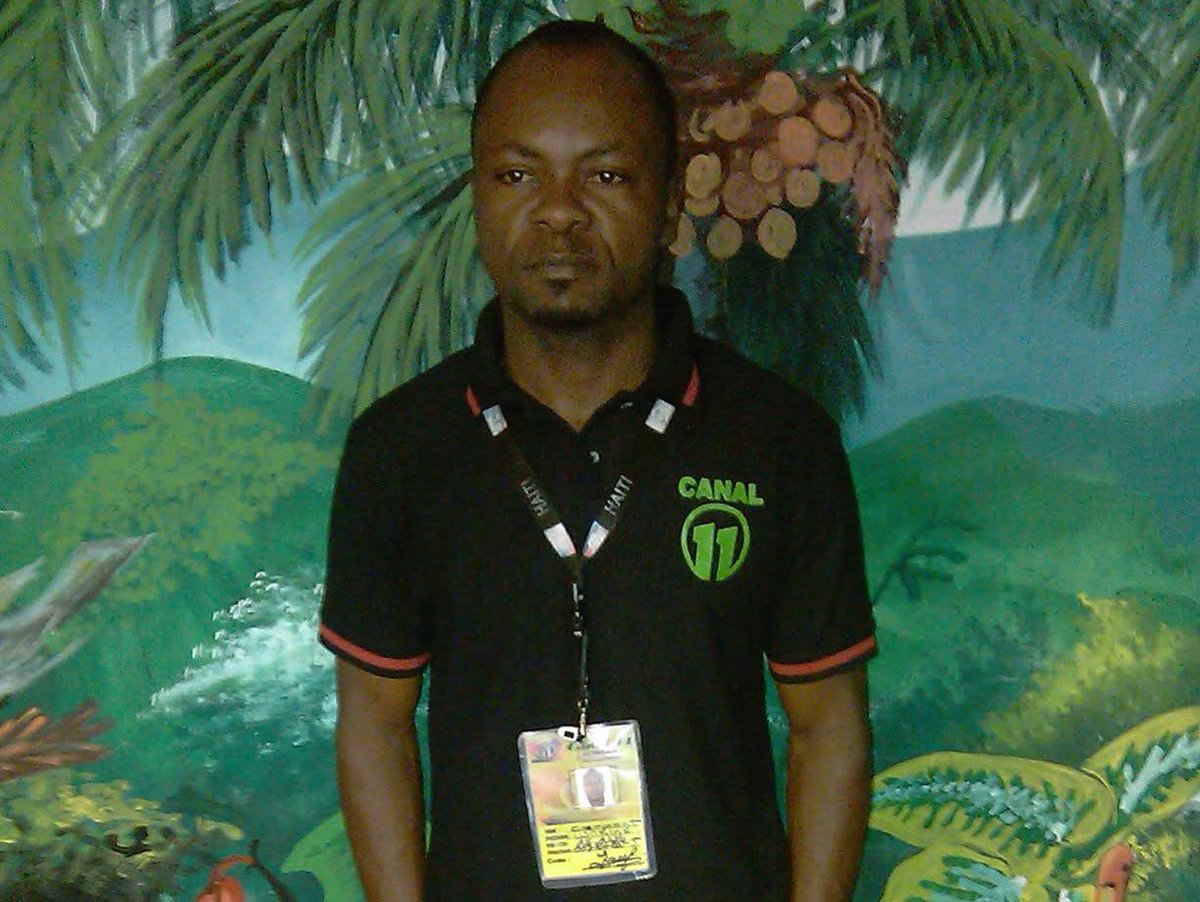
La presse haïtienne est en deuil. Le journaliste Wilkins Clermont est décédé ce mercredi 4 mars 2026 après avoir été victime d’un malaise alors qu’il se trouvait dans une salle de gym. Transporté d’urgence à l’hôpital OFATMA, l’ancien cameraman de Canal 11 n’a malheureusement pas survécu malgré les tentatives des médecins pour le sauver.
1
4
1,639

Feb 14
Bon mw menm mw pat jwenn li
Mw nan bwat leta se bagay ti zanmi sim pa Moun paw mw pap jwenn ogmantasyon.
Sa pase nan Ofatma sou direktè Carl François ok
Wap vin voye monte la
1
2
1,862

11 Dec 2025
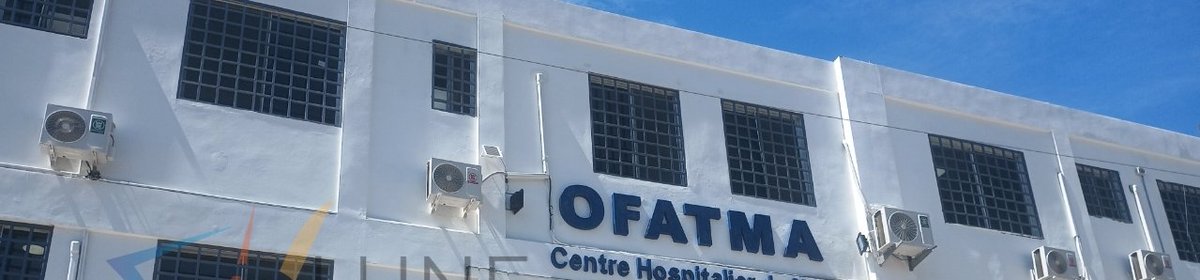
Nan maten jedi 11 desanm 2025 la, tansyon te monte nan zòn Taba apre manm gang Vitelòm yo te fòse antre nan lokal Òganis Asirans Asirans Travay, Maladi ak Matènite (OFATMA). Selon enfòmasyon ki rive jwenn redaksyon an, entèvansyon rapid polis nasyonal la ansanm ak ajan sekirite batiman an te pèmèt evite yon sitiyasyon pi grav. Fòs lòd yo te rive repouse bandi yo epi reprann kontwòl espas la kèk moman apre ensidan an.
Lokal OFATMA ki atake a twouve l a sèlman kèk mèt de Anbasad Ameriken an @USEmbassyHaiti, sa ki soulve plis enkyetid sou nivo sekirite nan zòn estratejik sa yo. Pou kounye a, okenn viktim pa rapòte, men evènman an relanse deba sou nesesite ranfòse dispozitif sekirite yo nan kapital la.@LuneActus
2
264

10 Dec 2025
OFATMA : un protocole d’accord signé pour assurer la continuité des services aux assurés haitiexpress.net/2025/12/10/…
3
80

8 Dec 2025
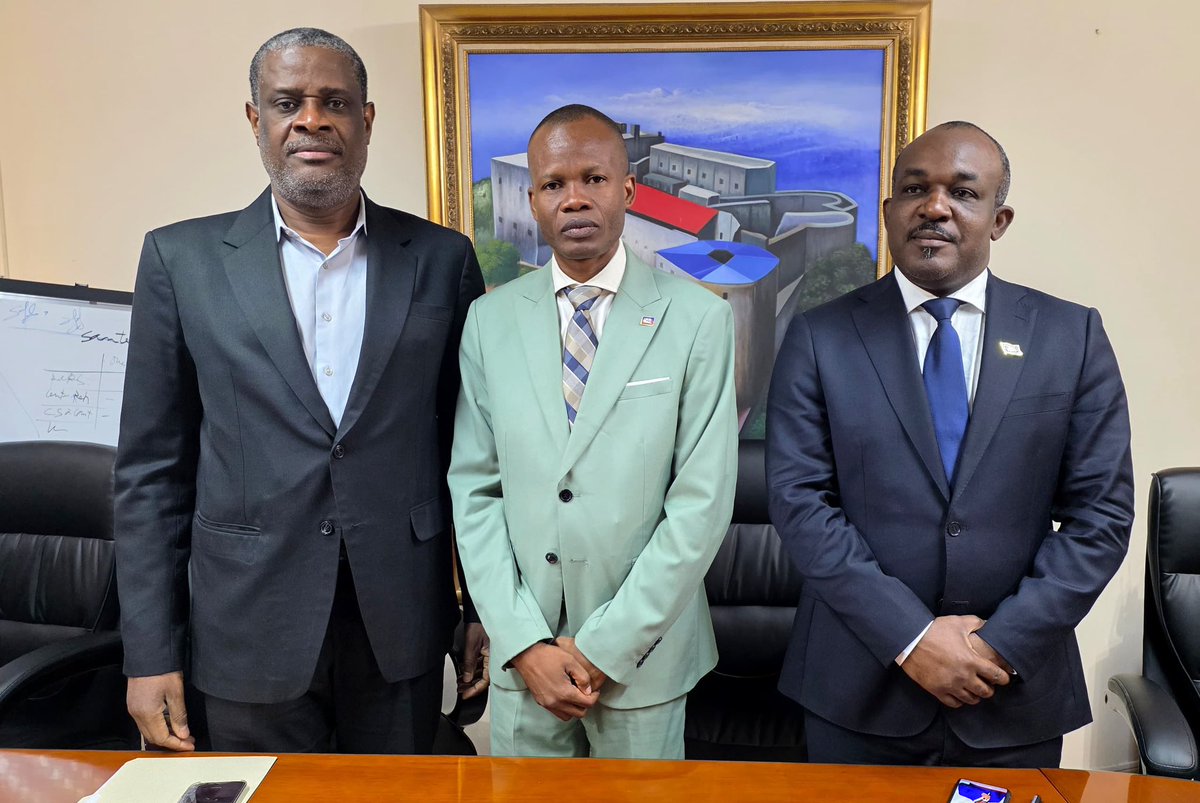
Haïti : l'Etat s'engage à régler les arriérés dus aux prestataires de soins de la fonction publique. Un protocole d'accord a été signé entre le ministère de l'Economie et des Finances et le ministère des Affaires sociales et du Travail, représentant de l'Office d'assurance accidents du travail, maladie et maternité (OFATMA). L'objectif : apurer les dettes accumulées auprès des établissements de santé ayant dispensé des soins aux fonctionnaires assurés. Les retards de paiement de l'État envers le secteur de la santé ont fragilisé de nombreuses structures médicales. Certaines menacent de suspendre la prise en charge des assurés sociaux. Le protocole vise à établir un calendrier de règlement des créances en souffrance. Il doit aussi restaurer la confiance entre l'administration publique et les prestataires privés de soins. Les modalités pratiques du remboursement n'ont pas été précisées dans l'annonce officielle. Le montant exact des arriérés concernés reste également inconnu. #PAPPOST #Haiti
1
3
7
1,233

5 Dec 2025
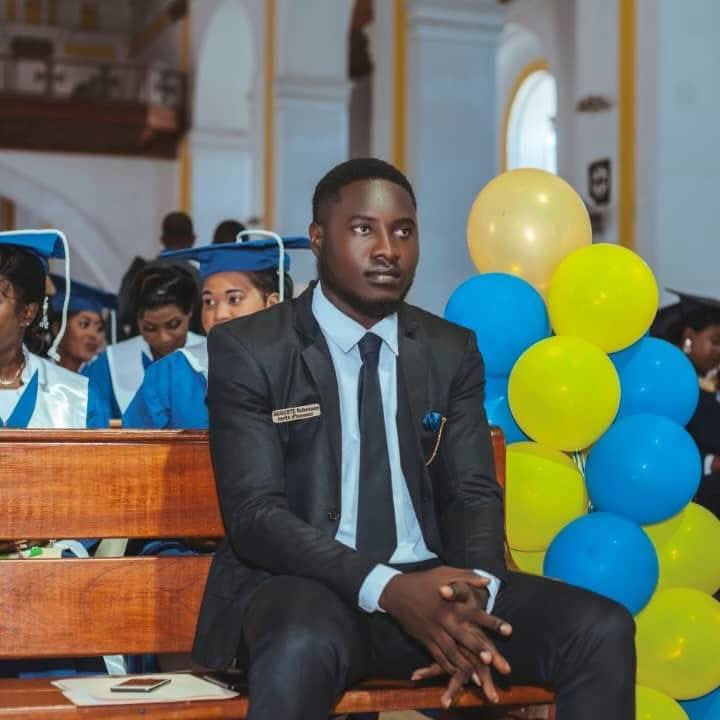
Mwen salye antre Rubenson Auguste kòm nouvo DRH OFATMA/Nord. Nan tout konvèsasyon nou, nou te toujou wè nesesite pou Jèn yo pran plas yo nan Leta pou pote vizyon ak chanjman. Felisitasyon frè m !
3
24
23 Nov 2025
"Pou moman sa a, moun k ap viv anba Kafou ( tèt Kristòf Chanel rive sou Ray, Paloma, Sapoti...) gen anpil enkyetid. Paske yo met nan tèt yo bal ka marye a nenpòt ki moman.
Rezon an: bout ba tenas pou krisla ba li moso teritwa nan Kafou. Li di krisla li mèt penmèt li rive nan pwent mache Divalye kote l ap gen sou kontwòl li yon mini sant komèsyal ki gen bank ladan, kès popilè, biwo transfè, yon anèks OFATMA ak yon pil lòt ti biznis.
krisla kanpe dan. E se sa ki ta mennen lagè ou wè ki pete ant Granravin ak Vilay la kote divès bandi gentan bwè dlo dan yo nan echanj kout bal ant yo. Tilapli kanpe rèd nan do bout ba, izo li menm li di krisla piga l okipe yo, pa bay anyen. Se pye bwa a k ap pale.
Yon pye bwa fè konnen Mik Mik anonse lap met pye l atè. Pa bliye Mik te anfas tou 2 gwoup bandi sa yo: Maryani ak Tibwa. Pye bwa sa a pa anmezi pou l di si l ap vini vre, si se krisla l ap vin ede ouben bout ba. Sèl sa m konnen Mik Mik te gen yon ekip ki t ap ede l goumen anfas bandi yo, se yo ki gen pòs peyay bò simityè Kafou a. Krisla ba yo otorizasyon pou yo fonksyone, li pa deranje yo men krisla fè yo konnen se sou teritwa li yo ye.
Sa gen plis pase 6 mwa bout ba te vin mete yon ekip nan limit Kafou ak Maryani pou fè resèt nan men chofè moto. Men moto pa tèlman sikile al Maryani. Se youn youn moto ki pase."
2
2
607
11 Nov 2025
OFATMA et UEH lancent une assurance santé pour les étudiants haïtiens haitiexpress.net/2025/11/10/…
1
3
118