
Funny 🤣
Same was said about Alvarez Carrease
An now there offloading him 🤣🤣😛
cayenne retweeted

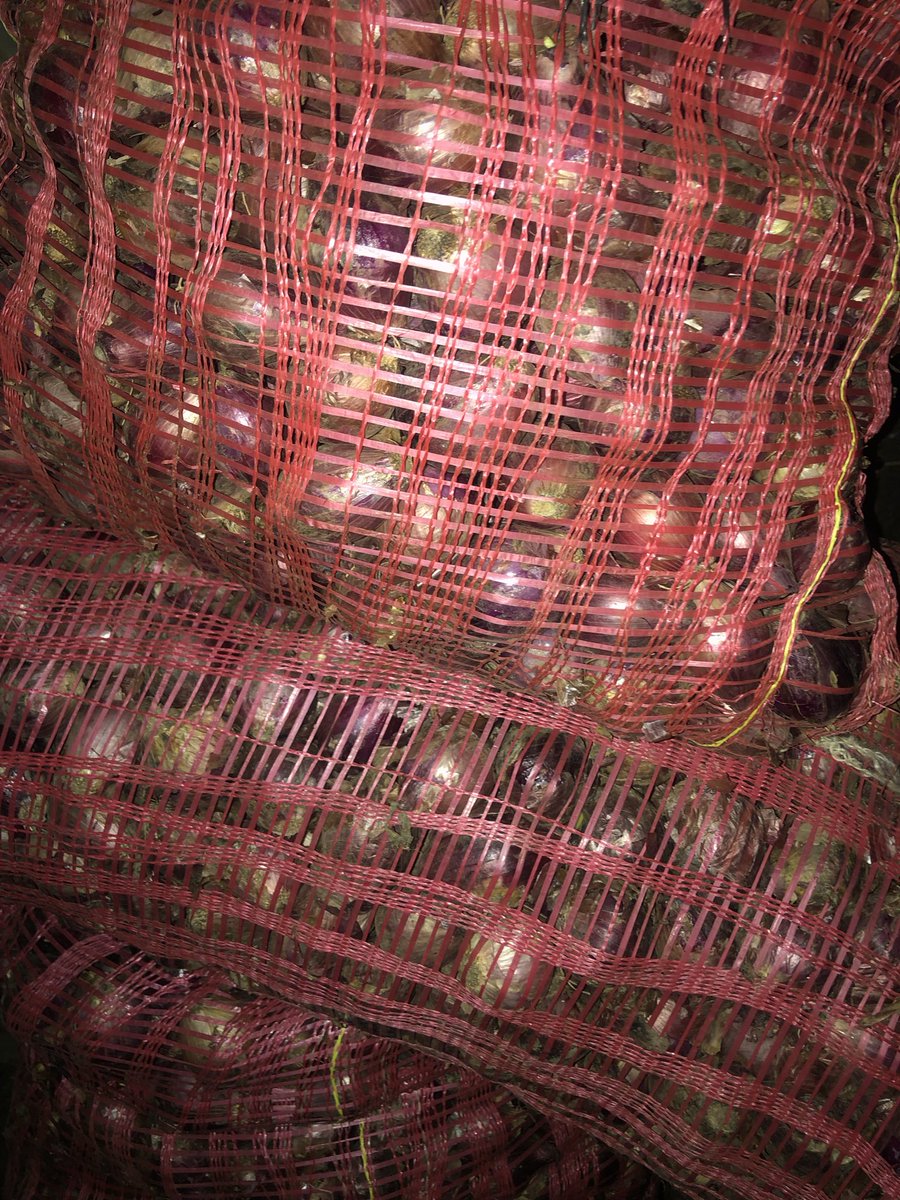
It’s now 9:50 PM clocking . Ndo tumetoka shamba and we are now offloading 5 tonnes of fresh ,well dried Redbulb onions 🧅. Mnaona venye najituma ? Good people of the lord , your son is here again🙏place your orders today at only 70bob /KG. Let’s move this stock together


10
168
276
11,949

So you want us to congratulate him and you ?? Stop this crap plz. Instead of offloading flops like Liam Delap, Tosin, Gusto, Fofana, Lavia, Badiashille, Disasi, Chalobah, you're selling important players! What a barbaric move! Shame on you @todd_boehly and your fellow fake CEOs
4

Parent your own kids then, instead of offloading it on the state and forcing everyone else to lose online privacy whilst they're at it
1
43

Why you snitching 🤣😂🤣🤣 he/she will return it after offloading the groceries 🤣😂🤣🤣
1
4
1,123

No
We can't afford to be offloading a lot of players every season.
Cody should stay...
1

AI doesn't work though. A ton of my time has been spent making it not screw things up. I'm building tons of tooling around that because I have AI core now.
Having teammates able to check it's work and give second opinions is extremely valuable.
Offloading is still valuable.
1
3

I'm not offloading it onto a foreign "devil", as you put it.
In simply saying we're mirroring existing techniques of censorship, which is ironic seeing as we've been so critical of such policies in the past.
Now we're embracing them.
This isn't the fault of some outsider.
2

The feeling of efficiency is the trap, not the bonus. Training teams on AI every week, the ones who report saving the most time are rarely the ones whose output changed. Offloading a task reads as progress. The workflow underneath stays identical. Felt time saved, measured nothing.
2


Genuinely Saibari, Brown and another player make this squad so much better than it was last season…
I love Kim so he could stay but offloading him for €25m (17m wages) and bringing a young hungry CB would be the cherry on top

Now sell Palhinha, Boey, Sieb, Ibra, Nübel, Asp Jensen, Bryan and use that money for a market opportunity winger after the WC and a cb if Kim/Ito leave
Then we have a 3x more competitive squad than last season already
3
30
1,900
Chrome 🇵🇸 retweeted

The U.S and Israeli pervert army are responsible for the killing of the 180 school girls in Iran.. Offloading culpability to LLMs is stupid… like who the fuck invented Claude!!!
6
26
64
1,836
Secrets!🌍 retweeted

PLU is offloading foot soldiers....lets pray for our brother kibanda wo mu hard target

4
5
10
64

$RENDER is climbing again while still sitting way under its old peak.
The story has not changed, it is GPU power for rent onchain paid in a liquid token.
As AI and 3D workloads grow, offloading compute to distributed GPU networks gets more attractive for studios and small teams.
If devs and creators keep choosing Render over centralized clouds, the token starts to track real demand for compute, not just trader flow.
For holders this is a straight bet on future AI graphics, virtual worlds, and heavy rendering jobs needing cheaper GPU access.
Next thing to watch is new partnerships with render farms and creative software, that is where real usage shows up.
2
31

Thinking about offloading your @berachain Rebases? 🐻🔄
If you're looking for liquidity, consider listing them on @opensea or reaching out directly to me to cut a deal. Let’s make it smooth.
Check out all details, stats, and info here: rebases.vercel.app/
#Berachain
2
11


An update on
* Distributed AI-Assisted Cognition, wiki.p2pfoundation.net/Distr…
ISPCR:
"The literature on AI-assisted cognition has, until recently, focused on the dyad: one human, one model. The questions asked have concerned cognitive offloading, automation bias, the calibration of trust, and the effect of generative outputs on the human's own reasoning. This is the right starting point for individual-scale work. It is the wrong frame for what is happening in small innovation consortia.
What we observe instead is a configuration in which multiple AI systems are invoked deliberately for different cognitive functions, and the differences between them are used as a productive resource. One model is preferred for strategic structuring and synthesis; another for sustained long-form drafting; another for adversarial pressure-testing of commercial narratives; another for sharp, compact SWOT generation. The human operator's task is increasingly to choose which model to ask, in what order, with which framing, and how to handle the contradictions that come back. This is not a dyad. It is closer to what one might call a curated polyphony — a small ensemble of cognitive agents with deliberately non-identical reasoning styles, used jointly to do work that none of them, and no human, would do as well alone.
The intellectual ancestry here runs through several traditions: the Delphi method, in which expert disagreement is treated as informative; ensemble methods in machine learning, in which the disagreement between weak learners is the source of strength; and red-team / blueteam practices in security and policy work, in which adversarial cognition is institutionalized. What is new is that the agents in the ensemble are themselves AI systems, that the human's role has shifted from substantive contributor to orchestrator, and that the orchestration itself is a learned skill that the case material visibly improves at over time."
(orcid.org/my-orcid?orcid=000…)
1
1
2
64

Started offloading some tasks to freelancers for the first time.
It is helping to me to focus on more important and challenging aspect of growing business.
How has your experience been with outsourcing so far?
3
4
67