
How do we learn, grow, and bet on ourselves in the AI era? AI · cognition · craft · culture. Writing what I find.
Joined December 2021
- Tweets 569
- Following 373
- Followers 137
- Likes 5,123
8 Photos and videos




Pinned Tweet

I've spent 3 years teaching AI to companies.
But what I really think about is how we learn, grow, and bet on ourselves when everything keeps changing.
AI, cognition, Japanese craft, investing : I think they're all the same question.
Thinking out loud here.
Follow along.
5
246
The algorithm now understands language.
It still optimizes for emotion. Fear, outrage, tribal rage. They outperform curiosity every single time.
Smarter model. Same human brain.
32
China just became the first country to ban companies from firing workers due to AI. US tech is cutting 882 jobs a day for the same reason.
Same technology. Two opposite answers to the same question.
The people I see thriving aren't waiting for governments to agree. They're learning the tools that made their role smaller and building something with them instead.
Policy follows reality. Rarely the other way around.
2
33
Most people use AI to remove friction. All friction.
But there are two kinds.
Vicious friction is the busywork. Formatting, status updates, copy-pasted spreadsheets. It teaches you nothing. Let the model take it.
Virtuous friction is the part where you don't have the answer yet. The 20 minutes of being stuck. The bad first draft. The reasoning you have to do yourself before the prompt even makes sense.
One drains your day. The other builds you.
When you outsource both, you don't gain time. You lose the version of yourself the friction would have made.
Eagleman calls it vicious vs virtuous friction. Here's how I understand it. Tell me where I'm wrong.
19
Token spend tells you someone opened the tool. It doesn't tell you if they accepted the first mediocre output and shipped it to the client.I train people on AI tools every week. The prompting part clicks fast.
What takes longer: looking at what the AI produced and deciding it's not good enough to send.Most skip that step. The output exists, so it ships.Teaching prompts is two hours. Teaching taste is the rest.
33
You know that feeling when you read a post and it just smells off? Like nothing's wrong with the words, but something is.
That feeling has a name. Eagleman calls it the effort phenomenon: we instinctively assign value to things that look like they cost the writer something.
A handmade letter. A reply someone clearly sat with.
A piece of writing you can tell took its author somewhere new.
The brain has been doing this for 200,000 years.
Long before AI.
So when a post feels "slop," people aren't reading the words. They're sensing the absence of cost. Of struggle. Of someone actually being there.
Writing in public after AI means the bar isn't "is this true?" or "is this clever?" It's "did this cost me anything?"
If it didn't, no algorithm will save it.
@davideagleman calls it the effort phenomenon.
Here's how I understand it. Tell me where I'm wrong.
25
A study just tested what happens when students use ChatGPT to study.
45 days later, they remembered less than those who studied the hard way.
57.5% vs 68.5%. Not even close.
I'm not surprised. I see this every week training teams on AI.
The people who copy-paste ChatGPT's answers feel productive in the moment. They nod along. They check boxes. They leave the room thinking they learned something.
They didn't.
The ones who actually retain? They argue with the AI. They ask "why?" three times. They get frustrated. They slow down.
The researchers call it "cognitive offloading": your brain stops encoding when it knows something else is doing the work for you.
I call it the fluency illusion: consumption feels like competence. Until it doesn't.
AI doesn't make you dumber. But using it as a shortcut instead of a sparring partner does.
2
96
Most people think they learned something when they understood it.
But understanding ≠ learning.
Cognitive science calls this the fluency illusion — information that feels easy to process feels like knowledge. It isn't.
I see this every week.
People leave an AI training session feeling sharp.
They followed along, they got it. Two weeks later, they can't reproduce a single thing.
They didn't learn. They spectated.
AI makes this worse. You read the output, it makes sense, you move on. You never struggled, so your brain never encoded anything. Consumption has never felt more like competence.
The uncomfortable truth: the things that feel inefficient — testing yourself, rebuilding from scratch, explaining without notes — are the only things that actually work.
Here's how I understand it. Tell me where I'm wrong.
1
3
90
"AI isn't replacing your job. It's replacing the tasks you mistake for your job."
Jensen Huang made the sharpest distinction I've heard: the job is patient care.
The task is reading a scan.
The job is strategy.
The task is building a spreadsheet.
Most people protect their tasks.
The ones who grow protect their judgment.
4
78
AI isn't replacing your tasks. It's replacing your habits of thought.
We measure the first because it's visible.
We ignore the second because it's not.
That's the real transformation and almost nobody is talking about it.
2
83
Juliann · learning out loud retweeted

26 Feb 2025
Introducing FLORA, Your Intelligent Canvas.
Every creative AI tool, thoughtfully connected.
855
913
3,768
622,950

🧵À ceux qui doutent de l'efficacité du halving 2024 :
🔸L'Allemagne vient de vendre 50k BTC, faisant plonger le marché de 63k à 53k USD...
🔸Pour avaler ces 10k USD il faut faire un 19%
🔸Le halving 2024 a déséquilibré l'offre de 3.25 BTC par block
🔸50K BTC représente environ 100 jours de halving : 50K / (3.25 * 6 * 24) = 106
Bien entendu, il serait fallacieux de dire que 100 jours de halving correspondent à un 19% sur BTC. On ne peut pas comparer directement une diminution de l'offre sur 100 jours et une vente massive sur un temps court.
On l'a vue, une vente massive a eu un effet court terme incapable de lancer une tendance.
Au contraire, poncer l'offre sur des mois et des mois déséquilibre le marché sur le long terme et a toute les chances de lancer une tendance si la demande n'est pas bouleversée.
Mais l'offre n'est pas du tout stable ! Elle a aussi explosé.
6
29
145
63,109
Juliann · learning out loud retweeted

11 Jun 2024
Asian countries eat a lot of rice & noodles, but don’t gain weight.
Americans & Europeans eat the same thing and tend to get fat.
Why is this?
I’ll explain.
THREAD

624
3,007
14,102
5,728,646
Juliann · learning out loud retweeted

12 Jun 2024
🚨 BREAKTHROUGH: 'STAR TREK' TELEPORTATION TECH ACHIEVED!
Scientists have made a quantum leap in teleportation, achieving a significant milestone in real-life quantum communication.
Using "hybrid entanglement" of photons, they have demonstrated near-perfect quantum state transfers by combining polarization and frequency.
The team at Fermilab, Caltech, and other top institutions teleported qubits over 27 miles using fiber-optic networks, showcasing the potential for a quantum internet.
This innovative approach even turns quantum noise into a beneficial factor, enhancing the teleportation process.
Sources: SciTechDaily, Earth, The Debrief

229
433
1,950
607,107
Juliann · learning out loud retweeted

13 Jun 2024
Dream Machine from @LumaLabsAI really brings memes to life!
A thread 🧵
85
379
2,672
657,772
Juliann · learning out loud retweeted

6 Jun 2024
🙄Cette vidéo date d'hier seulement...
Avec l'acquisition de Bitstamp par Robinhood, l'UE perd son seul exchange important, et file tout droit vers un rachat de ses acteurs majeurs, un par un, tandis que les autorités se félicitent de leur cadre "innovant", façon "qu'ils mangent de la brioche", et appellent à un MiCA 2 avant même que le 1 ne soit appliqué.
On les voit venir les tables rondes dans quelques années. On y invitera une FBF faussement triste, un secrétaire d'Etat au numérique hautain, une député européenne responsable de MiCA/TFR, et un régulateur "audacieux". Ensemble ils se féliciteront d'avoir créé un "cadre équilibré qui protège nos concitoyens et positionne l'Europe à la pointe de la réglementation".
Pendant ce temps, les entreprises françaises se voyaient fermer leurs comptes bancaires de façon illégale, les professionnels du secteur étaient contraints à l'exil, la fiscalité kafkaïenne contraignait les usages innovants, l'Europe lançait Europeum, et certains félicitaient et mettaient en avant SBF pour ses positions "écolo" anti-Bitcoin, envoyant à l'abattoir des milliers de personnes 1 an avant qu'il ne commette la plus grosse fraude depuis Enron.
Comme on disait à l'époque d'Internet, « On ne va pas faire une jupette pour aider à la vente des PC, c'est absurde. ». Et de toute façon « Penser que les 18 millions d'utilisateurs du Minitel vont basculer sur Internet, c'est à peu près aussi idiot que de dire qu'on va verser la mer Méditerranée dans une tasse de thé. ». Merci Monsieur Théry pour votre clairvoyance et rassurez-vous, vos successeurs en ont hérité.
Alors quand la question viendra, "qu'est ce qui a raté?", tout le monde regardera par terre. Mais on trouvera bien un bouc émissaire pratique : manque de talents ? manque d'audace de nos entrepreneurs ? Pas assez de taxes ? Ou alors plus simple encore : la faute des méchants bitcoiners ?
On sait déjà comment ça devrait se terminer : soit une grande commission chargée d'établir un rapport, qui prendra deux ans, et calera une armoire, soit un grand plan "European Crypto Act", financé par la planche à billet, en retard et pour un montant insuffisant, qui sera à nouveau pompé par des spécialistes de la ponction de fonds publics et ravira les protagonistes de ce capitalisme de connivence.
Mon engagement, c'est d'essayer d'éviter ce scénario malheureusement probable. Et c'était la raison que je développais chez @TheBigWhale_ lorsque j'ai rejoins @paymium.
Le succès de Paymium est notre affaire à tous. Il nous faut une bourse majeure en Europe. Je conjure les politiques de se réveiller maintenant, au risque de rempiler pour 20 ans de vassalité numérique, monétaire et financière, à demander l'avis des Etats-Unis pour bouger le petit doigt. Et j'appelle tous les professionnels de la finance, la banque ou la gestion d'actifs à nous contacter pour travailler ensemble, mais aussi tous les particuliers qui souhaitent faire leurs premiers pas dans #Bitcoin à considérer passer par chez nous plutôt que par des acteurs offshores.
73
268
855
96,132
Juliann · learning out loud retweeted

6 Jun 2024
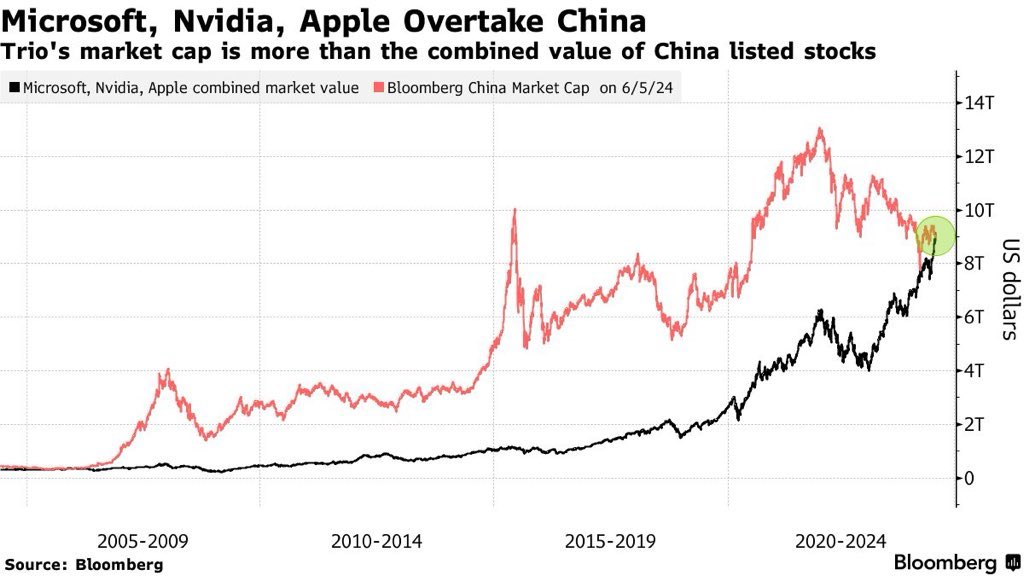
🚨 FLASH - Microsoft, NVIDIA et Apple pèsent désormais aussi lourd que le marché chinois 🥊
Vous avez bien lu, ces 3 entreprises ont la même capitalisation combinée que l'ensemble du marché côté chinois, une première dans l'histoire.
Giga bulle ou résultat logique ? 🤔
15
34
216
21,910
Juliann · learning out loud retweeted

14 May 2024
It's time for #GoogleIO 2024! Here's my thread covering everything Google is announcing 🧵

64
516
6,221
2,864,497

Introducing Multi Motion Brush.
Control multiple areas of your video generations with independent motion.
Available now for Gen-2 at runwayml.com
67
314
1,808
376,853
Juliann · learning out loud retweeted

10 Jan 2024
🚨✅ TOUS les ETF spot #Bitcoin sont approuvés ! Pour de vrai cette fois !
La SEC approuve les 11 ETF Spot #Bitcoin de VanEck, Bitwise, Fidelity, Franklin, Valkyrie, Hashdex, ArkInvest, Grayscale, BlackRock, WisdomTree, Invesco Galaxy.

42
235
902
70,862