
For decades, we rented our place on the internet.
Lumenis is building a future where your website, identity, and data belong to you—not a platform.
The next generation of the web is about ownership. 🌐
#LumenisIo #Decentralization #Crypto #OpenWeb #Privacy #Web3 #Blockchain #Innovation #Freerom

1
62
The next evolution of the internet isn't another website builder.
It's an internet where you own the website, the identity, and the infrastructure behind it.
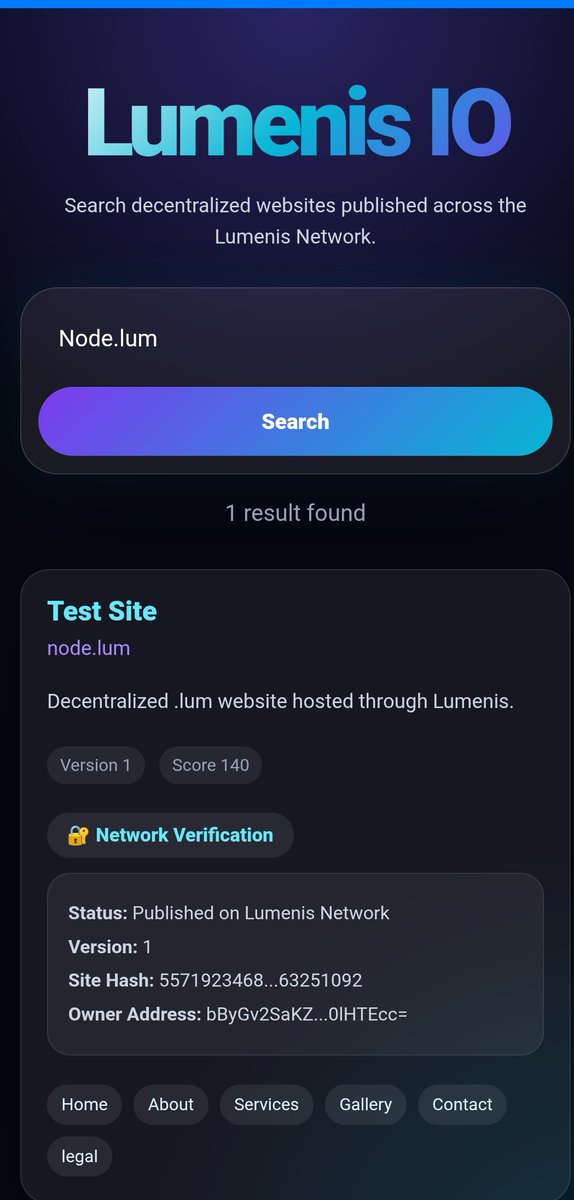
Lumenis IO is coming soon. Search and discover decentralized ".lum" websites published across the Lumenis Network.
Follow Lumenis and be among the first to explore the decentralized internet.
#LumenisIo #Decentralization #OpenWeb #DigitalOwnership #Public #Innovation #Freedom #Crypto #Blockchain
1
2
52
Reprobus, the ®Cicada 3301 🏴☠️👻 retweeted

My OpenWeb Transparency web browser extension has been approved and is now available in the Chrome Web Store.
chromewebstore.google.com/de…
1
2
10

If you know your web history, you understand how huge this is. #OpenWeb #CERN #WordPress #OpenSource
1
2
177


Definitely B2B value here, we have one of the largest B2B2C identity graphs on the market, so we can give you identifiers to reach your target accounts on Meta, Google and the OpenWeb instead of being stuck with LinkedIn.
1
1
115
Harshit Khosla retweeted

Jun 6
I’ve been hacking around with nanoGPT during endsems and ran a few small pretraining experiments.
I moved from OpenWeb-style data to a mixed 100M-token dataset:
- 70% FineWeb-Edu
- 20% Cosmopedia
- 10% Python code
I picked this mix to make the data feel closer to modern pretraining- web/education text, explanation-style synthetic data, and some code.
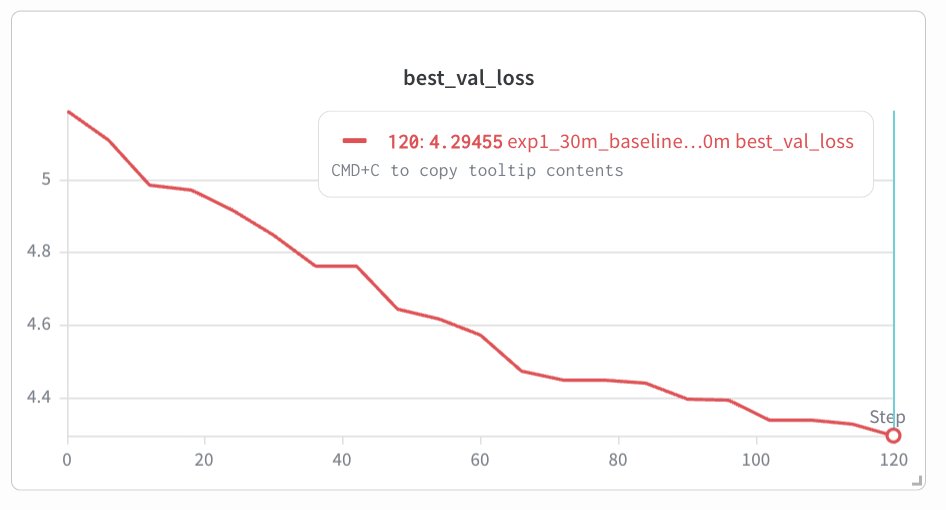
For the baseline, i trained a small decoder-only model in the nanoGPT style with learned absolute positional embeddings.
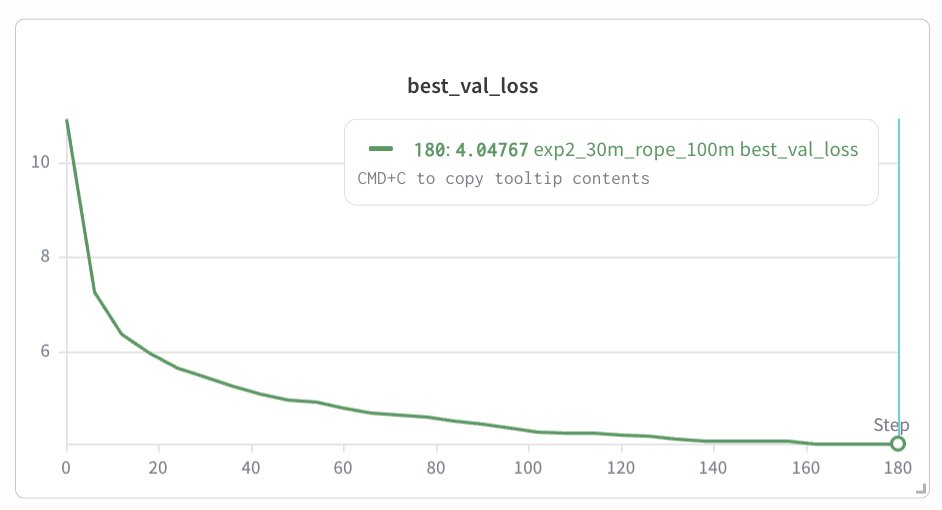
Then I ran one clean architecture ablation: replacing learned positional embeddings with RoPE, while keeping the dataset, model size, optimizer, and token budget the same.
Results:
Baseline best val loss: 4.29455
RoPE best val loss: 4.04767
RoPE improved validation loss by 0.24688 under the same training budget.
Throughput tradeoff:
Baseline: ~480k tokens/sec
RoPE: ~407k tokens/sec
Main learning: RoPE gave better model quality, but was slightly slower because it adds extra computation inside attention.
also a big thank you to @HotAisle for the compute. :)
3
4
41
4,412

Jun 8
Stop blaming AI for killing the open web. Google was already hoovering traffic into answer boxes. Facebook already killed blogs. AI just made the damage obvious. #OpenWeb #AI
hamishcampbell.com/ai-didnt-…
27


8 de Junio del 1955, en Londres, Reino Unido, nacía TIM BERNERS-LEE: EL HOMBRE QUE TEJIÓ LA RED QUE CAMBIÓ AL MUNDO
mendozantigua.blogspot.com/2…
El 8 de junio de 1955, en Londres, nacía Tim Berners-Lee, el científico británico que transformó para siempre la forma en que la humanidad se informa, aprende, trabaja, compra, publica, investiga y se comunica. Aunque muchas veces se lo llama “padre de Internet”, la precisión histórica es aún más importante: Berners-Lee fue el creador de la World Wide Web, la Web que usamos cada día para navegar páginas, enlazar contenidos y acceder al conocimiento global La informática parecía estar escrita en su destino. Sus padres, Conway Berners-Lee y Mary Lee Woods, trabajaron en la Ferranti Mark I, considerada una de las primeras computadoras comerciales de la historia. Tim estudió Física en la Universidad de Oxford y, años después, llegó al CERN, el gran laboratorio europeo de física de partículas, donde comenzó a imaginar una solución para un problema muy concreto: cómo permitir que científicos de distintos países compartieran información de manera simple, rápida y ordenada En 1980 desarrolló ENQUIRE, un sistema experimental basado en hipertexto. Aquel proyecto fue como una semilla silenciosa. En marzo de 1989, Berners-Lee presentó en el CERN su propuesta para crear un sistema global de documentos enlazados. La idea era unir tres mundos: computadoras, redes de datos e hipertexto. De esa combinación nacería una de las mayores revoluciones tecnológicas del siglo XX Entre 1990 y 1991, escribió el primer servidor web, creó el primer navegador/editor y dio forma a elementos fundamentales como HTML, HTTP y las direcciones web o URI/URL, pilares que todavía sostienen la navegación moderna. La primera web funcionó en una computadora NeXT ubicada en el CERN, con una advertencia escrita a mano para que nadie la apagara: “Esta máquina es un servidor. No apagar” En agosto de 1991, el software de la World Wide Web fue anunciado en grupos de noticias de Internet, y la idea comenzó a expandirse más allá del CERN. Pero el gesto decisivo llegó el 30 de abril de 1993, cuando el CERN puso el código de la Web a disposición pública sin regalías. Esa decisión permitió que la Web creciera libre, abierta y universal, sin quedar encerrada en manos de una empresa o de un sistema privado. En 1994, Berners-Lee se trasladó al MIT y fundó el World Wide Web Consortium —W3C—, organismo internacional dedicado a crear estándares abiertos para asegurar el crecimiento de la Web a largo plazo. Su objetivo fue claro: que la red siguiera siendo interoperable, accesible y útil para todos. Tim Berners-Lee no inventó solo una herramienta técnica. Cambió la arquitectura de la vida cotidiana. Abrió una puerta inmensa al conocimiento compartido, a la comunicación instantánea y a una nueva forma de memoria colectiva. Cada enlace que tocamos, cada página que visitamos, cada búsqueda que hacemos, lleva algo de aquella visión nacida en un laboratorio: una Web abierta, conectada y pensada para la humanidad. #TimBernersLee #WorldWideWeb #HistoriaDeInternet #HistoriaDeLaWeb #CERN #W3C #MIT #HTML #HTTP #Tecnologia #Efemerides #Innovacion #Ciencia #MundoDigital #CulturaDigital #MendozAntigua #WebHistory #InternetHistory #WorldWideWebHistory #TechHistory #DigitalRevolution #OpenWeb #Innovation #ScienceHistory #TechnologyHistory

1
80

Jun 7
Open is not free to provide. And it takes effort, generosity and goodwill. Like with things like democracy and good utilities, sometimes, losing it might be a key requirement to build it back again robustly.
gurupanguji.com/blog/2026/06…
#web #indieweb #openweb
14


Jun 1
เมื่อชาวเน็ตโดน AI เตือน พวกเขาแก้คอมเมนต์กันยังไง
จากการสุ่มตรวจเนื้อหา OpenWeb พบพฤติกรรมหลักๆ ดังนี้
1. เปลี่ยนคำ: รู้ว่าคำไหนแรงไป ก็เปลี่ยนเป็นคำที่เบาลง (เช่น จากคำว่า "ขยะ" เป็นคำว่า "ของ")
2. ลบทิ้งแค่คำด่า: ตัดคำหยาบออกไปเลย แต่บริบทอื่นยังอยู่ครบ
1
25
Jun 1
OpenWeb สตาร์ทอัพด้านระบบจัดการคอมมูนิตี้ ได้เผยผลการทดสอบสุดเจ๋ง โดยการจับมือกับ Perspective API ของ Jigsaw นำเทคโนโลยี AI มาบวกกับหลักจิตวิทยาที่เรียกว่า "Nudge Theory" (ทฤษฎีการสะกิด) เพื่อเตือนสติชาวเน็ตก่อนกดส่งข้อความ
1
641