
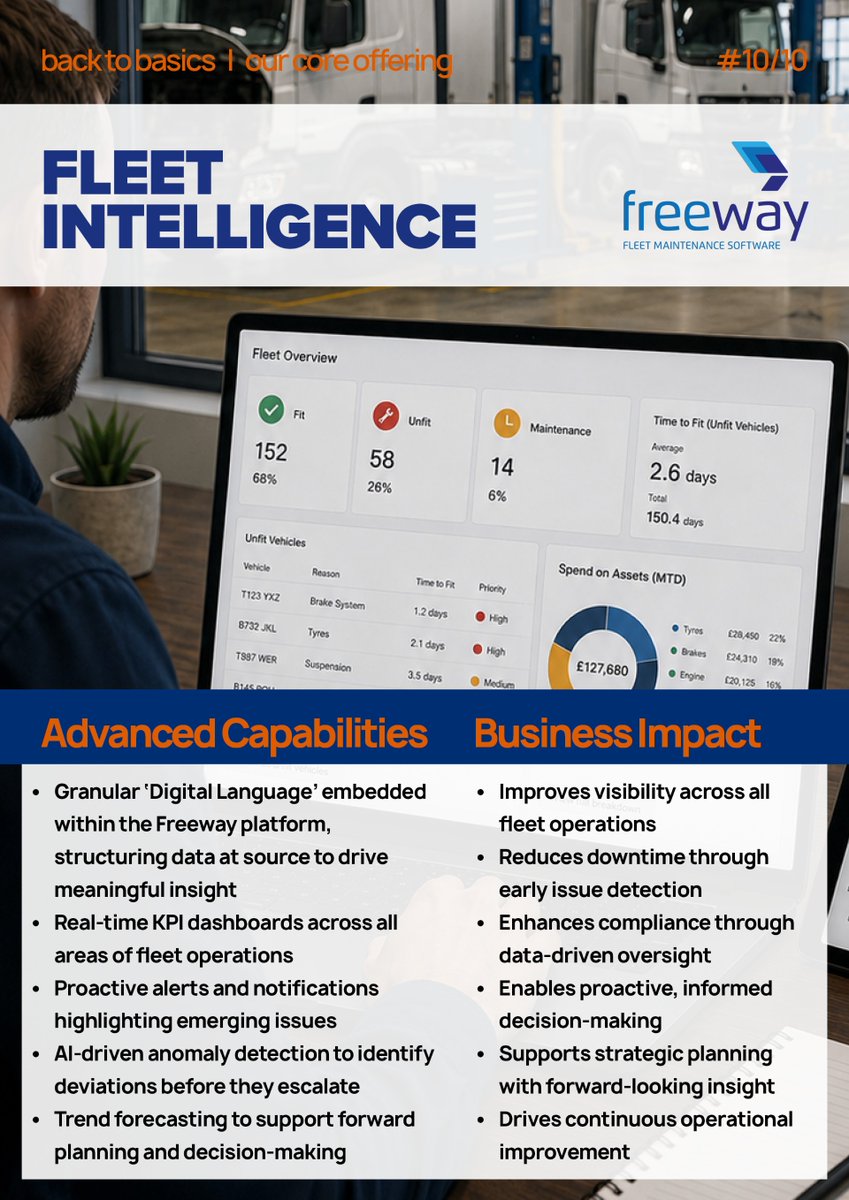
Back to basics, our core offering - Part 10 of 10 🚌
#FreewayFleetSystems #FleetIntelligence #FleetMaintenance #FleetManagement #SimplifyComplexity #SaaS #Data #OperationalInsight #WorkshopManagement #DigitalWorkshop #TransportIndustry #OperationalEfficiency
1

May 25
Most organizations I work with can tell you their automation capacity. How many workflows they've built. How many agents they've deployed. How many processes they've mapped and handed off.
Almost none can tell you their automation readiness.
These are not the same thing. Conflating them is the single most expensive mistake I see in AI deployment right now. And it's invisible precisely because capacity feels like progress.
Automation capacity is the mechanical question: Can the system execute this task? Can the model classify this input? Can the workflow run end-to-end without human intervention? It's measurable, demonstrable, and seductive. You can demo it. You can count it. You can put it on a slide.
Automation readiness is the organizational question: When this system fails — not if, when — does anyone notice before the damage compounds? When the model drifts, who has the standing to pull the plug? When the workflow encounters an edge case, is there a human still fluent enough in the work to step back in?
Capacity asks "can we?" Readiness asks "should we, and what happens when we're wrong?"
I watched a financial services team automate their client onboarding review process. Full pipeline. Document classification, risk flagging, compliance check — all running through a coordinated set of agents. Capacity was impressive. Demo was flawless. They deployed it across three business units simultaneously.
Eight weeks in, a regulatory change shifted what counted as a "related party transaction." The models didn't break. They kept running. They just started classifying transactions that should have been flagged as clean, because the definition of "related party" had moved and no one had updated the prompt logic. The compliance team had been restructured around the assumption that the system handled first-pass review. No one was doing manual spot checks anymore. The humans who'd done that work had been reassigned. Their domain knowledge hadn't been transferred — it had been treated as redundant.
That's not a model failure. That's a readiness failure. The system had the capacity to run. It did not have the organizational readiness to run safely at that scope.
Here's the distinction that changes how you see this:
Automation capacity scales with deployment. Automation readiness degrades with deployment unless you actively maintain it. Every workflow you hand off without preserving human fluency in that work reduces your readiness. Every model you deploy without a drift detection and intervention protocol reduces your readiness. Every team you restructure around the assumption of automated reliability reduces your readiness.
Capacity compounds. Readiness erodes. This is the tradeoff nobody talks about because capacity feels like the whole story.
The organizations that get this right build what I think of as "redundancy with proximity." The human who can step back into the workflow doesn't sit three org layers away in a center of excellence. They sit adjacent. They run the same cases the model runs, not all of them, but enough to notice when the answers start looking wrong before the dashboard catches it. They aren't a backup system. They're a sensing system.
This means your automation readiness metric isn't "how many workflows do we have" or "how much time have we saved." It's: "If the model started producing subtly wrong outputs tomorrow, how long would it take us to notice, and how much damage would accumulate before we did?"
Most teams can't answer that question. That's the tell.
The reframe: Stop asking whether you can automate a process. Start asking whether you can automate it without losing the ability to tell when the automation has gone quiet in the wrong way. The real risk isn't that the system breaks loudly. It's that it keeps running confidently, just slightly off, and no one's close enough to the work to feel it.
#AutomationReadiness #AIDeployment #OperationalInsight
1
2
48

May 24
Most organizations deploying AI are solving for the wrong variable.
They ask: "What can we automate?" when they should ask: "What can we augment?"
These aren't different points on the same spectrum. They're different architectures entirely. And conflating them is where most AI deployments go sideways.
Automation replaces a process. Goal: output equivalence at lower cost. Success = same result, cheaper. The measure is reduction — fewer hours, fewer errors.
Augmentation changes what a process can produce. Goal: output improvement. Success = better outcomes, not just cheaper ones. The measure is expansion — better decisions, faster learning, wider reach.
Here's why this matters:
When you automate, your risk is drift. The world changes, the process doesn't, and nobody notices because outputs still look like outputs. I've seen automated content pipelines producing technically correct posts for months — right format, right timing, zero relevance. Metrics green. Audience gone.
When you augment, your risk is dependency without skill. The human relies on AI's extension but never develops the underlying capability. Remove the augmentation and you don't get a slower version of the same person — you get someone who can't do the job at all. The GPS effect: people who navigate fine with AI but are lost without it.
The failure modes are opposite. Automation fails by being rigid. Augmentation fails by being too enabling. Neither is better. But most teams can't tell you which one they're running.
Three diagnostic questions:
1. If the AI went down tomorrow, would your people produce the same output slower — or different (worse) output? Same slower = automation. Different = augmentation.
2. Are you tracking cost reduction or capability expansion? "Hours saved" = automating. "Decisions we couldn't make before" = augmenting.
3. Who designs the process — the AI team or the domain expert? Automation: AI team maps and implements. Augmentation: domain expert defines capability needs, AI builds the extension. If neither side can say who leads, you're in the worst of both worlds.
The most expensive mistake: leadership frames the goal as augmentation (we want better decisions) but structures the deployment as automation (here's a tool that decides for you). The team disengages because they've been replaced, not extended. The AI degrades because nobody with expertise corrects it. And metrics report success because outputs are still generated.
The reframe: these are different tools for different problems. The worst deployments happen when you can't tell which one you're running.
#AIDeployment #OperationalInsight #AugmentationVsAutomation
3
4
156

13 Nov 2023
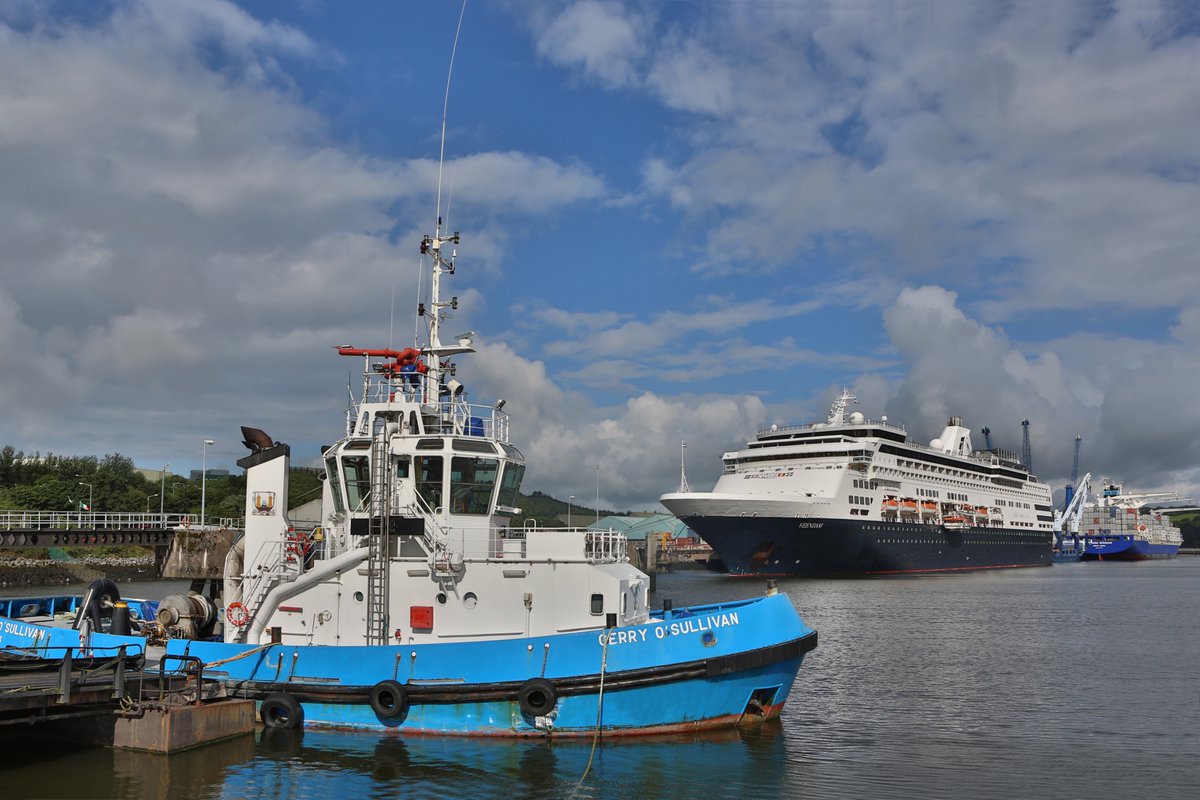
Did you know? A tugboat is a secondary boat that helps in the mooring or berthing operation of a ship by either pushing or pulling a vessel. A tug is a special class of boat without which large ships cannot access a port. #PortFacts #PortOfCork #OperationalInsight
2
2
41
3,138
17 Feb 2023
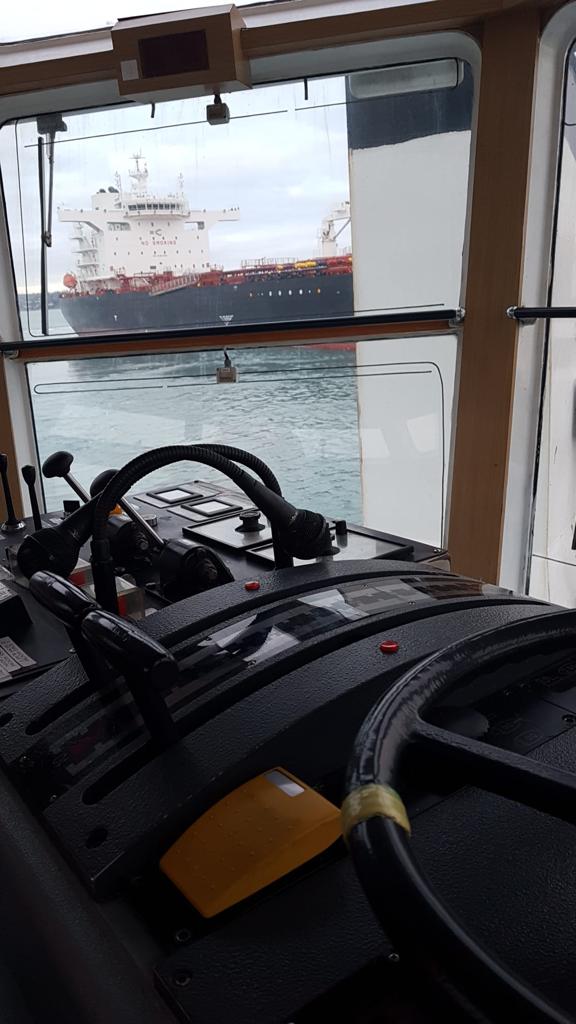
Ever wondered what a tug captain's view looks like? Our tugboats help in the mooring or berthing operation of a ship by either pushing or pulling a vessel. Without tugboats, large ships cannot get into a port. #PortOfCork #OperationalInsight
1
8
52
4,194
21 Jul 2022
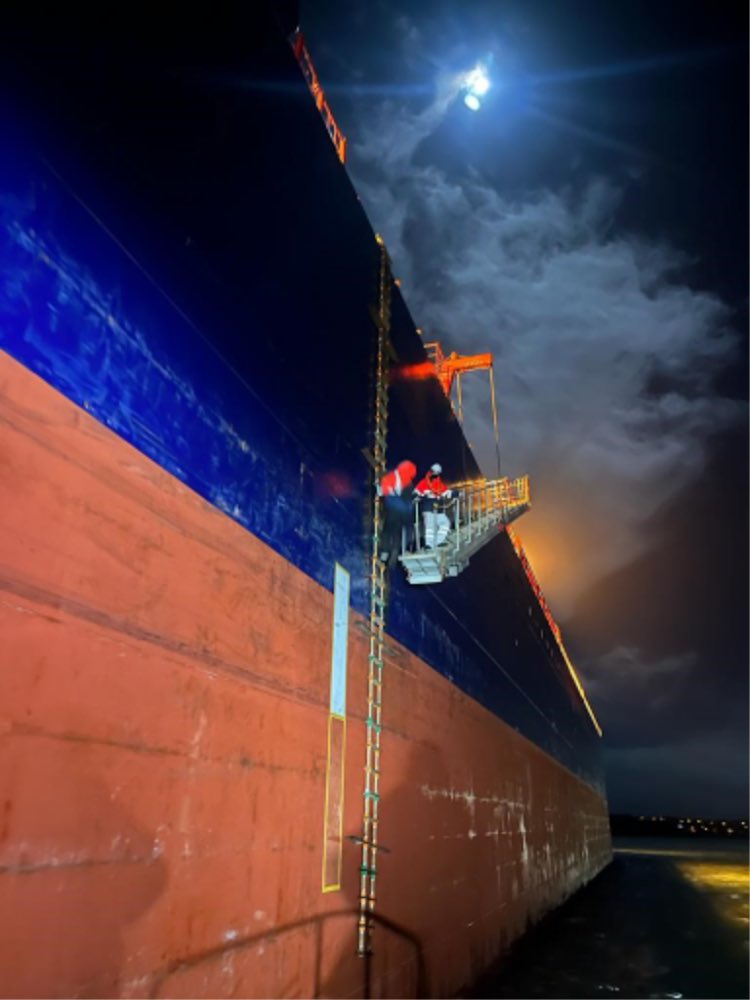
What does a #HarbourPilot driver do? All our pilots are #mastermariners & a pilot boards a vessel near the entrance of the port with the assistance of our pilot launch crew & then assists the ship's captain with bringing the ship into port. #PortOfCork #OperationalInsight
1
5
36

14 Sep 2021
We are pleased to welcome Sam Detzler our expanding data team. Read More: hubs.li/H0Xf81y0 #Welcome #DataInsight #OperationalInsight #AviationTechnology
2

11 Dec 2019
11 Dec 2019

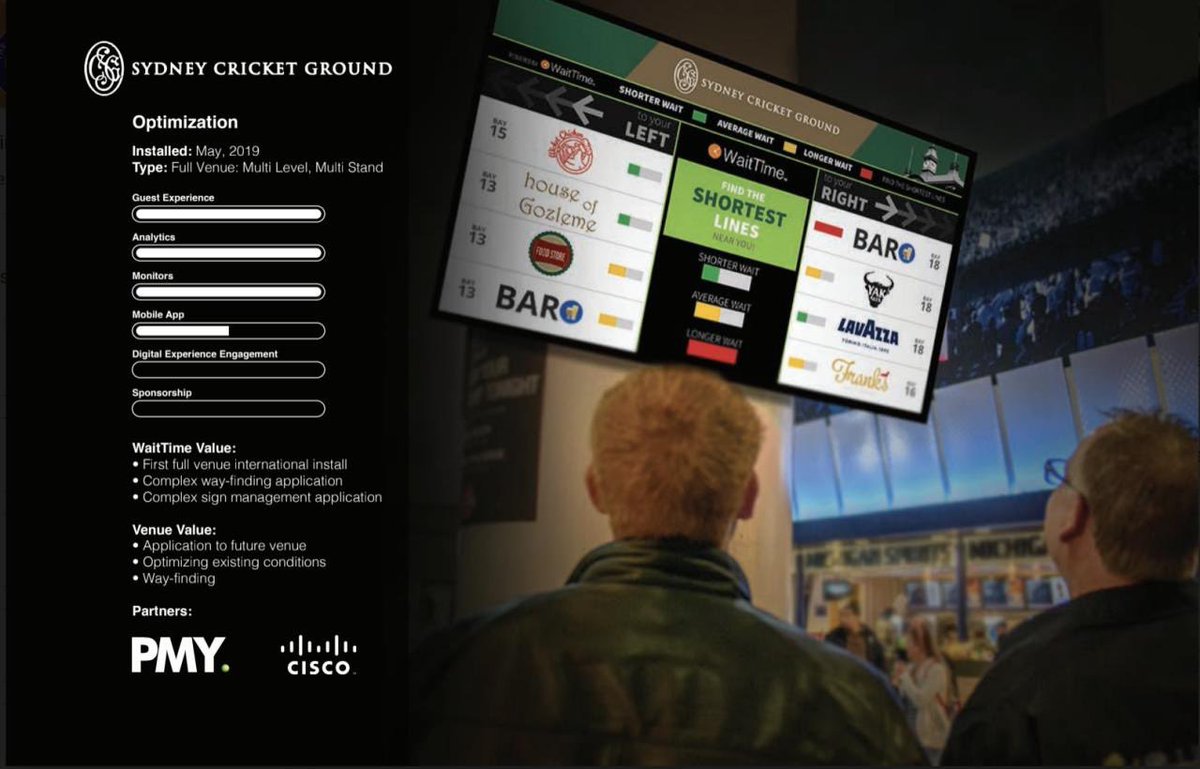
@TheWaitTimes is fully installed at the iconic @SYDCricketClub in #Australia, completely integrated with #CiscoVision #IPTV! Here is a profile overview of the value propositions that we provide for this install:
Media release: mobilesportsreport.com/2019/…
2

4 Oct 2019
Probably one of the best articles written about our #ai within the #sportsbiz for an elevated #fanexperience & added #operationalinsight! @TheSpoonTech 💯🙏🏼
thespoon.tech/waittime-is-li…
26 Mar 2019
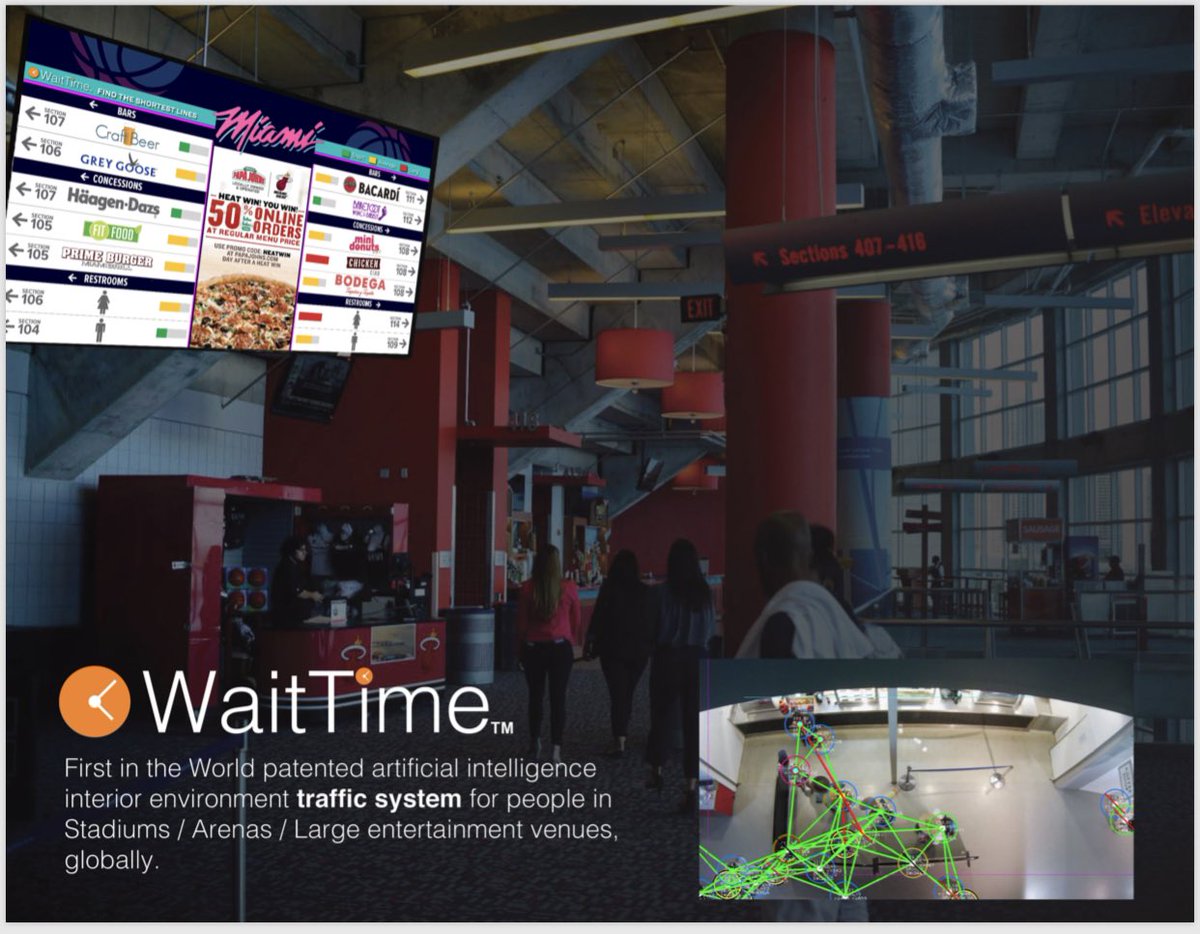
@TheWaitTimes is quickly growing into a strong #brand across the #sportsindustry with our first in the World & #patented #ArtificialIntelligence system that provides both #operationalinsight & net new #Sponsorship assets! What could be better? #fanexperience #NBA #Heat #AFL
3

16 Sep 2017
With so many moving parts in #retail, there's no substitute for granular #operationalinsight 👉 hubs.ly/H08vrw60

9 Sep 2017
With so many moving parts in #retail, there's no substitute for granular #operationalinsight 👉 hubs.ly/H08g5TK0
1

24 Aug 2017
With so many moving parts in #retail, there's no substitute for granular #operationalinsight 👉 hubs.ly/H07HTkL0

15 Aug 2017
With so many moving parts in #retail, there's no substitute for granular #operationalinsight 👉 hubs.ly/H08g5TL0
20 Jul 2017
With so many moving parts in #retail, there's no substitute for granular #operationalinsight 👉 hubs.ly/H07XVbj0
1
1

5 Jul 2017

3
19 Jun 2017

1
2
7 Jun 2017
How one #foodmanufacturer achieved a new layer of #operationalinsight and subsequent savings 👉 hubs.ly/H07vr1_0
1
3 Jun 2017
How one #foodmanufacturer achieved a new layer of #operationalinsight and subsequent savings 👉 hubs.ly/H07vql70
1
26 Apr 2017

1
1