
May 30
WATER PRIVATIZATION REVERSED FOR INDIGENOUS FARMERS
Mexico faces a growing water crisis but Sheinbaum views water as a public right and national resource.
Under the new Water Law, the government announced plans to recover and redistribute billions of cubic meters of water nationwide, especially to indigenous farmers.
It said it’s necessary to:
• Protect public access
• Stop corporate overextraction
• Address inequality in water distribution
• Prepare for worsening climate pressures
2
24
55
847

Overextraction of resources is a real phenomenon, and the rapid pace of growth we've come to expect as "normal" is leading to this problem.
We don't need to supply the world with resources; we just need to supply ourselves in perpetuity!
1
3
34

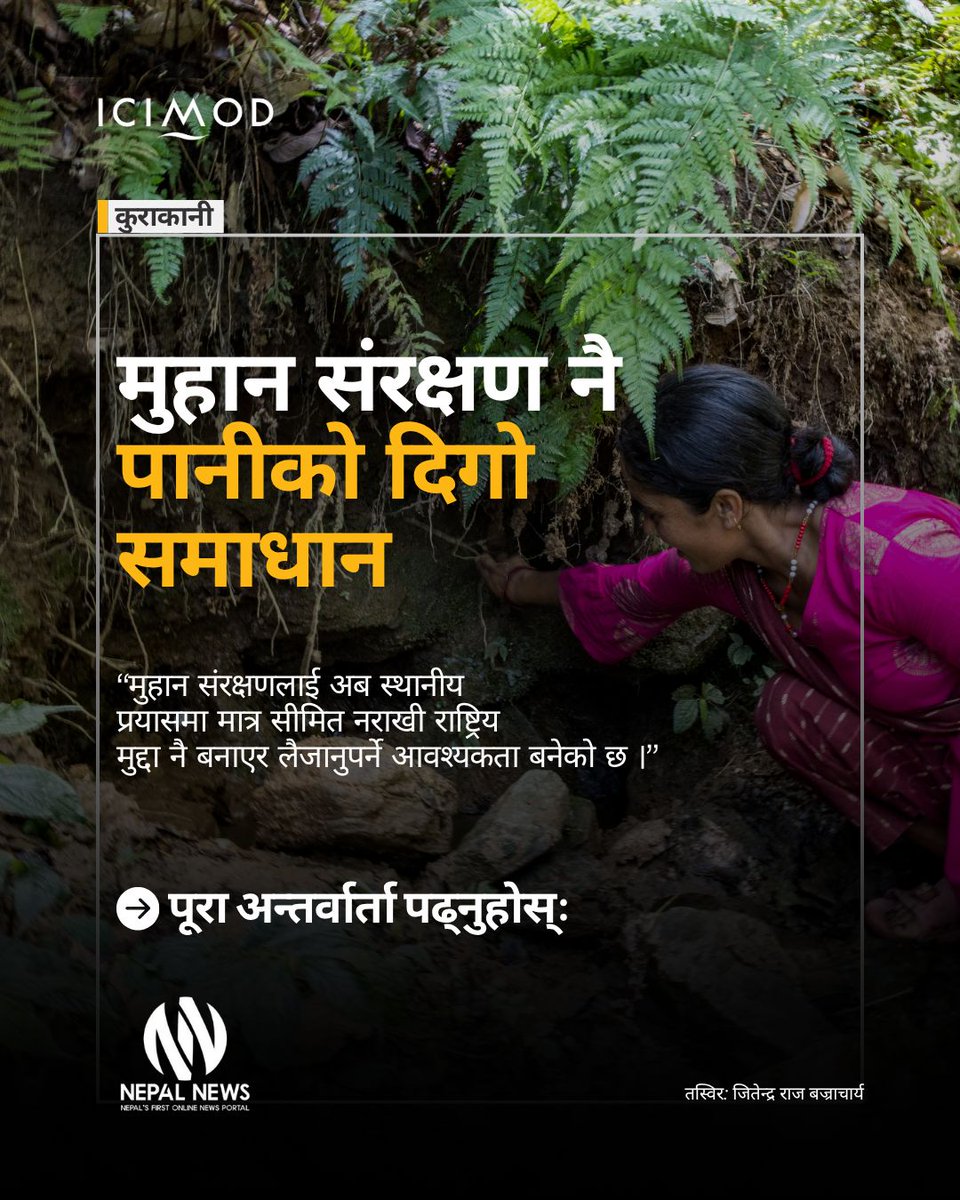
Springs are a lifeline for rural communities, supporting drinking water, agriculture, and local livelihoods. Changing rainfall patterns, land use changes, and overextraction are accelerating the decline of natural water sources. Drying springs are affecting daily life, food security, and socio-economic development in Nepal.
In a conversation with Bidhya Rai of Nepal News, Anju Pandit, Springshed Management Specialist at the International Centre for Integrated Mountain Development (ICIMOD) highlights the critical importance of springs for rural communities. She explains the causes accelerating the decline of water resources, including climate change and changing land use patterns.
She also discusses how ICIMOD is prioritising springshed management and revival in collaboration with municipalities, while empowering local Community Resource Persons (CRPs) to map and monitor springs across districts.
ICIMOD’s work on springs is being implemented by its Himalayan Resilience Enabling Action Programme (HI-REAP), funded by the UK Government, and Integrated Climate Adaptation Solutions for the Hindu Kush Himalaya Region (HI-CAS), funded by the Government of Canada through Global Affairs Canada (GAC).
Read the full interview here (in Nepali language): nepalnews.com/2026/03/22/sou…
#springshed #springsrevival #hireap #hicas
@FCDOGovUK @UKinNepal @CanadaDev
2
7
244


Mar 10
18.
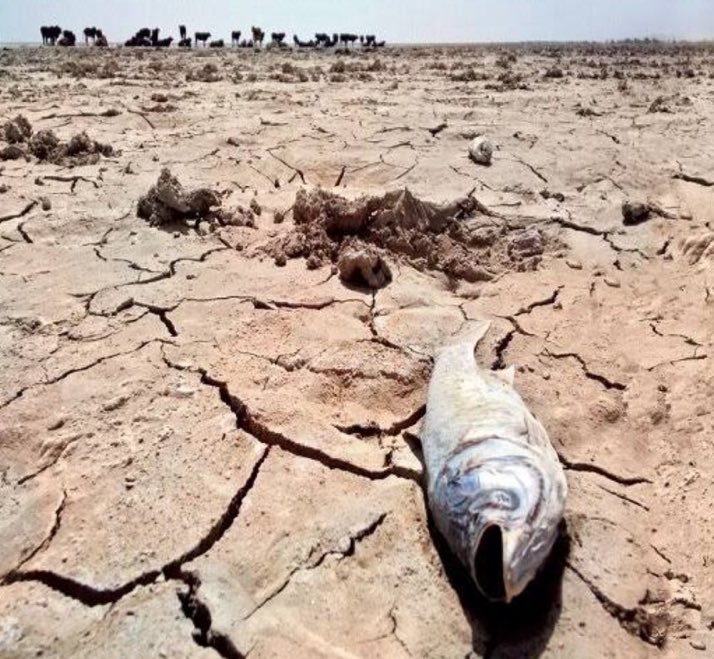
#ThisIsNotAWarPhoto
During the 47 shameful years of the #IslamicRepublic, more than 2,800 wetlands in #Iran have been destroyed.
Causes: excessive dam construction, overextraction of groundwater, inter-basin water transfers, mismanagement, incompetence, and corruption among the officials and authorities of this fascist government.
8
17
295

Glad to see more and more people recognizing the issue of overextraction from our aquifers! California has faced this issue for decades, and the Ogallala Aquifer is shrinking too. Usually, to produce animal feed rather than fruits and vegetables we actually eat.
4
29
516

Feb 11
26%? where did pull that stat out of?
despite so many people here there is enough water for everyone. there is
it risk of scarcity but not scarcity due to overextraction of ground water, similar to murica doesn't look good for murica either
newsweek.com/map-water-suppl…
12
103

Feb 10
As the global capitalist crisis deepens, the mismanagement and overextraction of water resources will only worsen.
wsws.org/en/articles/2026/02…
4
9
92

It is essential that Canada has full control over the the western arctic. The overextraction of fish, the brutality to our cetacean neighbors, the pollution of arctic waters by unscrupulous USA companies, show the USA is dangerously incompetent to manage Alaska 😠
1
3
18


16 Dec 2025
We need to understand in the Global South, development is one of the most contested terms used to legitimize overextraction, land appropriation and the displacement of local populations. Calling it progress is just another colonial rip-off.
5
10
1,016

12 Dec 2025
This particular area was already ecologically destroyed from overextraction in the past.
32
342

30 Nov 2025
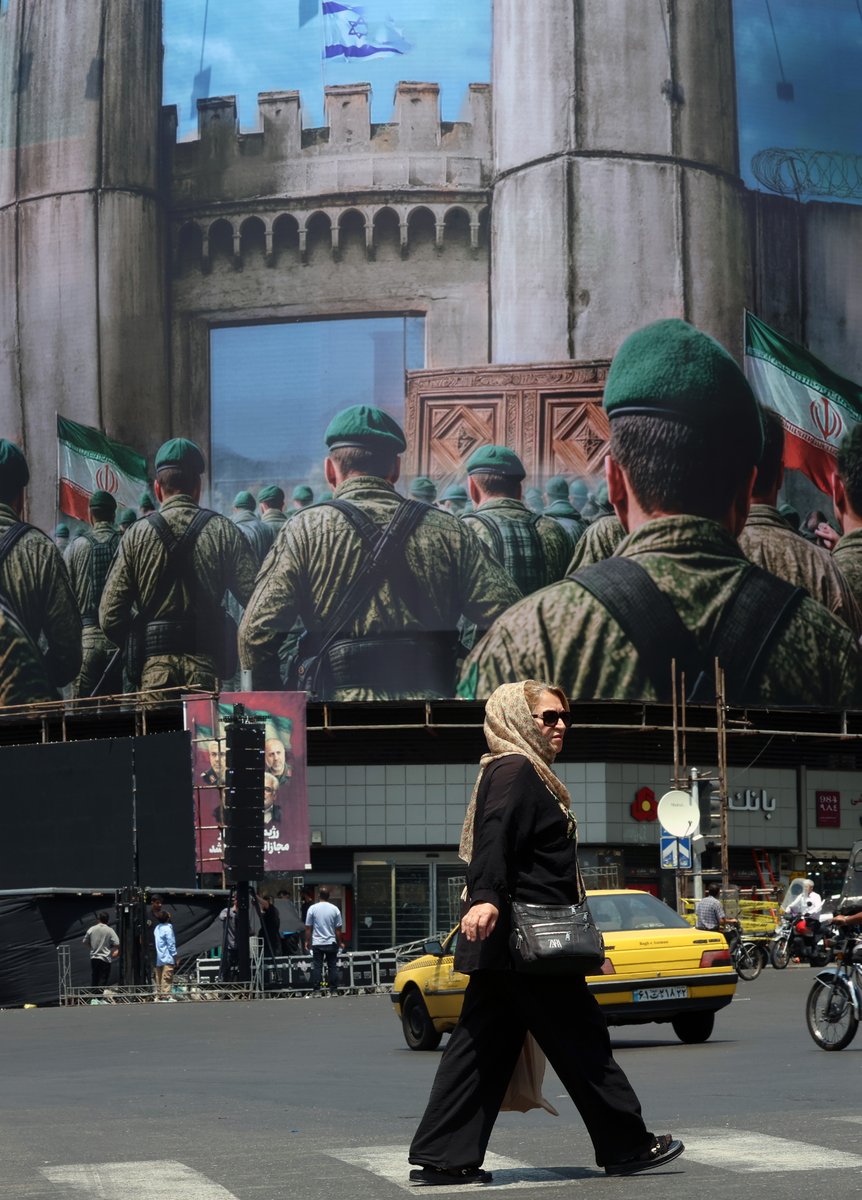
3️⃣ The Root Cause: Overexploited Groundwater
Iran faces overextraction of groundwater, with around 1 million wells, half illegal, draining ancient aquifers unsustainably—about 50 billion cubic meters per year. The overuse fuels the land’s collapse, endangering infrastructure and lives.
1
5
914

13 Nov 2025
Analysing 13.3 million buildings, the researchers from Virginia Tech, the UN University and other international institutes found that 2,406 structures in Delhi, Mumbai and Chennai are already at high risk of damage because of subsidence.
If current trends continue, that number could rise to 23,500 buildings at very high risk in the next 50 years.
Delhi leads in absolute numbers, while Chennai is the most vulnerable relative to its size, with about 8% of its buildings exposed to moderate or higher hazard.
The study emphasises that "a high or very high risk does not imply imminent collapse" but it substantially increases vulnerability, especially when combined with floods or seismic activity. Uneven settlement can deform roads and underground utilities even before visible structural failure occurs.
Why Cities Are Sinking?
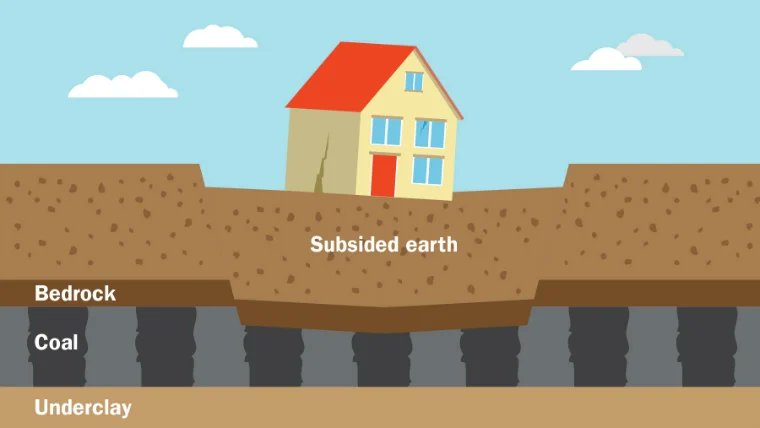
The study identifies groundwater overextraction as the main driver of land subsidence.
When water is pumped out faster than it can be replenished, the pressure that supports soil particles declines, causing the layers to compact.
The weight of urban infrastructure concrete, steel and dense buildings adds additional stress to these weakened layers.
Millions of tonnes of Marble and Granite from Rajasthan and other places have been transportedntonthese cities to create beautiful looking floors and walls.
This is like shifting mountains from its ranges into buildings, sheet by sheet.
Erratic monsoons and the sealing of open land under roads and buildings further reduce groundwater recharge.
Other contributing factors include population growth, which increases borewell density and water demand: regulatory gaps, as building codes before 2017 had no post-construction monitoring standards; and unplanned construction on floodplains, where sediments are most compressible.
In total nearly 878 sq km of land across five Indian megacities - Delhi, Mumbai, Chennai, Kolkata and Bengaluru - is subsiding.
Nearly 1.9 million people - roughly the population of Chandigarh - are living in areas where the ground is subsiding faster than 4 mm a year.
"The silent strain we see today could lead to tomorrow's disasters if cities do not adapt their infrastructure and groundwater management policies.
The trend is actually global, affecting at least 150 cities around the world: from Jakarta, which in sinking by more than 25 cm a year, to Mexico City, which has dropped nine metres over a century.
India's five megacities together represent one of the largest urban populations living on sinking ground - more than 80 million people.
In coastal cities such as Mumbai and Chennai, the combination of subsidence and sea-level rise increases flood exposure.
Even small changes in elevation can alter drainage patterns and allow seawater to reach farther inland.
India needs to quickly adopt a Regulation for groundwater extraction.
Large-scale rainwater harvesting and aquifer recharge is the only way forward.
Restrictions on construction in floodplains should become a non-negotiable mandate.
Light- weight construction materials which provides adequate mechanical strength should find its place in the construction industry.
Architects and designers should think twice before recommending mountains of marble and granite and other stones to be transported from its natural location to the building sites.
1
1
6
454
13 Nov 2025
Analysing 13.3 million buildings, the researchers from Virginia Tech, the UN University and other international institutes found that 2,406 structures in Delhi, Mumbai and Chennai are already at high risk of damage because of subsidence.
If current trends continue, that number could rise to 23,500 buildings at very high risk in the next 50 years.
Delhi leads in absolute numbers, while Chennai is the most vulnerable relative to its size, with about 8% of its buildings exposed to moderate or higher hazard.
The study emphasises that "a high or very high risk does not imply imminent collapse" but it substantially increases vulnerability, especially when combined with floods or seismic activity. Uneven settlement can deform roads and underground utilities even before visible structural failure occurs.
Why Cities Are Sinking?
The study identifies groundwater overextraction as the main driver of land subsidence.
When water is pumped out faster than it can be replenished, the pressure that supports soil particles declines, causing the layers to compact.
The weight of urban infrastructure concrete, steel and dense buildings adds additional stress to these weakened layers.
Millions of tonnes of Marble and Granite from Rajasthan and other places have been transportedntonthese cities to create beautiful looking floors and walls.
This is like shifting mountains from its ranges into buildings, sheet by sheet.
Erratic monsoons and the sealing of open land under roads and buildings further reduce groundwater recharge.
Other contributing factors include population growth, which increases borewell density and water demand: regulatory gaps, as building codes before 2017 had no post-construction monitoring standards; and unplanned construction on floodplains, where sediments are most compressible.
In total nearly 878 sq km of land across five Indian megacities - Delhi, Mumbai, Chennai, Kolkata and Bengaluru - is subsiding.
Nearly 1.9 million people - roughly the population of Chandigarh - are living in areas where the ground is subsiding faster than 4 mm a year.
"The silent strain we see today could lead to tomorrow's disasters if cities do not adapt their infrastructure and groundwater management policies.
The trend is actually global, affecting at least 150 cities around the world: from Jakarta, which in sinking by more than 25 cm a year, to Mexico City, which has dropped nine metres over a century.
India's five megacities together represent one of the largest urban populations living on sinking ground - more than 80 million people.
In coastal cities such as Mumbai and Chennai, the combination of subsidence and sea-level rise increases flood exposure.
Even small changes in elevation can alter drainage patterns and allow seawater to reach farther inland.
India needs to quickly adopt a Regulation for groundwater extraction.
Large-scale rainwater harvesting and aquifer recharge is the only way forward.
Restrictions on construction in floodplains should become a non-negotiable mandate.
Light- weight construction materials which provides adequate mechanical strength should find its place in the construction industry.
Architects and designers should think twice before recommending mountains of marble and granite and other stones to be transported from its natural location to the building sites.
4
8
24
1,363

26 Oct 2025
#ByoWaterShortagesACriticalProblem
By David Coltart, Mayor Of Bulawayo
Bulawayo, Zimbabwe’s second-largest city, stands at a critical juncture in its quest for water security.
For decades, the city has endured chronic shortages, severe rationing, and the erosion of confidence in its ability to sustain both population growth and economic activity. Despite being the country’s industrial hub and a regional centre of commerce, Bulawayo’s progress has been systematically undermined by its fragile water supply system, much of which is dependent on aging dams whose yields have declined sharply due to siltation, illegal mining, inadequate catchment management, and the worsening impacts of climate change.
Water scarcity in Bulawayo is not simply an environmental challenge, it is a structural constraint on the city’s growth, investment potential, and long-term viability.
The absence of reliable water has suppressed urban expansion, deterred industrial development, and created a cycle of stagnation where demand has been artificially curtailed by crisis-driven rationing. With residents enduring outages of up to 130 hours per week, water insecurity has become not only a technical and financial issue but also a matter of public health, social stability, and political urgency.
This report presents a feasibility and strategic assessment of the proposed Glassblock/Bopoma Dam and associated pipeline, alongside a critical review of the role of groundwater in Bulawayo’s water supply strategy.
The analysis is anchored in historical and contemporary studies, including assessments by ZINWA, SWECO, BOSCH Stemele, ECA/Dorsch/BCHOD, and the World Bank, as well as recent Parliamentary inquiries.
By consolidating these findings, the report highlights both the immediate imperatives and the long-term options available to secure Bulawayo’s water future.
The central argument advanced here is twofold.
First, the Glassblock/Bopoma Dam represents the most practical, least-cost, and fastest-to-implement solution to the city’s current water crisis. With the potential to deliver 70 megalitres (ML) of water per day at a cost of USD0.90 per cubic metre, and within a three-year construction timeframe, the dam offers a realistic opportunity to stabilise supply while other large-scale projects remain years away.
Second, while groundwater resources, such as the Nyamandlovu and Epping Forest aquifers, play an important supplementary role, they are neither sufficient nor sustainable on their own.
Without urgent investment, rehabilitation, and protection of aquifer infrastructure, these resources will remain vulnerable to vandalism, overextraction, and eventual depletion.
In doing so, the report situates Bulawayo’s water challenge within broader demographic, economic, and climatic trends.
With Africa projected to experience the fastest rate of urbanisation globally by 2050, and Zimbabwe’s cities under increasing pressure to deliver reliable services, Bulawayo’s trajectory will serve as a test case for how water security underpins urban resilience.
The findings therefore extend beyond technical feasibility to address the strategic importance of securing water for livelihoods, industry, and sustainable growth.
Ultimately, this report underscores the urgent need for an integrated and sequenced water security strategy, the immediate construction of Glassblock/Bopoma Dam Dam, the upgrade of the Ncema works treatment facility and the Tuli reservoir, the rehabilitation and protection of groundwater resources, and the parallel development of long-term supply augmentation through projects such as the Gwayi-Shangani pipeline. - Glassblock /Bopoma Dam
and Groundwater: Feasibility and Strategic Importance.

1
3
4,256

15 Oct 2025
Overpopulation itu gimana ya? Yang bermasalah overextraction.
Top 0,01% orang terkaya dunia mengambil sumber daya untuk diri mereka sendiri
Akhirnya banyak orang ga kebagian, bahkan lingkungan udah rusak
2
58
3,138

11 Oct 2025
Lulubog lang ang lugar nila sa overextraction ng groundwater....
2
33

5 Oct 2025
If you give an environmentalist enough time, they'll slowly but surely become an anti-capitalist of sorts.
Afterall, capitalist overproduction and overextraction for the sake of monopoly and accumulation is what has caused an inevitable climate breakdown.
1
1
26
1,434

21 Sep 2025
‘We must change’: how drought and overextraction of water has run Iran dry. theguardian.com/environment/…
1
3
97