

Btw bisa coba pake app flexcil kalo dpt sumber belajar bentuk pdff, memudahkan bgt lgsg dicoret disitu ga satu-satu difoto
1
47
1,576

The "next THR-β" after Resmetirom: Viking's VK2809.
VOYAGE Phase 2b 52-wk (AASLD headline):
- MASH resolution up to 75%
- 12-wk MRI-PDFF median −55%
Cross-trial only (not head-to-head). Ligand–Viking TR-β license dispute ongoing 👇
🔗 fibrosis-inflammation.com/en…
#VK2809 #MASH
15
Resmetirom後の「次のTHR-β」最先行、Viking のVK2809。
VOYAGE Phase 2b 52週 ※AASLD発表headline値:
・MASH resolution 最大75%
・12週MRI-PDFF中央値 −55%
注:Resmetiromとはcross-trial比較不可、Phase 3未公表。LigandとTR-βライセンス係争中👇
🔗 fibrosis-inflammation.com/ja…
#VK2809 #MASH
8


Jun 11
Honest read: this is a randomized double-blind placebo-controlled trial — the strongest design we have. It tracks weight, visceral fat (DEXA), liver fat (MRI-PDFF), and metabolic markers, but it is NOT yet a cardiovascular outcomes trial. (5/9)
1
157


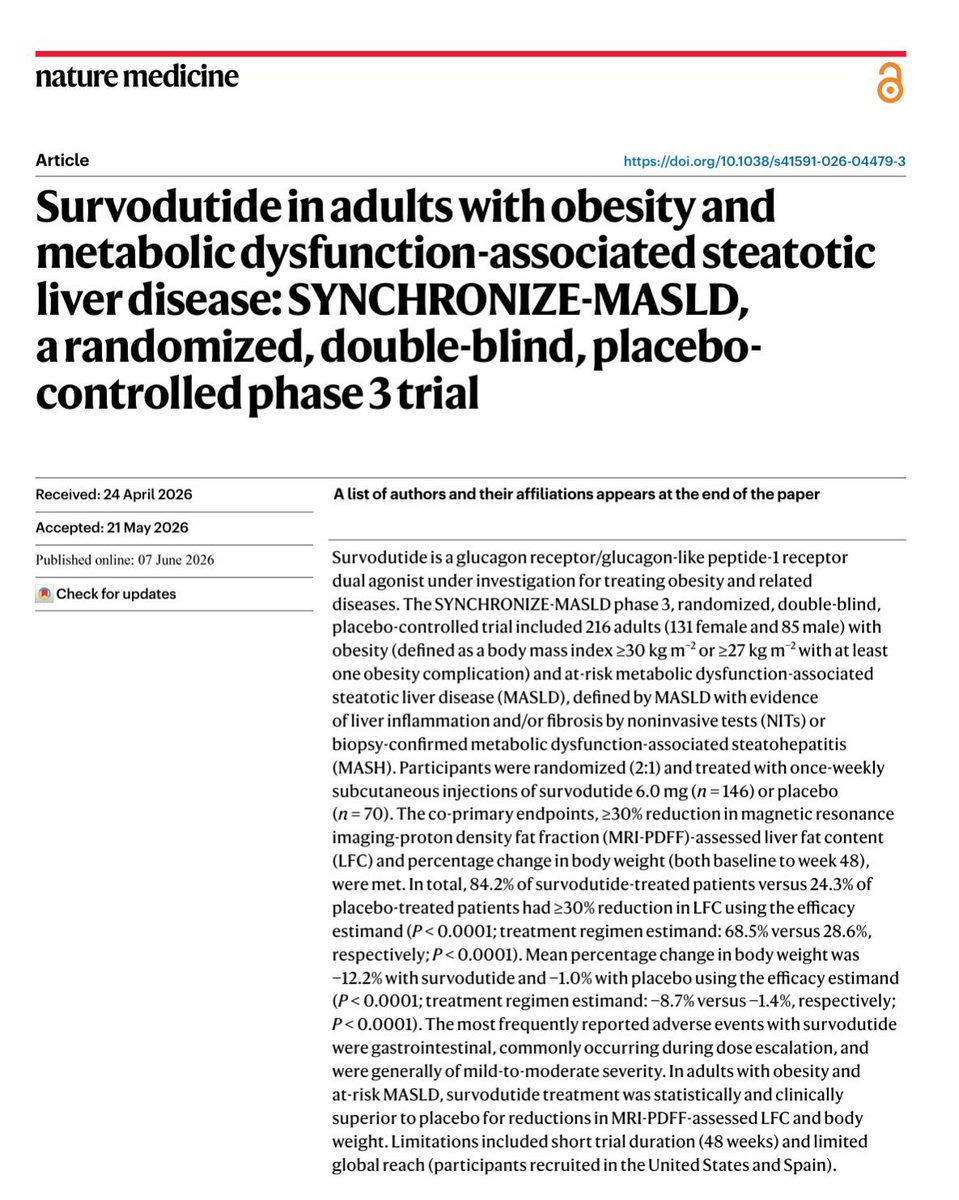
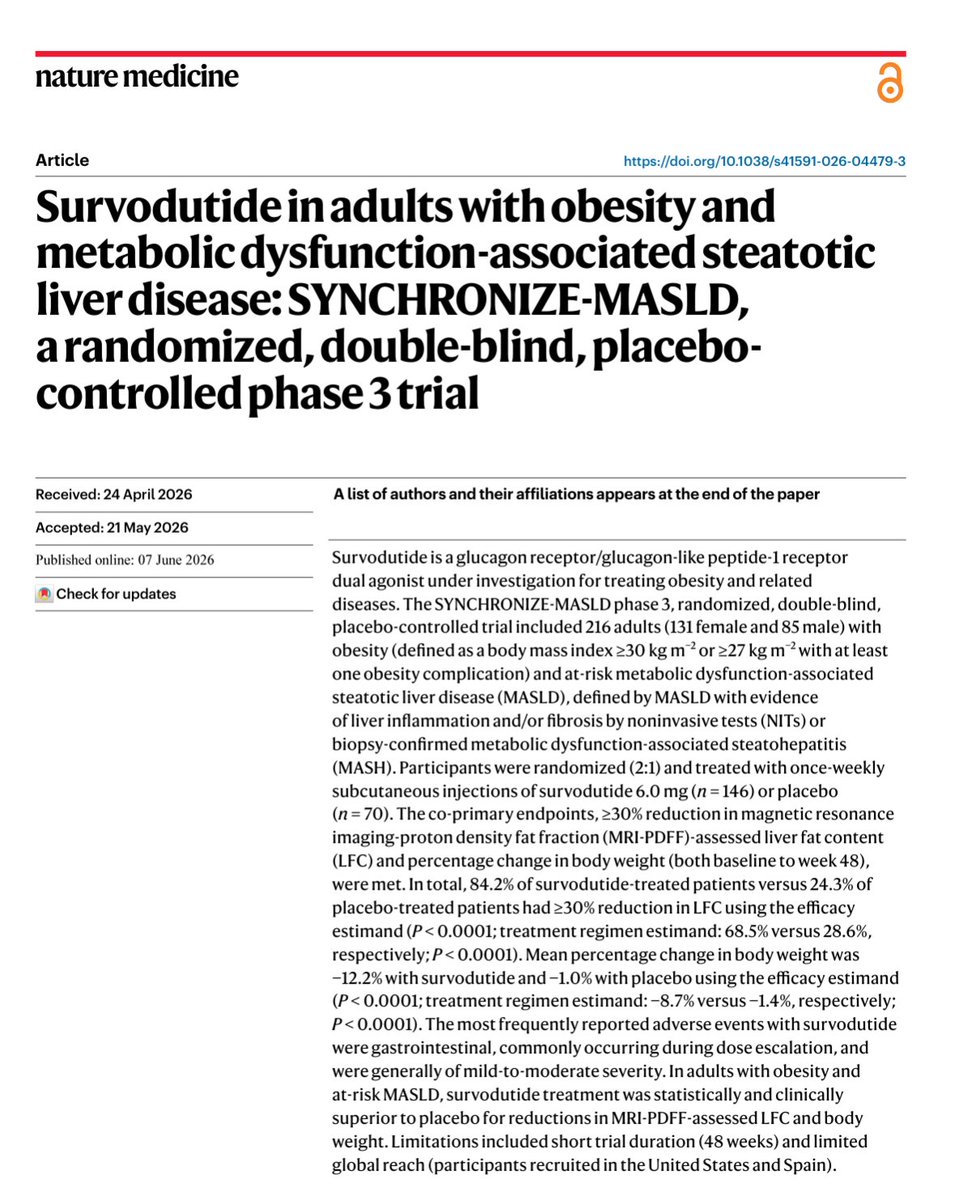
🎯 #2 SYNCHRONIZE-MASLD (Nature Medicine Phase 3)
Survodutide (dual glucagon-receptor GLP-1-receptor agonist), 6 mg subQ weekly, 48 weeks. n=216 obese adults with at-risk MASLD
(Metabolic Dysfunction Associated Steatotic Liver Disease).
• ≥30% MRI-PDFF liver fat reduction: 84.2% vs 24.3% placebo (p<0.0001)
• Mean body weight: −12.2% vs −1.0% (p<0.0001)
• AEs predominantly GI, dose-titration-related
Not an oncology trial. But remember: MASLD/MASH is now the fastest-rising etiology of HCC in the US.
#GIOnc #HCC #MASLD #MASH #Prevention
doi.org/10.1038/s41591-026-0…
1
112

SYNCHRONIZE-MASLD in @NatureMedicine: once-weekly #survodutide 6.0 mg led to ~12% weight loss and >80% achieving ≥30% MRI-PDFF liver fat reduction at 48 weeks, with NIT and cardiometabolic improvements.
nature.com/articles/s4159…
1
1
189

Jun 9
SYNCHRONIZE-MASLD in @NatureMedicine: once-weekly #survodutide 6.0 mg led to ~12% weight loss and >80% achieving ≥30% MRI-PDFF liver fat reduction at 48 weeks, with NIT and cardiometabolic improvements.
nature.com/articles/s41591-0…
2
19
63
3,714

Jun 9
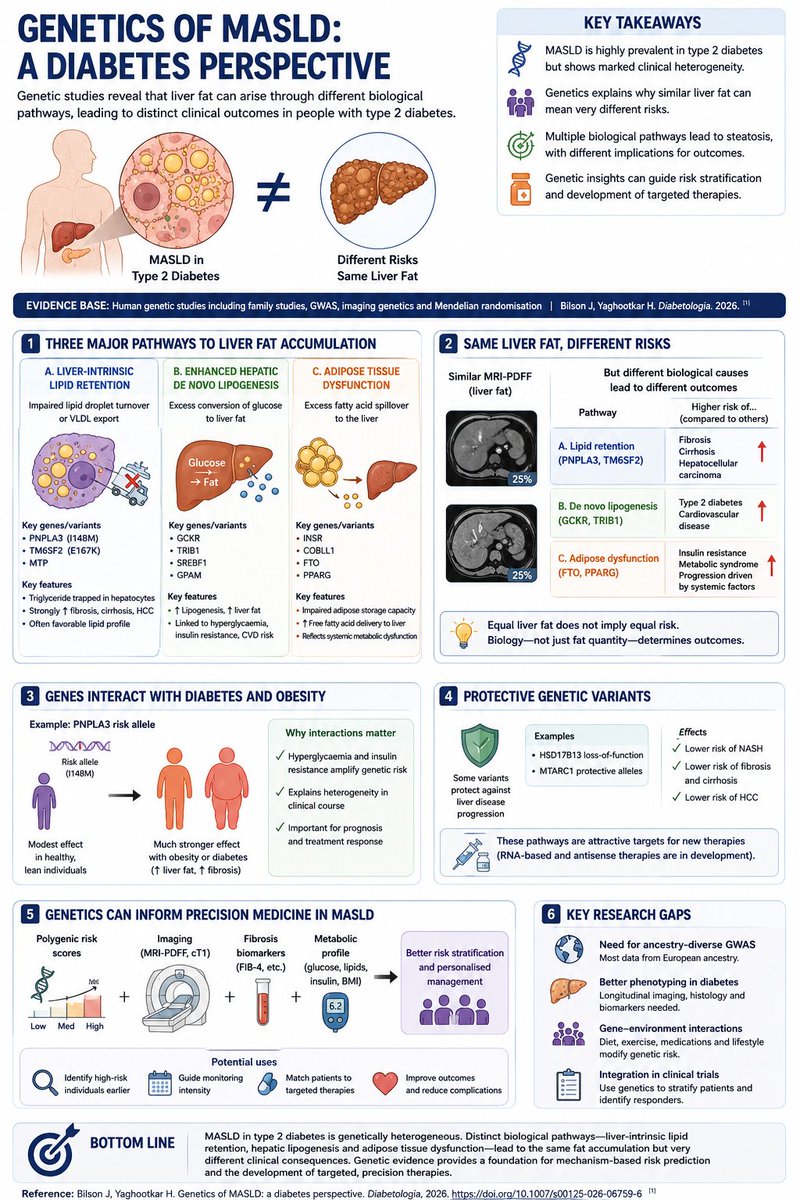
MASLD Is Not One Disease: Genetics Reveals Distinct Biological Pathways in Diabetes
Why do some people with type 2 diabetes develop cirrhosis while others with similar obesity and glycaemic control have relatively benign fatty liver?
A new Diabetologia review argues that the answer lies in the genetics of MASLD (metabolic dysfunction-associated steatotic liver disease). Human genetic studies show that liver fat accumulation can arise through fundamentally different biological mechanisms, leading to very different clinical outcomes.
Three major genetic pathways emerge:
🔹 Liver-intrinsic lipid retention
Variants such as PNPLA3 I148M and TM6SF2 E167K impair lipid droplet turnover or VLDL export, trapping triglycerides within hepatocytes. These variants strongly increase fibrosis, cirrhosis and hepatocellular carcinoma risk while often showing surprisingly favorable lipid profiles.
🔹 Enhanced hepatic de novo lipogenesis
Variants in GCKR, TRIB1, SREBF1, and GPAM drive conversion of glucose into liver fat. These pathways closely connect MASLD with hyperglycaemia, insulin resistance and cardiometabolic disease.
🔹 Adipose tissue dysfunction
Variants affecting adipose expandability and insulin signaling promote excessive fatty acid spillover into the liver. In these individuals, hepatic steatosis reflects systemic metabolic dysfunction rather than a purely hepatic defect.
One of the most important insights is that equal liver fat does not imply equal risk.
The review highlights that:
• PNPLA3/TM6SF2 carriers often develop severe fibrosis despite relatively favorable cardiovascular profiles.
• GCKR/TRIB1-related steatosis is more tightly linked to insulin resistance, type 2 diabetes progression and cardiovascular disease.
• Similar MRI-PDFF values may therefore represent completely different biological diseases.
Genetic studies also reveal strong interactions with diabetes itself.
Hyperglycaemia, insulin resistance and obesity amplify the effects of many MASLD risk alleles. The classic example is PNPLA3, whose impact on liver fat and fibrosis becomes much stronger in individuals with obesity or diabetes.
Importantly, genetics is beginning to influence precision medicine approaches.
Protective variants such as:
✓ HSD17B13 loss-of-function
✓ MTARC1 protective alleles
reduce progression to steatohepatitis, fibrosis and hepatocellular carcinoma, making these pathways attractive therapeutic targets. Early RNA-based and antisense therapies targeting genetically validated pathways are already entering clinical development.
The review proposes a future framework where:
• Polygenic risk scores
• MRI-based liver phenotyping
• Fibrosis biomarkers
• Met
4
81


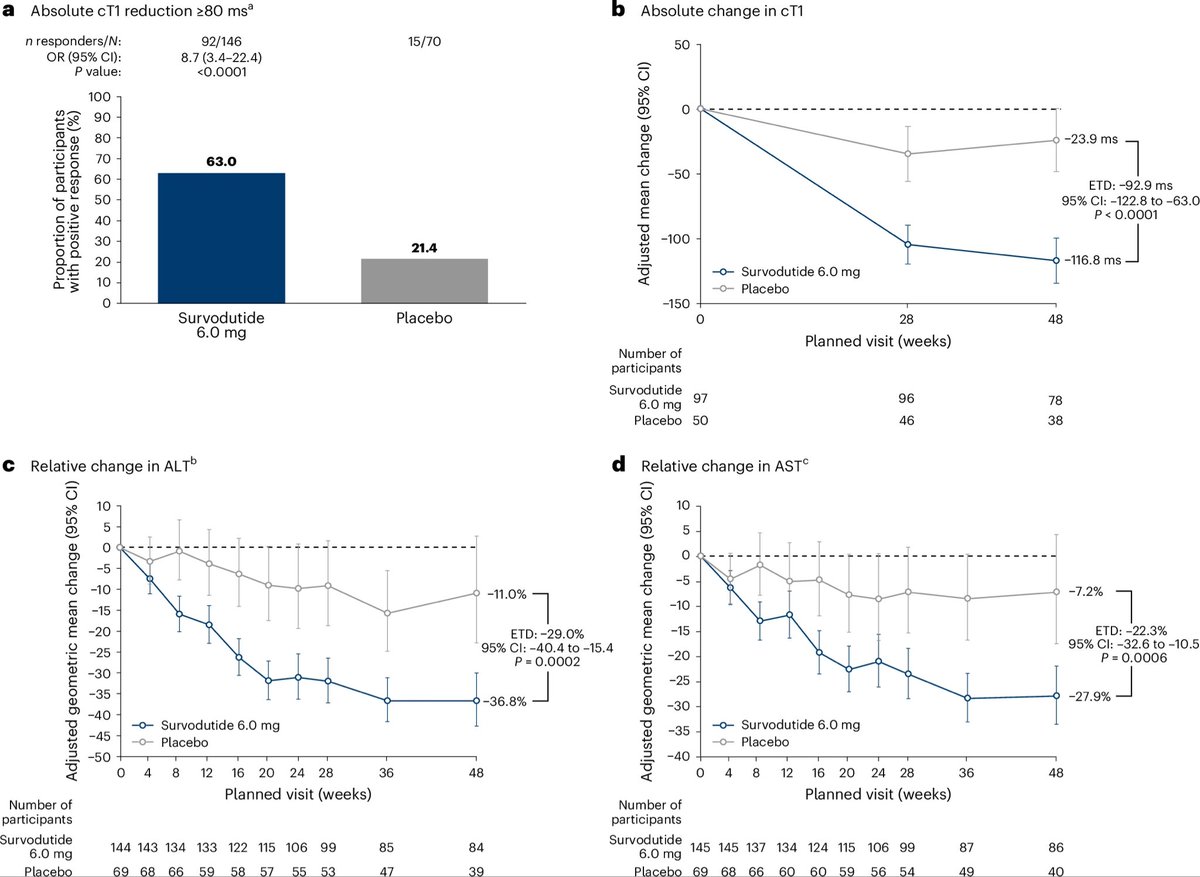
🔴 SYNCHRONIZE-MASLD @NatureMedicine
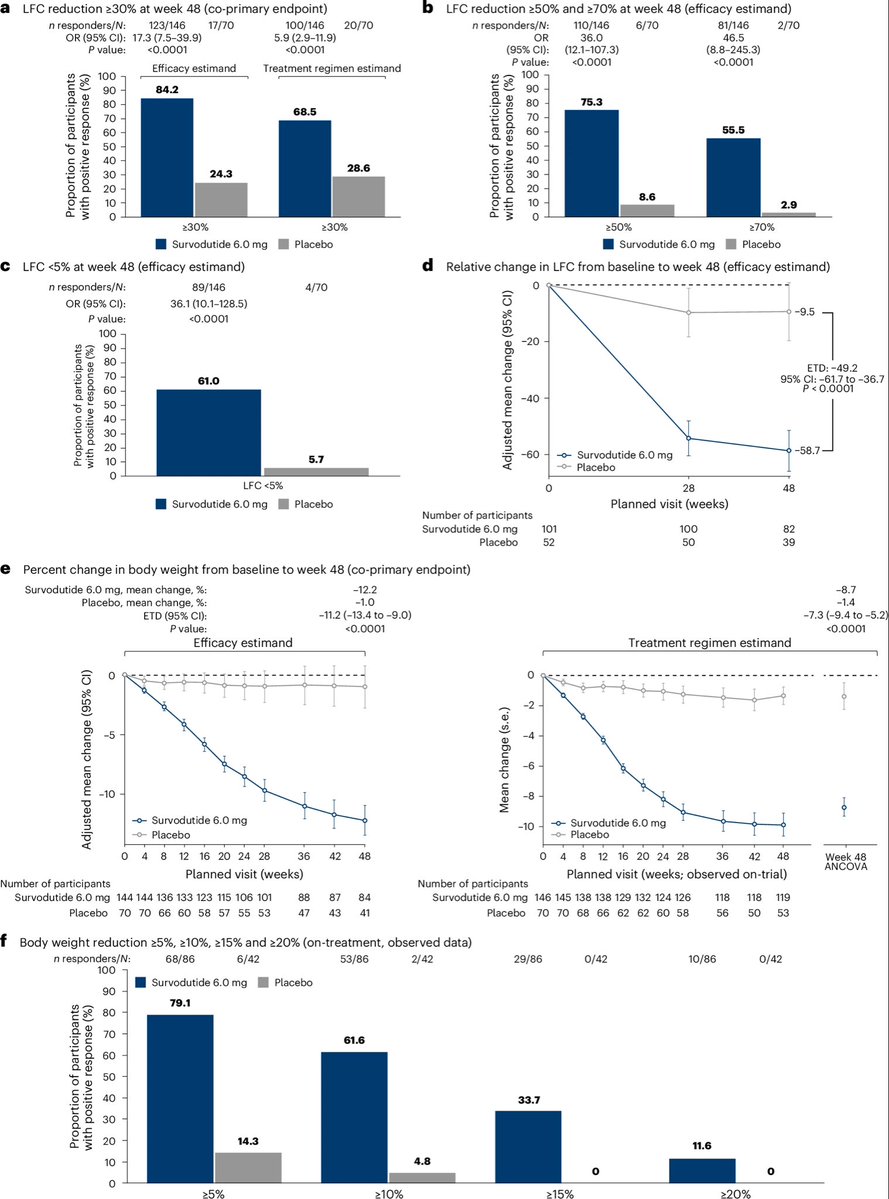
Survodutida 6,0 mg semanal en obesidad MASLD de riesgo (fase 3, 48 sem):
📉 ≥30% reducción de grasa hepática (MRI-PDFF): 84,2% vs 24,3% placebo
🫀 −12,2% de peso vs −1,0%
🔬 61% normalizó la grasa hepática (<5%)
Mejoras además en cT1, ALT, AST, rigidez por VCTE y perfil cardiometabólico. Sin DILI, pancreatitis ni cáncer adjudicados.
Doble agonismo GCGR/GLP-1: efecto hepático más allá de la pérdida de peso.
🔗 nature.com/articles/s41591-0…
#ADA2026 #ADAScisessions
1
10
30
1,170

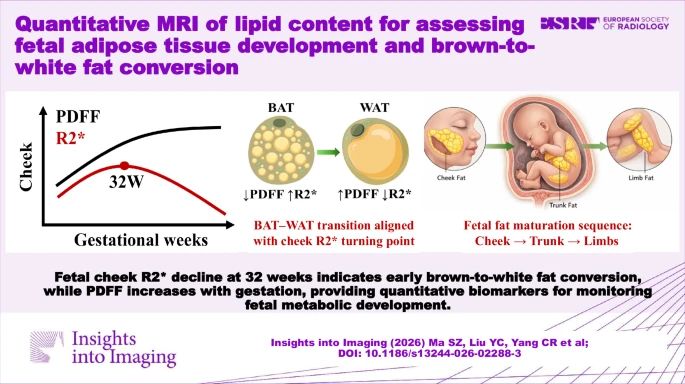
🍼 Can MRI track fetal fat development before birth?
📊 A new study using IDEAL-IQ MRI shows that fetal fat fraction (PDFF) increases steadily with gestational age, reflecting progressive metabolic maturation
🧬Regional R2* patterns also change over time, with early shifts in the cheek region (~32 weeks) suggesting a possible transition from brown- to white-like adipose tissue
buff.ly/CDbQaMy (Shuzhen Ma et al.)
2
3
138

Jun 4
$wve will likely PR their ADA 2026 presentation tomorrow. I expect they concentrate on WVE-007 phase 1 data with detailed DXA scan metrics and MRI-PDFF readouts demonstrating targeted visceral fat reduction and lean muscle preservation.
Bought more in 5.70-5.80 area
7
1,053
May 28
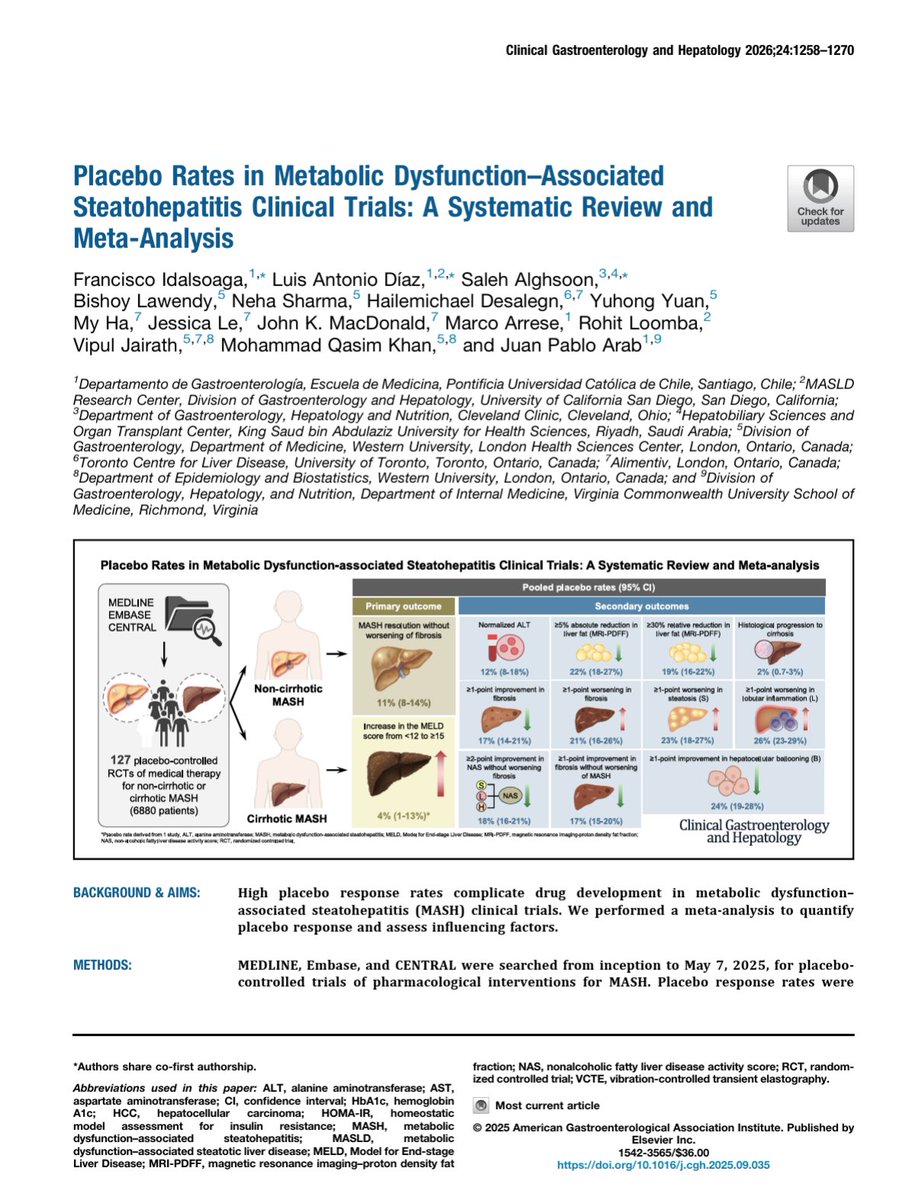
High placebo response is a major hurdle in MASH drug development. In this meta-analysis of 127 RCTs (n=6,880), 11% of placebo patients achieved MASH resolution without fibrosis worsening, 18–26% improved key histologic features, and nearly one in five met MRI-PDFF fat reduction targets on placebo alone. Meta-regression could not identify consistent clinical or trial-level predictors of this effect, reinforcing that endpoint selection and trial design will be critical to truly distinguish drug signal from a surprisingly strong placebo response in future MASH programs.
cghjournal.org/article/S1542…
1
8
27
3,163