










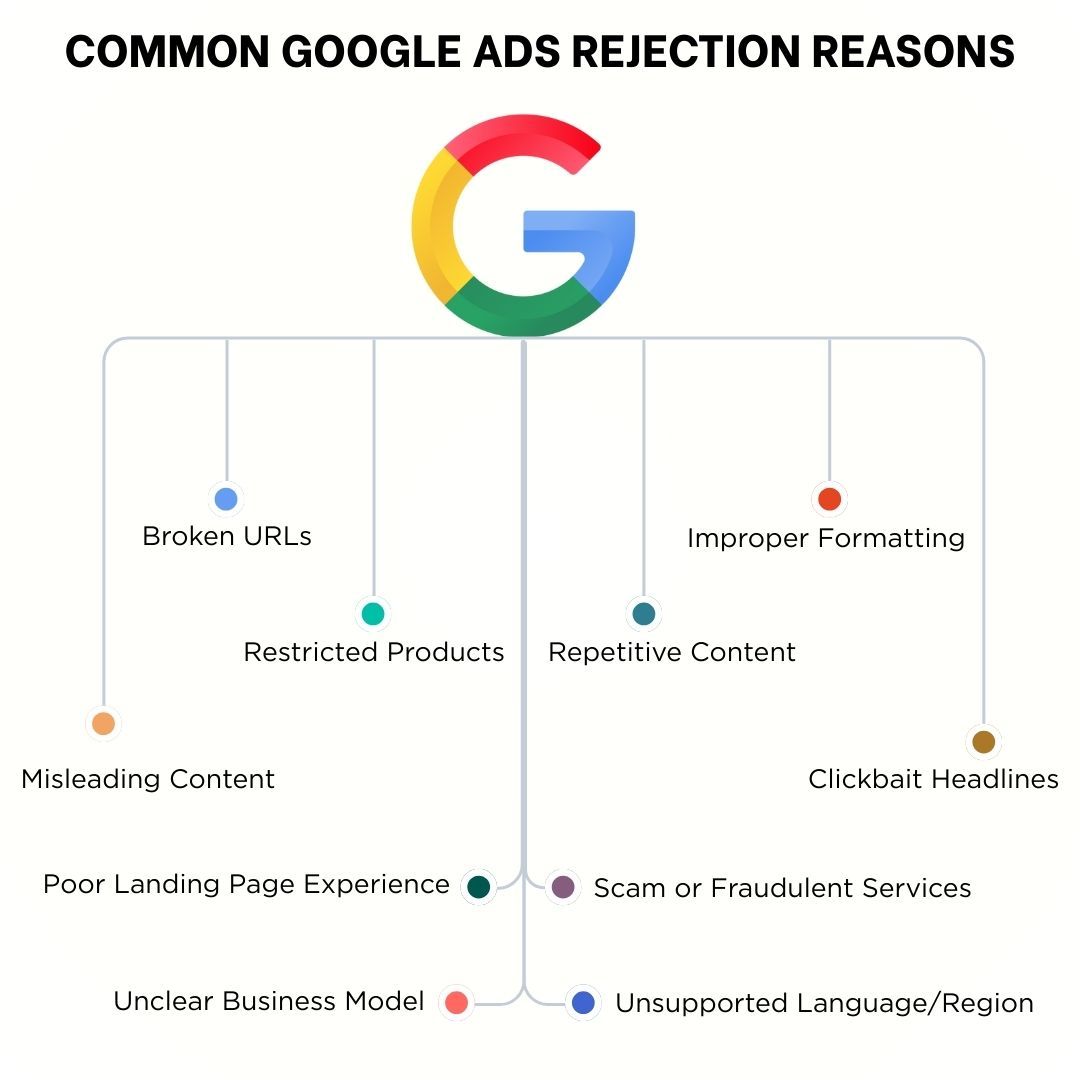
ALT Don't let ad rejections derail your campaigns. Our latest infographic, "Common Google Ads Rejection Reasons," provides a clear, concise checklist of policy, technical, and content-related issues that can lead to ad disapproval. Learn about common pitfalls, from broken URLs and poor landing page experience to misleading content and policy violations. We highlight why Google's policies are crucial for a positive user experience and how a strategic approach can help you avoid common mistakes. Discover how PC Doctors NET specializes in creating meticulously crafted PPC campaigns designed to adhere to all of Google's strict policies, ensuring your ads get approved and your business gets seen by the right audience. Avoid wasted ad spend and streamline your marketing efforts with expert guidance.


ALT Google Ads By Web SEO Expert
ALT What's your biggest Pay-Per-Click (PPC) frustration? Tell us in the comments! At PC Doctors NET, we're not just offering PPC Services; we want to understand your challenges. Are you struggling with wasted ad spend, low conversions, or complex campaign management? Share your biggest PPC headache below. Our expert team provides strategic PPC management designed to drive qualified traffic and maximize your ROI. Let's move beyond frustration and achieve real advertising success together. Discover our engagement-focused PPC solutions today!
ALT Stop guessing and start converting with expert Pay-Per-Click (PPC) services from PC Doctors NET. We build high-impact, data-driven PPC campaigns that deliver instant visibility, precision targeting, and measurable ROI. Our strategic approach ensures every marketing dollar is an investment in your business's growth.