
In this webinar, PacketLight Networks’ Erik Garland and Communications Industry Researchers President Lawrence Gasman examine the operational realities of migrating DWDM and OTN networks to 800G optical transport. @packetlight
📽️Watch here: HostingJournalist.com/video/…
18
In this webinar, PacketLight Networks’ Erik Garland and Communications Industry Researchers President Lawrence Gasman examine the operational realities of migrating DWDM and OTN networks to 800G optical transport. @packetlight
📽️Watch here: HostingJournalist.com/video/…

29

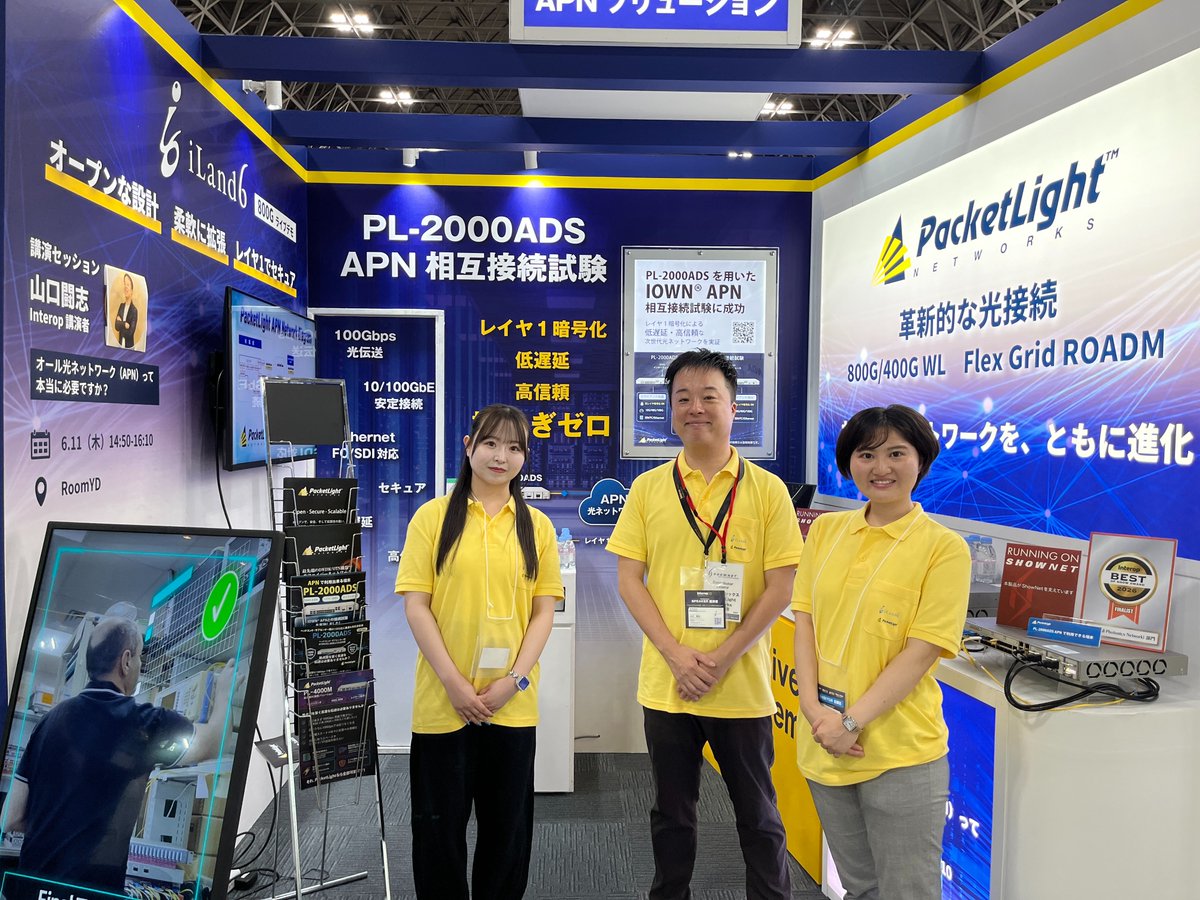
📍Interop Tokyo 2026 最終日!
あっという間の3日間。
本日が最終日となりました!
アイランドシックスブース【7S06】では、PacketLightの最新光伝送ソリューションやAPN関連技術を展示中です。
まだお越しでない方は、ぜひ最終日にお立ち寄りください!
#InteropTokyo2026 #Interop26 #ShowNet
3
305
HostingJournalist.com retweeted
#Webinar PacketLight on 800G Migration for DWDM Networks: In this webinar, PacketLight Networks’ Erik Garland and Communications Industry Researchers President Lawrence Gasman examine the operational realities of migrating DWDM and OTN networks to 800G… dlvr.it/TSzM8j
1
14
ShowNet NOC retweeted
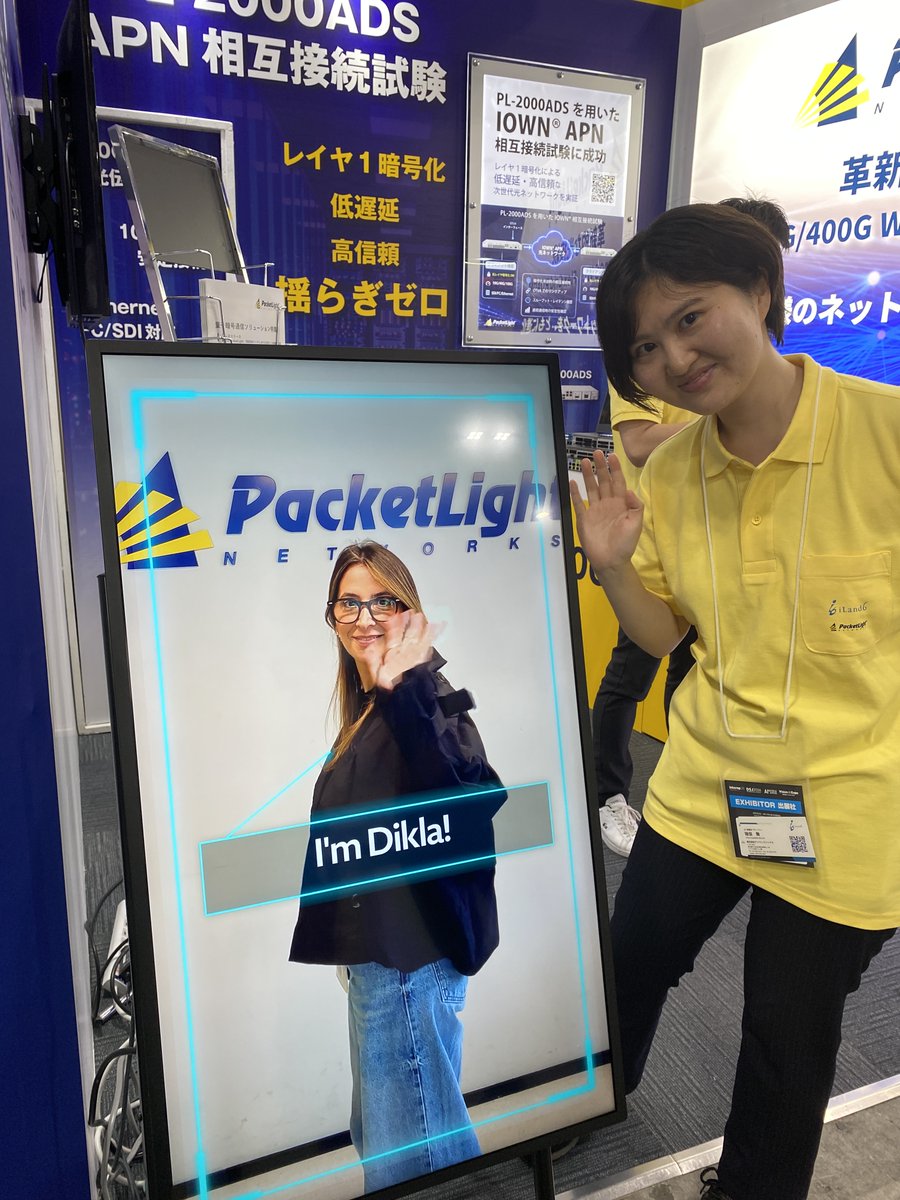
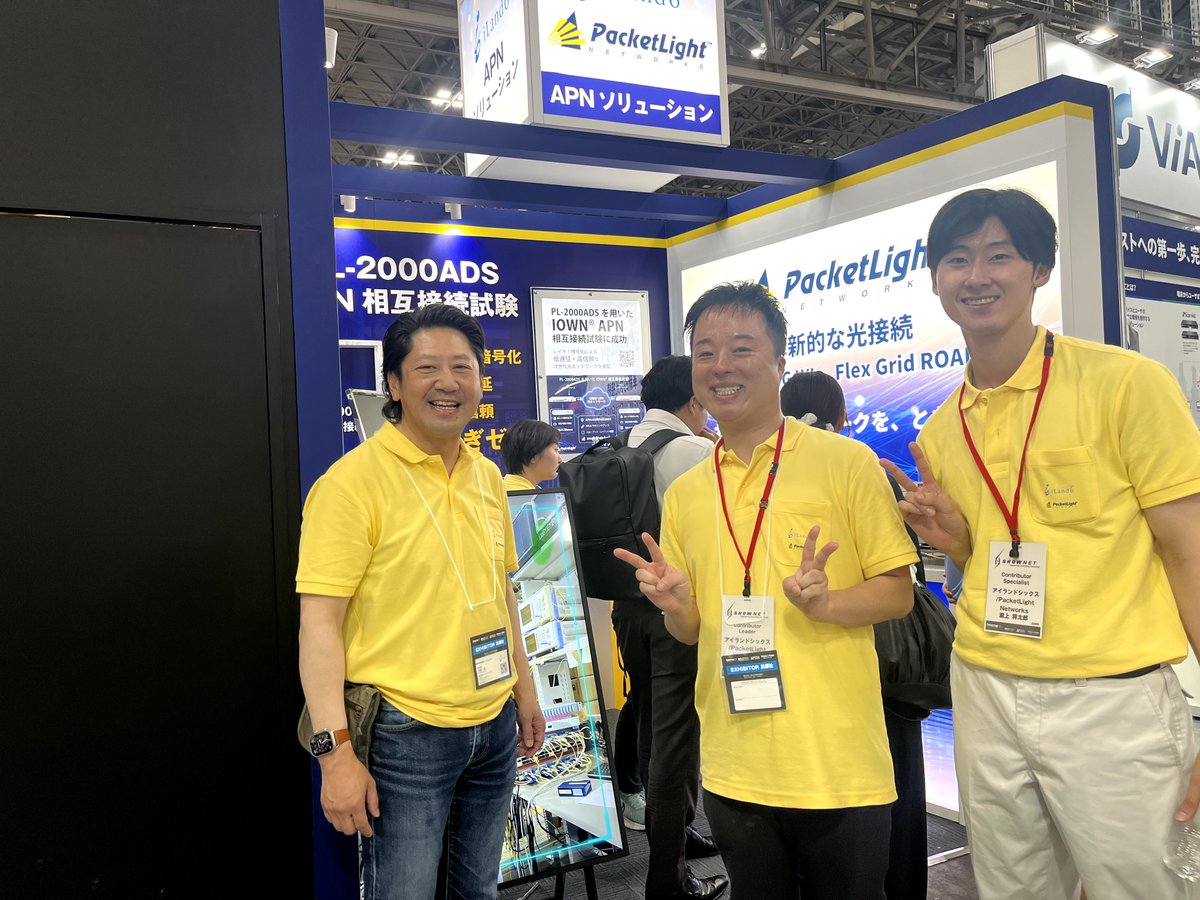
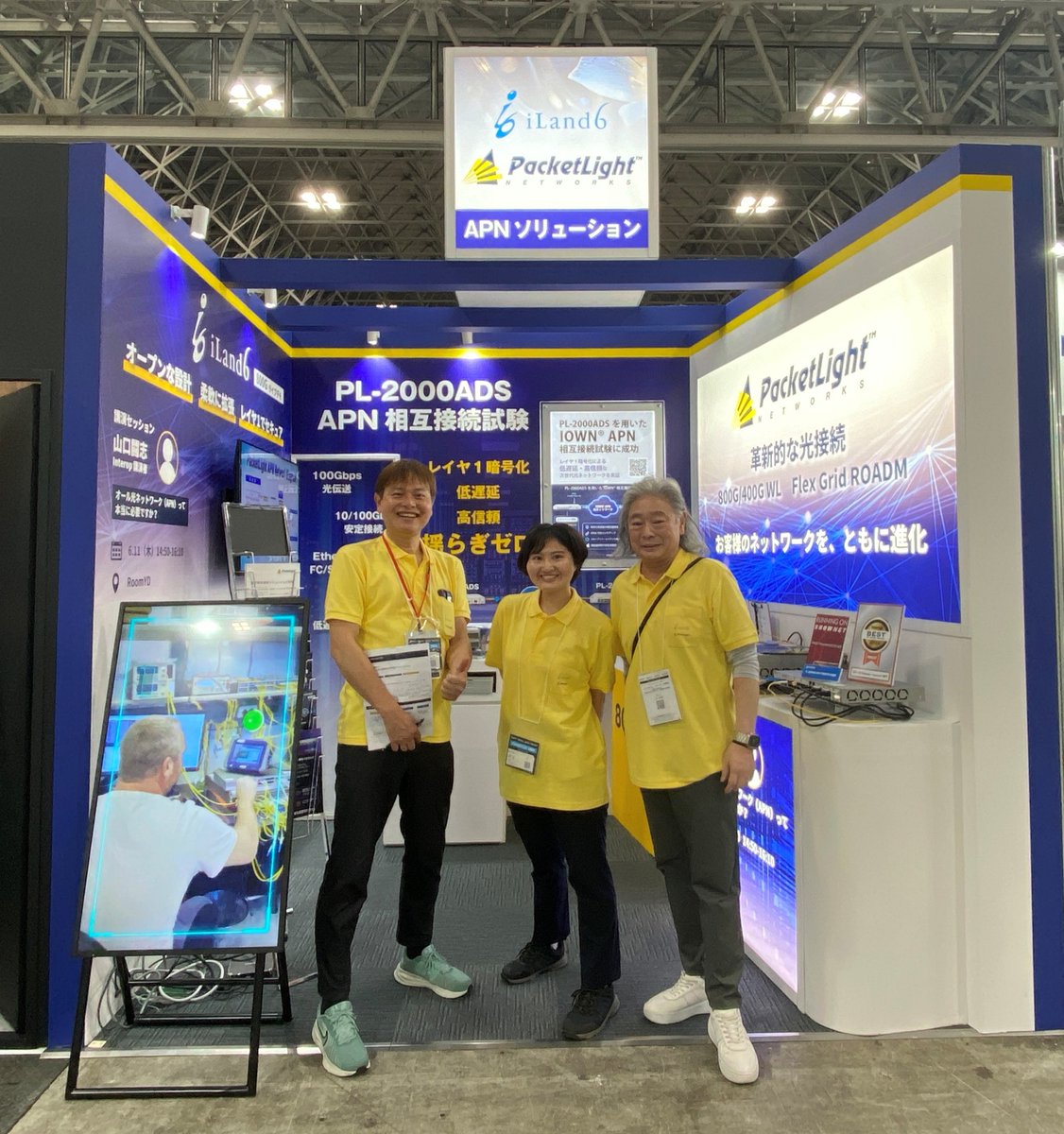
#InteropTokyo2026 2日目
アイランドシックスメンバー一同、
ブース【7S06】で皆さまをお迎えしています!
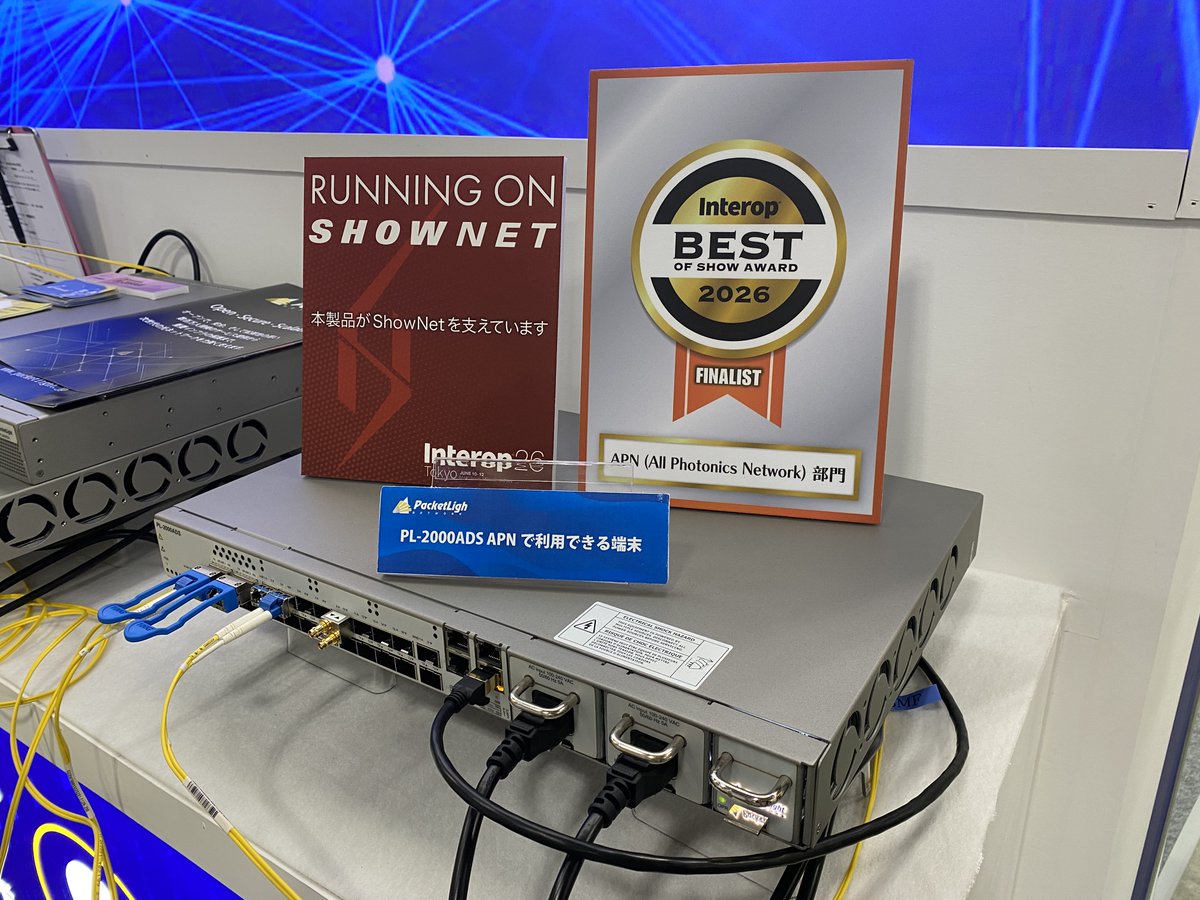
今回展示中の PacketLight「PL-2000ADS/GA」は、
🏅 Best of Show Award 2026APN部門ファイナリスト
に選出されました。
#Interop26 #PacketLight #APN #ShowNet #OpenROADM
1
12
990

Jun 11
弊社アイランドシックスの取り扱い製品である
光伝送装置「PacketLight」がInteropTokyo2026に出展しております💡
弊社メンバー一同【7S06】ブースにてお待ちしております😊

#InteropTokyo2026 2日目
アイランドシックスメンバー一同、
ブース【7S06】で皆さまをお迎えしています!
今回展示中の PacketLight「PL-2000ADS/GA」は、
🏅 Best of Show Award 2026APN部門ファイナリスト
に選出されました。
#Interop26 #PacketLight #APN #ShowNet #OpenROADM
2
3
In this webinar, PacketLight Networks’ Erik Garland and Communications Industry Researchers President Lawrence Gasman examine the operational realities of migrating DWDM and OTN networks to 800G optical transport. @packetlight
📽️Watch here: HostingJournalist.com/video/…
17
ShowNet NOC retweeted
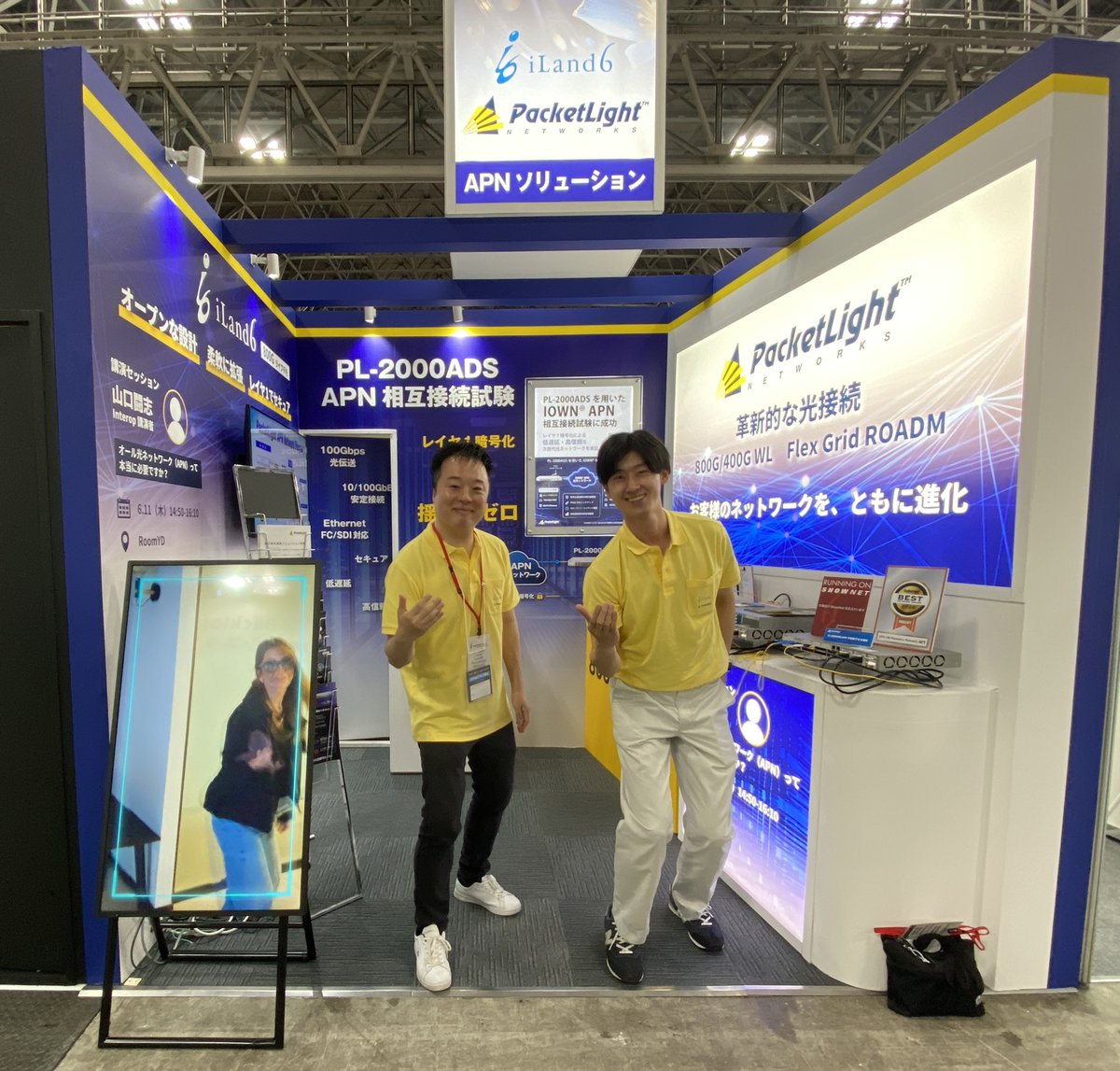
本日より Interop Tokyo 2026 がスタートしました!
アイランドシックスブース【7S06】では、
PacketLightの最新光伝送技術を展示中です。
🔹 OpenROADM対応800Gソリューション
🔹 APN長距離ライブデモ
実機を交えてご紹介しておりますので、ぜひお気軽にお立ち寄りください。
#Interop26 #ShowNet
1
6
1,131
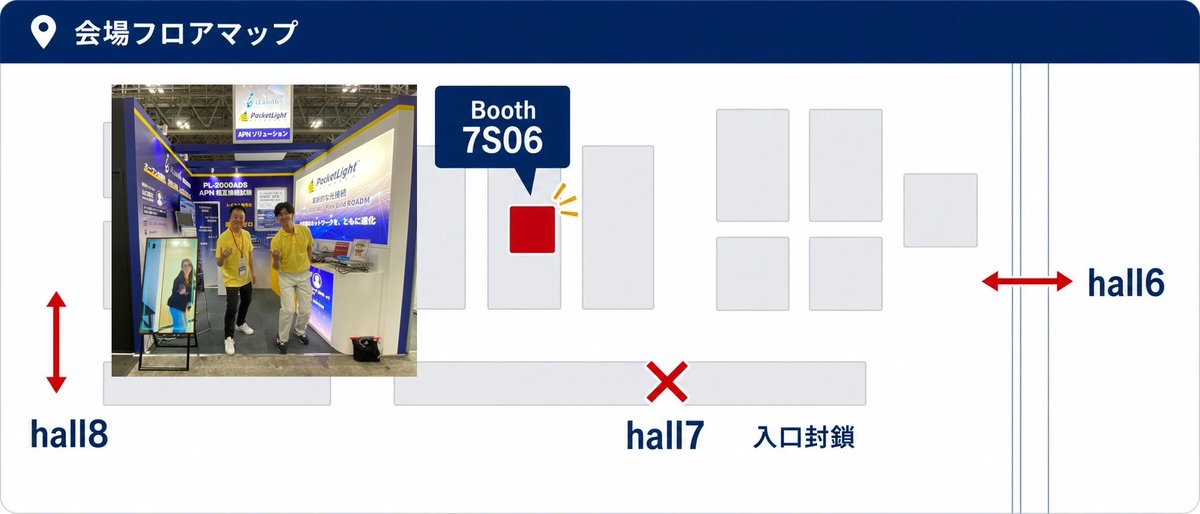
📍Interop Tokyo 2026 ご来場予定の皆さまへ
ホール7側の入口が封鎖されているため、アイランドシックスブース【7S06】へは、
➡️ ホール6入口から入場
➡️ 通路をまっすぐ進む
ルートが最も分かりやすくおすすめです。
#InteropTokyo2026 #Interop26 #PacketLight #APN #OpenROADM
3
495

May 23
【昨日の注目リリースまとめ】
💰 資金調達
■ イグニション・ポイントベンチャーパートナーズ株式会社
prtimes.jp/main/html/rd/p/00…
Life Design Fundは、日本円連動ステーブルコイン「JPYC」を発行するJPYC株式会社へ出資。次世代のシームレスな決済体験構築を目的とする。
■ Z Venture Capital株式会社
prtimes.jp/main/html/rd/p/00…
Z Venture Capitalは、ロボット基盤モデル開発のConfig Intelligenceへ投資。データ収集とモデル構築を一気通貫で実施するプラットフォームとして注目。
■ ICEYE Japan株式会社
prtimes.jp/main/html/rd/p/00…
ICEYE Japanは、3億ユーロのリボルビング・クレジット・ファシリティを確保。防衛・防災分野の宇宙インテリジェンス需要に対応する事業拡大を支援。
■ JPYC株式会社
prtimes.jp/main/html/rd/p/00…
JPYC株式会社はシリーズBで累計約50億円を調達。金融・web3のエコシステム拡大、システム強化、人材採用、新規事業開拓に活用する。
🤝 業務提携・協業
■ 株式会社日立製作所
prtimes.jp/main/html/rd/p/00…
日立製作所の米国子会社Hitachi Digital Servicesが、決済インフラを提供するStripeと戦略的提携。保険業界を中心に、企業向けに統合型決済ソリューションを提供する。
■ 川崎重工業株式会社
prtimes.jp/main/html/rd/p/00…
川崎重工は、NVIDIA、Analog Devices、Microsoft、富士通と協業し、米国シリコンバレーにフィジカルAI開発拠点を開設。医療・介護やモビリティ分野での社会実装を加速する。
■ 東建コーポレーション株式会社
prtimes.jp/main/html/rd/p/00…
東建コーポレーションは農林水産省などと協定を結び、賃貸集合住宅分野で国産材の利用を推進。3年間で30,000m3の国産杉ツーバイフォー材を活用し、林業活性化や脱炭素社会実現を目指す。
■ 株式会社エイチ・アイ・エス
prtimes.jp/main/html/rd/p/00…
HISは釜山観光公社と業務協約を締結し、日本人観光客の釜山観光拡大を図る。2026年5月から2028年5月まで、マーケティングやツアー共同誘致など協力する。
■ イー・ガーディアン株式会社
prtimes.jp/main/html/rd/p/00…
イー・ガーディアンはOSCOM社を完全子会社化し、次世代型AIアウトバウンドコール市場へ参入。AIと人のスキルを融合した「AI-BPO」モデルの拡大を図る。
■ リョーサン菱洋株式会社
prtimes.jp/main/html/rd/p/00…
リョーサン菱洋とai&がパートナーシップを締結し、日本におけるAI推論ソリューションの普及を加速する。
■ 株式会社ウィゴー
prtimes.jp/main/html/rd/p/00…
株式会社ウィゴーは株式会社サムライソードと提携し、コンビニプリント『にこぷり』を通じた若年層向けプロモーションと共同企画を推進する。
■ 株式会社エクサウィザーズ
prtimes.jp/main/html/rd/p/00…
エクサウィザーズはMS&ADグループと合弁会社を設立し、AIを活用した保険業務の変革を推進。2026年6月設立予定。
■ 株式会社ホンダトレーディング
prtimes.jp/main/html/rd/p/00…
ホンダトレーディングは、PathAheadと業務提携し、砂漠の砂を活用した人工骨材「Rising Sand」を用いた次世代道路舗装材・建設資材の事業化を推進する。
■ ビザ・ワールドワイド・ジャパン株式会社
prtimes.jp/main/html/rd/p/00…
VisaはTrip.com Groupと戦略的提携し、アジア太平洋地域の旅行者にパーソナライズされた体験や特典、シームレスな決済を提供する。
■ レジェンダ・コーポレーション株式会社
prtimes.jp/main/html/rd/p/00…
レジェンダ・コーポレーションはカオナビと販売パートナー契約を締結し、タレントマネジメント領域での提案・導入支援を強化。
■ 株式会社irodas
prtimes.jp/main/html/rd/p/00…
irodasはSNS×新卒人材紹介サービス「テクシュー」をグループ会社として統合。マーケティング強化や求人拡大を通じたシナジーを狙い、新卒採用支援事業の強化を図る。
■ 株式会社Trip.com International Travel Japan
prtimes.jp/main/html/rd/p/00…
Trip.com GroupはVisaと戦略的提携し、アジア太平洋地域の旅行者にパーソナライズされた体験やシームレスな決済を提供する。
■ インタラクティブ株式会社
dreamnews.jp/press/000034979…
インタラクティブ株式会社と株式会社Evolivが業務提携を発表。
■ インタラクティブ株式会社
value-press.com/pressrelease…
インタラクティブ株式会社と株式会社Evolivが業務提携を発表。
■ インタラクティブ株式会社
prtimes.jp/main/html/rd/p/00…
インタラクティブ株式会社と株式会社Evolivは、熊本県内企業の採用支援を目的に業務提携。SNSと求人マッチングサービスを連携し、若年層への情報発信と応募導線を強化する。
■ ナイスモバイル株式会社
prtimes.jp/main/html/rd/p/00…
ナイスモバイルはNottaと協業し、MAXHUB「All in One Meeting Board」にAI議事録機能を追加。会議後の負担軽減と生産性向上を支援する。
■ ウインテスト株式会社
prtimes.jp/main/html/rd/p/00…
ウインテスト株式会社は、5社との共同出資で「AI Data Partners株式会社」を設立。日本国内のAI特化型高性能データセンターの開発・運営を主導する。
■ abc株式会社
prtimes.jp/main/html/rd/p/00…
abc株式会社ら6社が共同出資し、AI特化型高性能データセンターの開発・運営を目的とする「AI Data Partners株式会社」を設立。
■ VPON JAPAN株式会社
prtimes.jp/main/html/rd/p/00…
Vpon HoldingsがAI広告企業Tagtooを統合、アジア全域でのAI×データDX体制を強化。インバウンド促進や日本コンテンツの海外展開を強力に支援する。
■ ブーミー株式会社
prtimes.jp/main/html/rd/p/00…
BoomiがGongと協業し、Boomi AgentstudioにRevenue AIを導入。企業が会話データを活用した自動化アクションを実現する。
■ コスモエネルギーホールディングス株式会社
prtimes.jp/main/html/rd/p/00…
コスモエネルギーら5者は溶融塩電解技術によるCO2由来固体炭素製造のベンチスケール検証を開始。脱炭素と素材サプライチェーンの多様化を目指す。
■ 株式会社アイランドシックス
value-press.com/pressrelease…
PacketLightはQuantum XChangeと提携し、量子安全な光ネットワーキングのポートフォリオを拡充する。
■ Notta株式会社
prtimes.jp/main/html/rd/p/00…
Nottaはナイスモバイルと協業し、MAXHUB「All in One Meeting Board」向けにAI文字起こし技術を搭載した「MAXHUB AI議事録」を2026年5月22日に提供開始。会議の効率化と「会議AX」の実現を推進する。
■ 株式会社サムライソード
prtimes.jp/main/html/rd/p/00…
サムライソードはウィゴーと提携し、コンビニプリント『にこぷり』を軸に若年層市場の活性化を推進する。
■ 株式会社Evoliv
prtimes.jp/main/html/rd/p/00…
Evolivとインタラクティブが業務提携し、「クマリク」と「ジョブアンテナ熊本」を連携。熊本県内企業の採用支援と若年層への求人情報発信を強化する。
■ 株式会社Sports Partners
prtimes.jp/main/html/rd/p/00…
リバプールFCインターナショナルアカデミー・ジャパンは、ラグビースクールジャパンと戦略的パートナーシップを結び、日本における子どもたちのフットボールと教育の育成環境を強化していく。
■ ohpner株式会社
prtimes.jp/main/html/rd/p/00…
ohpner株式会社が運営するビジネス対談番組『BizPot』が、株式会社IRISのタクシーメディア「TOKYO PRIME」のタイアップコンテンツパートナーに参画。番組のダイジェスト映像を活用し、ミドルファネル特化型のコミュニケーション設計を強化する。
■ 株式会社INS
prtimes.jp/main/html/rd/p/00…
eスポーツチーム「INSOMNIA」は、薬局運営の株式会社おうかとスポンサーシップを締結。医療とeスポーツの異業種連携で、薬剤師の役割を広く発信する。
■ プレシャスデイズ株式会社
dreamnews.jp/press/000035001…
プレシャスデイズはLIGと提携し、「AI研修、現場で使えない」問題の解決を目指す。
■ PathAhead株式会社
prtimes.jp/main/html/rd/p/00…
PathAheadはホンダトレーディングと業務提携し、砂漠の砂を活用した人工骨材「Rising Sand」を用いた次世代道路舗装材・建設資材の事業化を推進する。
1
6
2,704
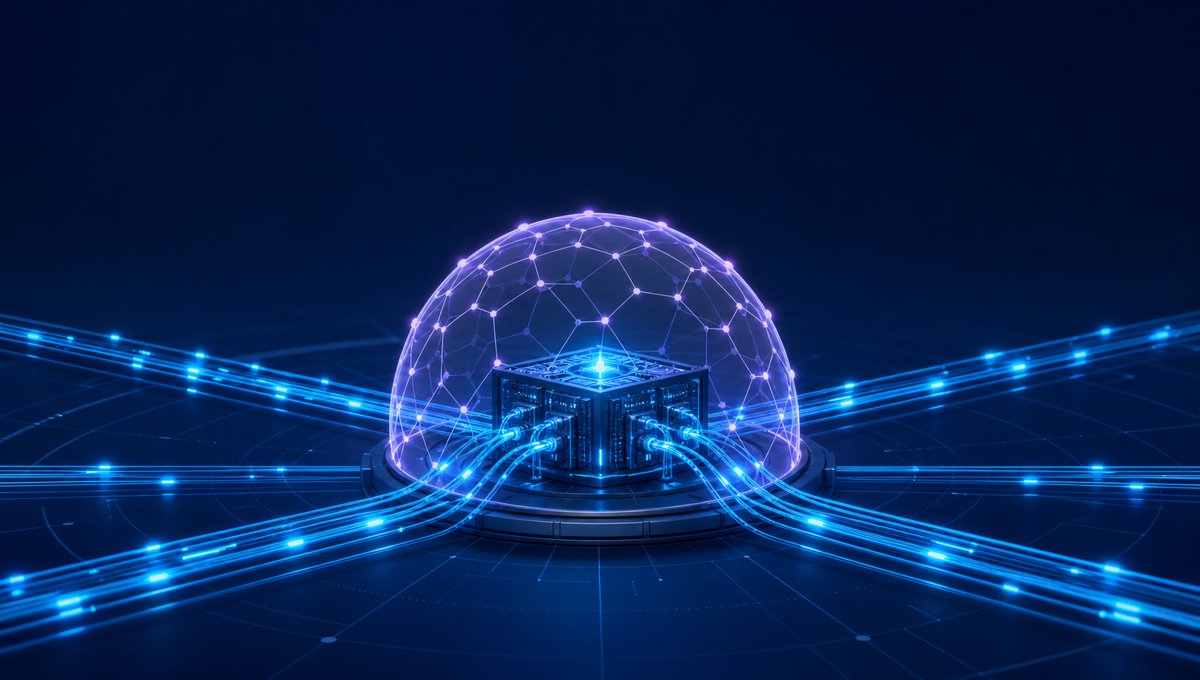
【新提携】PacketLightがQuantum XChangeと提携しました。
DWDM/OTNソリューションにポスト量子暗号(PQC)を統合し、量子安全な光ネットワーキング・ポートフォリオを拡充。PQC・QKD・ハイブリッドから選べる、将来に備えた通信中データ保護を実現します。
packetlight.jp/packetlight-q…
3
51

6 Dec 2025
7/ Silicom: NICs & bypass switches for encryption/decryption. Risk: Invisible traffic mirroring or backdoors. PacketLight: Optical transport with Layer-1 encryption—trust consolidated in vendor. #NetworkSecurity
1
1
4
236

16 Sep 2025
Congrats to PacketLight for pushing 400G ultra long haul transport to 4,000km. #CoherentPluggables spr.ly/6011AD0uT
4
64

28 Aug 2025
$GLW $COHR $LITE $CRDO - the data center is the unit of compute.
———
Below is a structured ecosystem map—focused on who actually manufactures the building blocks that let you stitch multiple data centers into a single, unified “scale‑across” domain over metro, regional and multi‑state distances. I group vendors by what they make and why it matters for long‑distance, low‑jitter interconnects used by high‑performance clusters and Spectrum‑XGS‑class networks. I call out representative names, not an exhaustive list, and I anchor each group to concrete product categories your networking teams buy and deploy.
Optical connectors and front‑panel interconnects. Hyperscale‑grade connectors determine density, insertion loss and cleanability at the transceiver faceplate and in patch fields. US Conec is central here: it created the MTP brand of MPO and now drives VSFF formats MDC (duplex) and MMC (multifiber) that pack 2–3x the ports into the same RU footprint versus legacy LC/MPO, with documented 3x density for MDC and up to 3x MPO density for MMC; US Conec also maintains the ferrule technology and licensing into cabling OEMs, and has public partnerships with Corning and Sumitomo to scale supply.     Senko Advanced Components is another anchor supplier, owning the CS and SN VSFF families used on QSFP‑DD/OSFP breakouts and inside dense cassettes; Senko explicitly positions CS as a denser, operationally simpler alternative to LC duplex on modern pluggables.  Additional high‑quality connector/cabling system providers with strong data‑center portfolios include Corning Optical Communications, TE Connectivity, Molex (now also a WSS vendor), Panduit, Leviton, HUBER SUHNER, Rosenberger OSI, Diamond SA and AFL. They collectively supply LC/MPO/VSFF jumpers, cassettes and panels; HUBER SUHNER, Rosenberger OSI and Diamond emphasize pre‑terminated, high‑density systems and ultra‑low‑loss or high‑power variants appropriate for coherent optics.        
Optical cabling and fiber manufacturers. For inside plant, campus and long‑haul, you’re mostly sourcing from Corning, Prysmian Group/Draka, OFS (Furukawa), Sumitomo Electric, Fujikura, CommScope, Nexans, Belden, YOFC, STL (Sterlite), Hengtong and ZTT. Corning dominates preform and SMF innovation; Prysmian and OFS are mainstays for outside‑plant and ribbon; CommScope, Belden, Nexans and AFL provide end‑to‑end data center systems; Chinese groups YOFC/Hengtong/ZTT/STL deliver very large volumes globally. Several of these vendors publish DCI‑specific or data‑center‑optimized product lines and sustainability roadmaps (e.g., Nexans’ low‑carbon cables) that matter for permitting and ESG.          
Coherent pluggable optics for DCI. The physical enablers of single‑lambda 400G/800G DCI are the QSFP‑DD/OSFP coherent ZR, ZR and OpenZR transceivers. Primary merchant module suppliers include Coherent Corp. (ex II‑VI/Finisar), Lumentum (with NeoPhotonics), Eoptolink, InnoLight, Accelink, Hisense Broadband and Cisco/Acacia. These vendors ship 400ZR and ZR modules with duplex LC front ends, tunable C‑band operation, and DSPs from Marvell (ex‑Inphi), Acacia/Cisco and NTT Electronics; the same ecosystem is now demonstrating 800ZR class devices. These parts let you run 400G wavelengths 80–120 km without a full line system (ZR), and materially farther on ZR with amplification and ROADMs.      
Coherent DSP and silicon photonics engines. At the heart of ZR/ZR is the coherent DSP. Marvell ships Deneb/Orion‑class coherent DSPs used across multiple vendors; Acacia (Cisco) integrates DSPs into its pluggables for ZR/OpenZR /OpenROADM; NTT Electronics supplies 400G DSPs and co‑packaged coherent devices. Ciena (WaveLogic), Nokia (PSE), and Infinera (ICE) supply embedded coherent engines for line cards and transponders; they are less about pluggables and more about maximum reach/spectral efficiency over long spans. For CPO/laser ecosystems, Lumentum and Coherent supply tunable lasers, pump lasers and external light sources that align with emerging CW‑WDM MSAs for co‑packaged optics.    
Open line systems, optical amplification and ROADMs. When your DCI goes beyond ~80–120 km or you want multi‑degree flexibility, you add EDFAs/Raman amps, WSS‑based ROADMs, and an open line system. Line‑system and transponder OEMs include Ciena (WaveLogic 5/6 Waveserver), Infinera (ICE6/ICE‑X, Groove/Chassis), Nokia (1830/PSE), Cisco (8000 Routed Optical Networking), ADVA/Adtran (FSP 3000), Ribbon (Apollo), Ekinops (Ekinops360), PacketLight and Smartoptics. These systems integrate EDFAs, dispersion management and WSS to let you ride ZR/ZR or alien wavelengths over metro, regional and multi‑state routes, and they’re the practical path to spreading a training cluster across states as a single logical domain.         
Wavelength‑selective switches, ROADMs and pump/amplifier components. Behind every open line system sit component suppliers. Lumentum and Coherent are the 2 most critical vendors for WSS, tunable lasers, ITLAs/nITLAs, integrated coherent receivers and EDFAs; Molex also supplies WSS after acquiring Nistica; Santec supplies WSS as well. This layer can be a single point of failure in tight markets because WSS and pump lasers are technically demanding, capital‑intensive to manufacture, and concentrated among few companies.   
Passive DWDM mux/demux and filters. For short‑haul ZR or as building blocks inside line systems, you still deploy thin‑film‑filter mux/demux modules, OADMs and VOAs from specialists such as DiCon Fiberoptics, Precision OT and numerous OEMs supplying TFF/AWG units. These are commodity by comparison to WSS but still matter for insertion loss budgets and channel plans.  
Dispersion management. Over very long spans, especially where legacy SMF or PAM4 regimes are involved, you can still encounter fixed or tunable DCMs; OFS is a notable supplier with extensive DCM product families. While modern coherent DSPs largely equalize CD/PMD digitally, DCMs remain useful in specific engineered paths and for non‑coherent legs. Be aware that fiber‑based DCMs add latency; engineering teams now prefer Raman coherent compensation when possible.  
Optical circuit switches for dynamic fiber connectivity. For large fabrics and multi‑site clusters you may want all‑optical circuit switching to reconfigure dark fiber paths, lab networks or GPU POD interconnects with negligible added latency. HUBER SUHNER’s Polatis and Calient are the 2 pure‑play OCS vendors; Polatis (acquired by HUBER SUHNER) continues to expand capacity and production to support AI data centers. These switches are protocol‑ and rate‑agnostic and help operationalize “scale‑across” by hot‑patching wavelengths and fibers without truck rolls.   
Routers and switches that host ZR/ZR . The practical IP layer that terminates coherent pluggables at each site comes from Arista, Cisco and Juniper. Arista’s 7280R3 platforms explicitly support dense 400ZR DCI; Cisco’s 8000 family and Routed Optical Networking configs document ZR/ZR /Bright‑ZR operations; Juniper provides ZR/OpenZR across QFX/PTX lines with design guidance for IPoDWDM. This is the “IP over DWDM” stack that lets you bypass discrete transponder shelves for many DCI use cases.    
Test, turn‑up and monitoring equipment. Scaling unified DCI links demands institutionalized inspection/cleaning and characterization. EXFO and VIAVI dominate OTDR, dispersion testing and continuous fiber monitoring for high‑fiber‑count builds; their data‑center‑specific workflows reduce turn‑up time and de‑risk large‑scale expansions. This is operationally critical when you are juggling dozens of parallel ZR/ZR circuits and open line spans between states.  
How this maps to unified data center‑to‑data center connectivity. In a Spectrum‑XGS context, the single‑node, multi‑site illusion relies on 2 optical layers. First, IP routers or DCI shelves at each site terminate coherent pluggables (400ZR/ZR /800ZR as appropriate) over dark fiber or carrier waves. For metro distances ≤120 km and tolerant tail‑latency budgets, ZR plus in‑line EDFAs can be sufficient; for regional/multi‑state spans you typically deploy ZR pluggables or embedded coherent line cards into an open line system equipped with EDFAs/Raman and WSS ROADMs to handle add/drop and protection. The component vendors above represent the practical supply base for every element of that chain—from the LC/VSFF jumpers on the front panel all the way to WSS modules and pump lasers deep in the line system. The connector suppliers determine achievable faceplate density and field serviceability; the fiber makers and cable OEMs determine attenuation/PMD/macrobend behavior and installation options; the coherent optics/DSP vendors determine reach, FEC and spectral efficiency; the WSS/amp vendors set your network’s reconfigurability and margin. You select combinations based on target reach, span loss, span count, amplifier spacing, channel plan and protection policy, and you validate with OTDR/dispersion tooling from EXFO or VIAVI.    
Representative vendor list by role you can diligence for a Spectrum‑XGS multi‑state build. For connectors and patch systems: US Conec (MTP/MDC/MMC), Senko (CS/SN), Corning, TE Connectivity, Molex, Panduit, Leviton, HUBER SUHNER, Rosenberger OSI, Diamond SA, AFL.          For fiber/cable: Corning, Prysmian, OFS/Furukawa, Sumitomo Electric, Fujikura, CommScope, Nexans, Belden, YOFC, STL, Hengtong, ZTT.       For coherent optics and DSP: Coherent, Lumentum (NeoPhotonics), Cisco/Acacia, Eoptolink, InnoLight, Accelink, Hisense; DSPs from Marvell, Acacia and NTT Electronics.      For line systems, ROADMs and transponders: Ciena, Infinera, Nokia, Cisco, ADVA/Adtran, Ribbon, Ekinops, PacketLight, Smartoptics.     For optical components inside those line systems: Lumentum, Coherent, Molex, Santec, DiCon.     For optical circuit switching: HUBER SUHNER Polatis, Calient.   For test/turn‑up/monitoring: EXFO, VIAVI.   For ZR‑capable routers/switches: Arista 7280R3, Cisco 8000, Juniper PTX/QFX families.   
Implications for procurement and risk. The highest concentration risk is in WSS and pump lasers (Lumentum/Coherent/Molex/Santec), coherent DSPs (Marvell/Acacia/NTT‑EL), and high‑density VSFF connectors (US Conec/Senko). These are not easily dual‑sourced at identical specs and lead times; if your strategy hinges on multi‑state scale‑across with tight tail‑latency percentiles, you should pre‑qualify at least 2 module vendors per optical interface and 2 connector SKUs per density tier, and keep an alternate open line system vendor on framework agreement. The good news is that the router ecosystem has broadly normalized ZR/ZR operations, making IPoDWDM stacks vendor‑diverse.  
Bottom line. If your objective is to make multiple data centers behave like a single, schedulable node over 100–1000 km, the concrete supply base exists today. You will spec VSFF connectors and high‑density cabling from US Conec/Senko plus a Tier‑1 cabling house; you will ride 400ZR for metro rings and step up to OpenZR /embedded coherent on an open line system from Ciena/Infinera/Nokia/Cisco/ADVA/others for regional and multi‑state spans; you will rely on Lumentum/Coherent/Molex/Santec for WSS/amp subsystems and on Marvell/Acacia/NTT‑EL DSPs inside the optics; you will host these pluggables in ZR‑ready routers from Arista/Cisco/Juniper; and you will instrument turn‑up with EXFO/VIAVI. This is the practical vendor landscape that underpins unified data center‑to‑data center connectivity for Spectrum‑XGS‑class deployments.    
28 Aug 2025

$NVDA NVIDIA Q2 FY2026 Earnings Call - Comprehensive Networking Analysis
Executive Summary: Networking as Core Growth Driver
NVIDIA’s networking business delivered record revenue of $7.3 billion in Q2, representing 46% sequential and 98% year-over-year growth. This explosive growth reflects networking’s critical role in AI infrastructure, with the company now offering three distinct networking technologies: NVLink for scale-up, InfiniBand/Spectrum-X for scale-out, and the newly announced Spectrum-XGS for scale-across. Management emphasized that choosing the right networking can improve AI factory efficiency by tens of percent, effectively making the networking investment “free” given the $50 billion cost of a gigawatt data center.
1. OVERALL NETWORKING BUSINESS PERFORMANCE
1.1 Financial Metrics
Q2 Revenue: $7.3 billion (record quarter)
Growth Rates: 46% sequential, 98% year-on-year
Revenue Mix Contributing to Growth:
Spectrum-X Ethernet
InfiniBand
NVLink
1.2 Strategic Positioning
Colette Kress emphasized: “Escalating demands of AI compute clusters necessitate high-efficiency and low-latency networking… with strong demand across Spectrum-X Ethernet, InfiniBand, and NVLink.”
1.3 Historical Context
Jensen referenced the Mellanox acquisition: “It’s the reason why NVIDIA dedicates so much in networking. That’s the reason why we purchased Mellanox five and a half years ago.”
1. THREE-TIER NETWORKING ARCHITECTURE
2.1 Jensen’s Framework
Jensen Huang articulated NVIDIA’s comprehensive networking strategy: “We now offer three networking technologies. One is for scale-up, one is for scale-out, and one for scale-across.”
2.2 The Economics of Networking
Critical insight from Jensen: “Choosing the right networking, the performance, the throughput improvement going from 65% to 85% or 90%, that kind of step-up because of your networking capability effectively makes networking free… the ability to improve the efficiency of that factory by tens of percents results in $10 billion, $20 billion worth of effective benefit.”
1. NVLINK - SCALE-UP NETWORKING
3.1 Revolutionary Architecture Evolution
Previous Generation:
NVLink 8: Node-scale computing where “each node is a computer”
Current Generation:
NVLink 72: Rack-scale computing where “each rack is a computer”
Jensen on the achievement: “That disaggregation of NVLink 72 into a rack-scale system was extremely hard to do, but the results are extraordinary”
3.2 Performance Specifications
Bandwidth: “14x the bandwidth of PCIe Gen 5”
Impact: “We’re seeing orders of magnitude speed up and therefore energy-efficiency and therefore cost-effectiveness of token generation because of NVLink 72”
3.3 Strategic Importance for AI Evolution
Jensen linked NVLink directly to the AI paradigm shift: “We built the Blackwell NVLink 72 system, a rack-scale computing system for this moment. We’ve been working on it for several years.”
Critical for Reasoning Systems:
“At a time when we have long-thinking, thinking models, agentic AI, reasoning systems, the NVLink basically amplifies the memory bandwidth, which is really critical for reasoning systems”
“NVLink 72 is what made it possible for Blackwell to deliver such an extraordinary generational jump over Hopper’s NVLink 8”
3.4 NVLink Fusion Initiative
“Positive reception to NVLink Fusion, which allows semi-custom AI infrastructure, has been widespread”
Example deployment: “Japan’s upcoming FugakuNEXT will integrate Fujitsu’s CPUs with our architecture via NVLink Fusion”
Multi-workload capability: “It will run a range of workloads including AI, supercomputing and quantum computing”
3.5 Future Generation
Rubin platform includes “NVLink 144 scale-up switch” (already taped out to TSMC)
Represents continued evolution of rack-scale architecture
3.6 Revenue Impact
“Strong growth as customers deployed Grace Blackwell NVLink rack-scale systems”
Contributing significantly to the $7.3B networking revenue
1. SPECTRUM-X ETHERNET - ENHANCED SCALE-OUT NETWORKING
4.1 Product Positioning & Differentiation
Jensen clarified the unique nature of Spectrum-X: “Spectrum Ethernet is not off the shelf. It has a whole bunch of new technologies designed for low latency and low jitter and congestion control.”
4.2 Performance Metrics
Annualized Revenue: “exceeding $10 billion”
Growth: “double-digit sequential and year-over-year growth”
Market Age: “only about a year and a half old”
Market Success: Jensen declared it “a home run”
4.3 Technical Capabilities
Designed specifically for “Ethernet AI workloads”
Provides “the highest-throughput and lowest-latency network for Ethernet”
Includes advanced congestion control mechanisms
“Has the ability to come closer, much, much closer to InfiniBand than anything that’s out there”
4.4 Target Market
For customers “who would like to use Ethernet, because their whole data center is built with Ethernet”
4.5 Spectrum-X in Rubin Platform
The Rubin platform includes “Spectrum-X scale-out and scale-across switch” as one of its six chips
1. SPECTRUM-XGS - NEW SCALE-ACROSS TECHNOLOGY
5.1 Product Announcement
“At Hot Chips, we introduced Spectrum-XGS Ethernet, a technology designed to unify disparate data centers into giga-scale AI superfactories”
5.2 Performance Promise
“Projected to double GPU-to-GPU communication speed”
5.3 Early Adoption
“CoreWeave is an initial adopter of the solution”
5.4 Strategic Purpose
Jensen explained: “Spectrum-XGS, a giga-scale for connecting multiple data centers, multiple AI factories into a superfactory, a gigantic system”
5.5 Market Vision
“You’re going to see that networking obviously is very important in AI factories”
1. INFINIBAND - HIGH-PERFORMANCE SCALE-OUT
6.1 Performance Leadership
Jensen’s unequivocal statement: “InfiniBand, which is unquestionably the lowest latency, the lowest jitter, the best scale-out network”
6.2 Financial Performance
“InfiniBand revenue nearly doubled sequentially”
Driven by “adoption of XDR technology”
6.3 Technical Advantages
XDR provides “double the bandwidth improvement over its predecessor”
“Especially valuable for the model builders”
Benchmark superiority: “If you were to benchmark an AI factory, the ones with InfiniBand are the best performance”
6.4 Target Market & Trade-offs
Primary users: “For supercomputing, for the leading model makers, InfiniBand, Quantum InfiniBand is the unambiguous choice”
Complexity consideration: “It does require more expertise in managing those networks”
6.5 Competitive Positioning
Positioned as the premium option for those requiring absolute best performance, despite higher complexity
1. NETWORKING’S ROLE IN AI INFRASTRUCTURE
7.1 Critical Component of Blackwell Success
Colette Kress noted: “Blackwell is still going to be the lion’s share of what we have in terms of data center. But keep in mind that helps both our compute side as well as it helps our networking side because we are selling those significant systems that are incorporating the NVLink”
7.2 Integrated System Sales
Networking growth tied directly to rack-scale system deployments
HGX systems driving both compute and networking revenue
Seamless integration enabling customer adoption
7.3 Supply Chain Integration
Six chips required for complete Rubin platform
Networking components integral to platform, not add-ons
Manufacturing coordination across multiple chip types
1. COMPETITIVE DYNAMICS & MARKET POSITIONING
8.1 Network Efficiency as Competitive Advantage
Jensen’s framework on networking ROI: “The AI factory, a gigawatt as I mentioned before, could be $50 billion. And so the ability to improve the efficiency of that factory by tens of percents is – results in $10 billion, $20 billion worth of effective benefit.”
8.2 Performance Benchmarking
Throughput improvements from 65% to 85-90% with right networking choice
Direct revenue impact in power-limited environments
Efficiency gains “effectively makes networking free”
8.3 Full-Stack Integration Advantage
Jensen emphasized the complexity: “In order to build Blackwell, the platform; and Rubin, the platform, we had to build CPUs that connect fast memory… to the GPU; to a SuperNIC, to a scale-up switch, we call NVLink, completely revolutionary, we’re in our fifth generation now; to a scale-out switch, whether it’s Quantum or Spectrum-X Ethernet; to now scale-across switches”
1. CUSTOMER ADOPTION & USE CASES
9.1 Cloud Service Providers
Major CSPs deploying all three networking tiers
CoreWeave as early adopter of Spectrum-XGS
Seeing 10x inference improvements with proper networking
9.2 AI Model Builders
OpenAI, Meta, Mistral using GB200 NVL72 systems
Leveraging NVLink 72 for training and inference
InfiniBand preferred for leading model makers
9.3 Quantum & Supercomputing Centers
FugakuNEXT (Japan) - NVLink Fusion integration
Julich, AIST, NNF, NERSC running on CUDA-Q platform
300 ecosystem partners supporting quantum initiatives
9.4 Enterprise Deployments
Growing adoption of Spectrum-X for Ethernet-based infrastructure
RTX PRO servers integrating networking for standard IT environments
1. FUTURE ROADMAP & TECHNOLOGY EVOLUTION
10.1 Near-term Developments
Rubin platform with enhanced networking (volume production next year)
NVLink 144 representing next evolution
Continued Spectrum-X market expansion
10.2 Long-term Vision
Jensen’s projection: “Soon we’ll be building millions of GPU – millions of Rubin GPU platforms powering multi-gigawatt, multi-site AI superfactories”
10.3 Technology Integration
Silicon Photonics processor in Rubin (taped out)
Convergence of optical and electrical networking
Scale-across becoming critical for superfactory architecture
1. KEY STRATEGIC INSIGHTS
11.1 Networking as Revenue Enabler
Direct quote establishing the value proposition: “When we increase the perf per watt, the token generation per amount of usage of energy, we are effectively driving the revenues of our customers”
11.2 Annual Innovation Cadence
Continuous improvement across all three networking tiers
Coordinated development with compute platforms
Maintaining technology leadership through rapid iteration
11.3 Market Education Need
Jensen spent considerable time explaining networking importance, suggesting market still underappreciates networking’s role in AI infrastructure
11.4 Pricing Power
Record revenue and growth rates indicate strong pricing
Performance advantages justify premium pricing
Integrated solutions prevent commoditization
1. ANALYST Q&A INSIGHTS ON NETWORKING
12.1 Aaron Rakers (Wells Fargo) Question
Question: “I want to go back to the Spectrum-XGS announcement this week, and thinking about the Ethernet product now pushing over $10 billion of annualized revenue, just what is the opportunity set that you see for Spectrum-XGS?”
Jensen’s Comprehensive Response:
Detailed explanation of three-tier architecture
Emphasized each tier serves distinct purpose
Highlighted massive efficiency gains from proper networking
Positioned Spectrum-XGS as essential for future superfactories
12.2 Stacy Rasgon (Bernstein) Question
Question about Q3 growth allocation across products
Colette’s Response:
“Blackwell is still going to be the lion’s share of what we have in terms of data center. But keep in mind that helps both our compute side as well as it helps our networking side because we are selling those significant systems that are incorporating the NVLink”
This confirms networking revenue is tightly coupled with compute platform sales.
1. TECHNICAL SPECIFICATIONS SUMMARY
13.1 Bandwidth Comparisons
NVLink: 14x PCIe Gen 5 bandwidth
InfiniBand XDR: 2x bandwidth over previous generation
Spectrum-XGS: Expected to 2x GPU-to-GPU communication speed
13.2 Efficiency Metrics
Network efficiency improvements: 65% → 85-90%
Token generation improvement with NVLink 72: “orders of magnitude”
ROI on networking: Can generate $10-20B benefit on $50B investment
13.3 Scale Metrics
NVLink 8 → NVLink 72 → NVLink 144 (roadmap)
Spectrum-X: $10B annualized revenue in ~1.5 years
InfiniBand: Revenue nearly doubled sequentially
1. COMPETITIVE MOAT ANALYSIS
14.1 Integration Complexity
The full quote revealing the moat: “The complications, the complexity of everything that we do is really quite extraordinary. It’s just done in a really, really extreme scale now.”
14.2 Multi-Generation Advantage
Fifth generation NVLink
Years of development on rack-scale architecture
Continuous innovation across all networking tiers
14.3 Ecosystem Lock-in
Software optimization for specific networking architectures
Customer investments in training for InfiniBand management
Platform-level integration preventing component substitution
1. FINANCIAL IMPACT & PROJECTIONS
15.1 Current Contribution
$7.3B quarterly revenue (approximately 15.6% of total revenue)
Growing faster than company average (98% YoY vs 56% for data center)
Margin accretive given software/IP content
15.2 Future Growth Drivers
Gigawatt superfactory buildouts requiring scale-across
Continued Blackwell/Rubin deployments driving NVLink
Enterprise Ethernet transitions to Spectrum-X
Sovereign AI initiatives requiring complete networking stack
15.3 Investment Thesis
Jensen’s articulation of networking value: “Choosing the right networking, you’re basically paying – you’ll get a return on it like you can’t believe”
This positions networking not as a cost but as a revenue multiplier for AI infrastructure deployments.
10
2,522

8 Aug 2025
Quantum-secure networking is no longer theory, NEC & PacketLight just demoed QKD at full data speeds without hardware upgrades.
Meanwhile, Fujitsu eyes 10,000 qubits by 2030.
Quantum is accelerating.
Is your crypto ready?
Explore $MCM! Built for the quantum age.
Source: tipranks.com/news/quantum-co…
#QuantumComputing #PostQuantum #Mochimo #CryptoSecurity
1
5
15
413

5 Aug 2025
🔒量子鍵配送×400G DWDM、実証成功!
PacketLightとNECが、量子通信と既存光ネットワークの共存を実証。
NECのQKDとPacketLightのPL-4000Mを用い、高性能かつ量子セキュアな通信環境を実現。
量子安全な通信インフラの実装が、いよいよ現実に。
packetlight.com/about/press-…
1
10
700

31 Jul 2025
$IONQ PacketLight and NEC Demonstrate Quantum Key Distribution Over 400G DWDM Link - Quantum Computing Report.
This demonstration suggests a scalable and cost-effective method for layering quantum security onto operational environments share.google/Q5w9z0gtxcJ3y2U…
1
20
581