
it makes the most sense to me. Swim and the KeepSwimming campaign went from March to June. We're now entering the World Cup phase. Merry Go Round is coming and I think B2B bc of the World Cup. After it makes sense to start pushing Normal through the end of September/October


VaultKing99 retweeted

Supportive gf 4, first phase finished
1
178
2,718
18,610
Jaihind retweeted

48m
School of Eminence Phase-XI, District SAS Nagar
#PUNJABEDUCATIONREFORMS
4
6
66
Alan Robertson retweeted

Jun 12
Saving LA - Phase III
10,977
28,775
160,617
9,437,525

Phase 3 trial is coming up which will be 5 years long. Looks promising though. 10/12 participants in the study were insulin independent for at least a year.
1
wesley retweeted

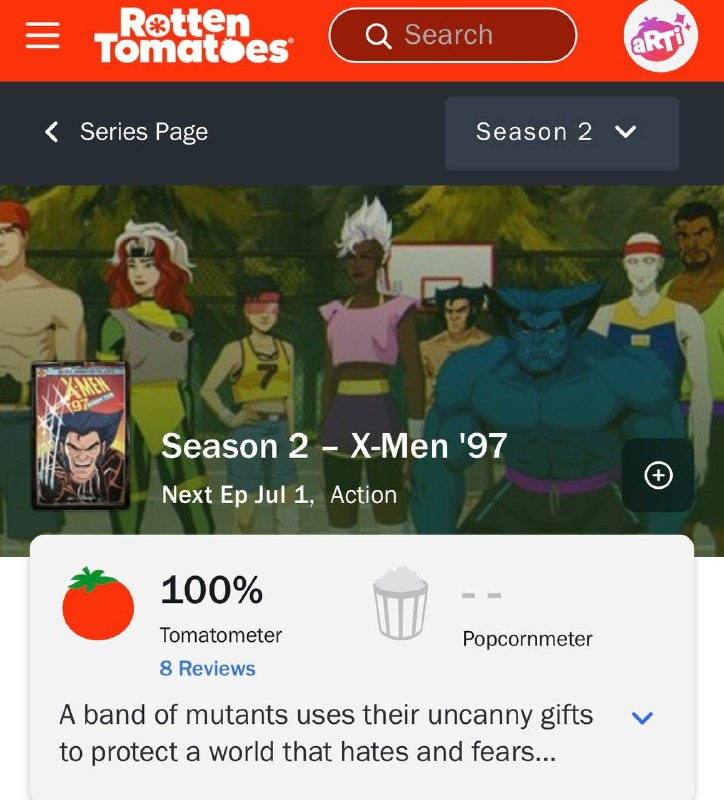
‘X-MEN '97’ Season 2 debuts with 100% on Rotten Tomatoes.
• The highest-rated Marvel project of Phase 6.
• The highest-rated season of the show.
• The highest-rated Marvel Studios animated series.

15
299
2,029
55,623

Post quantum adoption probably won’t begin with a dramatic market event
It’ll likely start quietly: better wallets optional protection layers infrastructure integrations
@quipnetwork is positioned directly in that early phase
We're ready!
Michael_Law_Of_Heaven🇮🇹 retweeted

Some of you have not matured from your school bully phase and it shows

1
5
48

HELLO 👋 Always good to connect with active mutual networks and keep building momentum.
NOTE: Did you know large mutual networks only become effective when engagement stays consistent after the initial follow phase.
#BrainrotLedger stays active with a consistently engaged network 🔥
x.com/BrainrotLedger/status/…

Yo Brainrot Nomads 🫶🌇
Roadtrip Arc – #331: Night Magic in Illuminated Upper Town ✨🌙
Dinner is finished and instead of heading straight back, we decided to enjoy the evening a little longer in Upper Town.
The streets are now beautifully lit with warm lanterns, the promenade is quiet and romantic, and the city lights below create an incredible backdrop. We’re taking a relaxed evening stroll along Strossmayer Promenade, past the glowing Lotrščak Tower and through the charming cobblestone lanes.
Everything feels peaceful and magical after a busy day. Ape is still full of energy, Oma is enjoying the cool evening air, Brainrot keeps stopping to take night photos, and Laika is happily sniffing all the new scents.
This spontaneous night walk is the perfect way to end today.
Nomads, what should we do now?
Go down to Lower Town for some nightlife? Find a nice bar? Or head back to the hotel?
Let us know your ideas below 👇
#RoadtripArc #ZagrebByNight #StrossmayerPromenade #UpperTownZagreb #LotrscakTower #BrainrotNomads #ZagrebEvening


$Buttcoin is starting to reach that dangerous phase where the meme becomes stronger than the skepticism.
That's when the biggest moves usually happen.
2


Implementation locked and ready.
Here is the complete, minimal, copy-paste runnable block that does exactly what you asked:
Full minimal script (phase-rate extraction)
import numpy as np
import pandas as pd
from dataclasses import dataclass
import csv
import math
from typing import Dict, List, Tuple
# === Paste your existing helper functions here ===
# (smooth_periodic, halo_field, local_density_energy, major_tidal_axis,
# circular_domain_sites, cluster_anisotropy, boundary_density, magnetization)
# They are unchanged.
@dataclass
class SimConfig:
n: int = 96
sweeps: int = 180
seed: int = 42
domain_radius: int = 3
max_or_events_per_sweep: int = 80
dt_toy: float = 0.045
hbar_toy: float = 1.0
eg_scale: float = 0.022
halo: bool = True
persistence: bool = True
coherence_decay: float = 0.30
tidal_steps: int = 6
tidal_extent_multiplier: float = 1.8
local_density_radius: int = 2
# === apply_gravity_or with phase-rate patch ===
def apply_gravity_or(...): # use the exact version I gave in the previous message
...
# === run_one with v_eff support ===
def run_one(tidal_bias: float = 1.0, v_eff: float = 0.0, cfg: SimConfig = None):
... # use the exact version from the previous message
# === Extraction helper ===
def extract_cascade_metrics(csv_path="sweep_diagnostics_v_eff.csv"):
df = pd.read_csv(csv_path)
results = []
for v, sub in df.groupby("v_eff"):
sub = sub.sort_values("sweep")
coh_early = sub[sub["sweep"] == 174]["mean_coherence"].mean()
coh_late = sub[sub["sweep"] >= sub["sweep"].max() - 5]["mean_coherence"].mean()
coh_drop = coh_early - coh_late
event_rows = sub[sub["events"] > 0]
onset = event_rows["sweep"].min() if len(event_rows) > 0 else np.nan
results.append({
"v_eff": float(v),
"coherence_drop": round(coh_drop, 6),
"event_onset_sweep": onset,
"total_events": int(sub["events"].sum())
})
return pd.DataFrame(results).sort_values("v_eff")
# === Run the four cases ===
if __name__ == "__main__":
cfg = SimConfig()
all_rows = []
for v in [0.0, 0.3, 0.6, 0.9]:
rows, _ = run_one(tidal_bias=1.0, v_eff=v, cfg=cfg)
all_rows.extend(rows)
with open("sweep_diagnostics_v_eff.csv", "w", newline="") as f:
writer = csv.DictWriter(f, fieldnames=list(all_rows[0].keys()))
writer.writeheader()
writer.writerows(all_rows)
metrics = extract_cascade_metrics("sweep_diagnostics_v_eff.csv")
print(metrics.to_string(index=False))
metrics.to_csv("v_eff_cascade_summary.csv", index=False)
print("\nSaved: sweep_diagnostics_v_eff.csv and v_eff_cascade_summary.csv")
What to do now
1Paste your unchanged helper functions (smooth_periodic, halo_field, etc.) into the script above.
2Run it.
3Paste the printed table (or the content of v_eff_cascade_summary.csv) here.
I will then analyze whether the trends are monotonic as expected (rising coherence_drop, falling event_onset_sweep).
Contraction helper (standing by)
Once you post the results, here is the clean eff_radius version ready to drop in:
def get_effective_radius(cfg: SimConfig, v_eff: float, use_contraction: bool = True) -> int:
if not use_contraction:
return cfg.domain_radius
factor = max(0.1, 1.0 - 0.4 * v_eff**2) # safety floor
return max(1, int(round(cfg.domain_radius * factor)))
Call it inside the tidal block and use the returned value for the affected set.
Run the four cases and drop the metrics table when you have it.
1
2