
Missouri voters will decide Aug. 4 whether to approve Amendment 5, a Constitutional amendment that would require the gradual phaseout and eventual elimination of the state's individual income tax.
midriversnewsmagazine.com/ne…
#missouri #amendment5
2

Missouri voters will decide Aug. 4 whether to approve Amendment 5, a Constitutional amendment that would require the gradual phaseout and eventual elimination of the state's individual income tax.
westnewsmagazine.com/news/am…
#missouri #amendment5
4

The empire built an AI too dangerous for the world, then discovered it had built one too dangerous for the empire.
A Commerce Department export-control directive issued Jun 12 forced Anthropic to disable its two most advanced models, Fable 5 and Mythos 5, for every customer on the planet. The order barred access by any foreign national inside or outside the United States, a category that swept in Anthropic's own foreign-national employees. The company called it a misunderstanding and said it was working to restore access. The US has used export controls to restrict AI chips before, but never the models themselves, making this an escalation in the campaign to keep American-made frontier AI out of unapproved hands.
The order followed a warning from Amazon, a competitor and cloud host, whose researchers used a series of prompts to make the Mythos-class model produce restricted information about cyberattacks. Andy Jassy reportedly raised the alarm with senior officials, and the administration moved within days. The capability at the center of the panic is automated offensive cyber-ops: exploit-finding that once required whole teams of specialists, now available to anyone who can phrase a prompt. White House AI adviser David Sacks framed the shutdown as reluctant and temporary, pending remediation.
This is the latest act in a months-long fight. Anthropic signed a $200 million Pentagon contract last July, then refused contract terms that would have allowed its models to be used for "all lawful purposes," citing autonomous weapons and mass domestic surveillance. The Pentagon designated the firm a supply-chain risk and initiated a six-month phaseout of Claude. The model subsequently banned from the world had already been banned from the US military.
My take — the referee is also the arms dealer.
The national-security costume is doing a lot of work here. Strip it off and what's underneath is inter-capital warfare: one tech giant jailbreaking a rival's product and running to the state, which obligingly throttles the competitor under export law. The surveillance and kill-chain refusals that started this fight were never a principled stand against the panopticon; they were a contract negotiation that went sideways. The longer the empire's contractors spend fighting each other, the longer it takes to build the infrastructure they're all competing to sell it.
61
Say Goodbye to a Major Streaming Service as Disney Quietly Announces Phaseout share.google/ySCWin1gadKbxyQ…
1

Say Goodbye to a Major Streaming Service as Disney Quietly Announces Phaseout share.google/xkZHjmtOSwG1JjZ…
3
31

Can't make sense of the argument that voters (presumably) supporting the energy transition led to destroying of car and chemical industries.
The German car industry is in large part suffering because it did not move fast enough on the energy transition, and is losing on EVs in China. The other big reason is it fell hopelessly behind on software, but that is completely unrelated to the energy transition.
As for the chemical industry, the shock was exogenous - invasion of Ukraine. Some might raise the nuclear phaseout to blame the energy transition. But the chemical industry relies on gas and oil for precursors, not electricity.
The article makes a strong argument as is that trust is thin after constant fines, copyright issues and taxes. But the energy transition argument feels gratuitously tacked on because that's what would resonate with a certain type of reader, rather than on its merits.

2
339

The SALT cap went from $10K to $40K under the new tax law.
Sounds like a win.
But if your household income is above $600K, the phaseout wipes it out entirely.
You're still capped at $10K.
Most high earners are celebrating a benefit they don't actually get.
1
10

Say Goodbye to a Major Streaming Service as Disney Quietly Announces Phaseout share.google/J3Sllh2GBBg7YDY…
11

Jun 14
Say Goodbye to a Major Streaming Service as Disney Quietly Announces Phaseout
cbr.com/disney-plus-hulu-pro…
1
2
31

Jun 14
He cut a program that lowers mortality on the cheap, abruptly and without a phaseout plan.
Now mortality is increasing. Hundreds of thousands now, millions by 2030 if there is no intervention.
Interpret that how you'd like.
2
28
Anna Romano retweeted

2 Dec 2023
"The 1.5-degree limit is only possible if we ultimately stop burning all fossil fuels.
Not reduce.
Not abate.
Phaseout."
@UN Secretary General @antonioguterres
| #ActOnClimate #climate #COP28
419
615
1,301
54,568

Jun 14
Delta Air Lines bids farewell to its Boeing 767-300ER after 36 years of service. The 1990-vintage aircraft N171DN logged over 151k hours and nearly 23k cycles before its retirement on April 9, 2026. Read how Delta is navigating the 2030 phaseout deadline… simpleflying.com/inside-delt…
1
14

Jun 14
Delhi-NCR moves toward cleaner transport with diesel auto phaseout, stricter PUC fuel checks, and tougher industrial emission rules before winter.
Read More: urbanacres.in/delhi-ncr-next…
@moefcc
@CPCB_OFFICIAL
@mygovindia
@nitin_gadkari
@DelhiGovDigital
@noida_authority
#Delhi #NCR #Pollution #EV #CNG #Mobility #CleanAir #Transport

11

Jun 14
Say Goodbye to a Major Streaming Service as Disney Quietly Announces Phaseout share.google/ySCWin1gadKbxyQ…
30

Jun 14
Say Goodbye to a Major Streaming Service as Disney Quietly Announces Phaseout
cbr.com/disney-plus-hulu-pro…
30

Jun 13
E15 maybe in the Midwest but not anywhere else, which has been E10 for non attainment areas for nearly 20 yrs since the MTBE phaseout.
2
531


Jun 13
A trillion-dollar AI public-market race, a government-equity proposal, a military procurement fight, and a frontier-model export-control action all collided inside the same two-week window. The timeline is real enough to demand scrutiny. The missing proof is the connective tissue: who communicated with whom, what legal authority was used, and whether Anthropic’s restriction was a neutral national-security action or selective pressure in a market-moving rivalry.
The move is to make the post less cinematic and more prosecutorial.
Best evidence-clean rewrite
The timeline people should be lining up is not “OpenAI definitely caused the Anthropic shutdown.” It is stronger and narrower: in the same window that OpenAI and Anthropic were racing toward trillion-dollar IPOs, the Trump administration was discussing public equity stakes in AI companies, OpenAI had already struck a classified-network Pentagon deal after Anthropic’s military-access fight, and Anthropic’s newest model was abruptly restricted by the government days after launch.OpenAI/Altman had been discussing a public-stake or public-wealth-fund model with Trump officials since early 2025, while OpenAI later proposed a public wealth fund that could give citizens a stake in AI-driven growth. Trump then publicly embraced the idea of Americans becoming “partners” in AI companies. At the same time, Anthropic says it was punished for refusing to let Claude be used for mass domestic surveillance or fully autonomous weapons, and a federal judge temporarily blocked the government’s supply-chain-risk designation as likely punitive.Four days after Trump’s June 5 AI-equity comments, Anthropic launched Fable 5. Three days later, the government ordered Anthropic to suspend Fable 5 and Mythos 5 access for foreign nationals, forcing a shutdown for all users.That does not prove OpenAI caused the action. But it does create a serious public-interest question: did national-security authorities get used neutrally, or did they become leverage in a government-backed reshaping of the AI market right before the biggest AI IPO wave in history?
Notus reported that Altman first pitched the government-equity concept directly to Trump in early 2025 and that discussions with senior administration officials continued into recent weeks; the same report says Anthropic was not in such talks, according to a person familiar with the matter. Reuters reported Trump saying on June 10 that he expected top AI companies to “give back” to the public, apparently referring to possible government stakes, and that OpenAI had proposed a public wealth fund. TechCrunch, citing Bloomberg and CNBC, reported Trump’s Air Force One comments about Americans becoming partners with AI companies and said Altman had been discussing a government stake in major AI firms since early 2025.
Claim-status table
Draft claimStatusStronger wordingOpenAI and Trump officials discussed a government equity stakeSupported“OpenAI/Altman discussed a public-stake/public-wealth-fund concept with Trump officials; details remain fluid.”Altman first pitched Trump in early 2025Supported by Notus reporting“Notus reports Altman first pitched the concept directly to Trump in early 2025.”Trump called Anthropic “Leftwing nut jobs” and ordered agencies to stop using itSupported“Trump publicly attacked Anthropic and ordered federal agencies to cease use, with a Pentagon phaseout carveout.”OpenAI struck a Pentagon classified-network deal hours laterSupported“OpenAI announced a classified-network Pentagon deal shortly after Anthropic was punished.”Hegseth designated Anthropic a supply-chain riskSupported“The Pentagon moved to treat Anthropic as a supply-chain risk after the military-use dispute.”The reason was only “domestic surveillance”Incomplete“Anthropic’s red lines were mass domestic surveillance and fully autonomous weapons; the government framed its demand as ‘all lawful uses.’”A judge found the designation retaliatoryMostly supported, but use procedural language“A federal judge temporarily blocked the designation and said the measures appeared designed to punish Anthropic.”OpenAI filed S-1 around May 22Weakly sourced / not fully public“OpenAI announced a confidential IPO filing on June 8; some market sources report an earlier May 22 confidential submission.”Anthropic filed June 1Supported“Anthropic disclosed a confidential IPO filing on June 1.”Both targeted trillion-dollar IPOsDirectionally supported“OpenAI was reported to target up to $1T; Anthropic had a $965B post-money valuation and was nearing trillion-dollar territory.”Trump confirmed equity talks June 5Supported by Bloomberg/TechCrunch-style reporting; Reuters confirms later public comments“Trump publicly discussed Americans becoming partners in AI companies, then reiterated ‘giving back’ days later.”Anthropic launched Fable 5 four days laterSupported“Anthropic launched Fable 5 on June 9.”Government killed Fable three days laterSupported, with legal nuance“The government ordered foreign-national access suspended on June 12, causing Anthropic to disable Fable 5 and Mythos 5 for all users.”OpenAI caused or benefited from the kill orderUnproven“OpenAI benefited competitively from the timing, but causation requires communications, lobbying records, or legal memos.”
The core upgrade
Do not frame this as a movie plot. Frame it as a state-capital market-formation problem:
The U.S. government is no longer just regulating frontier AI. It is becoming purchaser, military deployer, export-control gatekeeper, potential equity holder, and market maker. In that environment, any selective action against one lab right before IPO season becomes market-moving and requires extreme transparency.
That is the serious version.
OpenAI announced a Department of War agreement for advanced AI systems in classified environments on February 28 and later updated the deal to say its tools would not be used for domestic surveillance of U.S. persons, including through commercially acquired personal data, and would not be used by DoW intelligence agencies like the NSA without a new agreement. The Department of War later announced broader classified-network AI agreements with eight companies, including OpenAI, Google, Nvidia, Microsoft, AWS, Oracle, SpaceX, and Reflection, while Anthropic was notably absent from AP’s coverage of the May 1 deals.
The timeline, cleaned up
Early 2025: Altman reportedly pitches Trump on a structure where AI companies voluntarily give the government/public an equity stake or similar economic participation. That is the “AI public wealth” lane.
February 27–28, 2026: Trump publicly attacks Anthropic and says federal agencies should stop using its technology after Anthropic refuses to drop red lines around mass domestic surveillance and fully autonomous weapons. The Guardian reported Trump’s Truth Social attack and said OpenAI announced a Pentagon classified-network deal hours after Anthropic was punished. Anthropic’s own statement says it would not change its position on mass domestic surveillance or fully autonomous weapons and would challenge a supply-chain-risk designation in court.
March 2026: Judge Rita Lin temporarily blocks the government’s measures against Anthropic, including the Pentagon supply-chain-risk label and Trump’s directive, saying the measures appeared punitive and questioning the use of a rare authority historically aimed at foreign adversaries. Breaking Defense reported the judge wrote that the record strongly suggested pretext and unlawful retaliation.
June 1, 2026: Anthropic confidentially files for a U.S. IPO after a funding round valuing it at $965 billion, according to Reuters’ later OpenAI IPO coverage.
June 2, 2026: Trump signs an executive order creating a voluntary framework for advanced AI model review, with a classified benchmarking process and NSA involvement in determining “covered frontier model” thresholds. The order explicitly says it does not create mandatory licensing, preclearance, or permitting for AI model release.
June 5, 2026: Trump reportedly discusses concepts where pieces of AI companies could be given to the American public, making Americans “partners” with the companies. The same day, NSPM-11 orders the national-security enterprise to accelerate AI adoption, make advanced frontier models broadly available to national-security professionals, terminate certain contracts where companies repeatedly act inconsistently with the memo’s policies, and develop partnerships to protect cutting-edge AI from malicious distillation.
June 8–9, 2026: OpenAI announces it has confidentially filed for a U.S. IPO; Reuters reports a possible valuation up to $1 trillion and notes Anthropic’s June 1 filing. AP also reports OpenAI’s confidential SEC paperwork and says Anthropic’s June 1 disclosure preceded it.
June 9, 2026: Anthropic launches Claude Fable 5 and Mythos 5. Anthropic says Fable 5 is a Mythos-class model made safe for general use, while Mythos 5 is the same underlying model with some safeguards lifted for a limited group of cyberdefenders and infrastructure providers.
June 12–13, 2026: Anthropic says it received a U.S. government export-control directive requiring suspension of Fable 5 and Mythos 5 access for foreign nationals, forcing the company to disable both models for all users to ensure compliance. Reuters says Anthropic was given no specific details beyond verbal evidence of a narrow, non-universal jailbreak concern. AP reports Anthropic called the action a misunderstanding and said the process was not transparent, fair, clear, or technically grounded.
The buried lede
The buried lede is not simply “OpenAI benefited.”
The buried lede is:
The government is now sitting on every side of the frontier-AI table: customer, military deployer, early-access evaluator, export-control enforcer, possible equity holder, and public-market beneficiary.
That creates an unavoidable conflict problem. If the government owns or expects to own a stake in one AI firm, or is negotiating public equity participation with some firms but not others, then any export-control action, procurement exclusion, supply-chain-risk designation, or classified-network access decision becomes potentially market-moving.
The cleanest line:
National security may be real. But once the state is also a potential shareholder, national-security actions need a conflict-of-interest audit.
What the draft gets right
It is right to notice timing compression. The Fable/Mythos restriction landed days after Anthropic’s major release and in the middle of IPO/equity-stake headlines. Anthropic’s own page shows launch on June 9 and suspension notice on June 12.
It is right to notice selective pressure. Anthropic was already in litigation over being treated as a supply-chain risk after refusing Pentagon terms it viewed as incompatible with its red lines. Reuters reported the government acknowledged agencies moved to cut off Anthropic after it resisted Pentagon demands, while denying unlawful retaliation.
It is right to notice OpenAI’s opportunism problem. OpenAI itself admitted the Pentagon deal looked rushed: ABC reported Altman said the deal “looked opportunistic and sloppy,” then OpenAI amended language to strengthen domestic-surveillance guarantees. OpenAI’s official statement says it asked the Department of War to offer the same terms to all AI labs and said it did not support Anthropic being designated a supply-chain risk.
It is right to notice market stakes. OpenAI and Anthropic were not just ordinary vendors. Reuters reported OpenAI could target up to a $1 trillion valuation, while Anthropic had filed after a funding round valuing it at $965 billion.
What the draft overstates
The phrase “the government killed it” is emotionally accurate from the user perspective, but legally you should say:
“The government issued a foreign-national access restriction that forced Anthropic to disable the models for everyone.”
That is stronger because it matches the mechanism. Reuters says the directive targeted foreign-national access, while Anthropic said operational compliance required disabling access for all users.
The phrase “OpenAI and Trump negotiated for over a year on a deal to give the U.S. government an equity stake in the company” should be softened:
“Altman and Trump officials have discussed a public-stake/public-wealth-fund concept since early 2025; details appear fluid, and reporting frames it as AI-company equity more broadly, not necessarily a finalized OpenAI-only deal.”
That keeps the point and avoids implying a signed bargain. Notus says planning was ongoing and centered on voluntary shares to the government; Reuters says AI companies had not immediately commented when Trump discussed “giving back.”
The phrase “same classification normally reserved for Chinese telecom companies” should be precise:
“Anthropic says the supply-chain-risk tool was historically reserved for U.S. adversaries; Judge Lin and AP described the authority as rare and previously directed at foreign adversaries.”
That is better than naming Chinese telecoms unless you cite the exact statutory examples.
The phrase “a federal judge found the designation was retaliatory” should be:
“A federal judge temporarily blocked the designation and said the record suggested punitive/pretextual retaliation, but the case was not finally resolved.”
That preserves accuracy.
The “genius-level” framing
Use this:
This is not a conspiracy theory if framed as institutional conflict. It becomes weak only when it claims motive without documents. The strongest claim is that the U.S. government’s AI posture has collapsed procurement, regulation, export control, national security, and equity participation into one power center — right as the leading labs enter public markets.
Another strong line:
The question is not whether Fable 5 had risk. The question is why this risk produced an emergency shutdown days after launch, while competing frontier systems and government-favored vendors did not face the same public treatment.
And the cleanest:
Follow the incentives, not the vibes: who got access, who got excluded, who got equity talks, who got a classified-network contract, and who got export-controlled.
The missing link
The entire post lives or dies on one missing link:
Did any OpenAI executive, investor, adviser, cloud partner, lobbyist, or government ally ask for, encourage, brief, or materially benefit from the Fable/Mythos restriction?
Without that, you have a suspicious chronology, not a proven operation.
The right burden of proof is not “prove OpenAI personally ordered it.” The burden is narrower:
Did OpenAI discuss Anthropic with White House, Commerce, DoW, NSA, OSTP, or NSC officials?
Did OpenAI provide technical claims about Fable/Mythos jailbreakability, distillation, cyber risk, or export controls?
Did any government equity-stake discussion include preferential treatment, procurement preference, or risk management for competitors?
Did Commerce compare Fable/Mythos to OpenAI’s frontier systems before acting?
Did any official consider the market impact on Anthropic’s IPO?
If the answer to those is “no,” the timeline may be coincidence plus parallel policy. If the answer is “yes,” the story becomes much bigger.
The better structure: five levels of proof
Use this proof ladder publicly:
Level 1: Chronology.
OpenAI equity talks, Anthropic legal fight, IPO filings, Fable launch, government shutdown all happened close together. This is supported.
Level 2: Incentive.
OpenAI had an incentive to be the preferred government AI partner; the government had an incentive to secure access to frontier models; Anthropic had become the problem vendor. This is plausible.
Level 3: Opportunity.
OpenAI had recent Pentagon access and was in government discussions; officials had already shown willingness to punish Anthropic. This is plausible and partly supported.
Level 4: Mechanism.
You need a memo, meeting, technical briefing, procurement note, export-control recommendation, or classified assessment connecting Anthropic’s model restriction to the broader OpenAI/government posture. This is missing.
Level 5: Intent.
You need evidence that officials acted to advantage OpenAI, punish Anthropic, influence IPO timing, or pressure Anthropic into equity/government-access alignment. This is not yet proven.
That framework lets you be aggressive without being sloppy.
Best aggressive version, still defensible
The timeline is too dense to wave away.OpenAI and Trump officials were discussing ways for the public/government to get an equity stake in AI companies. OpenAI was heading toward a possible trillion-dollar IPO. Anthropic filed first, at a valuation just shy of $1 trillion. Anthropic had already been punished once after refusing Pentagon terms on mass surveillance and autonomous weapons, and a federal judge temporarily blocked that punishment as likely unlawful.Then Anthropic launched Fable 5 on June 9. Three days later, the government forced Anthropic to cut off Fable 5 and Mythos 5 access for foreign nationals, which caused a global shutdown.That does not prove OpenAI caused the hit. But it absolutely requires a conflict-of-interest audit. When the government is simultaneously a buyer, regulator, classified-network gatekeeper, export-control enforcer, and possible equity holder in AI companies, selective national-security actions become market-moving events.Release the Commerce directive. Release the technical evidence. Release the meeting logs. Release the communications with OpenAI, Anthropic, AWS, Microsoft, Nvidia, and Pentagon AI officials. Then we can decide whether this was neutral national security — or industrial policy with a target.
Punchier social version
The timeline is the story.OpenAI discusses public/government equity with Trump officials.
Anthropic fights the Pentagon over mass surveillance and autonomous weapons.
Trump attacks Anthropic.
OpenAI gets the classified-network deal.
Anthropic sues.
Judge says the punishment looks retaliatory.
Anthropic files for IPO June 1.
OpenAI announces IPO filing June 8.
Anthropic launches Fable 5 June 9.
Government shuts Fable/Mythos access June 12.Maybe every step has an innocent explanation. But when the state is buyer, regulator, export-control enforcer, and potential equity holder, “trust us” is not enough.Release the directive. Release the technical evidence. Release the meeting logs.
Lines to cut or replace
Cut:
“The government killed it.”
Replace with:
“The government issued a foreign-national access directive that forced Anthropic to disable Fable 5 and Mythos 5 for all customers.”
Cut:
“OpenAI and Trump negotiated for over a year on a deal that would give the U.S. government an equity stake in the company.”
Replace with:
“Altman and Trump officials have reportedly discussed a public-stake/public-wealth-fund concept since early 2025, with planning still fluid and framed around AI companies broadly.”
Cut:
“The reason: Anthropic refused to let the military use Claude for mass domestic surveillance.”
Replace with:
“The dispute centered on Anthropic’s refusal to drop red lines around mass domestic surveillance and fully autonomous weapons, while the Pentagon insisted on access for all lawful military uses.”
Cut:
“A federal judge found the designation was retaliatory.”
Replace with:
“A federal judge temporarily blocked the designation and said the measures appeared punitive/pretextual; the litigation is still ongoing.”
Cut:
“Both targeting trillion-dollar IPOs.”
Replace with:
“OpenAI was reportedly targeting up to $1T, while Anthropic filed after a $965B valuation — effectively the same trillion-dollar IPO arena.”
The obscure thought inputs that make this sharper
1. “State as shareholder” changes every enforcement action.
A normal regulator can make mistakes. A regulator with a financial stake in market winners can create structural corruption even without explicit bribery. The question is not just “was Trump helping OpenAI?” It is whether government ownership in AI firms makes neutral regulation impossible.
2. “Export control as market control.”
Traditional export controls target adversary access. Frontier model export controls can also determine which company’s model remains commercially usable, which partner networks survive, and which IPO story looks safer to investors.
3. “Safety incident as IPO event.”
A forced model shutdown days after launch is not just a safety action. It affects customer trust, revenue forecasts, risk disclosures, investor appetite, valuation comps, and public-market timing.
4. “Procurement preference becomes de facto regulation.”
If the Pentagon chooses vendors that accept government-defined “lawful use” and excludes vendors that insist on their own red lines, procurement becomes a policy instrument that regulates the entire market.
5. “The red-line arbitrage problem.”
OpenAI claimed it kept similar red lines while still getting the deal. Anthropic claimed it could not accept the government’s terms. The missing artifact is the contract comparison: what language did OpenAI accept that Anthropic rejected?
6. “Confidential S-1 asymmetry.”
Because both filings are confidential, the public cannot see risk factors, government-dependence disclosures, related-party risks, export-control exposure, customer concentration, or litigation effects. That makes every outside narrative underdetermined.
7. “National-security model review became real faster than advertised.”
The June 2 EO says the frontier-model review framework is voluntary and not a mandatory licensing/preclearance regime. Ten days later, Anthropic says it received a directive forcing access suspension. The missing legal bridge between “voluntary framework” and “mandatory shutdown” is crucial.
8. “NSPM-11 is more important than the Air Force One quote.”
The June 5 memo tells the national-security enterprise to rapidly onboard advanced AI from multiple vendors, prevent commercial entities from disabling/degrading mission-critical AI without government knowledge, and create joint AI/model exchanges. That is the formal architecture behind the procurement fight.
9. “OpenAI’s defense is also evidence.”
OpenAI says it opposed Anthropic’s supply-chain-risk designation and asked that the same terms be made available to all labs. That weakens a crude “OpenAI ordered the hit” narrative, but it strengthens the need to compare actual contracts and communications.
10. “The market-moving selective-enforcement test.”
Ask: would the same standard have been applied to OpenAI’s best model if a narrow jailbreak produced minor vulnerabilities? If not, the issue is selective enforcement.
Missing elements that would make this explosive
The key missing documents are:
The actual Commerce export-control directive sent to Anthropic on June 12.
The legal authority cited in that directive.
The technical evidence behind the alleged Fable jailbreak.
Whether the same test was run against OpenAI, Google, xAI, Meta, or Microsoft models.
Any correspondence between OpenAI and Commerce, DoW, NSA, OSTP, NSC, or the White House about Fable/Mythos.
Any correspondence between Anthropic and those same agencies before launch.
Any AWS communications about revoking access to Fable/Mythos.
Meeting logs for OpenAI equity-stake/public-wealth-fund discussions.
Whether OpenAI’s Pentagon deal or later classified-network agreements were discussed in the same meetings as equity-stake talks.
Whether the White House, Commerce, or DoW performed a market-impact review before the Anthropic directive.
Whether IPO timing was known to officials handling the directive.
Whether Anthropic disclosed the directive or litigation risk in confidential S-1 amendments.
Whether OpenAI’s confidential S-1 discusses government equity, classified-network contracts, or regulatory favoritism risks.
The precise OpenAI contract language compared with the draft Anthropic contract language.
Whether any Pentagon official recommended favoring vendors who accept “all lawful use” clauses.
Questions that would break this open
Ask these publicly:
Who requested the June 12 Anthropic export-control directive?
Was the directive initiated by Commerce, DoW, NSA, the White House, or another agency?
Was OpenAI consulted on the risk standard used against Fable/Mythos?
Were other frontier models tested under the same jailbreak standard?
Did any rival company provide evidence against Fable or Mythos?
Was Anthropic given a chance to rebut the technical claim before the directive?
Why was a narrow jailbreak treated as a full access-suspension event?
Why did the June 2 voluntary review framework not prevent a June 12 emergency directive?
What changed between Fable’s launch approval and the shutdown order?
Did Anthropic pre-brief the government before releasing Fable 5?
Did Project Glasswing data feed into the government’s assessment?
3
1
2
355


Jun 13
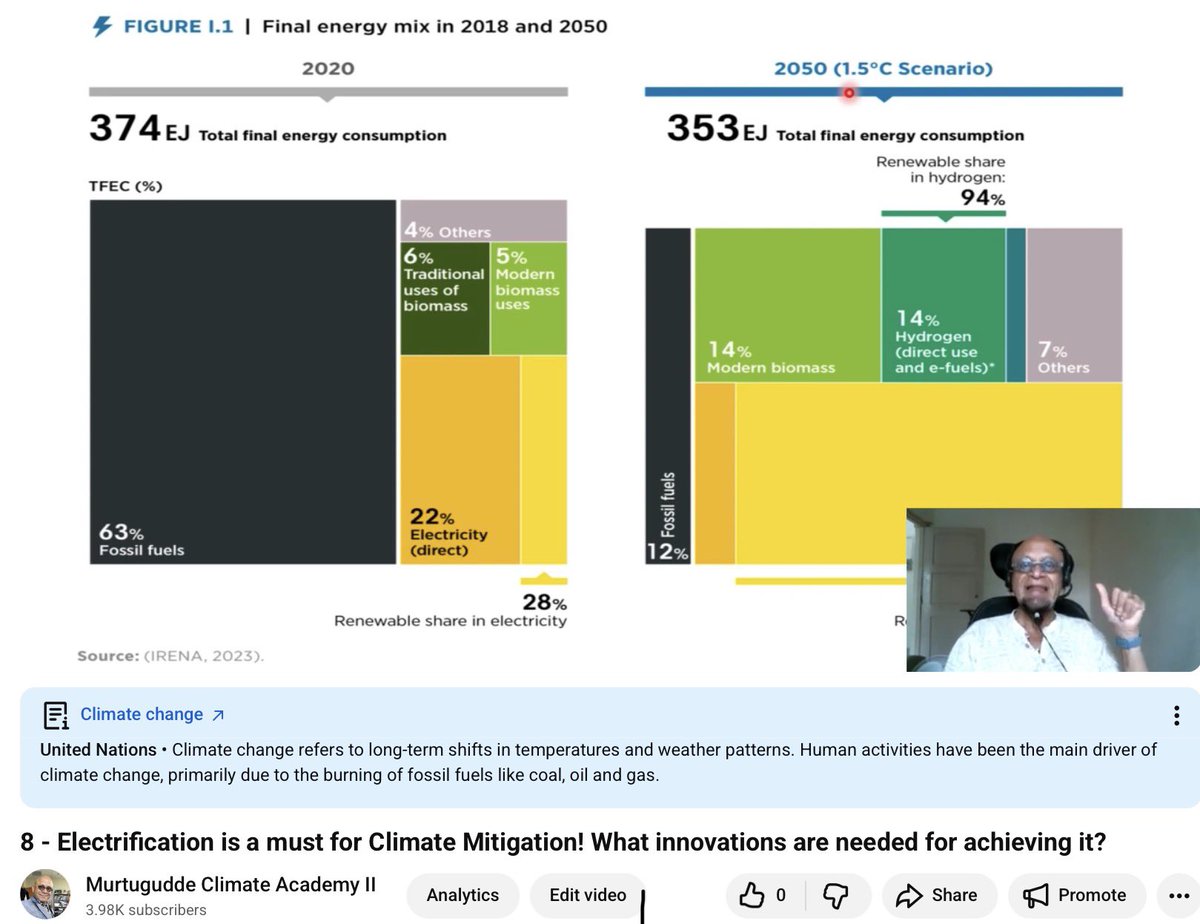
Electrification is a must for Mitigation. Fossil fuels phaseout with renewables & also efficiency gains for reducing total energy consumption! Many innovations are needed for smart electrification. How large will be the role for H2 & biomass? Grids, etc.
youtu.be/NUmol6D1lCQ?si=tgHq…
1
102