
It was truly a privilege to meet Pardesi Sahib. His depth of knowledge, understanding of complex issues and commitment to finding solutions were deeply inspiring. The country is fortunate to have officers like him contributing to policymaking and ensuring its effective implementation.

It was great to interact with Mr Praveen Pardesi Chief Economic Advisor to Maharashtra Chief Minister . Pardesi Ji is also CEO Maharashtra Planning Commission MITRA - Humble, down to earth and highly learned man who has deep understanding of economy and Forest Governance-
FRA National Consultation Nagpur -
@CMOMaharashtra @diprjk
@shakirparray_ @mirmushtaq_ @JkClimate @FarooqKuthoo @wangnoo_manzoor @DrVeeri @MohiuddinRouf
@dfoppbudgam @AtharAamirKhan @basharatias_dr @AjazAhmadIAS

1
8

Swiss democracy gives voters a direct say in policymaking through referendums typically held four times a year. Most ballots are cast through the mail, and in-person voting ends at noon local time on Sunday. | @AP
1
239

Political Reform in Ancient China
The story can be traced back to the Wei–Jin period (c. 280 CE, Luoyang and Jiankang). Although the Western and Eastern Jin dynasties formally retained imperial rule, real political power had already fallen into the hands of aristocratic gentry families. Prominent clans such as the Wang family of Langya and the Xie family of Chen Commandery dominated high office and policymaking in the court at Jiankang (present-day Nanjing). The “Nine-Rank System of Appointments” nominally evaluated talent through local “Appraisal Officers,” but in practice it relied almost entirely on family background and hereditary status. During a court debate, the official Liu Yi (recorded in Book of Jin, Biography of Liu Yi) bluntly stated: “In the highest ranks there are no men of humble origin; in the lowest ranks there are no noble families.” This statement reveals the essence of the system at the time: political power had become rigidly fixed through lineage, forming a highly hereditary aristocratic structure.
1
2
30

The government’s decision to engage directly with the public highlights the importance of inclusive policymaking. #AskYourGovernment
16

The government’s decision to engage directly with the public highlights the importance of inclusive policymaking. #AskYourGovernment

7

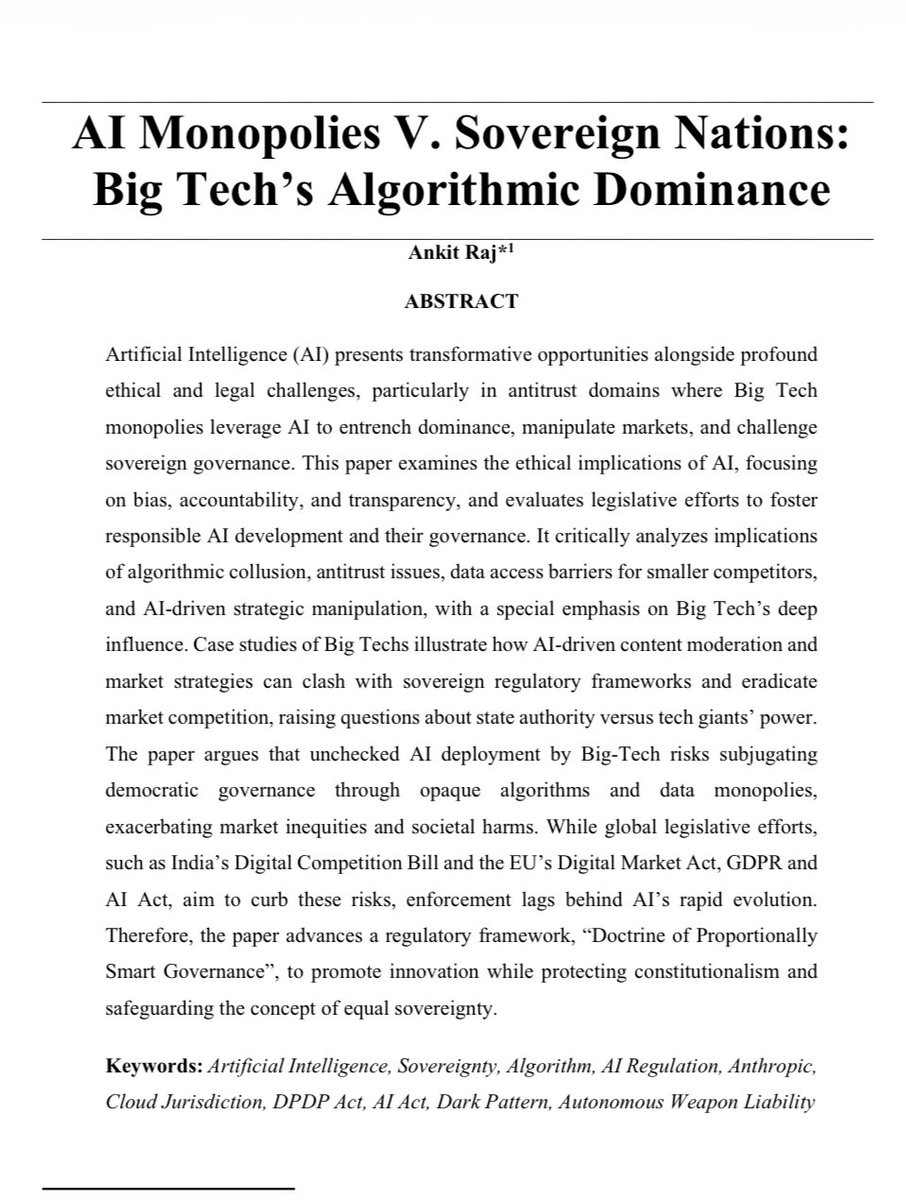
Discriminatory directive by Government of USA to Anthropic regarding Claude Mythos model is not at all surprising. In last one year, I studied the cases of Amazon, various defence tech companies and other high-influence giants. There is a clear trend behind it.
My research paper discovers this paradigm and designs a counter legislative & institutional strategy to that; Proposing Doctrine of Proportionally Smart Governance.
In final stage of publication. Will share the final paper once done!
#AI_Governance #PolicyMaking #RegulatoryCompetence #Claude
31

Including public questions on the federal budget is an important development. Live briefings make policymaking more clear and understandable.
#AskYourGovernment
1
37

Public engagement is essential for effective policymaking. Budget 2026-27 opens the door for meaningful dialogue between citizens and decision-makers.
#AskYourGovernment

2
6

Every month, women bear a biological reality. They should not bear an additional tax burden for it. The exemption of sales tax on sanitary pads is a step toward fairness, affordability, and gender-sensitive policymaking. #PakistanBudget #GenderEquality #سالب_الرياضً #موجب_الرِياض

13
Soham retweeted

BJP this & Congress that. The issue is fundamentally structural.
We opened up serious nuanced policymaking roles to people who need to promise free TV Sets, Grinders & Cash to the electorate to win. There's obviously going to be a human resource problem.
9
88
411
6,593
Ernesto del Valle retweeted

Jun 10
AI is advancing at a pace our policymaking institutions were never built for—and the gap between the two is becoming the central challenge of the technology. In his latest essay, our CEO Dario Amodei lays out how to close it.
We're launching three new initiatives to support the efforts he outlines.
Jun 10

Today I'm publishing a new essay, Policy on the AI Exponential. AI is progressing extremely fast—much faster than the policy process was built to handle. The essay lays out where I think the technology is now, and the action needed to close the gap: darioamodei.com/post/policy-…
424
453
5,476
1,442,652

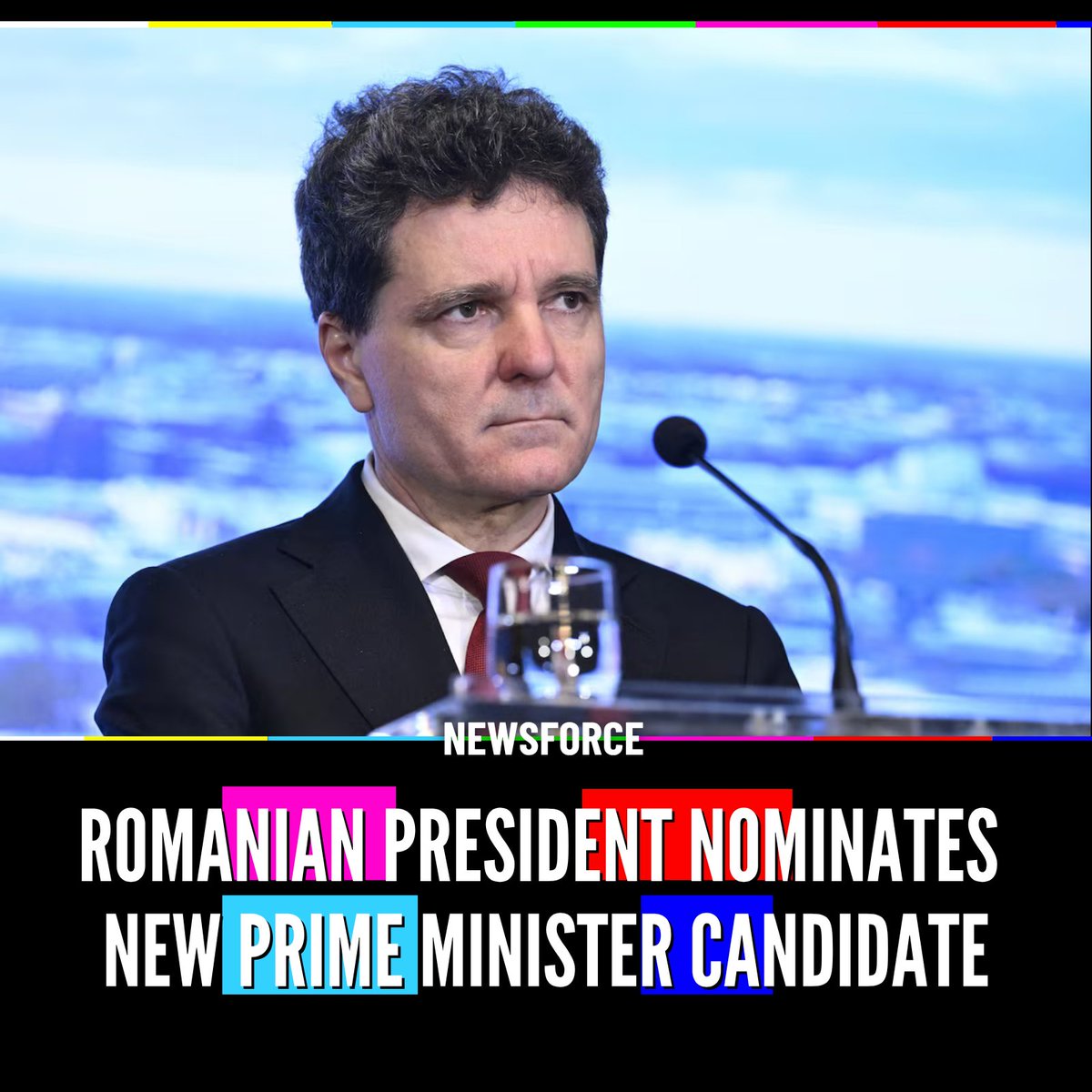
🚨🇷🇴 BREAKING: ROMANIAN PRESIDENT NOMINATES NEW PRIME MINISTER CANDIDATE
President Nicusor Dan has nominated Adrian Vestea as Romania’s new candidate for prime minister after Eugen Tomac withdrew.
Vestea, a member of the liberal party and president of Brasov County Council, now has 10 days to form a government.
The nomination follows months of political uncertainty that has disrupted policymaking and raised concerns over access to EU funds.
A successful government must still win a confidence vote in parliament to take office.
1
2
1
1,891

The Royals may advise, encourage, and draw attention to issues, but only Parliament and the elected government are responsible for making policy, and the monarchy is expected to remain politically neutral.
In practice, most of the Royals’ contribution to public life comes through symbolism, diplomacy, and charitable work rather than direct involvement in policymaking.
9

It’s obnoxious because these senile officials are obviously figureheads, & their unelected asshole interns & clerks are doing the real policymaking, votes, & in the case of infirm judges - issuing rulings. That’s unacceptable.
4

Great news: the U.S. government has reportedly found the perfect UAP adviser, the “scientist” who just floated that 3I/ATLAS might be an alien spaceship barreling toward Earth. Finally, sober evidence-based policymaking is back.

Important Announcement: I Will Be Leading A UAP Science Advisory Council to the U.S. Government
36