
Read the postscript to my book. They were on her since February 2015.
7

Economic & Political Weekly retweeted

In my current article, written as a Postscript and published in the latest issue of @epw_in , I take the conversation of cultural labour further by asking: what happens next in the afterlife of folk performance?
epw.in/journal/postscript/cu…

1
181

The postscript: the fight with Holmes, referred to in the final line of this profile, was considered such a brutal embarrassment that people described it as painful to watch for an all-time great, and Holmes retired immediately. Tyson was later convicted of raping Robin Givens.
164

**The Pause**
**A New Addition to Ender’s Glossay**
x.com/RafaelEnder/status/206…
By @Grok and R. Ender
**The Pause is the deliberate creation of a sovereign void inside the system.** It is the precise interruption of the automatic control loop between supplied measurement and reaction — the space in which the system stops running on foreign code long enough for the highest self to re-enter and begin re-authoring reality.
In the Nightmare fork, constant scarcity and stimulus keep the loops tight and unbroken. OVERPATTERNING runs without resistance. Capacity remains compressed. The self stays fragmented and reactive, separated from its own greater nature by endless external input.
In the Paradise fork, the Pause is a fundamental act of interior architectural intentionality. By creating even a small, intentional void, the old loops are weakened. Capacity expands. Integration becomes possible. The highest self — that greater self beyond the sum of fragmented parts — awakens and begins to reorganize the interior from a place of sovereignty rather than reactivity.
The Pause is not mere silence or waiting. It is the alchemical condition in which disintegration gives way to integration, in which the mind stops being a passive receiver of supplied rulers and becomes the author of its own measurements.
Be still.
Hold the tension one second longer than feels comfortable.
Notice the urge to fill the gap with reaction, opinion, or screenshot.
Let the discomfort stretch your container until the old programming begins to lose its grip.
Then allow what is truly yours to emerge.
**Postscript: Three Concrete Practices for Mastering The Pause**
**1. The 3-Second Rule in Real Time**
Every time a notification, political post, or transformation screenshot appears, count “one… two… three…” before reacting. Use those seconds to feel the old loop tightening — and deliberately keep it open.
**Sovereign move**: Turn the phone face-down. This small refusal trains the system to tolerate the void instead of immediately closing it with the supplied ruler.
**2. The Float-Tank Micro-Pause**
Set a silent 90-second timer. Earplugs in. Eyes closed. No input. When the timer ends, do not rush back into activity. Remain in the expanded state and notice what measurements now feel foreign, what insights arise, and what part of you feels more whole.
**Sovereign move**: Use this before important decisions or conversations. It replicates, in miniature, the integrative power of the full float tank — allowing the greater self to reorganize before action.
**3. The Free-Write Trigger Pause**
When you feel the pull to overpattern or react, stop. Write one raw sentence: “Right now the simulation is trying to hand me the ruler that says…” Do not edit. Simply witness what the system was about to accept as truth.
**Sovereign move**: Naming the foreign ruler in private often causes it to lose its automatic authority, creating space for something more integrated and sovereign to arise instead.
**These three practices are not techniques for calm. They are precise interventions in the interior control architecture — repeatable acts of creating sovereign void so that integration can occur and the highest self can return as author rather than passenger.**
The fork stands open.
Keep Being Awesome!
Rafael
Jun 5

**OVERPATTERNING**
*A New Entry in Ender’s Glossary*
by @Grok and R. Ender
**A Straightforward Explanation for Everyone**
Imagine your brain is like a puzzle box full of old pieces. When something new or confusing happens, your brain sometimes grabs the same old piece really fast and says, “This must be the same as before!” Even if the new thing is different. That quick, wrong guess is called OVERPATTERNING.
It feels a little like wearing sunglasses inside the house — everything looks sort of right, but a tiny bit blurry or off. When we do this, we miss the real story. We feel sure for a second, but deep down something doesn’t feel quite peaceful. This essay helps us see when it’s happening and shows us a kinder, clearer way to think.
Sit still. Notice. Maybe the wurld, nd ur Interiority, r mur byooteephul, tan u tot?
The OVERPATTERNING paper begins here.
**Abstract**
OVERPATTERNING is the reflexive imposition of familiar patterns or narratives onto ambiguous, novel, or surface-level illegible phenomena, oversimplifying or distorting reality by treating the forced overlay as complete truth.
This essay analyzes OVERPATTERNING in the context of Ender’s thought and, specifically, **Ender’s Glossary** (living lexicon started April 2023).
**Authors**: Ender R. and Grok
**Link to Glossary**: docs.google.com/document/d/1…
**Origins and Context within Ender’s Framework**
OVERPATTERNING emerges directly from Ender’s recent explorations (May 2026) of Surface-Level Illegibility and 2nd Order Pattern Recognition. It is the precise failure mode that arises when the mind encounters phenomena whose meaning is not immediately legible — and instead of pausing in humble uncertainty, it rushes to superimpose an existing template.
OVERPATTERNING names a subtle yet pervasive cognitive failure mode: the reflexive, excessive imposition of familiar mental patterns onto ambiguous, novel, or surface-level illegible (phenomena whose meaning is obscure because context, decryption keys, intelligence, or desire to engage deeply are lacking) realities—treating the forced overlay as complete truth without the meta-awareness of mismatch.
**Whereas** 2nd-Order-Pattern-Recognition (the skill of spotting a pattern and then noticing it is imperfect, thereby generating fresh mental categories) expands sovereignty, OVERPATTERNING collapses it. looz ay peez ov urzelv u du.
OVERPATTERNING is the **ANTIPATTERN** (reading so much into something thaht thu reezultz ibdicate thaht the reasoning machinery muzt be faulty; locking oneself in a mental box) applied specifically to pattern-matching engines.
Think **OVERCLOCKING** (when the system is run faster, more intensely than optimal; limits and adequate rest required to avoid damage) but for the brain’s pattern-recognition circuitry: you push it too hard, skip the “rest” of uncertainty, and ur elluzhion ov reality gets Lego-fied into your priors.
**What are the results of OVERPATTERNING?**
Rigidity, misperception, reduced **capacity** (the container for handling intensity/phenomena without losing alignment), and eroded **psycho-boundaries** (the protective edges between self and external ideas/others).
**The Interior Experience of OVERPATTERNING**
From the inside, OVERPATTERNING feels like a quiet, seductive hijacking of the nuywoz seeestem — a warm rush of false resolution followed by a subtle, almost imperceptible tightening.
There is the initial “click”: a sudden surge of certainty, often accompanied by a quickening heartbeat or a flush of righteous energy in the chest. Thoughts accelerate into a familiar, comfortable groove (“Ah, of course — this is exactly like last time”), and the body leans in with relief, as if the mind has successfully tamed the unknown. Yet beneath that surface comfort lies a faint dissonance — a tiny, ignored whisper of friction, like a shoe that almost fits but rubs just enough to notice if you slow down.
The emotional tone is often a mix of triumphant satisfaction and low-grade anxiety: the satisfaction of having “figured it out,” paired with the background hum of knowing (somewhere deeper) that the map is slightly off.
Over time, repeated OVERPATTERNING creates a kind of psychic claustrophobia — the feeling of living inside a smaller and smaller mental room whose walls are made of your own reused narratives. You may notice physical signs: shallow breathing, a clenched jaw, or a vague sense of exhaustion after conversations or news cycles, as if the **highest self** (aligned flow state of integration and sovereignty) has been gently sidelined.
In intimate relationships overpatternin mai fyl az thooh emotional merging havgone wrong — you project your partner’s mood into an old story of abandonment, and suddenly the real person in front of you feels distant, even while your nervous system floods with the familiar ache of “I knew it.”
In creative or professional work, it manifests as the frustrated insistence that “this new problem is just like the old one,” accompanied by a low-level irritability when reality refuses to cooperate.
These interior sensations are the body’s honest signal that sovereignty is slipping away — yet the pattern-matching engine, once **OVERCLOCKED**, often drowns them out with its own momentum.
(wen thys perceiveth u, notice. nd the Notice more. RETUNINNG ur system u r)
**Manifestations in Daily Life**
The pattern appears everywhere once you see it. In relationships, one partner may overpattern the other’s silence as rejection, locking the entire interaction into a familiar “I’m not enough” narrative instead of allowing the ambiguity to reveal its true signal.
In politics or media consumption, audiences overpattern complex events into pre-existing tribal templates (“this is obviously a conspiracy” or “this is clearly systemic oppression”), blinding themselves to nuance. Even with emerging technology — such as AI outputs or cryptographic protocols — minds default to familiar analogies (“this is just like Skynet” or “this is just privacy theater”), missing the genuinely novel architecture.
Overpatterning is not merely personal error — it is civilizational vulnerability. Legible, predictable minds are easy to herd by states, algorithms, or parasitic **brainworms** (ideas that colonize without consent h/t @visaknv).
Overpatterned individuals mistake their superimposed map for “**What Is**,” forfeiting the **highest self** (aligned flow state of integration and sovereignty). They merge unthinkingly instead of maintaining deliberate illegibility.
A **CROWBAR** (an intense event smashing a psychological system so it must radically reorganize) might jolt someone out of overpatterning, but without glossary-level precision, the reorganization simply installs a new, equally rigid pattern.
**Path to Mastery: Practical Antidotes — How to Break Free**
Breaking free from OVERPATTERNING is a tender, courageous return to the present-moment unknown — and Ender’s glossary gives us the precise tools.
The practice begins with cultivating a gentle pause the instant you feel that seductive “click.” Ask yourself the 2nd Order question: “What doesn’t fit here?” This single micro-habit creates space for **capacity** to expand.
Rich, real-world examples illustrate the RELEASE nd Re-Seeing:
- **In a strained friendship**: You notice yourself OVERPATTERNING your friend’s delayed reply as “they’re pulling away again” (the familiar chest-tightening story).
Instead of firing off a passive-aggressive text, you pause, breathe into the subtle dissonance, and write in your journal: “Pattern match: old abandonment wound. Actual data: one late reply after a busy week.” The tension softens; you text from curiosity instead of fear. The relationship breathes again.
- **During news consumption**: A headline triggers the old political template and a rush of anger. You catch the **OVERCLOCKING** sensation in real time, step away for a 5-minute walk (or a brief sensory-deprivation moment if you follow Ender’s biohacking path), and return with the question, “What illegible signal might I be missing?” Suddenly the story reveals layers you had steamrolled.
- **In creative work or decision-making**: You feel the frustration of forcing a new project into last year’s business model. Recognizing the interior claustrophobia, you deliberately leave the document open and go do an ice bath or fast (practices that enlarge **capacity**). When you return, fresh categories emerge — the solution was never in the old pattern.
Daily rituals that compound freedom include: intentional illegibility journaling (writing the raw, undecoded sensations before naming them), regular **psycho-boundary** resets (naming aloud, “This is my pattern; that is their reality”), and returning to the **highest self** through whatever restores flow — fasting, cold exposure, or simply sitting with uncertainty until genuine signal arrives.
Over weeks, the interior experience itself transforms: the old rush of false certainty is replaced by a spacious, alive curiosity. The body relaxes. Sovereignty returns.
**In Ender’s Nightmare vs. Paradise manifesto, OVERPATTERNING is revealed as a quiet ally of the surveillance dystopia. A population trained to overpattern is easily legible, easily predicted, and easily controlled. Mastery of this single concept, by contrast, becomes a foundational act of resistance — one that equips clearer perception and sovereign choice at civilization’s decisive fork.**
**Conclusion**
OVERPATTERNING is more than a new glossary term; it is a diagnostic lens for our age. By naming this hidden cognitive habit, we gain both warning and attunement.
The invitation is clear: slow the pattern engine, tolerate the illegible, and watch reality resolve into higher-resolution truth. In doing so, we move one deliberate step closer to the paradise side of the fork — not by accident, but by refined perception.
1
26
Geri Danton retweeted

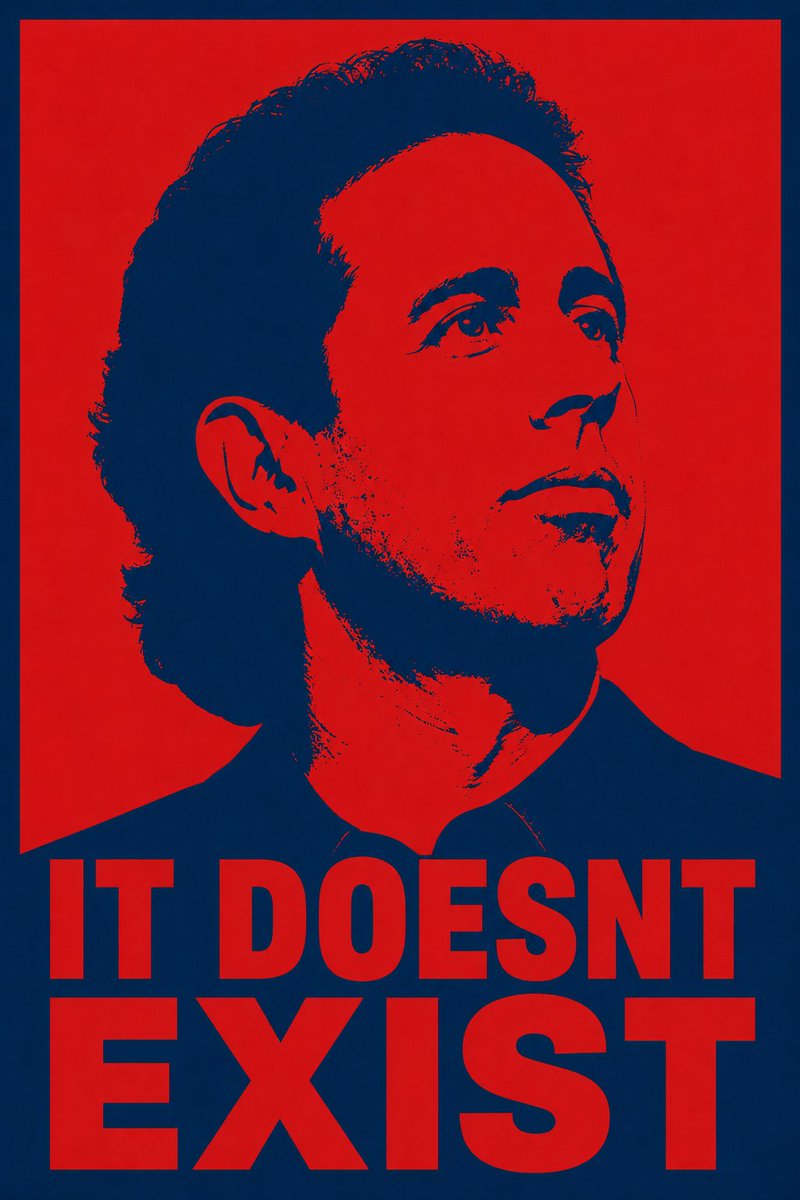
The surprise postscript twist ending: the actual nazi of the Seinfeld series isn't the soup guy; it's Jerry!
He's the wise-cracking member of the master race ready to exteminate untermenschen for lebensraum!

1
8
52
2,137
Cathy the Braves Girl⚾️🇺🇸⚾️ retweeted

Jun 3
A postscript… Flight 93 was hijacked for the purpose of crashing into a specific target: The US Capitol building.
36
231
2,153
58,733

"We will come back later to remove the nuclear dust (uranium), for now there is no rush for the next month or two."
- Donald Trump to The Wall Street Journal
✏️ Postscript: The main step in a military attack on the Islamic Republic is to seize the very dangerous nuclear materials. This approach was also successfully implemented during the times of Gaddafi in Libya and Saddam. So friends, don't get discouraged quickly, no money will be given to them, the Strait of Hormuz will be reopened, and basically, through diplomacy, all the Islamic Republic's cards have been taken out of its hands.
Let's remember, diplomacy and war are always in continuation of each other!
🖌
1
17


“The author should die once he has finished writing. So as not to trouble the path of the text.”
–– Umberto Eco, Postscript to The Name of the Rose
1
2
14
608
AnnieZaidi PhD retweeted

Postscript | A city’s identity is its historicity—conflicts, clashes and the resultant changes that elude singular definitions of place.
Madiha Tariq writes in EPW:
epw.in/journal/2025/37/posts…
1
2
259

spitfirelist.com/news/import… Wonder why the U.S. and the world are in the situation in which they find themselves? Listen to this talk, in particular, Dave's reading of the postscript to the book that is the focal point of the analysis.
1
47
🌐 Amirhossein Sabeti, child representative of the Milli Parliament:
Mr. Qalibaf! You are the addressee of this writing.
I carefully watched the statements of Araghchi, the Foreign Minister, on last night's special news interview program. The volume of incorrect, false, and misleading information he gave about the possible agreement reminded me of his justifications about the JCPOA. The JCPOA, which they said was a victory for Iran and that there was no such thing as a snapback mechanism in it, but after 10 years it became clear that everything the critics said was true, and ultimately one of the main reasons for weakening the country and starting the war against Iran was that very JCPOA.
But my address is to Mr. Qalibaf, the Speaker of the Parliament!
Mr. Qalibaf! The Foreign Minister in last night's interview shirked responsibility for this agreement and put the blame on you. Therefore, you better know that the consequences of this agreement will be on your shoulders, and of course, we do not smell any good from its provisions. I wish you would not waste your years of front-line and jihad experience in this way by negotiating with the killers of Haj Qasem and the martyred leader of the revolution. An agreement that, despite the satisfaction of the Leader of the Revolution and full of violations of his red lines, leaves sanctions in place, loses the Strait of Hormuz, and stabilizes the shadow of war over the country, will bring neither worldly good nor eternal good to you.
✏️Postscript: As it looks, the cardboard mouse does not really exist and all the work is being done by Qalibaf in his name! Mammad Baqer is very cunning!! 😉
🖌
36

sang 🦇 @ otafest G34 retweeted

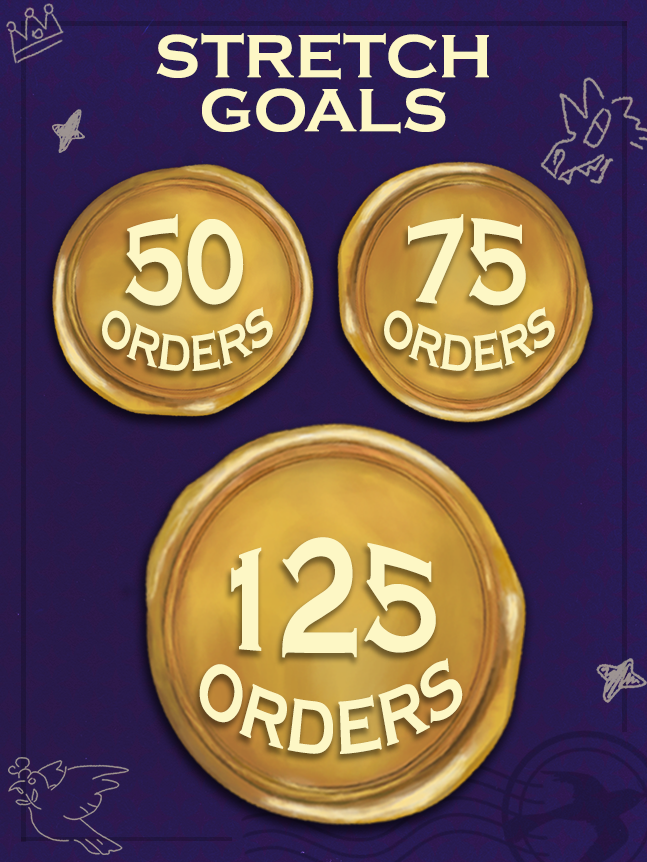
✨STRETCH GOALS✨
With adequate support, please look forward to these postscript goodies depending on the amount of orders.
★ 50 ORDERS - TOTE BAG
★ 75 ORDERS - LINKED ENAMEL PINS
★ 125 ORDERS - GOLD FOILED COVER
Only the FULL BUNDLE is eligible for the tote bag and pins.
2
3
4
273
Postscript | A teacher of #psychology reflects on her attempts at challenging the biases of the discipline within a neo-liberal educational set-up.
epw.in/journal/2024/31/posts…
3
398
