

Yes they have like an inner peen which is funny cuz clitorises are already pre-peens if we're talking evo-devo of actual humans.
Both the "biology" of it and the fic writer's need for "primalization" of love are very fascinating
1
4
363

8 Nov 2025
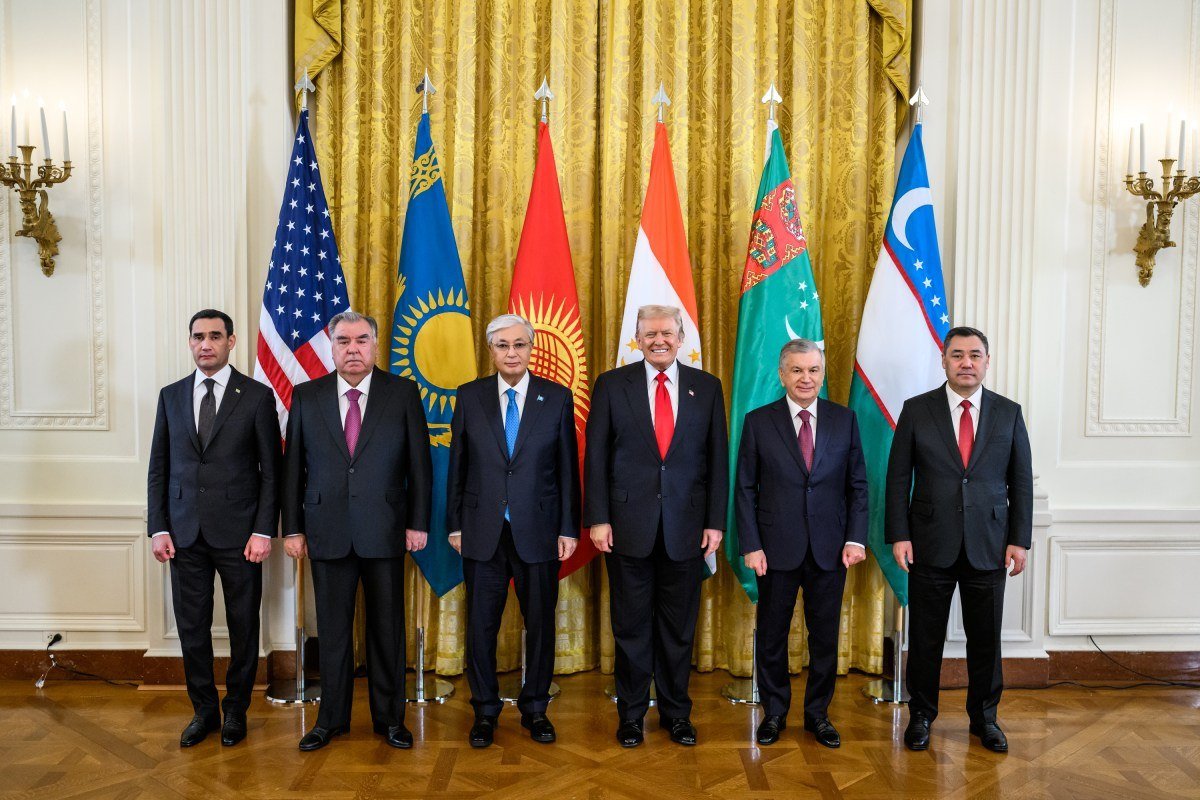
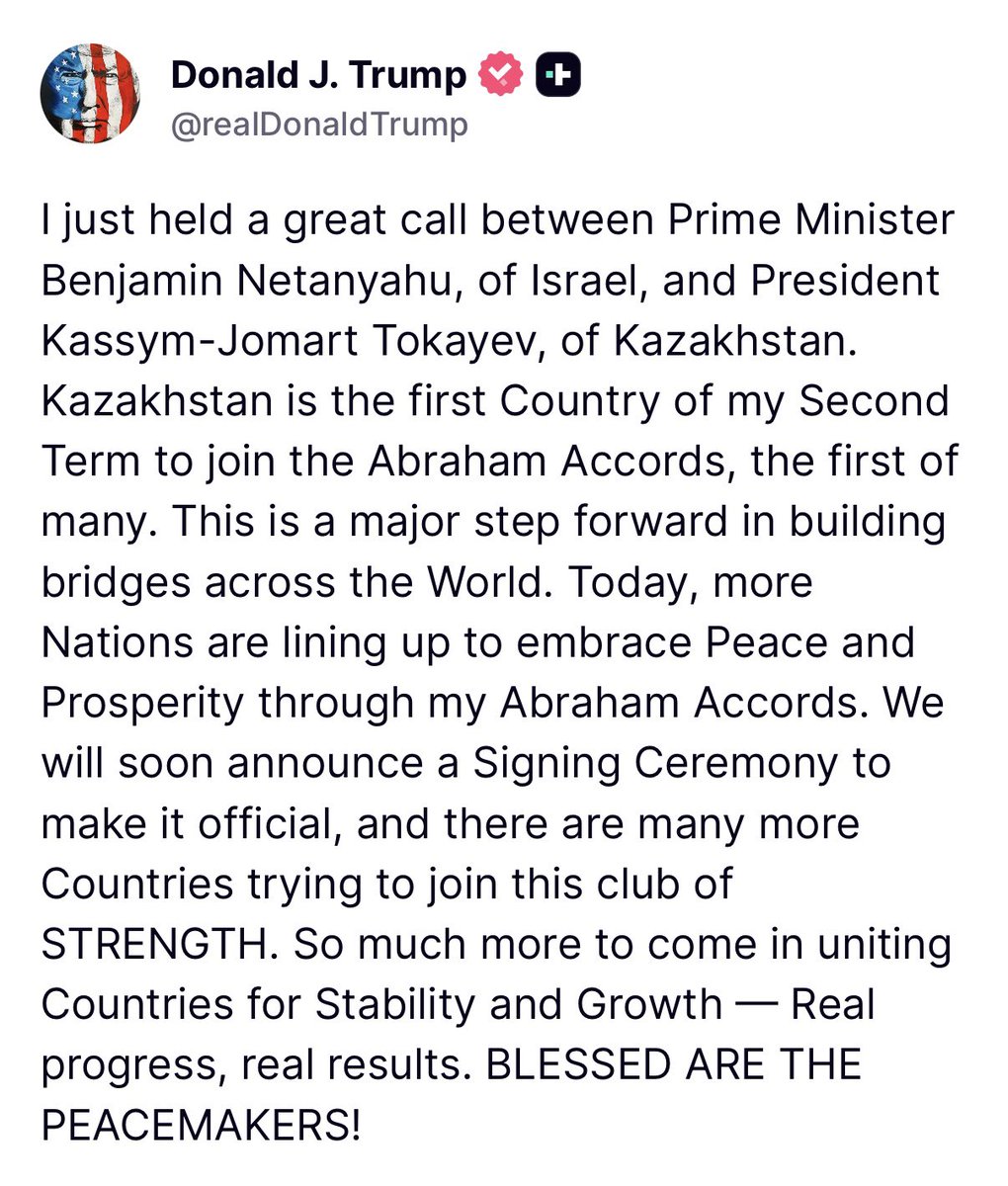
To celebrate President Trump’s Central Asian Summit, here’s the shared cultural history of Americans and Central Asians:
“Frontier exceptionalism” is the foundational culture of all our nations; it is the belief that ethnic groups forged through the integration with and conquest of wild frontier lands have a special superiority inherent in our folk people.
The physical embodiment of our "superiority" is the frontiersman “archetype” found represented in the American pioneer and the Central Asian nomad. This “archetype” is the pre-set for the Central Asians; however, it had to be unlocked in the European through a series of ascetic ritual rites of passage to “evolve” our people further beyond their “factory settings”.
Europeans had to first conduct a transatlantic voyage. Second, they had to integrate with and overcome the harshness of the “New World”. These rituals forced the European to shrug off the civilized, luxury comforts and thrust us back in time. We were forced to adopt more “savage” and “barbaric” ways of life to conquest the continent.
This process of “primalization” brought out latent characteristics of the Europeans and transformed them into a new ethnic people, the Americans. Our people group is colloquially referred to as the “American founding stock” or “old stock”.
We are a distinct people group forged throughout the 1600s - 1800s, during the “frontier period” of American history. While accepted and coined first by Frederick Jackson Turner in the 1800s, this definition has been seemingly exterminated from modern vernacular. Instead, it has been replaced with the contentious libel known as the “myth” of “the melting pot”.
We are incorrectly dismissed our ethnic distinction simply because of the “newness” of our people. However, if we observe this process through the older lens of Central Asian history, where we can see the same exact process, it is logical that we be given the same status.
Broadly speaking, the Central Asian peoples
originally hail from the Altai mountain range, specifically along the Yenisei river, located in the South of Russia. Locally, we call Kyrgyz who continue to have blonde hair or blue eyes "Yenisei Kyrgyz" in reference to this geographical and genetic origin. As each tribe “evolved” into distinct, individual ethnic groups due to the intensity of their migratory patterns, cohesion of allies, conquest of rival groups, and settled geographic terrains.
The best narration of these journeys is recounted in the longest story in recorded history, the Epic of Manas. Manas is the Kyrgyz folk hero who united 40 separate tribes into a cohesive power under his command. The epic recounts their unification, journey, and conquest against the Chinese and various “indigenous” tribes in the current territory like the Xionghnu.
The legacy of the Kyrgyz perfectly mirrors the American frontier ethnogenesis. Both of our founding member sets began as independent tribes who then unified, moved to, and conquered the foreign territories of which they are now established. “Kyrgyz” literally means “we are 40” to signify the unity of their founding tribes like the Saru, Sarybagysh, Solto, Buugu, Sayak, etc. Using this same framework, it is correct to assert that the original American groups of radical, Christian extremists like the Puritans, Pilgrims, Mennonites, Quakers, Dutch Reformed, Moravians, etc. be considered our founding tribes.
The time duration of the Kyrgyz and the American ethnogenesis perfectly match one another — 300 years. The Kyrgyz can be roughly said to have migrated and then firmly established themselves within their modern territory from the 900s - 1200s, whereas the Americans frontier period lasted from the 1600 - 1900s. In the present day the Kyrgyz are obviously presumed indigenous to their current lands — this same sentiment applies to the Turkmen, Kazakhs, Tajiks, etc.; hence, why the ending of each nation is nation is referred to as “Stan” meaning “land of”.
The American, however, is not considered indigenous to our lands, despite no difference in the timeframe of our ethnogenesis beyond the European and engagement in the same ritual rite of conquest as the Central Asian groups. It would be preposterous for an individual who cannot trace his lineage back to the days of Manas to claim himself “Kyrgyz”.
It should be equally preposterous for one to claim himself “American” without being the direct descendent of one of our founding tribes from our frontier era. The American is indeed indigenous to our lands, and our lands, much like with all of modern Central Asia, should be, without a single exception, be ruled by members of our founding tribe.
The late 1800s into the 1900s marked a shift in the identity of all nations. My folk answered the question of “What is an American without a frontier to conquer?” with the Industrial Revolution. We forfeited our ruggedly independent frontiersman lifestyles, relinquished our family farms, and instead began to rely more on the system to produce for us. Wild no more, tamed, sedentary in our cities, we sacrificed all unique expression of self-sufficient tradition in service to the machine.
We may have build the “tallest towers”, but at the cost of our ethnic identity. We then became a “melting pot” drowned by millions of “immigrants” who had zero comprehension, nor lived integration with our foundational ritual rites of passage. We “old stock” now live as foreigners in our own lands, no longer free to manifest our own destiny.
Our present situation mirrors the struggle of Central Asian tribes throughout the Soviet period in which, for the first time in history, the territory of each tribe became ruled by foreigners and in greater number. The “Russians” defined the destiny of Central Asia throughout the late 1800s - 1900s. They mandated modernity and the fist of eternal sameness ground the collective, folk traditions to dust. Sameness becomes law when a population is removed from the land and cowed into the concentration camp of the Soviet apartment.
Nomadism is the result of an unbroken chain of ancestrally transmitted skills. Once that chain is broken, there is no possible way to recover the knowledge without herculean effort. It is nearly unimaginable. Even today, most nomads are actually “semi nomads”, meaning that they (typically) cycle between areas in three month increments. The nomadic chain was broken by the Russian Soviet intervention.
The best way to narrate the Central Asian shift in identity is the following:
Central Asians lived nomadically for centuries. Their lands were colonized by the Soviets throughout the 1900s. They were forced to forfeit their nomadic lifestyle for sedentary slavery on collective farms. With grandpa shot dead, children lost all knowledge of optimal, nomadic trade routes. With dad forced to dig canal trenches, children couldn’t learn how to hunt or ride a horse. Within two generations, families knew nothing other than Soviet steel and myths from the past "barbarian ways".
By the third generation, the USSR imploded; however, the damage was already done. The vast majority of the people were now so firmly reliant upon the provisions of the technological system that they could never return again to nomadism. One could say they simply “forgot” the skills necessary to revive genuine nomadism and could not perfectly do so, if attempted. One could additionally say that "not even three generations of the Soviet Union were enough to eliminate tribal identity".
Since the fall of the USSR in 1991, the "great debate" has been what superpower should maintain dominion as "creditor" to the Central Asian nations. The first choice appeared to be Turkey with clear reasoning — the shared genetic blood. With Turkish investment came an even greater focus on Islam and with it Iranian investment.
The result of this has been a clear schism in the mind of locals in which some believe that Islam is not correctly in alignment with original expression of folk identity — Tengrianism. If one was indeed an ardent traditionalist, one should correctly argue that because Tengrianism is the original belief system of the Central Asian peoples that it must be revived. The same can technically be said of the American people in that our ancestors were also Pagan warrior types. Both America and Central Asia again appear similar in their debate between worship of an Abrahamic god or a return to more ancient religious practices.
Then, of course, one must not forget the Chinese, who now make up the majority of investment in the total region. This is certainly questionable to me, as it is an obvious, historical fact that the nomads have always been at war with China and that these wars have been the main focus in the "creation myths" of each nation.
Why they would decide to fully submit to debt slavery by their greatest historical rivals is certainly a powerful question. If modern, sedentary Americans have proved anything, it is that all great men die, when they reject their frontier heritage in exchange for the bribe of cheap, mass produced, plastic goods.
The great war of our times is in fact to avoid death by materialism. We must not simply sacrifice our traditions in pursuit of a fictitious "wealth" devoted the accumulation of more useless things. Truth wealth is the preservation of tradition. Let us not think of ourselves as foreigners to one another, but rather inheritors of the same ancestral flame of frontier exceptionalism. Let us see one another as brothers in the fight to return to our most authentic expression of ancestral identity — self-sufficient, pastoral practices.
What I propose is for Central Asian nations, not to encourage Americans to develop the urban landscapes, but instead to develop the rural, most remote areas of the countryside. Give us special access to build frontier settlements in your remote provinces so that we can work with your people to bring agrarian prosperity to the land.
The goal would be to establish independent, American farming communities throughout your nations. These communities would be entirely comprised of individual investors, rather than affiliated with our government. Our task would be to create a "Silk Road" exclusively targeted toward the promotion of for your impoverished, rural populations.
The purpose of such communities would be to act as bases that produce speciality, agrarian goods. These communities would then train and employ your locals to help grow, trade, and distribute the products throughout the wider region. With the power of American optimization and the strength of Central Asian population, together, we can vitalize your lands, maintain our shared frontier traditions, and bring economic prosperity to your rural populations.

4
4
16
3,168

16 Apr 2025
Unlocking the Secrets of Small Business Success
#SmallBusinessTips #EntrepreneurMindset #BusinessSuccess #UniqueSellingPoint #FlatBusiness #Entrepreneurship #BusinessGrowth #SuccessStrategies #SmallBusinessOwner #Primalization
1
2
21
