
Jun 7
Nuestro artículo de hoy en @CriptoTendencia.!!!
"Privacy Pools: la nueva frontera entre privacidad, regulación y finanzas institucionales"
#Web3 #Crypto #PrivacyPools
criptotendencia.com/2026/06/…
3
10
186

A single privacy pool (like pool of privacy not PrivacyPools[tm]) creates a centralized dependency.
Like if all ETH was staked to a single provider.
Lacking expressibility limits competition and diversification, creating honeypots.
Its strength is its weakness
1
4
160

May 26
saw a bait thread here basically arguing privacypools/railgun are stone-cold illegal and no one should get hyped on them until this is addressed
(1) this is massively overblown, @0xprivacypools in particular has a very conservative legal design (arguably too conservative imo) that protects them against the remaining attack vectors (essentially, *intentional and knowing* laundering of criminal funds)--they limit to an approved innocence association list and can dissociate & deanonymize 'depositors that lose innocence after entry,' so to speak, forcefully
(2) the thread invoked the 2019 finCEN guidance of 'mixers' being per se MSBs but failed to mention their intervening guidance specifically that Samourai and other non-custodial mixers are not MSBs
(3) the weakest aspect of TornadoCash legally re: potentially being an MSB was its need for "relayers"--crudely, just look at the term, "relay" screams "accept and transmit value"--and an upcoming Ethereum hardfork Kohaku are eliminating the need for them
(4) CLARITY Act / BRCA provisions are explicit on this--for noncustodial software protocols, only intentional & knowing money laundering (example, I craft a privacy protocol specifically for N. Korea as a customer) will remain prosecutable
9
6
76
5,974

May 24
Coming soon to Ambire: clear signing - the solution to one of the biggest sources of anxiety in web3, blind signing.
What's next? Privacy! Railgun/PrivacyPools integration through the Kohaku SDK, private data retrieval and more.
7
17
86
38,361

May 15
These are all very good points.
There are now several reasonable ways to move stablecoins privately:
-Railgun / Railway
-Near confidential Tx
-PrivacyPools
Scaling privacy still needs work but there is progress. What’s the advantage of introducing a new volatile asset?
May 14

A Small Manifesto Against the Current @Zcash Bandwagon
Zcash is a remarkable piece of cryptography, but cryptography isn't the bottleneck for crypto in 2026. Distribution, liquidity, and developer adoption are. And those are the exact dimensions on which Zcash is structurally disadvantaged.
1. Network effects work against single-purpose privacy chains
Privacy is a network-effect product: the larger the anonymity set, the stronger the privacy guarantee. Zcash currently has ~30% of supply in shielded pools, and most activity moves in and out of the shielded layer rather than staying within it. A shielded pool with ~5M ZEC and a few thousand daily active users provides meaningfully less privacy than the same cryptographic primitives running on an L1 with 10M daily addresses.
The math is brutal. If 100 people hide in a room, finding any individual is hard. If 100 million people hide in a room, it's impossible. Privacy coins concentrate users. Privacy features on general-purpose chains recruit them.
2. Liquidity and acceptance are non-negotiable
A privacy coin that gets delisted from major exchanges, as Zcash repeatedly has across Japan, Korea, the UK, and parts of the EU, becomes harder to acquire, harder to exit, and harder to use at scale. Privacy tools built on Ethereum, Solana, or Base inherit the liquidity of the underlying chain. You don't have to choose between privacy and the ability to transact with the rest of the financial system.
Zcash forces that choice. Nobody wants to make it.
3. People don't want private money. They want private applications
Most people don't need to hide a $50 ZEC transfer. They need confidential business payments, private payroll, undisclosed treasury operations, sealed-bid auctions, private voting and confidential DeFi positions that don't leak through transaction graphs.
None of these run on a privacy coin. They run on smart contract platforms with privacy primitives like @aztecnetwork on Ethereum, @AleoHQ as its own L1, @solana 's confidential transfers, @penumbrazone in the Cosmos ecosystem, FHE-based chains like @fhenix and ZK-rollups in general
The future of privacy is programmable, not denominational.
4. The technology has been completely commoditized
zk-SNARKs were Zcash's moat in 2016. By 2026, they're the foundation of every major L2, dozens of privacy systems, and most rollup architectures. The Zcash team did the foundational research, and then watched the IP escape. The chains that benefited most aren't paying rent to Zcash, and they never will.
It's one of the cleanest examples in crypto of pioneering a technology and capturing none of the value.
5. Regulatory exposure cuts the wrong way
Privacy coins occupy a uniquely vulnerable regulatory category. Privacy tools on general-purpose chains can be designed with selective disclosure, view keys for auditors, compliance hooks and they live inside chains regulators have already accepted as legitimate financial infrastructure.
Zcash has built the same compliance tooling (view keys, selective disclosure protocols) but still carries the "privacy coin" label that triggers automatic delisting regardless of actual functionality. The technology isn't the problem. The category is.
6. The unit-of-account problem
For privacy to matter for real economic activity, it has to be denominated in money people actually use, this is the biggest lesson in crypto over the past 5 years. Nobody pays salaries, settles invoices, or runs treasuries in ZEC. They use USD, EUR, USDC, USDT.
Privacy that requires switching unit-of-account is privacy that won't be used at scale. The winning model is private stablecoins and private transfers of mainstream assets, which requires programmability Zcash structurally doesn't have and isn't on a path to building.
7. The "private Bitcoin" comparison is just stupid
At the end of the day, Zcash only really competes with Bitcoin, except it doesn't, because the "private Bitcoin" framing falls apart on contact with reality.
You don't get to slap "private" on as a feature and call yourself Bitcoin's successor when you don't have the liquidity, the decentralized robustness, the regulatory acceptance, the size, or the history. Bitcoin's hashrate is distributed across hundreds of pools and tens of thousands of independent miners globally. Zcash's hashrate is functionally controlled by a handful of pools running ASICs from a few Chinese manufacturers. Zcash inherited Bitcoin's consensus model with a fraction of Bitcoin's decentralization.
And decentralization isn't a sliding scale where "more" earns you partial credit. It's binary. You're either close enough to Bitcoin to inherit the monetary properties that come with extreme decentralization, as Ethereum genuinely is, or you're not, and the "moneyness" argument doesn't apply to you at all.
Ethereum and even Solana have an order of magnitude better chances of reaching Bitcoin's market cap than Zcash does. That's not a controversial claim. It's just looking at the data.
1
1
7
1,072


Mar 29
The ranking goes by:
Dex / AMM = Llamaswap Curve
Vaults = Yearn
Derivative = Pendle
Wallets = Rabby
Bridges = Jumper Lifi
Lending = Aave
Privacy = Aztec / Railgun / PrivacyPools
1
4
644


Nethereum PrivacyPools @0xprivacypools coming soon github.com/Nethereum/Nethere…
1
4
396

Mar 17
People are free to make the educated decision to use prividiums and other such centralized L2s, especially when the L2s in question are very transparent and honest about the trustful nature and how they can rug you. If the end user is truly unwilling to use a better solution, transparency can be at least a minor improvement over the status quo.
However, when we know there are stronger solutions, those are the solutions we should be constantly advocating for. That is not pushing away something less important; that is very much pushing towards what we believe is important and valuable i.e. CROPS.
With the institutional work we can just be frank. They might just want reg arb and don't care if zksync or optimism can rug them, or that they can rug their users, and they might be legally compelled to have the right to rug their users. We should still make it clear to them that there definitely exist CROPS solutions and definitely exist less onerous ways they can rug their users (ala PrivacyPools ejection without confiscation of assets). If they choose a trustful solution on top of Ethereum there's nothing we can do about that, and it's not unimportant because for Ethereum a win's a win, but it's not the best we can do.

1
3
92

Feb 22
Rage quitting/un shielding to the original address is not private though.
If I deposit to privacypools and my deposit gets flagged, I can simply withdraw the funds to the address I used to deposit.
I've never used Railgun, but I assumed it would be a similar experience
1
1
66


Totalmente...
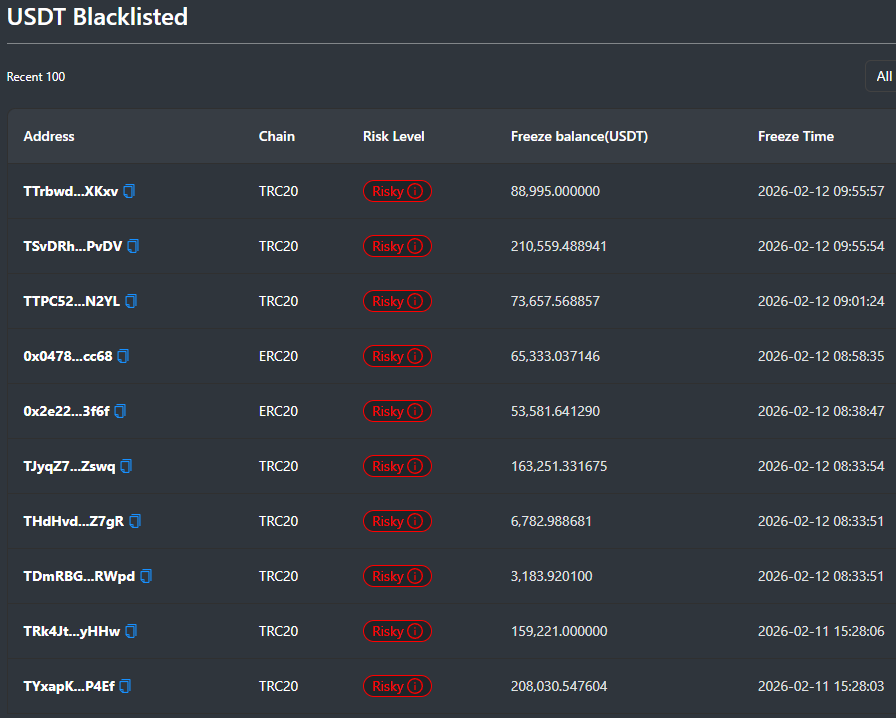
Estos blocks de $USDT son de hoy y ayer mamon jajaja
La Privaciad OnChain si importa
La raza mas puñetas es la que dice "yo para que nesecito privacidad" ? jajaja
La privacidad es un derecho humano $XMR #RailGun #TornadoCash #PrivacyPools
1
1
2
59

Feb 10
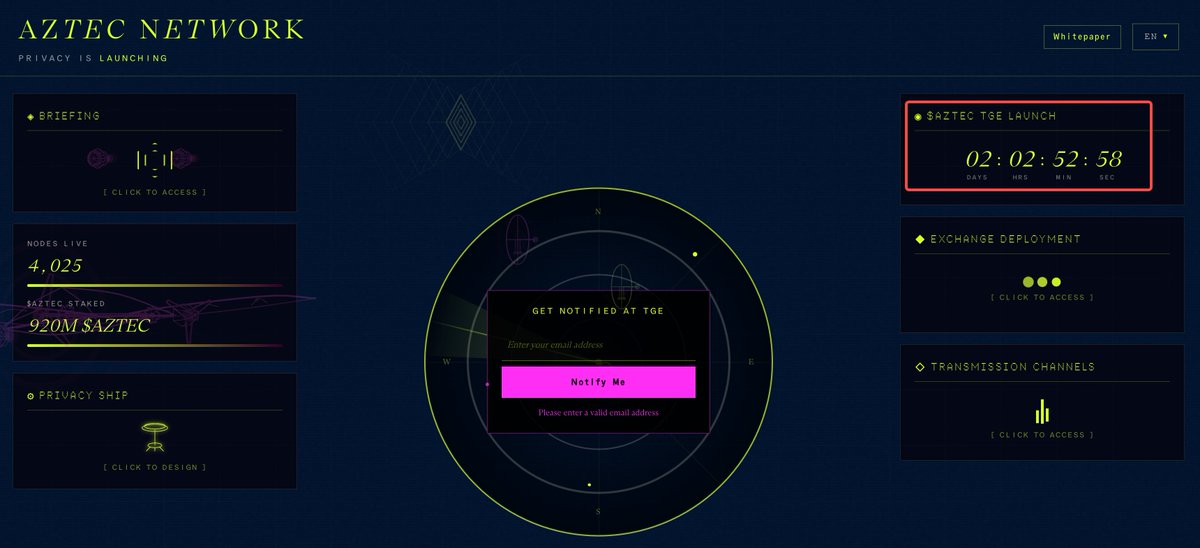
🍚aztec @aztecnetwork 两天后tge。目前官网可以填邮箱,主要作用还是通知后续tge的信息。另外还有个小游戏,要自己设计个飞机,目前还不知道具体有啥作用
链接:tge.aztec.network/
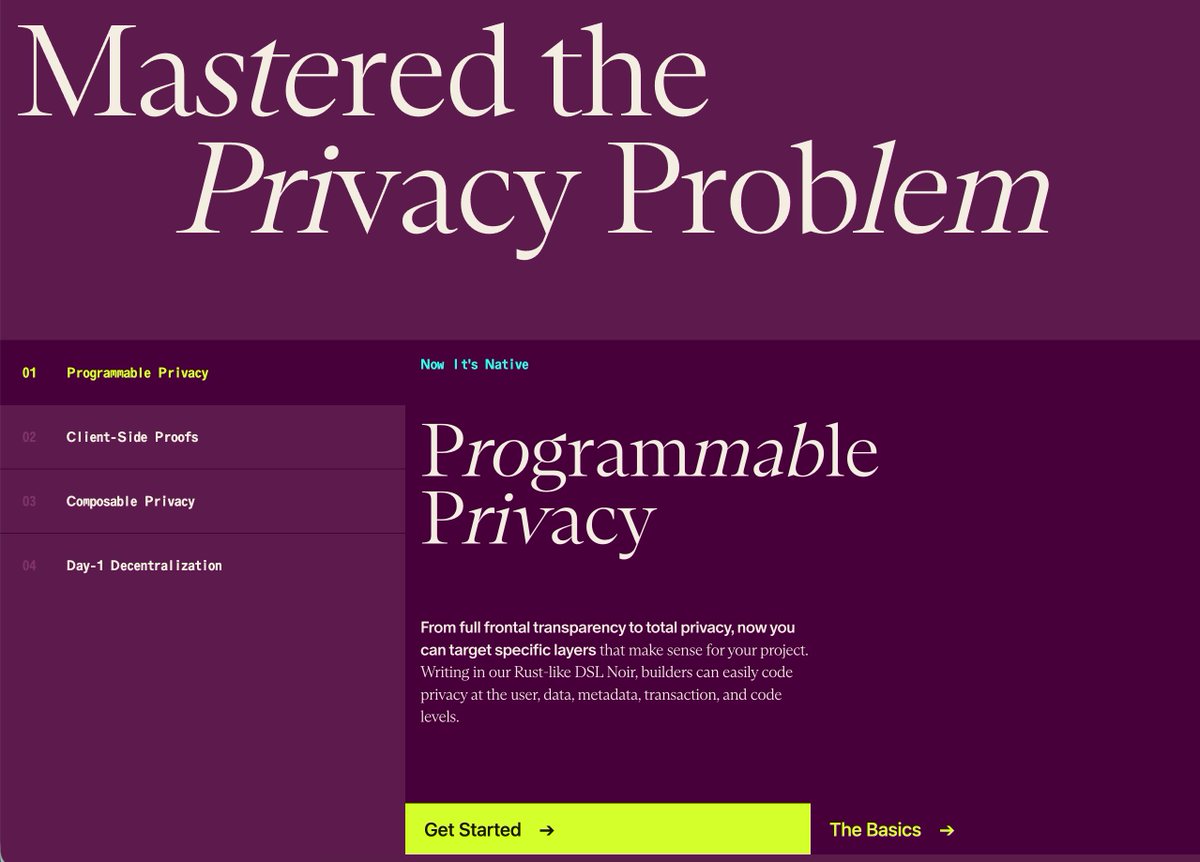
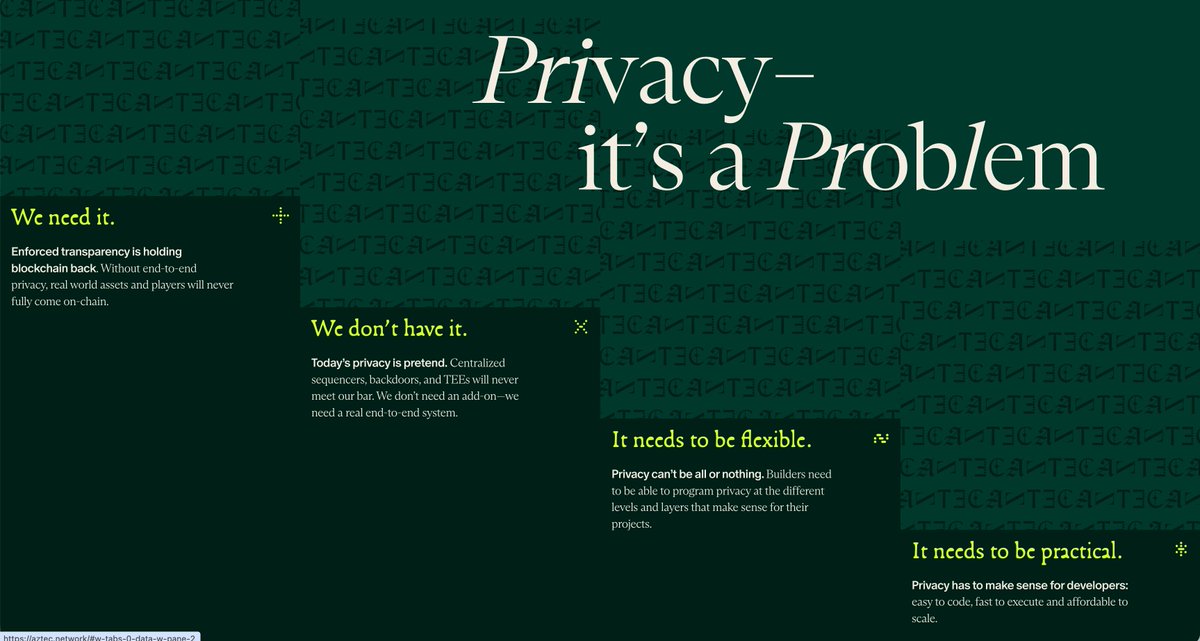
项目本身是没啥太大的让人去喷的点的,除了节奏稍微拖沓之外,融资不错,隐私赛道本身也很好。特别是在监管日益完善的现在,大家对隐私的需求也是越来越刚需。
大家应该还记得前段时间我分享了一些隐私项目,比如hush/privacypools之类的,他们也都挺不错的,只是作为一个应用,太分散了,太受限于他们本身所属链,有太大的局限性。
然后aztec是首个在基础层原生集成隐私的L2。我没记错的话,他们团队应该是几乎单独构建了整个现代隐私计算的完整技术栈。plonk/noir,一个证明系统 一个自研的零知识编程语言,基本上现在做隐私的团队都有在用。
反正至少在赛道这块儿,还是很有竞争力的。只是行情现在有点偏熊,大家钱袋子都看的很紧,也不知道真正tge之后,大家买单的意愿咋样。
只希望这次ido有利润🤣
Feb 9

$AZTEC is the ticker.
What we saw in privacy season in 2025 wasn’t the peak, it was just the tip of the iceberg.
tge.aztec.network/
13
5
27
21,916

Feb 4
Private Trading on Arbitrum with Ostium
Trading metals, stocks, FX, and crypto onchain feels powerful. It also exposes more than most traders expect. Funding your trading account often links your identity, history, and capital to every position you take. Ostium offers deep onchain markets on Arbitrum. Privacy Pools removes the identity trail behind your funding.
💡 The Real Problem Traders Face
Every deposit tells a story. When you fund a decentralized trading app from a known wallet or exchange, your trading wallet becomes your public identity.
➦ ENS names and wallet labels reveal ownership
➦ Exchange withdrawals point back to real world identity
➦ Full onchain history exposes net worth, habits, and counterparties
A new wallet alone fails. Funding it from a known address reconnects the trail instantly.
💡 Why Ostium on Arbitrum
Ostium brings real world markets fully onchain.
➦ Trade commodities like gold, silver, and oil
➦ Access forex, stocks, indices, and crypto
➦ Execute trades on Arbitrum with fast settlement and low fees
➦ Stay non custodial while trading perpetuals
Arbitrum gives Ostium predictable costs and reliable execution. Privacy Pools adds privacy at the funding layer.
💡 What Privacy Pools Solves
Privacy Pools breaks the direct onchain link between where funds come from and where they trade. Observers lose the obvious path between your main wallet and your trading activity.
Your trading wallet still stays public. The funding trail disappears.
💡 How to Fund Ostium Privately with Privacy Pools
Step 1 Create a Privacy Pools Account
➦ Visit privacypools dot com
➦ Connect your wallet
➦ Select Continue with Wallet and sign two messages with zero gas
Step 2 Secure Your zk Account
➦ Download your new zk account recovery phrase
➦ Store it safely
➦ Continue to the dashboard
Step 3 Deposit Funds
➦ Select Deposit
➦ Choose chain such as Ethereum mainnet or Arbitrum
➦ Choose asset like ETH, USDC, or USDT
➦ Confirm the transaction
Step 4 Deposit Review
➦ Deposits pass through the Association Set Provider
➦ Reviews typically complete within one hour
Step 5 Withdraw to a Fresh Wallet
➦ Select Withdraw
➦ Choose the same asset
➦ Enter a fresh wallet address with no history
➦ Withdraw using zero knowledge proofs
Your fresh wallet now funds Ostium without exposing the original source.
💡 Gas and Execution Planning
Trading requires gas. Plan ahead.
➦ Withdraw ETH alongside stablecoins when possible
➦ On mainnet, select the option to receive ETH for gas
➦ On Arbitrum pools, include ETH in your withdrawal or swap using gasless DEX tools
💡 Wallet Hygiene Rules
Privacy breaks fast with small mistakes. Discipline matters.
➦ Create a fresh wallet with zero history
➦ Avoid ENS names and wallet labeling
➦ Never fund it from your main wallet
➦ Use it for bridging, swapping, and depositing to Ostium
➦ Separate browser or wallet profiles
➦ Back up your Privacy Pools recovery phrase
💡 Recommended Funding Flows for Ostium
Liquidity depth matters when moving size.
➦ Large transfers favor mainnet ETH pools
➦ Withdraw to a fresh wallet
➦ Bridge or swap after withdrawal
➦ Deposit to Ostium on Arbitrum
Pool sizes vary by asset and chain. Adjust your flow based on volume and urgency.
💡 Why is this important?
Markets reward skill. Surveillance punishes exposure. Ostium delivers access to global markets on Arbitrum. Privacy Pools protects how you enter them.
💡 My take
Private execution starts before the trade. If you care about strategy, size, and long term edge, funding privacy matters as much as market access.
Ostium on Arbitrum paired with Privacy Pools gives traders a cleaner starting line.
Explore @0xprivacypools for details
Arbitrum everywhere
2
41

Jan 26
Privacy is normal.
Every data breach links some part of your IRL identity to your onchain finances. The full onchain financial history is visible to everyone. We are seeing the consequences: an increase in attacks.
Thankfully, there are teams building privacy tools on the Ethereum application layer. You can add some privacy to your onchain identity TODAY on Ethereum.
@0xprivacypools allows you to deposit ETH and stablecoins into a liquidity pool, and later withdraw the assets to an unlinked wallet address 🛡️
NOTE: When using PrivacyPools, use common fixed denominations and ensure you wait long enough (days to weeks) before withdrawing.
@fluidkey is an ultimate Stealth Address wallet. It allows you to send/receive/swap using single-use addresses. BONUS: You can break traceability using their single-click integration with @HoudiniSwap 🔒
@zkp2p makes it possible on onramp or offramp USDC<>USD using ZKPs and existing fintech rails (Zelle, PayPal, Venmo, Cash App) 🤝
@fileverse allows you to edit documents and spreadsheets, encrypted, stored on IPFS, and accessible using a wallet 📁
@rotkiapp allows you to view your onchain portfolio locally on your computer, meaning your wallets aren't tracked, logged, or linked by infra providers 🔒
More privacy tool users = better privacy for everyone
It takes minutes to onboard. Follow @bjnpck, he's been sharing the latest privacy tools.

Simple tools to 10x your privacy
1. @fluidkey for sending/receiving funds.
You get a free ENS. Each time you send/receive, they generate a new address, all controlled under your ENS.
Stupidly easy, great UX.
2. @zkp2p for on/off-ramping
Onramp directly from Revolut, Venmo etc. without them knowing you're buying crypto - t looks like a normal fiat transfer. To offramp, provide USDC liquidity and receive fiat from another individual to your bank account.
Usually cheaper than centralized services.
3. Set up a clean wallet.
Do a Token→XMR→Token swap via a no-KYC exchange. BTC and many ERC20s are supported.
Important: Set up a clean receiver wallet, let your funds sit in XMR for 24 hours, and don't send the same exact value back.
Use the aggregator @kyc_rip to find routes, or go directly with @swapgate, which in my experience offers the best rates.
Links below.
11
17
91
6,937


Creating a new wallet is easy.
Funding it without exposing your entire on-chain past? Not so much 😬
On public blockchains, the first transfer tells a story.
Privacy Pools exists to break that link — quietly.
On Arbitrum, activity is fast and cheap ⚡
But over time, that also means your wallet builds a very clear, traceable profile.
Privacy Pools lets you reset that visibility without leaving Arbitrum 🧡
Here’s the simple idea 👇
You deposit funds, then later withdraw to a fresh address using zero-knowledge proofs.
Observers see a withdrawal…
They just can’t link it back to you 👀
No mixers.
No shady hops.
Funds stay verifiable on-chain — intent stays private 🔐
You end up with:
• A new Arbitrum wallet
• ETH or stables funded
• No visible trail
• A clean slate ✨
My take:
This isn’t about hiding — it’s about control.
Being able to separate wallets should be normal in DeFi.
Privacy that works quietly > privacy that screams.
#Arbitrum #PrivacyPools #ZeroKnowledge #Web3Privacy
3
28

Starting Fresh on Arbitrum: How Privacy Pools Let You Fund a New Wallet Privately
Creating a new wallet is easy. Funding it without exposing where the money came from is not.
On public blockchains, the first transfer into a fresh wallet immediately creates a visible trail. Anyone can trace it back to your old address, along with everything you’ve ever done on-chain. That’s the quiet privacy gap @0xprivacypools is built to close.
What Privacy Pools Is Designed to Do
Privacy Pools is a zero-knowledge–based system that lets users deposit funds and later withdraw them to a different address without creating a public on-chain link between the two actions.
The goal is simple: allow users to fund new wallets without dragging their entire transaction history along with them.
Why This Is Especially Useful on Arbitrum
@arbitrum is optimized for speed and low fees, which encourages frequent activity. Over time, that activity builds a detailed and easily traceable on-chain profile.
Privacy Pools lets users stay within Arbitrum while resetting that visibility, instead of moving assets through centralized bridges or external chains.
How the Process Works (Simple Breakdown)
1. Account setup without gas costs
Go to privacypools.com and connect your wallet. First-time users sign two messages to create an account, with no gas required.
2. Backup your recovery phrase
During setup, you receive a seed phrase. This is essential for accessing your funds later and should be stored securely.
3. Deposit supported assets
You can deposit $ETH, $USDC, or yUSND, a yield-bearing stablecoin issued by @NeriteOrg, directly on Arbitrum.
4. Approval period
Deposits go through an approval process, typically completed within an hour. This helps maintain the integrity of the privacy pool.
5. Withdraw to a new address
When withdrawing, you choose a fresh wallet address. The withdrawal is executed using a zero-knowledge proof.
6. No public link created
Observers can see a withdrawal occurred, but cannot cryptographically link it to your original deposit.
What Sets Privacy Pools Apart
Privacy Pools are not simple mixers. The system is designed around provable correctness and selective privacy, allowing valid funds to move privately without exposing identities or histories.
This makes it better suited for long-term use as privacy becomes a standard expectation in on-chain finance.
What You End Up With
A new Arbitrum wallet funded with ETH or stablecoins.
No visible funding trail.
No obvious connection to your previous address.
Just a clean slate.
Why This Matters Long Term
As Web3 grows, users will manage multiple wallets for different purposes: trading, experimenting, governance, or safety. Without privacy tools, every wallet eventually becomes linked.
Privacy Pools offer a way to separate those identities without leaving the on-chain world.
My Honest Take
Tools like Privacy Pools are less about anonymity and more about control. The ability to decide what gets linked and what doesn’t is foundational for any serious financial system.
On-chain privacy doesn’t need to be extreme to be meaningful. Sometimes, it just needs to work quietly and reliably.
Post Reference: x.com/i/status/2006365152044…
#Web3Privacy #Arbitrum #ZeroKnowledge #PrivacyPools
31 Dec 2025

want to fund a fresh wallet on @arbitrum without revealing your entire onchain history?
here's how to deposit ETH, USDC, or @NeriteOrg's yUSND to privacy pools and withdraw privately to a fresh address ↓
2
40
309