

Ang pogi naman nitong nagpo-promore na to ☺️🥰🤗
#WillAshley
#KikoEndaya_TSOH88
#TheSecretsOfHotel88
#KikoJade
Jun 15

Maraming-maraming salamat, mga Kapamilya at Kapuso, mula kay Kiko ng #TheSecretsofHotel88. Marami pa kayong dapat abangan sa kanyang kwento, kaya huwag palampasin ang mga susunod na kaganapan.
1
1
173

May 3
Eva and promore is what got me into mecha/gundam, I fear If you only watch eva and nothing else mecha related your an idiot and are missing out on sm peak
1
6
822

Hey it be cool if you drop a follow...👉👈
I promore VR events charity and stuff...❤️
1
6
321

Apr 29
The FCC should cancel all legacy media stations until they can find real news reporters instead of democrat activists. They flat out lie, fabricate crazy stories/theories and work everyday to promore the evil corrupt, anita-America party of the democrats.
2
4
80

Promore/Gurren Lagann are old shows I absolutely love those but 99% of the newer generation don't know them sadly..
2
100

Apr 11
Thats a form of censorship, which you promote on this platform. Im sure you can quote a million people saying you dont promore censorship, but i have made less than a few dozen tweets on here, multiple are already censored, for stating facts. Sad place. Sad owner.
1
29

Mar 28
Kanglerja so zrušili naivni slovenceljski volilci v MB. Slovencelj je pač naiven. Oblast je ogledalo ljudske volje (in ne obratno). Še bolj žalostno pa, da MB ne promore kakšnega boljšega/mlajšega kandidata kot je Kangler(enako v LJ).Južnjaki so ambiciozni,slovencelj je pa hlapec
2
3
61

Mar 26
we'll probably gain around 20M with the comeback and then it'll keep going up with the tour and when they promore other songs for example...
5
88

Mar 11
Yall really be lacking any nuance in your thinking. Being a solo artist= Touring, album making, video shoots, pressure to sell, pressure to promore and pressures of fame....ghostwriting= writing for another artist.....looks like there's a difference...
1
2
150

Feb 14
Can't do much until/if the comic reachs my country...but I contacted some comic boom youtubers to maybe help and promore...hope that helps =/
1
2
182

S1000 could never. Promore suruh datang event itself without have some thought to promote badminton to bigger audiences.
Some may think it is not worth it but tbh it really helps to get some engagement and love towards the players/🏸
Feb 10

DAIHATSU INDONESIA MASTERS 2026 menghadirkan pertandingan berkualitas tinggi dengan atmosfer kompetisi yang istimewa🏸🏸🏸
Tak hanya di dalam lapangan, ragam hiburan di luar arena yang dikemas dengan meriah, menciptakan pengalaman sportainment yang berkesan bagi para Badminton Lovers🔥🔥🔥
Terima kasih atas energi dan dukungannya!!!
Keseruan akan berlanjut—sampai bertemu di POLYTRON INDONESIA OPEN 2026 🏸✨🔥
#BadmintonIndonesia #DaihatsuIndonesiaMasters2026 #DIM2026
1
9
46
6,559

Jan 13
so how will you promore "invisible" symbol in dexscreener and how you can find it?
in long term S tier coin would be better
2
178

Guys, they're not disbanding and as I understood they can keep the name Oneus and promore elsewhere. It's a good news because RBW is shit
2
10
86
16,865

18 Dec 2025
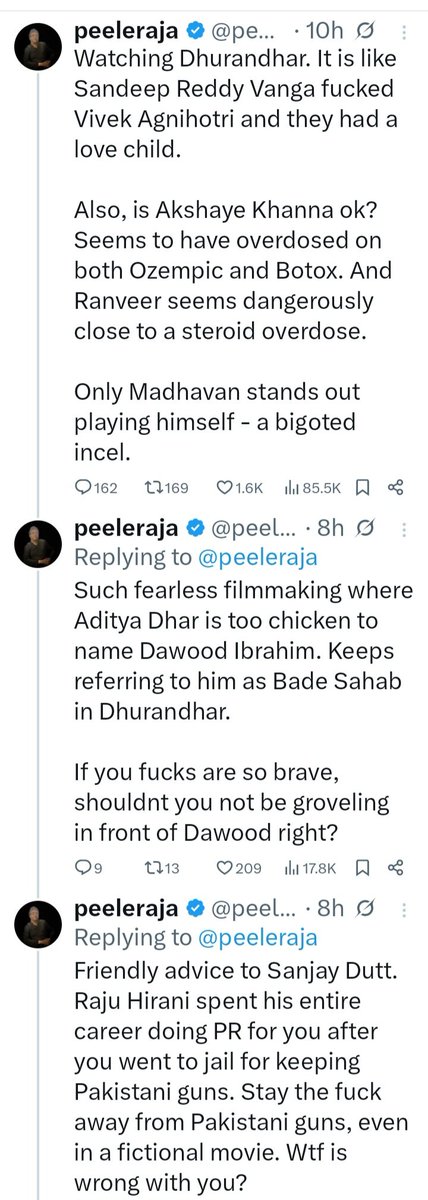
Yeh Bade Saahab ko Dawood bolke actually #Dhurandhar ko promore hi kar raha hai instead of mocking it ... Hilarious
18 Dec 2025

Dhurandhar Hate Gang and their creativity getting out of hands 😂
2
342

18 Dec 2025
im crine n their reasoning for it is so buns “i dont think we should promore mentally ill behaviour” and then the way they speak about it is only targeted to bully more people
1
2
28

12 Dec 2025
Yes they promore abortion 70 million since 1973, that is just the surgical ones. Kill off whites blacks and browns and then flood the country w people who have no regard for our country and its history and laws. Deliberate Globalism New World Odor Satanic Masonic
1
2
206

5 Dec 2025
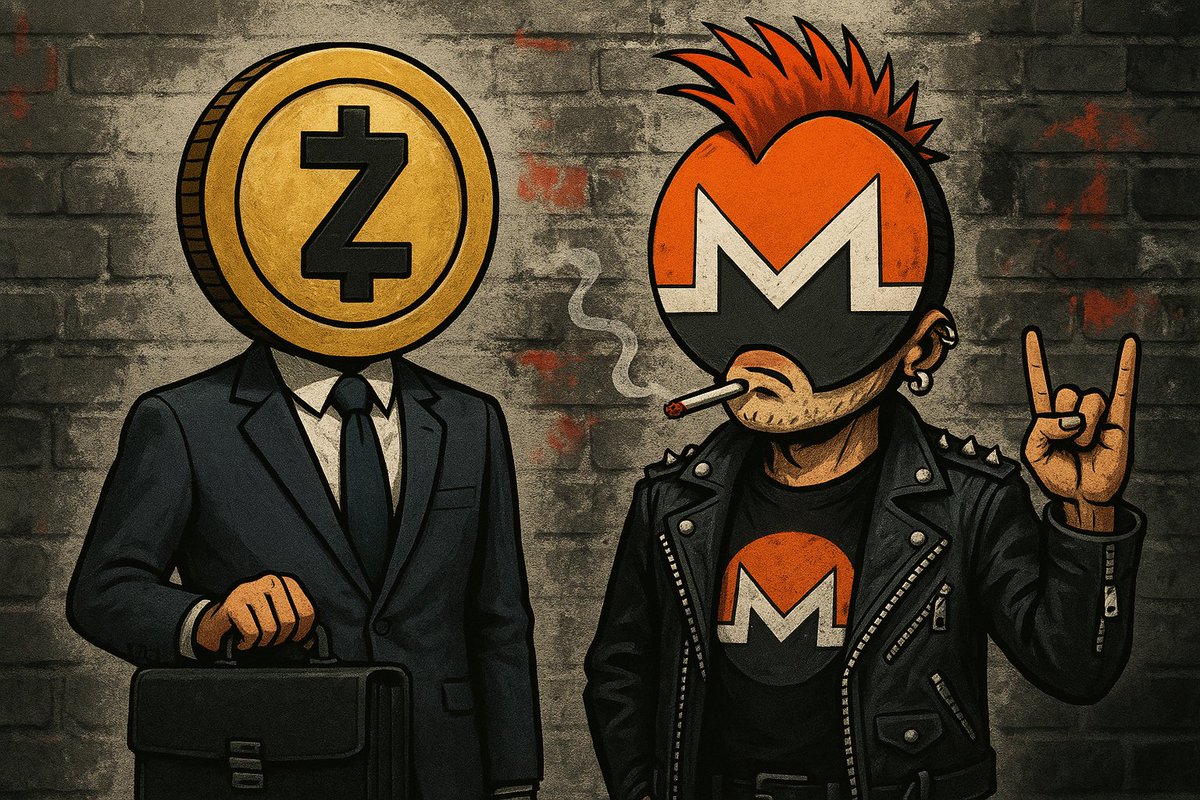
Both Zcash and Monero are dealing with their respective growing pains this week. 👶
Their challenges are completely opposite, but true to their inherent character: Zcash from being too "corporate," Monero from being too "immature."
MONERO - BLOCK SIZE LIMIT?!
Devs are proposing adding a block size limit after experiencing some issues on testnet, where 100mb blocks essentially crashed the whole network.
Monero has had an adaptive block size since its inception, which automatically grows with usage, though it's weighted to prevent too rapid growths in the block size in case of spam attacks etc.
There's a ton of technical nuance, but basically, devs are proposing to (kind of) create a (temporary) hard cap on the block size of 90mb.
Some community members, especially @nikzh, are upset at this, saying it starts down the path towards small blocks which hijacked Bitcoin's potential as uncensorable money for the world.
The real problem: Mass scale or everyone runs their own node?
The unsaid issue at the root of this contention is: what's more important to Monero, that everyone in the planet can use it eventually? Or that every user can run a node on consumer-grade hardware?
Monero seems to be a big-block crypto (because of the technically unlimited block size), but has made deliberate design choices against scale and security to favor small actors running infra.
The biggest of these is probably RandomX, which allows users to mine it without professional mining equipment, but has made the network easier to attack, as we saw during the Qubic attack situation.
The Monero community needs to decide which is more important: "the little guy" running infra, or everyone using the blockchain.
Proposed solution: Modified block size algo
As a compromise to prevent the network crashing in edge cases while not technically limiting the block size, I'd propose something like this:
Above 90mb, the network would need to sustain high volume for several months before the block size would start creeping up again. So, for example, you'd need essentially full 90mb blocks for three months before the block size would grow beyond that.
That way, the limit can be increased into the "danger zone," but in case of an attack enough time is left for miners to coordinate to start rejecting larger block sizes which could nuke the network. And gives devs enough time to fix underlying issues.
ZCASH - SUING OVER THE TRADEMARK?!
This week the Zcash Foundation threatened to sue Zcash Strategy (a new Zcash Digital Asset Treasury, or DAT, company) over using Zcash branding to promore their product.
This received widespread criticism from both inside and outside of the Zcash community, particularly from @vinibarbosabr, criticizing the chilling effect that a single centralized entity could have by determining which projects could or couldn't be called "Zcash" without getting sued.
In fairness, the Zcash trademark was jointly held by Electric Coin Company and the Foundation, but ECC relinquished control over it previously, and CEO Josh Swihart encouraged the foundation to do the same.
So this problem is not emblematic of all of Zcash, or its code/protocol, but rather one major entity in its ecosystem.
The real problem: Centralized vestiges
Zcash started as a fully permissionless protocol, but managed by a central team (ECC), with 20% of the block reward going to a predefined group of people, and at one point had certain licensing restrictions on use of its otherwise open-source code (the Bootstrap Open Source License, or BOSL).
Over the years Zcash has progressively decentralized: the dev fund now goes to a few different orgs, including a lock box where orgs must request funding. The BOSL was removed. Zcash's founder now runs a completely separate org, Shielded Labs. Community voting, including coin holder voting, has been implemented. And many others that I'm sure I'm forgetting.
The trademark is probably the most obvious and aesthetically annoying vestige of the more centralized era.
All cryptocurrencies start out pretty centralized and gradually decentralize over time, but Zcash was a little more structured than many others.
Proposed solution: Relinquish, or decentralize
To fix this, either the Zcash Foundation could relinquish control over the trademark entirely, or implement a multi-step, more decentralized process for enforcement:
1) Clearly and publicly define a process of preventative measures to engage in before even considering legal enforcement of the trademark, which should be considered a last resort
2) Clearly and publicly define the exact terms and conditions under which it may be enforced
3) Share control over decisionmaking on enforcement with several other organizations selected through community coinholder voting, or subject enforcement decisions directly to coinholder voting itself
4) Publicly publish rationale, votes, and preventative steps taken prior to engaging in any enforcement action
The growing pains faced by Zcash and Monero this week are getting a bit ugly, but I think we have a clear and easy path to dealing with them. I believe both projects will figure out an ideal way forward and be stronger for it.
38
29
189
13,978

24 Nov 2025
but only thanks to their talent and the efforts from the fandom to promore them. The company can't even bother to give them decent album designs. And they still focus on SK promotions instead of moving globally where they are wanted. Skz will never be popular enough in SK.
1
3
102

18 Nov 2025
So very bigoted and unable to see your own bigotry. Cope and seethe. We don’t pay for HBNews, we do pay for the BBC and it lost its way a long time ago. Thank you for proving that you indeed never watch GBNews if you truly believe all they do is promore Farage.
2
7
220