Jaguar King Mike (13-4) retweeted

14h
HR handing out $50 bonuses after the company made $30 billion in profits this year
139
2,482
40,621
605,126
Henry retweeted

Jun 11
💥 Crypto Loves Free Markets—Until Founders Take Profits
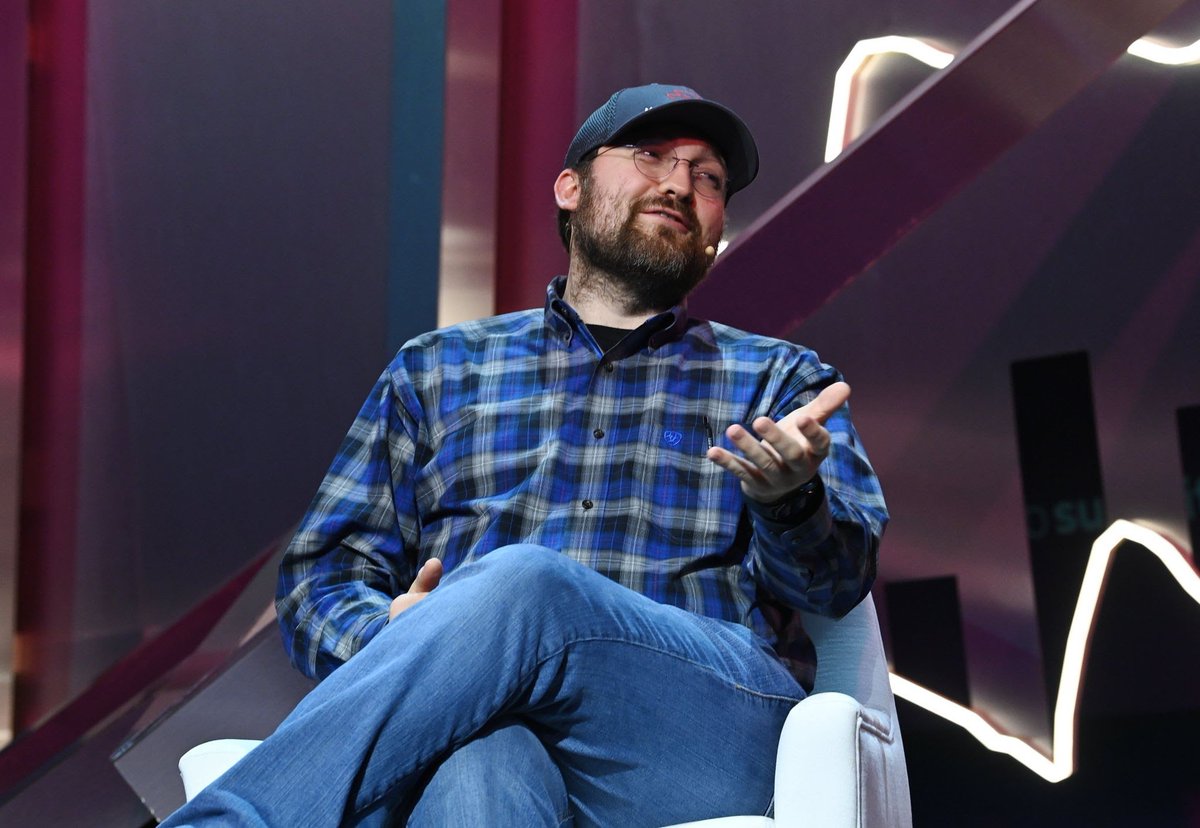
People attacking @IOHK_Charles for selling $ADA sound less like investors and more like bag holders looking for a scapegoat.
Founders who never sell are called liars. Founders who sell are called traitors.
If ADA went from pennies to over $3, are you seriously arguing the founder was supposed to ignore billions in paper gains forever just to make strangers on the internet feel better?
The uncomfortable truth: most critics would have sold long before he did.
The market isn't a charity. It's a market.
17
4
43
2,697

Perhaps he considered the security implications over profits?
2

Think of it like opening a restaurant using a world-famous chef's name:
• You pay the chef a fee to use their name (Royalty)
• YOU run the kitchen & buy ingredients
• YOU keep the profits after expenses
Page works the exact same way.
1
Nario AY retweeted

.@wallacemick says the arms industry profits from war, driving a system that sustains conflict through arms sales.
Follow: T.me/presstv
11
30
1,591
Michael Westcombe - Stalin's Canary 🐣 retweeted

"But rising wages can compress profit margins. As profits come under pressure, firms become more cautious. Investment slows." This is this the crux of it. Usury. Capital funds and leveraged creditors demanding consistently high returns. Workers and their communities will never be anything more than unit costs. Bollocks to their pandering 'job guarantee' or 'UBI'. We need an updated market socialism with public sector work fulfilling human needs.
1
4
13
296

The Elephant in the Room:
Why Continuing the Ukraine Conflict is Existentially Reckless for Europe.
The war in Ukraine did not begin in 2022, it is the violent culmination of decades of accumulating mistrust between Russian and Western spheres of influence, broken promises on NATO expansion, the events of 2014, and competing visions of European security.
Today, Ukraine functions less as a sovereign actor and more as a brutal proxy arena where great powers measure their strength.
In this larger context, recent battlefield developments take on grim significance.
Russian forces continue to press hard on Kostyantynivka, when the city fall, it will open pathways toward Kramatorsk and Sloviansk, the remaining pillars of Ukraine’s defensive line in Donbas.
Russia has committed over 700,000 personnel to the operation and shows no sign of slowing. Even if Russia eventually secures most of Donbas and its annexed regions within the coming year, few serious analysts believe this would end the conflict.
The war has too much momentum, and both sides retain the capacity to continue.
Yet the human, economic, and strategic costs continue to mount - especially for Europe.
Sanctions and energy policies have driven deindustrialization, soaring prices for energy and food, factory closures, and declining competitiveness. Germany and other industrial heartlands have been particularly hard hit.
Whether this outcome is the deliberate aim of a “Great Reset” style transformation or merely the unintended consequence of geopolitical decisions and policy inertia, the result is the same;
- Europe is hollowing itself out while American LNG exporters and defense industries reap substantial gains.
There is also a clear alignment of interests between Western defense contractors and the prolongation of the conflict. These companies are not making policy, but they are responding to massive demand, created by political choices in Washington and Brussels.
Record profits for arms manufacturers make genuine peace negotiations politically more difficult.
Militarily, the West is more exposed than many admit.
After intensive operations elsewhere, including heavy expenditure of precision munitions such as Tomahawks, U.S. stockpiles are significantly depleted and will take years to replenish.
Europe’s own arsenals are in even worse shape, meanwhile, Russia maintains a far more unified domestic narrative of national resolve, while many European countries grapple with deep internal divisions, visible in rising anti-immigration sentiment, protests, and skepticism toward endless involvement abroad.
NATO’s strength on paper is real, but its political cohesion in a prolonged high-intensity war is far less certain.
The risks extend further, China and Russia are deepening their partnership, including in military and resource domains.
China dominates rare earth elements and processing, critical for modern weapons and technology, while Western alternatives remain years from meaningful production.
In any broader escalation involving NATO, a Russia-China alignment would present a formidable challenge.
Most dangerously, we are approaching thresholds where Russia could employ advanced systems such as the Oreshnik intermediate-range ballistic missile.
‼️ One such missile, potentially armed with nuclear or high-yield warheads, could strike mid-sized European cities like Copenhagen, Oslo, Stockholm, or Hamburg.
A nuclear strike on Copenhagen, for example, would devastate Denmark, a small, densely populated country, and spread radioactive fallout across parts of southern Scandinavia and beyond, depending on wind patterns.
Russia has stated it would only cross the nuclear threshold under existential threat, but continued escalation makes that threshold easier to approach.
This is the elephant in the room that mainstream European politics refuses to address openly, the path we are on carries genuine existential risks for European societies.
The war could have been mitigated or ended through serious diplomacy years ago, instead, we see repeated escalation and self-harming policies.
The question that must be asked, calmly and without partisanship, is whether continuing this conflict serves the long-term interests and survival of European nations.
The current trajectory weakens Europe economically, militarily, and socially while inching us closer to catastrophe.
Facing this reality honestly is not defeatism, it is the minimum requirement of responsible leadership.
The discussion can no longer be avoided.
3

Les profits c’est l’unique but d une entreprise. Elle a un concept et il ce doit d’être rentable si non c est la faillite. J’imagine que c est une bonne gestionnaire ce que la majorité des élus ne sont pas .
1

Now is a very good buying price. We should continue to buy and hold patiently, waiting for the bull market to reap even greater profits
1

‘Sovereign AI’ would cost tens of billions to run every month without generating profits - you’re planning to spend taxpayer money on that are you?
1

Trading has cost me alot and I've come along way but should I stop now?
I've lost part of me chasing profitablility and building a brand name around it.
My stock analysis earlier this year got me recognition from big stock accounts and even a broker.
They reached out to use my post as an Ad and I agreed,which boosted my account.
Stock trading gave me profits and dividends
Well I lost it all .....
Got into a bit of a debt trying to come back, luckily I did.
After some months I hit a new milestone on my brand account,got an investor's fund,personal funding and a request to manage a $25-$50k prop account
Well I lost all again....
It's 6 months into this year and I'm very frustrated..
Trading and my behaviour cost me my father's trust
There were times he would send me $5k to $10k and say "I know you'll spend,don't over do it "
He bought me my first prop account
Well I blew most of the money on rubbish and he took away that privilege.
Trading has cost me so much and I think it's time to rebuild stuff it has spoilt..

Taking a break from trading...I definitely need to clear my head a bit .
It's been a really tough year.
6 months into this year and I've barely done any trading.
Did only one flip $70-$200 and lost that account.
Investor took back their funds after just 2 months of not placing any trade,even after we had a deal to take things slow for 6 months - 1 year.
Trying to get a new high paying job,while working out NYSC.
Trying to build an audience on this app and get monitized.
Figuring out how to add an extra source of income to the ones I have already.
Pressure up and down from family cause alot is expected of me as the first and only son.
I've tried my best not to let external problems affect my trading decisions but it's not easy..
I think I'll chill a bit till things cool down .

4
Warren Peacemaker 🏳️🌈 ally ⚖ retweeted

2h
You were laid off by a capitalist who wanted cheap labor and took advantage of that immigrant to increase his profits and nothing makes him happier than watching you blame the worker instead of him.
No immigrant stole your job.
2
21
45
701
MaglcNiftyy retweeted

Bulls should remain cautious and avoid getting overly excited. It is advisable to book profits ahead of the weekend.
Based on my current assessment, next week’s Initial days are likely to favor the bears. selling on any rallies, particularly on Monday or Tuesday.
#Nifty
1
1