
6 Jul 2023
Corpus linguistics offers us an empirical way to dissect the language of propaganda. Let's break it down:
Keyword Analysis: This can help identify the most frequent or salient words used in propaganda texts. For instance, words like 'freedom,' 'patriot,' or 'enemy' may appear more frequently to elicit specific responses.
Collocation Analysis: By studying how words tend to group together, we can understand the implicit meanings or connotations being conveyed. In war-time propaganda, 'sacrifice,' 'honor,' and 'duty' may often collocate.
Concordance Analysis: This provides insight into how certain words are used in context, enabling us to understand underlying messages. For example, studying the concordances of 'us' and 'them' might reveal an 'us vs. them' narrative.
Metaphor Analysis: Propaganda often uses metaphors to persuade. A corpus can help uncover these, such as the metaphor of a 'battle' in public health messaging about COVID-19.
Diachronic Analysis: This examines changes over time. Tracking shifts in language use can reveal how propaganda evolves to suit changing political climates.
Corpus linguistics, thus, provides robust tools for exposing the linguistic mechanics of persuasion and manipulation in propaganda, fostering our critical literacy in an age of information overload.
#CorpusLinguistics #PropagandaLanguage #KeywordAnalysis #CollocationAnalysis #ConcordanceAnalysis #MetaphorAnalysis #DiachronicAnalysis
1
2
234
6 Jul 2023
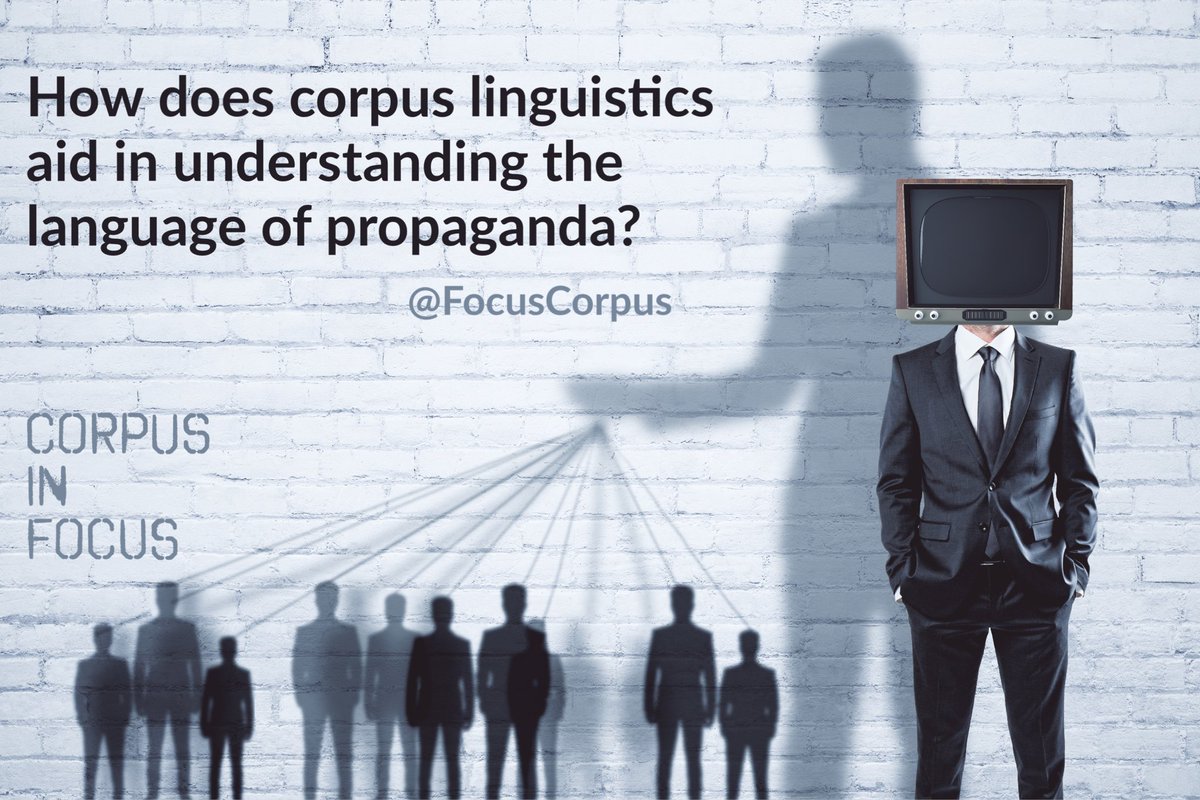
Question of the day: How does corpus linguistics aid in understanding the language of propaganda? #CorpusLinguistics #PropagandaLanguage #KeywordAnalysis #CollocationAnalysis #ConcordanceAnalysis #MetaphorAnalysis #DiachronicAnalysis
1
4
11
989