
Jun 9
Mon vrai compte. Je reponds au nom de MULINDWA MAHESHE Prophil Bibentyo. Né à Kadutu hôpital Boholo 5 le 16 février 1968, grandit à Bagira depuis 1970 et je suis père de 10 enfants, 6 filles et 4 Garcons à Goma commune de Goma, Kyeshero av. La conférence no 23. Content?
2
24

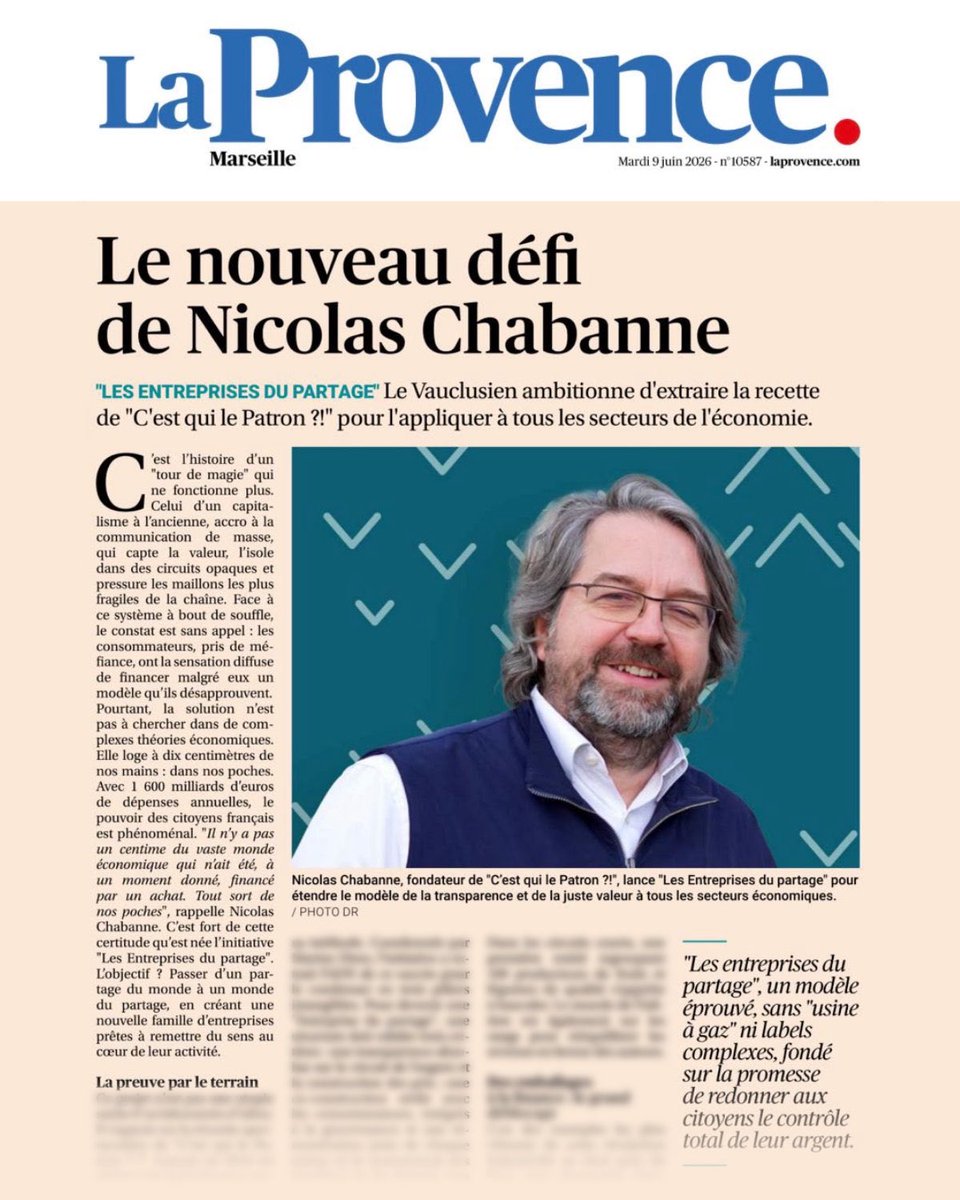
Ce matin dans @laprovence [Les Entreprises du Partage] Merci à Geneviève Van Lede pour ce rappel des enjeux et de l’espoir qui s’offrent à nous 👉🏻 celui de changer concrètement les choses via nos actes d’achat.
Nous en reparlerons lors des événements de juin (dès cette après midi au Ministère de l’Economie) et nous nous retrouverons le 30 juin chez C'est qui le Patron ?! La Marque du Consommateur pour construire la suite.
Dans le brouillard ambiant, il est essentiel de s’appuyer sur des solutions accessibles, concrètes et surtout à la portée de chacun.
Nous pouvons agir sans attendre personne et un véritable boulevard s’ouvre devant nous pour que l’argent de notre consommation redessine utilement et mécaniquement le monde qui nous entoure.
Cela ne nous coûtera rien de plus, bien au contraire et pans entiers de l’économie peuvent repasser sous notre contrôle direct de consommateurs.
Il faut que les entrepreneurs ouvrent cette voie et ce qui se prépare actuellement, porté par le succès de l’initiative qui sert aujourd’hui de locomotive à ce mouvement, prouve que rien ne se fera désormais comme avant.
La transparence et le partage vont organiser la suite de nos vies, c’est incontournable et c’est une excellente nouvelle. Rejoignez-nous pour que cette influence naturelle et légitime du poids que nous avons tous via notre rôle de moteur de l’économie se fasse sentir (informations en commentaires.) Bonne journée à toutes et à tous #SoutienAuxProducteurs #LePatronCestLeConso
Fonds de Soutien aux Producteurs C'est qui le Patron ?! La Marque du Consommateur Marine Diers Elsa Canot Fabien Cassam Chenai Raphaël Petit Elsa Satilmis Noemie Losfelt Geneviève VAN LEDE
📔Rappel des conférences et rencontres en Juin :
5 JUIN : Lille Grand Palais - Convention Banque Populaire - Conférence
9 JUIN : Paris - Ministère de l'Economie Conférence « Fondation » Prophil
10 JUIN: ESCP Paris - conférence « Entreprise & Progrès »
11 JUIN : Tours - conférence « Universités de l'économie responsable »
16 JUIN : Rennes - Conférence « Intelligence Marketing Day »
28 JUIN : Paris - Conférence Palais Brongniart (Made in France / Slip Français)
29 JUIN : (en visio) - Conférence « Les Voix Agricoles »
👉🏻✨ 30 JUIN : Paris 1ère journée d'immersion « Les entreprises du partage » chez CQLP à Paris
1/2
@FSProducteurs @C_qui_le_Patron @laprovence @VanLede
2
12
25
439
Ce soir j’ai peu de temps pour écrire ce post mais en résumé les choses avancent vite pour « Les Entreprises du Partage » (et merci à tous). Record de conférences en juin sur nos capacités de consommateurs à nous rassembler et à changer positivement le cours des choses ! C’est enthousiasmant et plein d’espoir (ne lâchez rien, on tient la solution collective à quelques centimètres de nos interrogations) 😊🙌 Merci pour vos relais et messages de soutien, ça n’arrête pas et ça fait du bien. Bonne soirée à tous et à demain pour les Lillois 🙌 #SoutienAuxProducteurs #LePatronCestLeConso
5 JUIN : Lille Grand Palais - Convention Banque Populaire - Conférence
9 JUIN : Paris - Ministère de l'Economie Conférence « Fondation » Prophil
10 JUIN: ESCP Paris - conférence
« Entreprise & Progrès »
11 JUIN : Tours - « Universités de l'économie responsable »
16 JUIN : Rennes - Conférence « Intelligence Marketing Day »
28 JUIN : Paris - Conférence Palais Brongniart (Made in France / Slip Français)
29 JUIN : (en visio) - Conférence « Les Voix Agricoles »
30 JUIN : Paris 1ère journée d'immersion « Les entreprises du - partage » chez CQLP
@FSProducteurs @C_qui_le_Patron #Souverainetéalimentaire #mercosur #agriculteursencolère #Solidarité 1/2
1
10
20
815

May 28
À l'émission Les Carnets de Livres en folie, jeudi 28 mai 2026, on reçoit Bénédique Paul autour de son ouvrage « Manager c'est décider »; Anny-Lee Shaïma Labranche autour de son recueil de poèmes « À toi qui as tout donné » et Djeff Prophil pour évoquer la participation de Correct Pro à la 32e édition de Livres en folie.
Retrouvez nous sur les ondes de Magik9, 100.9 et sur les pages Facebook Le Nouvelliste et Radio Magik9.



1
437

May 8
Bon… @JuliadeFunes était de passage ce matin chez @PascalPraud, née à Paris le 4 mars 1979, petite-fille de l’immense Louis de Funès, elle incarne une philosophie vivante, loin des tours d’ivoire. Docteure de Paris-Sorbonne et titulaire d’un DESS en ressources humaines, elle a d’abord exercé comme chasseuse de têtes avant de fonder en 2010 son cabinet Prophil Conseil, où elle met la pensée au service des entreprises, Thales, EDF, Adidas, Accor, pour redonner du sens au travail et traquer les absurdités managériales.
Son œuvre dissèque notre époque avec une précision jubilatoire. "Socrate au pays des process" dénonce le culte des procédures qui étouffe l’intelligence. Avec Nicolas Bouzou, "La Comédie (in)humaine" montre comment les entreprises, sous leurs discours bienveillants, font fuir les talents. Elle poursuit dans Le développement (im)personnel, réquisitoire contre les impostures du coaching et de la psychologie positive, puis dans "La vertu dangereuse".
Son dernier essai, "Pensées distinguées", offre des armes conceptuelles pour échapper aux débats binaires et réhabiliter la nuance, la distinction, le discernement.
Ce qui frappe chez Julia de Funès, c’est sa parole unique : un français limpide, élégant, sans jargon ni effets de manche. Elle rend la philosophie accessible avec une clarté redoutable, sans jamais céder sur l’exigence. Son regard sans concession sur le monde du travail, la tyrannie des process, les dérives du management "bienveillant" ou les modes intellectuelles, est toujours porté par l’humour, la finesse et une rare indépendance d’esprit. Ni moralisatrice ni provocatrice gratuite, elle défend la liberté de penser, le courage intellectuel, le refus des conformismes.
Dans un univers médiatique saturé de bruit, Julia de Funès est une voix qui éclaire sans assommer, critique sans détruire, élève sans condescendance. Son intelligence n’a rien de froid : elle est chaleureuse, incarnée, profondément humaine. L’écouter, c’est en sortir plus lucide, plus libre, et surtout plus exigeant envers soi-même et le monde. Une classe rare. Une pensée indispensable.
Et quel charme…

107
576
1,974
48,990

Leonard Prophil, líder y portavoz de la comunidad haitiana en Puerto Rico, conversó sobre el problema de seguridad en Haití y la pérdida de tres familiares secuestrados por gangas.
Lee el reportaje: periodismoinvestigativo.com/…
Programa completo: youtu.be/Sr3Fad7IzPY?t=200
1
5
8
528

Feb 9
#Panorama_Internacional
Familiares de las mujeres haitianas encontradas decapitadas en la frontera dominico-haitiana, en la zona de Macacía de Elias Piña supieron de su asesinato luego de recibir comunicaciones directas de la propia banda criminal que exigía un rescate de 50 mil dólares por cada víctima, según denunció Leonard Prophil, líder comunitario y portavoz de los haitianos en Puerto Rico.
Lee: panorama.com.do/banda-armada…
Amplíe en nuestro portal web panorama.com.do
Síguenos, Comenta y Comparte
#Panorama #RD #Haití

5
6
13
1,968

Feb 6
Four Haitian women, recently deported from Puerto Rico, were discovered decapitated near the southern border between Haiti and the Dominican Republic in the Elías Piña area. According to authorities, the women were killed in Haiti and their bodies thrown into a river, which carried them across the border, where they were recovered.
According to Puerto Rican newspaper El Nuevo Día, the victims, Haitian nationals aged between 27 and 31, had arrived in Puerto Rico by boat in December 2024 and lived in San Juan neighborhoods like Barrio Obrero and Puerto Nuevo. They were deported several months ago (one approximately two months prior, the others around three months and 15 days before their deaths), following immigration enforcement actions.
Leonard Prophil, a Haitian community leader and Creole interpreter in Puerto Rico who knew some of the women and was contacted by their families, confirmed they had been missing for about two weeks before the bodies were found. He linked the killings to gang activity in Haiti, where deportees, especially women, are often kidnapped and targeted for ransom demands from relatives presumed to have resources abroad (often in the U.S. or Puerto Rico).
"Deporting these people means condemning them to death," Prophil stated, calling for alternatives to deportation amid Haiti's severe gang violence and humanitarian crisis.
Dominican authorities arrested a Haitian man named Chin Laduse in connection with the case. This incident fits a reported pattern: Prophil has indicated that at least 18 Haitian deportees from the U.S. have been murdered upon return, with nine linked to Puerto Rico deportations.
The victims' families have withheld names and photographs out of fear of further gang retaliation. Many Haitians undertake perilous sea journeys ("yolas") to reach Puerto Rico, only to face detention, raids, and removal, heightening dangers in an unstable homeland.

1
7
14
1,920

Feb 5
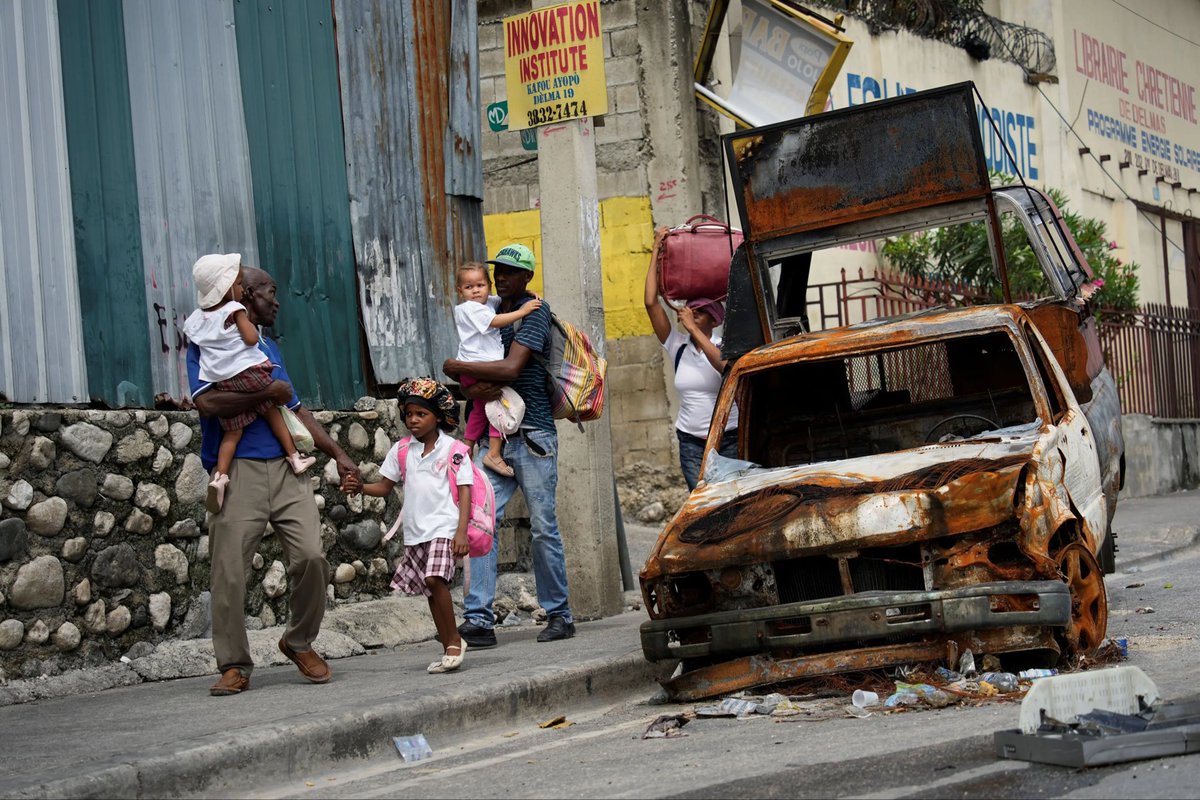
Resultado del EstadoPR que apoya operativos de @ICEgov . El asesinato de cuatro mujeres en Haití, que habían sido deportadas de PR en noviembre pasado, aumenta a 18 los ciudadanos de ese país que han muerto a manos de organizaciones criminales, después que han tratado de huir de esa violencia y el gobierno de PR abraza las políticas anti migratorias de Donald Trump.
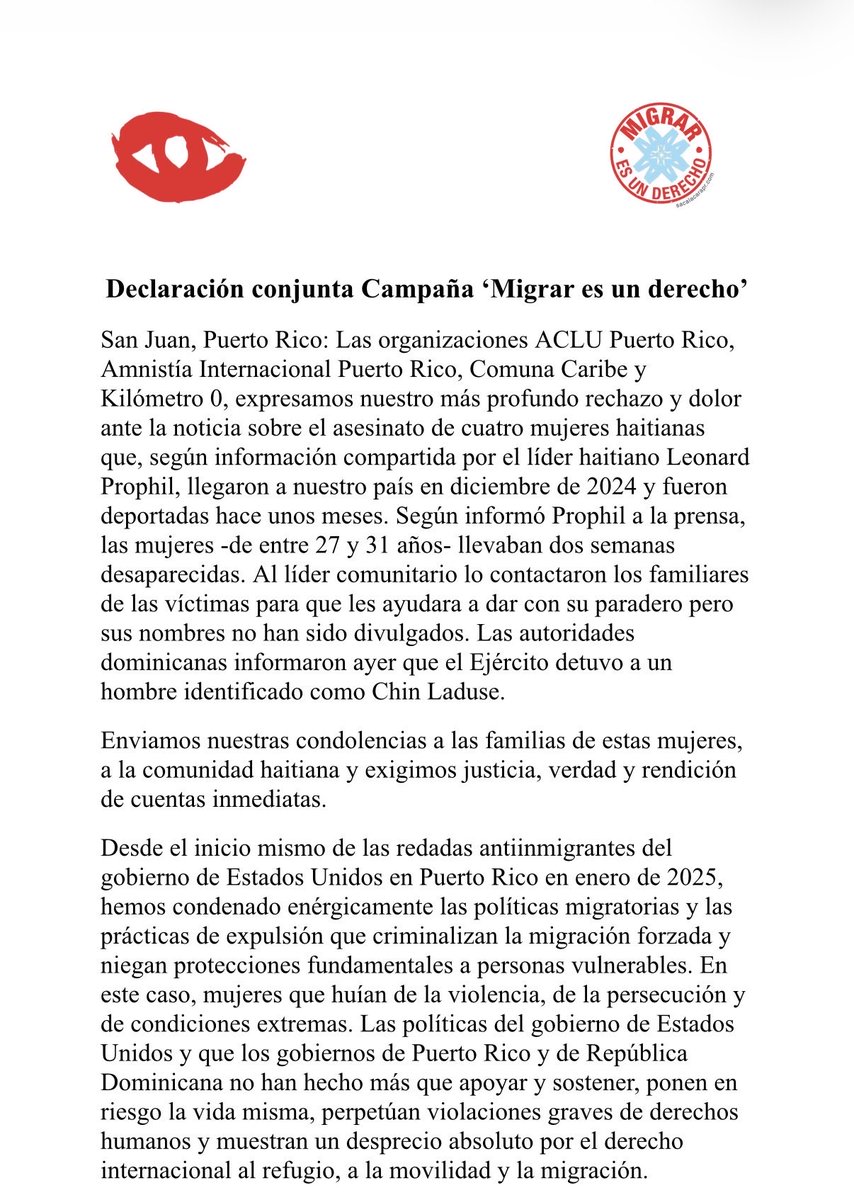
“Las políticas del gobierno de Estados Unidos y que los gobiernos de Puerto Rico y de República Dominicana no han hecho más que apoyar y sostener, ponen en riesgo la vida misma, perpetúan violaciones graves de derechos humanos y muestran un desprecio absoluto por el derecho internacional al refugio, a la movilidad y la migración, lee un comunicado de @Kilometro0PR @amnistia @ACLUPR @ComunaCaribe que mantienen la campaña Migrar es un Derecho para educar y denunciar sobre el tema.
Las mujeres de 31, 29, 25 y 22 años, fueron secuestradas hace un mes por sujetos que pedían dinero “por su cabeza” ante la creencia que una vez migraron tenían familiares con dinero fuera de esa nación. Así lo relató el líder Leonard Prophil a miembros de la prensa.
#violencia #estado #PuertoRico
8
15
22
653

Of the 18 deportees from the USA who've been thereafter murdered in Haiti, 9 were deported from Puerto Rico, says Haitian community leader in Puerto Rico, Leonardo Prophil

Nueve personas que deportadas desde Puerto Rico a Haití han sido asesinadas al regresar a su país, de un total de 18 que han encontrado tan trágica suerte, informó el activista haitiano residente en Puerto Rico, Leonardo Prophil elnuevodia.com/noticias/loca…
3
7
212

Nine haitian nationals deported from Puerto Rico to Haiti have been murdered upon returning to their country. According to Haitian community leader in Puerto Rico, Leonardo Prophil that brings it to a total of 18 who met the same end.
Nueve personas que deportadas desde Puerto Rico a Haití han sido asesinadas al regresar a su país, de un total de 18 que han encontrado tan trágica suerte, informó el activista haitiano residente en Puerto Rico, Leonardo Prophil elnuevodia.com/noticias/loca…
1
373
756
107,417

Nueve personas que deportadas desde Puerto Rico a Haití han sido asesinadas al regresar a su país, de un total de 18 que han encontrado tan trágica suerte, informó el activista haitiano residente en Puerto Rico, Leonardo Prophil elnuevodia.com/noticias/loca…
10
62
125
28,192
It’s clear there is a lack of transparency around deportation. It likely made the women vulnerable to violence. As reported by Haitian community leader in PR, Leonardo Prophil women end up targeted by kidnapping for ransom on the false notion they have family abroad who can pay.
4
9
258
In this article, Haitian community leader for Haitian migrants living in PR Leonard Prophil said he was contacted by the victims’ relatives to help them find their whereabouts. One women was deported from PR 3 months ago and the latest 15 days ago.
diariolibre.com/mundo/americ…
1
29
40
1,428

23 Nov 2025
Tu vois sur le prophil de quelqu'un et y'a écrit à rejoint Twitter en 2023 peu importe bah y'a une flèche tu cliques
2
2
146

17 Nov 2025
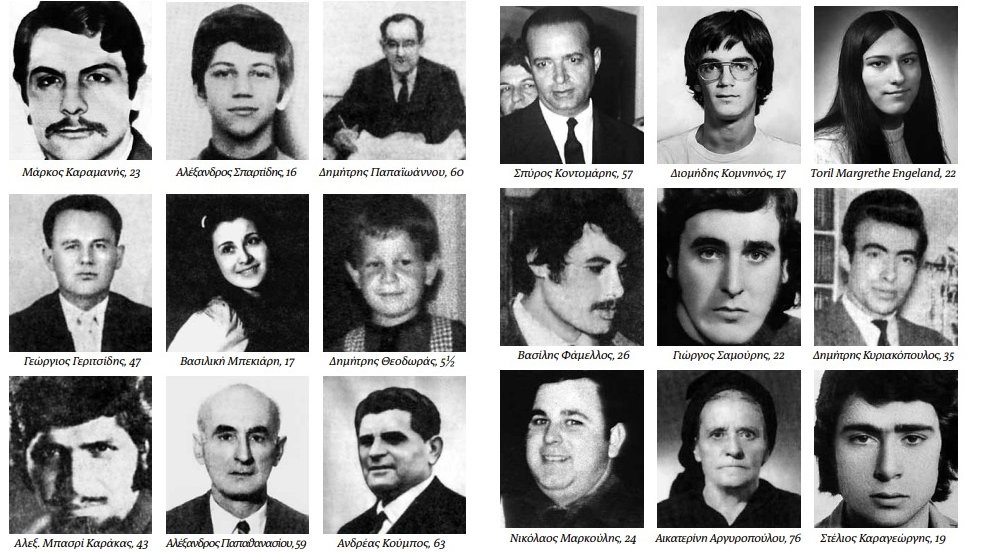
18 νεκροί από σφαίρες αστυνομικών και Κυπατζηδων της Χούντας του δικτάτορα Παπαδοπουλου
1
2
83

16 Nov 2025
Κατά την Ιταλική εισβολή το 1940 ΚΑΝΕΝΑΣ Ελληνας στρατιωτης δεν σκοτώθηκε απο τους Ιταλούς στην Ελλάδα.(ολοι στο Αλβανικό εδαφος) Με αλλα λόγια αυτό μα λέει
1
2
96

16 Nov 2025
Ρε ηλθιε ναζιστολατρη @prophil εχει σημασια αν ο αειμνηστος #ΜΥΡΟΓΙΑΝΝΗΣ που δολοφονησε το ελεεινο ναζιδι #Ντερτιλης
Ηταν μεσα η εξω απο τον περιβολο του Πολυτεχνειου ?
Σιχαμα .

16 Nov 2018

Ρε λοβοτομημένο Σταλίνι πες ΕΝΑ όνομα από νεκρό «ΜΕΣΑ» στον χώρο του Πολυτεχνείου...
Μόνο ΕΝΑ όνομα πες μας...ψεύτες Γκαιμπελιστές
1
64


16 Nov 2025
όταν κάποιος ειναι κλινικά ηλίθιος δεν υπάρχει περίπτωση να αλλάξει γνώμη.
όπως λέει κι ο Μπουκόφσκι,
οι έξυπνοι είναι γεμάτοι αμφιβολίες και οι ηλιθιοι γεματοι βεβαιότητες.
1
5
128