
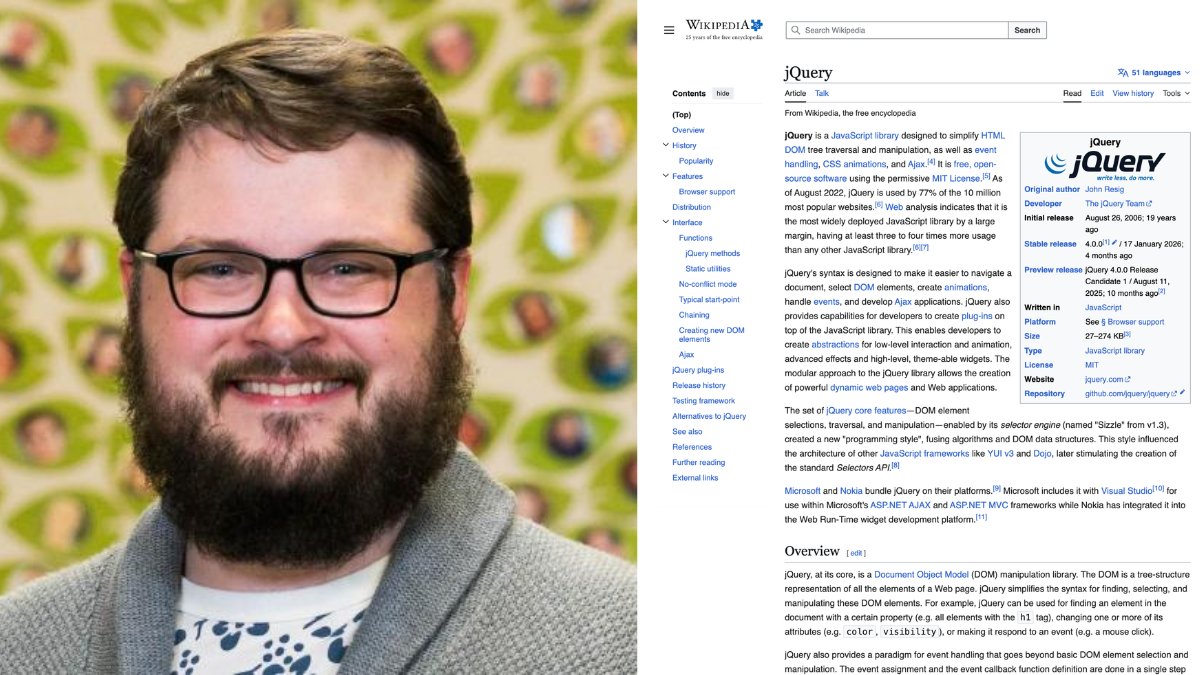
A 22-year-old computer science student in Rochester, New York got so frustrated with the way JavaScript worked differently in every browser that he wrote a library to fix it.
He released it for free at an unconference in January 2006. That library became the foundation of the web for an entire generation.
It now runs on 77 percent of the top 10 million websites on Earth. He never started a company around it. He gave it away and went to work on education and Japanese art.
His name is John Resig. The library is called jQuery.
Here is the story.
John was born on May 8, 1984 in Boston, Massachusetts. He grew up fascinated by computers and programming. He attended the Rochester Institute of Technology and studied computer science with concentrations in economics and psychology. During college he lived in Computer Science House, an on-campus living and project community where students build things for fun. His housemates voted him Member of the Year during his sophomore year.
The problem that consumed him at RIT was cross-browser JavaScript. In 2005 the web was a mess. Internet Explorer, Firefox, Safari, and Opera all handled JavaScript differently. Writing code that worked the same way in every browser was painful, repetitive, and fragile. Developers spent more time fighting browser inconsistencies than building features.
John spent years at RIT building personal tools and libraries to make JavaScript easier to write. He wanted to share them with the world in a clear and concise way. In 2005, while still a student, he started building jQuery.
In January 2006 he released it at BarCamp NYC, a tech unconference whose core rule was no spectators, only participants. He was 22 years old. The library was small, elegant, and solved the exact problem every web developer was struggling with. You could traverse the DOM, handle events, animate elements, and make Ajax calls in a few lines of code that worked the same way everywhere.
The adoption was immediate. jQuery was the only open-source JavaScript library at the time that shipped with documentation. Most libraries expected developers to read the source code. John's first hire was not a developer. It was a community manager, someone to help answer questions from developers who were adopting the library. He understood from the beginning that adoption was a human problem, not a technical one.
Drupal selected jQuery as a core component. WordPress built on it. Microsoft adopted it. Apple used it. Google, IBM, Amazon, and AOL incorporated it into their websites. Django and Rails integrated it. Mozilla built with it.
By the early 2010s jQuery was everywhere. It became the most deployed JavaScript library in history by a margin so large that the second place contender was not even close. As of recent measurements, jQuery runs on approximately 77 percent of the top 10 million websites.
John worked at the Mozilla Corporation from 2007 to 2011 as a JavaScript evangelist and tool developer. He authored two books, Pro JavaScript Techniques and Secrets of the JavaScript Ninja. He created Processing.js, a port of the Processing language to JavaScript. He created Sizzle, a standalone CSS selector engine. He created QUnit, a testing framework.
In 2011 he joined Khan Academy as Chief Software Architect. He has been there ever since, building the technology behind one of the largest free education platforms on Earth.
Then he did something nobody expected from a JavaScript legend. He became a scholar of Japanese woodblock prints.
John is a Visiting Researcher at Ritsumeikan University in Kyoto, studying Ukiyo-e, the Japanese art of woodblock printing from the 17th to 19th centuries. He built ukiyo-e .org, a comprehensive database and image search engine that lets anyone search across hundreds of thousands of prints from museums and collections worldwide. He applied the same engineering instincts that made jQuery work, simplify, document, and make accessible, to a centuries-old art form.
He was inducted into RIT's Innovation Hall of Fame in 2010. He lives in the Hudson Valley of New York.
A frustrated college student wrote a JavaScript library in his dorm room and gave it away for free.
It became the invisible foundation of the modern web.
He went to Kyoto to study woodblock prints.
5
45
228
25,805


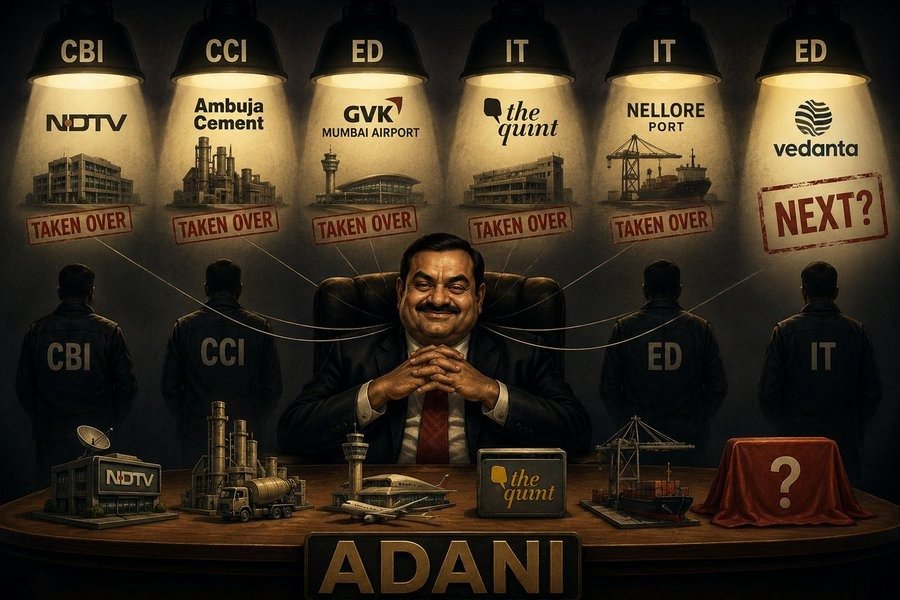
'मोदानी मॉडल' की क्रोनोलॉजी समझिए:
CBI ने NDTV पर रेड मारी -- अडानी ने NDTV खरीद लिया।
CCI ने अंबुजा सीमेंट पर रेड मारी -- अडानी ने अंबुजा सीमेंट खरीद की।
ED ने GVK पर रेड मारी -- Adani को GVK मुंबई एयरपोर्ट मिल गया।
Income tax ने Quint पर रेड मारी -- अडानी ने Qunit खरीद लिया।
IT ने Nellore Krishnaptnam पोर्ट पर रेड मारी उसके बाद अडानी को Nellore Krishnaptnam पोर्ट मिल गया।
अब ED ने Vedanta पर रेड की है तो क्या लगता है ये भी डिस्काउंट पर दिलवा देंगे क्या दोस्त को?
क्रोनोलॉजी समझिए ये रेड सिर्फ कंपनियों पर दबाव बनाने के लिए और दोस्त को सस्ते दामों पर कंपनी दिलवाने के लिए कि जाती हैं।
मोदानी मॉडल के पुराने ट्रैक रिकॉर्ड को देखते हुए बच्चा-बच्चा भी बता सकता है कि आगे क्या होने वाला है।
#GautamAdani #CBI #AdaniScam
1
8
10
152

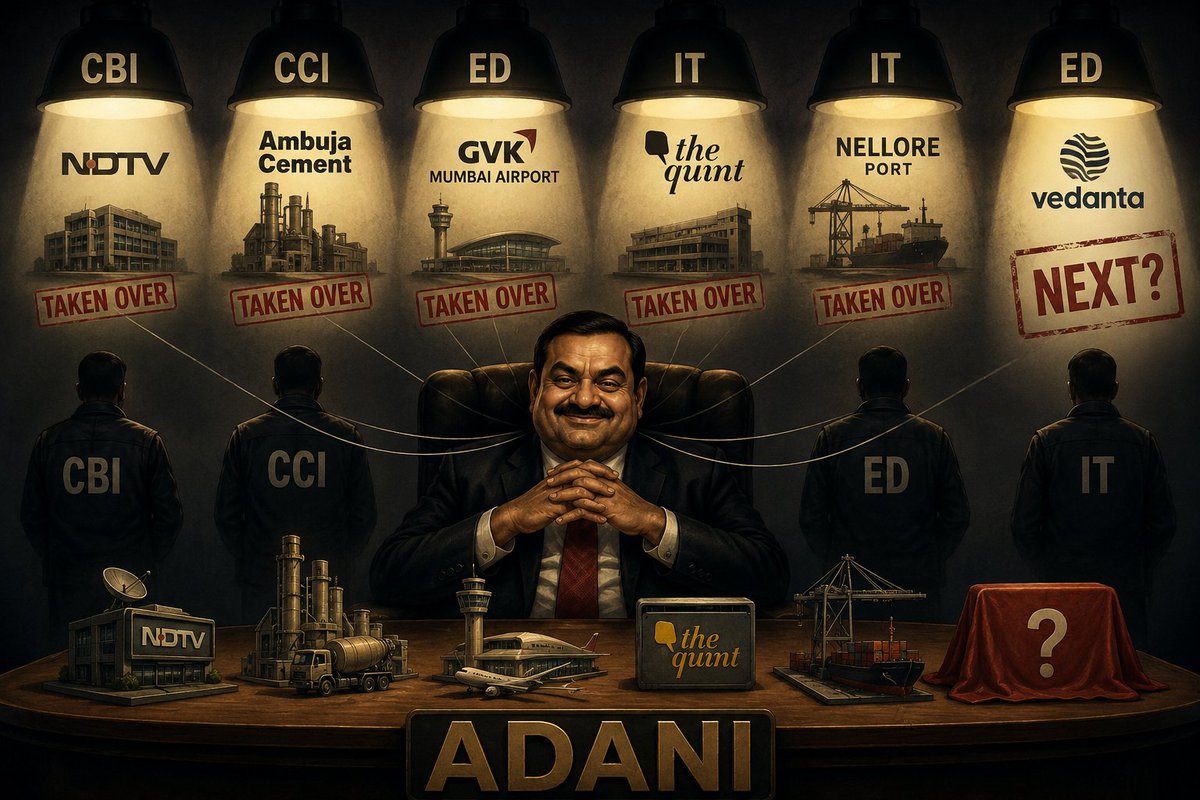
'मोदानी मॉडल' की क्रोनोलॉजी समझिए:
CBI ने NDTV पर रेड मारी -- अडानी ने NDTV खरीद लिया।
CCI ने अंबुजा सीमेंट पर रेड मारी -- अडानी ने अंबुजा सीमेंट खरीद की।
ED ने GVK पर रेड मारी -- Adani को GVK मुंबई एयरपोर्ट मिल गया।
Income tax ने Quint पर रेड मारी -- अडानी ने Qunit खरीद लिया।
IT ने Nellore Krishnaptnam पोर्ट पर रेड मारी उसके बाद अडानी को Nellore Krishnaptnam पोर्ट मिल गया।
अब ED ने Vedanta पर रेड की है तो क्या लगता है ये भी डिस्काउंट पर दिलवा देंगे क्या दोस्त को?
क्रोनोलॉजी समझिए ये रेड सिर्फ कंपनियों पर दबाव बनाने के लिए और दोस्त को सस्ते दामों पर कंपनी दिलवाने के लिए कि जाती हैं।
मोदानी मॉडल के पुराने ट्रैक रिकॉर्ड को देखते हुए बच्चा-बच्चा भी बता सकता है कि आगे क्या होने वाला है।
#Adani #RajeshExportsNews #RajeshExports #Gold #Sharemarket #HSCL

2
13
13
316

CBI ने NDTV पर रेड मारी -- अडानी ने NDTV खरीद लिया।
CCI ने अंबुजा सीमेंट पर रेड मारी -- अडानी ने अंबुजा सीमेंट खरीद की।
ED ने GVK पर रेड मारी -- Adani को GVK मुंबई एयरपोर्ट मिल गया।
Income tax ने Quint पर रेड मारी -- अडानी ने Qunit खरीद लिया।
IT ने Nellore Krishnaptnam पोर्ट पर रेड मारी उसके बाद अडानी को Nellore Krishnaptnam पोर्ट मिल गया।
अब ED ने Vedanta पर रेड की है तो क्या लगता है ये भी डिस्काउंट पर दिलवा देंगे क्या दोस्त को?
क्रोनोलॉजी समझिए ये रेड सिर्फ कंपनियों पर दबाव बनाने के लिए और दोस्त को सस्ते दामों पर कंपनी दिलवाने के लिए कि जाती हैं।
2
19
39
666

The Qunit is openly spreading hatred against Brahmins under the garb of opinion via using an active legal investigation which has nothing to do with all Brahmins of society. Strict action should be taken against them. @DrMohanYadav51 @JansamparkMP @MPPoliceOnline @CMMadhyaPradesh
1
14
482

May 19
Hahaha ku çka ka kesha me kete koment o kjo edhe ne Big qeshtu flokt edhe ftyren se like Maateon sa here qe ja shohim Floket e hallkata prej Brikit sa ke ne Itali irrishin mire qunit floket 😂
2
107

May 14
Me ne fund 🥳
Po edhe nje follow qunit se nuk u be qameti 😜 Na bejn te veshtirn kot tashi 😂
2
1
453

Apr 21
Ciles elijones qe i ka bo buzt si the joker e qe shtin corape me ju dok cicat si te asaj qe e qunit miss botoxi?
1
4
173

 tink🦦
tink🦦

Mar 25
side eye criminal offensive sIde eYE si plq qunit hiq po hiq HAHAHAHHA #bbvipks4
4
10
221
10,213


QUnit 2.25 is out!
Highlights from 2.24.1 and 2.25.0:
🧩 Add display of "early" errors in the HTML Reporter.
✨ New test filter callback, for parallel runners and other cool stuff. Thanks Sebastian Gbudje and @nullvoxpopuli
🐛 Fix bugs in TAP-reporter.
qunitjs.com/blog/2025/12/30/…
1
4
131

REFERENCE:
Qunit J, Herrett E, Bhaskaran K, Timmis A, Hemingway H, Wedzicha J et al. Effect of beta-blockers on mortality after myocardial infarction in adults with COPD: population-based cohort study of UK electronic healthcare records. BMJ 2013;347:f6650.
2
132

Agaknya mana si Mat Jargon lps kata walaun bengap, so Qunit Nazilah la korang
Jan 7

Bersatu now has become Bersepai. Galore of sacking. It's now affecting PAS & PN from moving forward. @anwaribrahim may continue his 2nd term.
2
179

2 Nov 2025
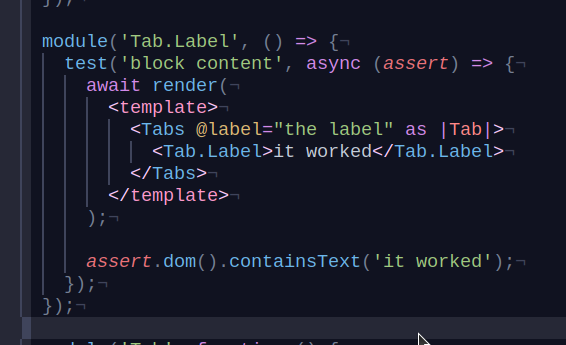
Did you know that you can use arrow functions in QUnit in Ember?
1
5
256


13 Oct 2025
Thanks a lot LLMs...
Now I know I can build QUnit CLI integration IDE integration in two days I'm on a side quest.
2
17
5,487