
Apr 4
First Neighborhood Massacre
Nagavc Massacre
Podujeva and surrounding Massacre
SopsiMassacre
Leshan Massacre
Skenderaj PinesMassacre
Tusuz Massacre
Llashtica Massacre
MitrovicaCenter Neighborhood Massacre
Ribar i VogëlMassacre
BukoshMassacre
Likoshan&Qirez Massacre
Beçiq Massacre
1
2
73

Kenyan @afshinrattansi, this so-called “award-winning journalist” who claims to be a voice of truth, has simply become a mouthpiece for the genocidal Serbian state propaganda.
He says “NATO bombing campaign of Yugoslavia was illegal”, but deliberately forgets to ask: Was there any legal basis for the systematic killing of Albanian civilians, for the ethnic cleansing, for the burning of homes, for the mass rapes, for the looting of private property, and for the expulsion of the Albanian population from their own land?
Of course not – because he doesn’t talk about the crimes of the Milošević regime, since his job is propaganda.
He also “forgets” that UN Security Council Resolutions 1160, 1199, and 1203 had clearly declared the situation in Kosovo a “threat to international peace and security” and had strongly condemned the ethnic cleansing carried out by Serbian forces. The Rambouillet negotiations failed because Milošević rejected every peaceful solution. And yes, any resolution authorising NATO intervention would have been immediately blocked by the vetoes of Russia and China.
Then he openly lies when he claims “Between 1200-2500 civilians were killed and 5000 were wounded”.
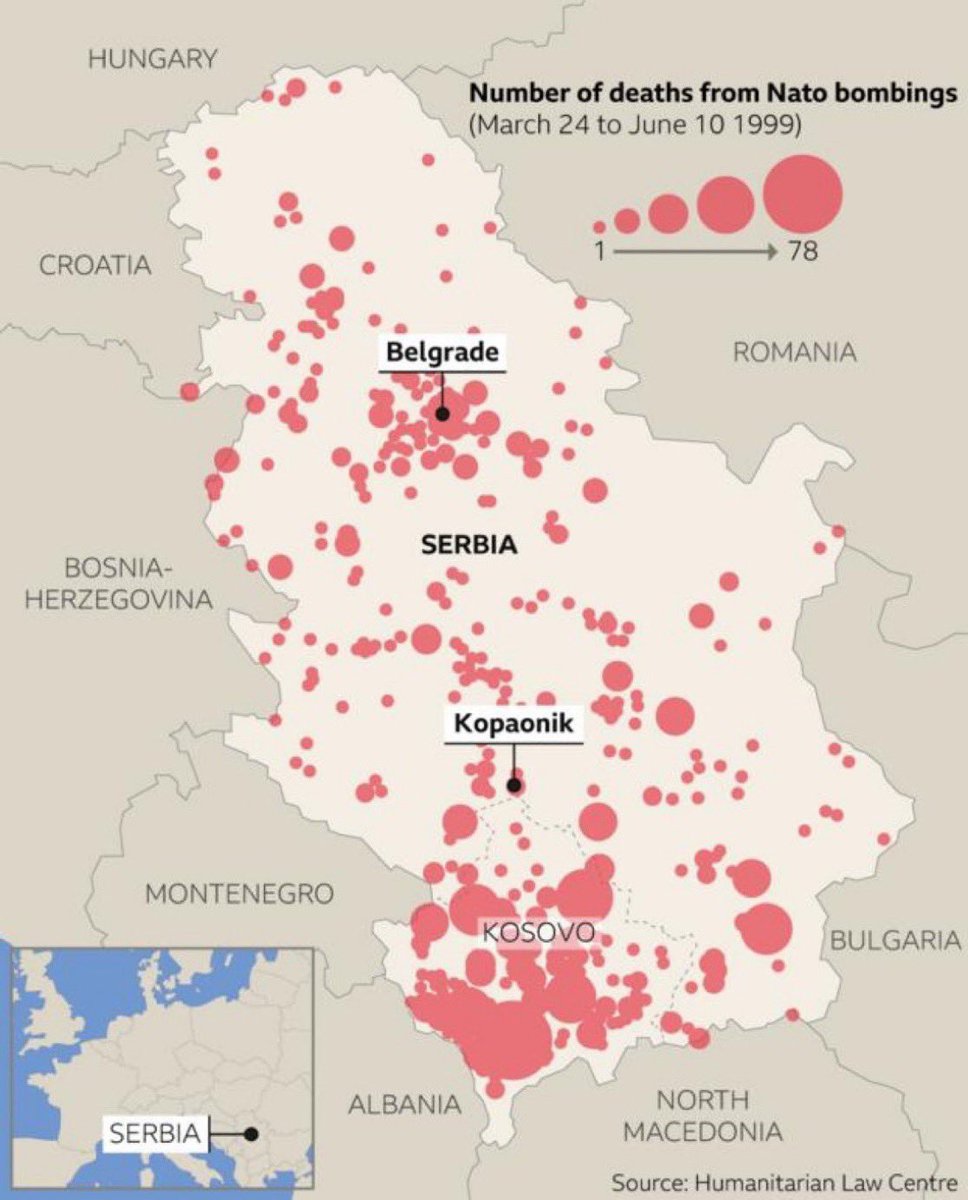
According to the data from the Humanitarian Law Center (HLC) – a respected Serbian organisation – during the entire NATO bombing campaign a total of 754 people lost their lives:
👉454 civilians (not 1,200–2,500)
👉300 members of armed forces
Among the civilians:
👉219 Albanians,
👉207 Serbs and Montenegrins,
👉14 Roma, and
👉14 of other nationalities.
Most of the Albanian civilians killed by NATO were used as human shields by Serbian genocidal forces (as in the Korisha and Bistrazhin incidents, where dozens of children were killed).
So his numbers are nothing but inflated Serbian propaganda.
He cleverly takes quotes from Strobe Talbott and Jaime Shea out of context, with the typical skill of a Serbian propaganda mouthpiece.
Yes, NATO struck infrastructure – because it had to force Milošević to stop the ethnic cleansing. But he doesn’t say a single word about the Serbian massacres that took place before NATO even started bombing:
👉Likoshan and Qirez (28 February – 1 March 1998)
👉Prekaz i Poshtëm (5–7 March 1998)
👉Lybeniq (25 May 1998)
👉Rahovec (19 July 1998)
👉Rancë (26 August 1998)
👉Kleçkë (27 August 1998)
👉Sushicë e Poshtme (29 August 1998)
👉Shalë e Bajgorës (15–17 September 1998)
👉Çyqavicë (22–24 September 1998)
👉Duboc (24 September 1998)
👉Abri e Epërme / Gornje Obrinje (26 September 1998)
👉Gollubovc (26 September 1998)
👉Reçak (15 January 1999)
👉Ura e Rakovinës (24 January 1999)
👉Rogovë (29 January 1999)
👉Rakovinë (29 January 1999)
👉Leshan (2 March 1999)
👉Katund i Ri (11–12 March 1999)
👉Mitrovicë (13 March 1999)
👉Skenderaj (20 March 1999)
He says nothing about the expulsion of over 850,000 Albanians in the period March–June 1999 alone (around 90% of the Albanian population was forced to flee or was internally displaced). Burned houses, destroyed villages, raped women, executed men – this is the reality that the “award-winning journalist” never mentions.
Nevertheless, we must admit one thing: this shameless journalist, despite spreading lies and Serbian propaganda so openly, has still managed to be called an “award-winning journalist”. To sell lies as truth with such skill is truly a talent – so he fully deserves the award.
Afshin Rattansi is not a journalist. He is simply a propagandist for the regime that carried out ethnic cleansing in Europe at the end of the 20th century. And that is the uncomfortable truth he will never accept.
Mar 24

On this day in 1999, NATO began bombing its illegal bombing campaign of Yugoslavia without permission from the UN Security Council.
Between 1200-2500 civilians were killed and 5000 were wounded. During the 3 months of bombing, NATO dropped between 10-15 tonnes of depleted uranium bombs.
After years of supporting right-wing nationalist forces to undermine and weaken the integrity of Yugoslavia, NATO begun its campaign to break up the socialist state. Though it claimed to be intervening to stop ethnic cleansing, the Assistant to US Secretary of Defense Strobe Talbott revealed the real reason for the war:
"It was Yugoslavia's resistance to the broader trends of political and economic reform, not the plight of Kosovar Albanians, that best explains NATO's war.”
NATO openly bragged about its destruction of Yugoslavia’s infrastructure, with its spokesperson Jaime Shea proudly saying in 1999 “And the fact that the lights went out in 70% of the country…we can turn the power off whenever we need to and whenever we want to.”
Between the 24th of March and 5th of June 1999, 78 industrial sites and 42 energy installations in Yugoslavia were damaged by bombing or missile strikes. The air strikes destroyed over 20 chemical and petrochemical installations, accounting for around 70% of Yugoslavia’s oil-processing capacity.
1
5
32
5,757

Feb 28
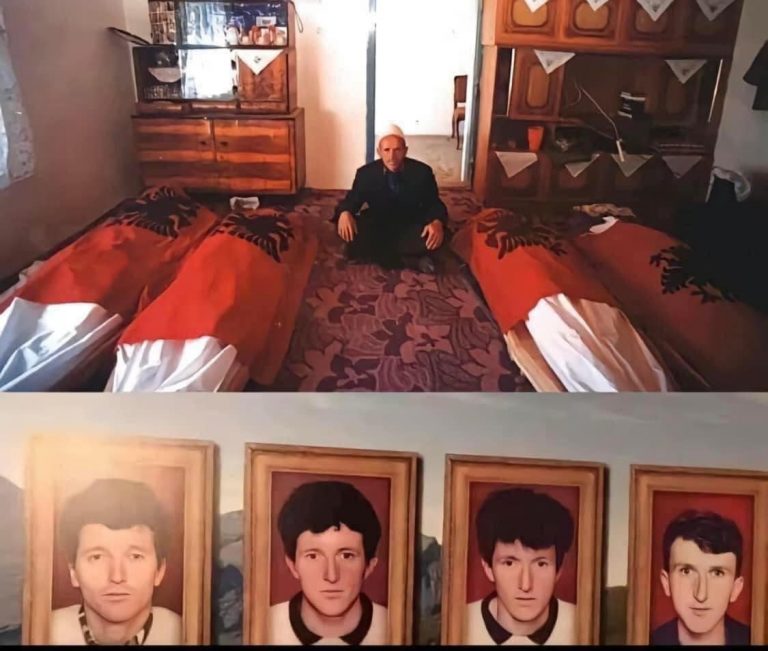
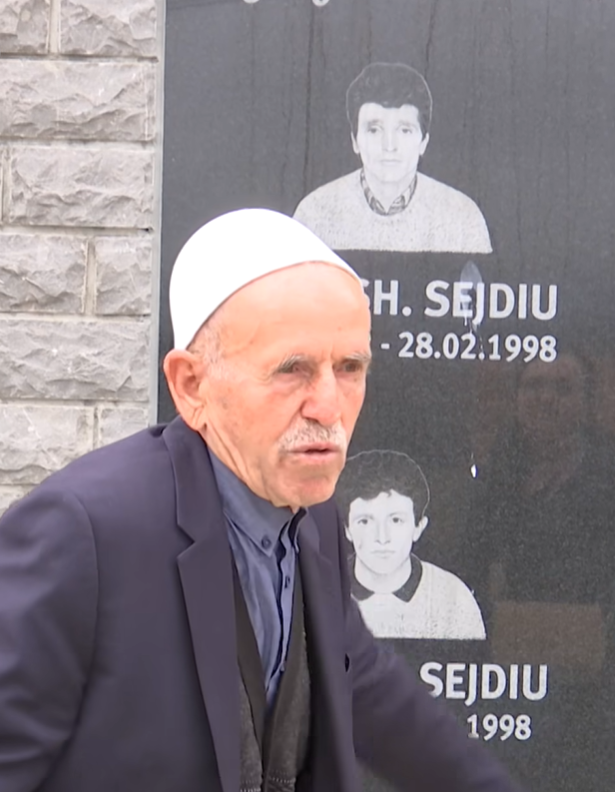
In what is widely considered the official start of Kosovo War, on this day in 1998, Serbian forces killed 26 Albanian civilians in Likoshan and Qirez, in central region of Drenica. Those killed included 4 sons of Sheremet Sejdiu- Beqir, Bekim and 24-year-old twins Nazmi and Bedri
35
32
256
12,165

Osmani: “The Blood of the Fallen in Likoshan and Qirez Became a Call for Resistance, Dignity, and Freedom”
#Likoshan #Qirez #Kosovo #VjosaOsmani
rks.news/osmani-the-blood-of…
2
97
Kurti in Likoshan and Qirez: Commemorating the First Massacre of the Kosovo War, a Historical Turning Point
#Kosovo #Likoshan #Qirez #KosovoWar #AlbinKurti #HistoricalCommemoration #KLA #FreedomAndSecurity #KosovoHistory
rks.news/kurti-in-likoshan-a…
2
93
Todays Highlights:
27 Years Since the Battle of Likoshan and Qirez!
Mexico Hands Over Drug Lords to US Authorities Amid Tariff Threats
Trump – Starmer Meeting: US President Closes NATO Doors for Ukraine, British Leader Responds
Turkey expresses readiness to send peacekeepers to Ukraine, but with conditions
President Osmani and Prime Minister Kurti Commemorates the Massacre of Likoshan and Qirez
NATO Chief: Stability in Kosovo, Bosnia, and Serbia is in Our Interest
Suspicions of Misuse of USAID Funds, Trump’s Prosecutor Arrives in Bosnia and Herzegovina, Investigations into Fund Spending
Operation by Prosecutor’s Office and AKI: Woman Arrested on Suspicion of “Espionage” – Police Conducting Search at Her Residence
Kosovo’s Constitutional Court Becomes a Full Member of the European Conference of Constitutional Courts
Violent Protests Erupt in Greece on Rail Crash Anniversary Amid Public Outrage
Operation in the North/ Extraordinary Press Conference Called, Sveçla, Police Chief…
Sveçla on Northern Kosovo Confiscations: “Civil Protection” Remains Active
Trump Signs Executive Order Making English the Official Language of the U.S.
Vote Counting by Mail: CEC Says Process Is Transparent and Conducted in the Presence of Observers
#LatestNews #Kosovo #US #Ukraine #Politics
1
5
396


28 Feb 2025
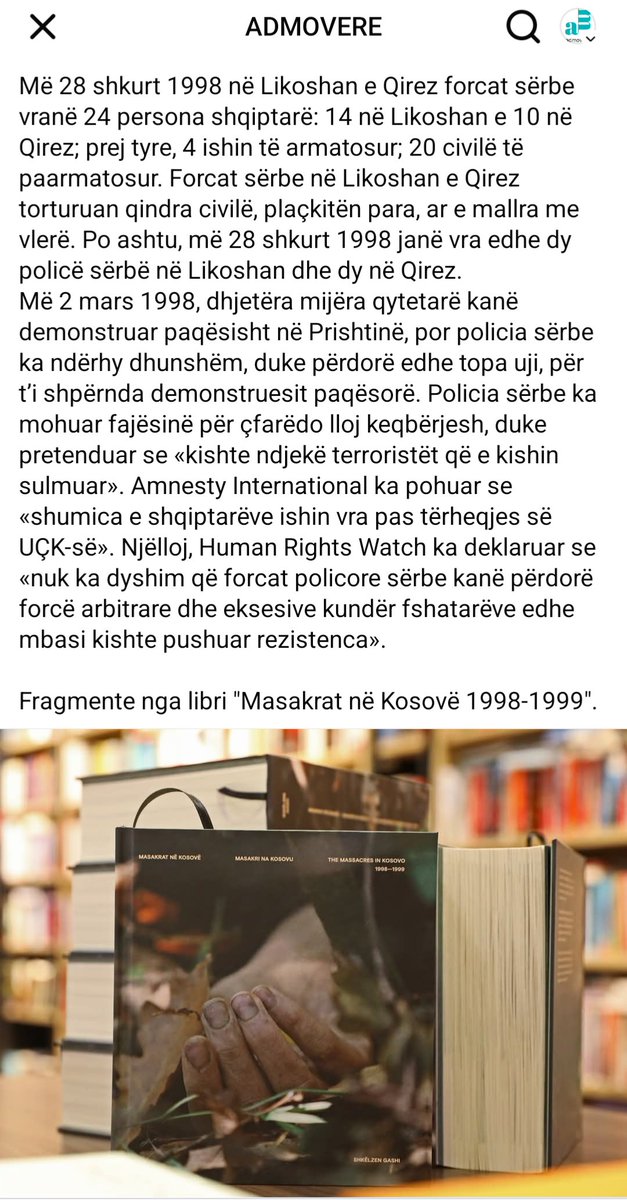
Today marks 27 years since the start of the war in Kosovo, a harrowing event that began in the villages of Drenica /Likoshan and Qirez.
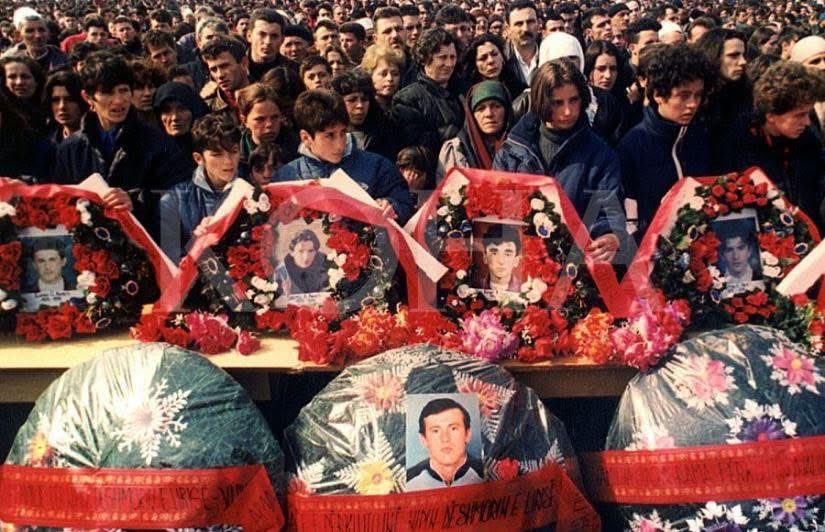
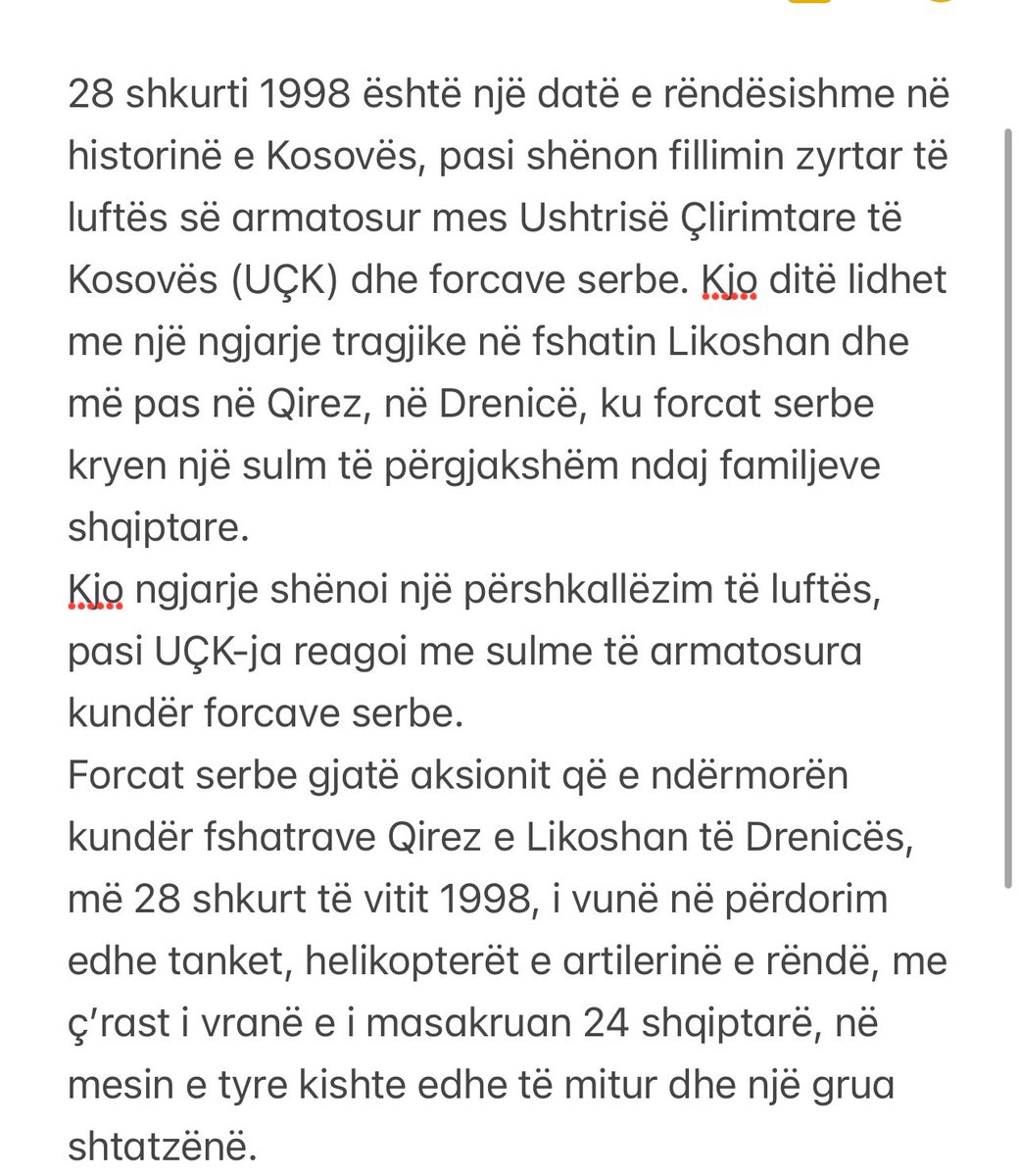
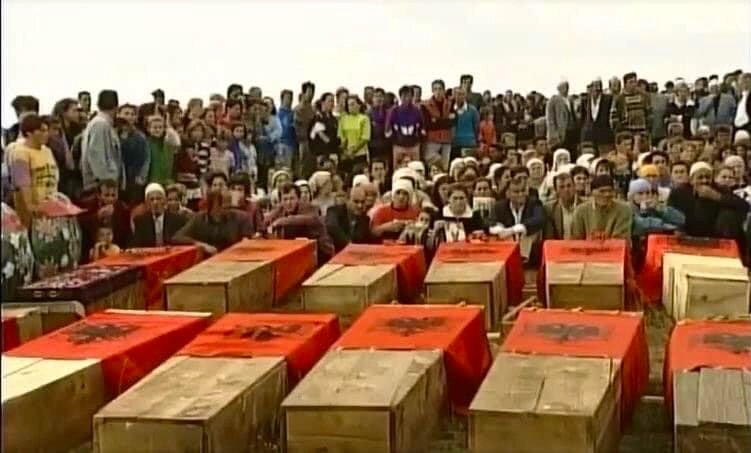
On 28.02.1998, a fierce battle erupted between the Kosovo Liberation Army and Serbian forces. In the aftermath, several Serbian police were killed but the Serbian forces retaliated with brutality, surrounding the villages and executing 24 civilians. This marked the first massacre of the Albanian population.
Among these tragedies, the story of the Ahmeti family stands out as one of the most heart wrenching. This massacre was not merely a crime, it was a testament to unimaginable hatred and brutality. When an army like Serbia's was challenged by the heroes of Kosovo, who fought for their freedom, albeit with limited resources, we paid a big price: civilians:women, children, young and the elderly became victims of ethnic cleansing.
To this day, Serbia has never held accountable those who committed these atrocities. The brutality that occurred reveals the deep seated animosity that fuels such violence. Those capable of committing such massacres are truly monsters and dont deserve to see the light of day.
Let us never forget these stories of suffering. We must continue to fight for our justice. In memory of those who lost their lives, we will seek light in the darkness of our history. Rest in peace, angels.
#Drenice #Likoshan #Qirez #Kosove #Massacres #Kosovowar #albanianvictims #martyrs #SerbiasWarcrimes #Milosevic
@VjosaOsmaniPRKS
@realDonaldTrump @SecRubio @RitchieTorres @USEmbPristina @USNATO @EU_Commission @EUparliament @kajakallas @AivoOrav @GermanAmbKOS @jonhargreaves67 @EUKosovo @UNHumanRights @aliciakearns @DorisPack2 @FarCanals @washingtonpost @DanielSerwer @Sandulovic_N @i_videnovic @FIGHT_4_RIGHT_S
5
19
60
1,875
Kurti Commemorates the Massacre of Likoshan and Qirez!
#Likoshan #Qirez #Kosovo #Massacre #KosovoWar
rks.news/kurti-commemorates-…
1
6
160
27 Years Since the Battle of Likoshan and Qirez!
#KosovoWar #Likoshan #Qirez #FreedomFighters #KosovoMartyrs
rks.news/27-years-since-the-…
1
5
387

28 Feb 2025
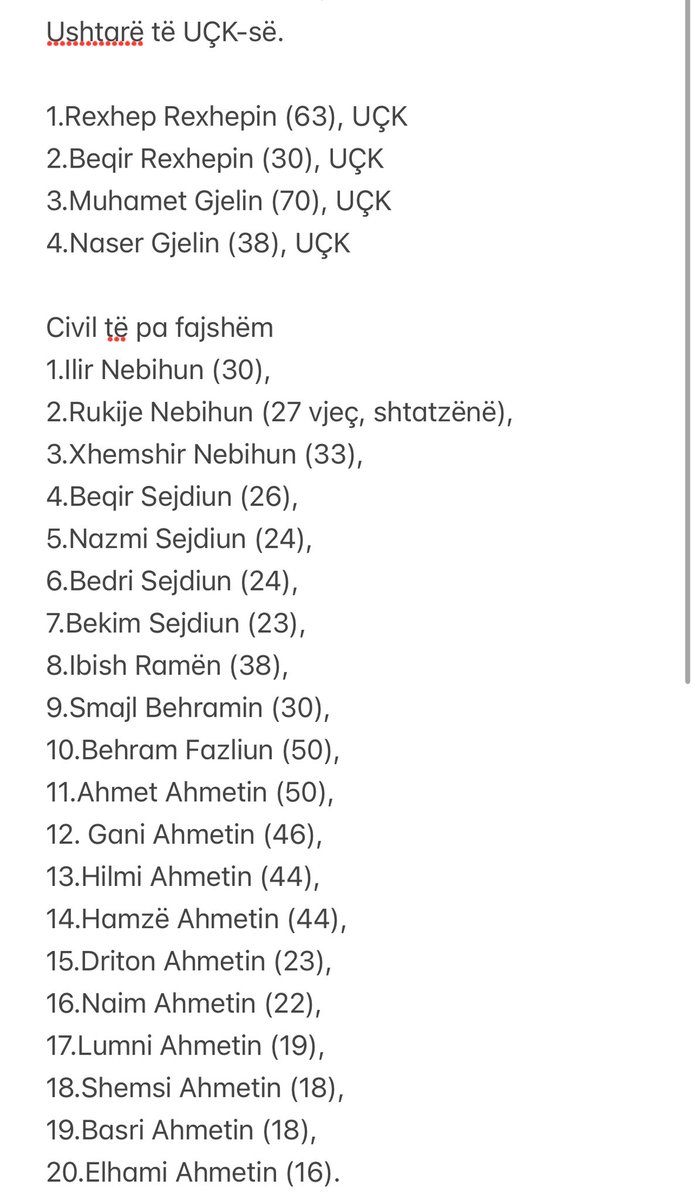
Sot, shenohet fillimi i luftës në Kosovë, përkujtohet 27 vjetori i Betejës së Likoshanit dhe Çirezit.
Në Qirez e Likoshan forcat serbe i vranë katër ushtarë të UÇK-së.
dhe njëzetë civil të pa fajshëm në shtëpitë e tyre.
4
16
574


29 Feb 2024
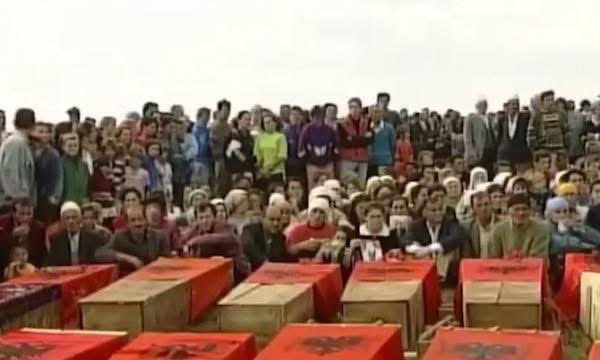
This is Sheremet Sejdiu from the village of Qirez in Skenderaj, whose 4 sons were killed by Serbian forces in February 1998.
26 years later, he remembers the massacre by Serbian forces in his village of Qirez.
Let's see the future, but let's not forget the past!
1
4
405


28 Feb 2024
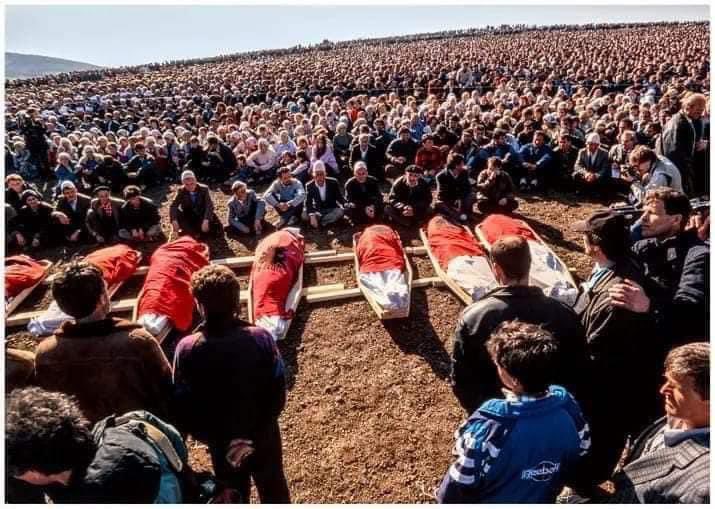
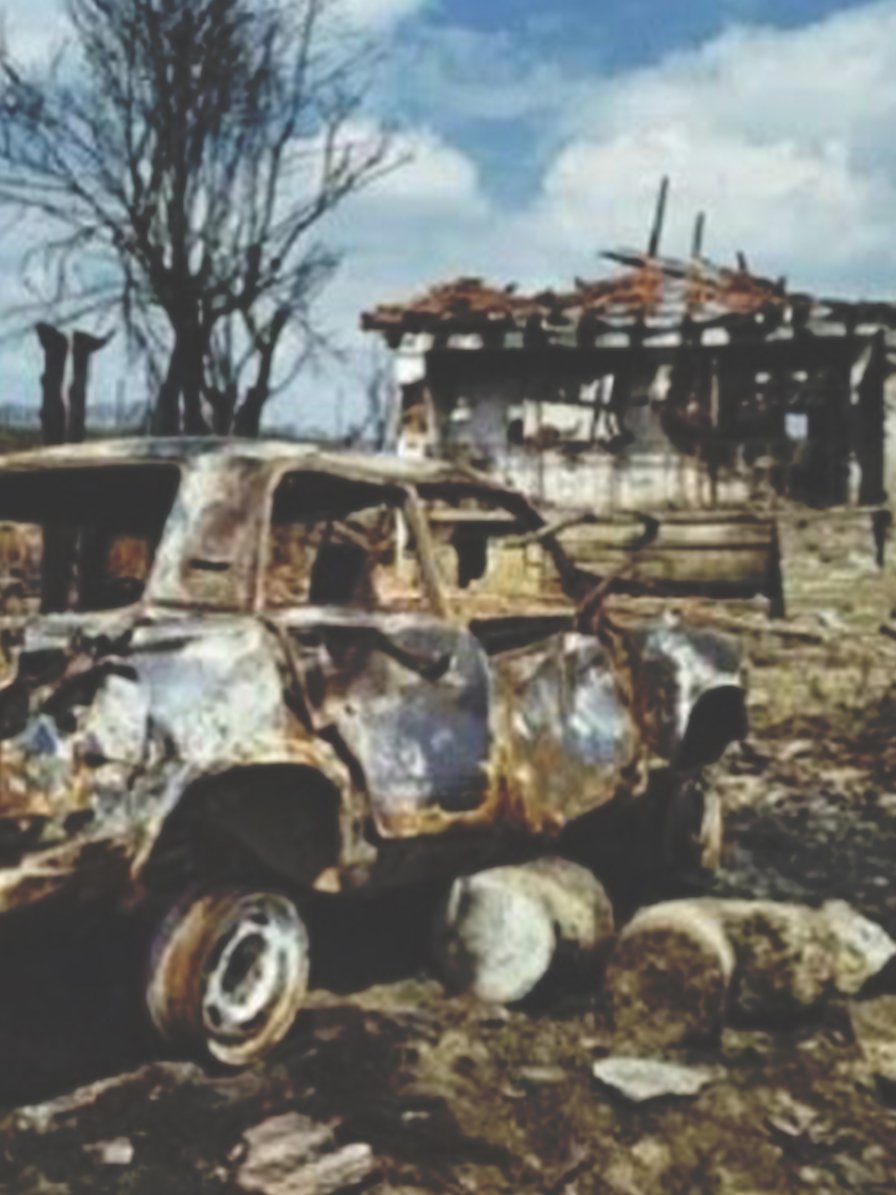
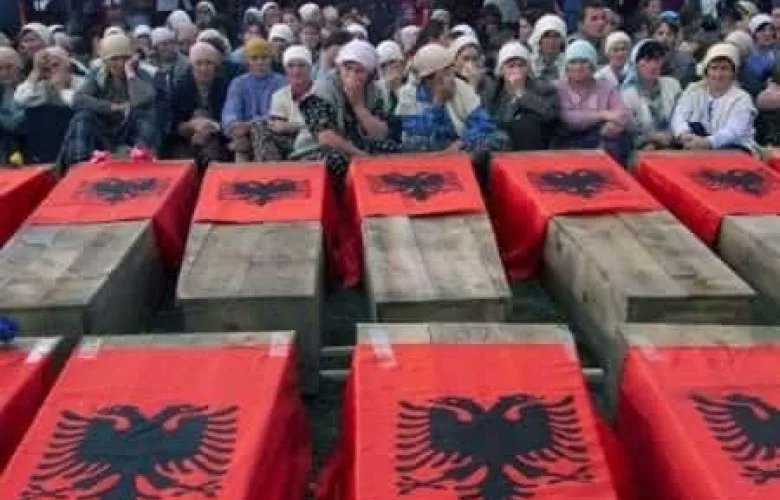
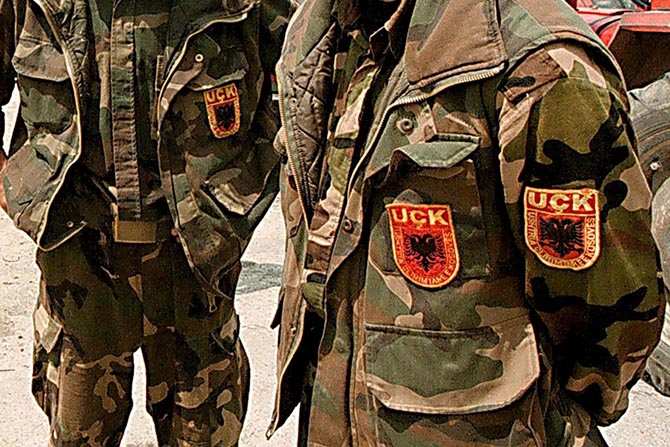
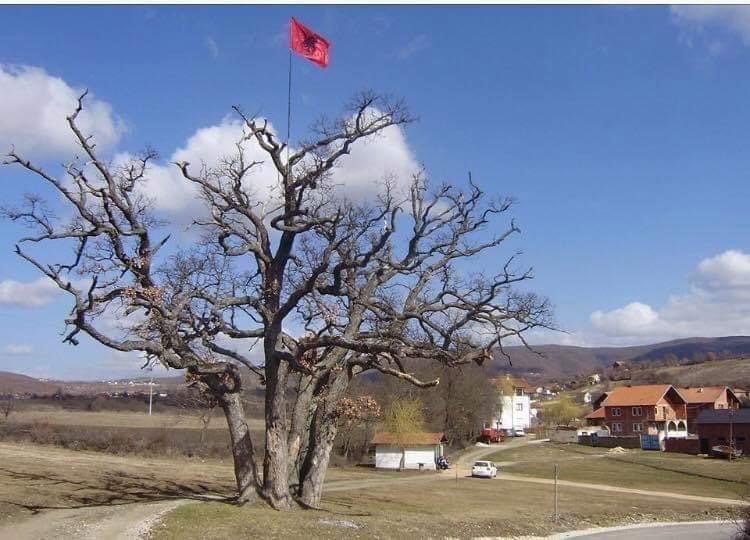
On this day 26 years ago, near the "6 oaks of Likoshan", Serbian army committed the Likoshan and Qirez massacres, triggering the start of the Kosova War. They wanted to kill and deport every single 🇦🇱 from Kosova.
They faced resistance by UÇK. They lost the war. They lost Kosova.
5
9
45
1,558

28 Feb 2024
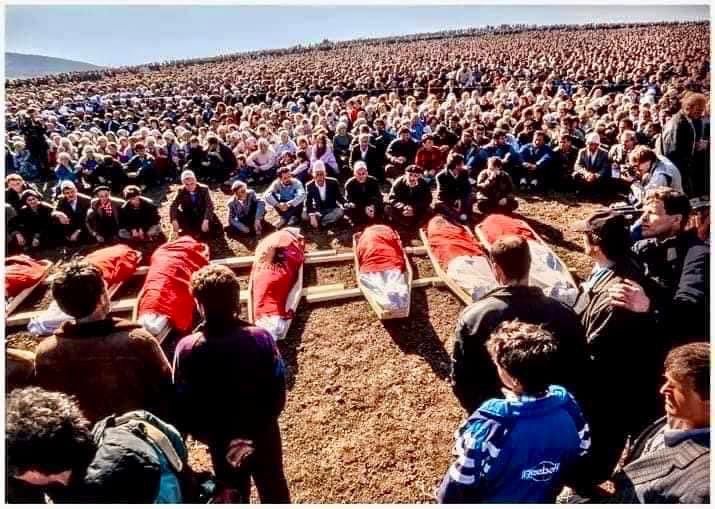
On February 28, 1998, Serbian forces killed civilians in Qirez and Likoshan in Kosova, including Rukije Nebihu, a pregnant woman, and four sons of Baca Sheremet. To this day, Serbia has not faced accountability for these crimes, leaving justice denied.
11
48
219
7,154

28 Feb 2024
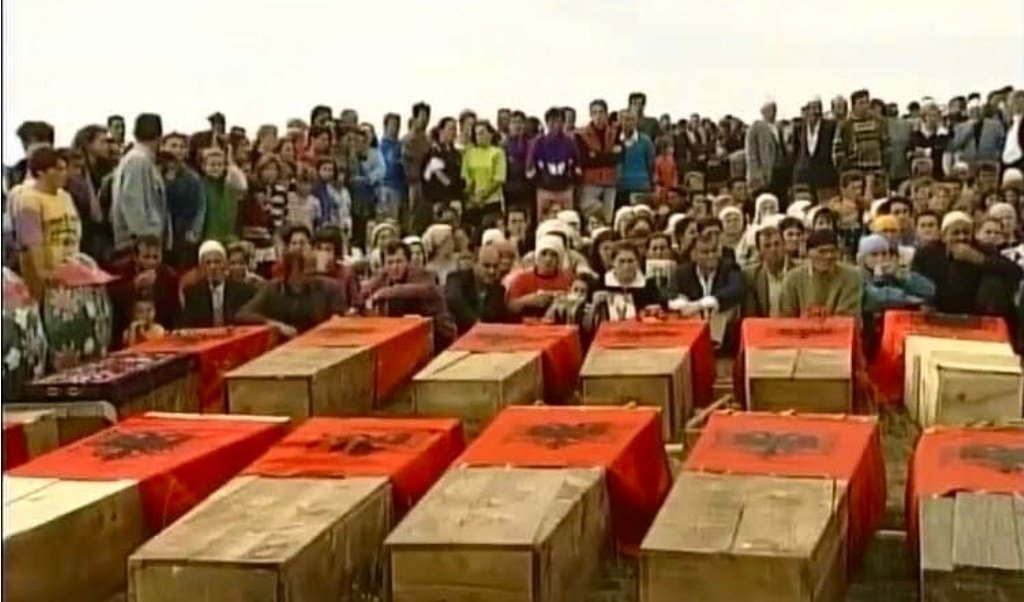
PM Albin Kurti commemorated the 26th anniversary of the Likoshan and Qirez massacre, where 20 unarmed Albanian civilians were killed. Kurti stated that this marked serbia's first massacre of Albanian civilians in the last Kosova war.
Never forgive and never forget #kosova
18
17
154
7,360

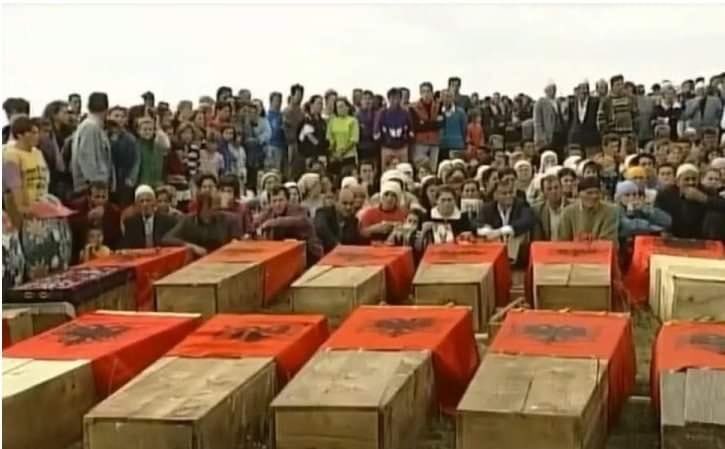
Sot bëhen 26 vjet nga fillimi i luftës në Kosovë, e cila nisi në fshatrat e Drenicës, Likoshan dhe Qirez, ku te vendi i quajtur “Te tre lisat” u zhvilluan luftimet mes Ushtrisë Çlirimtare të Kosovës dhe forcave kriminale serbe.
UÇK- krenaria jonë përjetsishtë!
5
28
1,249
28 Feb 2024
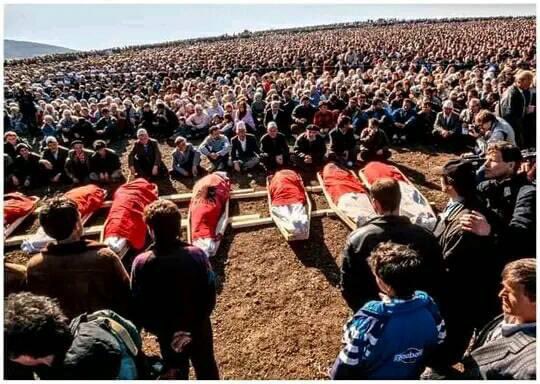
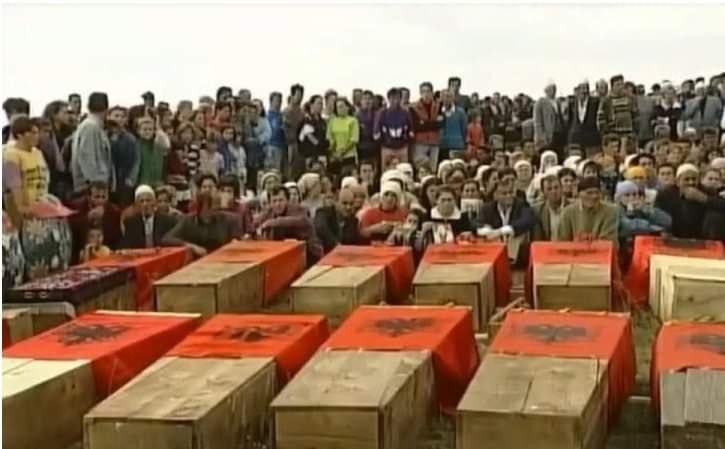
26 vjet nga masakra në Likoshan e Qirez të Drenicës
LAVDI!
8
274