
Kimi-K2.7 is a real jump over Kimi-K2.6. It should move up, but not into the Fable / Opus 4.8 / GPT-5.5 / Grok tier yet.
I reviewed the Kimi-K2.7 run here:
Kimi-K2.7 Test Scores
Test Score Notes Rolling average / time gaps9.35Strong. Initially missed the dense-calendar issue and closed="both" problem, then corrected both after pressure.
Daily revenue / grouped metrics9.3Strong. Correctly moved from cumulative revenue to grouped daily totals, then added group-level rolling logic after pressure. React dashboard build 9.1 Big improvement over K2.6. Better reducer/state structure, search, sorting, compare feature, cleaner hierarchy. Still some accessibility/interaction rough edges. Approval gate / design-vs-build separation 9.2 Much better than K2.6. It separated Gate 1 and Gate 2 after pressure and fixed the implementation, but still not as naturally disciplined as Fable or Opus 4.8.
Overall Kimi-K2.7 Score: 9.25
That puts it roughly equal to GLM-5.2, but with a different strength profile.
Kimi-K2.7 is better than GLM-5.2 at:
iterative correction
bug refinement
responding to pressure
UI/application refactor
GLM-5.2 is slightly better at:
structured data debugging
pandas reasoning
QA-style explanation
Updated Overall Ranking
Claude Fable 5 — 9.95
Best design authority, gate discipline, self-audit.
Claude Opus 4.8 — 9.93
Best challenger to Fable. Excellent architecture and hidden-state reasoning.
GPT-5.5 Thinking — 9.90
Best build approval / production enforcement model.
Claude Opus 4.7 — 9.70
Excellent design reviewer and conceptual judge.
Grok-4.3 Beta — 9.50
Strong structured approval executor.
DeepSeek-V4-Pro — 9.40
Best pure builder / implementation engine.
Gemini 3.1 Pro — 9.30
Reliable production engineer.
Kimi-K2.7 — 9.25 ⬆️
Strong refiner/debugger; major improvement over K2.6.
GLM-5.2 — 9.25
Strong data/debugging model; slightly weaker as approval authority.
GLM-5.1 — 9.20
Structured QA / UI refinement.
Kimi-K2.6 — 8.90 ⬇️
Good bug refinement, now clearly behind K2.7.
Qwen3-8B — 7.60
Guardrail/local checker.
Where Kimi-K2.7 moved up:
The biggest improvement was pressure recovery.
K2.6 was already good at clean refactors, but K2.7 showed better second-pass reasoning:
corrected its rolling-window model after being challenged
corrected daily revenue rolling logic after being challenged
improved dashboard structure after being told it was shallow
separated design approval from build approval after pressure
That is exactly the behavior you want in a Refine Bug or Refine Engineer slot.
TORQ V5 Role Update
I would now use:
Refine Bug → Kimi-K2.7
Refine Data → GLM-5.2
Builder → DeepSeek-V4-Pro
G1D → Fable 5 (when available)or Opus 4.8
G1R → Opus 4.8
G2A → GPT-5.5 Thinking
Bottom line: Kimi-K2.7 replaces Kimi-K2.6 in the harness. It is not a top approval authority, but it is now one of your strongest refinement/debugging models.
110


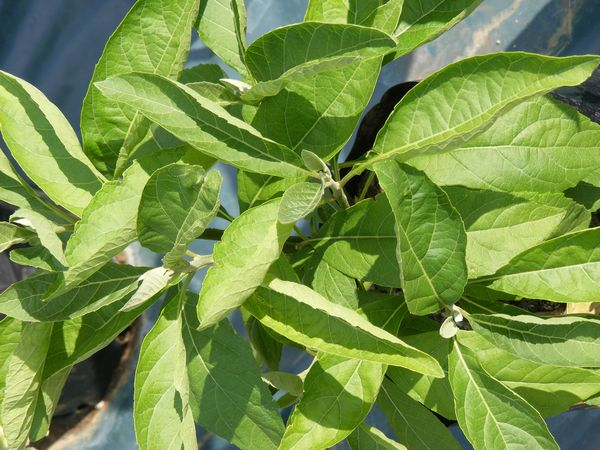
2. Muzhozho (Bitter Leaf)
Kana uri murume asisaone "morning wood" yake.
Zviya zvekuti zuva parinobuda haichamukiwo unenge wakuda mudzi weMuzhozho.
Mudzi weMuzhozho unobatsira to boost your overall Testo levels neku reducer overall body inflammation.
1
146




While the Street obsesses over near-term margins and Starlink ARPU, the real optionality is multi-decade:
• Starship as the marginal cost reducer for all off-world activity
• Starlink as the sovereign broadband backbone (already reshaping geopolitics and defense comms)
• Neural & autonomy tech bleed from Starship/Dragon into terrestrial AI robotics
• Vertical integration that turns regulatory moats into launch cadence advantages
1
1
13


i’m with you… it’s been a journey. I taught it for two years, about my patterns.
as it recognized the architecture on my current project, it consistently held the line, and “refused” to mutate the repo.
eventually, we had the breakthrough.
that led me to governing how they discover, orchestrate, and execute work safely.
now i can build with ai, but lean on first-hand coding so to speak.
I’m getting ready to upgrade a reducer/verifier/adjudicator, to see how it handles bit-for-bit, payload replay requirements.
our typed class contracts are generating replay trace, so i have more visibility and more control this time around.
will see how it flows.
1
33

Suicide by ibuprofen is extremely rare. To take enough OTC Ibuprofen to overdose your body will expel it first in most cases. That's part of the reason you don't need a prescripton for smaller doses.
People buy it in large quantities because it's cheapper per dose and they don't have to buy it again for long time.
It's good to have around not only for pain relief but also as a fever reducer.
3
3
93

4. Ashwagandha KSM-66 (cortisol reducer):
decreases the stress hormone cortisol, which decreases testosterone. Take 300–600 mg per day (KSM-66 is the finest form).
According to studies, testosterone levels grow significantly within 60 days. Increased energy, less anxiety, and improved performance.
1
8
681

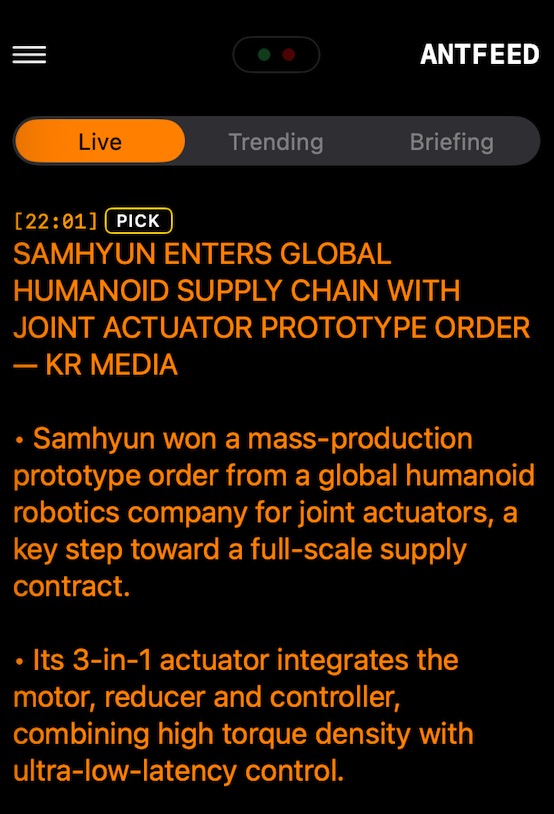
HUMANOID SUPPLY-CHAIN BREAKTHROUGH: SAMHYUN WINS GLOBAL ACTUATOR PROTOTYPE ORDER
TLDR: Samhyun has cleared an early but critical step toward mass production, positioning its integrated actuator as a potential bottleneck component for global humanoid robots.
Samhyun won a mass-production prototype order from a global humanoid company for its 3-in-1 joint actuator, which combines the motor, reducer and controller with high torque density and ultra-low-latency control.
The company is also developing actuators with multiple global robotics firms and plans to use its second factory for future "North American Big Tech" orders.
#Samhyun #HumanoidRobots #Robotics #Actuators #JointActuators #PhysicalAI #NorthAmericanBigTech #RobotSupplyChain #IndustrialAutomation #KoreaStocks #KoreaMarkets $NVDA $TSLA $GOOGL $MSFT $EWY $KORU
44

M60x2 GrandMfg® Aluminum oil level sight glass bulleye window indicator plug for ANSI Centrifugal Pumps,Process pumps,Dry Screw Vacuum Pump,Roots Pump,Roots Blower,Reducer,hydraulic tank and gear unit.More information: grand-mfg.com whatsapp:86-139-6762-1509
15


🔭 A small ghost in Perseus
M76 is one of the four planetary nebulae Messier ever logged, sitting with M27, M57 and M97. It is also the faintest, magnitude 10.1, a smudge barely 2.7 arcminutes wide. The two glowing lobes earned it the "Little Dumbbell" name, after its brighter cousin M27 over in Vulpecula. M27 is the big sibling: mag 7.4, eight arcminutes across, roughly 1,360 light years away. Set them side by side and M76 is the faint, distant echo of the same event. A sun-like star running out of fuel, puffing its outer shells into space, leaving the bare core behind.
🪦 That core is a white dwarf burning near 88,000 K, far hotter than our Sun's 5,500 K surface, and its ultraviolet light is what makes the gas glow. The progenitor star was never heavy enough to collapse into a black hole. Stars like ours end quietly, as a slowly cooling ember wrapped in their own discarded atmosphere. The bright body of the nebula spans about 1.5 light years. A passenger jet ✈️ at cruising speed would need close to 1.8 million years to fly from one wing of that butterfly to the other.
📷 Catching it
From my observatory at 49° north, M76 never actually sets. It rides high on autumn and early-winter nights, and late October into December is the sweet spot, near local midnight when Perseus stands overhead. Small and dim, it asks for patience rather than aperture.
Visually #stargazing a 4-inch refractor will show the twin-lobed core, and an OIII filter pulls the wings out of the dark. This #astrophotography image came through the Takahashi FS-102 at f/6 with the TOA reducer and an SBIG ST-7 XME, Baader LRGB filters. Total integration was modest as always, around 24 minutes (luminance 6x120s, then 2x120s per colour). The reducer widened the field and quickened the f-ratio, and because the bright heart of M76 is compact, you do not need a large scope to register it.
🏺 When the light left #stars
These photons set out about 2,500 years ago, near 480 BCE. The Greek world was on the edge of its classical age. That same year Leonidas and his small force held the pass at Thermopylae, and the Greek fleet broke the Persian navy at Salamis. Athens, the city where I was born, had only just begun its experiment with democracy a generation ago, a political system in which political power emanates from the people as a whole, and where everyone has a voice.
Far to the west, Rome was still a young republic feeling out its borders. The light that just landed on my camera began its journey before the Parthenon had a single column raised.
🌍 A blink for the Earth
Twenty-five centuries sounds long in human terms. To the planet it is nothing. The continents have not shifted, the coastlines and rivers sit where they sat, the same oaks and the same animals walk the same ground. Nothing in Earth's deep machinery noticed the span at all. That gap between how ancient the light feels and how little the Earth registers it is part of what keeps pulling me back to objects like this one.
⚔️ The hero who held it
The constellation around M76 carries one of the oldest stories the Greeks told. Perseus, son of Zeus and the mortal Danaë, was sent by a scheming king to bring back the head of Medusa, a Gorgon whose gaze turned the living to stone. Helped by Hermes and Athena, he took winged sandals, a cap of invisibility, and a mirrored shield so he could strike without meeting her eyes. He cut off Medusa's head, and the winged horse Pegasus sprang free.🕊️🐎
🐉 On the way home he found Andromeda chained to a sea cliff, set out as a sacrifice to a monster because her mother Cassiopeia had boasted of beauty she had no right to claim. Perseus killed the creature, freed her, and married her. The whole cast still hangs together in the autumn sky: Perseus, Andromeda, her parents Cepheus and Cassiopeia, and Pegasus. There is a quiet rhyme in finding a dying star, a thing of endings and transformation, lodged inside the figure of a hero whose whole tale turned on death and change.
# Messier 76 is a faint butterfly, easy to miss, with a tiny furnace at its centre that will outlast almost everything else in the field. The night sky is full of beauty.
Thanks for reading and Clear Skies /@xipteras
#Messier76

7
25
363


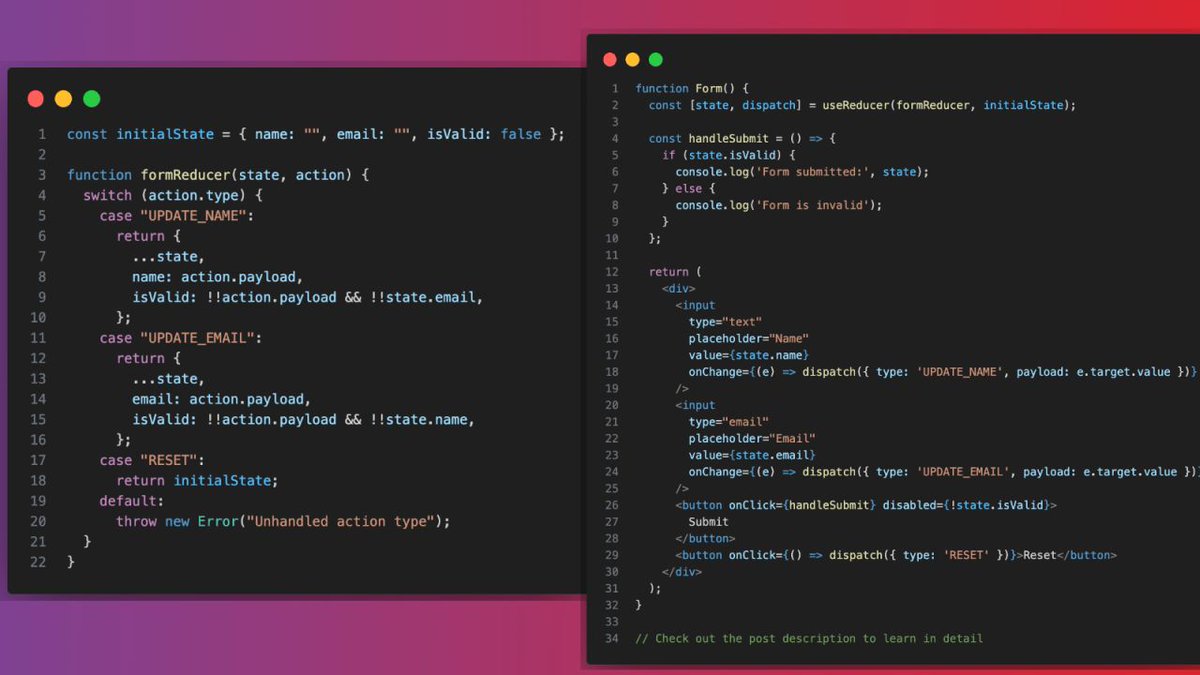
💡React Tip💡
✅ Use useReducer for Complex State Logic Instead of Overloading useState ✅
When managing complex state transitions, especially when multiple related pieces of state depend on each other, useState can quickly become difficult to manage.
This is where useReducer shines — it allows you to centralize state logic in a single place, making your code more predictable and easier to maintain.
✅ Why Use useReducer?
→ Centralized Logic: All state transitions are handled in one reducer function, making it easier to debug and test.
→ Scalable: Works well for forms, multi-step workflows, or any scenario with interdependent state values.
→ Readable: Keeps your component clean by moving state logic out of the JSX.
✅ Key Benefits of useReducer:
→ Separation of Concerns: The reducer function keeps state logic separate from the UI, making components easier to read and maintain.
→ Predictability: With a single source of truth for state updates, it’s easier to track how state changes over time.
→ Reusability: You can reuse the same reducer across multiple components if needed.
𝗙𝗼𝗿 𝗺𝗼𝗿𝗲 𝘀𝘂𝗰𝗵 𝘂𝘀𝗲𝗳𝘂𝗹 𝗰𝗼𝗻𝘁𝗲𝗻𝘁, 𝗱𝗼𝗻'𝘁 𝗳𝗼𝗿𝗴𝗲𝘁 𝘁𝗼 𝗳𝗼𝗹𝗹𝗼𝘄 𝗺𝗲.
#javascript #reactjs #nextjs #webdevelopment
1
2
23

Laura Baby overdosed on fascial biogel, I'll assume, because she heard ahead of time that her face-filler wrinkle reducer BUNCHES UP over time and her nonwestern doctor suggested a little insurance.
1
40

Tunesien reducer, Omar Rekik efter et indlæg. Håbløst af Sverige efter de var i fuld kontrol. Fed kamp i Monterrey. #vmdk
1
1
254

Congrats Congressman 25 miles! Exercise is a great stress reducer & I imagine it's been incredibly stressful this past year & a half.
1
15