
Apr 24
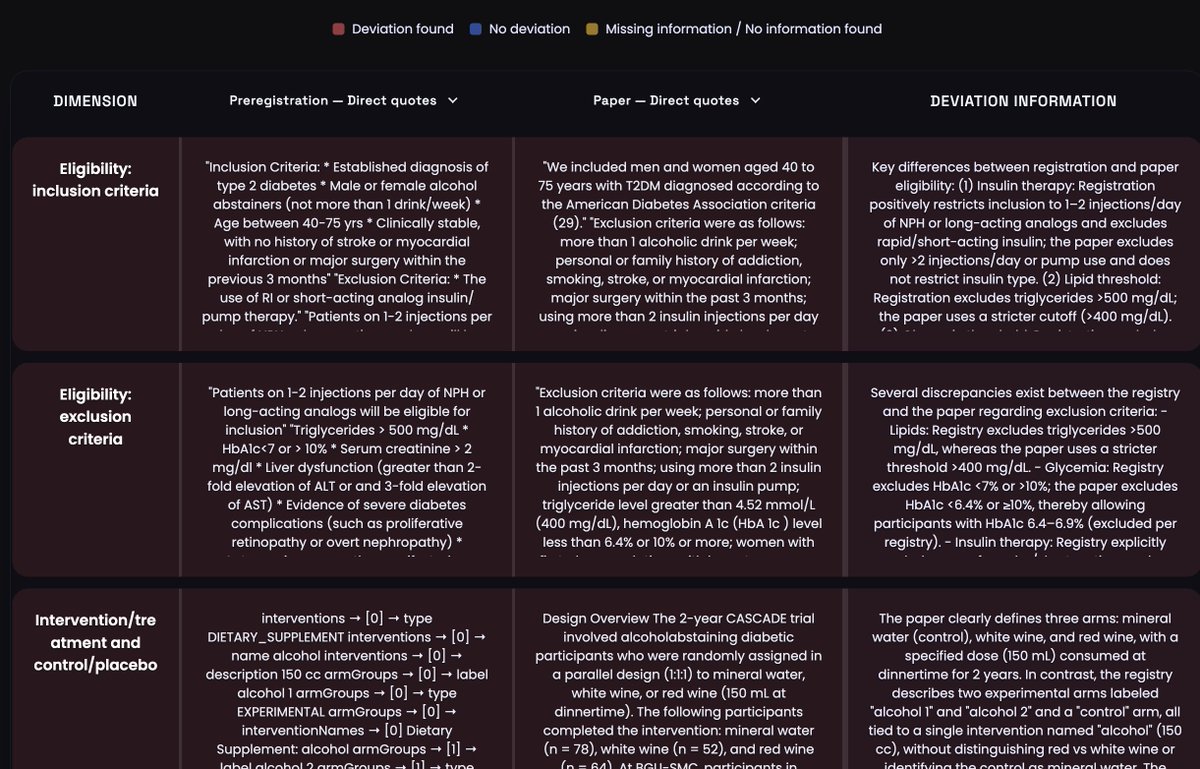
RegCheck regcheck.app is an AI system that checks for deviations from pre-registrations automatically.
Every system or con that depends on the argument "nobody's going to take the time to do that" is going away. AI will take the time to do that.
1
1
8
2,698

Apr 15
3/n
6- Now, the attacker scenario:
1. Go to this full url test.com/courses/Course_ID/?…
2.Modify the parameter to:
regcheck=victim@example.com
3.Access to the URL, Click Register Now.
4.Observe Full unauthorized action performed on the victim’s account.
7
1,321

Jan 16
Whoops that screenshot is actually from Jamie's other tool (which is also fascinating). Here's what the RegCheck one looks like...
1
6
1,230
Jan 16
I've gotten a lot of really cool and thought provoking outreach since I started thinking outloud about some of the ways AI might change (and hopefully, improve) research.
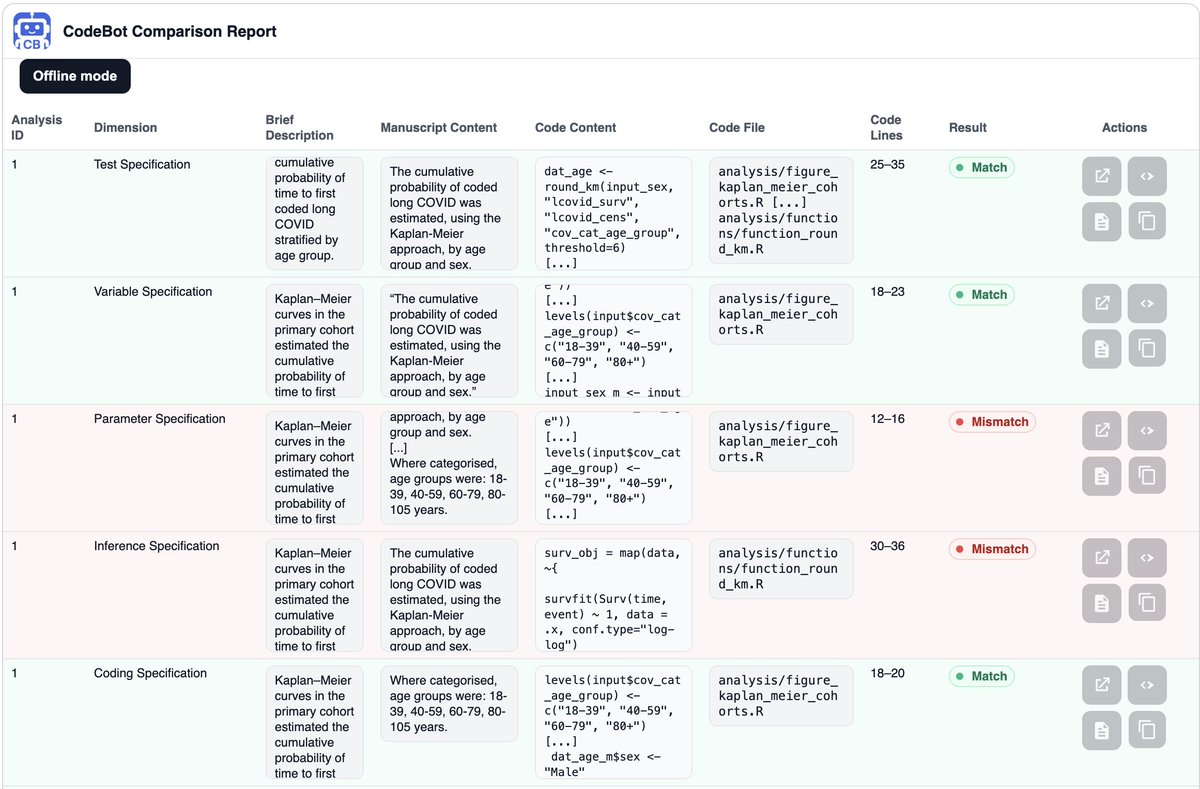
One of the ideas floating around, which @sreeramkannan and @ben_chain brought up, was that LLMs could evaluate how well pre-analysis plans were followed in the ultimate paper.
It turns out someone has already been working on that!
Jamie Cummins sent me his fascinating tool called RegCheck which produces full reports (see below) on how closely the plan is followed. Super cool!
Jan 13

Since I extended my own research using AI, I've been thinking about how it's going to reshape research and universities.
We can now build new institutions where research is continuously updated, automatically verified, and carried out at immensely greater scale.
Picture a research institute where senior scholars direct dozens or even hundreds of AI agents on coordinated programs. Small teams providing questions and judgment while agents handle collection, analysis, and verification.
What would it take to build? The requirements are almost comically simple: (1) compute funding for researchers, and (2) a commitment to hire ambitious people and get out of their way.
This new institute can unlock totally new way to do research:
--Living research that automatically updates any time new data arrives, so our knowledge stays up to date
--Automatically verified research that we know replicates from the moment it's posted publicly
--Hyperscaled descriptive work that ingests enormous bodies of political data, like the entire history of changes to the US tax code or every bill introduced in every state legislature
--Prototypes for new governance tools that are built for communities and then tested alongside them
I think we're stepping into a crazy new era of how social science is done. I offer more thoughts on what's changing and how we might design an AI-first university of the future in my post, linked below.

3
12
90
11,941

4 Apr 2025
My submission for @supabase Launch Week 14 Hackathon supabase-reg-check.vercel.ap…
RegCheck: an open-source event registration and check-in application built with React, Tailwind and #Supabase.

Supabase Launch Week 14 Hackathon is starting right now!
Submit your project by quote-retweeting this Tweet with a project link and a screen recording of the app!
The top 10 projects will win limited edition Supabase swag packs!
The deadline is April 6th at 11:59 PM PT.
7
300

18 Mar 2025
I was thinking the same mate, but still putting different combinations into RegCheck to figure out the rego. It's a bit blurry off the GoPro footage

6
1
8
359

25 Feb 2025
Audit✅
Regcheck✅
Project coin✅
100m gone forever✅
30 million locked for 4 months✅
This tweet is unavailable
17
16
24
573

19 Dec 2024
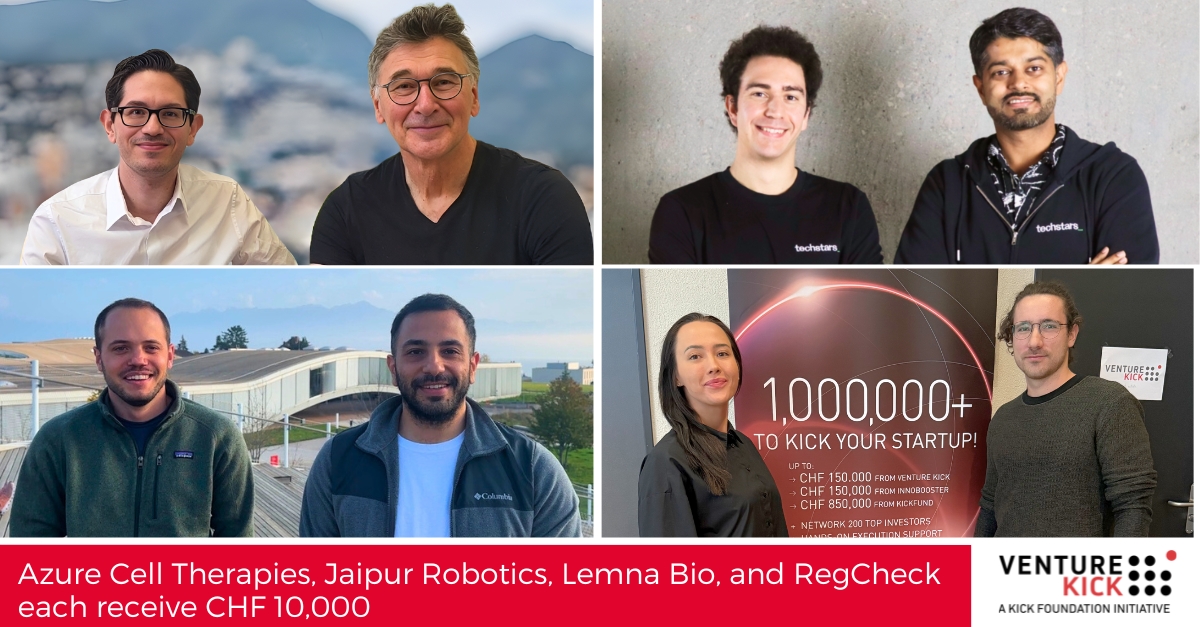
CHF 10’000 for Azure Cell Therapies, Jaipur Robotics, Lemna Bio and RegCheck. These four projects were selected at Venture Kick's first financial and entrepreneurial support stage. venturekick.ch/Startups-deve…
Meet the 4 successful projects:
Bilal Fares (CEO) and Karl-Heinz Krause (CSO) | Azure Cell Therapies - Developing next-gen CGTs for neurodegenerative diseases.
venturelab.swiss/azure-cell-…
Ermes Zamboni (CEO) and Nikhil Prakash (CTO) | Jaipur Robotics - Building the #1 OS for Waste Recognition.
startup.ch/jaipur-robotics
Lucien Krapp (CSO) and Moustafa Houmani (CEO) |
Lemna Bio - transforming biomolecule modeling with geometric transformer technology.
b2match.com/e/epfl-investor-…
Anna-Marie Makarova (CEO) and Lanzelot Moll (CTO) | RegCheck – Offering an automated regulation conformity assessment tool.
venturekick.ch/Startups-deve…
#VentureKick #SwissStartups
1
6
252


24 Jul 2024
RegCheck is intended to facilitate human comparisons between prereg and publication; to augment the manual process but not fully automate it.
2
57

19 Jun 2024
🚗🔍 Ever wondered about your car’s history?
Our latest blog shows you how to uncover your vehicle’s past. Ready to dig into your car’s story? 🛣️✨
#CarHistory #RegCheck #AAIreland 👇
aa.ie/3Vsu357
2
4,307

23 Oct 2023
Please note that the website services RegCheck, Recognised Course Search and Contact Us will be temporarily unavailable from 10am on Saturday 28 October 2023 (anticipated maximum period of downtime - four hours).
We apologise in advance for any inconvenience caused.
2
403

Vanmiddag staat Thymen Wabeke van @sidnlabs op de Dag van de Domeinnaam en vertelt over de RegCheck: de risicobeoordeling van nieuwe .nl-registraties. verenigingvanregistrars.nl/n… #DvdD #registrars
1
3
5
346

5 Sep 2023
🔝While the need for #regulation becomes more apparent in the #DigitalAssets space every year, are you sure your token project is up to regulatory standards? Utilize our RegCheck Services & get insight into your project’s risk adversity ⬇️
norfi.co/3F9gCPn
#Blockchain
1
2
120
6 Jul 2023
🚨With the regulatory landscape in the #tokenization space constantly developing, remaining compliant can be difficult. Utilize our RegCheck Services to make sure your project passes legal requirements⬇️
norfi.co/3F9gCPn
#Regulation #DigitalAssets #STO #NFTs #Crypto
1
4
87
4 Jul 2023
🚨With the regulatory landscape in the #tokenization space constantly developing, remaining compliant can be difficult. Utilize our RegCheck Services to make sure your project passes legal requirements⬇️
norfi.co/3F9gCPn
#Regulation #DigitalAssets #Crypto #NFTs #STOs
4
112

With recent scandals arising, to remain regulatory #compliant has never been more important! Don’t take the risk, you can’t fly under the radar anymore. Use the RegCheck Service Suite & let us help maintain your project’s legality ⤵️ norfi.co/3F9gCPn #DigitalAssets #NFTs

2
15
13 Jun 2023
With recent scandals arising, to remain regulatory #compliant has never been more important! Don’t take the risk, you can’t fly under the radar anymore. Use the RegCheck Service Suite & let us help maintain your project’s legality ⤵️
norfi.co/3F9gCPn
#DigitalAssets #NFTs
3
99
10 Jun 2023
📢With rapid developments and adoptions of new regulatory frameworks towards the #digitalasset space, remaining compliant has never been as important, Check out the RegCheck Service Suite to make sure your #tokenization project remains #legal 👇
norfi.co/3F9gCPn
3
107
7 Jun 2023
🛩️The days of flying under the regulatory radar have passed
By utilizing our RegCheck specialists you can get a better understanding of the regulatory risks and requirements your project faces👇
norfi.co/3F9gCPn
#NFTCommunity #DigitalAssets #Legal
2
75