
That's her alt account. It's cute that someone reliant on men paying to see her asshole is attempting to slut-shame other women.
1

#URGENT🚨
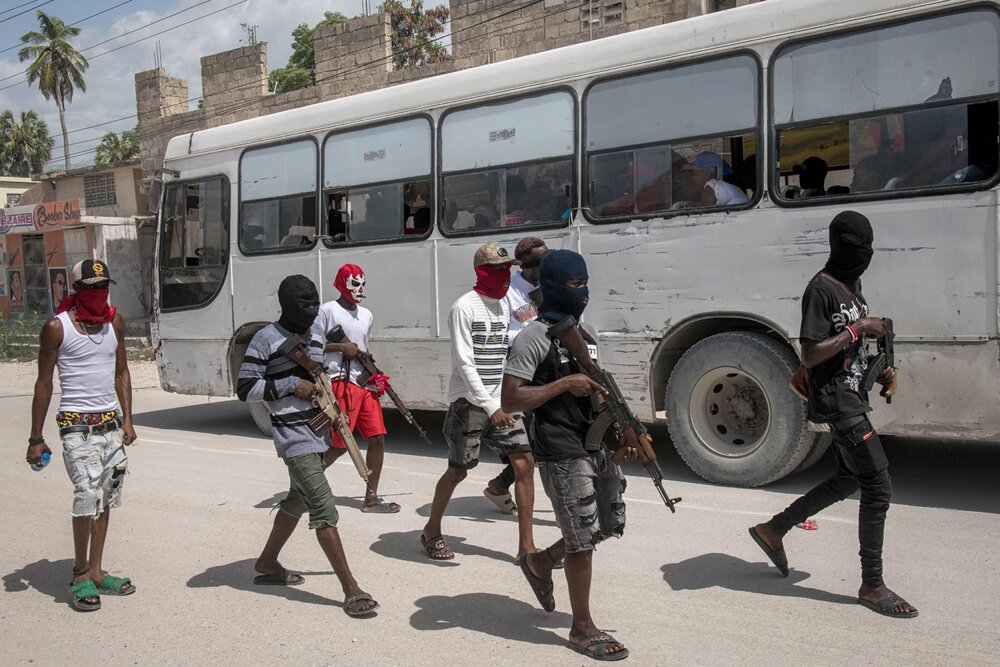
La coalition Viv Ansanm imposerait un péage de 25000Gdes aux autobus reliant P-au-P au Grand Nord. Plusieurs postes de contrôle illégaux permettent également à des groupes armés de fouiller les bagages et de contrôler la circulation sur la Route nationale n°1....
2

But Ukr doesn't need a year. Their midrange drone attacks are badly degrading Russian logistics. Russia matches Ukraine in short-range drones, but Ukraine has a big edge in midrange drones, reliant on AI, which they are using to degrade Russian logistics. (5/x)
10
Scroller retweeted

FY25: India's merchandise trade deficit - nearly $283 billion.
'Self-reliant India,' six years on, importing more than ever.
3
14
48
1,022


Very interesting, so you suppose a hidden layer further constrains what is permissible, in addition to state functions and their differential rates of change. This seems familiar with your work on history being as important to current state, yet not necessarily due to irreversibility of macroscopic entropy. So far kinetics is reliant on statistical Boltzmann's tail for threshold, thermodynamics on S=klogW for the entropic contribution against fixed enthalpy dictating equilibrium constant K. You have the intuition there may be something more deterministic?
1
8

For the last decade, I struggled with health issues that were slowly getting worse: 🟢 Gut issues and constant food comas 🟢 Food intolerances to gluten and dairy 🟢 Inconsistent energy and reliant on caffeine 🟢 Burning out every few weeks 🟢 Teeth grinding at night 🟢 Brain
20

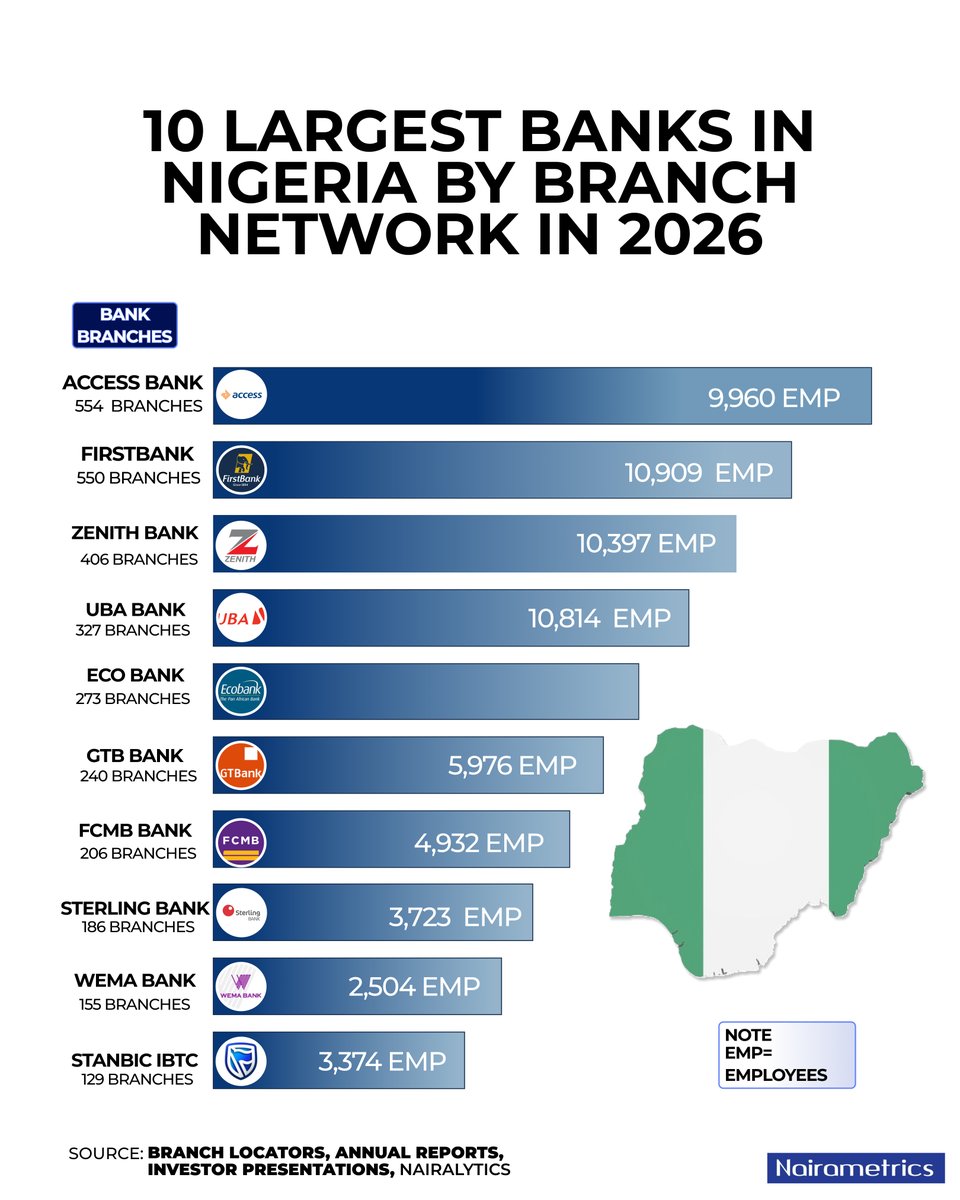
In an era of mobile apps and USSD banking, Nigeria’s largest lenders have not abandoned the branch.
The country’s top commercial banks collectively operate thousands of locations nationwide, reflecting a deliberate strategy to serve a large, diverse, and still
largely cash-reliant population.
Data compiled by Nairametrics Research from banks’
2025 annual reports and investor presentations, as well as available branch locators, show that Access Bank, FirstBank, and Zenith Bank remain the most visible lenders in Nigeria by branch network.
Here are the 10 largest banks in Nigeria by branch
Network in 2026.
Visit nairametrics.com to read more.
1
130

I hope you feel some shame for being reliant on AI to do your research. Everyone correcting you with evidence hopefully causes you to think about how you got to this bad place.
1

Not sure if the first part of that (that he wanted to believe) is true, maybe maybe not, the second part definitely is.
And also wouldn't be surprising if our own IC has been so reliant for so long on Israel for HUMINT looks into Iran that we've lost the ability to verify what they were telling us.
5

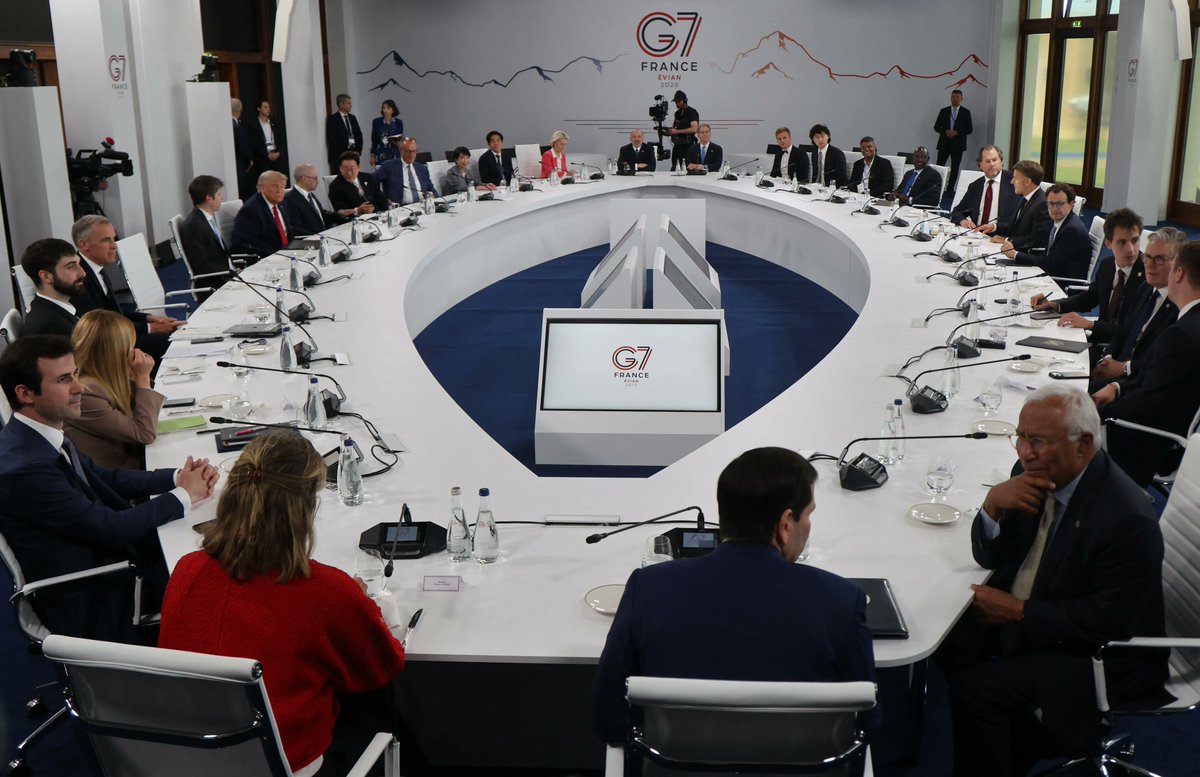
Yesterday, I had the insane experience of joining the G7 summit in Evian and present our perspective on open innovation in AI to the G7 world leaders.
With openness under pressure around the world, it is vital that we preserve a culture that makes open and responsible development the norm, not the exception
My full remarks below.
> Thank you, President Macron, for organizing this important conversation, and for bringing together this excellent group of people. I think I represent the youngest company in this room. I am Robin Rombach, co-founder and CEO of Black Forest Labs: a 90-person frontier AI lab, built on both sides of the Atlantic in Germany and the United States. We develop “world models”. These are visual AI models that understand and simulate our complex physical world.
Many of you have probably never heard of us. But if you’ve ever generated an AI image or AI video—I’m sure some of you have done so—you’ve probably encountered our research. Not far from here, at universities in Germany, our team pioneered and published many of the techniques that gave rise to visual generative AI. Our team has co-developed 3 of the top 5 most popular open generative AI models of all time, including Stable Diffusion, and the only open models as popular as DeepSeek.
We’ve talked a lot about language models today. They are remarkable. But language is a compressed, and ultimately limited, representation of the world. We are building models that learn from thousands of years of video, and can reason in complex visual environments—the rich, messy, complicated world we actually live in.
These are still early days, but this technology is going to transform every corner of the economy. For that reason, we believe that visual models, alongside language models, will soon be critical economic infrastructure.
That’s why we are passionately committed to open innovation. Sharing our technology openly means that businesses around the world can build their own AI systems, rather than renting them from a handful of companies. Open technology is vital for transparency, competition, and strategic independence in AI. A culture of open innovation made AI possible in the first place, including the transformer paper that gave birth to today’s language models, and we need to preserve that culture.
But we are fully aware that open innovation poses unique challenges, especially in image, video, and audio. Open AI models can be misused or modified to produce unlawful and deeply harmful content, and it can be difficult to withdraw these models once they're released.
Our commitment is to show that innovation in visual AI can be both open and responsible, not one or the other. This is partly a technical challenge, and we are making good progress. For example, our latest open models demonstrated over 10 times fewer vulnerabilities for sexual deepfakes and child abuse material than the open models released by other Big Tech firms.
But there is a role for governments too, from safety tools to evaluation standards to targeted regulation. For example, we have welcomed the leadership of the Trump Administration, as well as the European Union and the UK Government, in developing new legal strategies to combat sexual deepfakes.
It’s crucial that we strike the right balance. The future of our societies depends on getting this technology out into the world safely. But a climate of fear around open technology, or a focus on suppression over diffusion, will leave the world reliant on a handful of firms for critical infrastructure. We are ready to work with you all to make open and responsible innovation the norm, not the exception.
1
1
9
125
Edwin 🤘🏾🐐🇲🇽 retweeted

And yet we keep hearing decisions makers float the idea that we need a new stadium in Houston. NRG/Reliant Stadium is pretty badass. Glad an outside view is highlighting it


11
4
97
5,890
E retweeted

NRG/Reliant getting the best PR since it opened

What on earth is this stadium man 😭
How can any stadium in Europe even compete. USA are on another level when it comes to this
18
333
5,058
131,761
✝️ retweeted

Argentine players play for Messi, CR7 is a traditional striker now so he can’t do what Messi does & he’s reliant on his team to facilitate in what he & Haaland do best, finding & manipulating space, angles scoring. Two complete different styles of play between CR7 & Messi.

It's kool when Messi walks around but a major problem for ESPN when CR7 does it🤣
32
40
455
53,545

AJ retweeted

Jun 17
I’ve never seen Reliant Stadium get this much love in my entire life
66
427
6,530
201,410

True, that’s why I think he’s going to dominate in the NFL because he has been dominate in 2 different systems and for 2 different styles of QBs already, he’s not reliant on a system or QB, he makes them better
3
9

15m
We badly need Green and Malik to bounce back, having a good secondary is completely reliant on it. If 2025 is what he is we may be in trouble if we don't make a big move to make sure we have an elite pass rush
4

Seifert ✈️ - Jahangir - Shehan
(Breetzke ✈️ )
Hetmyer ✈️ - Stoinis ✈️ - Shanaka ✈️
Harmeet - Jessy - Gannon - Ngidi ✈️
Baartman or Tanveer Sangha ✈️
Harmeet need to play a very big role
Heavily reliant on Hetmyer Stoinis
#MLC2026 #SeattleOrcas #MajorLeagueCricket
13