
23 Apr 2025
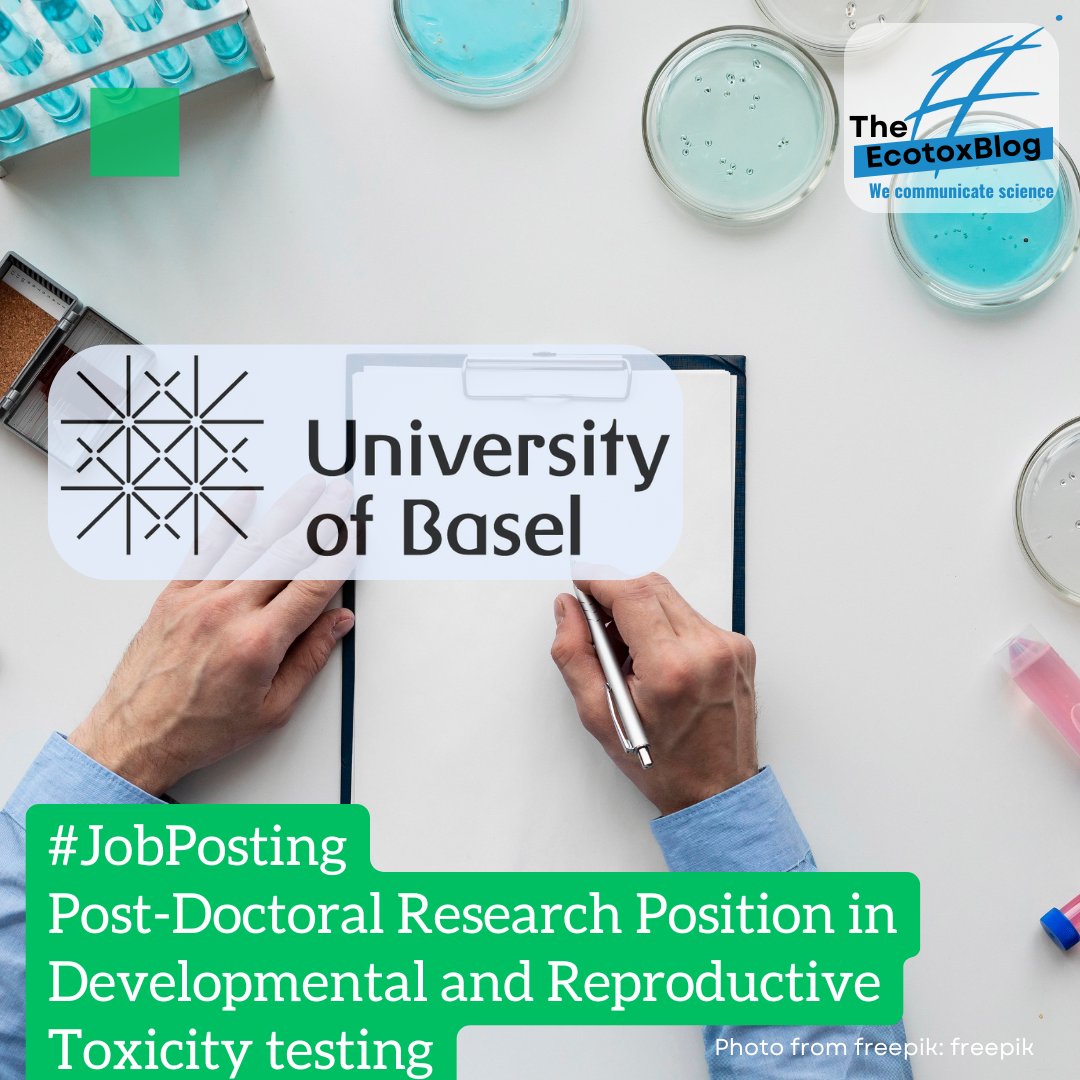
The SCAHT at the University of Basel is seeking a highly motivated Scientific Coordinator to lead and advance an International Stakeholder Network initiative for Developmental and Reproductive Toxicity testing.
More details in our blog👉 rptu.de/s/moywbu
#postdocposition
1
2
132



27 Oct 2024
Your seats reserved Scaht! Next stop Valhalla
2
7
15 Oct 2024
I agree, Scaht.
We will enter the greatest cycle in history. Many tokens will do very well.
I'm Especially bullish on the #1 auto-burn. Nothing else gives me reassurance to HODL through than $CWIF

1
3
76

19 Sep 2024
📣 Have you signed up for this month’s #Talking3RScience Webinar? Join us next Thursday, Sept 26, 5-6 PM (CEST)!
🎙️Jenny Sandström (@Swiss3RCC) & Ellen Fritsche (#SCAHT) will share how 🇨🇭 is advancing #3Rs & #NAMs in #RegulatoryToxicology 🔬📑
Register at: bit.ly/Talking3R-September
9 Sep 2024

🇨🇭🏔️Join us for this month’s #Talking3RScience Webinar (09/26 5-6 PM) as our Swiss colleagues, Jenny Sandström, @Swiss3RCC & Ellen Fritsche, SCAHT, provide insights into the Swiss model for supporting #3Rs implementation in #RegulatoryToxicology! Sign up: bit.ly/Talking3R-September

1
3
448
9 Sep 2024
🇨🇭🏔️Join us for this month’s #Talking3RScience Webinar (09/26 5-6 PM) as our Swiss colleagues, Jenny Sandström, @Swiss3RCC & Ellen Fritsche, SCAHT, provide insights into the Swiss model for supporting #3Rs implementation in #RegulatoryToxicology! Sign up: bit.ly/Talking3R-September
6
12
667


Much love to the entire @catwifhatsolana community.
Seriously the best community ever.
All the mods and the dev are the most supportive and #dramafree team I've ever worked with in the past. We share our hopes and fears and discoveries with each other every day and it has been amazing for my soul.
Thank you @I_Be_Wild_Will @NFTSILVER3 @OmarOurf @CWIFARMY and the rest of the team as well as @psygrr1_ @RoyaltySaint21 @CodeMeow777 @SwttAdeline, Mister Scaht, Dan the man, Soldier of Boom and all the rest of you who lift us up and make every day a positive experience. 🫶🏻
The #hatstayson #DiamondPaws #SteelClaws

5
9
35
2,919

15 Mar 2024
I believe it cuz I want it to be true
"Scaht-hh. How are ye lad"
2
6
1,025

22 Feb 2024
📢 Todays #EawagSeminar by Prof. Dr. Ellen Fritsche, SCAHT, University of Basel
«Current Developments in Chemical Risk Assessment: New Approach Methodologies on the Rise»
4 - 5pm, on-site and remote
eawag.ch/de/info/agenda/deta…
#eawagseminar #event
6
593

2 Nov 2023
Smartphones Linked To "Spermageddon" In New Research: What To Know
New research has signaled that smartphones may impact the sperm quality of young men. Fear not, though. While researchers in the field have praised the robustness of the study, they have added that the findings shouldn’t spark panic and the cause of humanity’s “spermageddon” remains elusive.
It’s been widely suggested that sperm count and quality has slumped in the past 50 years. One particular study found that the demise was most notable after 2005 when sperm counts from healthy young men in the US nosedived. This new research asks the question: could smartphones be to blame?
Scientists at the University of Geneva looked at data on 2,886 Swiss men aged 18 to 22, recruited between 2005 and 2018 at six military conscription centers nationwide.
“Men completed a detailed questionnaire related to their lifestyle habits, their general health status and more specifically the frequency at which they used their phones, as well as where they placed it when not in use,’’ Serge Nef, co-director of the study and professor in the Department of Genetic Medicine and Development at the UNIGE Faculty of Medicine and at the SCAHT – Swiss Centre for Applied Human Toxicology, said in a statement.
The findings showed that sperm concentration was significantly higher in the group of men who did not use their phone more than once a week (56.5 million per milliliter) compared with men who used their phone more than 20 times a day (44.5 million per milliliter) – that’s a 21 percent decrease.
The data also implies that sperm quality dropped more sharply during the first study period in 2005-2007 than in later periods in 2008-2011 and 2012-2018.
“This trend corresponds to the transition from 2G to 3G, and then from 3G to 4G, that has led to a reduction in the transmitting power of phones,’’ explains Martin Röösli, study author and associate professor at the Swiss Tropical and Public Health Institute.
The idea is that electromagnetic radiation is, somehow, impacting sperm quality. Many people keep their smartphone in their trouser pocket, very close to the groin, potentially making this sensitive part of the body susceptible to the electromagnetic waves beaming out of the device.
However, this link is by no means conclusive. Lead study author Rita Rahban notes: “The number of people in this cohort indicating that they did not carry their phone close to their body was too small to draw a really robust conclusion on this specific point.”
It’s also possible that the apparent drop in sperm fitness is associated with any number of technological, social, or environmental changes that have arisen in recent decades. For instance, a seminal book (no pun intended) by Professor Shanna Swan called Count Down argued that the “sperm apocalypse” is being driven by environmental pollutants used in manufacturing everyday products, such as phthalates from plastic and per- and poly-fluoroalkyl substances (PFAS) used, for example, in waterproofing.
Independent scientists commenting on the new research remarked that it was a “very well-conducted” study that provides an interesting piece of the puzzle. However, people should be cautious when interpreting the results as they only show an association between mobile phone use and semen quality, not a causal link.
@ScottAdamsSays
iflscience.com/smartphones-l…
1
1
1
330